

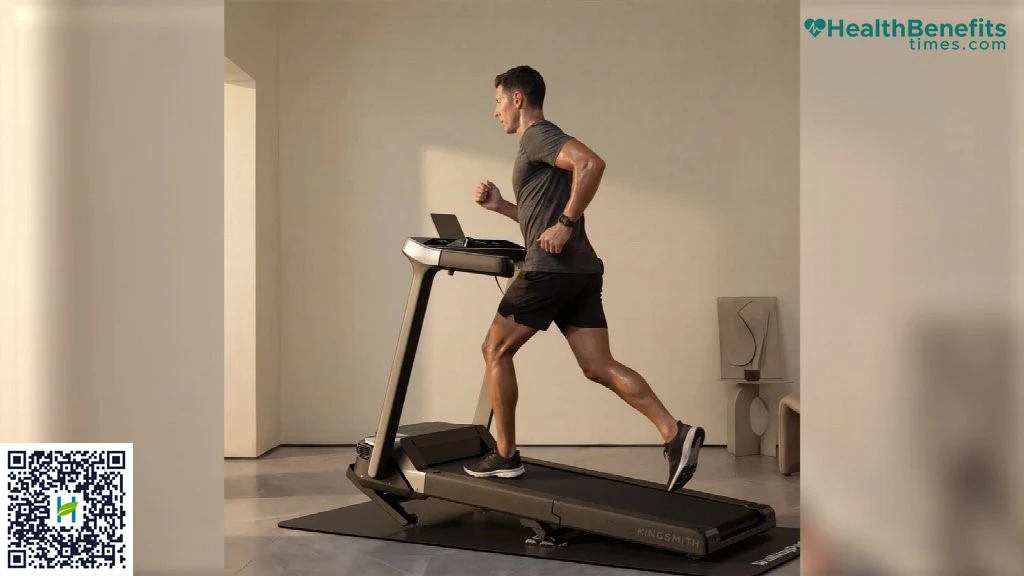
Raise the incline on a treadmill and your walk changes, even when the speed stays the same. That’s why incline walking is everywhere in fitness videos, often with big promises attached.
Some of those promises hold up well in lab research. Others stretch a small finding much further than it goes. This guide sorts them out. You’ll see how much harder incline makes a walk, which benefits have solid support and where the hype creeps in. Then you’ll get a 20-minute incline treadmill session you can do in a small room without ever breaking into a run.
What Changes When You Raise the Incline
Walking uphill means lifting your body a little with every step, so the effort climbs even when your pace doesn’t. On a flat deck, your legs mostly carry you forward. Add incline and they also push you up, which asks more of your heart, your lungs and the big muscles at the back of your legs.
Exercise scientists describe effort in METs. One MET is roughly the energy you use sitting still, so 4 METs means about four times that. Standard estimates for a 3 mph walk look like this:
| Incline at 3 mph | Effort (METs, approx.) | Compared with flat walking | How it tends to feel |
| 0% | 3.3 | Baseline | An easy walk |
| 5% | 5.4 | About 1.6× | A brisk walk up a hill |
| 8% | 6.6 | About 2× | Vigorous: talking gets choppy |
| 12% | 8.3 | About 2.5× | Similar to a flat 5 mph jog |
| 15% | 9.5 | About 2.9× | Hard, best kept to short blocks at first |
At walking speed, each 1% of incline adds roughly 12% to the effort. Somewhere around 8% at 3 mph, the walk moves into the vigorous range, the same zone as a steady jog. That’s the core benefit of an incline treadmill: you can reach a hard workout while you’re still walking.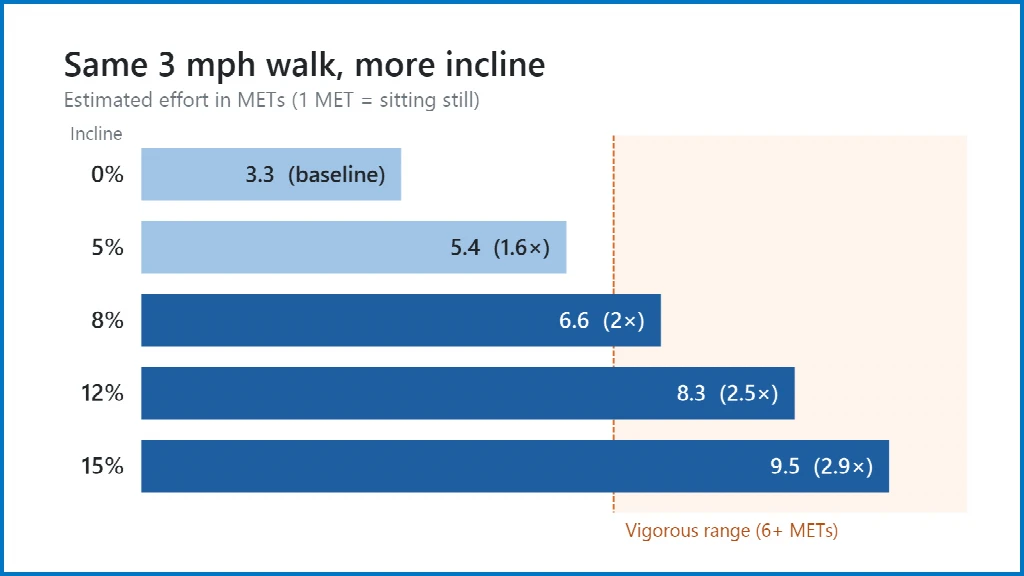
Benefit by Benefit: What the Research Supports
The strongest evidence says incline walking makes you work harder and uses your legs more. The case for easier knees is promising but limited. The fat-burning claims are often overstated.
| What you’ve heard | What lab research shows | How solid it is | What it means for you |
| Incline turns a walk into a hard workout | Effort rises steadily with grade, and a steep walk can match a jog | Strong and well established | You can reach vigorous effort without running |
| It works your glutes, hamstrings and calves harder | Uphill walking raises activity in the hip, knee and ankle extensors, more so on steeper grades | Solid for muscle activity, not proof of muscle growth | Expect more leg work; strength still needs gradual progression |
| It’s easier on your knees than running | Slow walking on a moderate incline lowered knee loading compared with faster flat walking | Limited: small, short-term studies | A reasonable choice if impact bothers you, not a treatment |
| 12-3-30 burns more fat than running | Incline walking drew a larger share of energy from fat, but running burned calories faster | Mixed: share of fuel isn’t fat loss | Pick the session you’ll repeat |
| Incline walking targets belly fat | No exercise removes fat from one chosen area | Not supported | Use incline to raise effort, not to spot-reduce |
Effort is the best-supported benefit. The link between grade and energy cost is one of the most consistent findings in exercise science, which is why the numbers above are so predictable.
Lab studies that measure muscle activity show uphill walking switches on your glutes, hamstrings, quads and calves more than flat walking does. The effect grows as the grade gets steeper and the pace picks up. That’s evidence of harder-working muscles, not bigger ones. Strength gains still depend on asking a little more of those muscles over the weeks.
The joint story needs more care. In small lab studies of adults with obesity, a slow walk on a moderate incline produced lower knee loading than a faster walk on the flat, at a similar overall effort. That makes slow incline walking a sensible option if impact bothers you. It doesn’t make incline a fix for knee pain, and very steep grades shift extra work to your calves and Achilles tendons, so build up gradually.
The 12-3-30 workout (12% incline, 3 mph, 30 minutes) is where claims get stretched. In one small study of young, active adults, a single 12-3-30 session drew about 41% of its energy from fat, compared with about 33% for a self-paced run. But the runners burned calories faster and reached the same total sooner. Burning a bigger share of fat during one workout isn’t the same as losing more body fat over time.
Finally, no workout burns fat from one spot. Incline walking is a great way to raise effort without running, but it isn’t a targeted fix for belly fat, whatever a video caption says.
Incline Walking vs. Running: Same Effort, Different Feel
A 3 mph walk at a 12% incline asks about as much of your body as a 5 mph jog on the flat. The difference is how that effort reaches you.
- Impact: Walking always keeps one foot on the deck, so there’s no airborne phase and less landing force with each step.
- Heart and lungs: At matched effort, both put you in the same vigorous zone, so your cardio fitness gets a similar challenge.
- Space and footfall: A walking stride is shorter than a running stride, and you skip the heavy landings. That suits apartments, upstairs rooms and early sessions while others sleep.
So is incline walking better than running? Neither wins outright. If you enjoy running and your joints feel good, keep running. If you’d rather not run, are just getting started, or want a lower-impact hard day between runs, incline walking gets you to a similar effort another way.
A 20-Minute Incline Session for Small Spaces
Keep the speed at a steady walk and change only the incline. That’s enough to turn a compact treadmill into a high-intensity interval session, with no need for a long deck or a running stride.
| Minutes | Incline | Pace | Effort check |
| 0–4 | 0–3% | Easy, 2.5–3 mph | You can talk in full sentences |
| 4–16 | 4 rounds: 2 min at 8–12%, then 1 min at 3% | Steady, 2.5–3 mph | Hard blocks: a few words at a time |
| 16–20 | Back down to 0–2% | Easy | Your breathing settles |
- If you’re new to incline: Keep the hard blocks at 5–6% for the first couple of weeks.
- To progress: Change one thing per week, either one more round or 1–2% more incline on the hard blocks.
- How often: Two or three incline sessions a week work well, with easy flat walks on other days. Walking daily is fine; just give steep days an easy day in between.
Wear supportive shoes, clip on the safety key, and lower the incline before you slow down and step off. Rest a hand lightly on the rail if you need balance, but avoid gripping it or leaning back. Lab tests show that kind of support takes a noticeable share of the work off your legs. Stop if you feel dizzy, unusually short of breath, or any joint pain.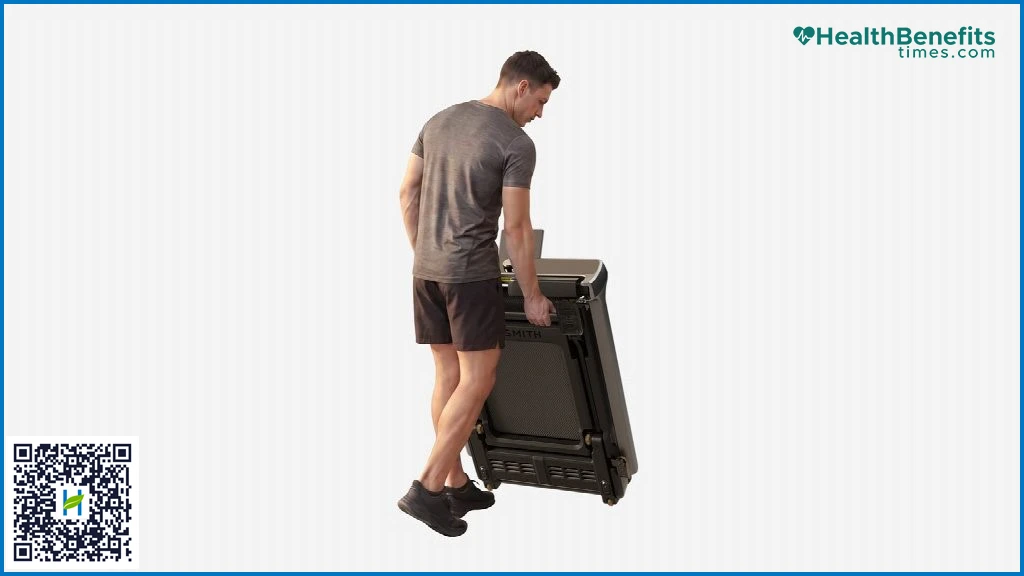
What to Look For in an Incline Treadmill for a Small Space
Start with the incline itself, meaning how far it goes and how quickly you can change it. Then check that the machine fits the room you actually have.
- Incline range: To run the session above, look for at least 10–12%. More range leaves room to progress.
- Motorized incline: Changing grade mid-walk with a dial, button or app is what makes intervals practical. Manual or fixed inclines suit steady walks.
- Deck length: Your stride lengthens slightly on a slope, so a longer walking surface feels more natural.
- Folded size and weight capacity: Measure the wall or corner where it will live, and check the rated capacity.
- Easy controls: A speed dial or app makes switching between hard and easy blocks smoother.
If you have a wall or corner to spare, you can compare foldable treadmills with built-in incline by incline range, folded size and weight capacity. The WalkingPad G5i reaches an 18% incline across 25 levels, so there’s room to grow past 12-3-30, and it folds upright to stand against a wall after your session.
Final Thoughts
The research backs one big idea: incline turns an ordinary walk into a hard workout without asking you to run. The muscle and joint benefits are real but more modest than the headlines suggest. The fat-burning claims depend on how much you move across the whole week, not on one magic setting.
Pick a grade that challenges you, build it up slowly, and choose the session you’ll actually repeat. Consistency will do more for you than any single number on the console.
Disclaimer: This article is provided for general informational purposes and is not a substitute for professional medical advice, diagnosis, or treatment. Individual health needs and responses to exercise can vary. If you have a medical condition, concerns about your health, or are considering changes to your exercise, diet, sleep, or daily activity, consult a qualified healthcare professional first.