

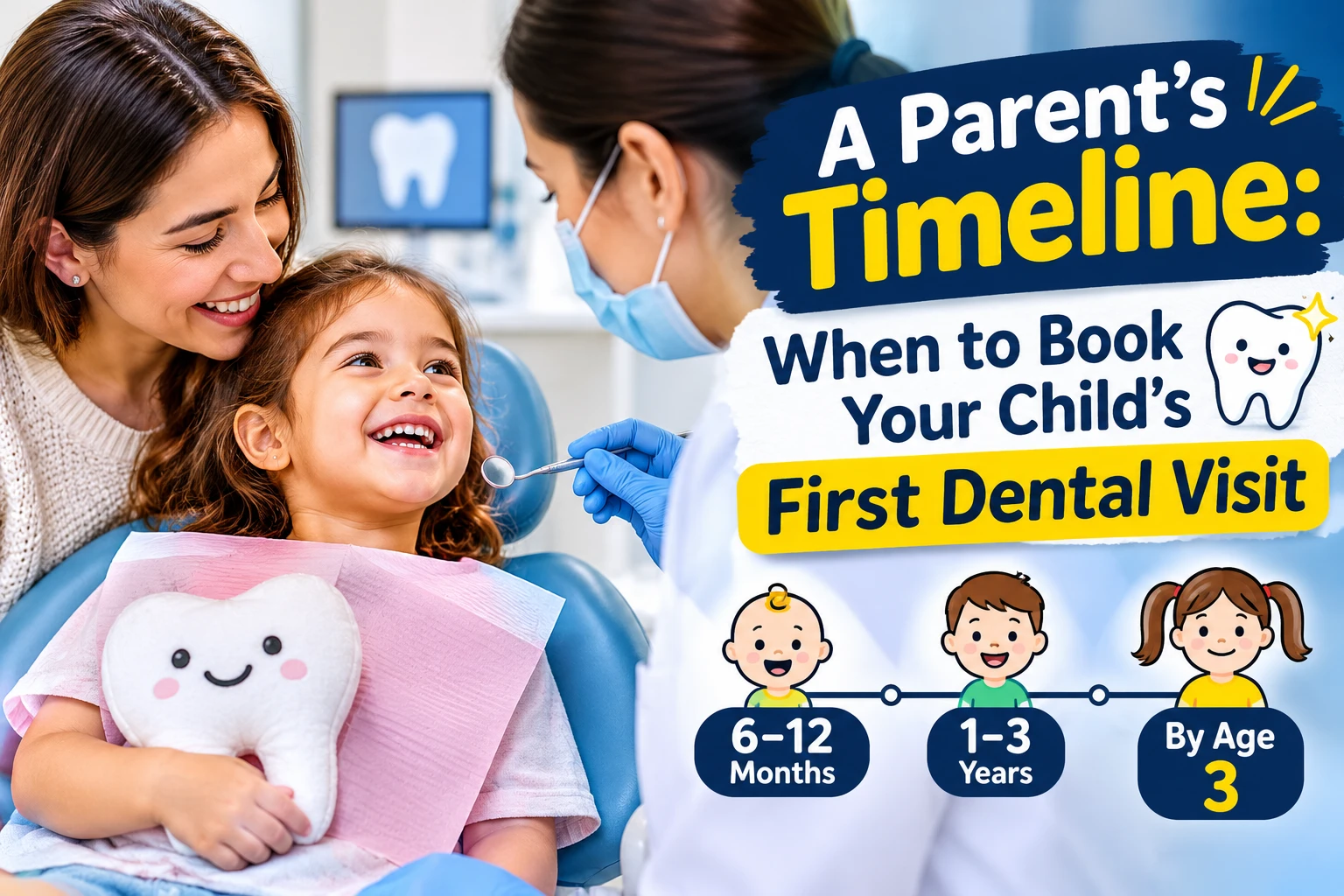
Most parents wait for a reason to call a dentist. A chipped tooth, a complaint about pain, something visible. Kids don’t work that way. The first visit is supposed to happen before anything’s wrong, and that window closes faster than most parenting guides let on.
Why Dentists Push the 12-Month Mark
Baby teeth have thin enamel, about half the thickness of what adults have, and it wears down fast once sugar from juice or formula or an overnight bottle gets involved. A dentist in Suffern tracking enamel wear in toddlers won’t call the 12-month rule a scare tactic. It’s just math. Once that first molar erupts, the clock on early childhood caries starts running.
A pattern that shows up constantly: a 14-month-old comes in with a faint white line along the gumline. Parents hadn’t noticed anything, because the tooth looked fine to them, and honestly it mostly did. That line is demineralization already in progress. Give it a few more months and it’s not a line anymore. It’s a hole.
Plaque begins to build up within hours after any feeding. When a baby feeds overnight bacteria have the uninterrupted time to attack enamel. This is why a baby who falls asleep nursing every night quietly accumulates plaque each day and most parents do not even notice. In parts of Rockland County well water is common. That water is often low, in fluoride, which removes a layer that city water normally supplies and people rarely think about it.
Some pediatricians still hand out the old advice. Wait until teeth fall out. Baby teeth don’t matter that much anyway. That’s outdated, and it ignores how cavity-causing bacteria actually spread — caregiver to child, through a shared spoon or a pacifier someone cleaned in their own mouth, frequently before the kid turns one. Catch the risk early, the fix is small. Miss it, and someone’s reaching for a drill.
What a First Visit Actually Looks Like
Parents picture a scaled-down version of their own dental appointment. It’s not that at all. A dentist in Suffern running knee-to-knee exams will describe something that looks more like a pediatric wellness check than anything involving a drill.
The child sits in the parent’s lap, facing them. The dentist sits knee-to-knee, opposite, tips the child’s head back gently, and looks. Counts teeth. Checks for white spots. Glances at the bite. A light swipe, with a rice-grain smear of fluoride toothpaste wraps everything up. No drills, no X-rays not unless there is a reason to do so.
The paperwork gets done right during the visit not after. Most dental offices do a caries-risk assessment right there. Looking at eating habits, how fluoride a person gets and family dental history, all of which go into a quick score. That score sets the recall schedule going forward. A kid flagged as higher risk might come back every three months instead of six, which surprises a lot of parents who assumed six months was just the universal rule.
Most of what actually matters happens through conversation, not instruments:
- weaning off the bottle or sippy cup, and when
- thumb-sucking or pacifier use, and the age it stops being developmentally normal
- how much fluoride is actually in the local tap water versus whatever bottled brand a family uses
- teething pain management, steering clear of numbing gels that have shown up in past safety recalls
- a “lift the lip” check parents can run at home once a month, just pulling the upper lip up and scanning for white or brown spots
Fifteen minutes, give or take, covers the whole visit. None of it is really about the exam. It’s about a kid getting comfortable in that chair before there’s ever a reason for actual treatment.
What Waiting Past Age 2 Actually Costs
Delay is the default for a lot of families. Work schedules don’t cooperate, pediatric-trained providers are thin on the ground in some areas, or nobody ever mentioned the 12-month guideline in the first place. Whatever the reason, the cost builds quietly and then lands all at once.
Offices that see a steady stream of late first visits — more than one dentist in Suffern among them — report the same thing over and over. White spots that could’ve reversed with fluoride varnish at 14 months have become full cavities by three. At that point a calm exam usually isn’t on the table anymore. Treatment shifts toward sedation dentistry, and the bill jumps from a routine visit fee into the thousands once anesthesia, facility charges, and multiple restorations all land on one invoice.
There’s a behavioral cost too, and it tends to last longer than the financial one. A kid whose first real dental memory involves a needle and a drill carries that forward. Plenty of adults who avoid the dentist can trace it straight back to one bad early visit, decades on.
Benefits timing gets affected as well. Most insurance, Medicaid pediatric dental included, covers preventive visits every six months starting from the first tooth. Push the first visit to age three, and a family has already forfeited four or five fully-covered visits that would’ve cost nothing out of pocket. Those windows don’t carry over. They just expire, unused.
A Working Visit Schedule, Birth Through Kindergarten
Once that first appointment happens on time, the rest of the calendar isn’t complicated.
- First tooth or 12 months whichever hits first: initial exam, risk check, habit counseling.
- Every six months through age 3: fluoride varnish, white-spot monitoring, bite tracking.
- Ages 3 to 5: six-month recalls continue , sealant candidacy gets reviewed as molars come in , and bitewing X-rays usually start once back teeth are touching.
- Around age 6: first permanent molars erupt. Sealant window opens.
- Kindergarten entry: many states require a dental exam form for enrollment — a built-in checkpoint most parents don’t even have to think to schedule.
Consistency matters more than perfection here. Missing one six-month window at age two won’t undo prior progress. Missing several in a row will. Skipped recalls pile up the way skipped oil changes do — nothing happens for a while, and then everything happens at once. A lot of offices now send automated recall texts about two weeks before a visit’s due, mostly because manual tracking by parents tends to fall apart once there’s a second or third kid in the mix.
How Local Practices Like Promise Family Dental Fit Into This Timeline
Family-focused practices built around this calendar are present in communities today. This movement is a shift that wants to fold pediatric preventive care into general family dentistry so families no longer need to send every child to a separate specialist. Promise Family Dental operates this way — kids and parents scheduled under one roof instead of running two intake processes at two different offices.
That structure quietly removes a common excuse for delay. No second provider to find, no second form, no separate insurance call. A dentist in Suffern running things this way can track a kid’s visits on the same six-month rhythm as the rest of the household, which keeps the whole recall calendar easier to actually stick to. For a family that juggles appointments for children the single-calendar set-up matters more in real life, than any office feature. The family finds that the calendar is the useful tool and the family sees that the calendar keeps everything organized. The familys experience shows that the calendar wins over any office detail.
FAQs
Does my child need a full set of teeth before the first visit?
No. The rule is first tooth or age 12 months, whichever comes first. Most kids have just a few teeth showing by then.
What if my child cries through the whole appointment?
That’s normal, and it’s fine. The value is in the exam and the parent conversation, not in a calm toddler.
Is fluoride varnish safe for a baby?
Yes, at the amounts used during a visit. It’s regulated separately from at-home fluoride products and applied by trained staff only.
No visible cavities — can we skip the first-year visit?
Skipping it means skipping the risk assessment and habit coaching too, not just a cavity check. That part is where most of the actual prevention happens.