

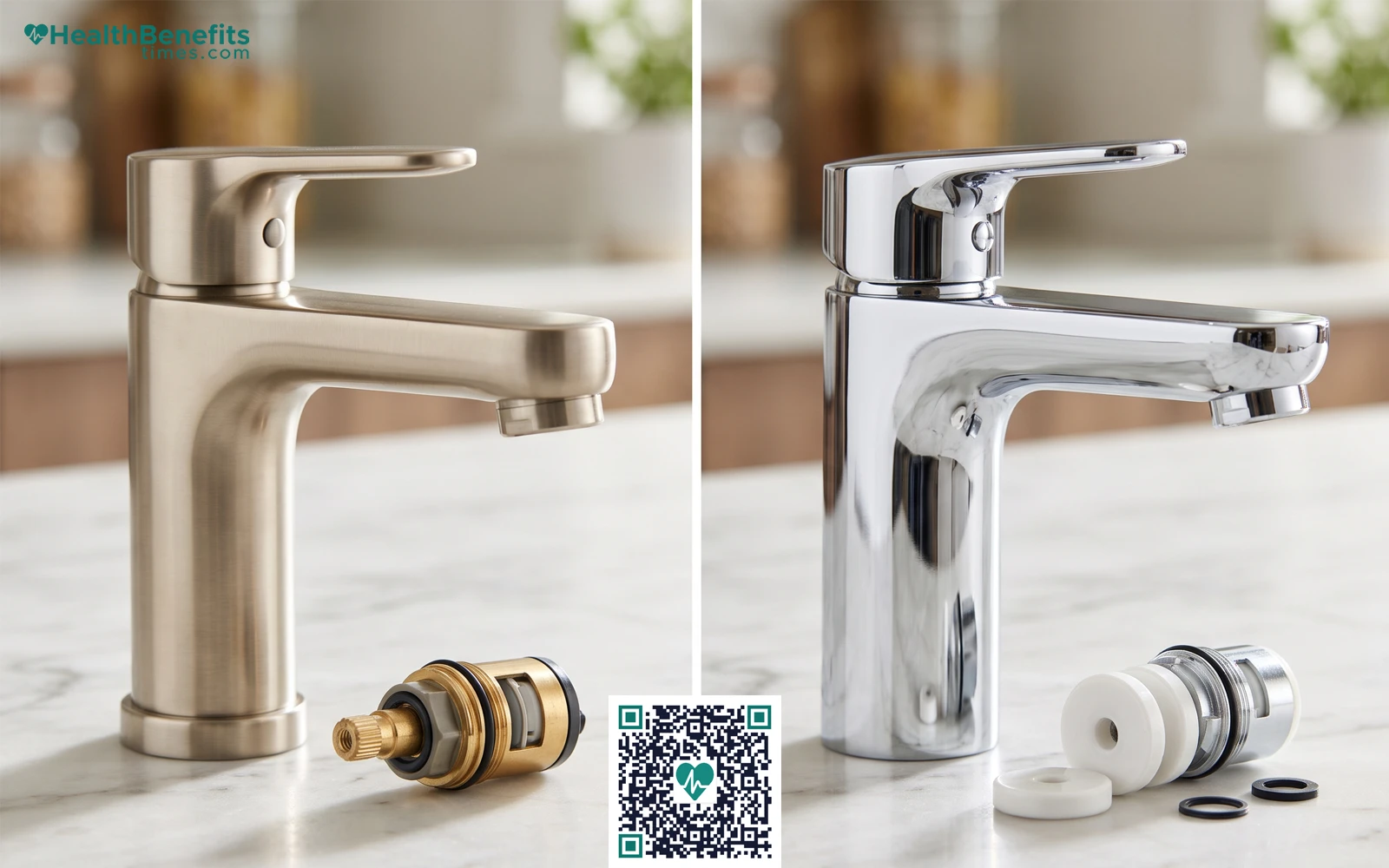
A homeowner standing over a dripping bathroom sink quickly discovers that not all faucets use the same internal parts. One model may hide a long, cylindrical cartridge, while another relies on flat, stacked ceramic discs to stop water flow. When a faucet begins to leak, matching the right repair kit to the specific type—cartridge or ceramic disc—makes the difference between a fast, lasting fix and a frustrating, recurring drip. Selecting the wrong kit can waste both time and money, as parts often aren’t compatible between these two common faucet types. Knowing how each system works and what repair kit fits ensures a smoother repair process and a faucet that stays dry after the job is done.
Cartridge Faucet vs. Ceramic Disc Faucet: How to Identify the Right Repair Kit
Determining whether you have a cartridge faucet or a ceramic disc faucet is the first step before purchasing a repair kit. Cartridge faucets typically have a single lever or two handles, and inside, a plastic or brass cartridge moves up and down or rotates to control water flow. Ceramic disc faucets, on the other hand, use a pair of precisely machined ceramic discs that glide against each other to open or close the water path.
To identify your faucet type, start by removing the handle and inspecting the internal mechanism. If you see a long, narrow cylinder, you’re looking at a cartridge. If you find two flat, round ceramic pieces stacked together, it’s a ceramic disc model. Comparing faucet internal components helps clarify which repair kit to buy, as each type requires specifically sized and shaped replacement parts.
Choosing the appropriate cartridge vs ceramic disc faucet repair kit depends on this identification step. Kits for cartridge faucets generally include one or more replacement cartridges plus rubber O-rings and seals. Ceramic disc faucet kits contain new ceramic discs and often matching gaskets. Mixing parts between these two systems will not resolve a leak.
How Cartridge and Ceramic Disc Faucets Control Water Flow
Understanding how each faucet design stops and starts water flow reveals why each requires a different repair approach. In cartridge faucets, the cartridge moves inside a chamber to align holes or block the water path, controlling both temperature and pressure. Over time, the cartridge’s rubber seals or the plastic body itself can wear out, producing leaks or difficulty turning the handle.
Ceramic disc faucets employ two hard ceramic discs with polished surfaces. When the faucet handle is turned, one disc rotates above the other, precisely exposing or sealing water inlets. Their design means less wear and tear, but mineral buildup or a cracked disc can still cause leaks. For a more detailed explanation, see how ceramic disc faucets work and why their repair needs differ.
Because the internal mechanisms function differently, the repair kits are not interchangeable. A cartridge vs ceramic disc faucet repair kit will include components tailored to its respective system, which is why identification is so important before starting any repairs.
Signs Your Faucet Needs a Cartridge or Ceramic Disc Repair Kit
Persistent dripping from the spout, even when the handle is tightly closed, often signals that the internal cartridge or ceramic discs are no longer sealing properly. In cartridge faucets, you might also notice the handle becoming stiff or difficult to move, a telltale sign that the cartridge is worn or mineral deposits have built up inside.
For ceramic disc faucets, a sudden change in handle movement—such as grinding, sticking, or a loose feel—combined with leaking, usually indicates that the discs are cracked or debris is interfering with their seal. Water pooling around the faucet base or under the sink can also suggest that internal seals or O-rings in either system are failing.
Following a resource like the Leaky Faucet Repair Guide streamlines the process of troubleshooting these symptoms. That practical guide walks through the visual checks and part replacements needed for both cartridge and ceramic disc faucets, making it easier to match your symptoms to the correct repair kit.
Choosing the Right Faucet Repair Kit for a Lasting Fix
Once you’ve identified your faucet and the signs of wear, selecting a repair kit comes down to matching the kit’s parts to your faucet’s specific brand and model. Cartridge repair kits often specify which faucet models or manufacturers they fit, so double-check compatibility before purchasing. Some brands use proprietary cartridges, which look similar but vary in length, diameter, and seal placement.
Ceramic disc repair kits will list the shape and thickness of the discs, as well as included seals. Carefully measure the old discs and compare them to the kit specifications to ensure a proper fit. Universal kits rarely work perfectly, so look for brand-specific options when possible.
Proper installation of the repair kit restores smooth handle movement and stops leaks for both types of faucets. Using mismatched parts or skipping steps in the process usually results in continued dripping and the need to repeat repairs. Always follow the manufacturer’s instructions to secure a watertight seal that will last.
Conclusion
Identifying your faucet’s internal design before purchasing a repair kit makes the difference between a fast, lasting fix and repeated frustration. Start by removing the handle to inspect for a cartridge or ceramic discs, then match your repair kit to your exact faucet type and model. This targeted approach is the surest way to resolve leaks and restore full function to your bathroom or kitchen faucet.