

- A group of eight essential B vitamins that work together to support various bodily functions, including energy metabolism.
- Vitamin B complex helps convert carbohydrates, fats, and proteins into usable energy by supporting enzyme activity in the body.
- These vitamins play a critical role in maintaining healthy energy levels, reducing fatigue, and supporting optimal brain and nervous system function.
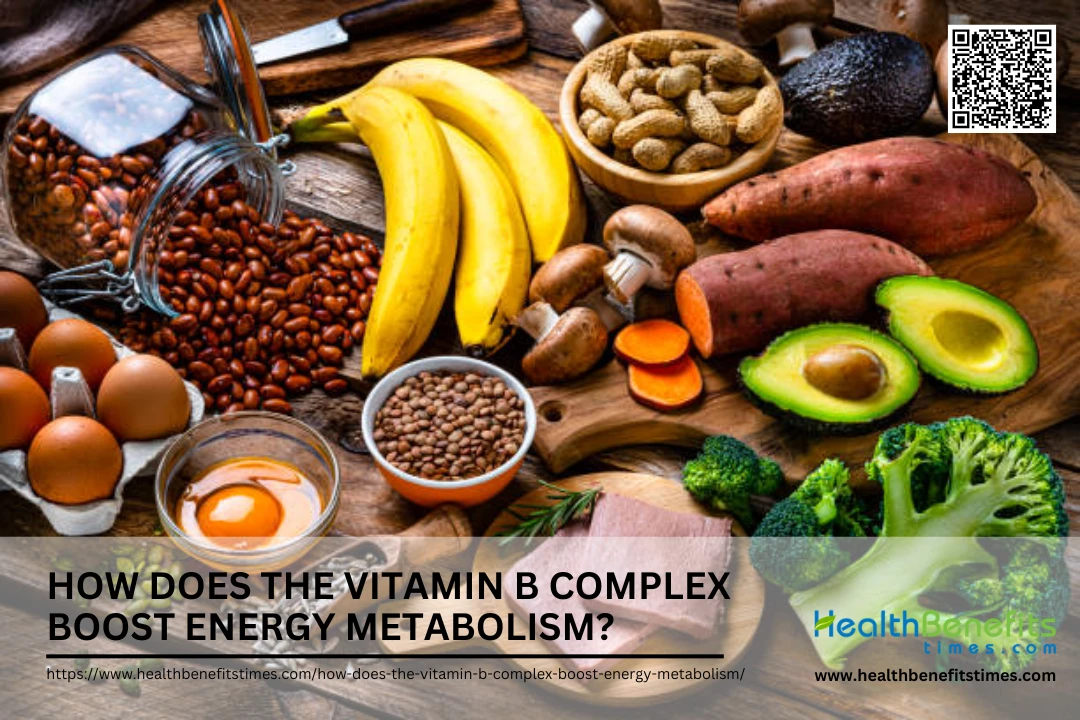
Energy metabolism is the intricate biochemical process by which the body converts food into energy, primarily in the form of ATP, to sustain cellular functions. (1) The Vitamin B complex plays a pivotal role in this process, acting as cofactors in enzymatic reactions critical to energy production pathways. For instance, thiamine (B1) and riboflavin (B2) are essential for the Krebs cycle and electron transport chain. (2) Niacin (B3) and pantothenic acid (B5) contribute to oxidative phosphorylation by aiding in the synthesis of coenzymes NAD and CoA. (3) Furthermore, B6 and B12 vitamins are critical for amino acid metabolism and red blood cell production, which ensures efficient oxygen transport for energy generation. (4) This interconnection underlines how B vitamins synergize to maintain optimal metabolic efficiency, especially under increased energy demands like exercise or stress. (5)
What is the Vitamin B Complex?
The Vitamin B complex refers to a group of water-soluble vitamins crucial for various metabolic processes, including energy production, DNA synthesis, and nervous system function. (6) It consists of eight essential vitamins: thiamine (B1), riboflavin (B2), niacin (B3), pantothenic acid (B5), pyridoxine (B6), biotin (B7), folic acid (B9), and cobalamin (B12). (7) Each vitamin serves distinct roles, such as coenzyme activity in enzymatic reactions and cellular energy metabolism. (8) Deficiencies in these vitamins can lead to various health disorders. (9) B vitamins are widely distributed in dietary sources, including whole grains, dairy, and leafy greens. (10)
How does the vitamin B complex boost energy metabolism?
Vitamin B complex plays a crucial role in energy metabolism by converting food into energy, supporting cellular function, and reducing fatigue.
 1. Vitamin B1 (Thiamine)
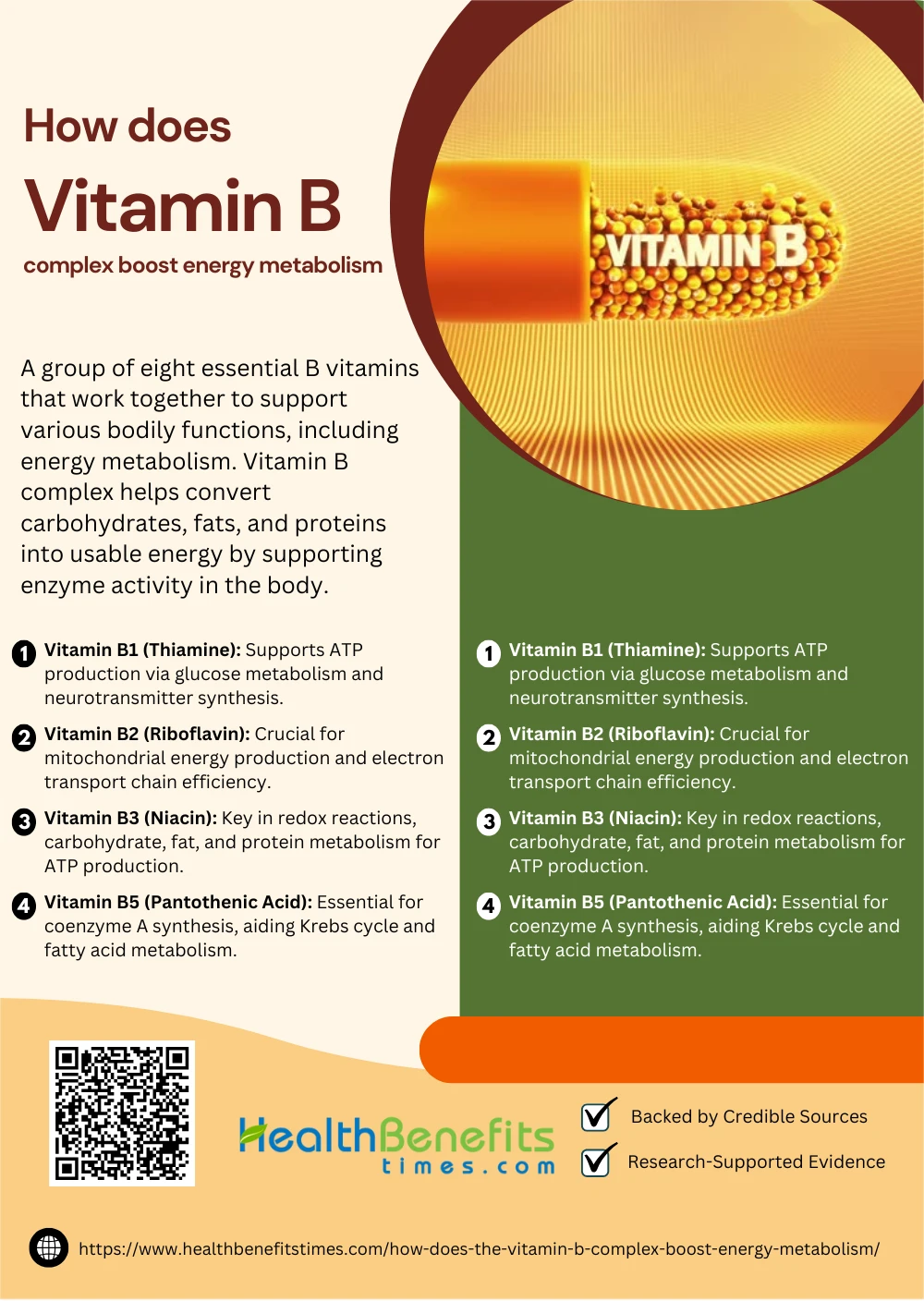
Thiamine (Vitamin B1) is vital for energy metabolism as it functions as a coenzyme in enzymatic processes like the citric acid cycle and glycolysis, facilitating ATP production. (11) It supports glucose metabolism in the brain and neurotransmitter synthesis, critical for cognitive functions. (12) Additionally, thiamine plays a protective role against metabolic stress and oxidative damage. (13)
2. Vitamin B2 (Riboflavin)
Riboflavin (Vitamin B2) is critical in energy metabolism, acting as a precursor for flavin adenine dinucleotide (FAD) and flavin mononucleotide (FMN), essential coenzymes in the electron transport chain. (14) Riboflavin also supports mitochondrial function and ATP production. (15) Its deficiency can impair metabolic pathways, reducing cellular energy. (16)
3. Vitamin B3 (Niacin)
Niacin (Vitamin B3) plays a crucial role in energy metabolism by serving as a precursor for NAD+ and NADP+, coenzymes essential for redox reactions in the Krebs cycle and electron transport chain. (17) It facilitates the metabolism of carbohydrates, fats, and proteins, enabling efficient ATP production. (3) Niacin also supports mitochondrial function and cellular energy balance. (18) Its deficiency can impair energy production, leading to metabolic disorders. (19)
4. Vitamin B5 (Pantothenic Acid)
Pantothenic acid (Vitamin B5) is vital for energy metabolism as it is a precursor for coenzyme A, a critical molecule in the Krebs cycle and fatty acid metabolism. (20) It supports ATP production by aiding in the synthesis of acetyl-CoA and succinyl-CoA. (21) B5 also plays a role in mitochondrial function and neuroprotection. (22)
5. Vitamin B6 (Pyridoxine)
Vitamin B6 (Pyridoxine) is essential in energy metabolism, particularly through its role as a coenzyme in over 100 enzymatic reactions, including amino acid metabolism and glycogenolysis. (23) It facilitates neurotransmitter synthesis, which influences energy balance. (24) Pyridoxine also aids gluconeogenesis by enabling transamination processes. (25) Deficiency can impair mitochondrial energy production and exacerbate oxidative stress.(26)
6. Vitamin B7 (Biotin)
Biotin (Vitamin B7) is essential for energy metabolism, serving as a coenzyme for carboxylases that regulate gluconeogenesis, fatty acid synthesis, and amino acid catabolism. (27) It facilitates ATP production by modulating key metabolic enzymes. (28) Additionally, biotin plays a significant role in mitochondrial energy pathways. (29) Biotin deficiency can impair metabolic functions, leading to fatigue and inefficiency in energy production. (30)
7. Vitamin B9 (Folate)
Folate (Vitamin B9) is pivotal for energy metabolism, serving as a coenzyme in reactions like amino acid catabolism, nucleotide synthesis, and mitochondrial energy production. (31) It plays a critical role in one-carbon metabolism, supporting ATP synthesis and cellular respiration. (32) Folate deficiency can impair mitochondrial efficiency, leading to fatigue and decreased metabolic functionality. (33) Its involvement in DNA synthesis ensures efficient energy utilization. (34)
8. Vitamin B12 (Cobalamin)
Vitamin B12 (Cobalamin) is essential in energy metabolism, acting as a coenzyme in the conversion of methylmalonyl-CoA to succinyl-CoA, a key step in the Krebs cycle. (35) It facilitates fatty acid and amino acid metabolism for ATP production. (34) B12 also supports DNA synthesis and red blood cell production, ensuring efficient oxygen transport. (36) Deficiency impairs metabolic pathways and mitochondrial function. (27)
Synergistic Functions of the Vitamin B Complex
The vitamin B complex works synergistically to support vital bodily functions, including energy production, nervous system health, and overall cellular efficiency.
 1. Energy Production
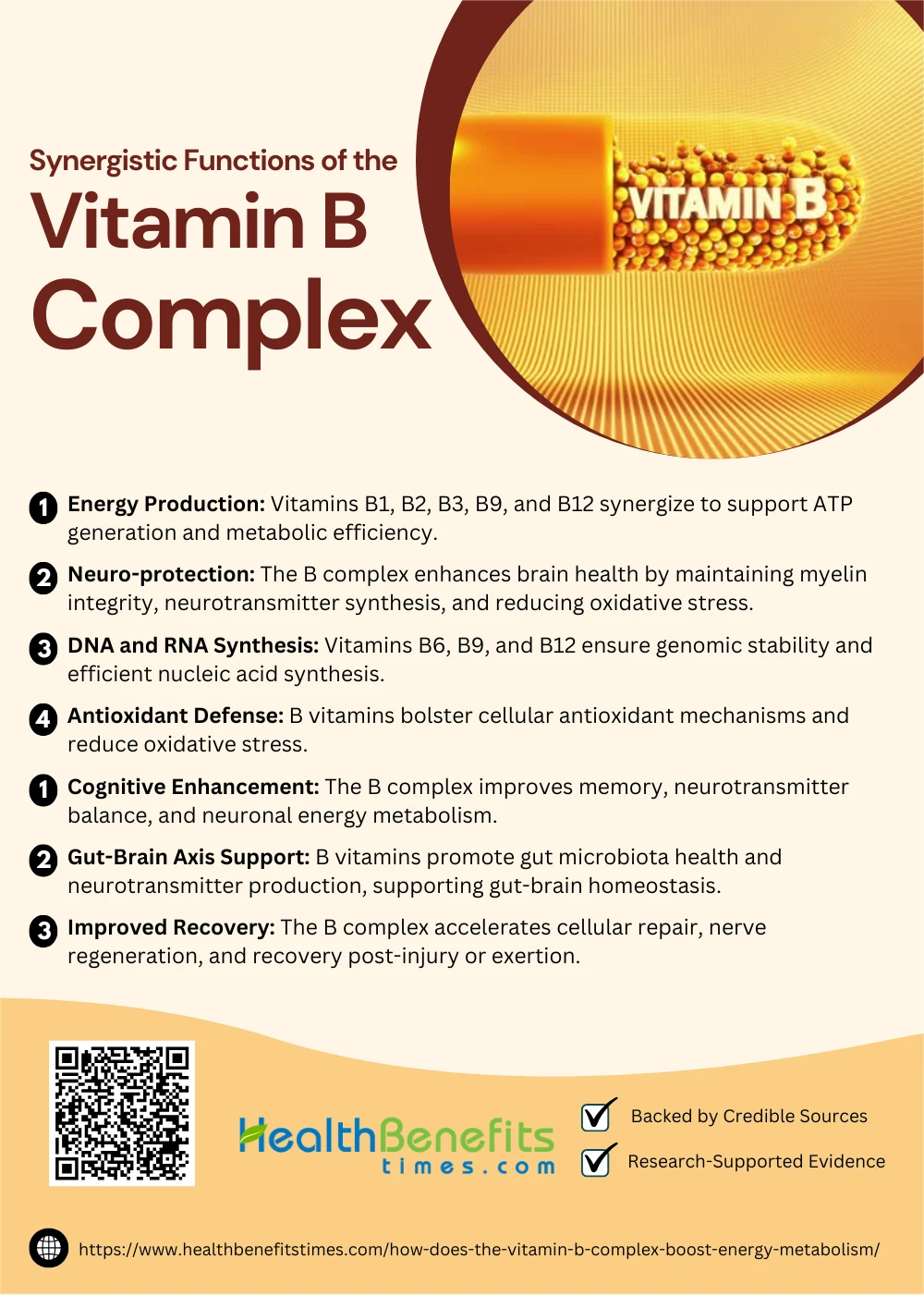
The Vitamin B complex plays a synergistic role in energy production by supporting the Krebs cycle, glycolysis, and oxidative phosphorylation. Thiamine, niacin, and riboflavin act as essential cofactors for enzymes involved in ATP generation. (37) Vitamin B12 facilitates fatty acid metabolism and DNA synthesis, crucial for cellular energy balance. (38) Folate aids in one-carbon metabolism, enhancing mitochondrial efficiency. (39) These coordinated actions ensure metabolic efficiency and energy sustainability. (7)
2. Neuro-protection
The Vitamin B complex supports neuroprotection through its combined roles in maintaining myelin sheath integrity and neurotransmitter synthesis, reducing oxidative stress, and supporting cellular energy production. Vitamin B12 and folate help lower homocysteine levels, reducing neuronal damage. (40) Thiamine and pyridoxine ensure proper synaptic transmission and cognitive function. (41) This synergistic interaction enhances brain health and prevents neurodegenerative diseases. (42)
3. DNA and RNA Synthesis
The Vitamin B complex synergistically facilitates DNA and RNA synthesis by supporting nucleotide formation and one-carbon metabolism. Folate (B9) and cobalamin (B12) are critical in methylation processes, ensuring genomic stability. (37) Pyridoxine (B6) assists in nucleotide metabolism, enhancing replication accuracy. (43) Thiamine and riboflavin improve mitochondrial efficiency, indirectly promoting nucleic acid synthesis. (7) These interactions ensure efficient genetic material maintenance and replication. (44)
4. Antioxidant Defense
The Vitamin B complex enhances antioxidant defense by reducing oxidative stress and improving cellular redox balance. Vitamins B2 and B3 act as cofactors in glutathione recycling, bolstering antioxidant activity. (45) B6 reduces homocysteine levels, preventing oxidative damage. (46) B12 synergizes with other antioxidants, supporting enzymatic pathways for reactive oxygen species detoxification. (47) These actions collectively improve oxidative stress management. (48)
5. Cognitive Enhancement
The Vitamin B complex enhances cognitive function by synergistically supporting neurotransmitter synthesis, reducing oxidative stress, and improving neuronal energy metabolism. B12 and folate improve memory by lowering homocysteine levels. (49) Thiamine and riboflavin boost cognitive processing speed through ATP production. (50) Pyridoxine facilitates neurotransmitter balance, aiding in stress resilience. (51) These synergistic effects optimize brain function. (52)
6. Gut-Brain Axis Support
The Vitamin B complex supports the gut-brain axis by enhancing microbiota health and neurotransmitter synthesis. B6 and B12 play key roles in serotonin production, modulating mood and cognition (55). Folate aids gut integrity, indirectly supporting neuronal function. (53) Riboflavin influences gut microbial metabolism, promoting neuroprotective benefits. (54) These synergistic actions maintain gut-brain homeostasis. (55)
7. Improved Recovery
The Vitamin B complex synergistically accelerates recovery by enhancing cellular repair, reducing inflammation, and supporting energy metabolism. Vitamins B6 and B12 aid in nerve regeneration and muscle repair post-injury. (56) Riboflavin boosts mitochondrial function for faster recovery. (51) Thiamine supports ATP production, vital for cell recovery. (57) Combined supplementation improves recovery in athletes and clinical patients. (58)
How Deficiencies in B Vitamins Affect Energy Levels
Deficiencies in B vitamins severely affect energy levels by disrupting essential metabolic processes. Thiamine (B1), riboflavin (B2), and niacin (B3) are vital for ATP production via the Krebs cycle, and their lack reduces energy output. (20) Folate (B9) and cobalamin (B12) deficiencies impair mitochondrial function, reducing cellular energy. (59) Vitamin B6 deficiency leads to neurotransmitter imbalance, causing fatigue. (60) Inadequate B12 levels further hinder oxygen transport and energy metabolism. (61)
Dietary Sources of the Vitamin B Complex
The vitamin B complex is found in various dietary sources, including whole grains, leafy greens, meats, dairy, eggs, nuts, and legumes.
 1. Leafy Greens
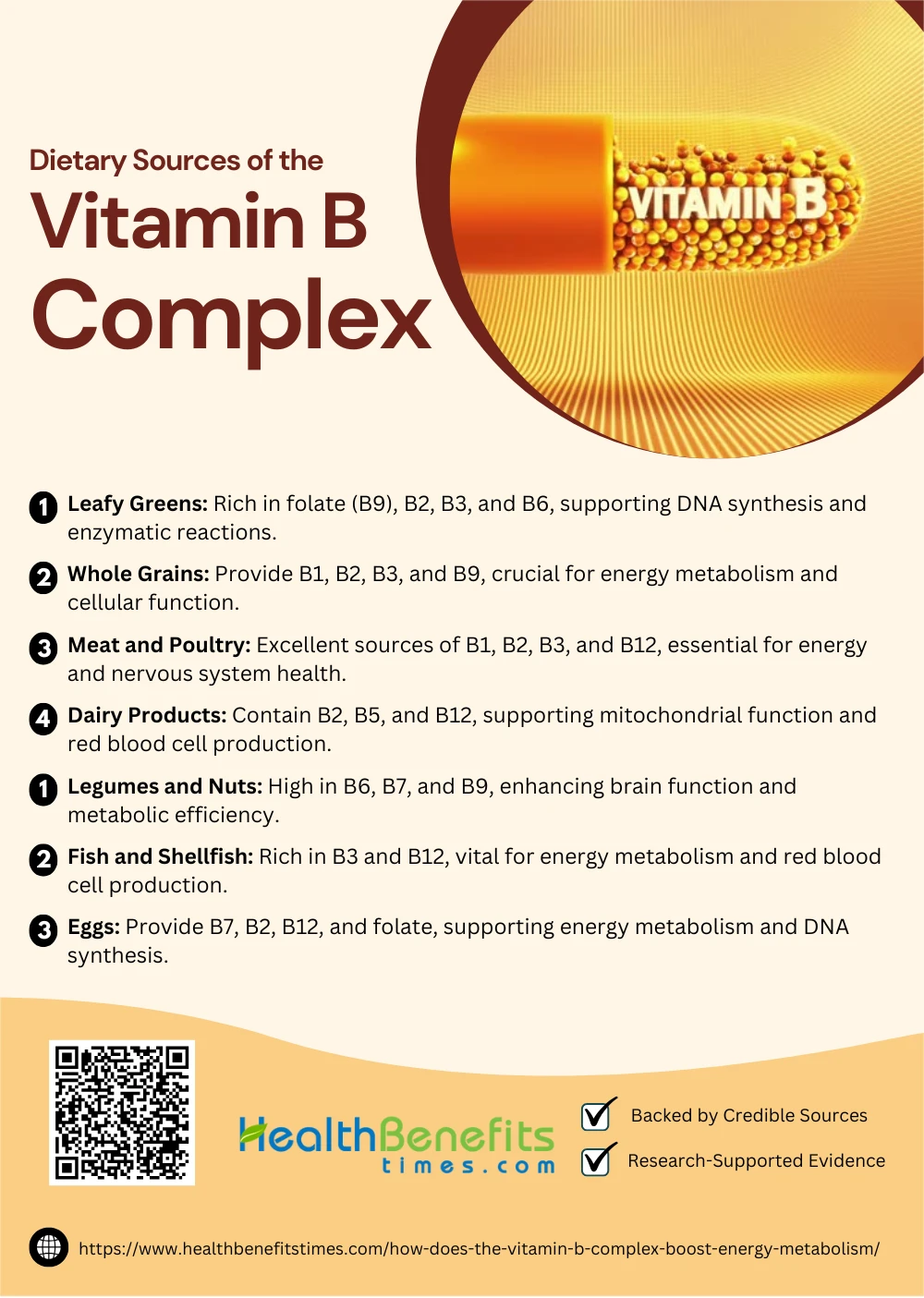
Leafy greens like spinach, kale, and lettuce are excellent sources of B vitamins, especially folate (B9), which is essential for DNA synthesis and energy metabolism. (62) These vegetables also contain B2, B3, and B6, which support enzymatic reactions. (63) Dark leafy greens contribute significantly to nutrient intake and are particularly rich in B-complex vitamins. (64) Additionally, they offer bioavailable vitamins crucial for combating deficiencies. (65)
2. Whole Grains
Whole grains, such as wheat, barley, and oats, are rich in B-complex vitamins, including thiamine (B1), riboflavin (B2), niacin (B3), and folate (B9), vital for energy metabolism and cellular function. (66) These grains provide essential cofactors for enzymatic processes. (67) Additionally, whole grain consumption supports digestive health and enhances nutrient absorption. (68) Fortified whole grains further boost B-vitamin levels. (69)
3. Meat and Poultry
Meat and poultry are rich sources of B-complex vitamins, including B1 (thiamine), B2 (riboflavin), B3 (niacin), and B12 (cobalamin), essential for energy metabolism and nervous system health. (70) Organ meats like liver are particularly high in B6 and folate, critical for red blood cell formation. (7) Poultry also provides readily bioavailable nutrients, supporting overall metabolic functions. (71) Including lean meats in the diet ensures adequate B-vitamin intake. (72)
4. Dairy Products
Dairy products, including milk, cheese, and yogurt, are excellent sources of B vitamins such as riboflavin (B2), pantothenic acid (B5), and B12, essential for energy production and cellular function. (73) Riboflavin contributes significantly to mitochondrial function, while B12 aids in red blood cell formation. (74) Additionally, fortified dairy provides improved bioavailability of these vitamins. (75) Regular dairy consumption ensures adequate B-complex vitamin intake. (7)
5. Legumes and Nuts
Legumes and nuts are excellent dietary sources of B-complex vitamins, including B6, biotin (B7), and folate (B9), which are essential for energy metabolism and brain function. (76) These foods enhance enzymatic reactions vital for metabolic efficiency. (77) Biotin from nuts improves fatty acid metabolism, while folate in legumes supports DNA synthesis. (78) Regular consumption of legumes and nuts ensures an adequate supply of these vital vitamins. (7)
6. Fish and Shellfish
Fish and shellfish are excellent dietary sources of B-complex vitamins, particularly niacin (B3) and cobalamin (B12), essential for energy metabolism and nervous system health. (79) Shellfish, like clams and oysters, are rich in vitamin B12, supporting red blood cell production. (80) Fish like salmon and mackerel provide niacin, enhancing mitochondrial efficiency. (81) Regular consumption of fish ensures adequate intake of these vital vitamins. (82)
7. Eggs
Eggs are a rich source of B-complex vitamins, particularly biotin (B7), riboflavin (B2), and cobalamin (B12), crucial for energy metabolism and brain function. (83) Egg yolks contain high levels of folate, supporting DNA synthesis. (84) The bioavailability of these vitamins in eggs makes them a vital dietary component. (85) Eggs also provide choline, enhancing neurotransmitter synthesis. (86)
Risks of Over-Supplementation
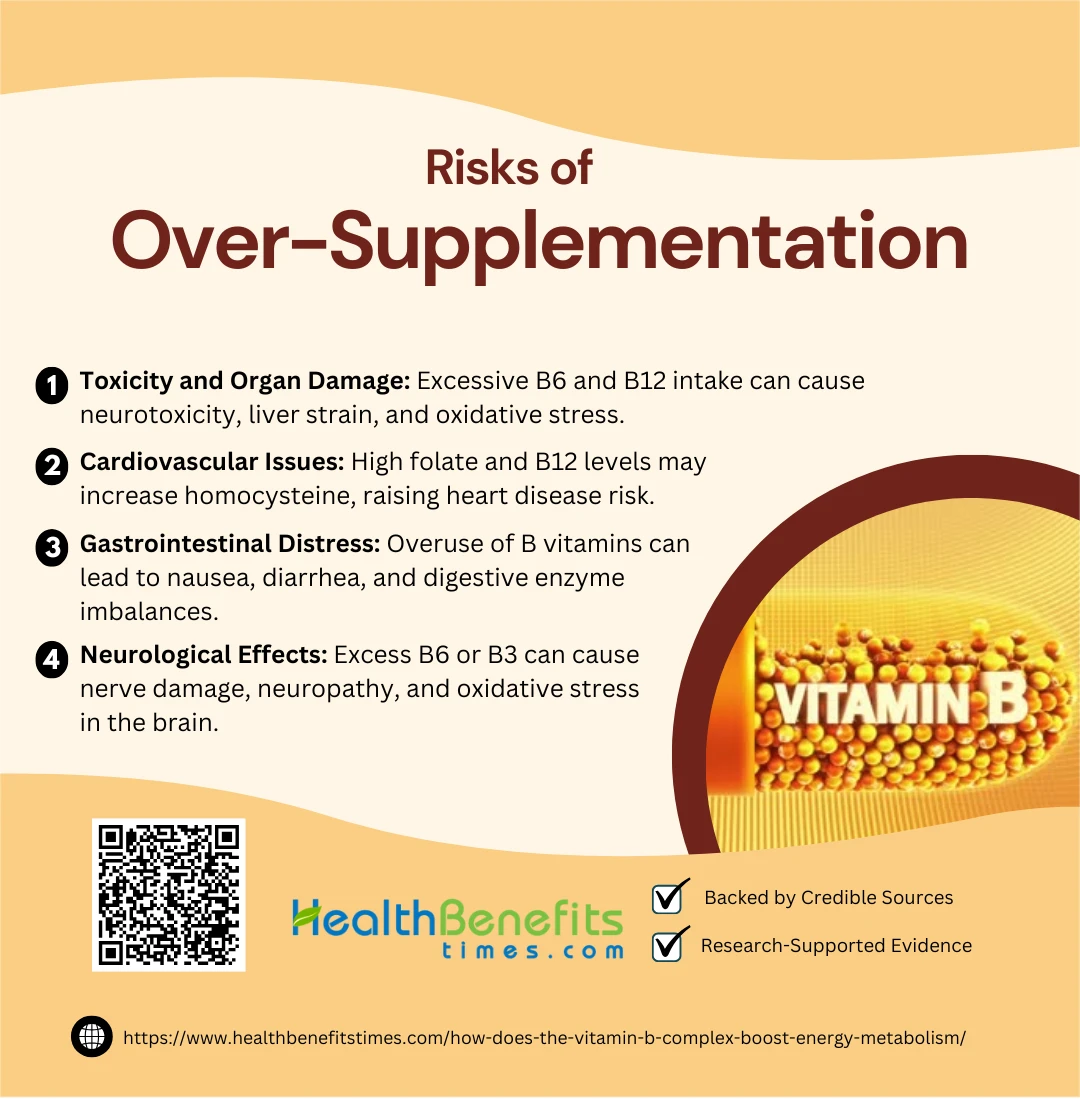
Over-supplementation of the vitamin B complex can lead to adverse effects such as nerve damage, skin issues, digestive discomfort, and toxicity risks.
 1. Toxicity and Organ Damage
Over-supplementation of the Vitamin B complex can result in toxicity and organ damage, particularly from excessive intake of B6 and B12, leading to neurotoxicity and liver strain. Prolonged high doses may disrupt mitochondrial function and DNA repair mechanisms. (87) Such imbalances increase oxidative stress and damage cellular structures. (88)
2. Cardiovascular Issues
Over-supplementation of the Vitamin B complex, especially folate and B12, may increase cardiovascular risks by elevating homocysteine levels, a marker linked to heart disease. Excessive B6 intake can lead to vascular toxicity, impairing arterial function. (87) Imbalances can exacerbate metabolic disruptions associated with cardiac health. (89) Such effects highlight the importance of regulated vitamin intake. (90)
3. Gastrointestinal Distress
Over-supplementation of the Vitamin B complex can cause gastrointestinal distress, including nausea, diarrhea, and abdominal pain. Excessive niacin (B3) intake often leads to gastric irritation. (89) High doses of riboflavin (B2) can alter intestinal microbiota balance. (91) Vitamin B6 excess has been linked to digestive enzyme imbalance. (92) These symptoms highlight the importance of dosage regulation. (93)
4. Neurological Effects
Over-supplementation of the Vitamin B complex, particularly B6, can lead to neurological effects like sensory neuropathy and impaired nerve function. Excess folate can mask B12 deficiency, worsening neurodegenerative symptoms. (92) High doses of B3 may exacerbate brain oxidative stress. (89) Pyridoxine toxicity can cause irreversible nerve damage. (90)
Conclusion
The vitamin B complex is a cornerstone of energy metabolism, enabling the body to efficiently convert food into energy. Each vitamin within the complex, including B1 (thiamine), B2 (riboflavin), B3 (niacin), B5 (pantothenic acid), B6 (pyridoxine), B7 (biotin), B9 (folate), and B12 (cobalamin), plays a distinct yet interconnected role in this process. These vitamins act as coenzymes, supporting metabolic pathways that break down carbohydrates, fats, and proteins into ATP, the body’s primary energy currency. By sustaining cellular function and reducing fatigue, the vitamin B complex ensures optimal energy levels and overall well-being, making it vital for an active, healthy lifestyle.