

- Technology refers to the application of scientific knowledge to develop tools, systems, or methods that solve problems or enhance human capability.
- Constant digital exposure is reshaping brain function—weakening attention, memory, emotional control, and social connectivity.
- Research shows that unchecked tech use triggers neuroplastic changes linked to anxiety, poor sleep, reduced empathy, and cognitive decline.

Technology refers to the application of scientific knowledge for practical purposes, especially in industry and everyday life, encompassing tools, systems, and methods that improve efficiency or solve problems. In the digital age, technology has become so embedded in our daily lives that its impact on the human brain is both profound and often invisible. While smartphones, social media, and AI-powered platforms have revolutionized how we work, learn, and connect, they are simultaneously rewiring our brains in ways that may be detrimental. Research suggests that the persistent use of digital devices fragments attention, reduces memory retention, and fosters dependency through dopamine-driven reward systems. Moreover, studies have shown that even the mere presence of smartphones can impair cognitive capacity and attentional control. As screen time continues to climb globally, mental fatigue, digital amnesia, and emotional dysregulation are emerging as new hallmarks of a digitally saturated society. This article explores the unsettling reality of how technology is reshaping the human brain—and not always for the better.
The Science of Neuroplasticity
Neuroplasticity refers to the brain’s remarkable ability to reorganize itself by forming new neural connections throughout life. It enables learning, memory formation, recovery from injury, and adaptation to new experiences or environments (Wen et al., 2025). This adaptability is critical for cognitive health and rehabilitation, especially in a world increasingly shaped by digital interactions.
Our brains are not static structures; they are continually molded by our experiences. Technology—through smartphones, social media, gaming, and virtual environments—provides constant stimuli that can direct neural rewiring. While this can be harnessed for therapeutic and educational gains, it also means that constant digital engagement can reshape attention patterns, emotional processing, and behavior. (1)
Recent studies reveal that excessive screen use and tech-related behavioral patterns may correlate with reduced grey matter density in regions associated with cognitive control and emotional regulation, highlighting the downside of maladaptive neuroplasticity. (2) Understanding these shifts is key to addressing technology’s neurological consequences.
How Technology Is Rewiring Your Brain for the Worse
Technology is reshaping your brain by shortening attention spans, weakening memory, and increasing stress. Constant screen exposure rewires neural pathways, making it harder to focus, think deeply, and manage emotions effectively.
 1. Reduced Attention Span
Constant digital stimulation fragments cognitive focus, shortening our attention span. Studies reveal that multitasking online disrupts deep work patterns, encourages cognitive shallowness, and alters brain plasticity in younger users. (3) (4)
2. Weakened Working Memory
Relying on digital tools reduces internal memory retention. Research links this trend to over-dependence on search engines, diminished hippocampal engagement, and poorer academic performance from attention fragmentation. (5) (6)
3. Decreased Emotional Regulation
Constant digital stimulation dysregulates the brain’s ability to manage emotions, especially in adolescents. Dopamine loops from app notifications impair impulse control, while social overstimulation reduces prefrontal cortex self-regulation. (7) Emotional reasoning also suffers from tech-driven communication styles. (8)
4. Disrupted Sleep Patterns
Screen time before bed disrupts melatonin cycles, delaying sleep onset and impairing brain recovery. Research shows that blue light exposure leads to poor sleep quality, increases anxiety-related insomnia, and alters sleep-related brain plasticity. (9) (10) (11)
5. Shrinking Grey Matter
Excessive screen exposure alters brain structure, specifically reducing grey matter in regions linked to attention, decision-making, and self-control. Neuroimaging reveals diminished cortical volume due to prolonged tech use, suggesting tech-driven neuroplasticity comes with cognitive trade-offs. (2) (12)
6. Loss of Empathy
Digital communication lacks emotional richness, leading to declining empathy, especially among adolescents. Brain scans show weakened activation in regions tied to perspective-taking and compassion. (13) (14) (15)
7. Increased Anxiety and Depression
Chronic digital exposure, especially through social media, heightens emotional dysregulation and fosters anxiety and depression. Researchers found that screen-induced dopamine cycles intensify mood disorders, while social comparison increases vulnerability to mental illness and brain alterations amplify psychiatric risks. (16) (17)
8. Neurodevelopmental Delays
Early overuse of screens impairs children’s cognitive and emotional development. Studies report rising cases of “virtual autism” linked to excessive screen time, while diagnostic research shows delays in key brain functions due to tech overexposure. (18) (19) (20)
9. Reduced Social Bonding in Children
Technology’s overuse diminishes children’s ability to form deep emotional connections. Screen-heavy environments replace in-person interaction, weakening neural pathways related to empathy and bonding. Digital distraction also decreases family cohesion and impairs long-term emotional development. (21)
How to Protect Your Brain from Digital Harm
To protect your brain from digital harm, it’s essential to set healthy screen boundaries, prioritize offline activities, and practice mindfulness. These habits help restore focus, improve memory, and reduce mental fatigue.
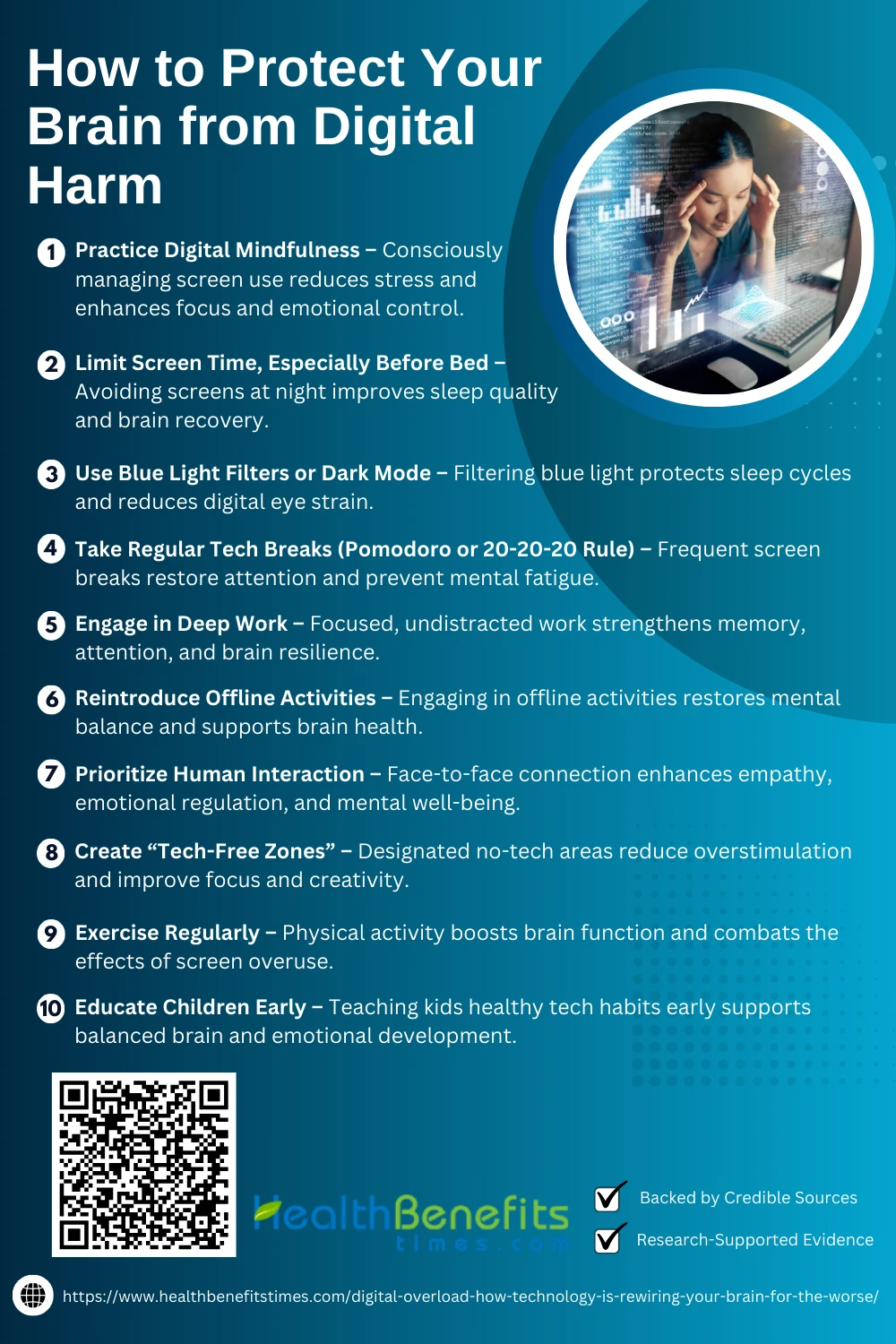 1. Practice Digital Mindfulness
Practicing digital mindfulness—consciously managing your screen use—reduces cognitive overload and supports emotional stability. It strengthens attentional networks and lessens impulsive tech use. Studies confirm that mindful digital habits improve brain plasticity and emotional regulation, minimize distraction-related stress, and preserve focus mechanisms. (2)
2. Limit Screen Time, Especially Before Bed
Reducing screen time before sleep protects melatonin cycles and enhances memory consolidation. Nighttime device use disrupts sleep quality and cognitive repair. Research links evening screen exposure to poor REM patterns, increased insomnia risk, and brain inflammation pathways. (22) (23)
3. Use Blue Light Filters or Dark Mode
Using blue light filters or dark mode reduces cognitive disruption and protects circadian rhythms. Studies show blue light disturbs melatonin secretion and neural connectivity, while dark mode minimizes digital strain and reduces neuro-stimulation. (24) (25)
4. Take Regular Tech Breaks (Pomodoro or 20-20-20 Rule)
Frequent breaks from screens restore cognitive capacity and emotional balance. Tech overuse depletes attention, but short mental pauses improve neural resilience, reduce fatigue-induced errors, and support long-term memory retention. (26)
5. Engage in Deep Work
Deep work—sustained focus without distraction—enhances brain resilience and cognitive integrity. It strengthens the prefrontal cortex, counteracting digital multitasking fatigue. Research shows deep work improves memory retention, boosts neural efficiency, and reduces anxiety caused by digital overload. (2)
6. Reintroduce Offline Activities
Offline activities—like nature walks, journaling, or creative play—help reset overstimulated brains. These practices restore emotional balance and attention. Studies show unplugged time fosters neurorestoration, protects young brains from tech-driven stress, and boosts creativity and resilience. (27) (28) (29)
7. Prioritize Human Interaction
Prioritizing in-person connection strengthens brain regions tied to empathy, trust, and emotional regulation. Human interaction activates neural circuits neglected by screen-based communication. Studies emphasize its role in emotional resilience, enhances social cognition, and promotes psychological well-being. (30) (8) (15)
8. Create “Tech-Free Zones”
Designating tech-free zones at home or school reduces cognitive overstimulation and restores attention. These spaces promote creativity, focus, and emotional regulation. Research shows tech-free areas improve developmental outcomes, reduce digital anxiety, and protect mental clarity. (31) (32) (33)
9. Exercise Regularly
Exercise counteracts digital overload by boosting neuroplasticity and cognitive resilience. Physical activity enhances memory, mood, and neural recovery from tech-induced fatigue. It stimulates brain-derived neurotrophic factors (BDNF) that support synaptic health, combats neuroinflammation, and reverses screen-related cognitive decline. (34) (35) (36)
10. Educate Children Early
Early digital literacy teaches children healthy tech habits, fostering emotional control and developmental balance. Educators recommend integrating screen hygiene in preschool routines, as early exposure shapes neurocognitive pathways. Proactive parental involvement strengthens social-emotional learning and prevents long-term digital dysregulation. (37) (38) (39)
Conclusion
Digital technology has transformed the way we live, work, and connect—but not without a cost to our brains. Constant screen time, multitasking, and information overload are silently reshaping our neural pathways, leading to reduced attention spans, weakened memory, and increased stress. While we can’t escape technology, we can take mindful steps to use it wisely. By setting boundaries, embracing digital detoxes, and reconnecting with offline life, we can begin to reverse the negative effects and reclaim our mental clarity. The goal isn’t to abandon technology, but to find a healthier balance that supports—not sabotages—your brain’s long-term well-being.