

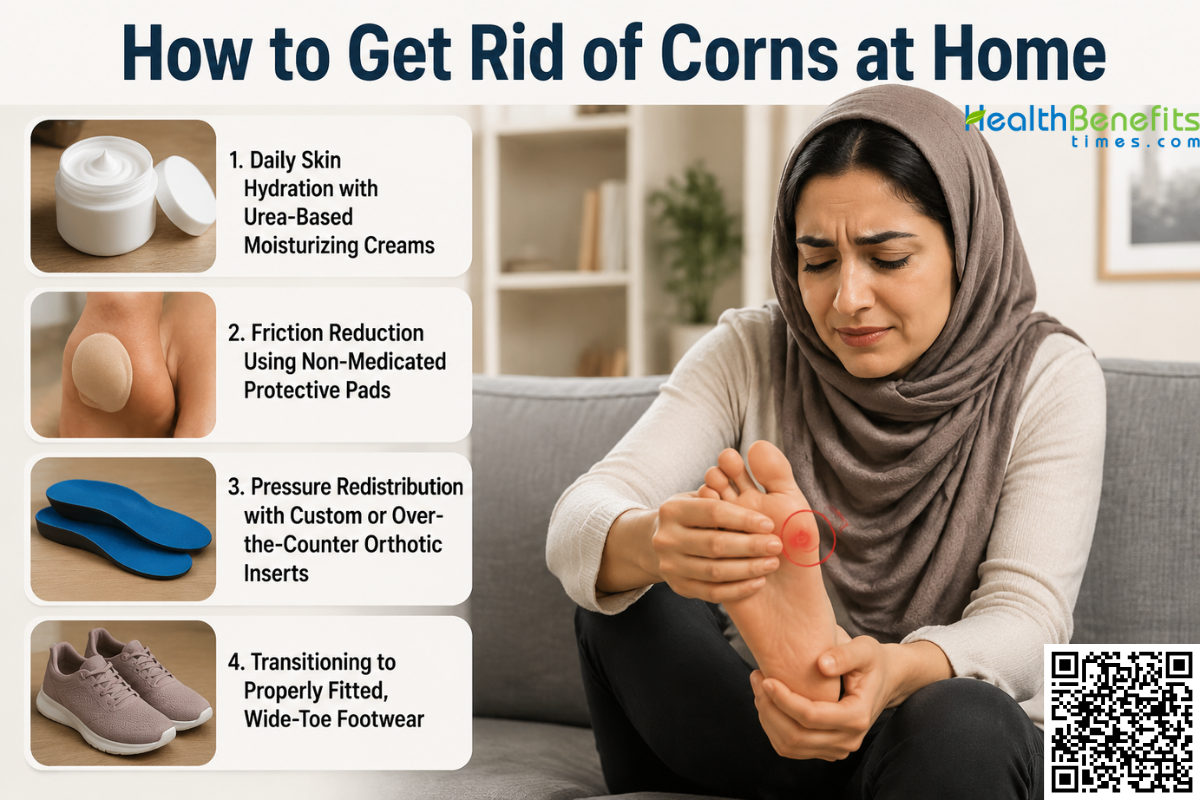
A corn is a small, localized area of thickened skin that develops on the feet as a natural protective response to repeated friction and mechanical pressure 1. Typically forming on the tops, sides, or between the toes, corns are visually distinct due to a hard, concentrated central core that points inward toward the underlying tissue. When external pressure from tight footwear or repetitive movement compresses this core, it presses against surrounding sensory nerves, resulting in sharp pain and localized inflammation. While often confused with calluses, corns are structurally distinct; clinical evaluations conclude that corns are smaller, possess a well-defined center, and predominantly occur on non-weight-bearing surfaces of the foot, whereas calluses are larger and typically form on the soles 1.
Causes of Corns
1. Ill-Fitting Footwear
Wearing shoes that are inappropriately sized, such as narrow, tight-fitting footwear or high heels, concentrates mechanical pressure on specific areas of the toes. This persistent friction forces the skin to thicken as a protective mechanism, directly leading to corn formation 1.
2. Foot Deformities
Underlying structural abnormalities, including hammertoes, claw toes, and bunions, alter the normal alignment of the foot. These deformities create abnormal bony prominences that persistently rub against the interior of shoes, making individuals highly susceptible to developing hard corns over the affected joints 1.
3. Abnormal Walking Patterns
An irregular gait or improper foot mechanics during walking unevenly distributes body weight across the feet. Clinical evidence indicates that this unequal pressure distribution places excessive mechanical stress on specific localized points, triggering the abnormal skin thickening process that forms corns 1.
4. Absence of Protective Socks
Wearing enclosed shoes without socks eliminates the protective fabric barrier between the skin and the shoe interior. This significantly increases direct skin friction and shear forces against the toes, which accelerates the hardening of outer skin tissue and promotes rapid corn development 1.
Symptoms of Corns
- Localized Thickened Skin: The most prominent symptom is a raised, hardened, and concentrated patch of skin, typically located on the tops or sides of the toes. This localized thickening is a direct structural adaptation to chronic mechanical stress 1.
- Presence of a Central Core: Unlike calluses, corns develop a dense, well-defined central core that points inward toward the deeper layers of tissue. This core is heavily compacted keratin and serves as the visual hallmark of a clinical corn 1.
- Pain and Tenderness Upon Pressure: Individuals experience sharp pain or acute tenderness when direct physical pressure is applied to the affected area. This discomfort occurs because the hard central core compresses the underlying pain receptors and sensory nerves within the dermis 1.
- Altered Surface Texture: The surface of the affected skin typically takes on a dry, flaky, or distinctly waxy appearance. This visual change results from the continuous accumulation and compaction of dead skin cells at the site of repetitive friction 1.
How to Get Rid of Corns at Home
1. Application of Over-the-Counter Salicylic Acid Products
How it may help
Salicylic acid acts as a skin-softening agent that specifically targets and breaks down keratin, the primary structural protein forming the hard central core of a corn. By dissolving this dense protein buildup, the medication softens the thickened tissue, allowing the dead skin layers to naturally peel away or be easily removed.
What research says
Clinical guidelines establish topical salicylic acid as an effective, first-line treatment for corns 1. Research confirms that applying salicylic acid safely reduces the physical size of the corn and successfully alleviates localized pain by chemically dissolving the compacted skin cells that cause pressure.
How to use it safely
Wash and completely dry your affected foot. Carefully apply the medicated liquid, gel, or pad directly onto the corn, ensuring you do not touch the surrounding healthy skin. After the recommended application time, gently rub away the softened dead skin using a pumice stone.
Potential precautions or side effects
Salicylic acid may cause chemical burns on healthy skin. Individuals with diabetes or poor circulation must strictly avoid these products due to severe ulcer risks 1.
2. Tissue Softening Through Warm Water Soaks
How it may help
Immersing the affected foot in warm water directly hydrates and softens the hard, compacted keratin layers of the corn. This tissue softening makes the thickened dead skin more pliable, reducing immediate pressure on underlying pain receptors and safely preparing the corn for gentle mechanical removal.
What research says
Clinical guidelines endorse warm water soaking as an effective, conservative first step for managing localized skin thickening 1. Medical reviews confirm that hydrating the affected tissue significantly reduces the physical density of the lesion, safely facilitating the gradual removal of dead skin layers without damaging healthy surrounding tissue.
How to use it safely
Submerge your affected foot in a basin of warm, comfortable water for ten to fifteen minutes. Once the thickened skin turns soft, thoroughly dry your foot with a clean towel. Immediately follow this with a gentle physical exfoliation method to carefully remove the softened skin layers.
Potential precautions or side effects
Always test water temperature to prevent burns. If you have diabetes or nerve damage, exercise extreme caution, as diminished sensation increases your risk of accidental thermal injuries 2.
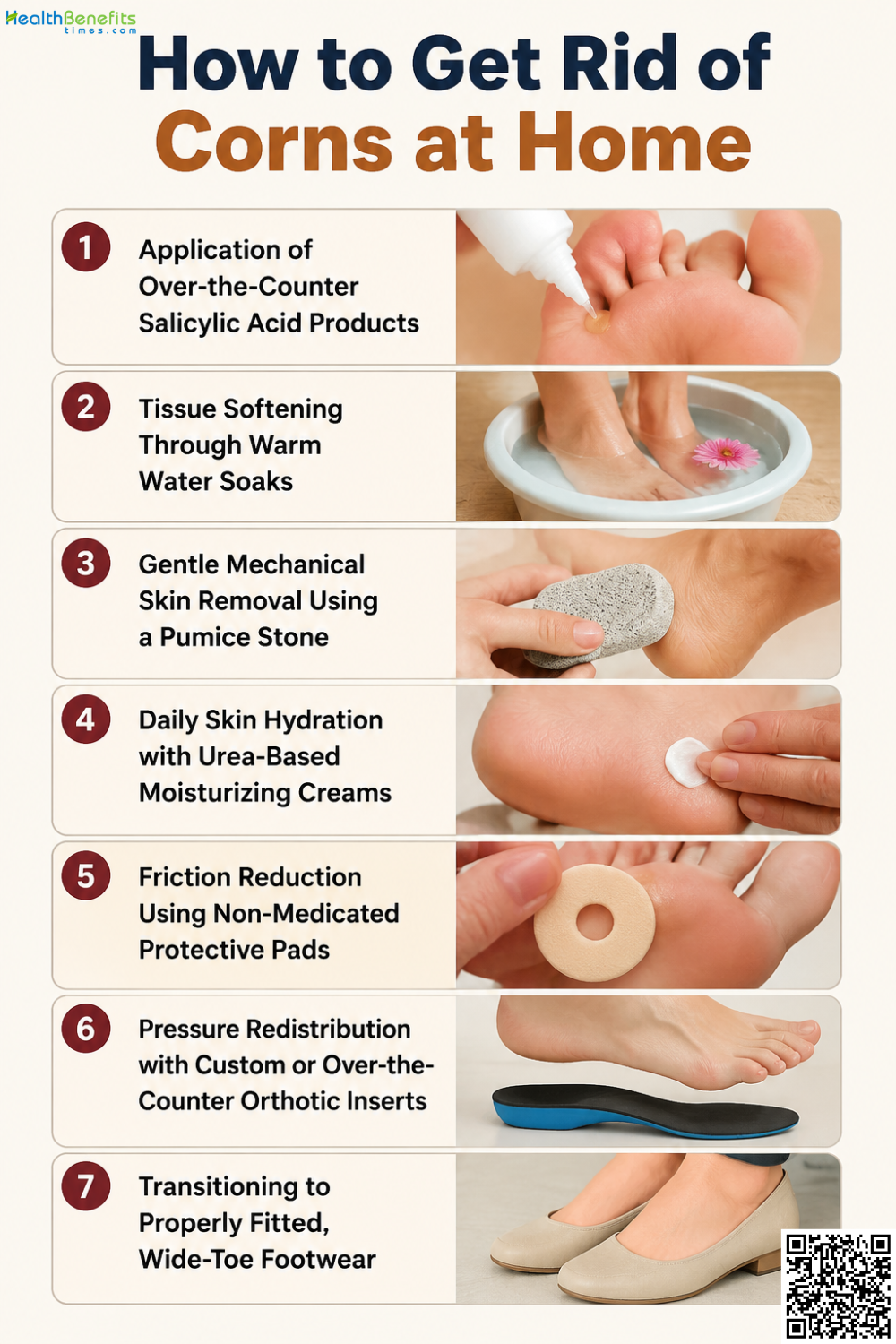
3. Gentle Mechanical Skin Removal Using a Pumice Stone
How it may help
A pumice stone is a porous, abrasive volcanic rock that physically files away dead skin cells. By mechanically rubbing the surface of a softened corn, it safely reduces the size of the hard central core. This gradual thinning relieves the physical pressure on underlying nerves, quickly reducing localized pain.
What research says
Clinical guidelines recommend gentle debridement using a pumice stone as a safe, conservative treatment for corns 1. Medical experts conclude that combining warm water soaks with mild mechanical exfoliation effectively reduces lesion thickness and successfully alleviates pressure-related pain without requiring invasive clinical procedures.
How to use it safely
First, soak your foot in warm water to soften the thickened skin. Wet the pumice stone, then gently rub it over the corn in circular motions for one to two minutes. Focus only on removing the top layers of dead skin to avoid bleeding or tissue damage.
Potential precautions or side effects
Never aggressively file the skin or use sharp instruments like razor blades. Individuals with diabetes or neuropathy should entirely avoid physical exfoliation to prevent dangerous infections and ulcers 2.
4. Daily Skin Hydration with Urea-Based Moisturizing Creams
How it may help
Urea is a potent hydrating agent that naturally draws moisture into the skin. It also acts as a keratolytic, meaning it actively breaks down the dense keratin proteins that form the hard core of a corn. This dual action deeply softens the thickened tissue, allowing dead skin to shed naturally.
What research says
Clinical reviews establish that topical urea is a highly effective treatment for localized skin thickening 3. Research confirms that urea-based moisturizers successfully dissolve compacted skin cells and restore deep tissue hydration, significantly reducing the physical density and pain associated with hard foot corns.
How to use it safely
Apply a urea-based cream directly to the corn once or twice daily, ideally immediately after bathing when your skin is still damp. Gently massage the moisturizer into the thickened area until fully absorbed. Wear clean cotton socks afterward to effectively lock in the moisture.
Potential precautions or side effects
Urea creams can cause mild stinging, redness, or burning if applied to cracked or open skin. Discontinue use immediately if you experience severe irritation or an allergic reaction.
5. Friction Reduction Using Non-Medicated Protective Pads
How it may help
Non-medicated protective pads act as a physical cushion between footwear and the skin. By absorbing external friction and redistributing mechanical pressure away from the corn’s hard central core, these pads prevent further tissue thickening and provide immediate relief from sharp, localized pain during movement.
What research says
Clinical guidelines state that conservative management of corns must involve reducing mechanical stress 1. Medical experts confirm that using non-medicated, donut-shaped padding successfully isolates the lesion from shoe friction, preventing continuous keratin compaction and allowing the affected skin to heal naturally without chemical intervention.
How to use it safely
Wash and thoroughly dry your affected toe. Carefully align a non-medicated, donut-shaped silicone or moleskin pad so the central hole directly surrounds the corn. This ensures the pad bears the shoe’s pressure, leaving the corn untouched. Change the pad daily to maintain proper hygiene.
Potential precautions or side effects
The adhesive backing may cause mild skin irritation or allergic contact dermatitis. Always remove the pads gently to prevent tearing fragile skin, especially if you have poor blood circulation.
6. Pressure Redistribution with Custom or Over-the-Counter Orthotic Inserts
How it may help
Orthotic inserts act as structural shock absorbers inside footwear. They correct abnormal foot mechanics and evenly distribute body weight across the entire sole. By aligning the foot properly, these inserts eliminate the concentrated mechanical pressure and friction on specific toes that cause corns to form and progressively worsen.
What research says
Clinical evidence indicates that addressing underlying foot mechanics with orthotic devices significantly reduces localized foot pressure 1. Studies conclude that redistributing mechanical stress through well-fitted inserts effectively halts the skin thickening process, providing long-term resolution and preventing the recurrence of hard corns.
How to use it safely
Place the orthotic inserts flat inside properly sized shoes with a wide toe box. Begin by wearing them for a few hours daily to allow your feet to adjust. If you have severe foot deformities, consult a podiatrist for custom-molded orthotics rather than using over-the-counter options.
Potential precautions or side effects
Ill-fitting inserts can create new friction points or cause foot pain. Discontinue use immediately if the orthotic increases discomfort or causes new areas of skin redness and irritation.
7. Transitioning to Properly Fitted, Wide-Toe Footwear
How it may help
Transitioning to footwear with a wide toe box eliminates the mechanical compression and friction that trigger skin thickening. By allowing the toes to rest in their natural anatomical alignment without rubbing against the shoe interior, this prevents new corns from forming and allows existing lesions to naturally heal.
What research says
Clinical guidelines emphasize that modifying footwear is the most critical and definitive treatment for resolving corns 1. Medical professionals conclude that removing constant mechanical pressure by wearing adequately sized, low-heeled shoes successfully halts pathological skin hardening and prevents recurrence far more effectively than topical treatments alone.
How to use it safely
Shop for new shoes late in the afternoon when your feet are naturally swollen to ensure an accurate fit. Select styles with a deep, wide toe box and avoid high heels. Always wear well-fitted, protective socks to provide an extra layer of friction defense.
Potential precautions or side effects
Avoid purchasing shoes that are excessively large. A loose fit allows the foot to slide forward during walking, which creates new friction points and can rapidly trigger painful blister formation.
Foods to Avoid When You Suffer from Corns
While diet does not directly cause corns, avoiding specific foods helps prevent weight gain, minimizes foot swelling, and protects against systemic complications that make foot lesions dangerous.
1. Refined Sugars
High sugar intake spikes blood glucose, impairing wound healing. This significantly increases the risk of a simple corn developing into a dangerous foot ulcer in diabetic individuals 2.
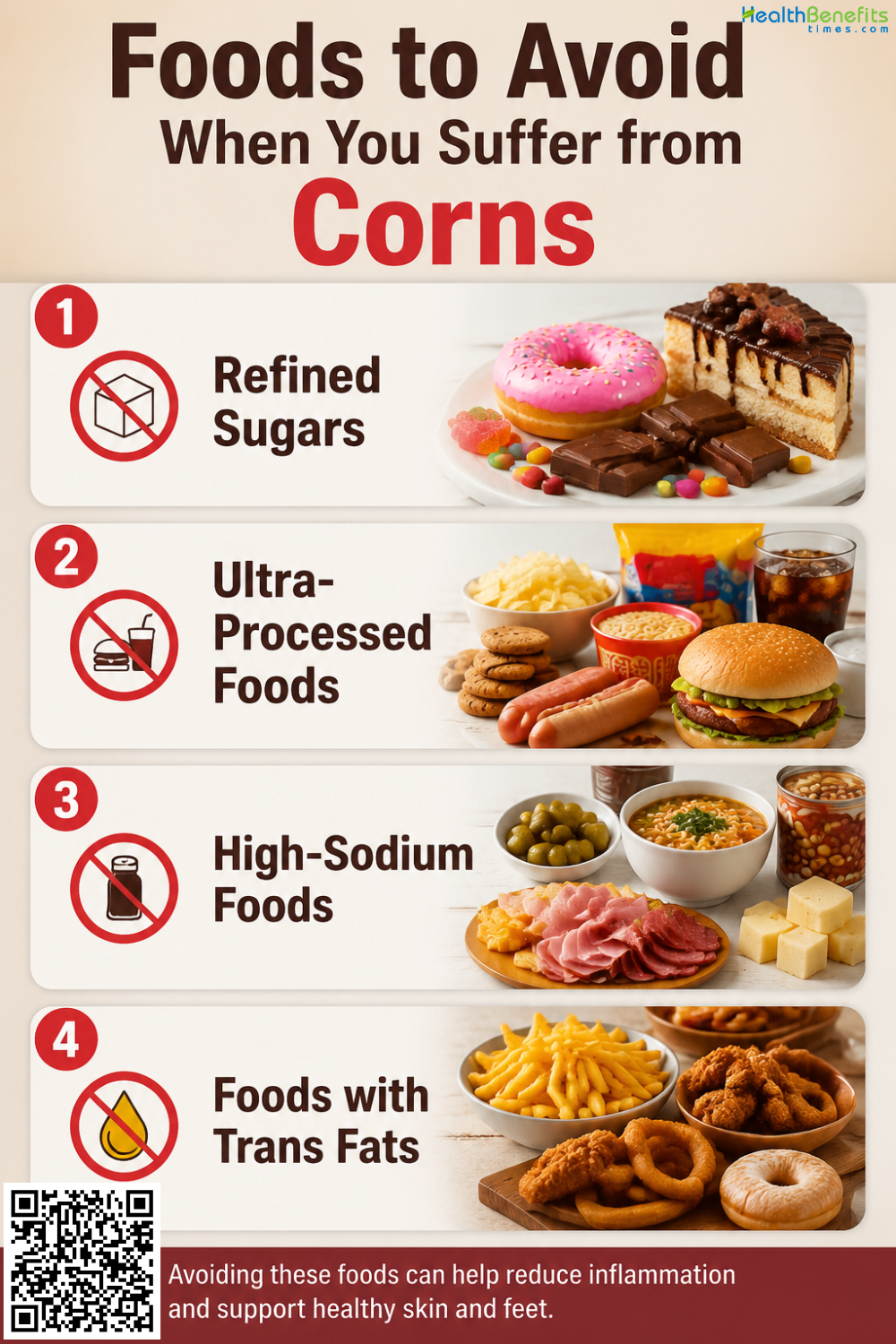
2. Ultra-Processed Foods
Calorie-dense processed foods drive weight gain. Excess body weight substantially amplifies the mechanical downward pressure exerted on the feet, accelerating the friction-induced skin thickening that forms corns 1.
3. High-Sodium Foods
Excessive dietary salt triggers fluid retention and peripheral swelling. This foot edema causes footwear to fit tightly, drastically increasing the mechanical friction responsible for corn formation 4.
4. Foods with Trans Fats
Artificial trans fats promote widespread inflammation and restrict peripheral blood vessels. Impaired blood circulation severely delays the natural tissue healing process of skin damaged by deep corns 5.
When to see Doctor when you struggle from Corns
1. Pre-existing Diabetes
Seek immediate medical evaluation if you have diabetes or peripheral neuropathy. Reduced sensation increases the risk of a simple corn rapidly developing into a severe, infected foot ulcer 2.
2. Signs of Infection
Consult a physician if the corn bleeds, discharges pus, or feels hot. These clinical signs indicate a bacterial infection requiring prompt professional debridement and antibiotic therapy 1.
3. Disabling Pain
Visit a podiatrist if pain disrupts normal walking. Severe discomfort indicates the hard keratin core has deeply compressed underlying sensory nerves, necessitating professional mechanical removal 1.
4. Underlying Bone Deformities
See a specialist if corns continually recur over bunions or hammertoes. Chronic recurrence signifies a structural foot abnormality requiring clinical assessment and specialized orthotic management 1.