Health Benefits
    Facebook Twitter Instagram
    Friday, December 5
    Facebook Twitter Pinterest
    Health Benefits
    • Home
    • Dental Health
    • Mental Health
    • Weight Loss
    • Health Wiki
    • Nutrition
    • Healthy Recipe
    • BMI Calculator
    Health Benefits
    Home»Herbs and Spices»Health benefits of Apple Mint
    Herbs and Spices

    Health benefits of Apple Mint

    By SylviaNovember 3, 2019Updated:November 3, 2019No Comments12 Mins Read
    Facebook Twitter Pinterest LinkedIn Tumblr Email

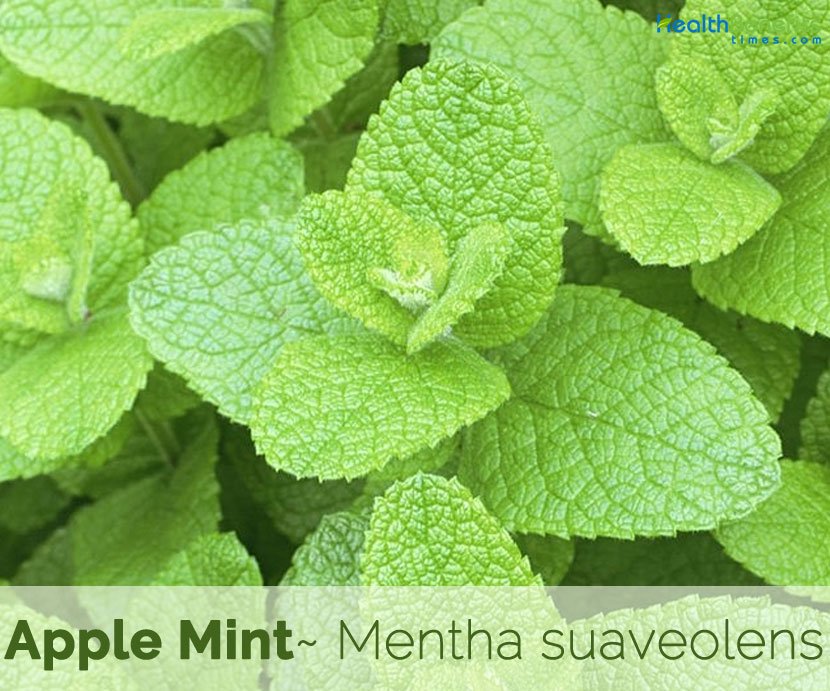
    Apple Mint scientifically known as Mentha suaveolens is also known as pineapple mint, woolly mint or round-leafed mint. It belongs to the scientific family Lamiaceae that also includes many of the other important aromatic cooking herbs, like basil, rosemary, sage, oregano, and catnip. It is a perennial plant belongs to the genus of Mentha. The plant is native to southern and western Europe including the Mediterranean region and is naturalized in central and northern parts of Europe.  Other names occasionally used include Apple mint, Pineapple mint, Round-leaf mint, Round-leaved mint, Big-leaved mint, horse mint and woolly mint.

    Genus name comes from Minthe or Menthe, a water nymph in Greek mythology, who was transformed by Persephone into a mint plant in revenge for Minthe’s ongoing affair with Hades (husband of Persephone). Specific epithet means sweet-scented. Both the leaves and stems of Apple mint are covered in fine hairs, hence its nickname wooly mint. Consider planting apple mint alongside cabbage, peas, tomatoes and broccoli to improve their flavor.

    Plant Description

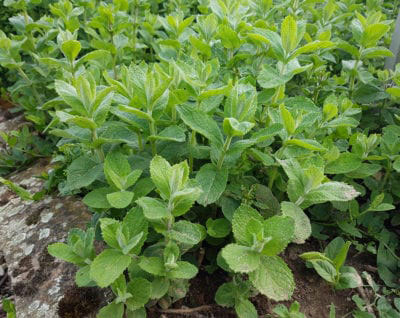
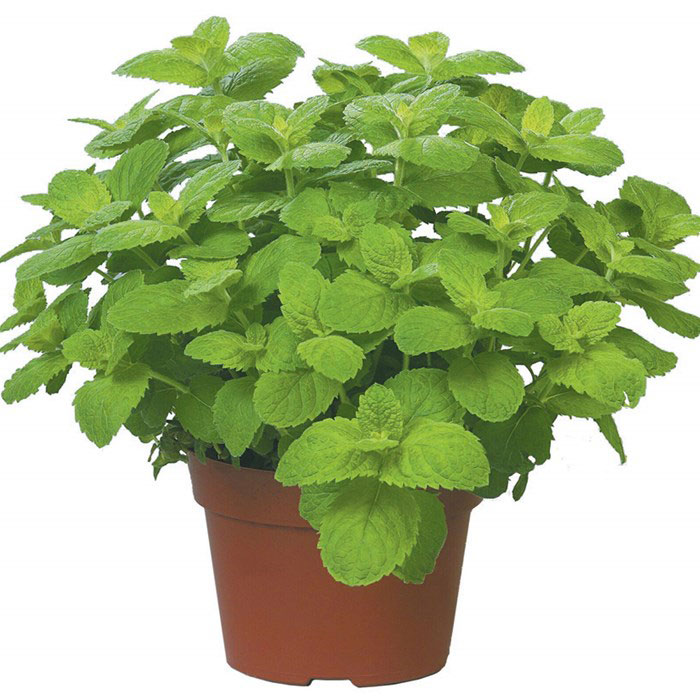
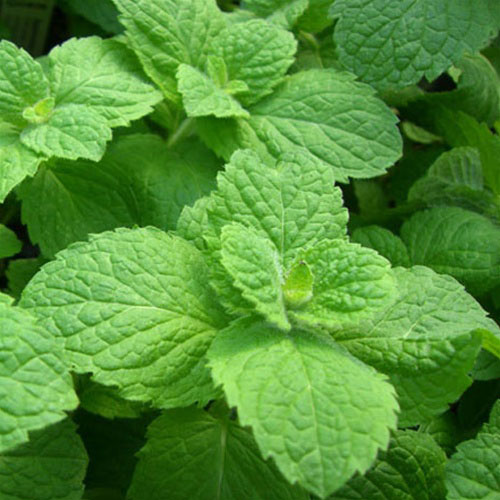
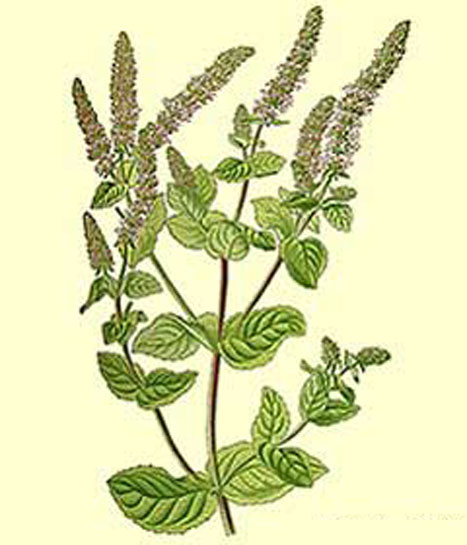
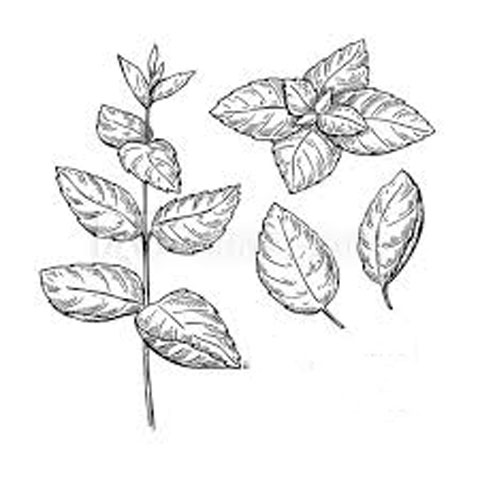
    Apple mint is a vigorous rhizomatous, densely hairy, upright herbaceous perennial plant that grows about 40 to 100 centimeters (16 to 39 in) tall. The plant is found growing in damp ground that often dries out in summer. It grows well in heavy clay soils and normally prefers rich, moist and well-drained soil. The plant is most commonly grown as a culinary herb and/or ground cover. It spreads by rhizomes to form an attractive ground cover. Leaves are bright green in color. The shape of the leaves varies from oblong to ovate and they grow up to 3 cm to 5 cm (1.2 inches to 2.0 inches) in length and are about 2 cm to 4 cm (0.8 inch to 1.6 inches) wide. Leaves of apple mint have a slightly hairy top surface, on the downside they are downy and have serrated margins. Leaves have a fruity fragrance and taste, and may be used to flavor teas or in salads or as a garnish.

    Flowers

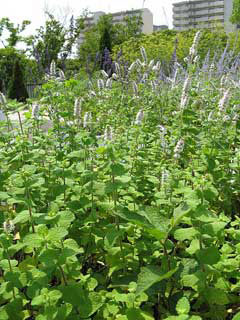
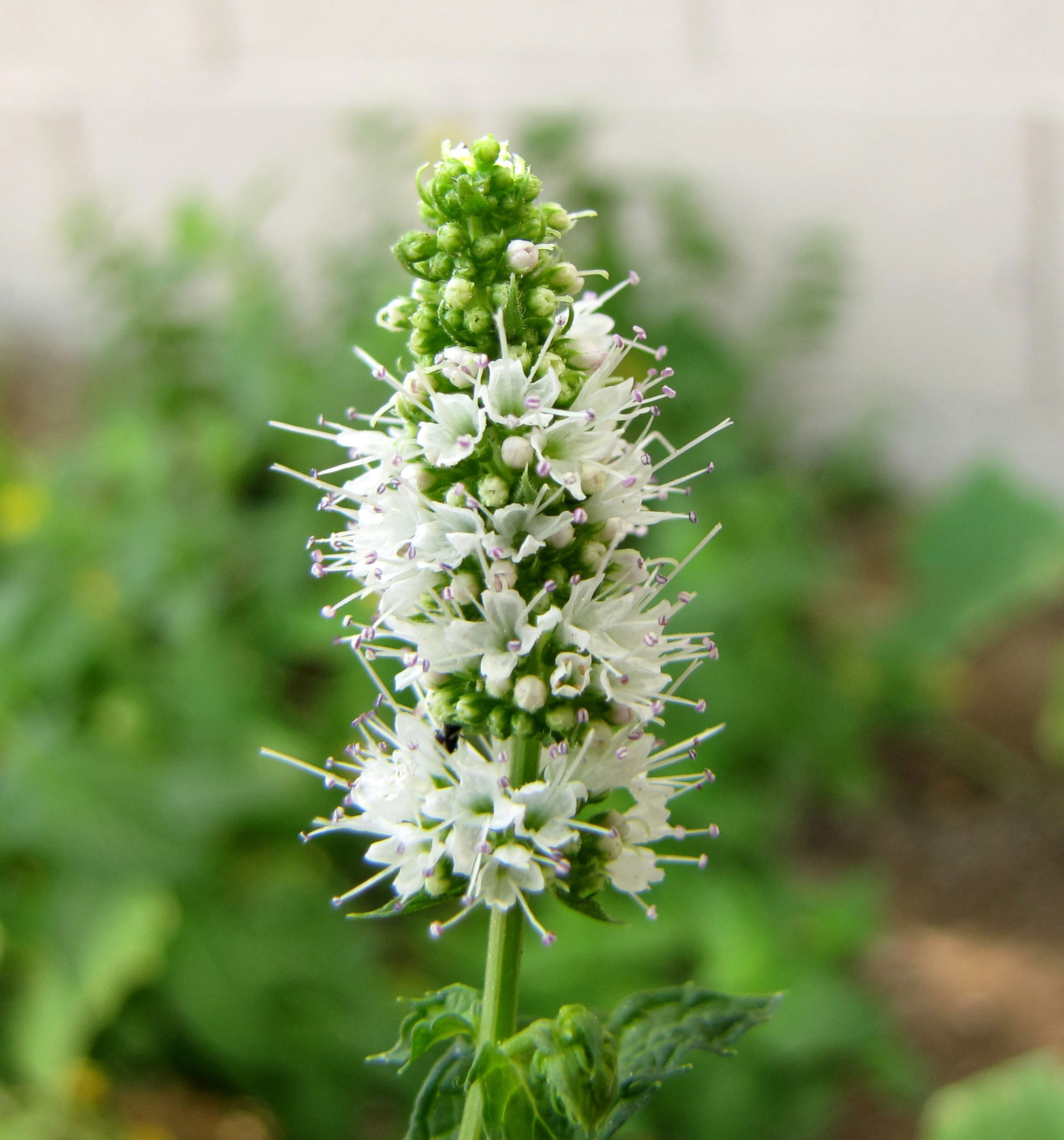
    The flowers of apple mint appear in terminal spikes that are about 4 cm to 9 cm (1.6 inches to 3.5 inches) in length and comprise several whorls of white-hued or pinkish blooms. The herb blossoms between mid-summer and the end of summer. The flowers grow in a tapering spike and the whorls are distant. The plant has got fruity and mint flavor of fragrance.

    Apple Mint Image Gallery
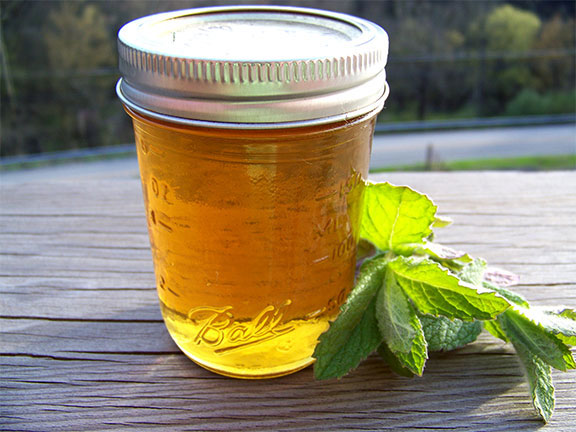
    Apple-Mint-Jelly Apple-Mint-Jelly
    Apple-Mint-plant Apple-Mint-plant
    Apple-Mint-plant-growing-wild Apple-Mint-plant-growing-wild
    Apple-Mint-plant-grown-on-the-pot Apple-Mint-plant-grown-on-the-pot
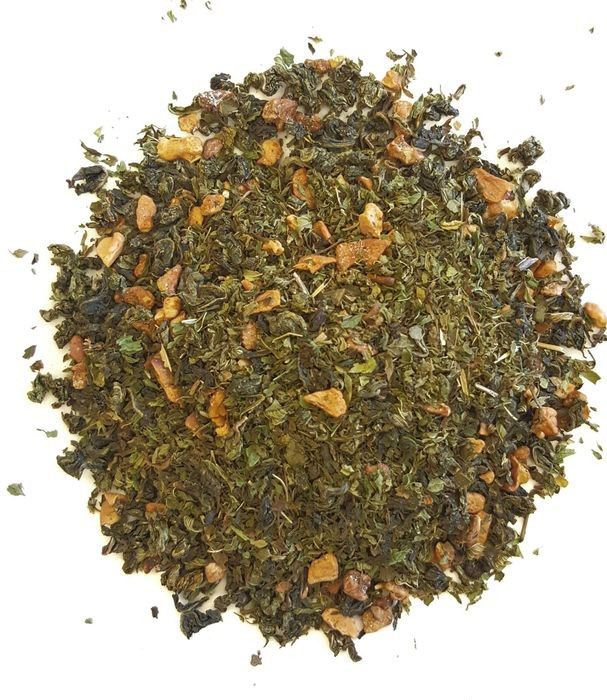
    Dried-Apple-Mint Dried-Apple-Mint
    Flowers-of-Apple-mint-plant Flowers-of-Apple-mint-plant
    Leaves-of-Apple-Mint Leaves-of-Apple-Mint
    Plant-illustration-of-Apple-Mint Plant-illustration-of-Apple-Mint
    Sketch-of-Apple-Mint Sketch-of-Apple-Mint

    Health Benefits of Apple Mint

    Apple mint leaves have certain medicinal properties. Listed below are some of the popular health benefits of Apple Mint

    1. Use as herbal tea

    Apple mint is most widely used as medicinal tea. The leaves of apple mint are dried and powdered. It is then brewed as tea which can cure fever, headache, various digestive problems and various other minor ailments.

    2. Antiseptic in nature

    The leaves of the herb can be crushed and oil can be extracted from them. This oil is antiseptic in nature that is used widely for many medical purposes.

    3. Cures Digestion problems

    Flowers of the Apple mint can be used to make tea which will cure problems related to digestive system such as stomach upset, indigestion and worms in the intestine. This tea is also very refreshing in nature which has the power of healing headache.

    4. Reduces the chances of cancer

    Apple mint is rich in Vitamin A and C and is also said to contain minimal amount of Vitamin B2. These act as antioxidants which helps in preventing cancer cell formation in colon and rectal.

    5. Other Health benefits

    The crushed leaves of this plant are said to eliminate the pain caused by bee sting, wasp stings and other insect bites. They bring about a cooling effect on the affected part of the body.

    Traditional uses and benefits of Apple Mint

    • Round leafed mint, like many other members of this genus, is often used as a domestic herbal remedy, being valued particularly for its antiseptic properties and its beneficial effect on the digestion.
    • Tea made from the leaves of most mint species has traditionally been used in the treatment of fevers, headaches, digestive disorders and various minor ailments.
    • Essential oil in the leaves is antiseptic, though it is toxic in large doses.
    • Monks had used it for curing epileptic fits since it was considered refreshing for the brain.
    • Apple mint leaves also help in breaking down fat and accelerating metabolism level.
    • Leaves have anti-cancer properties.
    • Powdered leaves can be used to whiten the teeth.
    • Essential oil extracted from the leaves is used in aromatherapy to cure acne, colic, cramp, colds, flu, stress, shock, asthma and travel sickness.
    • Plant has antiseptic properties, improves digestion, reduce fever, headaches, digestive disorders and other minor ailments.
    • Oil extracted from the leaves is used in aromatherapy to heal acne, cramp, colds, flu, stress, shock, asthma and travel sickness.
    • Monks believed that you could use the herb to treat the fatigue that followed epileptic seizures.
    • Flowers can be used to make tea which if consumed promotes digestion, cures many ailments such as intestine problems, stomach pain and refreshes the mind.
    • Researchers using essential oil of apple mint show promise for treating vaginal candidiasis.
    • Tea also aids in alleviating stomach aches, various ailments, such as intestinal disorders, and an assortment of other health conditions.
    • This herbal tea also aids in breaking down ingested fats and augmenting the level of metabolism.

    Steps for Storing apple mint

    Follow the following steps to store apple mint.

    • Rinse the leaves in cool water and dry them.
    • Gather the mint branches into a small and loose bunch.
    • Put the leaves in a paper sack that has holes to allow circulation.
    • The leaves should be kept upside with the base of the stems at the top.
    • Tie the base of the stems and close the sack.
    • Place the bag in a dry ventilated area so that the leaves get crispy.
    • Shake the bag later to loosen the leaves from the stem and pour them in an airtight vessel.
    • Keep the airtight vessel in a cool, dark and dry room.

    Steps for Growing Apple Mint

    If you wish to cultivate apple mint in your farm or backyard, these basic rules will come in handy for that.

    • Apple mint should be grown in a rich, moist and well-drained soil.
    • Always plant the herb in full sun to partial shade.
    • Protect the yard by creating a deep barrier in the soil so that the roots do not spread far.
    • 1 to ½ of space must be kept between the plants.
    • Too much of fertilizers or fresh manure will encourage rust which is harmful for the plant.
    • Frequent cutting or mowing will keep the mints trimmed and accelerate the growth.

    Apple mint should be harvested just before the blooming season. The leaves should be picked at midday when the concentrations of essential oils are high. You can pick individual leaves or cut the stems for a large harvest. Remove the flower buds when they develop in late summer. These buds make the flavor bitter.

    Culinary uses

    • Leaves can be consumed raw or cooked as a potherb.
    • It is used as a flavoring in salads or cooked foods.
    • Leaves have a similar flavor to spearmint, and are considered to be superior in flavor to that species but are also hairy, which makes them less suitable for garnishing.
    • Herbal tea is made from the leaves.
    • Leaves of this plant can be used to make apple mint jelly.
    • It is used as a flavoring in dishes such as apple mint couscous.
    • Apple Mint can be used in preparing jams, jellies, tea, sauces and desserts.
    • Dried form of apple mint leaves can be used to prepare delicious potpourri.
    • Leaves can also be used in making fruit salads.
    • They can be added to cottage cheese and cream cheese.
    • They are a tacky addition to Mediterranean cuisines, vinaigrettes and sauces.
    • They are also used in making candies and mint chocolates.
    • Certain alcoholic drinks carry a pinch of Apple mint.

    Recipes

    Apple Mint and Pink Grapefruit Fool

    Ingredients

    • 1 lb. tart apples, peeled and sliced
    • 8 oz. pink grapefruit segments
    • 3 tbsp. clear honey
    • 2 tbsp. water
    • 6 large sprigs apple mint, plus more to garnish
    • 2/3 cup double cream
    • 1 ¼ cups custard

    Directions

    1. Place the apples, grapefruit, honey, water and apple mint in a pan, cover and simmer for 10 minutes until soft.
    2. Leave in the pan to cool, and then discard the apple mint.
    3. Purée the mixture in a food processor.
    4. Whip the double cream until it forms soft peaks, and fold into the custard, keeping 2 Tbsp. to decorate.
    5. Carefully fold the cream into the apple and grapefruit mixture.
    6. Serve in individual glasses, chilled and decorated with swirls of cream and small sprigs of apple mint.

    Apple mint Angel Food Cake

    Ingredients

    • 1 cup pastry flour
    • 2 tbsp. cornstarch
    • 5 large egg whites
    • 2/3 cup sugar
    • grated rind of half a lime
    • 1 tbsp. finely chopped apple mint

    Directions

    1. Preheat oven to 350 F.
    2. Line the base of an angel food pan with nonstick baking paper, but do not grease the pan.
    3. Sift the flour and cornstarch with 1 tbsp. of the sugar.
    4. Whisk the egg whites until stiff, then add the rest of the sugar gradually, whisking until the mixture is very thick.
    5. Fold in the flour, grated rind, and mint.
    6. Turn into the pan and bake 35-40 minutes.
    7. Invert the cake, in the pan, onto a wire rack to cool, but do not unmold until cold.
    8. Serve sprinkled with confectioner’s sugar.
    9. The cake should be eaten soon after baking, as it does not keep well.

    Apple Mint Pudding

    Ingredients

    • 2 cups milk
    • ¾ cup sugar
    • 2 tbsp. cornstarch
    • ¼ tsp. salt
    • 2 egg yolks, beaten
    • 2 tbsp. butter
    • 1 tsp. pure vanilla extract
    • 1 tsp. apple mint, finely minced
    • sprigs of fresh mint, for garnish

    Directions

    1. Combine the milk, sugar, cornstarch, and salt in a medium saucepan.
    2. Stir to blend well.
    3. Cook the mixture over medium-low heat, stirring all the time, until it is thick.
    4. Remove from the heat and cool slightly.
    5. Spoon a small amount of the hot pudding mixture into the beaten egg yolks and stir.
    6. Pour the egg mixture into the pudding mixture, and cook for 2 minutes.
    7. Remove from the heat.
    8. Add the butter, vanilla and mint; stir.
    9. Pour into individual dessert dishes.
    10. Cool, and serve with a sprig of mint.

    Strawberry-Apple Mint Pie

    Ingredients

    • 1 9-inch baked pie shell
    • 1 cup strawberries, crushed
    • 2 medium apples, chopped
    • 2 tbsp. finely chopped apple mint
    • 1 cup water
    • 1 cup sugar
    • red coloring
    • additional whole berries

    Direction

    1. Wash and hull berries; crush enough to make 1 cup.
    2. Reserve 6 or 8 berries of equal size for garnish and small ones to cover pie bottom.
    3. Pare and chop apples.
    4. In water in a saucepan dissolve sugar and add fruits and mint.
    5. Bring to a boil then cook over low heat 5 minutes.
    6. Test for thickening, and when juice drops thickly off a spoon, remove from heat, stir in coloring and cool for a few minutes.
    7. Arrange a layer of reserved berries over bottom of a pie shell and pour warm mixture over them.
    8. As pie begins to set, place a berry on top for each serving, equidistant from each other and about halfway out from center.
    9. Whipped cream may be piped around berries or decorate the top as desired.

    Apple Ale

    Ingredients

    • ½ cup sugar
    • 1 cup water
    • 18 sprigs apple mint
    • 4 lemons
    • 1 quart ginger ale

     Directions

    1. Boil sugar and water until sugar is dissolved.
    2. Remove from heat and add 10 sprigs apple mint. Chill.
    3. Add the juice of 4 lemons and strain.
    4. After filling mint julep glasses with crushed ice, add ½ cup apple ale and fill to top with ginger ale.
    5. Add sprig of apple mint and serve.

    Other facts

    • An essential oil is obtained from the whole plant.
    • Rats and mice intensely dislike the smell of mint.
    • Plant was therefore used in homes as a strewing herb and has also been spread in granaries to keep the rodents off the grain.
    • In early times, the Greeks used apple mint to clean their banqueting tables and also added it to their baths to rejuvenate their bodies.
    • This flower was used as a floral spectacle was in full bloom in the Olympic Games 2012.
    • The Apple Mint oil is also use for producing Breath fresheners, tooth paste, chewing gums, candies and mint chocolates.
    • The oil is mixed with camper and uses to produce mosquito repels.
    • Mint oil is also used as an environmentally-friendly insecticide for its ability to kill some common pests like wasps, hornets, ants and cockroaches.
    • The herb was strewn across floors to cover the smell of the hard-packed soil.

    Precautions

    • Large quantities of some members of this genus, especially when taken in the form of the extracted essential oil, can cause abortions so some caution is advised.
    • Consuming apple mint might be harmful for those who are allergic to menthol or have asthma.
    • Apple mint consumption in excess can lead to several stomach disturbances, muscle ache, cramps, tremors, drowsiness, diarrhea and slow heart rate.
    • Pregnant women should not consume apple mint since it can cause abortion.
    • Apple mint is highly toxic when taken in large doses.

    References:

    https://www.itis.gov/servlet/SingleRpt/SingleRpt?search_topic=TSN&search_value=503753#null

    https://npgsweb.ars-grin.gov/gringlobal/taxonomydetail.aspx?id=313976

    https://pfaf.org/user/Plant.aspx?LatinName=Mentha+suaveolens

    https://www.cabi.org/isc/datasheet/115574

    http://www.missouribotanicalgarden.org/PlantFinder/PlantFinderDetails.aspx?taxonid=281542

    http://www.floracatalana.net/mentha-suaveolens-ehrh

    https://plants.usda.gov/core/profile?symbol=MESU5

    https://wikivisually.com/wiki/Mentha_suaveolens

    http://plantinfo.co.za/plant/mentha-suaveolens/

    http://www.naturalmedicinalherbs.net/herbs/m/mentha-suaveolens=round-leaved-mint.php

    https://gd.eppo.int/taxon/MENSU

    https://www.herbalpedia.com/MINT,%20APPLE.pdf

    https://en.wikipedia.org/wiki/Mentha_suaveolens

    78%
    78%
    Awesome

    Comments

    comments

    A Herbs and Spices
    Share. Facebook Twitter Pinterest LinkedIn Tumblr Email
    Previous ArticleFacts about Water Mint
    Next Article Know about Peppermint

    Related Posts

    Uses of Monkey Pitcher plant

    April 16, 2024

    Traditional uses and benefits of Wild Marigold

    March 21, 2024

    Traditional uses and benefits of Drooping fig

    March 12, 2024

    Comments are closed.


    Apple Mint Facts

    Apple Mint Quick Facts
    Name: Apple Mint
    Scientific Name: Mentha suaveolens
    Origin Southern and western Europe
    Taste Slight fruity flavor
    Health benefits Beneficial for fever, headaches, digestive disorders, acne, colic, cramp, colds, flu, stress, shock, asthma, travel sickness, fatigue, epileptic seizures
    Name Apple Mint
    Scientific Name Mentha suaveolens
    Native Southern and western Europe and is naturalized in central and northern parts of Europe
    Common Names Apple mint, Pineapple mint, Round-leaf mint, Round-leaved mint, Big-leaved mint, horse mint, woolly mint
    Name in Other Languages Afrikaans: Appelmint
    Albanian: Mendër
    Arabic: Naenae hului alrrayiha (نعناع حلو الرائحة)
    Austria: Rundblatt-Minze
    Bulgarian: Ananasova menta (ананасова мента)             
    Catalan: Herba-sana borda, Madrastra, Mendastra, Menta borda, Menta d’ase, Menta peluda, Mentastra, albarsana borda, alfàbrega de pastor, berdónica, herba sana pudenta, matapuça, menta boscana, menta de bosc, menta de bou, menta de gat, padrastre
    Chinese: Yuan ye bo he (圆叶薄荷)
    Croatian: Metvica
    Czech: Máta vonná
    Danish: Rundbladet mynte
    Dutch: Wollige munt, Witte munt
    English:  Apple mint, Pineapple mint, Round-leaf mint, Round-leaved mint, Big-leaved mint, horse mint, woolly mint
    Finnish: Pyöröminttu
    French: Baume sauvage, Menthe de cheval, Menthe odorante, Menthe simple, Menthe suave, Menthe à feuilles rondes, Menthe parfumée, bonhomme, menthastre, menthe crépue, menthe simple
    German:  Apfelminze, Rundblättrige Minze, Wohlriechende Minze, Rundblatt-Minze, Edelminze, runde Minze
    Hebrew: Na’na reichanit, נַענַע רֵיחָנִית
    Hungarian: Almaillatú menta     
    Italian:  Menta a foglie rotonde, mentastro di Venere
    Japanese: Apperu minto (アップルミント)
    Maltese: Nagħniegħ Selvaġġ
    Norwegian: Rundmynte
    Occitan: Menta pudent, Mentastre
    Portuguese: Hortelã-brava, hortelã-comum, hortelã-verde, hortelã-vulgar, mantrage, mantrastro-das-boticas, mentastro, mentrasto, mondrastos, montraste, montrastes
    Russian:  Myata kruglolistnaya (Мята круглолистная), myata dushistaya  (мята душистая)
    Slovak: Jablková mäta   
    Spanish:  Atapulgas, Hierbabuena de burro, Mastranzo, Menta tequina, Mentastro, Padrastros, berdonia, cándalo, hierba brava, hierba Buena, hierba áspera, hierbabuena bastarda, hortolana, madrastra, matapulgas, menta, menta borde, menta brava, menta de burro, menta de caballo, menta tequina
    Swedish: Blötmynta,  Rundbladsmynta,  Rundmynta, Pyöröminttu
    Turkish: Kaba nane
    Plant Growth Habit Vigorous rhizomatous, densely hairy, upright herbaceous perennial plant
    Growing Climates Damp ground that often dries out in summer
    Soil Grows well in heavy clay soils
    Plant Size 40 to 100 centimeters (16 to 39 in) tall
    Leaf Light green, with the opposite, wrinkled, sessile leaves being oblong to nearly ovate, 3 to 5 cm (1.2 to 2.0 in) long and 2 to 4 cm (0.8 to 1.6 in) broad. They are serrated, somewhat hairy on top and conspicuously hairy, downy underneath with serrated edges
    Flower Flowers develop in terminal spikes 4 to 9 cm (1.6 to 3.5 in) long and consisting of a number of whorls of white or pinkish flowers. Apple mint flowers in mid to late summer
    Propagation By division or from cuttings
    Flavor/Aroma Sweet scent that seems like a cross between spearmint and apples
    Taste Slight fruity flavor
    Plant Parts Used Leaves

    Apple Mint Scientific Classification

    Scientific Name: Mentha suaveolens

    Rank Scientific Name & (Common Name)
    Kingdom Plantae (Plants)
    Subkingdom Tracheobionta (Vascular plants)
    Infrakingdom Streptophyta  (land plants)
    Super Division Spermatophyta (Seed plants)
    Division Magnoliophyta (Flowering plants)
    Sub Division Spermatophytina  (spermatophytes, seed plants, phanérogames)
    Class Magnoliopsida (Dicotyledons)
    Sub-Class Asteridae
    Super Order Asteranae
    Order Lamiales
    Family Lamiaceae ⁄ Labiatae (Mint family)
    Genus Mentha L. (mint)
    Species Mentha suaveolens Ehrh. (apple mint)
    Synonyms
    • Mentha bauhinii (Ten.) Strail
    • Mentha graveolens R.Vilm. & M.Barbero, 1975
    • Mentha lapeyrousiana Gand., 1884
    • Mentha ramondiana Gand., 1884
    • Mentha rotundifolia var. suaveolens (Ehrh.) Briq.
    • Mentha vasconica Gand., 1884
    Categories
    • Beverages (78)
    • Dairy (28)
    • Dental Health (15)
    • Equipment (5)
    • Essential OIls (196)
    • Facts (2,939)
    • Foods (255)
    • Fruits (516)
    • Giveaway (1)
    • Grains and Cereals (36)
    • Health & Beauty (763)
    • Herbs and Spices (1,249)
    • Medicines (9)
    • Mental Health (19)
    • Nutritional value (27)
    • Nuts and seeds (73)
    • Oils (81)
    • Pets (4)
    • Poultry & Seafoods (67)
    • Pulses and Beans (16)
    • Reviews (25)
    • supplement (2)
    • Vegetables (304)
    • Weight Loss (22)

    What is Lupin Bean Flour?

    Science Backed Health Benefits of Durian (Durio zibethinus)

    Science Backed Health Benefits of Feijoa (Pineapple Guava) (Acca sellowiana)

    Science Backed Health Benefits of Gac Fruit (Momordica cochinchinensis)

    Science Backed Health Benefits of Amaranth Leaves (Amaranthus spp)

    Science Backed Health Benefits of Arrowhead (Sagittaria sagittifolia)

    ABOUT
    Home
    About us
    Contact us
    Privacy Policy
    Terms & conditions
    Disclaimer
    Direct Communication
    e-mail: [email protected]
    Gmail: [email protected]
    Whatsapp: +977-9841146511
    Viber: +977-9841146511
    Useful
    Health Wiki
    Nutrition
    Facebook Twitter Pinterest
    © 2025 www.healthbenefitstimes.com All rights reserved.

    Type above and press Enter to search. Press Esc to cancel.

    ×

    Log In

    Forgot Password?

    Not registered yet? Create an Account