Health Benefits
    Facebook Twitter Instagram
    Friday, December 5
    Facebook Twitter Pinterest
    Health Benefits
    • Home
    • Dental Health
    • Mental Health
    • Weight Loss
    • Health Wiki
    • Nutrition
    • Healthy Recipe
    • BMI Calculator
    Health Benefits
    Home»Herbs and Spices»Health Benefits of beech drops
    Herbs and Spices

    Health Benefits of beech drops

    By s mJanuary 8, 2020Updated:January 8, 2020No Comments3 Mins Read
    Facebook Twitter Pinterest LinkedIn Tumblr Email

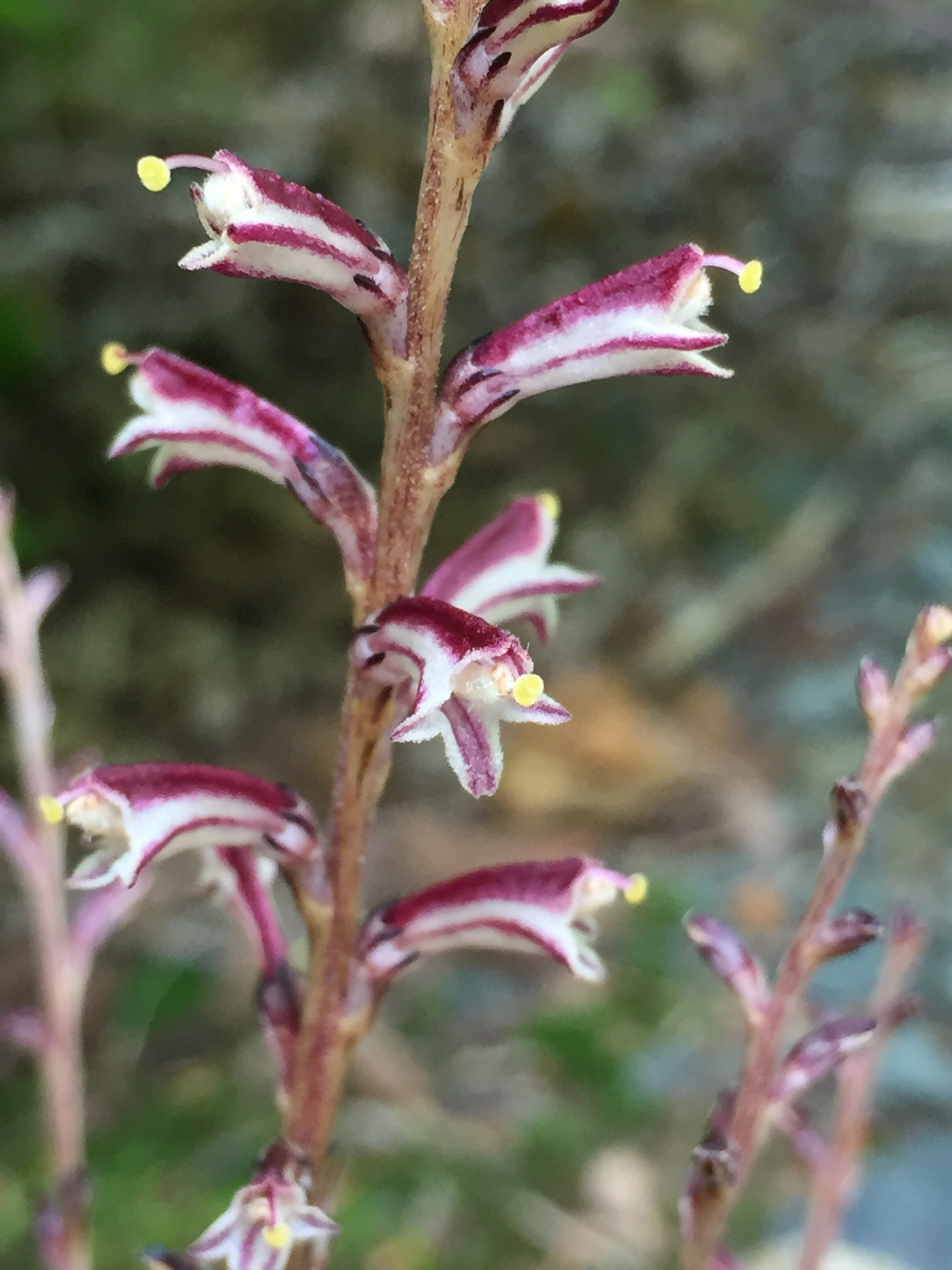
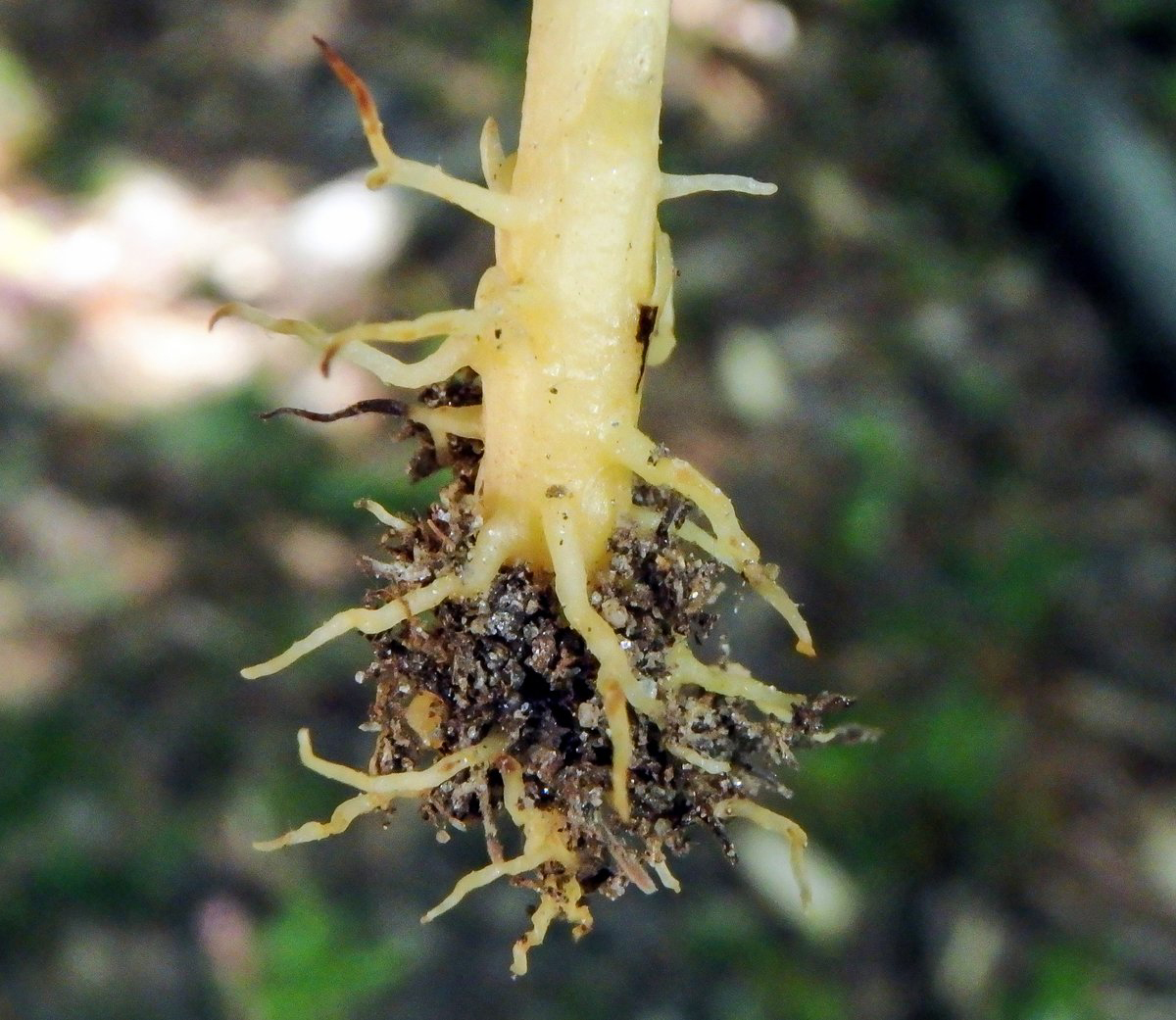
    A parasite of the family Orabanchaceae (broom-rape family). The name Cancer root is applied to several of the root parasites but more specifically to the Beechdrop or cancer drops of the beech tree roots. The low wiry plant has pale brown, dull red, or light brown stems usually marked with fine brown purple lines. The stem has leaf scales but no leaves. The root is scaly and tuberous. Altogether the taste is disagreeably astringent. The August and September flowers are white in the upper corolla, about 1 cm long, striped with brown-purple and are sterile; the less conspicuous lower flowers bear seeds.

    Facts About Beech drops

    Beech drops Quick Facts
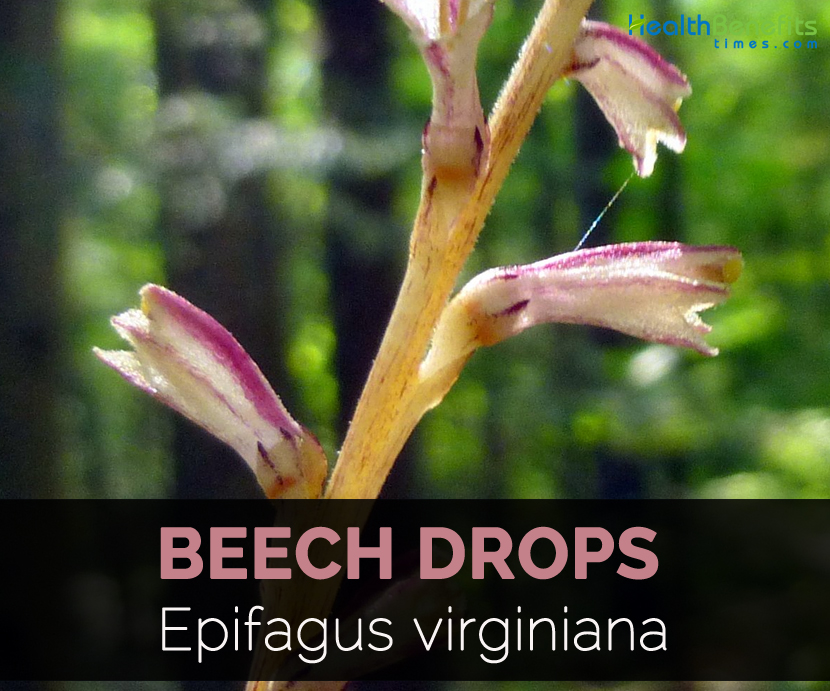
    Name: Beech drops
    Scientific Name: Epifagus virginiana
    Colors Brown
    Shapes Small, ¼ inches
    Name Beech drops
    Scientific Name Epifagus virginiana
    Common/English Name Beech drops , beech-drops, beechdrops
    Name in Other Languages English: Beechdrops, Virginia beechdrops;
    French: Épifage de Virginie In
    Plant Growth Habit Obligate parasitic plant
    Soil Chalky and sandy
    Plant Size 30 cm tall
    Medicinal parts Tops, root, stems
    Stem Pale brown, dull red, or light brown
    Flowering Season Late summer/early fall
    Flower Reddish, brown or yellowish, tubular, length 1.3 cm
    Fruit shape & size Small, ¼ inches
    Fruit color Brown

    Plant description

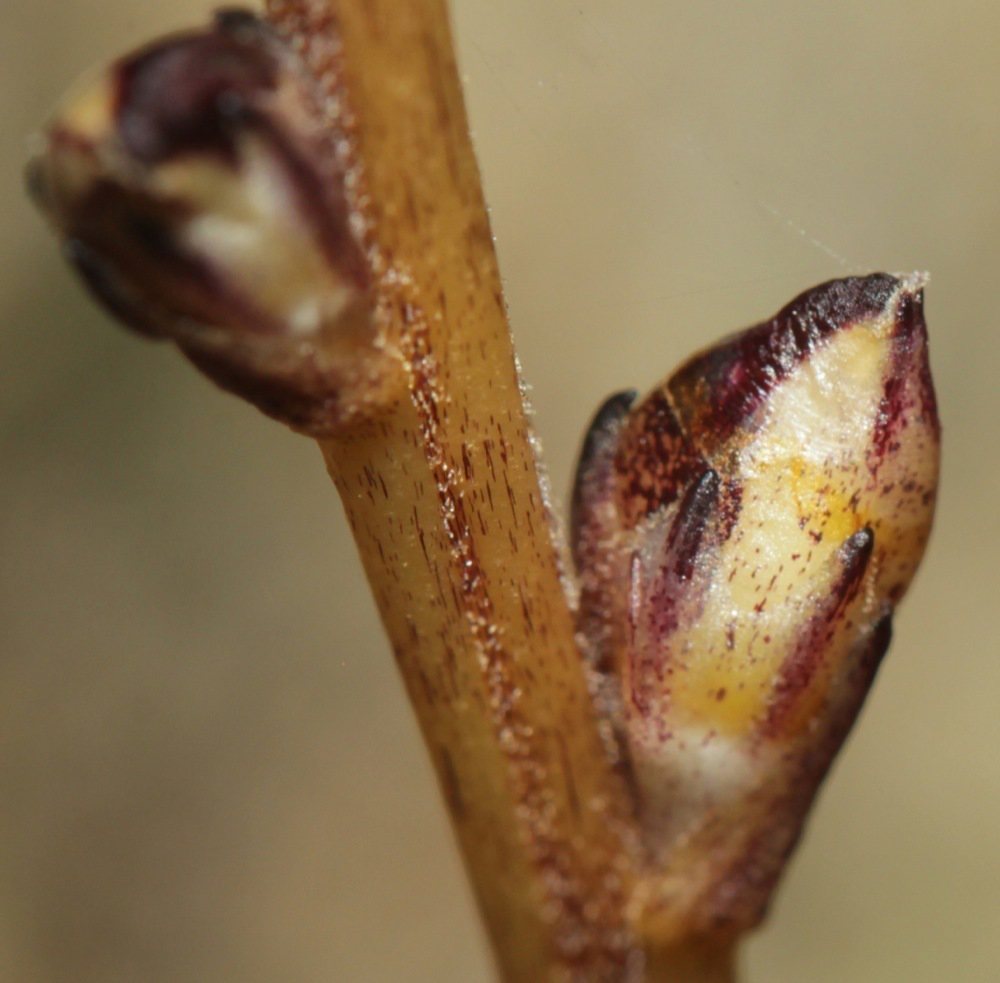
    Beech drops grows to the height of 5 inches to 18 inches. Branches are skinny and tubular with small scale like leaves which are flat pressed against stem. Flowers are tiny occurring singly or in spikes. Flowers are tubular and forms two lip like projections and produce nectar to attract winged pollinators. Flowers bloom from August to October and by the end of November, the plant turns dark brown and brittle. It is used for treating diarrhea, mouth sores, dysentery and externally on cold sores.

    Beech-drops-flower Beech-drops-flower-buds Beech-drops-roots
    [Show thumbnails]
    Medicinal uses

    • It is used for asthma and also helpful for obstinate ulcers of mouth or stomach and diarrhea.
    • Use it internally as stimulating expectorant in chronic bronchitis and apply it externally for various skin problems.
    • The tea made from fresh plant is used for dysentery, diarrhea, cold sores and mouth sores.
    • Apply the poultice or decoction for wounds, ulcers and gangrene.
    • Apply the cooled decoction in ulcers, skin disorders and erysipelas.
    • Use the tea as a wash.
    • The mixture of cherry bark and beech drops are used for treating hemorrhages of bowels.
    • In North America, it is used for treating health problems such as dysentery, diarrhea, mouth sores and cold sores.

    References:

    https://www.itis.gov/servlet/SingleRpt/SingleRpt?search_topic=TSN&search_value=34276#null

    https://botanical.com/botanical/mgmh/b/beech-27.html

    https://en.wikipedia.org/wiki/Epifagus

    https://www.wvdnr.gov/wildlife/magazine/Archive/08fall/Vol8No2msfBeechdrops.pdf

    https://www.jstor.org/stable/4032585?seq=1

    https://www.gloucesterva.info/DocumentCenter/View/4055/Beechdrops-September-2012-PDF

    https://www.ct-botanical-society.org/Plants/view/186

    http://www.missouriplants.com/Pinkalt/Epifagus_virginiana_page.html

    https://plants.usda.gov/core/profile?symbol=EPVI2

    https://www.henriettes-herb.com/eclectic/kings/epiphegus.html

    https://elmaskincare.com/herbs/herbs_beechdrops.htm

    http://www.tipdisease.com/2015/05/beechdrops-epifagus-virginiana-overview.html

    77%
    77%
    Awesome

    Comments

    comments

    B Herbs and Spices
    Share. Facebook Twitter Pinterest LinkedIn Tumblr Email
    Previous ArticleFacts about Mountain Soursop
    Next Article Health Benefits of Indian hemp

    Related Posts

    Uses of Monkey Pitcher plant

    April 16, 2024

    Traditional uses and benefits of Wild Marigold

    March 21, 2024

    Traditional uses and benefits of Drooping fig

    March 12, 2024

    Comments are closed.


    Beech drops Scientific Classification

    Scientific Name: Epifagus virginiana

    Rank Scientific Name & (Common Name)
    Kingdom Plantae (Plants)
    Subkingdom Viridiplantae  (Green plants)
    Infrakingdom Streptophyta  (Land plants)
    Superdivision Embryophyta
    Division Tracheophyta  (Vascular plants, tracheophytes)
    Class Magnoliopsida
    Subclass Asteridae
    Order Lamiales
    Family Orobanchaceae (Broomrape)
    Genus Epifagus Nutt. (Beechdrops)
    Species Epifagus virginiana (L.) W.P.C. Barton (Beechdrops)
    Synonyms
    • Epifagus americanus Nutt.
    • Epifagus virginiana f. atropurpurea Pease
    • Epifagus virginiana f. pallida C.A.Weatherby
    • Epifagus virginiana f. virginiana
    • Epifagus virginiana var. rauana Austin
    • Epifagus virginianus f. atropurpureus Pease
    • Epifagus virginianus var. rauana Austin
    • Epiphejus americanus (Nutt.) Walpers
    • Leptamnium virginianum (L.) Raf.
    • Mylanche virginiana (L.) Wallr.
    • Orobanche virginiana L.
    Categories
    • Beverages (78)
    • Dairy (28)
    • Dental Health (15)
    • Equipment (5)
    • Essential OIls (196)
    • Facts (2,939)
    • Foods (255)
    • Fruits (516)
    • Giveaway (1)
    • Grains and Cereals (36)
    • Health & Beauty (763)
    • Herbs and Spices (1,249)
    • Medicines (9)
    • Mental Health (19)
    • Nutritional value (27)
    • Nuts and seeds (73)
    • Oils (81)
    • Pets (4)
    • Poultry & Seafoods (67)
    • Pulses and Beans (16)
    • Reviews (25)
    • supplement (2)
    • Vegetables (304)
    • Weight Loss (22)

    What is Lupin Bean Flour?

    Science Backed Health Benefits of Durian (Durio zibethinus)

    Science Backed Health Benefits of Feijoa (Pineapple Guava) (Acca sellowiana)

    Science Backed Health Benefits of Gac Fruit (Momordica cochinchinensis)

    Science Backed Health Benefits of Amaranth Leaves (Amaranthus spp)

    Science Backed Health Benefits of Arrowhead (Sagittaria sagittifolia)

    ABOUT
    Home
    About us
    Contact us
    Privacy Policy
    Terms & conditions
    Disclaimer
    Direct Communication
    e-mail: [email protected]
    Gmail: [email protected]
    Whatsapp: +977-9841146511
    Viber: +977-9841146511
    Useful
    Health Wiki
    Nutrition
    Facebook Twitter Pinterest
    © 2025 www.healthbenefitstimes.com All rights reserved.

    Type above and press Enter to search. Press Esc to cancel.

    ×

    Log In

    Forgot Password?

    Not registered yet? Create an Account