


Cyclosporiasis is an intestinal infection caused by Cyclospora cayetanensis, a microscopic, single-celled parasite. The illness occurs when individuals ingest food or water contaminated with feces containing the parasite’s oocysts 1. Unlike many foodborne pathogens, Cyclospora requires days to weeks outside a host to mature and become infectious, making direct person-to-person transmission highly unlikely 1. The infection primarily targets the small intestine, triggering prolonged watery diarrhea, abdominal cramping, weight loss, and extreme fatigue.
While endemic in tropical and subtropical regions, outbreaks in non-endemic areas are frequently linked to imported fresh produce like leafy greens and berries. If untreated, the disease can extend for months, often presenting with a remitting and relapsing pattern. The standard clinical treatment for symptomatic individuals is a targeted course of trimethoprim-sulfamethoxazole (TMP-SMX).
Causes of Cyclosporiasis
- Contaminated Fresh Produce: The most common cause of infection is eating raw fresh fruits and vegetables that carry the parasite. Outbreaks are frequently linked to imported produce such as raspberries, blackberries, basil, cilantro, snow peas, and mixed lettuce 1.
- Contaminated Water Systems: People can contract the illness by drinking untreated water or eating crops that were irrigated, treated with pesticides, or washed using water that contains the infectious parasite 2.
- Travel to High-Risk Areas: Visiting tropical and subtropical regions significantly increases the risk of exposure, as the parasite is naturally widespread in the local food and water supplies of these environments 3.
Symptoms of Cyclosporiasis
- Watery Diarrhea: The primary and most frequent symptom is severe, watery, and frequent bowel movements, which can be prolonged and occur in relapsing cycles if left untreated 1.
- Appetite and Weight Changes: Infected individuals typically experience a sudden and noticeable loss of appetite, which frequently leads to significant, unintended weight loss 1.
- Stomach and Intestinal Distress: The infection commonly causes intense abdominal cramping, generalized stomach pain, excessive bloating, increased intestinal gas, and severe nausea 1.
- Extreme Fatigue: A profound sense of physical exhaustion and weakness is a hallmark of the illness, often lingering even after other digestive issues begin to improve 2.
- Flu-Like Signs: Though less common than gastrointestinal issues, the infection can also trigger vomiting, low-grade fevers, generalized muscle aches, and headaches 1.
Best Foods for Cyclosporiasis
1. Oral Rehydration Solutions
How it may help
Cyclosporiasis causes severe, watery diarrhea leading to rapid fluid and electrolyte loss. Oral rehydration solutions help by efficiently replenishing water, sodium, and potassium. Their precise balance of sugars and salts maximizes fluid absorption in the intestines much more effectively than plain water.
What research says
The CDC emphasizes that fluid and electrolyte replacement is a critical supportive therapy for patients experiencing prolonged diarrheal illnesses like cyclosporiasis 1. Clinical protocols confirm that correctly formulated oral rehydration therapy effectively prevents and treats severe dehydration during acute intestinal infections 4.
How to use it safely
You should sip the solution slowly throughout the day rather than drinking large amounts quickly, which can trigger nausea. Always mix powdered packets exactly according to the package instructions using clean, safe drinking water to ensure the proper concentration of electrolytes 5.
Potential precautions or side effects
Consult a doctor before using these solutions if you have kidney disease or heart conditions. The added sodium and potassium can be unsafe without proper medical supervision 5.
2. Clear Broths
How it may help
Clear broths provide vital hydration and replace sodium lost through severe diarrhea. Because they are completely liquid and free of fiber or heavy fats, the digestive system processes them easily without further irritating the inflamed intestines. They offer essential fluid support when eating solid foods becomes too difficult.
What research says
Health authorities advise consuming clear liquids during acute diarrheal illnesses. The National Institute of Diabetes and Digestive and Kidney Diseases confirms that drinking clear broths helps prevent severe dehydration while allowing the digestive tract time to rest and recover from active infections like cyclosporiasis 6.
How to use it safely
You should sip warm broth slowly throughout the day, avoiding extremely hot temperatures that can trigger intestinal cramping. Ensure you skim off any visible fat before drinking, as greasy liquids can worsen diarrhea and upset your stomach.
Potential precautions or side effects
Monitor your intake if you have high blood pressure, as commercially prepared broths frequently contain high sodium levels. Choose low-sodium varieties if you require a restricted salt diet.
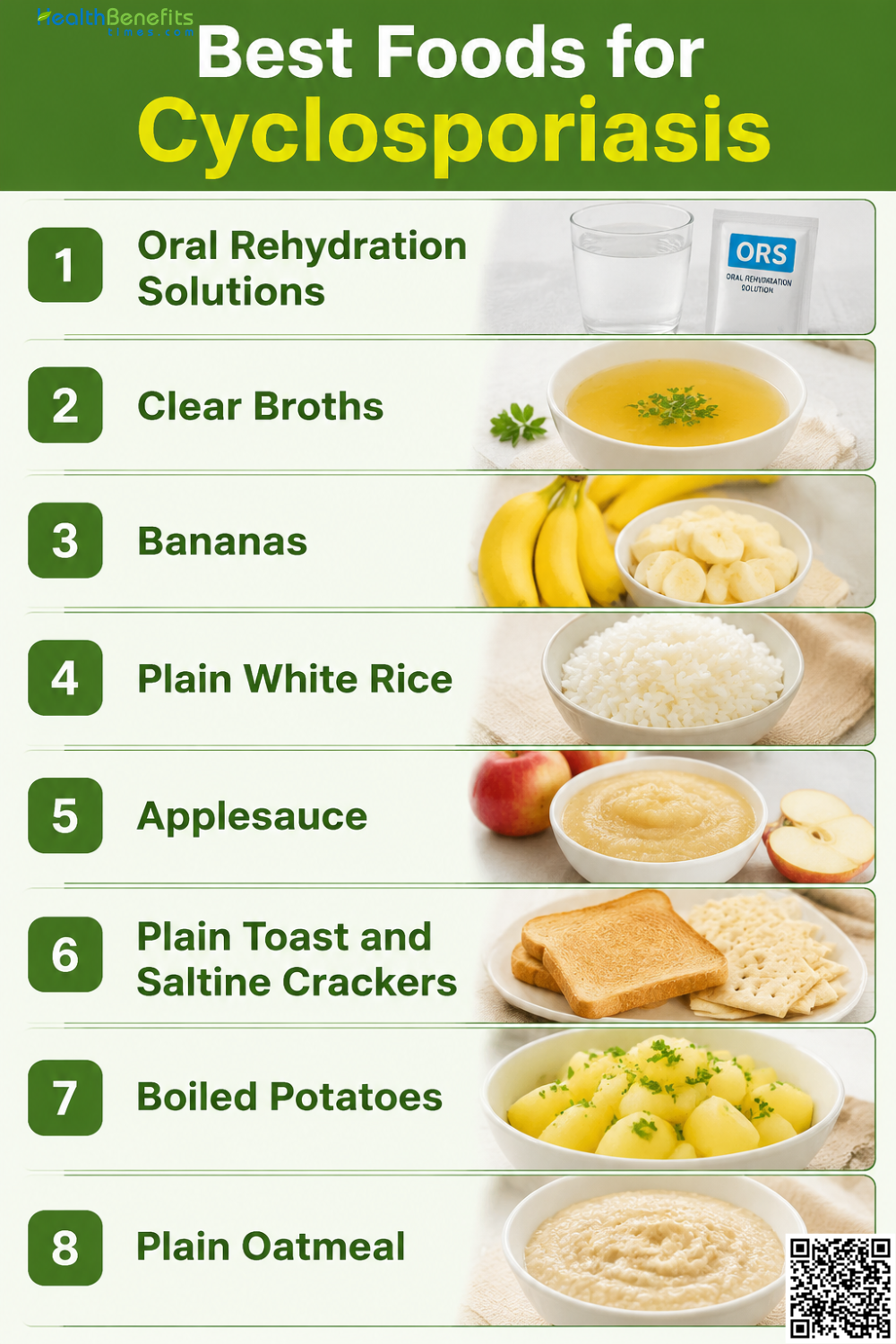
3. Bananas
How it may help
Bananas are easily digestible and provide a gentle source of energy for a compromised digestive system. They are particularly valuable during intestinal infections because they are rich in potassium, a critical electrolyte rapidly depleted by frequent, watery diarrhea. Their soluble fiber also helps firm up loose bowel movements.
What research says
Clinical dietary guidelines support incorporating bland foods to manage acute diarrhea. The National Institute of Diabetes and Digestive and Kidney Diseases identifies bananas as an ideal food choice during diarrheal illnesses because their high potassium content effectively restores essential electrolyte balances lost through severe gastrointestinal distress 6.
How to use it safely
You should eat plain, ripe bananas in small portions rather than consuming large amounts at once. Mash the banana if digesting whole foods feels too heavy. Avoid adding sugars, syrups, or dairy products, as these additions can further upset your stomach.
Potential precautions or side effects
Limit your intake and consult a doctor if you have advanced kidney disease, as consuming extra potassium can be dangerous when kidney function is severely impaired.
4. Plain White Rice
How it may help
Plain white rice is a bland, low-fiber carbohydrate that digests easily without stressing an inflamed intestinal tract. It helps absorb excess fluid in the bowels, effectively thickening loose stools. This provides a gentle, necessary source of energy when frequent diarrhea makes eating complex or heavy foods difficult.
What research says
Medical guidelines strongly support eating bland, easily digestible carbohydrates during severe gastrointestinal infections. The National Institute of Diabetes and Digestive and Kidney Diseases recommends plain white rice as a core component of a recovery diet, noting its effectiveness in managing active diarrhea and preventing further digestive irritation 6.
How to use it safely
You should steam or boil the rice thoroughly until it is very soft. Eat small, frequent portions instead of large meals. Strictly avoid adding butter, heavy oils, rich sauces, or spicy seasonings, as fats and spices can severely aggravate diarrhea.
Potential precautions or side effects
Do not substitute white rice with brown rice, as its higher fiber content can worsen diarrhea. Individuals with diabetes should carefully monitor their blood sugar when consuming white rice.
5. Applesauce
How it may help
Applesauce contains pectin, a soluble fiber that absorbs excess fluid in the intestines and helps add bulk to watery stools. Because the apples are cooked and pureed, the digestive tract can process them with minimal effort, providing a gentle source of energy without worsening the irritation caused by the infection.
What research says
Medical guidelines for managing acute gastrointestinal infections recommend easily digestible foods to minimize bowel stimulation. The National Institute of Diabetes and Digestive and Kidney Diseases includes applesauce in standard dietary protocols for diarrhea, noting its high pectin content effectively helps firm up loose bowel movements 6.
How to use it safely
You should choose only unsweetened, plain applesauce to avoid excess sugar. Eat small amounts gradually rather than a large bowl all at once. Keep the applesauce at room temperature, as extremely cold foods can sometimes trigger intestinal cramping during an active infection.
Potential precautions or side effects
Avoid applesauce with added sugars, syrups, or artificial sweeteners, as these ingredients can draw more water into the intestines and significantly worsen your diarrhea 6.
6. Plain Toast and Saltine Crackers
How it may help
Plain toast and saltine crackers provide easily digestible carbohydrates that help settle the stomach and restore energy. Because they lack heavy fibers and fats, they do not overstimulate the inflamed intestines. Saltine crackers offer the added benefit of replenishing sodium, a vital electrolyte frequently lost during bouts of watery diarrhea.
What research says
Health authorities consistently recommend incorporating bland, low-fiber foods during acute gastrointestinal infections to minimize bowel irritation. The National Institute of Diabetes and Digestive and Kidney Diseases specifically includes plain toast and crackers in dietary protocols for diarrhea management, noting their effectiveness in promoting recovery without worsening digestive symptoms 6.
How to use it safely
You should choose crackers and bread made from refined white flour rather than whole grains, as extra fiber can worsen symptoms. Eat them completely plain. Strictly avoid adding butter, margarine, peanut butter, or sugary jams, because high-fat and high-sugar toppings can immediately trigger further diarrhea.
Potential precautions or side effects
Avoid these foods if you have celiac disease or a known gluten sensitivity. Additionally, if you have high blood pressure, monitor your intake of saltine crackers due to their sodium content.
7. Boiled Potatoes
How it may help
Boiled potatoes provide an easily digestible source of calories and essential nutrients when the digestive tract is highly sensitive. They are naturally rich in potassium, helping replace vital electrolytes lost through severe diarrhea, while their starchy composition helps firm up loose bowel movements without causing additional intestinal irritation.
What research says
Dietary protocols for gastrointestinal infections prioritize bland, starchy foods to aid recovery. The National Institute of Diabetes and Digestive and Kidney Diseases identifies boiled potatoes as a recommended food for individuals experiencing acute diarrhea, confirming their role in restoring nutrients while minimizing stress on the digestive system 6.
How to use it safely
You should always peel the potatoes before boiling, as the skin contains tough fiber that can aggravate an inflamed bowel. Cook them until they are very soft and mash them lightly. Strictly avoid adding butter, milk, cheese, or spices, which can immediately trigger worsening diarrhea.
Potential precautions or side effects
Consult a doctor before consuming high-potassium foods like potatoes if you have severe kidney disease. Individuals with diabetes should also monitor their blood sugar when eating starchy foods.
8. Plain Oatmeal
How it may help
Plain oatmeal contains high amounts of soluble fiber, which absorbs excess water in the intestines to form a soothing, gel-like consistency. This process effectively adds bulk and firmness to watery stools caused by the infection, providing an easily digestible energy source without further irritating the sensitive digestive tract.
What research says
Clinical dietary recommendations emphasize soluble fiber for diarrhea management. The National Institute of Diabetes and Digestive and Kidney Diseases advises eating plain oatmeal during acute gastrointestinal illnesses, confirming that its specific fiber profile helps stabilize bowel movements while providing necessary nutrients during the recovery phase 6.
How to use it safely
You should prepare oatmeal strictly using water, as dairy products can severely worsen active diarrhea. Cook the oats until they are very soft to ensure easy digestion. Eat small portions and completely avoid adding sugar, butter, heavy creams, or artificial sweeteners 6.
Potential precautions or side effects
If you have celiac disease, ensure you choose certified gluten-free oats to avoid cross-contamination. Consuming excessively large portions may temporarily increase stomach bloating or mild intestinal gas.
Worse Foods for Cyclosporiasis
1. Dairy Products
What research says
Gastrointestinal experts strongly advise against consuming dairy during acute intestinal infections. The National Institute of Diabetes and Digestive and Kidney Diseases explains that diarrheal illnesses frequently cause temporary lactose intolerance, making milk products a primary trigger that exacerbates severe digestive distress and prolongs the illness 6.
Potential precautions or side effects
Consuming dairy too soon can immediately trigger intense abdominal cramping, painful gas, and returning diarrhea. If you need a substitute, strictly choose plain, unsweetened plant-based milks.
2. Greasy, Fried, and High-Fat Foods
What research says
Clinical dietary guidelines explicitly warn against consuming greasy, fried, or high-fat foods during acute gastrointestinal infections. The National Institute of Diabetes and Digestive and Kidney Diseases confirms that heavy fats are difficult to digest and frequently speed up intestinal contractions, significantly worsening severe diarrhea and stomach cramps 6.
Potential precautions or side effects
Consuming heavy, high-fat meals during an active infection often triggers immediate nausea, painful abdominal bloating, and rapid, uncontrollable bowel movements, severely delaying your overall recovery process.
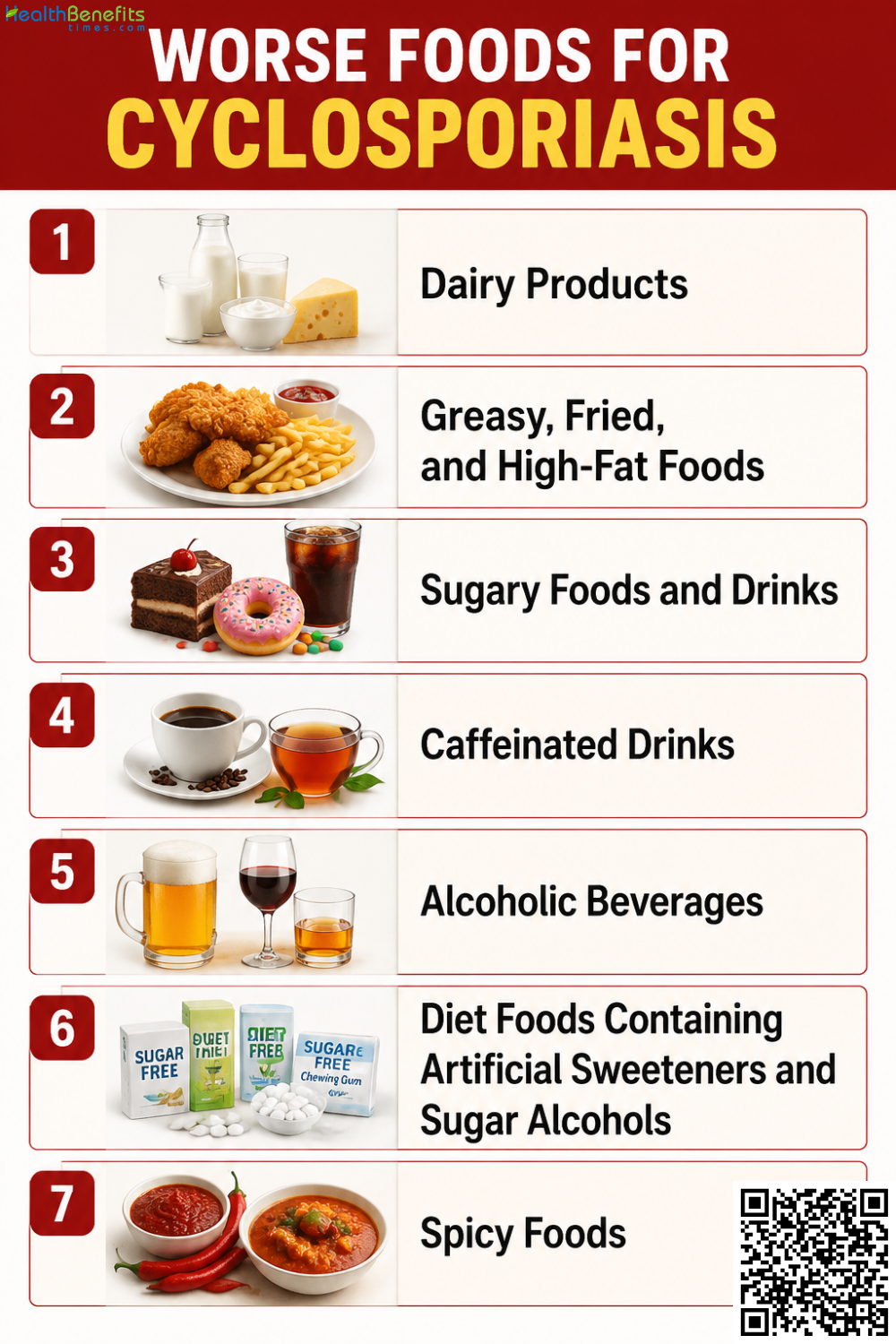
3. Sugary Foods and Drinks
What research says
Medical experts advise avoiding foods and beverages with high sugar content, particularly fructose, during gastrointestinal infections. The National Institute of Diabetes and Digestive and Kidney Diseases explains that concentrated sugars draw excess water into the intestines, which significantly worsens severe, watery diarrhea 6.
Potential precautions or side effects
Consuming undiluted fruit juices, sodas, or heavy sweets can rapidly trigger intense abdominal cramping, painful bloating, and a sudden increase in loose bowel movements.
4. Caffeinated Drinks
What research says
Medical authorities strongly advise against drinking caffeinated beverages like coffee and tea during intestinal infections. The National Institute of Diabetes and Digestive and Kidney Diseases explains that caffeine directly stimulates the digestive system, which speeds up bowel movements and significantly worsens diarrhea while increasing dehydration risks 6.
Potential precautions or side effects
You should strictly avoid coffee, energy drinks, and caffeinated sodas. Consuming them can immediately trigger severe abdominal cramping, accelerate fluid loss, and unnecessarily prolong your overall recovery.
5. Alcoholic Beverages
What research says
Health authorities strictly advise against consuming alcoholic beverages during gastrointestinal infections. The National Institute of Diabetes and Digestive and Kidney Diseases explains that alcohol acts as a diuretic, pulling fluids from the body and worsening the severe dehydration already caused by constant, watery diarrhea 6.
Potential precautions or side effects
You should strictly avoid all alcohol during your recovery. Consuming it can immediately increase intestinal irritation, trigger painful stomach cramps, and severely complicate essential rehydration efforts.
6. Diet Foods Containing Artificial Sweeteners and Sugar Alcohols
What research says
Medical experts strongly recommend avoiding artificial sweeteners and sugar alcohols, such as sorbitol or xylitol, during acute gastrointestinal infections. The National Institute of Diabetes and Digestive and Kidney Diseases notes that these compounds often act as laxatives, drawing excess water into the intestines and significantly worsening severe diarrhea 6.
Potential precautions or side effects
You should carefully check ingredient labels on diet sodas, sugar-free gums, and candies. Consuming these hidden sweeteners can immediately trigger painful stomach cramps, excessive gas, and sudden watery bowel movements.
7. Spicy Foods
What research says
Clinical dietary guidelines strongly advise against eating spicy foods during acute gastrointestinal infections. The National Institute of Diabetes and Digestive and Kidney Diseases explains that strong spices can severely irritate the already inflamed lining of the intestines, which rapidly worsens severe diarrhea and digestive discomfort 6.
Potential precautions or side effects
You should strictly avoid hot sauces, chili peppers, and strong curries. Consuming these can immediately trigger severe stomach cramps, painful gas, and burning sensations during bowel movements.
When to see Doctor when you struggle from Cyclosporiasis
If you are experiencing symptoms of cyclosporiasis, it is crucial to know when to seek professional medical care.
- Prolonged Diarrhea: You should contact a healthcare provider if your watery diarrhea lasts longer than several days, as cyclosporiasis often requires prescription antibiotics for clearance 1.
- Signs of Severe Dehydration: Seek immediate care if you develop extreme thirst, a dry mouth, dizziness, or reduced urination, which indicate dangerous fluid loss 7.
- High Fever: You must see a doctor if your gastrointestinal symptoms are accompanied by a high fever, as this can signal a severe or worsening infection 7.
- Severe Abdominal Pain: Seek emergency medical attention if you experience sudden, intense, or unrelenting stomach pain, which goes beyond typical cramping and requires immediate clinical evaluation 7.
- Inability to Retain Fluids: You should seek help if continuous vomiting prevents you from keeping liquids down, as intravenous fluids may be necessary to prevent serious complications 5.