

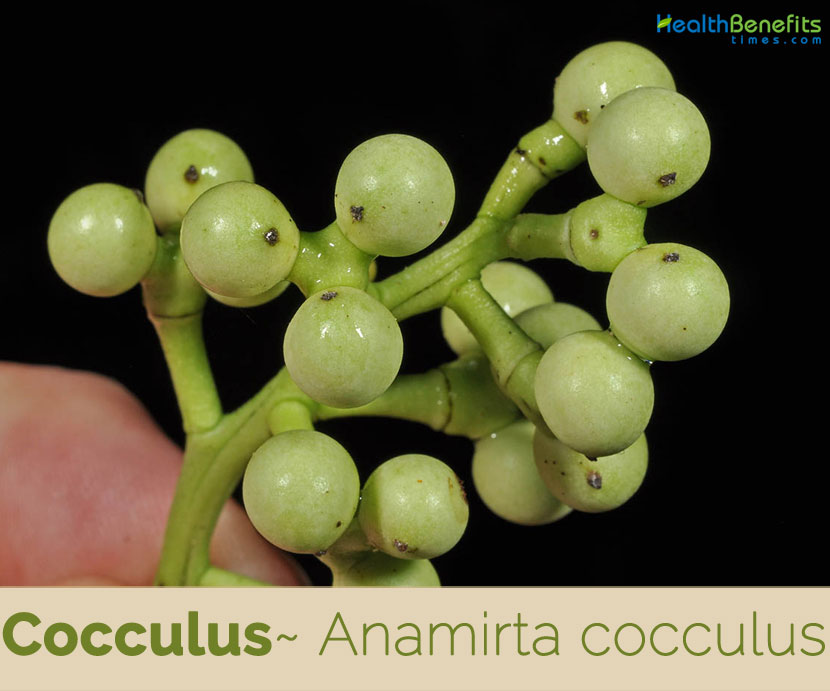
| Cocculus Quick Facts | |
|---|---|
| Name: | Cocculus |
| Scientific Name: | Anamirta cocculus |
| Origin | Southeast Asia from India, Sri Lanka, Andaman and Nicobar Islands, Thailand, Indo-China |
| Colors | Initially white turning red, finally dark purple |
| Shapes | Round and kidney shaped drupe, 9-11 mm long |
| Taste | Bitter |
| Health benefits | Good for fevers, dyspepsia, ringworm, menstrual problems, headache, stomach-ache, skin diseases, ulcers, scabies, convulsions, neurological disorders and psychosis-related fear |
| Name | Cocculus |
|---|---|
| Scientific Name | Anamirta cocculus |
| Native | Southeast Asia from India, Sri Lanka, Andaman and Nicobar Islands, Thailand, Indo-China, through Sumatra, Java, Lesser Sunda Islands, the Moluccas, to the Philippines and New Guinea |
| Common Names | Levant nut, fish berry, poison berry, Crow killer, Indian berry, Malayan fishberry, Indian Cockle |
| Name in Other Languages | Arabic: Mahijehreh, mahie zahraj , eanibiat hawriat al’awraq (عنيبية حورية الأوراق) Assamese: Kakmari Cambodia: Seg dom Chinese: Yin du mu fang ji Czech: Kebule korková English: Levant nut, fish berry, poison berry, Crow killer, Indian berry, Malayan fishberry, Indian Cockle Finnish: Intiananamirta, bois enivrant French: Coque du Levant Hindi: Kakamari (काकमारी) , Vatoli, Nanchuvalli, Pollakai, Kollakkaya Indonesian: tuba biji, oyod peron, bori, jermae, kakamari, kakmari, kakmari-ke-binj Irula: Kallekkodi Kannada: Kāge māmbaḷḷi (ಕಾಗೆ ಮಾಂಬಳ್ಳಿ), chiplothi, chippula kaayi, chipula koll, chiplothi, chippula kaayi, chipula kolli, chipulu, ciplotte, cipullukolli, cipulu, garuda phala, haenu beeja, kaage maari, kaagemaari, kaaka maari, kaakamaari, kaaki soppu gadde, kaakkisoppu gade, kagemari, kakamari, kakamari-bija, kakisoppugadde, kakkisoppugade Malayalam: Pealla (പൊള്ള), Kaipalathumka, Garaphala, Pollakai, Kollakkaya, Pechuvalli, Nanchuvalli, Polla, Pettumarunna, anakrytu, anamrytu, garalaphala, ആനയമൃത് (Anamrytu), Pealla (പൊള്ള), Pettumarunnu (പെട്ടുമരുന്നു), anakrytu, anamrytu, garalaphala, garaphala, kaandakaconuveh, kantakakonnuveli, kantakakunavam, karanta-kattin-kaya, karantakam, kollakkaya, minnannu, miunannu, nacattinkayi, naccattinkaya, nanjukuru, nanninkuru, pettumarunnu, polla, pollaconuveh, pollak-kaya, pollakkaya, pullukunavam, meenanu, nanjinkuru, pellakkaya Marathi: Kakmari (काकमारी), kaarvi, kadu-phal, garudaphal, kaakmaaari, kaarvi, kadu-phal, kakmari, karwi Mindanao: Ligtang, aria Persian: Mahijehreh Philippines: Arai, lagtang, ligtang Russian: Anamirta kokkulyusovidnaya (Анамирта коккулюсовидная) Sanskrit: Dhvankshanakhi, garalaphala, kakadani, kakahva, kakamari Spanish: Coca de Levante Swedish: Kockel-lian Tagalog: Bayati Tamil: Kakka kolyvirai, cantiropam, kakamari, kakanacam, cantiropam, kakamari, kakanacam, kakkai kolli, kakkai-k-kolli, kakkaikolli, kakkakolivirai, kakkakolyvirai, kakkay-k-kolli, kakkay-kolli-virai, kakkayk kolli, kakkaykkolli, kakkaykolli, kakkaykollivirai, muratayam, naicikam, nancukkottai, pen kottai, pen-kottai, penkottai, vayacam, kakakulli, kakacollie verei, kakkakoly virai Telugu: Kaaka maari, kaaki chempa, kaaka maari, kaaki chempa, kaka-mari, kakamari, kaki-champa, kakichempoo, kodi thige, koditige, thippathige, tippatige, kakmari, koditeega, tippateega Thailand: Khamin khruea, om phanom, waai din Urdu: Mahijehreh Vietnam: Dây táo, dây dông cầu |
| Plant Growth Habit | Large, woody, dioecious climbing plant |
| Growing Climates | Moist deciduous, evergreen forests, sacred groves in the plains, in forest, forest fringes, in thickets, on river banks, near streams, in savannah |
| Soil | gGrows best on volcanic basalt, limestone, calcareous rocks and sandy soils |
| Plant Size | Up to 15 m tall |
| Bark | Ash-colored thick bark, vertically furrowed or corrugated |
| Stem | Stems are sometimes 10 centimeters thick, longitudinally wadded, porous, with stout, smooth branches |
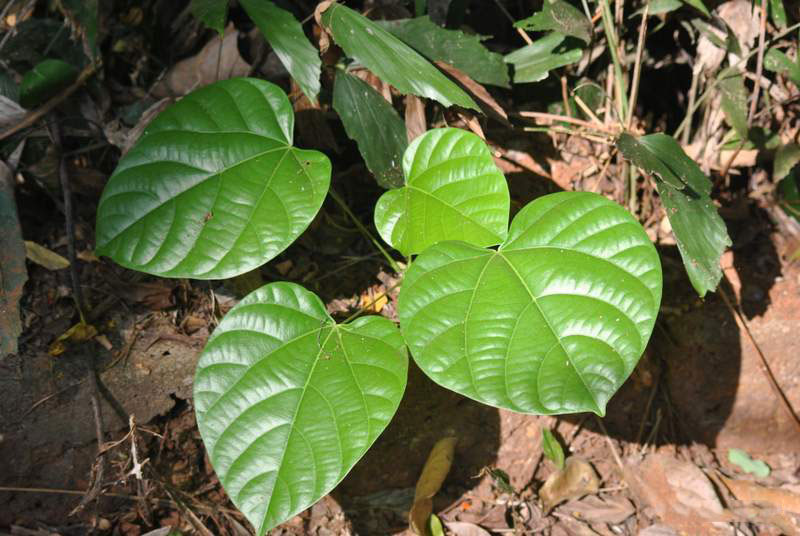
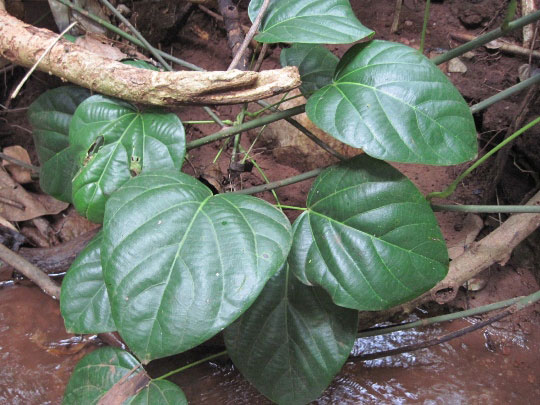
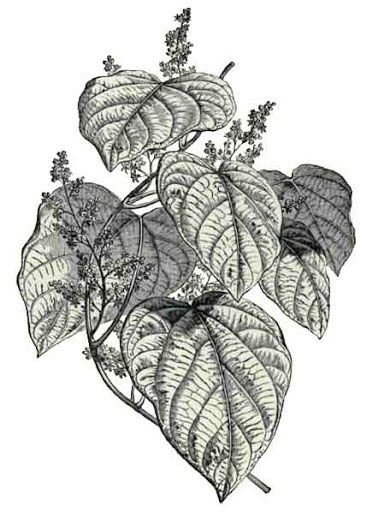
| Leaf | Alternate, simple, ovate to broadly ovate, 16-18 cm long and 10-24 cm wide, base cordate to truncate, apex shortly acuminate, margin entire, palmately 3-7 veined at base with 4-5 pairs of lateral veins |
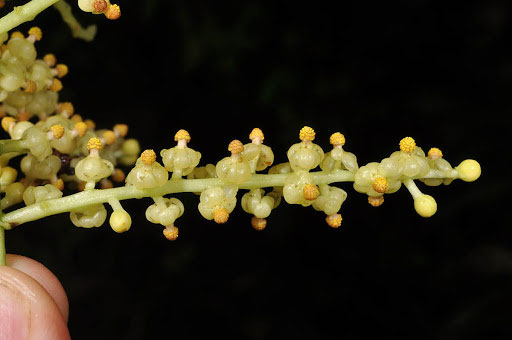
| Flower | Yellowish, sweet-scented, 6 to 7 millimeters across, crowded on 3- to 4.5 centimeters long, pendulous panicles |
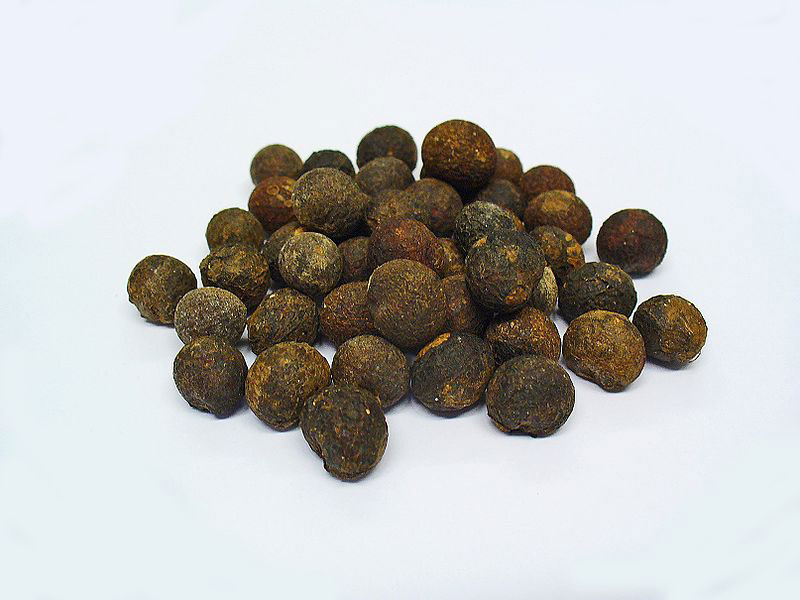
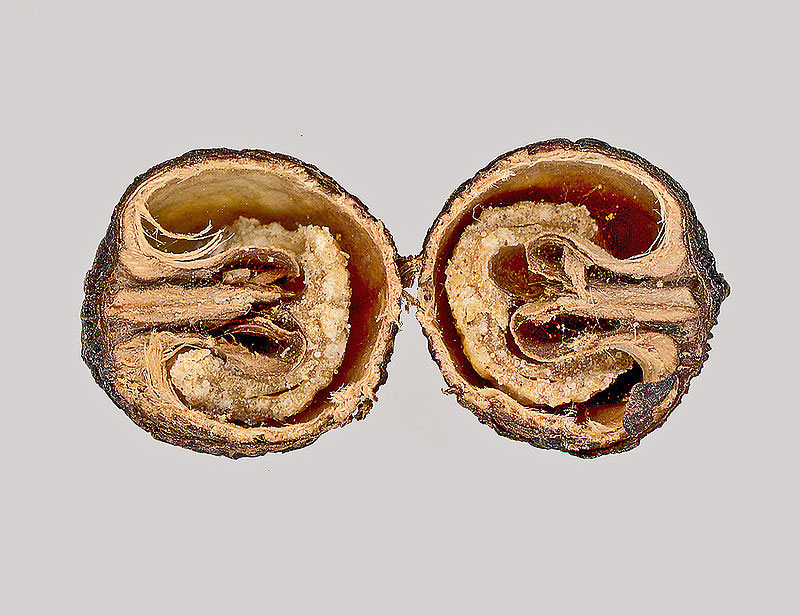
| Fruit Shape & Size | Round and kidney shaped drupe, 9-11 mm long. Outer coat is thin, dry, browny, black and wrinkled, inside a hard white shell divided into two containing a whitish seed |
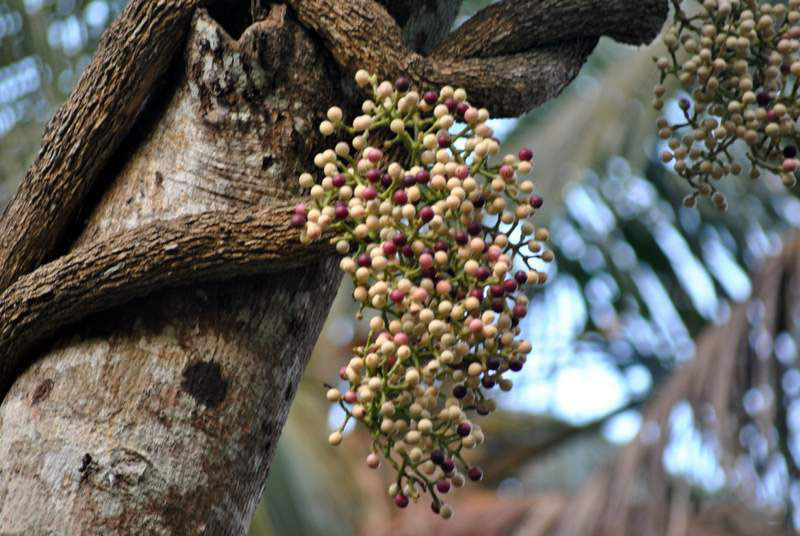
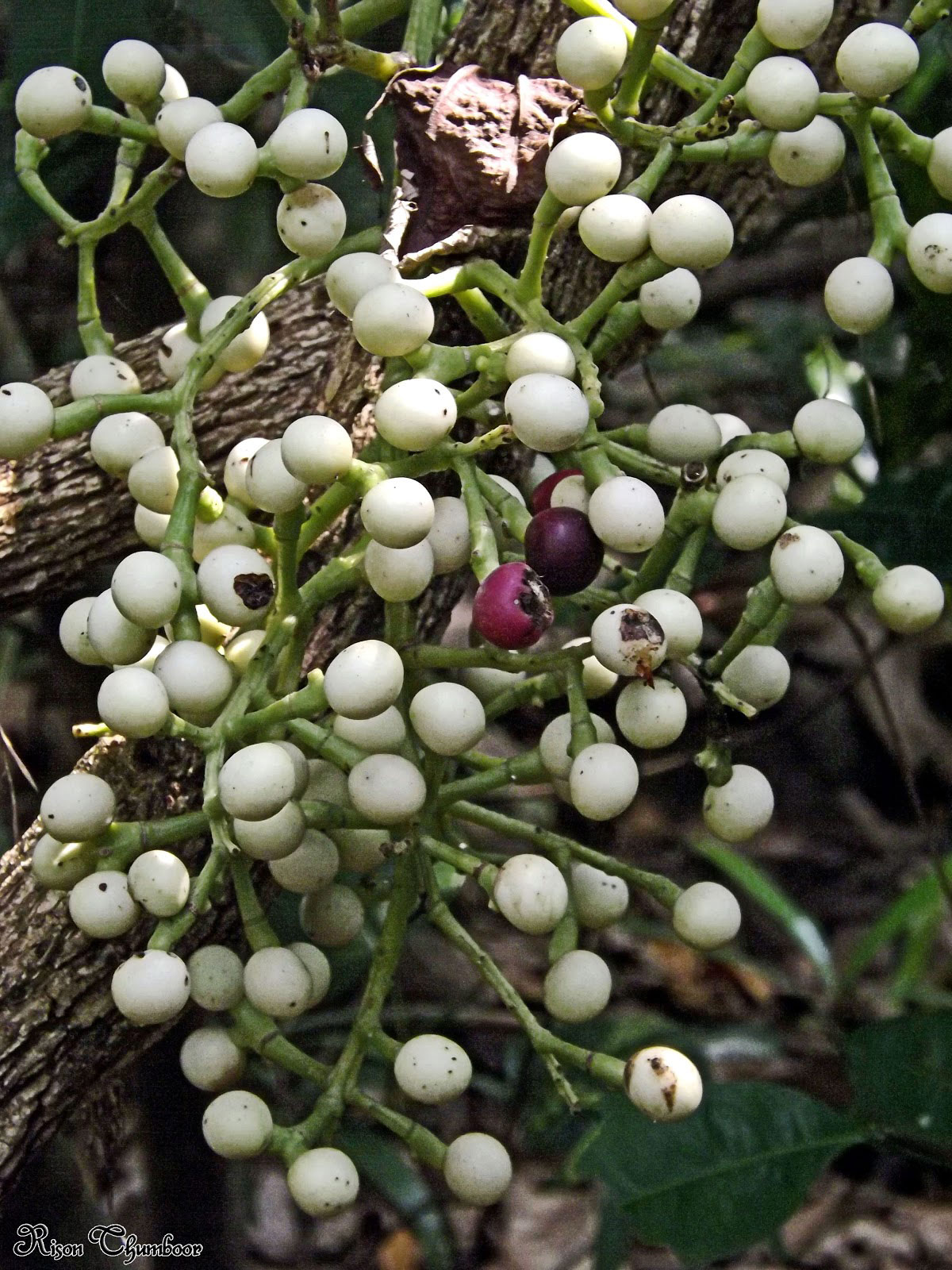
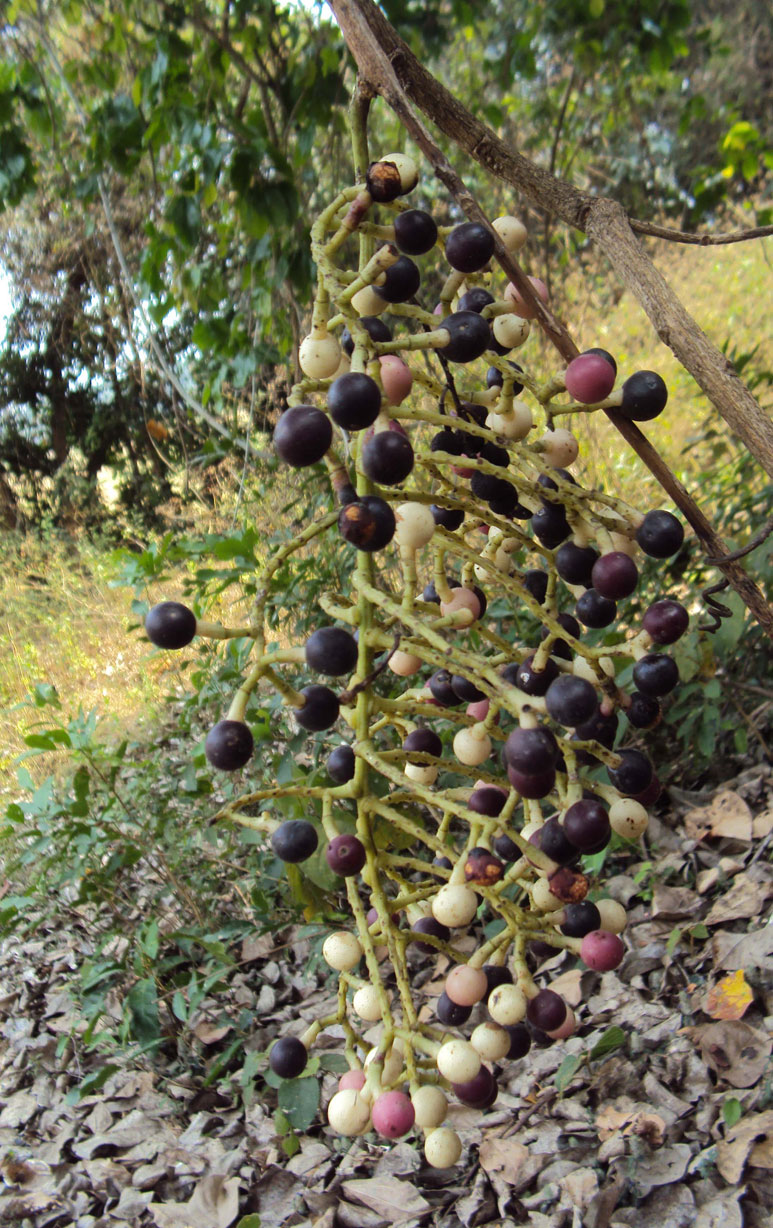
| Fruit Color | Initially white turning red, finally dark purple |
| Propagation | By seed |
| Plant Parts Used | Dried fruit, fruits, leaves |
| Taste | Bitter |
| Culinary Uses |
|
Leaves
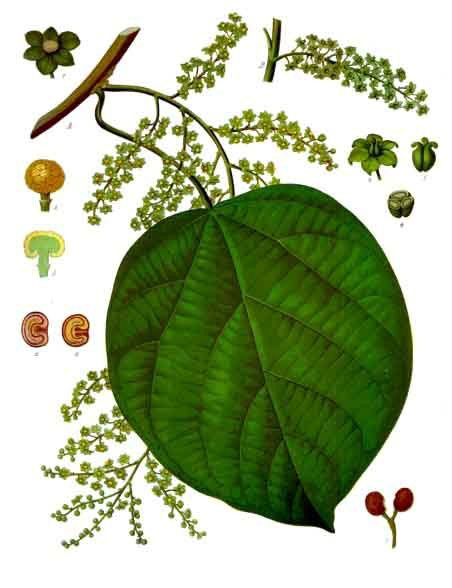
Leaves are alternate, simple, ovate to broadly ovate, 16-18 cm long and 10-24 cm wide, base cordate to truncate, apex shortly acuminate, margin entire, palmately 3-7 veined at base with 4-5 pairs of lateral veins running parallel with the main pair of basal veins, lower surface with reticulum clearly visible and slightly raised, midrib very prominent, glabrous on both surfaces apart from hairy patches (domatia) in the axils of the secondary and main veins, thinly coriaceous; petiole 8- 26 cm long, glabrous, swollen at both ends, geniculate at base; stipules absent.
Flower
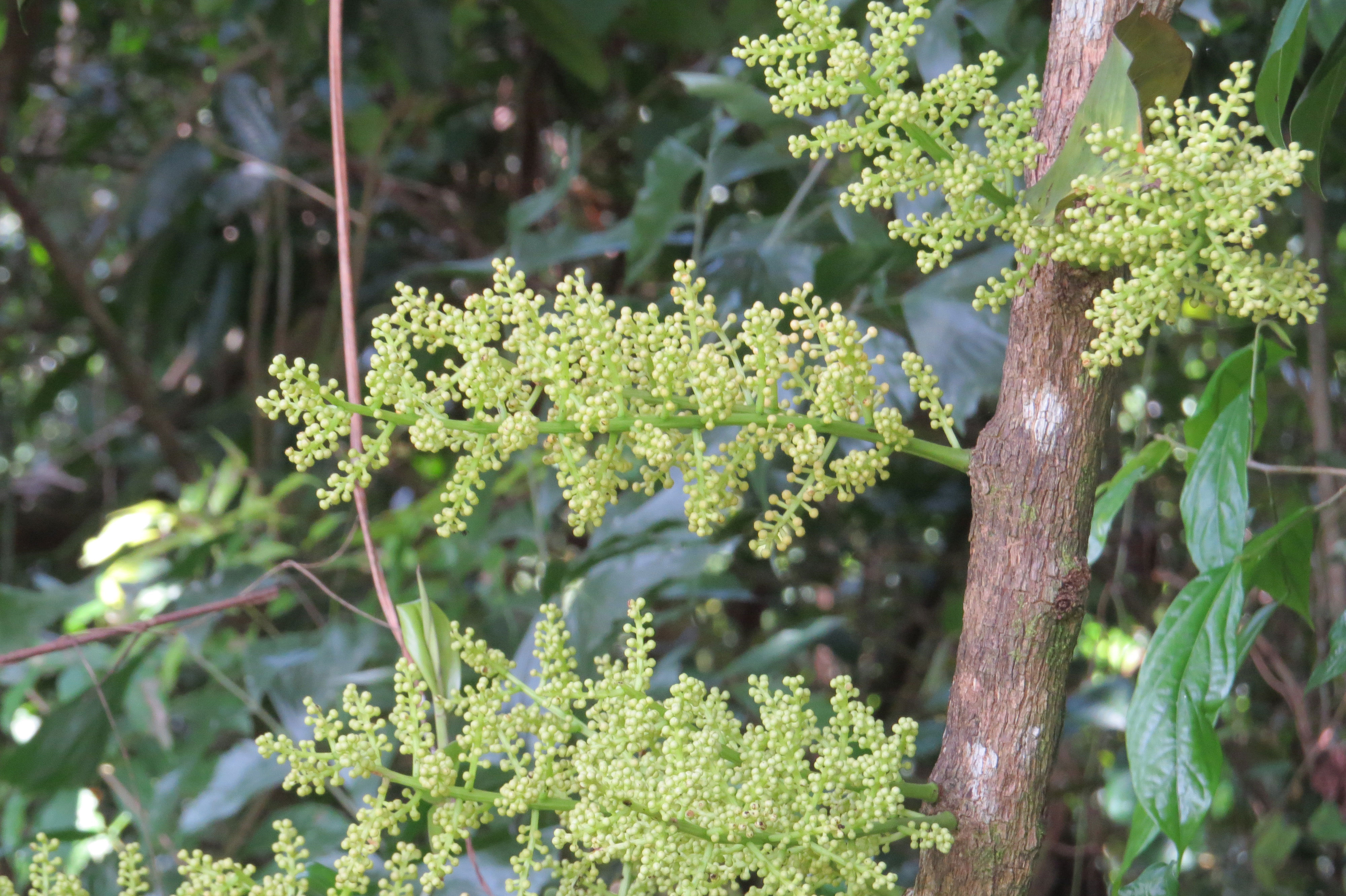
Flowers are shortly pedicellate, unisexual, petals absent, strongly fragrant. Male flowers with glabrous pedicels up to 2-3 mm long, sepals white, yellow or pale green, outer sepals 2, scarcely 1 mm long, inner sepals 6, broadly elliptical, 2.5-3 mm long and 2 mm wide, glabrous apart from often minutely papillose margin, stamens 30-35, filaments more or less connate, anthers in a stalked cluster. Female flowers with pedicels and sepals as in male flower, staminodes 6, carpels 3(-4), curved-ellipsoid, 1.5-2 mm long, stigma thick, recurved. Infructescence with lateral branches up to 15 cm long, gynophore 6-16 mm long, shortly branched below the drupes, continuous with pedicel, 8-20 mm long.
Fruits
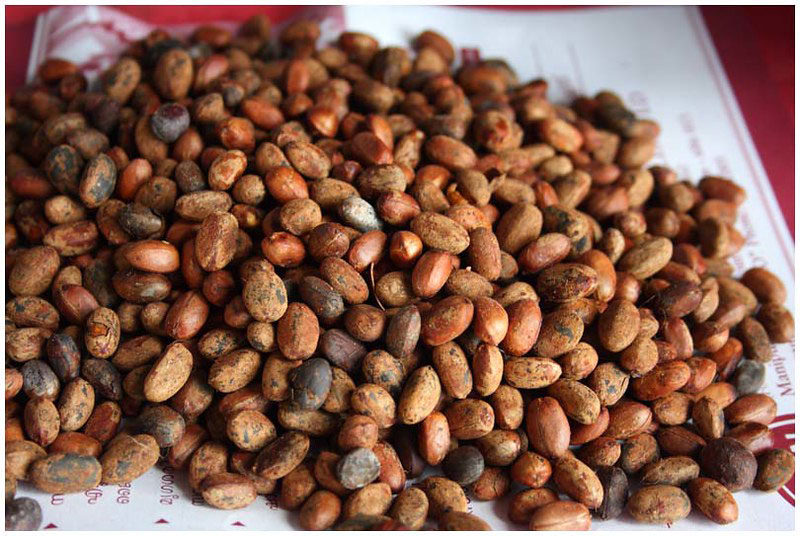
Fertile flowers are followed by round and kidney shaped drupe, 9-11 mm long. Outer coat is thin, dry, browny, black and wrinkled, inside a hard white shell divided into two containing a whitish seed. Fruits are initially white turning red, finally dark purple, glabrous, smooth and hard when dry. Seeds are deeply cup-shaped and very oily, with endosperm; embryo with foliaceous, divaricate cotyledons.
Its crushed seeds are an effective pediculicide (anti-lice) and are also traditionally used to stun fish or as a pesticide. The name “fishberry” comes from the use of the dried fruit as a method of fishing.
Traditionally and benefits of Cocculus
- Powdered berries are occasionally used as an ointment for destroying lice.
- Entire fruits are used to stupefy fish, being thrown on the water for that purpose.
- It is an antidote in Morphine poisoning.
- Its crushed seeds are an effective pediculicide (anti-lice) and are also traditionally used to stun fish or as a pesticide.
- Experiments based on ethno-botanical practices have shown that the plant can be effective in treating ringworm.
- It encourages the central nervous system, mostly the medulla oblongata and respiratory center.
- An infusion of the roots is used to treat fevers, dyspepsia and menstrual problems.
- An extract of the stem is added to native wine and is drunk to make the blood strong.
- Leaves may be used as a poultice for headache, stomach-ache or delayed menstruation.
- Fruit is used in very small doses to treat eruptive fevers, whilst the powdered fruit is used to treat acute barbiturate poisoning.
- Applied externally, the fruits and seeds are made into an ointment to treat skin diseases.
- Juice of the fruits is applied externally to ulcers and scabies.
- The fruits are an ingredient of many homeopathic formulations.
- Bitter berries are sometimes used in the form of an ointment.
- Fresh leaves are used in Bengal as a snuff in the treatment of quotidian ague.
- Cocculus is used internally as a homoeopathic medicine for convulsions, neurological disorders and psychosis-related fear.
- In the Philippines, an infusion of the roots of A. cocculus is used to treat fevers, dyspepsia and menstrual problems.
- The fruit paste is applied topically to treat tinea/ringworm.
- For itch, and herpes, the fine powder of seeds are mixed with castor oil, and applied topically.
- To kill lice, and other parasites, the paste prepared from the seeds (about 5 gram) is mixed with oil (50 ml), and applied.
- Seeds used as ointment ingredient used for the destruction of hair pediculi.
- Seeds used for the night sweats of phthisis.
- In India, fruits used for bronchitis, chronic skin disease, foul ulcers, dermatophytosis, and vertigo.
- In Thailand, creeping stem used for blood stasis, fever, and to stimulate the central nervous system.
- Fruit removes intestinal gases and is good for rheumatism.
- In homeopathic medicine the drug is used for nervous exhaustion, attacks of dizziness, cramps, paralysis, dysmenorrheal and occipital headaches.
Other Facts
- Wood of the plant is used for fuel and carving.
- Crushed seeds are traditionally used to stun or kill fish and as a pesticide.
- Fiber from the stem used to make ropes for house construction.
- Leaves used to keep betel leaves fresh for more days and also as a serving plate.
- Plant often bears flowers in abundance; the fragrant smell can be detected by people from 50 meters away.
- The bast- fibers are used for basketry rope and belt making.
- The poisonous fruit can be used as an insecticide.
- Fruit of A. cocculus is used mainly as a fish poison and as an insecticidein South East Asia.
Precautions
- It may cause headache and nausea.
- Seed, when taken internally, is a powerful poison for all vertebrates affecting the central nervous system, stimulating the motor and inhibitory centers in the medulla, especially the respiratory and vagus centers, acting on the heart and respiration.
- The poisoning causes vomiting, purging, profuse sweating and intoxication, with extreme giddiness, dimness of vision and unconsciousness.
- Breathing and the pulse become weak.
- The poisoning also results in chronic convulsions; during spasms and intervals of relaxations the pupils correspondingly contract or dilate.
- Death occurs quickly from respiration failure, or slowly from gastro-intestinal symptoms.
- When taken orally it causes unconsciousness, delirium, convulsions, gastro-enteritis, and stimulation of the respiratory center followed by paralysis.
- It must not be applied on abraded, ulcerated, cut, bruised or damaged skin
References:
https://botanical.com/botanical/mgmh/c/coccul79.html
https://en.wikipedia.org/wiki/Anamirta_cocculus
http://www.tn-grin.nat.tn/gringlobal/taxonomydetail.aspx?id=3069
https://indiabiodiversity.org/species/show/225416
https://wikivisually.com/wiki/Anamirta_cocculus
https://es.linkfang.org/wiki/Anamirta_cocculus
https://gd.eppo.int/taxon/AMWCO
http://tropical.theferns.info/viewtropical.php?id=Anamirta+cocculus
https://www.wisdomlib.org/hinduism/book/indian-medicinal-plants/d/doc213979.html
https://npgsweb.ars-grin.gov/gringlobal/taxonomydetail.aspx?3069
http://www.theplantlist.org/tpl1.1/record/kew-2636192
https://uses.plantnet-project.org/en/Anamirta_cocculus_(PROSEA)
https://www.flowersofindia.net/catalog/slides/Fish%20Berry.html
http://www.medicinalplantsindia.com/fish-berry.html
http://www.stuartxchange.org/Lagtang.html