Health Benefits
    Facebook Twitter Instagram
    Friday, December 5
    Facebook Twitter Pinterest
    Health Benefits
    • Home
    • Dental Health
    • Mental Health
    • Weight Loss
    • Health Wiki
    • Nutrition
    • Healthy Recipe
    • BMI Calculator
    Health Benefits
    Home»Herbs and Spices»Health Benefits of Firmosses
    Herbs and Spices

    Health Benefits of Firmosses

    By s mJanuary 3, 2020Updated:January 5, 2020No Comments5 Mins Read
    Facebook Twitter Pinterest LinkedIn Tumblr Email

    Huperzia serrata is a rare species which is considered a medicinal herb in Western countries and is used in a wide range of functional foods. It is used to prevent aging diseases. It is propagated by spores. It is a type of moss which is found in subtropical parts of India, Southern China and the United States. The herb is used as a cognitive enhancer and treats organophosphate poisoning and neurodegenerative disorders such as Parkinson’s disease and Alzheimer’s disease. This traditional Chinese medicine for memory took the world by storm fifty years ago. Clinical studies show its ingredient huperzine is an effective cognitive enhancer that boosts learning, memory, and mood in students and people with Alzheimer’s, and it is safe to take.

    History and folklore

    This ancient Chinese plant remedy dating back to 600 to 900 AD, brewed as a tea, Qian Ceng Ta, has been used to treat various mental disorders, fever, and inflammation. Chinese medicine practitioners noticed that people who drank the tea found their memories improved. Spores from the related species wolf’s claw clubmoss (Lycopodium clavatum, common throughout the world), ignite when thrown into flame. Once thought to be magic, this practice provided the flash in early photography.

    Facts About Firmosses

    Firmosses Quick Facts
    Name: Firmosses
    Scientific Name: Huperzia serrata
    Origin India and southeast Asia
    Name Firmosses
    Scientific Name Huperzia serrata
    Native India and southeast Asia
    Common/English Name Chinese Clubmoss, Toothed clubmoss
    Name in Other Languages English: Toothed club-moss, Toothed clubmoss
    Stem Erect, single, 6-10 cm tall
    Leaf Linear-oblanceolate or linear-oblong, 6-10 mm long

    Plant description

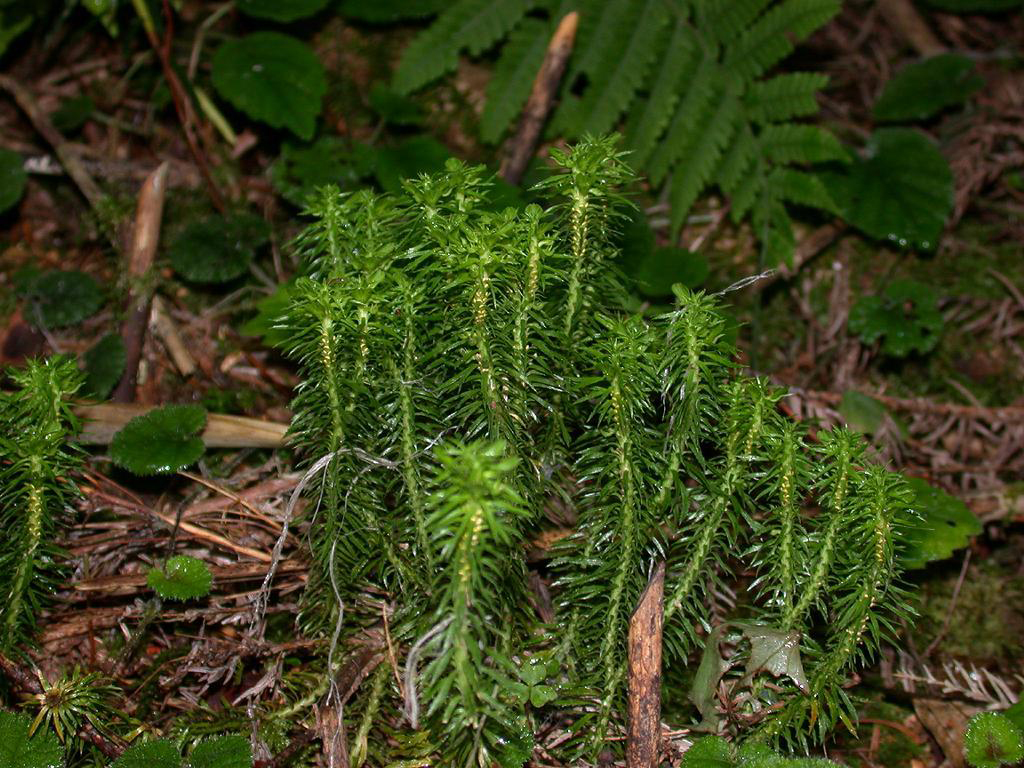
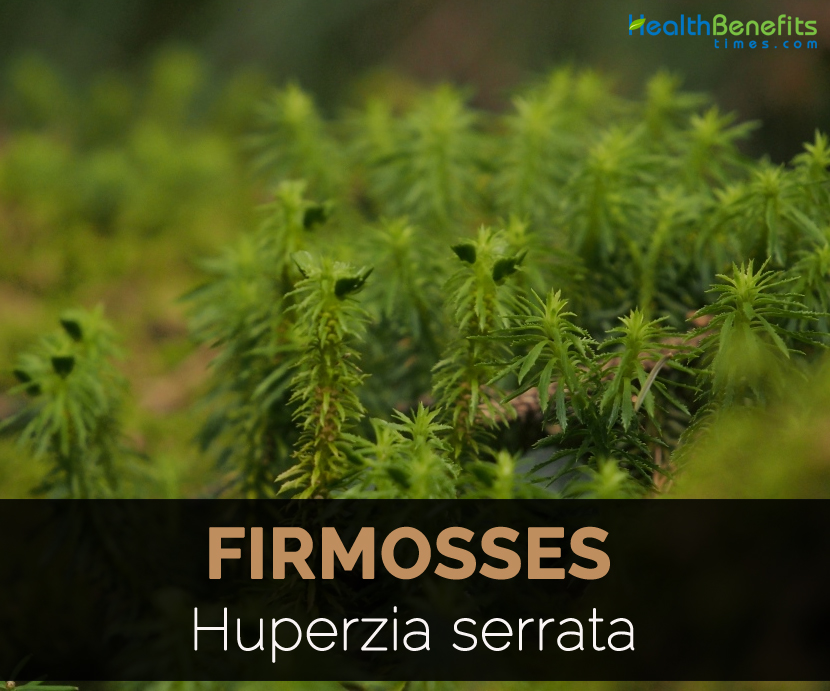
    Also known by the common names toothed or fir clubmoss, this genus is one of the oldest plants on the planet, for it grew 390 million years ago when tree forms of clubmoss reached heights of 100 feet (30 m). Now growing to about 12 inches (30 cm), the slow-growing, evergreen clubmoss looks very much like a large moss with branching green stems and simple needle-like leaf structures called microphylls. Leaves are reflexed near the base and spreading in the younger parts, spirally in various ranks, petiolate. Lamina is elliptical to lanceolate, 7-17 mm × 2-4 mm, base narrowed, margins deeply irregularly serrate or double serrate, apex abruptly acuminate and deep-green. In China it is becoming endangered but can still be found largely in rock crevices and damp forests along the Changjiang River area, and it also grows in tropical and subtropical forests of Australia and India. Also known as ground pine or creeping cedar, it is epiphytic, slow-growing, and propagated mainly by spores. It does not produce flowers.
    Firmosses
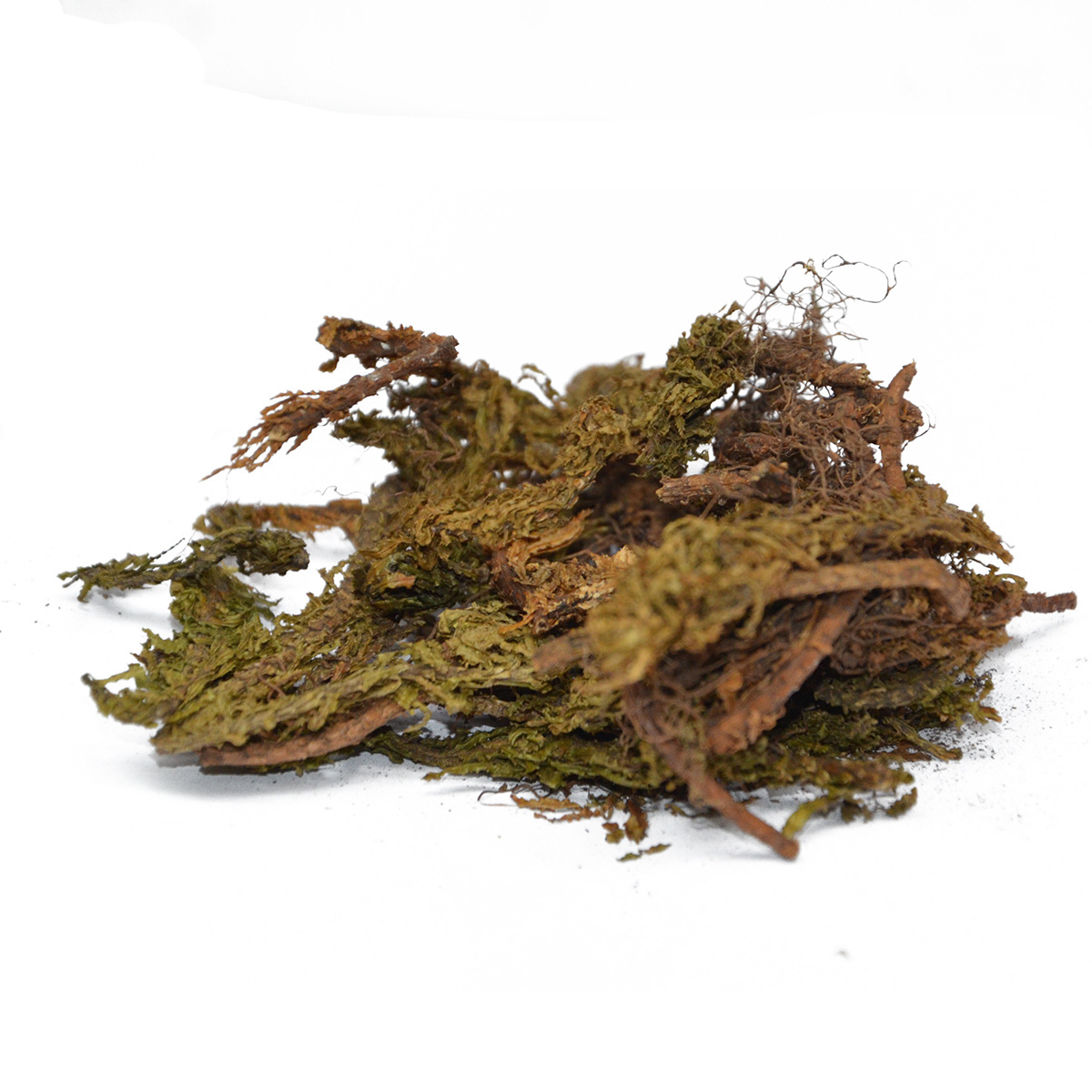
    Dried-Firmosses Dried-Firmosses
    Firmosses Firmosses
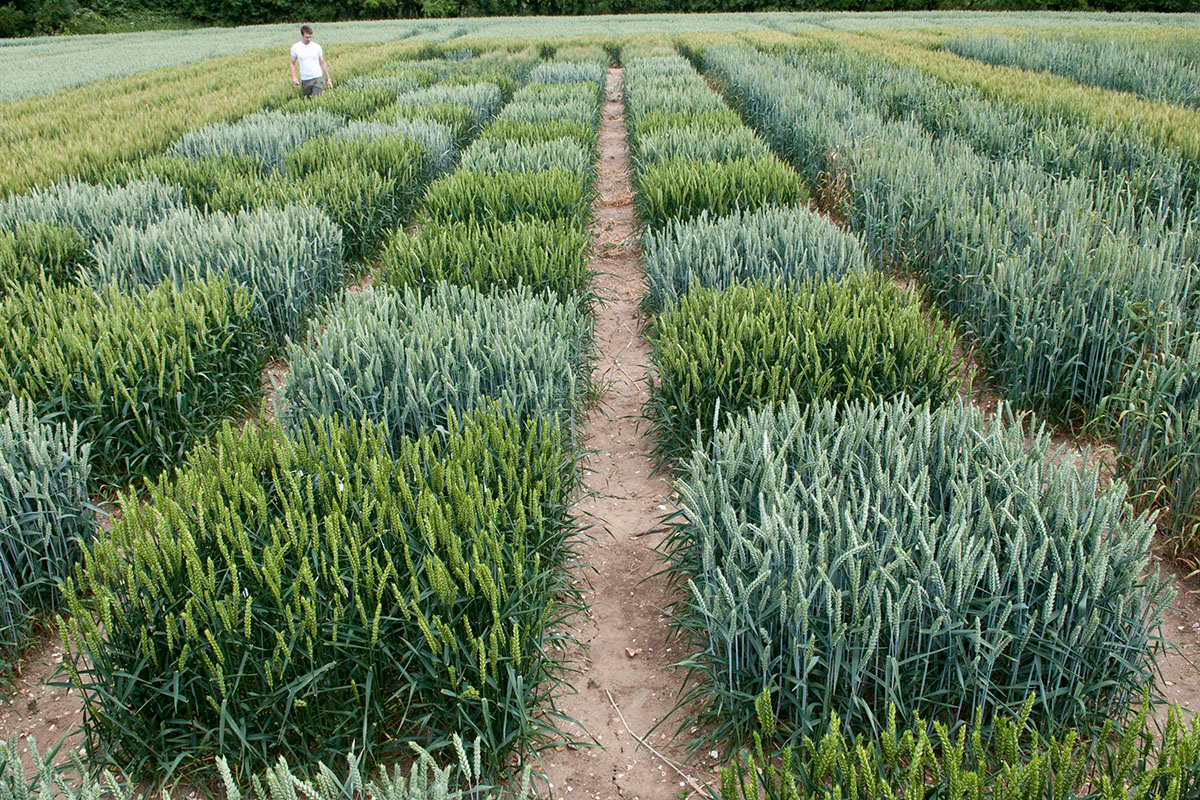
    Firmosses-farm Firmosses-farm
    Spores

    Spore sacs form on most of the current year’s growth. One sac is attached to the base of each sporophyll on upper stem and branches which turns yellow as they mature and light brown when dry. It splits to release the spores in late summer into fall. Old, dried sporangia from previous years persist on the stem. Leaf-like propagules are produced on claw-shaped branchlets which are distributed throughout the stem. Gemmae are flattened fan-shaped, about 3 to 4 mm long with three main leaves, the central leaf is oblong and two lateral leaves are more elliptic, 0.5 to 1 mm wide and all three are pointed at the tip.

    What scientists say

    In humans: Chinese clubmoss was discovered to be a brain booster in China in the 1970s when people using it had nausea and dizziness (a sign of overstimulus of memory signals). Numerous clinical studies in China show its active ingredient huperzine is an effective cognitive enhancer. Controlled studies show beneficial effects in learning and memory in students, in a meta-analysis for Alzheimer’s, in vascular and multi-infarct dementia, and in cocaine use disorder, as well as beneficial effects in initial studies of brain trauma, schizophrenia, and benign senescent forgetfulness. Huperzine was approved to treat Alzheimer’s in the 1990s and improves memory, cognition, mood, and behavioral function.

    In the lab: Huperzine works by potently boosting the memory signal acetylcholine, and  also affects another memory signal, glutamate, improving learning and memory in various (including cognitively impaired) lab models. Huperzine also has strong neuroprotective effects, lowering inflammation, affecting gene expression and mitrochondrial dysfunction in brain disorder models, and increasing neuronal growth.

    Key ingredients

    The Lycopodium alkaloids huperzine A and B (and others such as carinatumin) boost the memory signal acetylcholine. Members of the genus Phlegmariurus in the same family contain more huperzine A than Huperzia species.

    Traditional uses

    • The plant decoction acts as antispasmodic and diuretic and also used for treating irregular menstruation.
    • Dust the spores of plant on wounds or inhale to stop bleeding noses.
    • It is also used to absorb fluids from injured tissues.
    • Use it for treating colds, rheumatism, flu and colds or to relax muscles and tendons.
    • It is used for sprains, bruises, swelling, poor circulation, myasthenia gravis, organophosphate poisoning and Alzheimer’s.
    • Use the spores as a powder on skin rashes or baby bottoms.
    • It is used for treating digestive tract problems, skin ailments, relieve headaches and induce labor in pregnancy.

    How to take it

    Commonly taken in capsules or powder form, and capsules of the active ingredient huperzine A on its own is also taken. Aerial parts can be taken as a tea or added to your morning smoothie. Not to be mistaken for Lycopodium clavatum (a related species that does not contain the active huperzine). Consult your health care practitioner as dose can vary with health, age, and weight.

    https://www.youtube.com/watch?v=ujOPYxrRM8c

    Safety

    Reported entirely safe in recommended dose. Do not exceed recommended dose to avoid side effects such as blurred vision, nausea, and vomiting. More studies are required, though huperzine A is reported to have high tolerance, with no serious adverse events. Do not take in pregnancy, hypertension, epilepsy, heart conditions (it can change the heart rate), or pulmonary disorders (it increases mucous). The side effects of concentrated extract are gastrointestinal upset and discomfort, headaches, restlessness, appetite suppression, sweating and high blood pressure.

    References:

    https://en.wikipedia.org/wiki/Huperzia_serrata

    https://worldwidescience.org/topicpages/p/plant+huperzia+serrata.html

    https://uses.plantnet-project.org/en/Huperzia_serrata_(PROSEA)

    https://thesunlightexperiment.com/herb-summaries/chinese-clubmoss-huperzia-serrata

    https://vnps.org/princewilliamwildflowersociety/botanizing-with-marion/clubmosses-an-ancient-and-interesting-group-of-fern-allies/

    81%
    81%
    Awesome

    Comments

    comments

    F Herbs and Spices
    Share. Facebook Twitter Pinterest LinkedIn Tumblr Email
    Previous ArticleFacts about St. Thomas Bean
    Next Article Some Common Myths about Yoga Teacher Training

    Related Posts

    Uses of Monkey Pitcher plant

    April 16, 2024

    Traditional uses and benefits of Wild Marigold

    March 21, 2024

    Traditional uses and benefits of Drooping fig

    March 12, 2024

    Comments are closed.


    Firmosses Scientific Classification

    Scientific Name: Huperzia serrata

    Rank Scientific Name & (Common Name)
    Kingdom Plantae (Plants)
    Subkingdom Viridiplantae  (Green plants)
    Infrakingdom Streptophyta  (Land plants)
    Superdivision Embryophyta
    Division Tracheophyta  (Vascular plants, tracheophytes)
    Class Lycopodiopsida
    Subclass Lycopodiidae
    Order Lycopodiales  (Clubmosses)
    Family Lycopodiaceae  (Club mosses, club-moss family)
    Genus Huperzia Bernh. (Clubmoss)
    Species Huperzia serrata (Thunb.) Trevis. (Toothed clubmoss)
    Synonyms
    • Huperzia cubana (Herter) Holub
    • Huperzia selago subsp. serrata (Thunb.) Á.Löve & D.Löve
    • Huperzia selago var. serrata (Thunb.) A. & D.Löve
    • Huperzia serrata (Thunb.) Rothm.
    • Huperzia serrata f. intermedia (Nakai) Ching
    • Huperzia serrata var. intermedia (Nakai) Satou
    • Huperzia serrata var. serrata (Thunb.) Trevis.
    • Lycopodium cubanum Herter
    • Lycopodium khasianum D.D.Pant & P.S.Pandey
    • Lycopodium sargassifolium Liebm.
    • Lycopodium serratum Thunb.
    • Lycopodium serratum Thunb. ex Murray
    • Lycopodium serratum f. intermedium Nakai
    • Lycopodium serratum var. thunbergii Mak.
    • Lycopodium serratus var. sachalinensis Nessel
    • Plananthus serratus (Thunb. ex Murray) P.Beauv.
    • Urostachys cubanus (Herter) Herter
    • Urostachys sachalinensis (Nessel) Herter
    • Urostachys serratus (Thunb. ex Murray) Herter
    • Urostachys serratus (Thunb.) Herter ex Nessel
    • Urostachys serratus var. japonicaneotropicus Herter
    • Urostachys serratus var. japonicaneotropicus Herter ex Nessel
    • Urostachys serratus var. japonico-neotropicus Herter
    • Urostachys serratus var. japonico-neotropicus Herter ex Nessel
    • Urostachys serratus var. sachalinensis Nessel
    Categories
    • Beverages (78)
    • Dairy (28)
    • Dental Health (15)
    • Equipment (5)
    • Essential OIls (196)
    • Facts (2,939)
    • Foods (255)
    • Fruits (516)
    • Giveaway (1)
    • Grains and Cereals (36)
    • Health & Beauty (763)
    • Herbs and Spices (1,249)
    • Medicines (9)
    • Mental Health (19)
    • Nutritional value (27)
    • Nuts and seeds (73)
    • Oils (81)
    • Pets (4)
    • Poultry & Seafoods (67)
    • Pulses and Beans (16)
    • Reviews (25)
    • supplement (2)
    • Vegetables (304)
    • Weight Loss (22)

    What is Lupin Bean Flour?

    Science Backed Health Benefits of Durian (Durio zibethinus)

    Science Backed Health Benefits of Feijoa (Pineapple Guava) (Acca sellowiana)

    Science Backed Health Benefits of Gac Fruit (Momordica cochinchinensis)

    Science Backed Health Benefits of Amaranth Leaves (Amaranthus spp)

    Science Backed Health Benefits of Arrowhead (Sagittaria sagittifolia)

    ABOUT
    Home
    About us
    Contact us
    Privacy Policy
    Terms & conditions
    Disclaimer
    Direct Communication
    e-mail: [email protected]
    Gmail: [email protected]
    Whatsapp: +977-9841146511
    Viber: +977-9841146511
    Useful
    Health Wiki
    Nutrition
    Facebook Twitter Pinterest
    © 2025 www.healthbenefitstimes.com All rights reserved.

    Type above and press Enter to search. Press Esc to cancel.

    ×

    Log In

    Forgot Password?

    Not registered yet? Create an Account