Health Benefits
    Facebook Twitter Instagram
    Friday, December 5
    Facebook Twitter Pinterest
    Health Benefits
    • Home
    • Dental Health
    • Mental Health
    • Weight Loss
    • Health Wiki
    • Nutrition
    • Healthy Recipe
    • BMI Calculator
    Health Benefits
    Home»Fruits»Facts about French Mulberry
    Fruits

    Facts about French Mulberry

    By SylviaApril 10, 2019Updated:April 10, 2019No Comments5 Mins Read
    Facebook Twitter Pinterest LinkedIn Tumblr Email

    Facts about French Mulberry

    French mulberry scientifically known as Callicarpa americana is a loose open shrub appreciated for its spectacular fruits. It is of the genus Callicarpa L. (beautyberry) of flowering plants in the family Verbenaceae (Verbena family). The plant is native to Southeastern United States and commonly occurs in all states of the region except Kentucky. The species ranges from coastal Maryland south through the northern two-thirds of Florida and west to extreme southern Missouri, eastern Texas, and eastern Oklahoma. It is also found in Mexico and the West Indies. Few of the popular common names of the plant are American beautyberry, Spanish-mulberry, French-mulberry, Bermuda-mulberry, sour-berry, sow-berry, Beautyberry and American Mulberry. Genus name comes from Greek meaning beautiful fruit. Specific epithet means of the Americas. The roots, leaves, and branches were used by various Native American tribes for medicinal purposes to treat malarial fevers and rheumatism.

    Plant Description

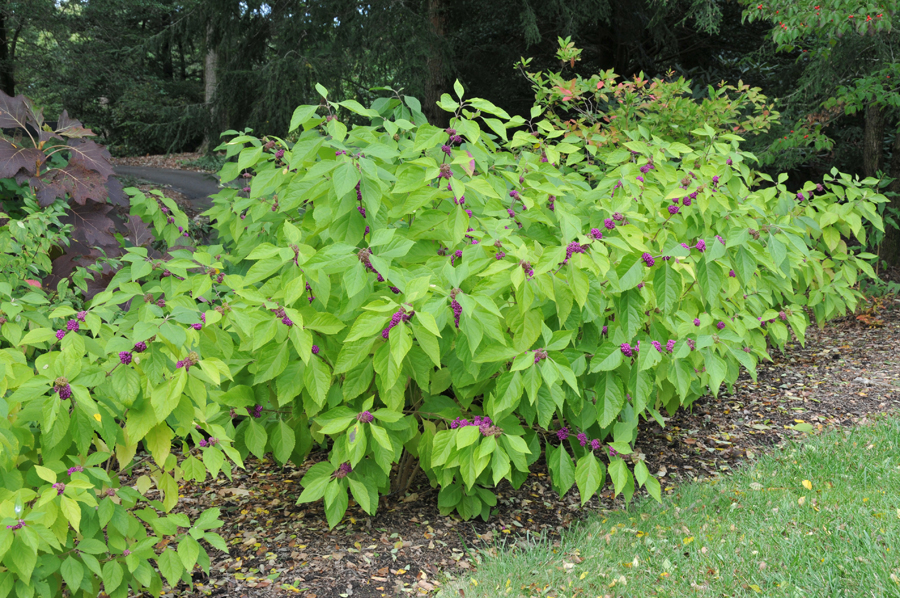
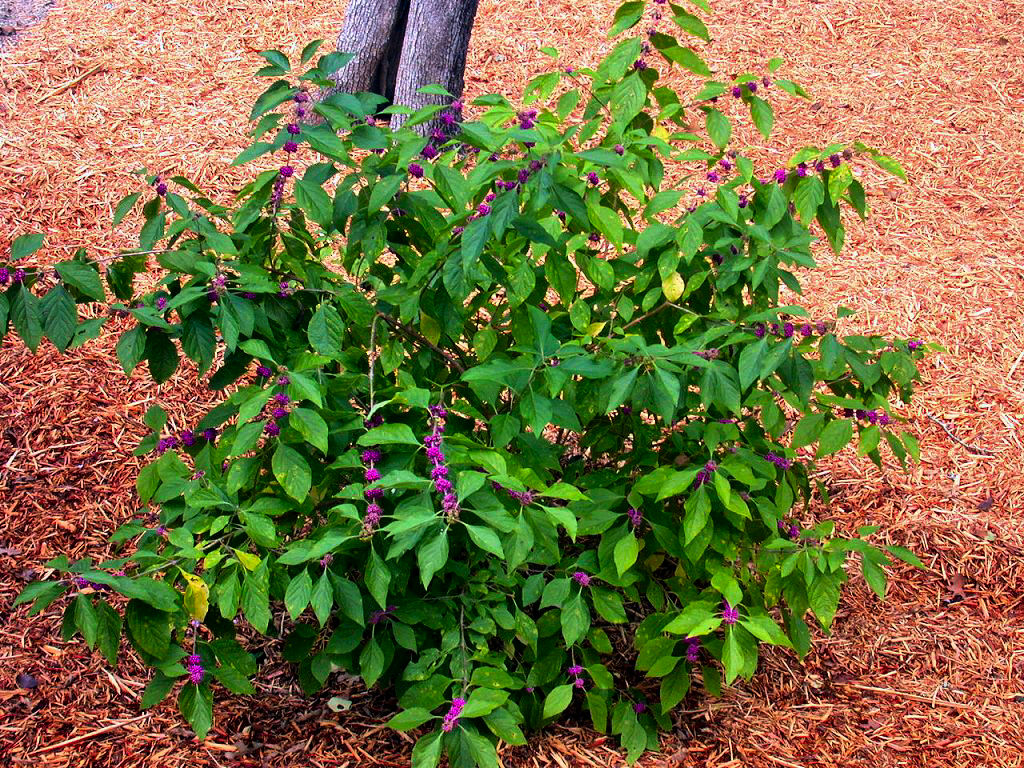
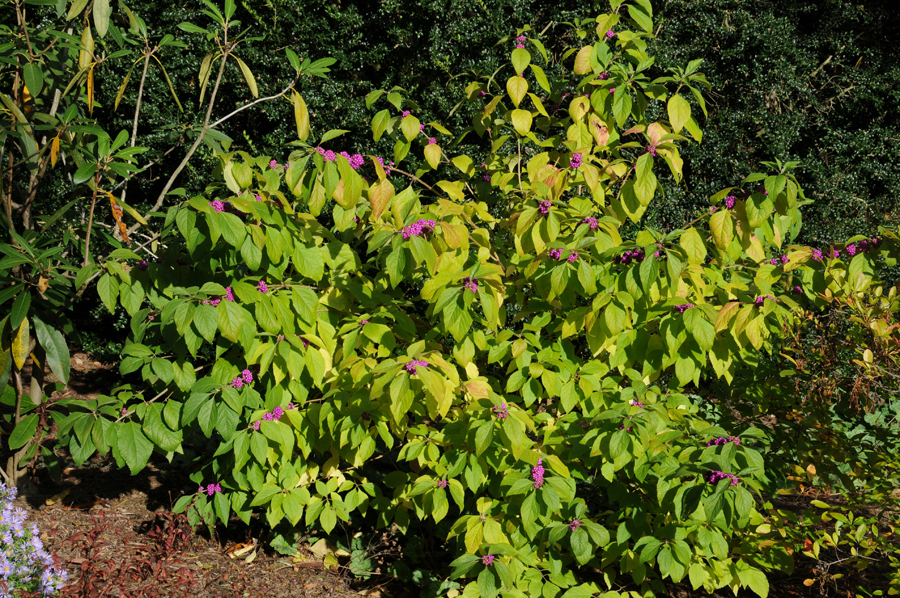
    French mulberry is a fast growing, deciduous, perennial many-branched shrub that grows five to eight feet tall and almost as wide with drooping branches. The plant is found growing in longleaf pine-turkey oak/sand-hill association, mixed hardwood-pine forests, south Florida flat woods, cabbage palm flat woods, wetland hardwood hammock plant communities, woods, particularly on moist areas under open pine canopies, thickets, right of ways, and fence rows. Normally the plant grows well in moist, moderately to well-drained, fertile loams.  However, it is tolerant of most soils and is often found on poor, clay soils along woodland edges. It will grow on dry, rocky sites and can survive soil conditions of low fertility and high salt content. Stem is slender, gray to reddish brown, and terete or four sided. Older stems are brittle and usually have small and thin scales. Twigs are slender to moderate, scruffy gray-scaly and brown, light lenticels, oval leaf scar with a single bundle scar, buds small and naked or with a few scales. Bark is brown with numerous raised lenticels.

    Leaves

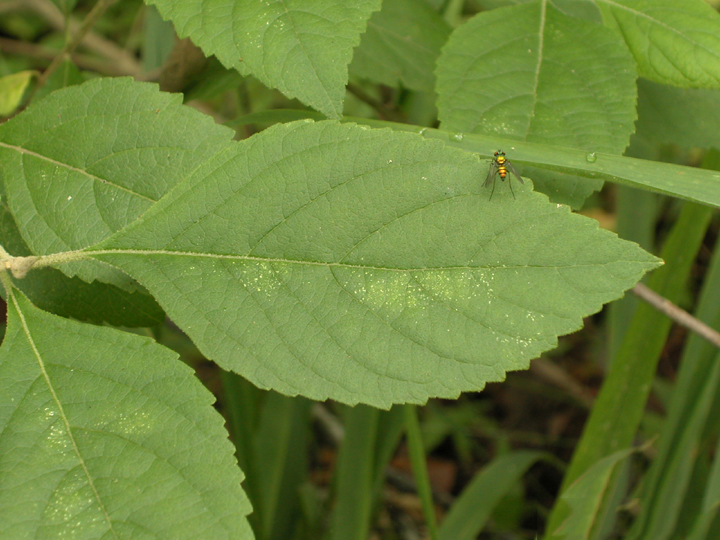
    Aromatic, soft-textured leaves are simple, opposite, and occasionally ternate (present in threes). The upper leaf surface is dark green to yellow green and glabrous to slightly pubescent, while the ventral surface is paler and pubescent with stellate trichomes. Leaves are oval to elliptical in shape, 3 to 9 in. (7.6 to 23 cm) long, and approximately 2 to 5 in. (5 to 12.7 cm) wide.  They taper to points at both the apex and base and have coarsely toothed margins and prominent veins. The pubescent petioles are 0.6 to 1.4 in. (1.5 to 3.5 cm) long.

    Flower

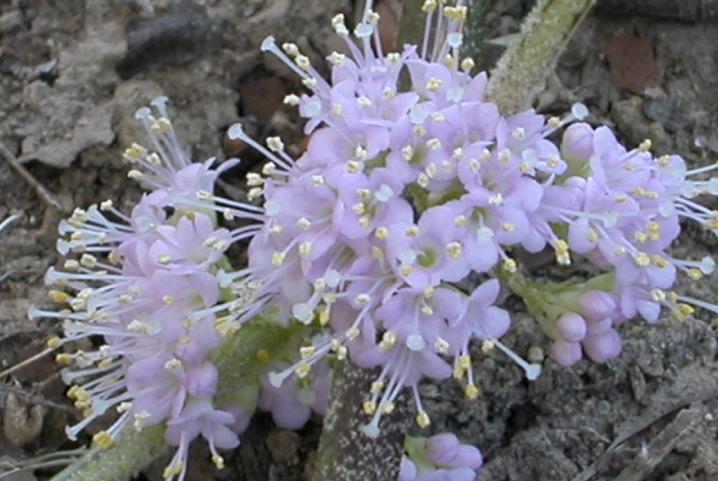
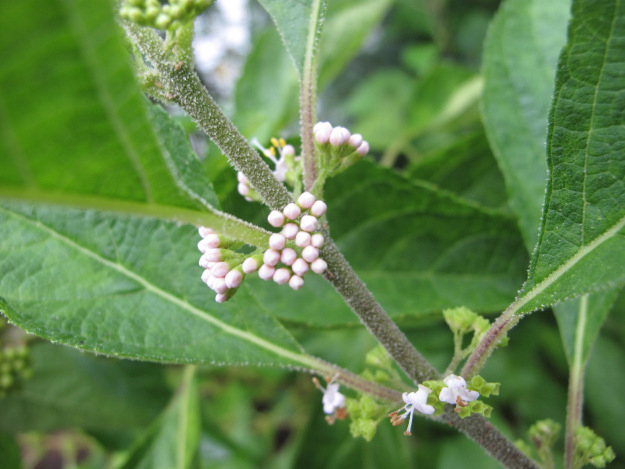
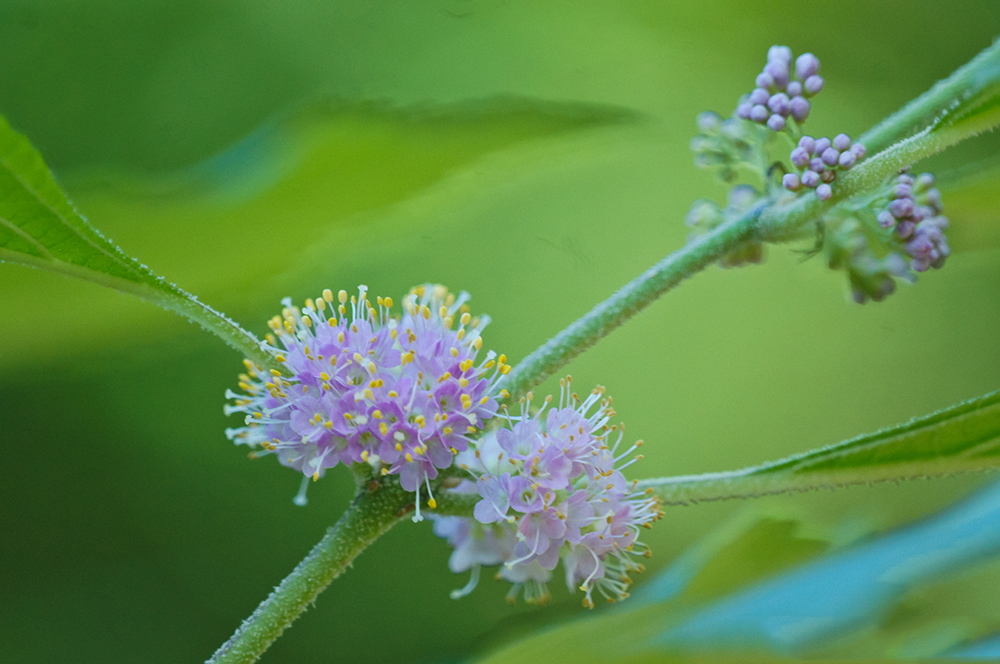
    The perfect, pale blue to pale pink flowers is 0.12 to 0.2 in. (3 to 5 mm) long and form clusters of 0.33 to 1.5 in. (0.85 to 3.8 cm) at the leaf axils of current growth. Flowering begins as early as March and April but is most abundant in June and July. Flowers and new leaves may be produced at branch tips throughout the summer and early fall, even while mature fruits are present on the same plant.

    Fruits

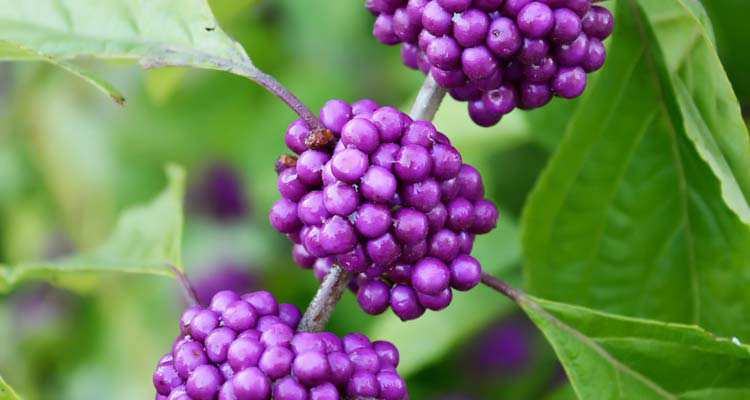
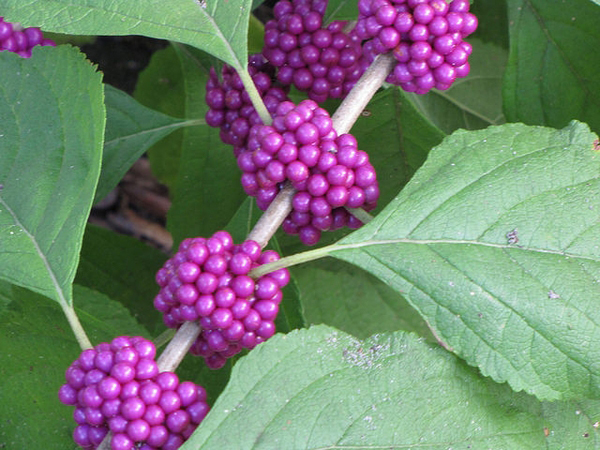
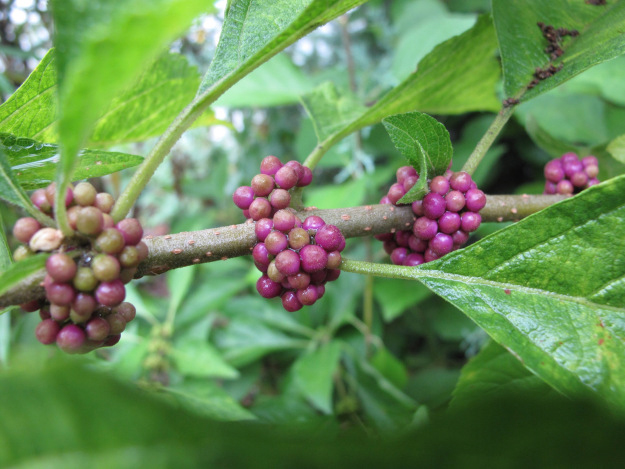
    Fertile flowers are followed by showy, bright violet- to reddish-purple drupes (sometimes called berries). They are the most prominent characteristic of American beautyberry. Drupes are 0.13 to 0.25 in. (3 to 6 mm) in diameter and are borne in the leaf axils in dense, round clusters that encircle the stem at regular intervals. Drupe consists of 4 yellowish brown seeds, each of which is about 0.03 in. (0.7 mm) long, rounded on the back, and flattened on the inner surface. The drupes may be noticeable as early as June but become more conspicuous with maturity in late summer and early fall. Fruits persist well into winter if not eaten by birds and other wildlife.


    French mulberry Image Gallery
    Bushes-of-French-mulberry Bushes-of-French-mulberry
    Closer-view-of-flower-of-French-Mulberry Closer-view-of-flower-of-French-Mulberry
    Closer-view-of-fruit-of-French-mulberry Closer-view-of-fruit-of-French-mulberry
    Flower-buds-of-French-mulberry Flower-buds-of-French-mulberry
    Flower-of-French-Mulberry-plant Flower-of-French-Mulberry-plant
    French-mulberry French-mulberry
    French-Mulberry-plant French-Mulberry-plant
    French-mulberry--plant-growing-wild French-mulberry--plant-growing-wild
    Leaves-of-French-Mulberry Leaves-of-French-Mulberry
    Maturing-French-mulberry Maturing-French-mulberry
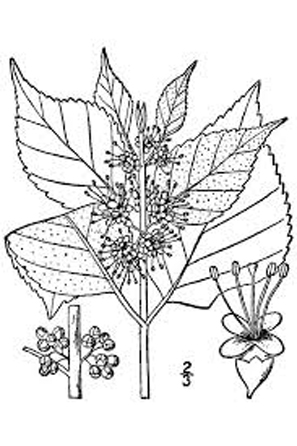
    Plant-Illustration-of-French-mulberry Plant-Illustration-of-French-mulberry
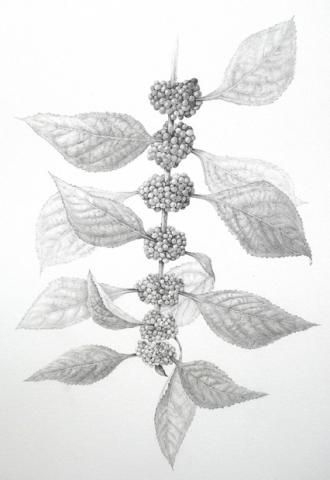
    Sketch-of--French-mulberry Sketch-of--French-mulberry
    Traditional uses and benefits of French mulberry

    • Decoction of the root bark has been used as a diuretic.
    • Leaves are a cure for dropsy.
    • Tea made from the roots is used in the treatment of dysentery and stomach aches.
    • Tea made from the roots and berries is used in the treatment of colic.
    • Some native North American Indian tribes used the leaves and roots in sweat baths for the treatment of malaria, rheumatism and fevers.
    • Roots were used to treat dizziness, stomachaches and dysentery.
    • Root and leaf tea was used in sweat baths for rheumatism, fevers, and malaria.
    • Root tea was used for dysentery and stomach aches.
    • Root and berries were used for colic and as a treatment for a wide variety of common ailments.
    • Bark from the stems and the roots were used to treat itchy skin.
    • Root of this plant is useful in relieving rashes on the tongue if chewed.

    Other Facts

    • In the early 20th century, farmers would crush the leaves and place them under the harnesses of horses and mules to repel mosquitoes.
    • Farmers rubbed the crushed leaves on themselves to repel mosquitoes and biting bugs.
    • American beautyberry is used as an ornamental shrub in mass plantings, borders and container planting.
    • Beautyberry is occasionally planted as an ornamental outside its natural range.

    References:

    https://www.itis.gov/servlet/SingleRpt/SingleRpt?search_topic=TSN&search_value=32144#null

    https://davesgarden.com/guides/pf/go/2657/

    https://npgsweb.ars-grin.gov/gringlobal/taxonomydetail.aspx?id=8516

    https://pfaf.org/user/Plant.aspx?LatinName=Callicarpa+americana

    http://www.missouribotanicalgarden.org/PlantFinder/PlantFinderDetails.aspx?kempercode=j580

    https://www.botanical.com/botanical/mgmh/m/mulcom62-bu.html

    https://plants.usda.gov/core/profile?symbol=CAAM2

    https://plants.usda.gov/factsheet/pdf/fs_caam2.pdf

    https://www.wildflower.org/plants/result.php?id_plant=caam2

    http://www.theplantlist.org/tpl/record/kew-30660

    https://www.fs.fed.us/database/feis/plants/shrub/calame/all.html

    https://en.wikipedia.org/wiki/Callicarpa

    https://en.wikipedia.org/wiki/Callicarpa_americana

    https://www.cabi.org/isc/datasheet/13917

    74%
    74%
    Awesome

    Comments

    comments

    F Fruits
    Share. Facebook Twitter Pinterest LinkedIn Tumblr Email
    Previous ArticleHow to manage your Stress
    Next Article Natural Remedies For Common Health Problems

    Related Posts

    Facts about Saffron Plum

    February 11, 2024

    Health benefits of Assyrian plum

    February 8, 2024

    Facts about Red Chokeberry

    February 4, 2024

    Comments are closed.


    French Mulberry Facts

    French mulberry Quick Facts
    Name: French mulberry
    Scientific Name: Callicarpa americana
    Origin Southeastern United States and commonly occurs in all states of the region except Kentucky
    Colors Green young turning to purple to blue as they mature
    Shapes Clusters of small purple to blue berries or drupes encircle the woody stems. Each small berry in the cluster contains two to four seeds about 1/16 in. long
    Taste Bitter, astringent
    Health benefits Beneficial for dropsy, dysentery, stomach aches, colic, malaria, rheumatism, fevers, dizziness and itchy skin
    Name French Mulberry
    Scientific Name Callicarpa americana
    Native Southeastern United States and commonly occurs in all states of the region except Kentucky. The species ranges from coastal Maryland south through the northern two-thirds of Florida and west to extreme southern Missouri, eastern Texas, and eastern Oklahoma
    Common Names American beautyberry, Spanish-mulberry, French-mulberry, Bermuda-mulberry, sour-berry, sow-berry, Beautyberry, American Mulberry
    Name in Other Languages Arabic: Tūt faransā (توت فرنسا )
    Chinese:  Měi zhōu zǐ zhū (美洲紫珠)
    Czech:  Krásnoplodka americká
    Danish:  Glasbær-slægten
    English:  American beautyberry, Beauty berry, French mulberry
    French:  American arbuste aux bonbons, Porphyra, Callicarpe d’Amérique
    German:  Amerikanische Schönfrucht, Liebesperlenstrauch, wirbelbeerre
    Italian: Callicarpa d’america
    Russian: Krasivoplodnik amerikanskij (Красивоплодник американский)
    Serbian:  Kalikarpe  (Каликарпе)
    Spanish: Filigrana
    Vietnamese: Tử châu Mỹ
    Plant Growth Habit Fast growing, deciduous, perennial many-branched shrub
    Growing Climates Longleaf pine-turkey oak/sand-hill association, mixed hardwood-pine forests, south Florida flat woods, cabbage palm flat woods, wetland hardwood hammock plant communities, woods, particularly on moist areas under open pine canopies, thickets, right of ways, and fence rows
    Soil Grows well in moist, moderately to well-drained, fertile loams.  However, it is tolerant of most soils and is often found on poor, clay soils along woodland edges.
    Plant Size Five to eight feet tall and almost as wide with drooping branches
    Bark Brown with numerous raised lenticels
    Stem Slender, gray to reddish brown, and terete or four sided. Older stems are brittle and usually have small, thin scales
    Twigs Slender to moderate, scruffy gray-scaly and brown, light lenticels, oval leaf scar with a single bundle scar, buds small and naked or with a few scales
    Leaf Elliptical to ovate shaped leaves have an opposite arrangement with saw toothed margins. The underside of the leaves may be covered with wooly like hairs.
    Flowering season June to July
    Flower Perfect, pale blue to pale pink flowers is 0.12 to 0.2 in. (3 to 5 mm) long and form clusters of 0.33 to 1.5 in. (0.85 to 3.8 cm) at the leaf axils of current growth
    Fruit Shape & Size Showy, bright violet- to reddish-purple drupes (sometimes called berries). They are the most prominent characteristic of American beautyberry. Drupes are 0.13 to 0.25 in. (3 to 6 mm) in diameter and are borne in the leaf axils in dense, round clusters that encircle the stem at regular intervals
    Fruit Color Green young turning to purple to blue as they mature
    Propagation By transplanting volunteer plants, softwood cuttings, or seeds
    Taste Bitter, astringent
    Plant Parts Used Leaves
    Season August to November

    French mulberry Scientific Classification

    Scientific Name: Callicarpa americana

    Rank Scientific Name & (Common Name)
    Kingdom Plantae (Plants)
    Subkingdom Tracheobionta (Vascular plants)
    Infrakingdom Streptophyta  (land plants)
    Superdivision Spermatophyta (Seed plants)
    Division Magnoliophyta (Flowering plants)
    Subdivision Spermatophytina  (spermatophytes, seed plants, phanérogames)
    Class Magnoliopsida (Dicotyledons)
    Subclass Asteridae
    Superorder Asteranae
    Order Lamiales
    Family Verbenaceae (Verbena family)
    Genus Callicarpa L. (beautyberry)
    Species Callicarpa americana L. (American beautyberry)
    Synonyms
    • Burchardia americana (L.) Duhamel
    • Burchardia callicarpa Crantz
    • Callicarpa americana f. lactea (F.J.Müll.) Rehder
    • Callicarpa americana var. alba Rehder
    • Callicarpa americana var. lactea F.J.Müll.
    • Callicarpa americana var. purpurea F.J.Müll.
    • Callicarpa serrata Moench
    • Callicarpa viburnifolia Salisb.
    • Johnsonia americana (L.) Mill.
    Categories
    • Beverages (78)
    • Dairy (28)
    • Dental Health (15)
    • Equipment (5)
    • Essential OIls (196)
    • Facts (2,939)
    • Foods (255)
    • Fruits (516)
    • Giveaway (1)
    • Grains and Cereals (36)
    • Health & Beauty (763)
    • Herbs and Spices (1,249)
    • Medicines (9)
    • Mental Health (19)
    • Nutritional value (27)
    • Nuts and seeds (73)
    • Oils (81)
    • Pets (4)
    • Poultry & Seafoods (67)
    • Pulses and Beans (16)
    • Reviews (25)
    • supplement (2)
    • Vegetables (304)
    • Weight Loss (22)

    What is Lupin Bean Flour?

    Science Backed Health Benefits of Durian (Durio zibethinus)

    Science Backed Health Benefits of Feijoa (Pineapple Guava) (Acca sellowiana)

    Science Backed Health Benefits of Gac Fruit (Momordica cochinchinensis)

    Science Backed Health Benefits of Amaranth Leaves (Amaranthus spp)

    Science Backed Health Benefits of Arrowhead (Sagittaria sagittifolia)

    ABOUT
    Home
    About us
    Contact us
    Privacy Policy
    Terms & conditions
    Disclaimer
    Direct Communication
    e-mail: [email protected]
    Gmail: [email protected]
    Whatsapp: +977-9841146511
    Viber: +977-9841146511
    Useful
    Health Wiki
    Nutrition
    Facebook Twitter Pinterest
    © 2025 www.healthbenefitstimes.com All rights reserved.

    Type above and press Enter to search. Press Esc to cancel.

    ×

    Log In

    Forgot Password?

    Not registered yet? Create an Account