Health Benefits
    Facebook Twitter Instagram
    Sunday, December 14
    Facebook Twitter Pinterest
    Health Benefits
    • Home
    • Dental Health
    • Mental Health
    • Weight Loss
    • Health Wiki
    • Nutrition
    • Healthy Recipe
    • BMI Calculator
    Health Benefits
    Home»Health & Beauty»Health Benefits of Frostwort
    Health & Beauty

    Health Benefits of Frostwort

    By s mJanuary 31, 2020Updated:January 31, 2020No Comments4 Mins Read
    Facebook Twitter Pinterest LinkedIn Tumblr Email

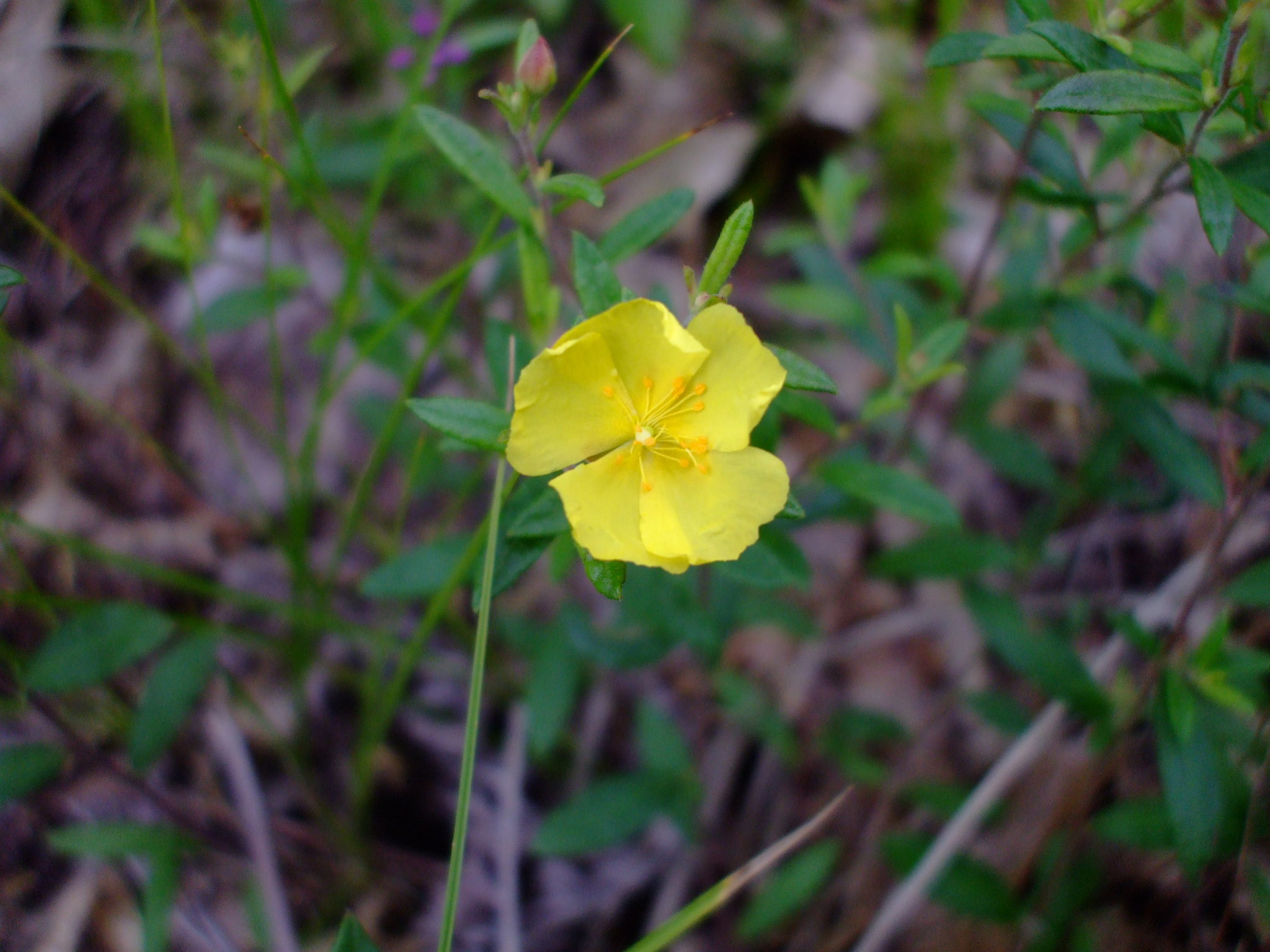
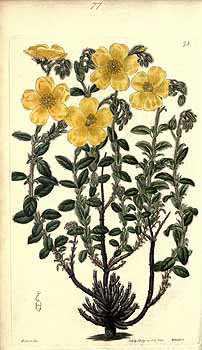
    This flowering plant, with its large, bright yellow face, is indigenous to all parts of the United States, growing in dry, sandy soils and blossoming from May to July. The flowers open in sunshine and cast their petals the next day. When seen growing you will notice some with petals and some without. The Rock rose is a perennial herb, simple, ascending downy stems about 1 ft. high. The leaves are alternate, from ½–1 in. long, and about a quarter as wide. The leaves, as well as the stem, are covered with a white down, hence its name.

    The whole plant is official, having slight aromatic odour; and astringent and bitter taste.

    Professor Eaton, in his work on Botany, records this curious fact of the plant: “In November and December of 1816, I saw hundreds of these plants sending out broad, thin covered ice crystals, about an inch in breadth from near the roots. These were melted away by day, and renewed every morning for more than twenty-five days in succession.”

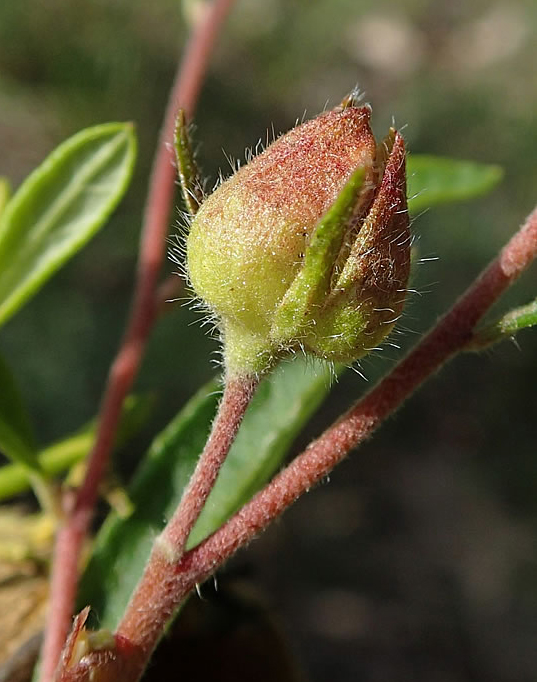
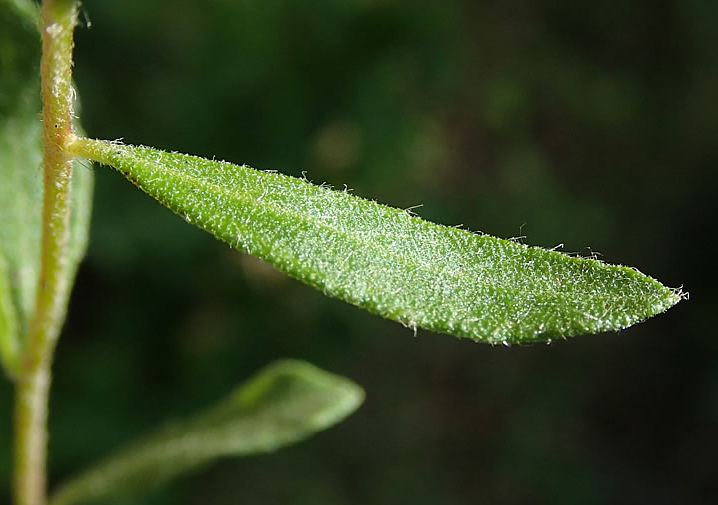
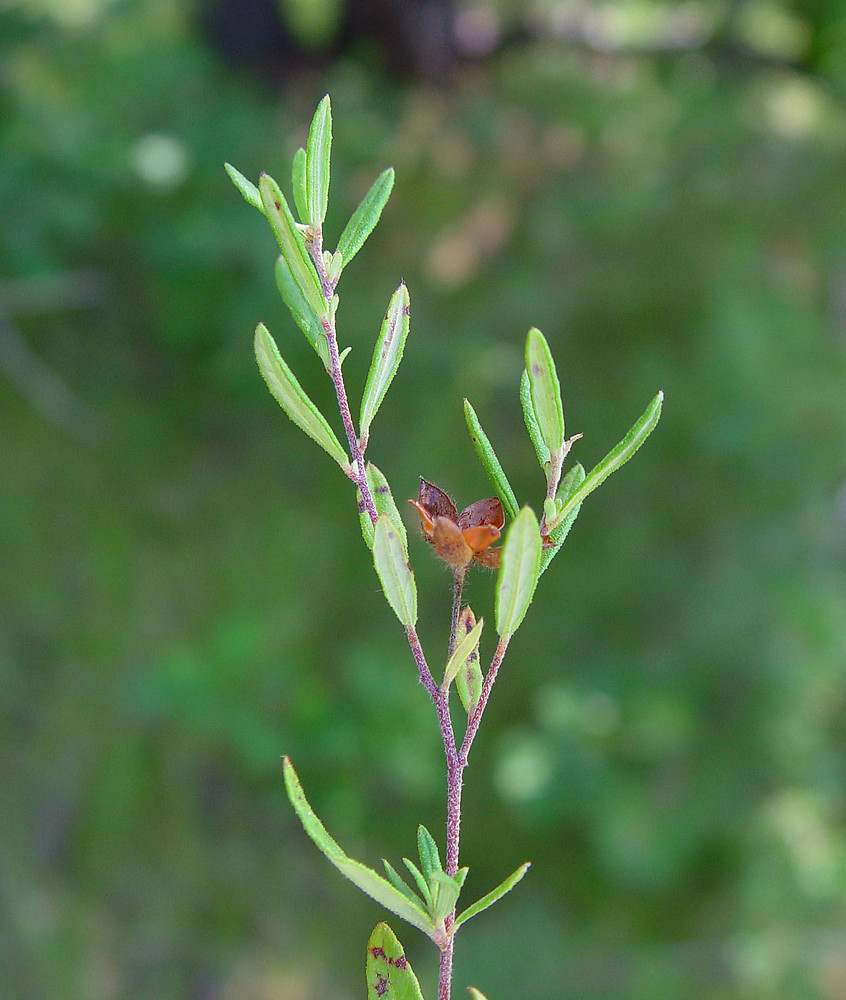
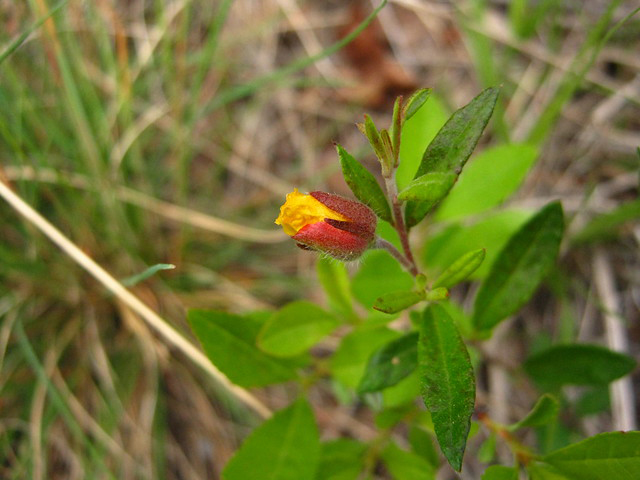
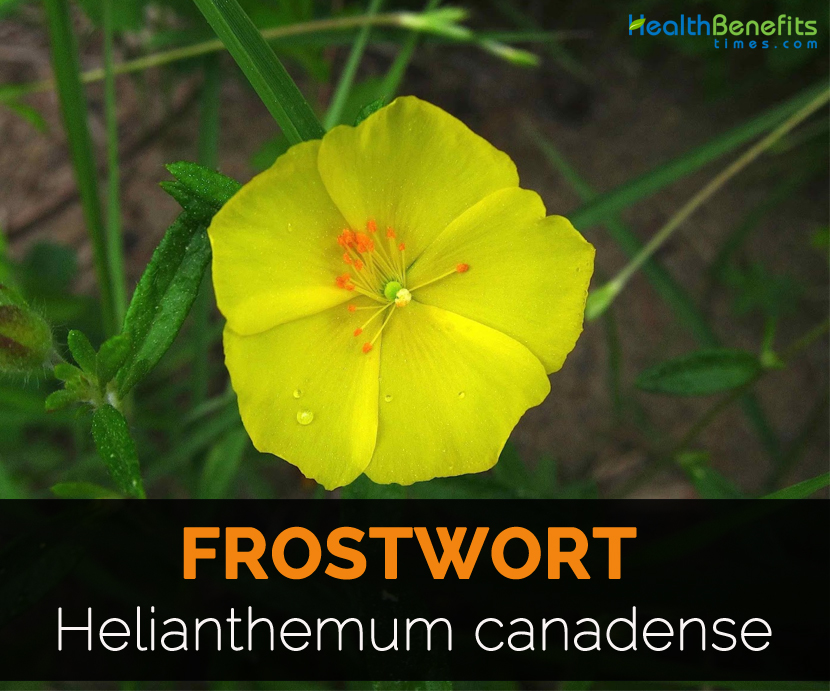
    Close-view-of-Frostwort-flower Flower-buds-of-Frostwort Frostwort-leaf Frostwort-leaves Opening-buds-of-Frostwort-flower Plant-illustration-of-Frostwort
    [Show thumbnails]
    Plant description

    Frostwort is a flowering perennial plant 8-24 inches high which blooms from May to June. Normally each stem has single flower but rarely can have two. Flower is yellow with five petals and between ¼ and 1 ¼ inches across. Leaves are covered in hairs and alternate in pattern. Stems are covered in hairs and are brown or green in color.

    Facts about Frostwort

    Frostwort Quick Facts
    Name: Frostwort
    Scientific Name: Helianthemum canadense
    Origin Eastern North America
    Name Frostwort
    Scientific Name Helianthemum canadense
    Native Eastern North America
    Common/English Name Rock Rose, Frostweed, Frost Plant, Sun Rose, Scrofula Plant, Longbranch frostweed, Canada frostweed, Rock frost, Frostplant, Frostwort
    Name in Other Languages English: Canada frostweed, Longbranch frostweed;
    French: Hélianthème du Canada
    Soil Dry, base-rich
    Medicinal part The herb
    Flowering Season May until July
    Flower Bright yellow, saucer-shaped

    Flower

    Flowers are single stalked at the tip of stem or branch, sometimes two but only one flower opens at a time. Flowers are about ¾ to 1¼ inch across with five yellow petals and 10 or more orange tipped stamens fanning around small central column. Flowers are five green to red tinged sepals, inner three broadly triangular, outer two very narrow and half as long to nearly as long as the inner. Sepals are covered in a mix of short star shaped hairs, long and spreading to ascending hairs.

    Leaves and stems

    Leaves are alternate, narrowly elliptic or wider, 1 ¼ inch to 1/3 inch wide, pointed or blunt at the tip, stalkless and tapering at the base. Upper surface is shiny and covered in short star shaped hairs mixed with scattered, long and unbranched hairs. Typically leaves on branches are smaller than those on main stem and do not have long and unbranched hairs. The undersides of leaves are densely covered in short and star shaped hairs providing gray-green appearance. Stems are hairy, round, green or brown, initially branched forming several ascending branches after initial yellow petaled flower has finished blooming.

    Fruit

    A round capsule which is enclosed by persistent sepals resembling cleistogamous flowers. Usually, the fruits developed from yellow petaled flowers are larger and has more seeds than fruit developed from cleistogamous flowers.

    Medicinal uses

    • Dried leaves act as antiscrofulatic, laterative, tonic and astringent.
    • Tea made from leaves is used for treating kidney ailments and sore throats.
    • Strong leaf tea is used for treating scrofula.
    • Apply it externally to eye infections and skin diseases.
    • Use it in the form of syrup, decoction and fluid extract.

    Uses

    Has been used for cancerous degenerations, especially the oil procured from the plant. In scrofula, its valuable contents have performed with astonishing admiration.

    It can be used with advantage in diarrhoea, as a gargle in scarlatina and aphthous ulcers (small white ulcers on the tongue, and in the mouth) and as a wash in scrofulous ophthalmia. Effective in venereal treatment, obviating the many side-effects of the popular treatment.

    It is used in the form of decoction, syrup, or fluid extract, but is advised to be used with Dicentra canadensis (Corydalis) and Stillingia.

    Dose

    Steep 1 teaspoonful of the granulated herb in 1 cup of boiling water for ½ hr., strain, take 1 tablespoonful three to six times a day. Of the tincture, 5–10 min.

    Externally

    • The leaves made into a poultice are effective in treating scrofulous tumours, and ulcers.
    • Surely there is something in the unruffled calm of nature that exceeds our anxieties and doubts, and is in control by obeying her.

    Precautions

    Overdose causes nausea and vomiting.

    References:

    https://www.itis.gov/servlet/SingleRpt/SingleRpt?search_topic=TSN&search_value=22258#null

    https://en.wikipedia.org/wiki/Helianthemum_canadense

    https://pfaf.org/user/Plant.aspx?LatinName=Helianthemum+canadense

    http://temperate.theferns.info/plant/Helianthemum+canadense

    https://www.minnesotawildflowers.info/flower/canada-frostweed

    https://en.wikipedia.org/wiki/Helianthemum

    https://practicalplants.org/wiki/Helianthemum_canadense

    https://en.wikipedia.org/wiki/Helianthemum_nummularium

    https://www.henriettes-herb.com/eclectic/king1854/helianthemum.html

    https://practicalplants.org/wiki/Helianthemum_canadense

    78%
    78%
    Awesome

    Comments

    comments

    F Health & Beauty
    Share. Facebook Twitter Pinterest LinkedIn Tumblr Email
    Previous ArticleKnow about Cotton Rose
    Next Article Dental implants – Jewels of your mouth

    Related Posts

    How to cleanse liver naturally?

    February 19, 2024

    Health benefits of False Patchouli

    December 29, 2023

    Health benefits of Fragrant Premna

    December 28, 2023

    Comments are closed.


     Frostwort Scientific Classification

    Scientific Name: Helianthemum canadense

    Rank Scientific Name & (Common Name)
    Kingdom Plantae (Plants)
    Subkingdom Viridiplantae  (Green plants)
    Infrakingdom Streptophyta  (Land plants)
    Superdivision Embryophyta
    Division Tracheophyta  (Vascular plants, tracheophytes)
    Class Magnoliopsida
    Subclass Dilleniidae
    Order Malvales
    Family Cistaceae (Rock roses)
    Genus Helianthemum Mill. (Frostweed)
    Species Helianthemum canadense (L.) Michx. (Canada frostweed, hélianthème du Canada, longbranch frostweed)
    Categories
    • Beverages (78)
    • Dairy (28)
    • Dental Health (15)
    • Equipment (5)
    • Essential OIls (196)
    • Facts (2,937)
    • Foods (255)
    • Fruits (516)
    • Giveaway (1)
    • Grains and Cereals (36)
    • Health & Beauty (761)
    • Herbs and Spices (1,249)
    • Medicines (9)
    • Mental Health (19)
    • Nutritional value (27)
    • Nuts and seeds (73)
    • Oils (81)
    • Pets (4)
    • Poultry & Seafoods (67)
    • Pulses and Beans (16)
    • Reviews (25)
    • supplement (2)
    • Vegetables (304)
    • Weight Loss (22)

    What is Lupin Bean Flour?

    Science Backed Health Benefits of Durian (Durio zibethinus)

    Science Backed Health Benefits of Feijoa (Pineapple Guava) (Acca sellowiana)

    Science Backed Health Benefits of Gac Fruit (Momordica cochinchinensis)

    Science Backed Health Benefits of Amaranth Leaves (Amaranthus spp)

    Science Backed Health Benefits of Arrowhead (Sagittaria sagittifolia)

    ABOUT
    Home
    About us
    Contact us
    Privacy Policy
    Terms & conditions
    Disclaimer
    Direct Communication
    e-mail: [email protected]
    Gmail: [email protected]
    Whatsapp: +977-9841146511
    Viber: +977-9841146511
    Useful
    Health Wiki
    Nutrition
    Facebook Twitter Pinterest
    © 2025 www.healthbenefitstimes.com All rights reserved.

    Type above and press Enter to search. Press Esc to cancel.

    ×

    Log In

    Forgot Password?

    Not registered yet? Create an Account