

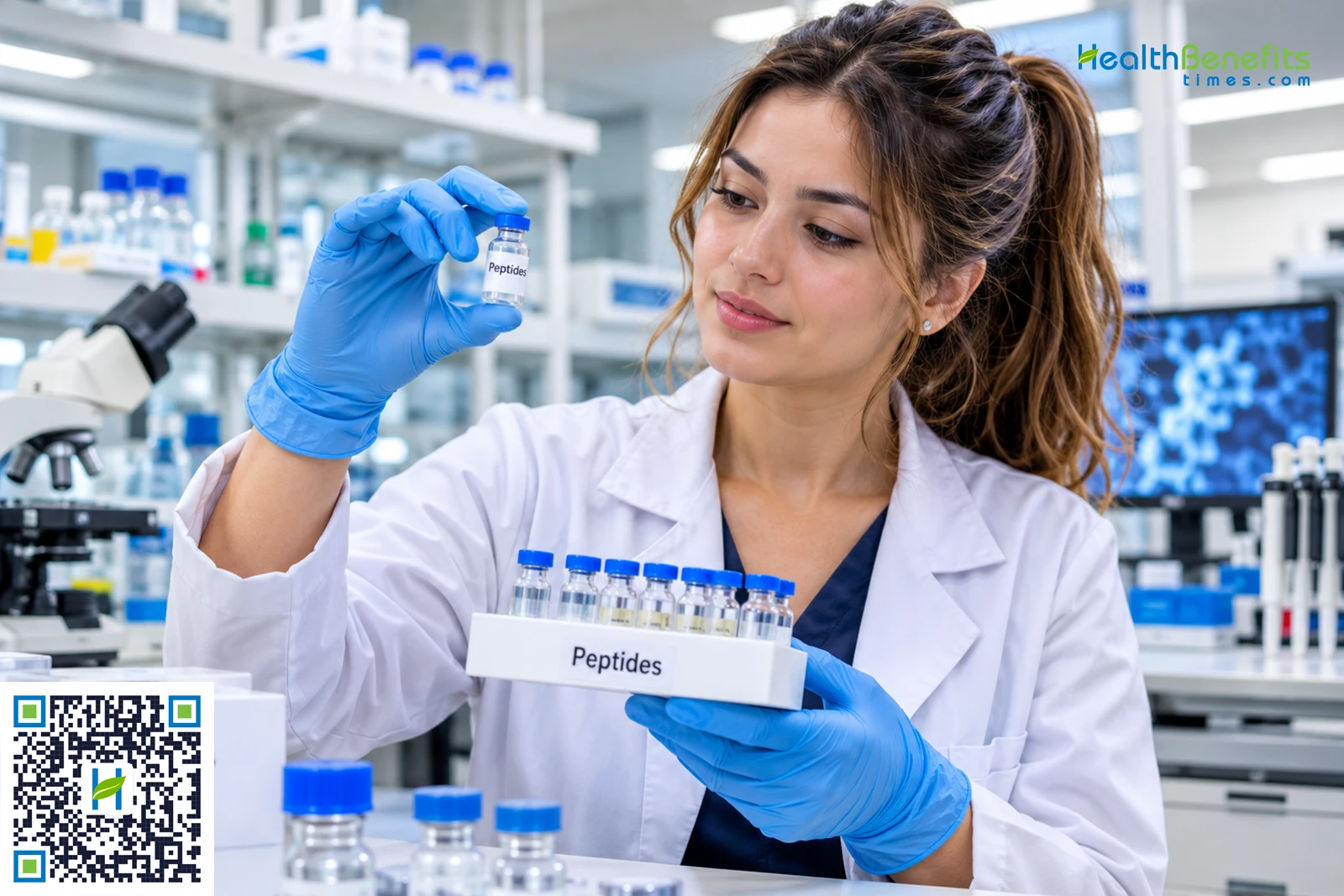
Most peptide problems in the lab are not chemistry problems. They are handling problems. A vial that spent an afternoon on a warm bench, a stock solution refrozen five times, a tube left open while someone answered the phone: any of these can leave a researcher with data that looks like biology but is really degradation.
Labs comparing peptides uk suppliers offer quickly learn that the vial is only half the story. How it is handled afterwards matters just as much. What follows is a plain walk through the points that tend to matter most. It is general guidance only, so always follow the supplier’s instructions and your institution’s protocols for the specific compound.
Know why peptides are fragile
A peptide is a chain of amino acids, and the sequence decides how it behaves. Some sequences are prone to oxidation, particularly those containing methionine, cysteine or tryptophan. Others absorb moisture or clump together in solution. Lyophilised (freeze-dried) powder is generally more stable than a dissolved peptide, which is why most are shipped that way. Once a peptide is in solution, the clock tends to run faster.
Keep it cold, dry and dark
Unless the supplier says otherwise, lyophilised peptides are usually kept in a freezer, sealed tightly and protected from light. Before opening a cold vial, let it come up to room temperature with the cap still on. Opening it straight from the freezer lets moisture condense on the powder, and that moisture can speed up breakdown. It is a small step that is easy to forget on a busy day.
Choose solvents with care
Not every peptide dissolves in water. Charged residues, hydrophobic stretches and overall length all play a part, and some sequences need a little organic solvent or an adjusted pH to go into solution properly. Use sterile, good-quality solvents, and check what your downstream assay can tolerate. A solvent that dissolves the peptide beautifully but upsets your cells has not solved anything.
Aliquot, then label everything
Repeated freeze-thaw cycles are one of the most common causes of loss in stock solutions. Dividing a stock into single-use aliquots means each portion is thawed once and then used or discarded. Label every tube with the compound name, concentration, batch number and date. Tubes marked “peptide, Tuesday” have a way of becoming mysteries.
Check before you trust it
If an experiment gives an unexpected result, ask whether the peptide is still what you think it is. Comparing a fresh aliquot against an older one, or repeating analytical checks such as HPLC where your facility offers them, can show whether degradation is the cause. Keep the original Certificate of Analysis to hand as your baseline.
Remember the regulatory side
Research-use-only products are still subject to UK rules. Guidance from the MHRA and the Health and Safety Executive is a sensible starting point, alongside your institution’s safety and procurement policies. These materials are for laboratory investigation only and are not intended for human or veterinary use.
Final thoughts
Good peptide handling is mostly routine: keep things cold and dry, thaw gently, aliquot early and label properly. None of it is difficult, but all of it is easy to skip when time is short. Build the habits into your protocol and your results will reflect the biology rather than the bench.