

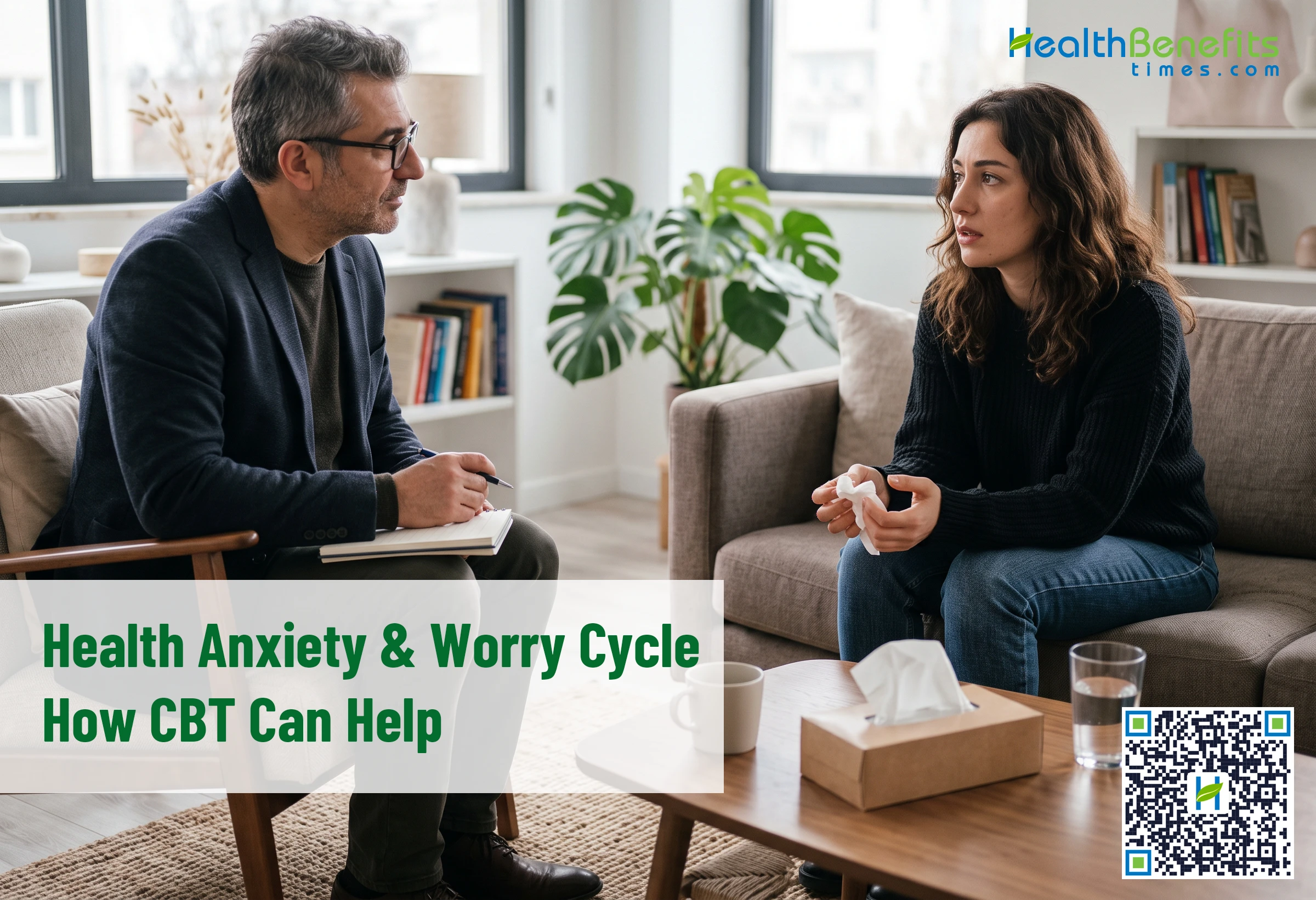
Worrying about your health from time to time is normal. A new ache, unexpected sensation, or story about an illness can make almost anyone feel concerned. The problem begins when those worries become persistent and start interfering with everyday life. Some people find themselves repeatedly checking their bodies, researching symptoms, or asking others for reassurance, only to feel anxious again shortly afterwards.
Cognitive behavioural therapy (CBT) offers a structured way to understand these patterns. It explores how thoughts, emotions, physical sensations, and behaviours can reinforce one another. CBT-based self-help resources, including digital tools such as Condri, can also help people recognise patterns associated with health anxiety and practise healthier responses. Self-help is not a replacement for appropriate healthcare, but understanding the anxiety cycle can be an important step towards managing persistent worry.
What Is Health Anxiety?
Health anxiety involves excessive worry about having or developing an illness. A person may become highly focused on ordinary bodily sensations or interpret minor changes as signs of something serious.
The experience can be distressing because the fear itself feels convincing. Someone might notice a headache and immediately worry about a serious neurological condition. Another person might feel their heart beating quickly and fear a cardiac problem.
Anxiety can then produce additional physical sensations. Muscle tension, sweating, dizziness, nausea, and an increased heart rate may occur when someone feels frightened. These sensations can become further “evidence” for the anxious interpretation, creating a self-reinforcing cycle.
How the Health Anxiety Cycle Develops
CBT often looks at the connections between a trigger, interpretation, emotional response, and subsequent behaviour.
Imagine noticing a new sensation. An anxious interpretation might be, “This must be something serious.” That thought increases fear, which makes you pay even closer attention to your body.
You may then search for symptoms online, repeatedly examine the area, or ask someone for reassurance. These actions can reduce anxiety temporarily, which makes them tempting to repeat.
The difficulty is that temporary relief does not necessarily change the underlying fear. The next sensation may restart the entire process. Recognising this pattern can help someone begin responding differently.
Why Reassurance Does Not Always Work
When people feel frightened about their health, seeking reassurance is understandable. Talking to an appropriate healthcare professional can also be necessary when symptoms require assessment.
However, repetitive reassurance-seeking driven primarily by anxiety can become a problem. Someone may ask a partner whether they look unwell, revisit previous medical advice, or repeatedly search for confirmation that a symptom is harmless.
Relief may last only briefly. Soon another question appears: “What if something was missed?”
CBT can help people distinguish between sensible healthcare decisions and repeated attempts to achieve absolute certainty.
The Problem With Constant Symptom Searching
Online health information can be useful, but searching repeatedly while anxious can increase distress.
Many symptoms have numerous possible explanations. Search results may include serious conditions alongside much more common causes. When someone is already worried, their attention can naturally settle on the most frightening possibility.
One search may therefore lead to another rather than providing lasting reassurance.
A useful exercise is to notice what happens to your anxiety before and after searching. If you repeatedly look up symptoms to feel better but consistently end up more frightened, the behaviour may be contributing to the cycle.
CBT and Anxious Thoughts
One important CBT skill involves learning to examine thoughts rather than immediately accepting them as facts.
Suppose your first interpretation of a physical sensation is catastrophic. You can consider what evidence supports that conclusion, what evidence does not, and whether there are other reasonable explanations.
Another useful question is: “How would I respond if a friend described this same situation?”
People often assess someone else’s concern more calmly than their own. Creating that psychological distance can make it easier to recognise when anxiety is pushing an interpretation towards the worst possible outcome.
The objective is balanced thinking, not forced positivity or pretending that illness can never happen.
Reducing Body Checking
People with health anxiety can become extremely aware of their bodies. They may repeatedly check their pulse, examine their skin, feel for changes, or test whether a sensation is still present.
Unfortunately, intense monitoring makes ordinary variations easier to notice. Bodies constantly produce sensations that most people barely register.
Repeated checking can also keep attention fixed on the feared problem. CBT-based strategies may therefore involve becoming aware of checking habits and gradually reducing unnecessary checks.
This process should not be confused with ignoring recommended health monitoring or medical advice. The focus is on reducing repetitive anxiety-driven behaviours.
Learning to Tolerate Uncertainty
At the centre of many health-anxiety patterns is a desire for certainty. A person wants to know, beyond all doubt, that they are healthy and that nothing serious has been overlooked.
Complete certainty about future health is impossible. Continually trying to achieve it can therefore lead to more checking, researching, and reassurance-seeking.
Learning to tolerate reasonable uncertainty is an important psychological skill. It means recognising that uncertainty exists without feeling compelled to resolve every doubt immediately.
This approach does not mean becoming careless. Routine healthcare, appropriate screening, and professional assessment of concerning symptoms remain important.
When Self-Help May Not Be Enough
Self-help can provide useful tools for understanding and managing anxiety, but it will not be sufficient for everyone.
If health anxiety is consuming substantial amounts of time, disrupting sleep, affecting relationships, or interfering with work and normal activities, consider seeking support from a qualified healthcare or mental-health professional.
People should also avoid automatically attributing new physical symptoms to anxiety. New, severe, persistent, or otherwise concerning symptoms may require medical assessment. Urgent or emergency symptoms should receive appropriate urgent care.
Building a Healthier Relationship With Health
Managing health anxiety is not about eliminating every health-related thought. The aim is to respond to concerns in a more proportionate way.
Learning to identify catastrophic interpretations, reconsider repetitive reassurance, reduce unnecessary body checking, and tolerate uncertainty can weaken the cycle that keeps anxiety going. CBT provides a framework for practising these skills and understanding why certain habits provide short-term relief while maintaining longer-term worry.
With appropriate support, people can learn to take sensible care of their health without allowing every sensation to become a source of fear. That balance—not ignoring health and not constantly monitoring it—is an important part of developing a healthier relationship with uncertainty.