

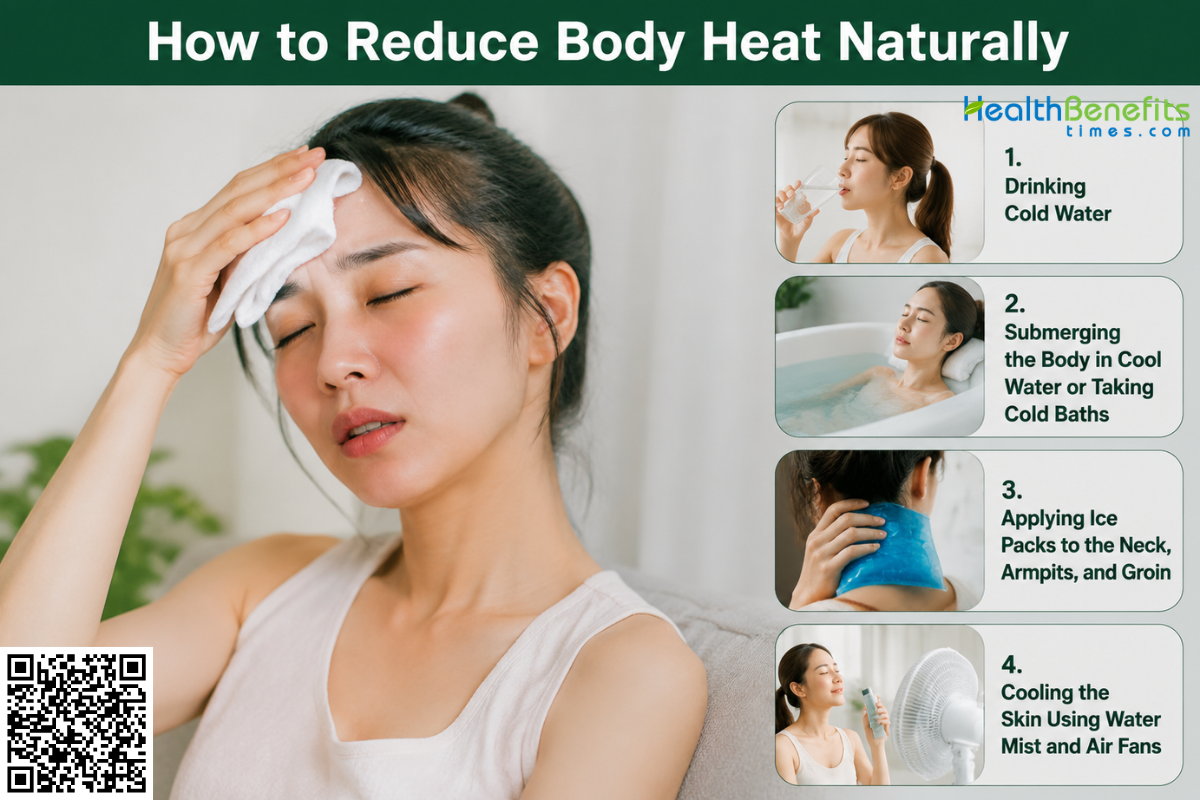
Body heat refers to the internal temperature generated and maintained by the human body to keep vital organs functioning correctly. The body operates best within a narrow, regulated range, typically resting around 98.6°F (37°C) 1. A small area at the base of the brain called the hypothalamus acts as a central thermostat, constantly balancing the heat produced by daily metabolism with the heat released through the skin 2. When exposed to hot environments or intense physical activity, the body cools itself primarily by sweating and increasing blood flow to the skin’s surface. However, if environmental temperatures become too extreme or physical exertion is too high, these natural cooling systems can fail to keep up, causing internal body heat to rise to dangerous levels and triggering heat-related illnesses 3.
Causes of Body Heat
- High Environmental Temperatures and Humidity: When the surrounding air is excessively hot, the body naturally absorbs heat from the environment. If the air is also highly humid, it holds too much moisture for sweat to evaporate off the skin, which neutralizes the body’s primary method of cooling down 4.
- Strenuous Physical Exertion: Muscles generate a significant amount of internal energy during intense labor, sports, or exercise. Without adequate rest breaks, active muscles produce heat faster than the circulatory system and skin can release it into the surrounding air 3.
- Dehydration: Failing to consume enough fluids depletes the body of water required for basic functions. Without sufficient hydration, the body cannot produce the sweat needed to cool the skin, causing internal temperatures to rise steadily 5.
- Certain Medications: Specific prescription and over-the-counter drugs can disrupt the central nervous system’s ability to regulate body temperature. Medications such as water pills (diuretics), allergy medications (antihistamines), and certain heart or psychiatric drugs often limit sweat production or alter blood flow to the skin 6.
- Infections and Illnesses: When harmful bacteria or viruses attack the body, the immune system intentionally raises the internal baseline temperature to create an environment that kills off the invading germs. This natural immune response is commonly recognized as a fever 7.
- Overactive Thyroid (Hyperthyroidism): The thyroid gland produces hormones that control the speed of the body’s daily metabolism. When this gland is overactive and produces excessive hormones, bodily systems process energy too quickly, which continuously generates extra internal heat and lowers a person’s overall tolerance for warm environments 8.
Symptoms of Body Heat
- Heavy Sweating and Clammy Skin: As internal body heat rises, the body attempts to cool itself through excessive perspiration, often leaving the skin feeling unusually cool, moist, and pale 9.
- Muscle Cramps and Spasms: Intense, painful muscle contractions frequently occur in the legs, arms, or abdomen due to the significant loss of water and essential minerals (electrolytes) through heavy sweating 10.
- Extreme Fatigue and Weakness: Elevated core temperatures force the cardiovascular system to work harder to pump blood to the skin’s surface, leading to a profound sense of exhaustion and lack of physical energy 11.
- Dizziness, Confusion, and Fainting: When excessive sweating leads to dehydration, overall blood pressure drops. This reduces vital oxygen flow to the brain, causing sudden lightheadedness, disorientation, or temporary loss of consciousness 9.
- Nausea and Vomiting: As the body instinctively diverts blood flow away from the digestive system to prioritize cooling the skin, individuals often experience severe stomach upset and an urge to vomit 9.
- Rapid Heart Rate: The heart begins to beat significantly faster than normal as it attempts to rapidly circulate a diminishing volume of bodily fluids to maintain necessary internal cooling functions 11.
- Throbbing Headaches: A severe, pounding headache frequently develops as a direct physical response to dehydration and the expansion of blood vessels attempting to release excess internal heat 10.
- Hot, Red, and Dry Skin: In extreme cases where the body’s natural cooling mechanisms fail completely, sweating stops entirely. The skin becomes dangerously hot, red, and dry to the touch, signaling a life-threatening medical emergency known as heat stroke 9.
How to Reduce Body Heat Naturally
1. Drinking Cold Water
How it may help
Consuming cold water directly absorbs internal thermal energy as the fluid warms to match the body’s core temperature. Additionally, it rapidly replenishes fluid volume lost through excessive sweating, ensuring the cardiovascular system can continue circulating blood to the skin’s surface for ongoing natural cooling.
What research says
Clinical research demonstrates that ingesting cold fluids during heat exposure significantly blunts the rise in core body temperature. Studies confirm that this internal cooling method delays heat-induced fatigue and effectively prevents the onset of severe conditions like heat exhaustion 12.
How to use it safely
Drink about one cup (8 ounces) of cool water every 15 to 20 minutes when in hot environments. You should sip the fluid gradually rather than gulping large amounts at once to maintain steady hydration and effective temperature regulation 13.
Potential precautions or side effects
Avoid consuming extremely ice-cold water rapidly, as it can cause severe stomach cramps. Do not drink more than 48 ounces per hour to prevent dangerous blood sodium dilution 13.
2. Submerging the Body in Cool Water or Taking Cold Baths
How it may help
Immersing the body in cool water rapidly transfers internal thermal energy out through the skin. Because water conducts heat away from the body efficiently, full-body submersion physically forces the core temperature to drop quickly, bypassing the need for sweat evaporation to achieve immediate cooling 14.
What research says
Clinical evidence identifies cold water immersion as the most effective medical treatment for rapidly lowering dangerous body temperatures. Research concludes that submerging a person in cold water quickly reverses severe heat stress and dramatically reduces the risk of organ damage or death from heatstroke 14.
How to use it safely
Fill a bathtub with cool water, ideally between 50°F and 59°F. Submerge your body up to the chest for 10 to 15 minutes. Exit the water immediately if you begin to shiver intensely, as shivering physically generates additional internal body heat 14.
Potential precautions or side effects
Sudden exposure to ice water can trigger a dangerous gasp reflex or cardiovascular shock. Prolonged immersion significantly increases the risk of abnormally low body temperature, known as hypothermia 15.
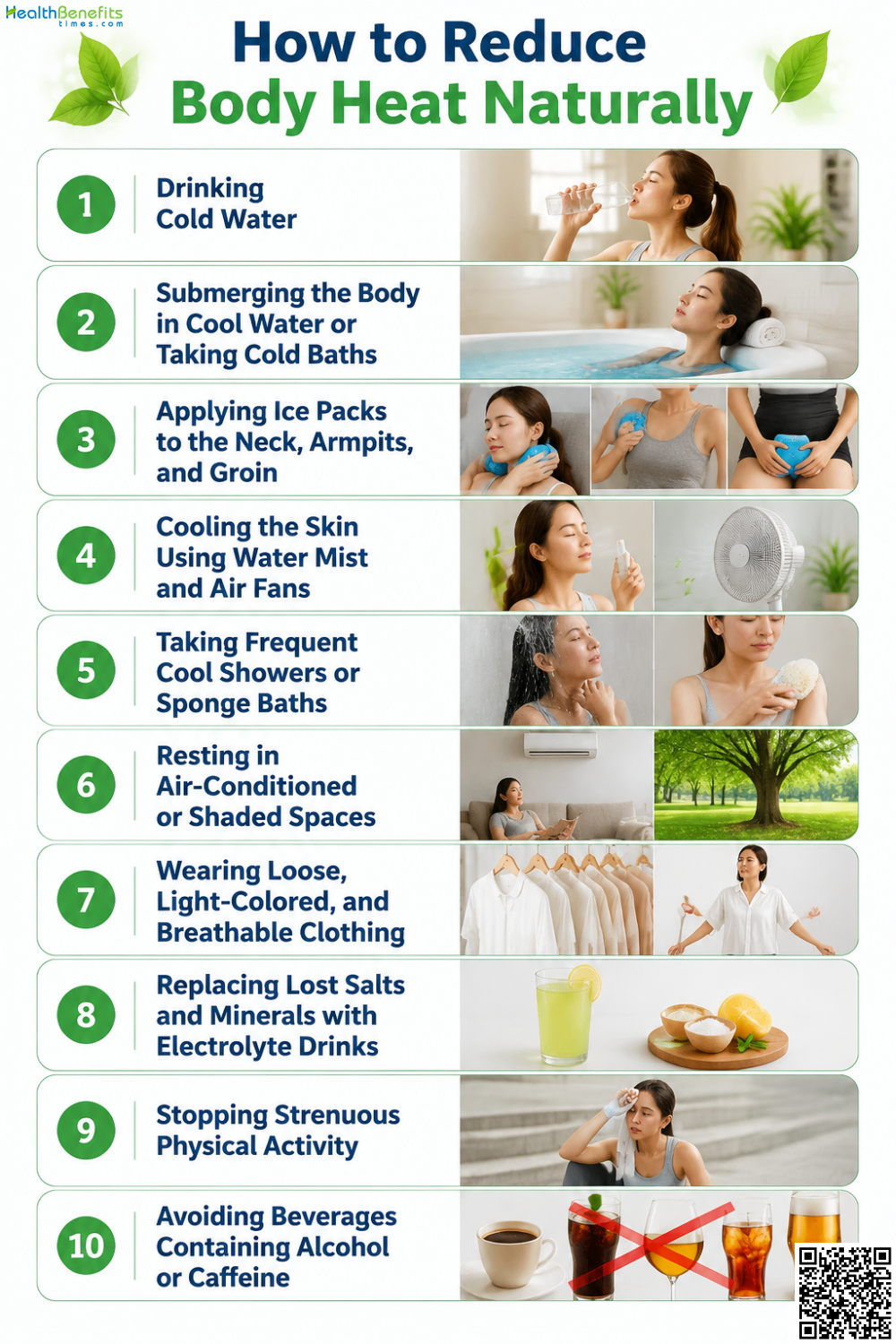
3. Applying Ice Packs to the Neck, Armpits, and Groin
How it may help
Placing ice packs on the neck, armpits, and groin targets areas where major blood vessels run close to the surface of the skin. As the chilled blood circulates back through the cardiovascular system, it rapidly lowers the internal core temperature and prevents severe heat-related complications.
What research says
Clinical protocols establish that applying ice to the neck, axillae (armpits), and groin effectively accelerates core body cooling during heat emergencies. Research confirms this targeted surface cooling method significantly reduces thermal stress on vital organs when full-body cold water immersion is not immediately available 10.
How to use it safely
Always wrap ice packs in a thin towel before application to prevent direct contact with the skin. Apply the wrapped ice to your neck, armpits, or groin for 15 to 20 minutes at a time, removing it periodically to allow the skin to recover 9.
Potential precautions or side effects
Placing ice directly on bare skin can cause severe frostbite or localized tissue damage. Prolonged application may induce shivering, which counterproductively raises internal body heat 14.
4. Cooling the Skin Using Water Mist and Air Fans
How it may help
Spraying water on the skin artificially mimics the body’s natural sweating process. When air from a fan moves across the moistened skin, the water rapidly evaporates. This conversion from liquid to vapor pulls thermal energy directly away from the body, effectively lowering the internal core temperature.
What research says
Clinical guidelines highlight evaporative cooling as a highly effective intervention for heat stress. Research confirms that combining continuous water mist with high-speed air circulation rapidly reduces core body temperature and significantly lowers the risk of heat exhaustion when full-body cold water immersion is unavailable 10.
How to use it safely
Fill a spray bottle with cool or room-temperature water and lightly mist your exposed skin. Sit directly in the path of an electric air fan to increase evaporation. Continuously reapply the mist as soon as your skin feels dry to maintain a steady cooling effect 4.
Potential precautions or side effects
Never use fans as your only cooling method when room temperatures exceed 90°F (32°C). Blowing extremely hot air over dry skin rapidly accelerates dangerous dehydration and internal heating 16.
5. Taking Frequent Cool Showers or Sponge Baths
How it may help
Taking a cool shower or sponge bath rapidly lowers skin temperature by transferring internal body heat directly into the water. Additionally, leaving the skin slightly damp after a sponge bath promotes ongoing evaporative cooling, which continuously pulls thermal energy away from the body as the water dries.
What research says
Public health guidelines emphasize that frequent cool showers and sponge baths are effective interventions for maintaining safe core body temperatures during heatwaves. Evidence confirms that applying cool water to the skin prevents heat exhaustion and significantly reduces cardiovascular strain in hot environments 6.
How to use it safely
Step into a cool—not freezing—shower for a few minutes whenever you feel overheated. For a sponge bath, wipe your arms, legs, and neck with a cool, wet cloth and allow the water to air-dry naturally to maximize the evaporative cooling effect 17.
Potential precautions or side effects
Avoid using extremely cold water, as sudden temperature drops cause involuntary shivering. Shivering generates internal muscle heat, which counteracts the cooling process and raises your core temperature 17.
6. Resting in Air-Conditioned or Shaded Spaces
How it may help
Moving to an air-conditioned or deeply shaded environment immediately stops the body from absorbing environmental heat. This rapid change in ambient temperature allows the cardiovascular system to slow down, easing the physical burden of pumping blood to the skin for sweat production and cooling.
What research says
Public health research identifies air conditioning as the strongest protective factor against heat-related illness and death. Studies conclude that spending just a few hours daily in a cooled space significantly reduces core temperature and allows the body’s natural thermal regulation systems to recover completely 17.
How to use it safely
If you do not have home air conditioning, spend at least two hours daily in public cooling centers, libraries, or malls. When outdoors, take frequent rest breaks in heavily shaded areas to allow your heart rate and internal temperature to stabilize 4.
Potential precautions or side effects
Do not rely entirely on electric fans in un-air-conditioned rooms when temperatures exceed 90°F (32°C), as circulating intensely hot air fails to lower internal core temperature 17.
7. Wearing Loose, Light-Colored, and Breathable Clothing
How it may help
Wearing loose-fitting, breathable fabrics like cotton allows air to circulate freely across the skin, which is essential for sweat to evaporate and cool the body. Additionally, light-colored clothing reflects radiant heat from the sun away from the body rather than absorbing it.
What research says
Public health experts indicate that tight, dark, or heavy clothing traps body heat and blocks sweat evaporation, directly increasing the risk of severe heat-related illnesses. Clinical guidelines confirm that lightweight, light-colored garments effectively minimize solar heat absorption and support the body’s natural thermal regulation 17.
How to use it safely
Choose natural, breathable fabrics like cotton or linen when spending time in warm environments. Select white or pastel colors to reflect sunlight. If you must be outdoors, pair your loose clothing with a wide-brimmed hat to protect your face and neck from direct solar heating 17.
Potential precautions or side effects
Ensure the breathable fabrics you choose are not too thin, as loosely woven materials can allow harmful ultraviolet rays to pass through and cause severe sunburns 18.
8. Replacing Lost Salts and Minerals with Electrolyte Drinks
How it may help
Heavy sweating depletes the body of water and essential minerals, such as sodium and potassium. Consuming electrolyte drinks restores this balance, allowing the cardiovascular system to maintain proper fluid levels. This ensures the body can continue producing the sweat necessary to naturally release internal heat.
What research says
Clinical guidelines confirm that replacing electrolytes is critical during prolonged heat exposure. Research concludes that restoring sodium and potassium prevents severe muscle cramps and dangerous fluid imbalances, significantly reducing the risk of progressing from mild heat stress to severe heat exhaustion 10.
How to use it safely
If you sweat heavily for more than an hour, consume a commercially available sports drink or an oral rehydration solution. Sip the fluid gradually alongside regular water to effectively replenish lost minerals and sustain your body’s natural cooling mechanisms 13.
Potential precautions or side effects
Consult a doctor before consuming electrolyte beverages if you are on a strictly low-salt diet or have chronic medical conditions affecting your kidneys or heart 17.
9. Stopping Strenuous Physical Activity
How it may help
Active muscles generate significant internal energy, acting as the primary source of metabolic heat. Halting intense physical exertion immediately stops this internal heat production. This pause allows the cardiovascular system to catch up, shifting its focus back to cooling the skin rather than fueling muscle movement.
What research says
Occupational health research confirms that implementing regular rest breaks is critical for preventing severe heat illness. Clinical guidelines conclude that stopping heavy physical labor during peak environmental temperatures significantly reduces the metabolic heat load, allowing the core body temperature to safely stabilize 13.
How to use it safely
If you must work or exercise in hot conditions, strictly pace your activities. Schedule frequent rest breaks in a deeply shaded or air-conditioned area. Stop any physical exertion immediately if you begin to experience lightheadedness, extreme fatigue, or painful muscle cramps 13.
Potential precautions or side effects
Stopping vigorous movement abruptly can cause blood to pool in your legs, leading to sudden fainting. Walk slowly for a few minutes to cool down before sitting entirely still 10.
10. Avoiding Beverages Containing Alcohol or Caffeine
How it may help
Alcohol and heavily caffeinated drinks act as diuretics, forcing the kidneys to excrete extra water. By eliminating these beverages, the body retains vital fluids and maintains proper hydration. This ensures the cardiovascular system has sufficient water to produce sweat and effectively cool the skin 6.
What research says
Public health guidelines classify alcohol and high doses of caffeine as significant risk factors during heatwaves. Clinical findings conclude that these substances accelerate severe dehydration and actively impair the central nervous system’s ability to accurately regulate internal core temperatures during heat exposure 17.
How to use it safely
When environmental temperatures rise, replace alcoholic and highly caffeinated drinks entirely with plain water. If you choose to drink coffee or tea, limit your intake to a single cup and immediately consume an equal amount of water to offset the resulting fluid loss 17.
Potential precautions or side effects
Suddenly stopping heavy daily caffeine use can trigger severe withdrawal headaches and irritability. Gradually reduce your intake rather than quitting completely on the first day of a sudden heatwave 19.
Foods to Avoid When You Suffer from Body Heat
1. High-Protein Meats
Digesting complex animal proteins requires significant metabolic energy. This process, known as diet-induced thermogenesis, actively generates excess internal heat and raises core body temperatures 20.
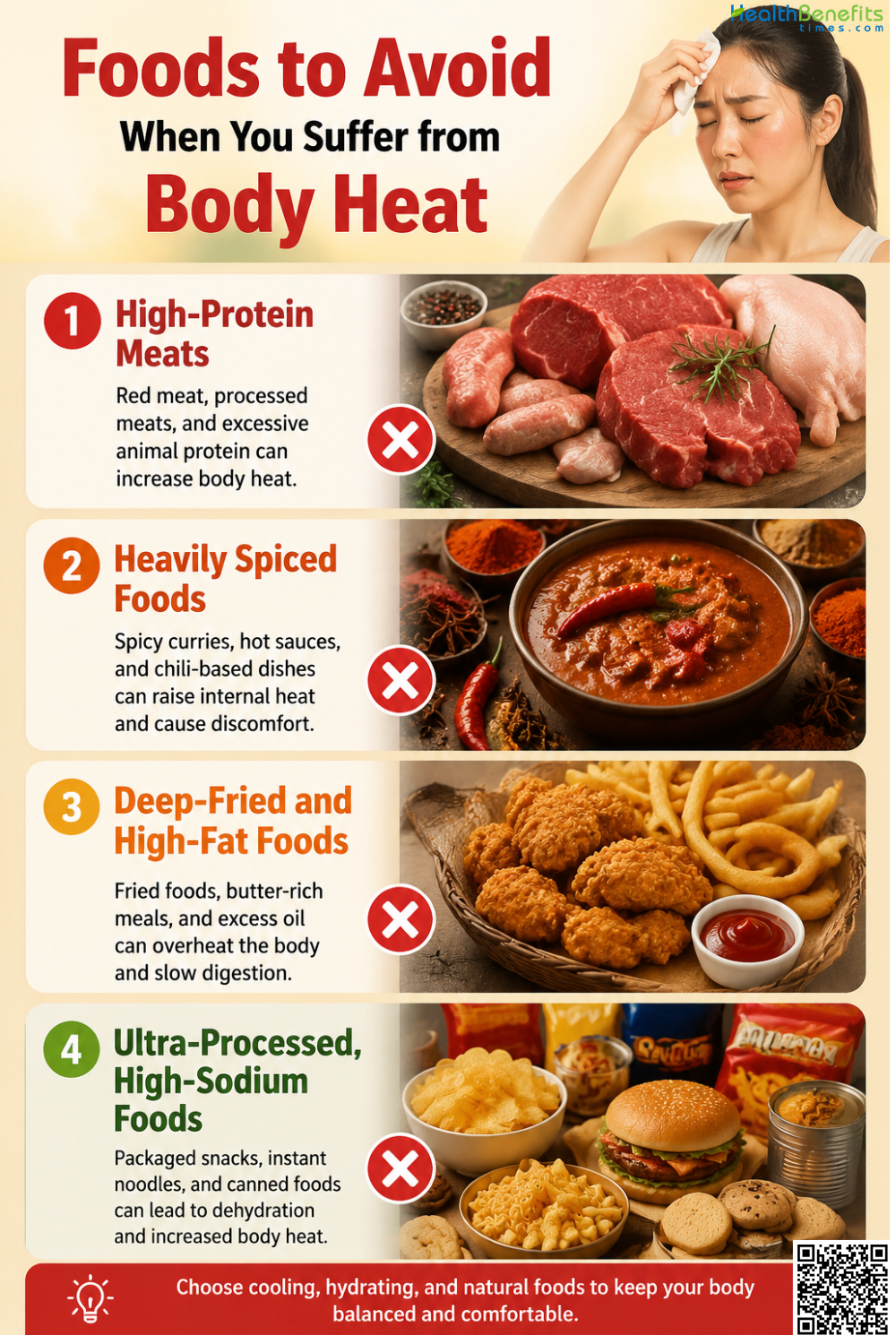
2. Heavily Spiced Foods
Ingredients containing capsaicin, like chili peppers, stimulate thermal nerve receptors. This triggers a neurological response that directly raises the body’s internal temperature and induces rapid sweating 21.
3. Deep-Fried and High-Fat Foods
Greasy, high-fat foods digest exceptionally slowly. This prolonged gastrointestinal breakdown forces the body to expend constant energy, steadily producing metabolic heat over several hours 22.
4. Ultra-Processed, High-Sodium Foods
Consuming excessive sodium forces the kidneys to draw water from tissues. This promotes cellular dehydration, which directly impairs the skin’s ability to produce cooling sweat 23.
When to See a Doctor When You Struggle from Body Heat
1. Altered Mental State
Seek immediate medical care if an overheated person experiences confusion, slurred speech, or unusual agitation. These neurological symptoms indicate life-threatening heat stroke requiring emergency clinical intervention 9.
2. Loss of Consciousness
Emergency medical attention is required if an individual faints or loses consciousness. This severe drop in brain blood flow signals critical failure of internal temperature regulation 9.
3. Inability to Sweat
Consult a doctor immediately if skin becomes hot, red, and completely dry. The sudden cessation of sweating means the body’s natural cooling mechanism has catastrophically failed 10.
4. Persistent Vomiting
Seek medical help if severe nausea leads to repeated vomiting. This prevents oral rehydration, rapidly accelerating dangerous dehydration and fluid imbalance during severe heat exposure 9.
5. Dangerously High Body Temperature
Go to an emergency room if core body temperature reaches 103°F (39.4°C) or higher. Such extreme internal heat rapidly induces irreversible cellular and internal organ damage 9.