

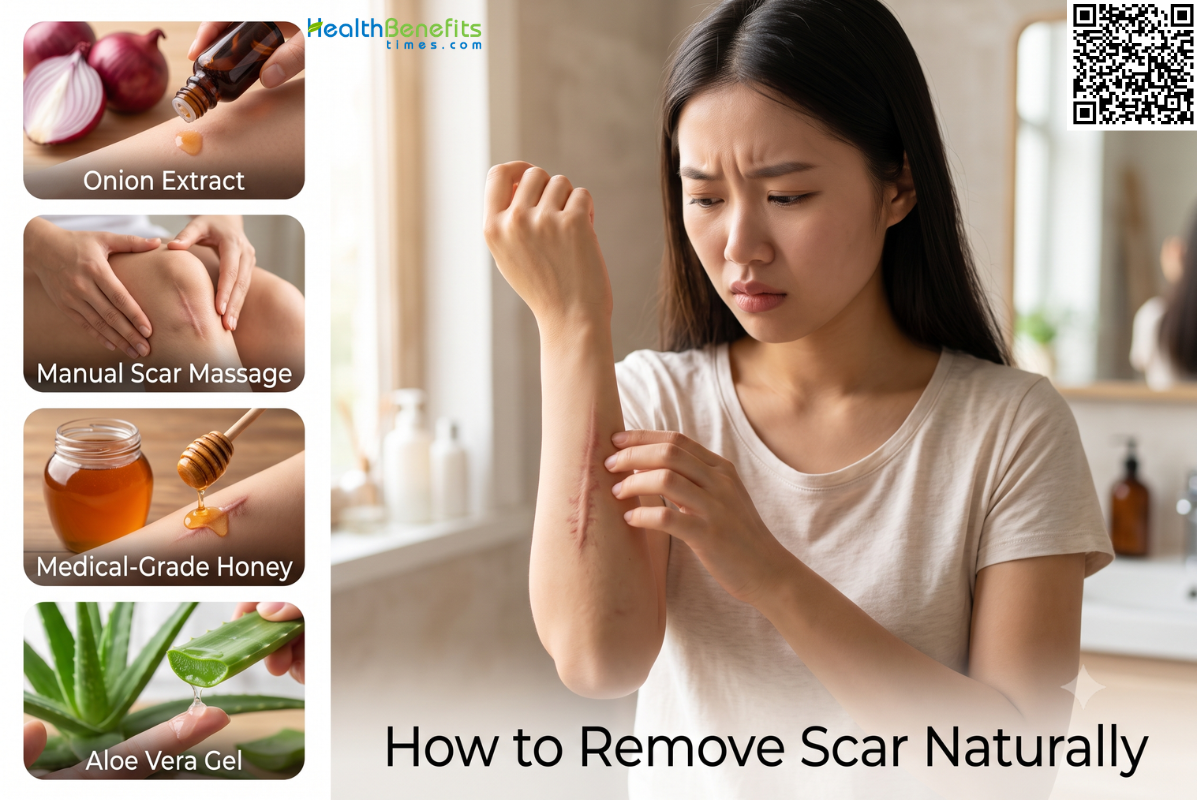
A scar is a permanent mark left on the skin or other body tissues after a wound, burn, or sore has fully healed. When the skin suffers an injury, the body immediately begins a natural repair process to protect the affected area from infection. During this phase, the body produces a tough, fibrous protein called collagen to mend the damaged tissue and close the wound. Because this replacement tissue is structured differently from the original skin, it often has a distinct texture, color, and thickness. While immature scars may initially appear raised, pink, and firm, they typically become flatter, softer, and paler as they mature over a period of one to two years 1. Scars are an essential and normal part of tissue repair, though their final appearance heavily depends on the injury’s depth, location, and individual genetic factors.
Causes of Scar
1. Physical Trauma and Injuries
Deep cuts, severe scrapes, and puncture wounds that penetrate beyond the skin’s outermost layer force the body to rapidly produce collagen to bind the torn tissues, inevitably leaving a permanent mark 2.
2. Surgical Procedures
Planned medical operations require cutting into the skin and underlying tissues. As these deliberate surgical wounds heal, they consistently form linear or geometric scars corresponding to the surgeon’s incision pattern 1.
3. Burns
Exposure to extreme heat, harsh chemicals, or high-voltage electricity causes deep tissue destruction. As severe burns heal, they frequently result in a specialized, tightened scar tissue known as a contracture, which can physically restrict joint or muscle movement 3.
4. Inflammatory Skin Conditions
Diseases such as cystic acne, chickenpox (varicella), and severe skin infections cause intense, localized inflammation. This deep inflammation destroys underlying skin structures, frequently resulting in permanent pitted, sunken, or abnormally raised scars once the active infection resolves 4.
How to Remove Scar Naturally
1. Onion Extract
How it may help
Onion extract contains natural compounds that actively reduce skin inflammation and regulate tissue repair. It works by preventing the body from producing excessive amounts of collagen, the tough protein that causes scars to become raised and thick. This helps soften hardened tissue and fade discoloration in healing wounds.
What research says
Clinical studies confirm that topical onion extract significantly improves the overall appearance of surgical and trauma scars. Consistent application over several weeks has been shown to reduce scar redness, increase tissue softness, and flatten raised areas more effectively than standard wound care alone 5.
How to use it safely
To use this remedy, apply a commercially prepared onion extract gel directly to the scar only after the wound has completely closed and healed. Gently massage a thin layer into the tissue one to three times daily. Never apply it to open cuts or broken skin.
Potential precautions or side effects
Onion extract can occasionally cause localized skin irritation, mild itching, or redness. Stop using the product immediately if you experience an allergic reaction or worsening skin discomfort.
2. Manual Scar Massage
How it may help
Manual massage applies targeted physical pressure to healing tissue. This mechanical force helps break down stiff, tightly bound collagen bands that cause scars to become thick and rigid. Regular manipulation also increases local blood flow, which delivers nutrients and helps keep the scar tissue soft, flexible, and flat.
What research says
Clinical evidence indicates that scar massage effectively decreases scar height and improves tissue flexibility, particularly for surgical and burn scars. Research concludes that consistent mechanical friction prevents excess collagen buildup, significantly reducing the pain, itching, and physical tightness associated with thickened scars 6.
How to use it safely
Wait until your wound is fully closed and a doctor has removed any stitches. Using your fingertips, apply firm but gentle pressure to rub the scar in circular, vertical, and horizontal motions. Perform this massage for five to ten minutes, two to three times every day.
Potential precautions or side effects
Never massage an open, infected, or actively bleeding wound, as this will disrupt healing and cause further damage. Stop immediately if you experience sharp pain, bleeding, or increased swelling.
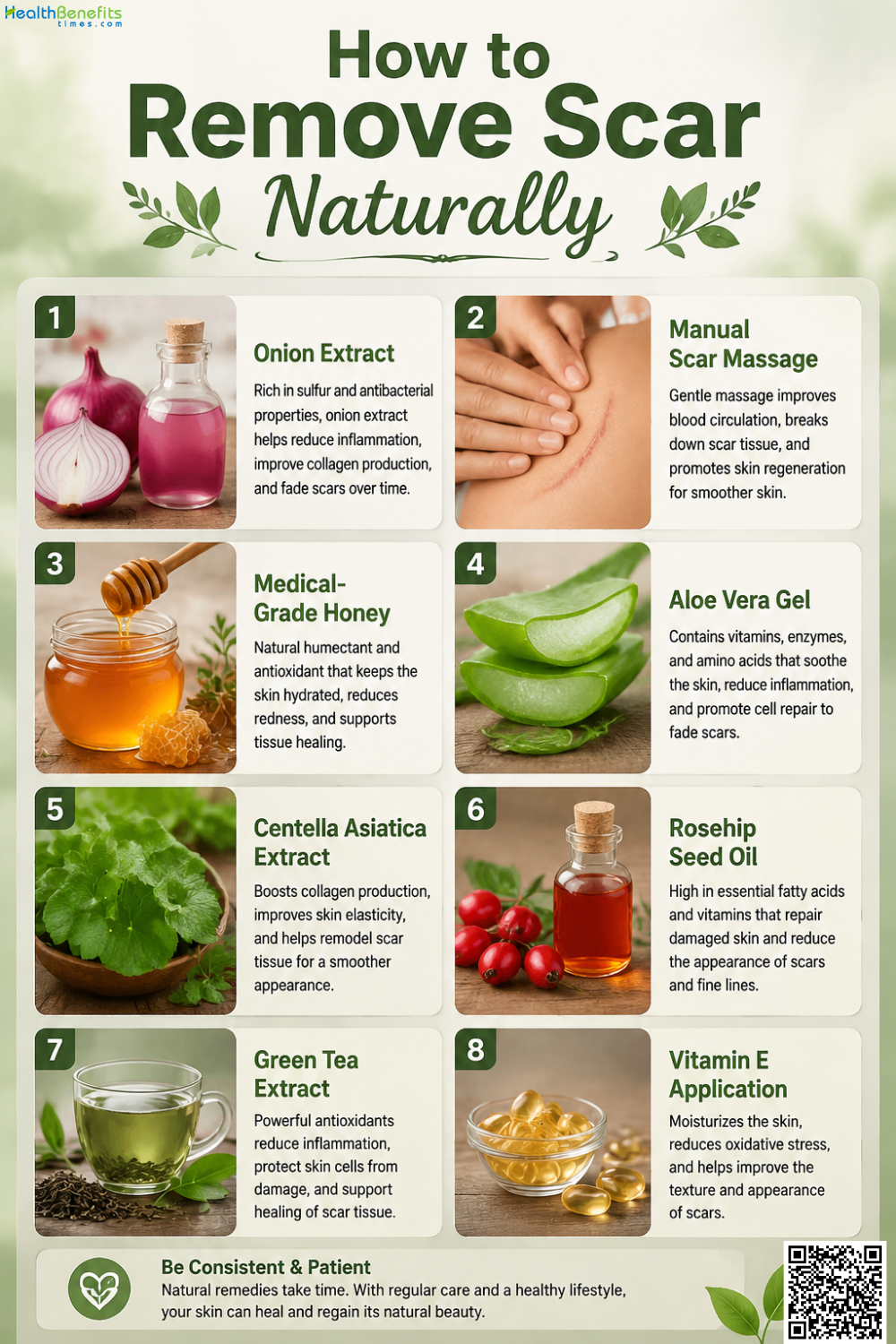
3. Medical-Grade Honey
How it may help
Medical-grade honey creates an optimal, moist healing environment that encourages healthy tissue regeneration. It contains natural anti-inflammatory and antibacterial properties that reduce swelling and prevent localized skin infections. By maintaining skin hydration and minimizing intense inflammation, it helps prevent thick, raised scar tissue from forming during the healing process.
What research says
Clinical research confirms that medical-grade honey accelerates tissue repair and effectively minimizes scar formation. Studies conclude that its antibacterial action and ability to stimulate cell growth lead to flatter, softer, and less visible scars compared to conventional dry wound care methods 7.
How to use it safely
Always use sterilized, medical-grade honey, such as Manuka honey, rather than raw supermarket varieties. Wash the affected area, apply a thin layer of the honey directly onto the healed tissue or closing wound, and cover it securely with a sterile bandage. Repeat this daily.
Potential precautions or side effects
Avoid this treatment if you have a known allergy to bees, pollen, or honey. Discontinue use immediately if you experience persistent stinging, redness, or an allergic skin reaction.
4. Aloe Vera Gel
How it may help
Aloe vera gel deeply hydrates the skin and reduces tissue inflammation. By keeping the healing area moist, it prevents the scar from drying out and becoming tough or rigid. Its natural compounds also support healthy cell turnover, which helps soften, flatten, and fade the appearance of scar tissue over time.
What research says
Clinical research demonstrates that aloe vera promotes proper wound healing and tissue repair. Studies conclude that its active compounds significantly reduce skin inflammation and improve skin elasticity, which helps prevent the formation of raised, discolored, and restrictive scar tissue during the final phases of skin recovery 8.
How to use it safely
Extract fresh gel directly from an aloe vera leaf or choose a pure, fragrance-free commercial product. Apply a generous layer of the gel to your fully closed, healed scar. Gently massage it into the skin and let it dry. Repeat this process two to three times daily.
Potential precautions or side effects
Aloe vera is generally safe, but it can cause mild skin irritation or allergic rashes in some individuals. Always test a small amount on healthy skin before applying it completely.
5. Centella Asiatica Extract
How it may help
Centella asiatica, often called gotu kola, contains active plant chemicals that regulate how the body repairs damaged tissue. It helps prevent the skin from producing too much collagen, which is the main cause of raised, lumpy scars. It also supports skin flexibility to soften existing hardened tissue.
What research says
Clinical studies demonstrate that Centella asiatica extract effectively improves the overall appearance of mature scars. Research concludes that its active compounds reduce tissue inflammation and balance skin repair, preventing the formation of thick, raised scar tissue during the healing process 9.
How to use it safely
Purchase a standardized, over-the-counter cream or ointment containing Centella asiatica extract. Apply a thin layer of the product directly over your fully healed scar once or twice a day. Gently rub the cream into the tissue until it is absorbed.
Potential precautions or side effects
Centella asiatica is generally safe but may cause localized skin redness, itching, or an allergic rash. Discontinue application immediately if you notice any skin irritation or burning sensation.
6. Rosehip Seed Oil
How it may help
Rosehip seed oil is highly concentrated in essential fatty acids and natural vitamin A derivatives. These components support cellular turnover and deeply hydrate the skin barrier. By improving skin elasticity and regulating pigment production, the oil helps flatten raised tissue and fade dark or red discoloration left behind by healing wounds.
What research says
Clinical trials indicate that pure rosehip seed oil significantly improves the appearance of post-surgical scars. Research concludes that regular application over twelve weeks reduces scar redness, decreases tissue elevation, and improves overall skin color match compared to scars left untreated during the same recovery period 10.
How to use it safely
Wait until your wound is completely closed and your stitches are removed. Gently massage two to three drops of cold-pressed, pure rosehip seed oil directly onto the scar tissue. Perform this gentle massage twice daily, allowing the oil to fully absorb into the skin.
Potential precautions or side effects
Rosehip oil can occasionally cause mild allergic reactions or clog pores in acne-prone skin. Always perform a patch test before application, and discontinue use if redness or itching occurs.
7. Green Tea Extract
How it may help
Green tea extract contains a powerful antioxidant known as EGCG. This active compound reduces deep skin inflammation and interferes with the specific cellular signals that trigger collagen overproduction. By slowing down this biological process, it helps prevent healing wounds from developing into excessively raised, thickened, or lumpy scar tissue.
What research says
Clinical research demonstrates that the active antioxidant compounds in green tea directly suppress the hyperactive cells responsible for heavy scarring. Studies conclude that applying these extracts stops abnormal collagen buildup, effectively reducing the size, thickness, and severity of raised hypertrophic scars and keloids 11.
How to use it safely
Select a topical cream, gel, or specialized ointment formulated with green tea extract. Once your wound is completely closed and fully healed, gently massage a thin layer of the product into the scar tissue one to two times daily. Do not apply it to unhealed skin.
Potential precautions or side effects
Topical green tea extract is generally safe but can occasionally cause mild skin dryness or irritation. Stop using the product immediately if you develop redness, itching, or an allergic rash.
8. Vitamin E Application
How it may help
Vitamin E is a potent fat-soluble antioxidant commonly thought to support skin healing. It is believed to deeply moisturize damaged tissue, neutralize harmful molecules that delay recovery, and protect newly formed skin cells. This hydration theoretically helps keep healing tissue soft and prevents excessive scar thickening.
What research says
Despite widespread popular use, comprehensive clinical reviews conclude there is insufficient evidence that pure vitamin E improves scar appearance 12. Several controlled studies demonstrate that topical vitamin E monotherapy offers no cosmetic benefit over standard wound ointments, and can actually worsen the overall appearance of healing scars 13.
How to use it safely
If you choose to use this remedy, wait strictly until the wound is fully closed. Apply a thin layer of a formulated vitamin E cream or oil from a punctured capsule directly to the scar daily. Never apply it to raw, open, or actively bleeding skin.
Potential precautions or side effects
Topical vitamin E carries a highly documented risk of causing contact dermatitis. Up to one-third of users develop localized redness, severe itching, or blistering rashes 13. Stop application immediately if irritation occurs.