

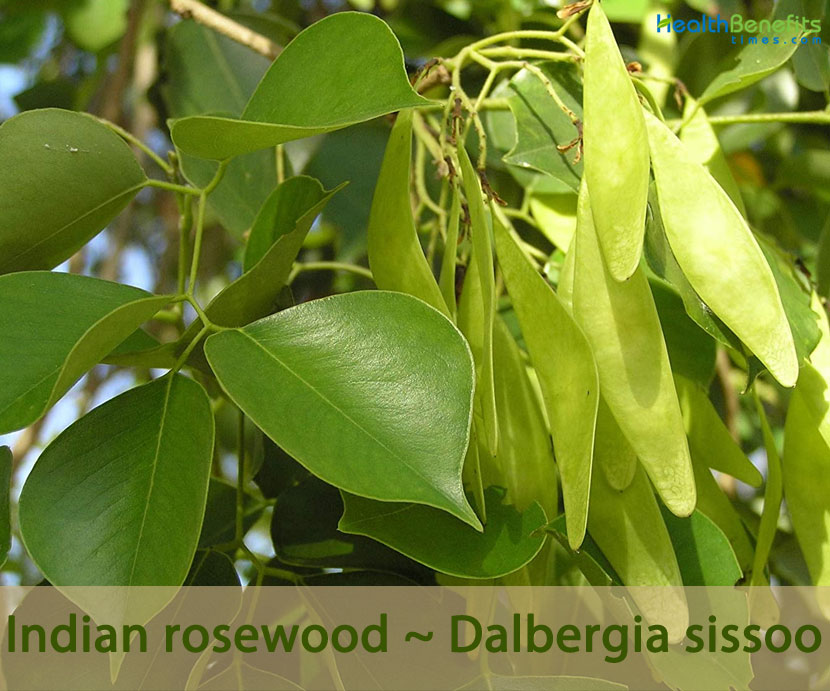
| Indian rosewood Quick Facts | ||
|---|---|---|
| Name: | Indian rosewood | |
| Scientific Name: | Dalbergia sissoo | |
| Origin | Indian Sub-continent, Myanmar and possibly also neighboring countries | |
| Colors | Pale brown | |
| Shapes | Oblong, flat, thin, strap-like pods that are 4–8 cm (1.6–3.1 in) long, 1 cm (0.39 in) wide | |
| Taste | Acrid, Astringent, bitter | |
| Health benefits | Body Irritation, Stomach irritation, Eye disease, Fight with Fever, Cure anemia, Urinary Disease, Gonorrhea, Cure diarrhea, Treat Cholera, Hemorrhage, Wound, Leucorrhoea, Syphilis disease, Cystica Diseases | |
| Name | Indian rosewood |
|---|---|
| Scientific Name | Dalbergia sissoo |
| Native | Indian Sub-continent, Myanmar and possibly also neighboring countries. |
| Common Names | Bombay blackwood, Himalaya raintree, India teakwood, Indian dalbergia, Indian rosewood, Sisham, sissoo, East Indian rosewood, penny leaf tree, shisham, sisso |
| Name in Other Languages | Arabic: دلبيرجيا سيسو Assamese: Sisu (সিসু), Sissu, Konkani-Siso Australia: Penny-leaf Bengali: Shishu, Shisu, Sisu, Sitral Burmese: Kularr pitout (ကုလားပိတောက်) Chinese: Yìndù huáng tán (印度黄檀) Czech: Dalbergia sissoo, dalbergie šišam, Amerimnon sissoo, dalbergia šišam Dutch: Shisham, sissoo English: Bombay blackwood, East Indian rosewood, Himalaya raintree, India teakwood, Indian dalbergia, Indian rosewood, Penny leaf tree, Penny-leaved tree, Sheesham, Shisham, Sissoo tree, Sisu, Sissoo, North Indian rosewood, French: Ebénier jaune, Palissandre de l’Inde, Palissandre des Indes, Sesham, Sissou, arbre de Shisham, palissandre d’Asie, arbre de Shisham German: Indisches Rosenholz, Java-Palisander, Ostindisches Jacaranda, Ostindischer Palisander, Ostindisches Palisanderholz, Ostindisches Rosenholz, sissoo, Rosenholzbaum, Palisanderholzbaum, Sissoo-Palisanderholzbaum Gujarati: Sīsama (સીસમ), Sissom, Sis Hebrew: סיסם הודי , sisam haddi, סִיסָם הָדִּי, Indian rosewood Hindi: Sheesham (शीशम), Sisam, Sissai, Sissu, agaru, biridi, errasissn, erra-sissu, gelte, gette, hiku, kara, karra, kattari, mukko-gette, nakkar, nukkukattai, padimi, shewa, shisam, shisha, shisham, shisham-bage, shishu, shisku, sihon, simsapa, sinsapa, sinsupa, sissi-utti, sissoo, sissua, sissu-karra, tahli, tali, tenach, yettle, Kala-shisham (काला शीशम), Vilayati Shisham (विलायती शीशम) Hungarian: Shisham, Sissoo Indonesia: Sonowaseso Italian: Palissandro di India, Palissandro d’India, sissoo Japanese: Shissōshitan (シッソーシタン), Shissonoki (シッソノキ) Javanese: Skuva, sonoswaseso Kannada: Beete (ಬೀಟೆ), Sissoo, Shimshape (ಶಶಿಂಶಪೆ), Shimshupa (ಶಿಂಶುಪ), Biridi (ಬಿರಿಡಿ), Sīsaṁ (ಸೀಸಂ) Konkani: Siso (सीसो) Korean: Bug-indohwangdan (북인도황단) Malay: Sonoswaseso Malayalam: Sinśapa (ശിംശപ) , Viitti (വീട്ടി), Iitti (ഈട്ടി), Karivittti (കരിവീട്ടി), Irupul (ഇരുപുല്), Iruvil (ഇരുവില്), Oivala-sesba Manipuri: Sissu Marathi: Sisau (शिसव), Kalarukh (काळारुख), Shisham (शीशम) Nepali: Sisham, Sisau (सिसौ), Sissau, Bandre shirin, Sissau Oriya: Padimi, Sisu Pakistan: Shisha, shisham, sihon, sissoo, sissoo, tahli Persian: Jag, شیشَم Portuguese: Sissó, sisu Punjabi: Shisham, Sissu, Ṭāhalī (ਟਾਹਲੀ), ٹالی Tali, ٹاہلی Tahli Russian: Dal’bergiia sissoo (Дальбергия сиссу) Sanskrit: Aguru, Shinshapa, Shinshapa (शिंशपा), Agurushinshupa, Dhira, Dhumrika (धुम्रिका), shaamp (शांप), pippala (पिप्पला), Yugapattēikā (युगपत्तेिका), Picchilā (पिच्छिला), shyaama (श्यामा), Kr̥ṣṇasāra (कृष्णसारा) Sindhi: ٽالهي Spanish: Palisandro de India, Sisu Swedish: Shesham Tamil: Gette, Nukku kattai, Sisuitti, Sisso, Yette, Totakatti (தோதகத்தி), Nukkam (நூக்கம்), Chichamaram (சிசே மரம்), Chiche Tangkhul: Chingsoo Telugu: Iriḍi (ఇరిడి) , Iruguducettu (ఇరుగుడుచెట్టు), Errasisso, Errasissu Thai: Du-khaek, Pradu-khaek Urdu: Shisham شِيشم, ﺷﻴﺸﻢ Sheesham |
| Plant Growth Habit | Fast growing, hardy, medium to large, deciduous, long-lived tree with a spreading crown and thick branches |
| Growing Climates | Sands and gravels along watercourses, irrigated plantations, roadsides and canals, around farms and orchards as windbreaks, gregarious colonizer of landslips, hillsides, new embankments, grasslands, natural and planted forests, along forest margins, near streams and rivers, hammocks, canopy gaps, agricultural areas and disturbed sites |
| Soil | Thrive on a variety of soils types, from dry to wet but is not particularly salt-tolerant |
| Plant Size | Up to 25 m (82 ft) in height and 2 to 3 m (6 ft 7 in to 9 ft 10 in) in diameter, but is usually smaller |
| Root | Long taproot and numerous surface roots which produce suckers |
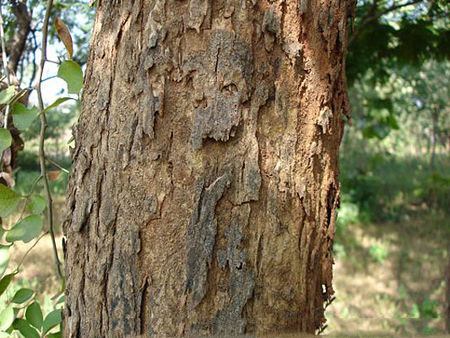
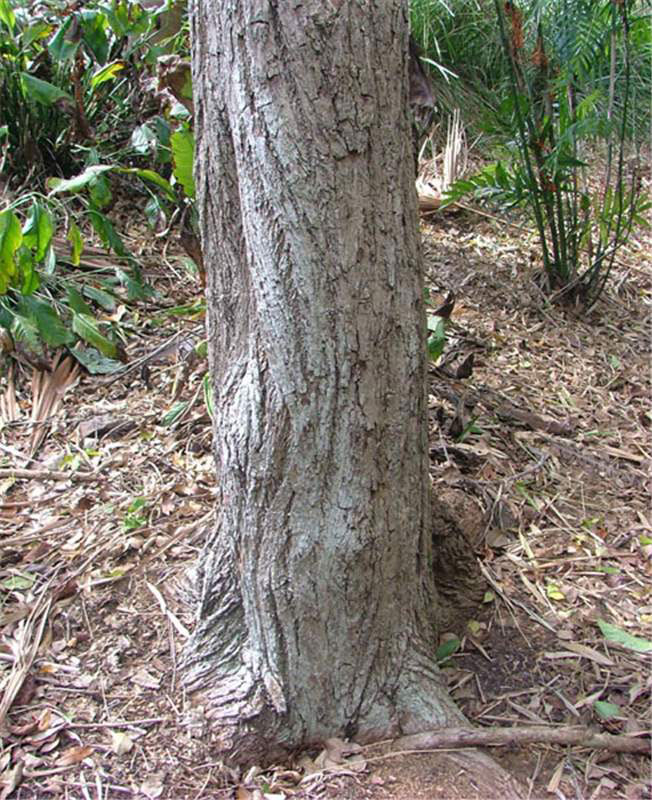
| Bark | Thick, rough and grey, up to 2.5 cm (0.98 in) thick and has shallow, broad, longitudinal fissures exfoliating in irregular woody strips and scales |
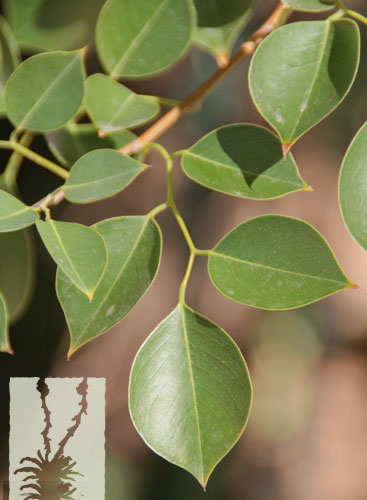
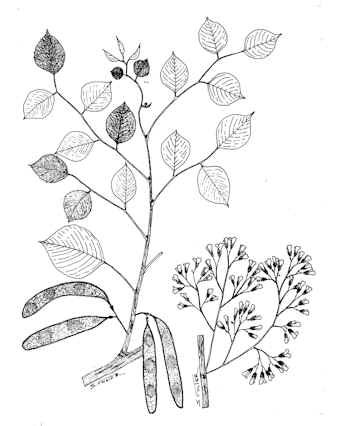
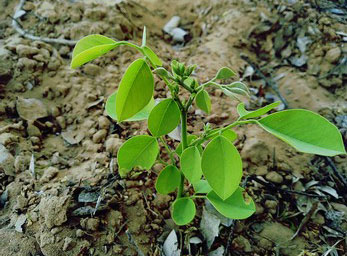
| Leaf | Pinnately compound, alternately arranged on twigs, and 15 cm long. The three to five leaflets are 3.5-9 cm long and 3-7 cm wide and is alternate, broadly ovate, conspicuously and abruptly cuspidate at the apex |
| Flowering season | March – April |
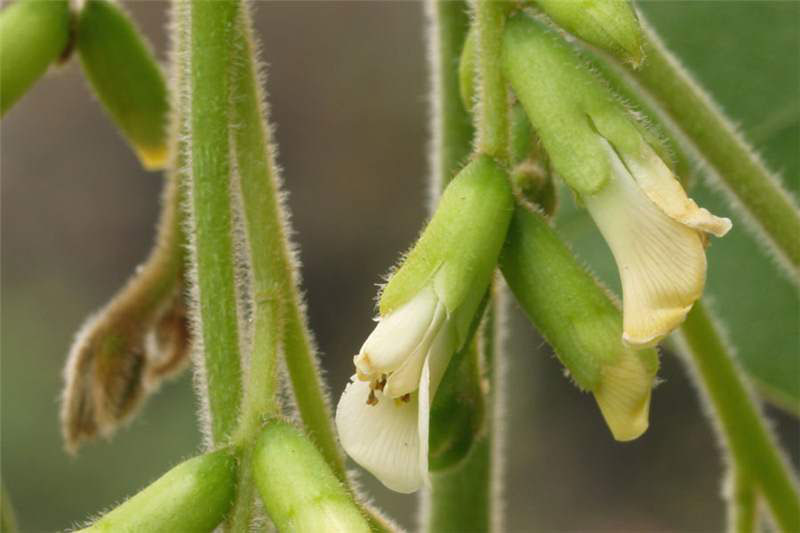
| Flower | Whitish to pink, fragrant, nearly sessile, up to1.5 cm (0.59 in) long and in dense clusters 5–10 cm (2.0–3.9 in) in length. Calyx campanulate, corolla pale yellow, standard obovate-orbicular, with a long claw, wings oblong, keel obtuse, stamens 9, monadelphous, ovary long, style incurved. |
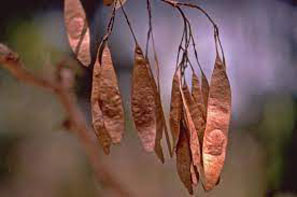
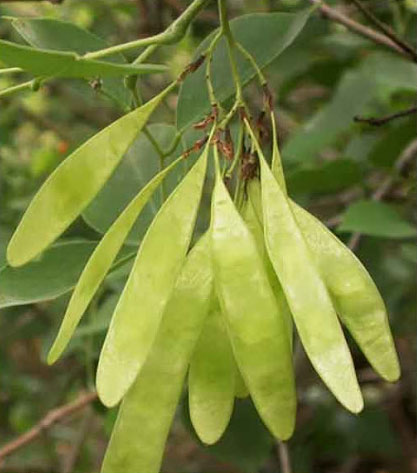
| Fruit Shape & Size | Oblong, flat, thin, strap-like pods that are 4–8 cm (1.6–3.1 in) long, 1 cm (0.39 in) wide, end rounded with a minute point, glabrous, reticulate against the seeds |
| Fruit Color | Pale brown |
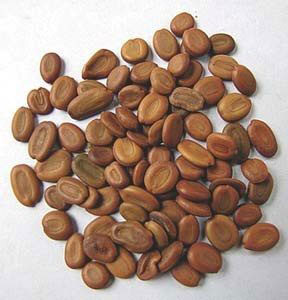
| Seed | Kidney-shaped, variable in size about 8-10 mm long and 4-5.5 mm wide, pale brown, brown to brownish-black, reniform, compressed, with papery testa |
| Propagation | By Seeds and by root suckers |
| Taste | Acrid, Astringent, bitter |
| Plant Parts Used | Roots, leaves, bark, Heartwood, Leaf |
| Season | April–May |
| Health Benefits |
|
Leaves
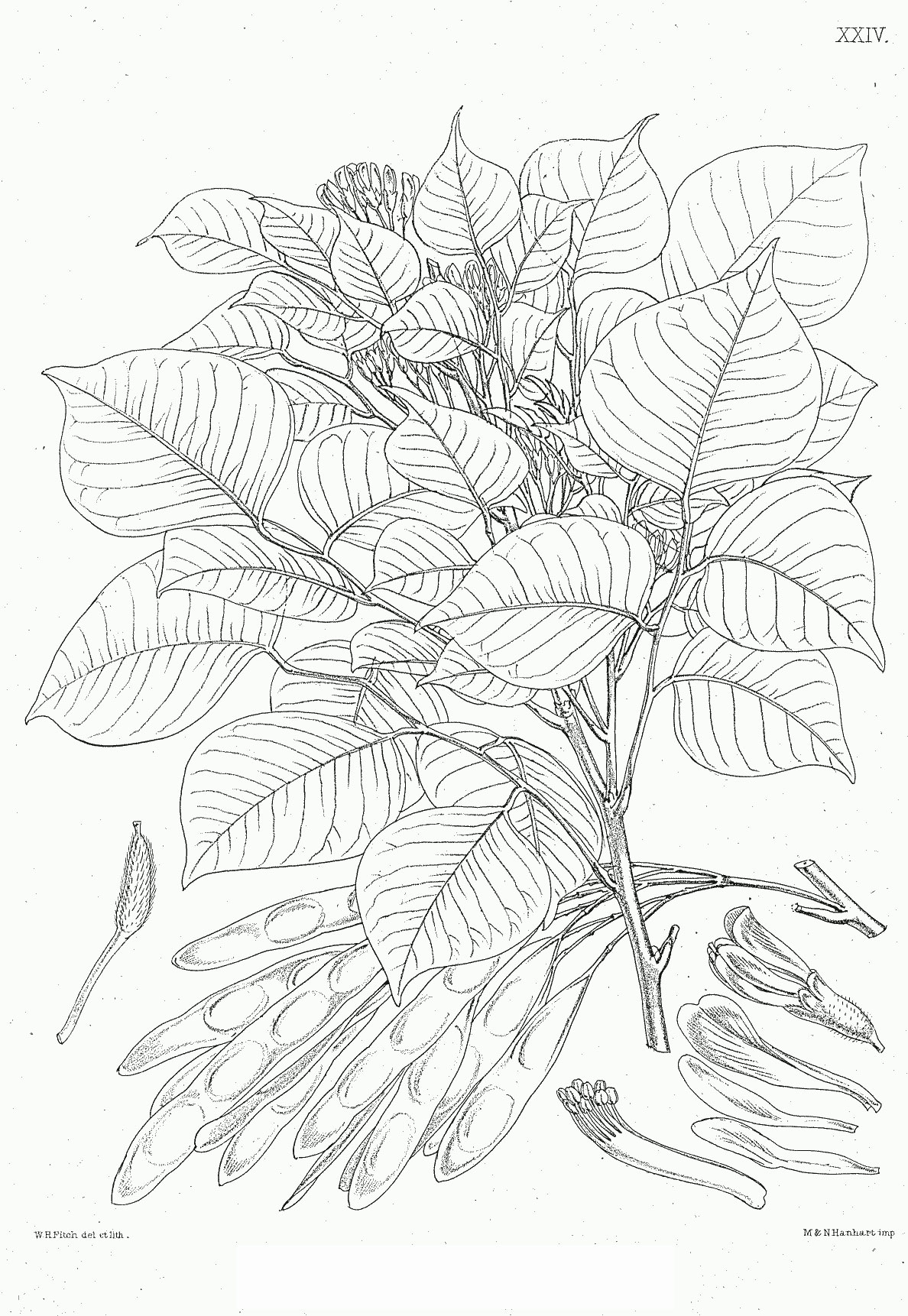
Leaves are pinnately compound, alternately arranged on twigs, and 15 cm long. The three to five leaflets are 3.5-9 cm long and 3-7 cm wide and is alternate, broadly ovate, conspicuously and abruptly cuspidate at the apex, rounded at the base, entire, coriaceous, pubescent when young and glabrous when mature. They have short petiolules and broad; nearly truncate bases that form a slight angle. Leaves are shiny and succulent when young and become thicker with age. They are dark green, turning brown in the autumn, and drop between September and January. The terminal leaflet is larger than the others, and there are 8-12 pairs of veins in the leaflets.
| Leaf arrangement | Alternate |
| Leaf type | Odd-pinnately compound; made up of 3 to 7 leaflets |
| Leaf margin | Entire |
| Leaf shape | Orbiculate, elliptic (oval) |
| Leaf venation | Pinnate, brachidodrome |
| Leaf type and persistence | Semi-evergreen |
| Leaf blade length | 6 inches; leaflets are 3 inches |
| Leaf color | Green on top, paler green underneath |
| Fall color | No color change |
| Fall characteristic | Not showy |
Flower
Inflorescence of Indian rosewood is an axillary panicle 3.5-7.5 cm long, with small flowers. Young flower buds appear with the new leaves. Flowers are whitish to pink, fragrant, nearly sessile, up to 1.5 cm (0.59 in) long, and in dense clusters 5–10 cm (2.0–3.9 in) in length. Calyx is campanulate, corolla is pale yellow, standard obovate-orbicular, with a long claw, wings oblong, keel obtuse, stamens 9, monadelphous, ovary long and style incurved. Flowering normally takes place in between March and April.
| Flower color | Yellowish or white |
| Flower characteristics | Not showy; fragrant; emerges in clusters on axillary panicles |
| Flowering | Spring and summer |
Fruit
Fertile flowers are followed by oblong, flat, thin, strap-like pods that are 4–8 cm (1.6–3.1 in) long, 1 cm (0.39 in) wide, end rounded with a minute point, glabrous, reticulate against the seeds, and usually 1-4 seeded. Seeds are kidney-shaped, variable in size about 8-10 mm long and 4-5.5 mm wide, pale brown, brown to brownish-black, reniform, compressed, with papery testa. In most locations, pods form in April, become full size by July and mature by November. After four years of growth, trees set seed annually.
| Fruit shape | Flat pod or pod-like, elongated |
| Fruit length | 2 to 4 inches |
| Fruit covering | Dry or hard |
| Fruit color | Green to brown with maturity |
| Fruit characteristics | Does not attract wildlife; not showy; fruit/leaves not a litter problem |
Medicinal uses of Various Parts of Shisham
| Plant Parts | Preparation | Problems |
|
Leaf |
Juice mixed with honey as eye
drop |
Pain in eyes |
| Leaf juice in dose of 10-15ml
thrice a day |
Jaundice, pus in urine | |
| 50-100ml decoction of leaves, drink twice a day |
Painful urination, boils, pimples, blood purification | |
| Warmed and tied on affected
area for reducing swelling |
Breast swelling | |
| 10-15 ml juice of leaves twice a
day |
Pain in abdomen | |
| Juice in dose of 10-15ml, twice in
a day |
Abnormal bleeding
in females |
|
|
Bark Powder |
3-6 grams with one cup
milk/water for 2-3 weeks |
Body Pain |
| 3-6 gm. decoction | Gonorrhea | |
| 10 gm. sissoo bark boiled in 500ml of water till the volume reduces to half, mix the juice and consume for 40 days every morning | Leprosy | |
| Bark powder 1 kg cooked in 2 liter water, taken in dose of ten grams with milk 3 weeks | Sciatica | |
| Shisham oil | Topical application | Skin Diseases |


Health benefits of Indian Rosewood (Shisham)
Shisham tree is quite beneficial for our health. Let us now know how many diseases can be taken with the use of Indian rosewood. The medicinal uses, quantities and methods of medicinal uses of Indian rosewood are listed below
1. Body Irritation
Many men or women complain of body irritation. In such a situation, there is a benefit from rosemary oil. Apply rosewood oil to any part of the body that is jealous. Burning of the body is cured.
2. Stomach irritation
You can treat stomach irritation with the use of Indian rosewood. Take the juice of 10-15 ml Indian rosewood leaves. Drink it and cure stomach irritation.
3. Eye disease
Regular use of Indian rosewood is beneficial in eye diseases such as eye irritation. Add honey to the juice of sisam ke patte. Putting 1-2 drops in the eyes provides relief from irritation.
4. Fight with Fever
Indian rosewood provides medicinal properties in all types of fever. Take 20 grams of Indian rosewood essence, water 320 ml and milk 160 ml. Mix them and cook in the milk. When the milk remains little, drink it 3 times a day. It cures fever.
5. Cure anemia
Anemia causes loss of blood in a person’s body. To cure anemia, take the juice of 10-15 ml Indian rosewood leaves. Taking it in the morning and evening is also beneficial in anemia.
6. Urinary Disease
Urine diseases like intermittent urination, burning sensation in urine, pain in urination, taking Indian rosewood are beneficial. Make a decoction of 20-40 ml Indian rosewood leaves. Drink it 3 times a day. It provides relief in problems like intermittent urination, burning sensation in urine, pain in urine, etc. Besides it, taking 10-20 ml decoction of leaves is also beneficial.
7. Gonorrhea
Gonorrhea disease is treated with the intake of Indian rosewood. Grind 8-10 leaves of Indian rosewood and 25 grams of sugar candy. Drink it in the morning and evening. Gonorrhea disease is cured by this.
8. Cure diarrhea
Indian rosewood can be used to prevent diarrhea. Take Indian rosewood leaves, kachnar leaves and barley. Mix all three and make a decoction. Now add ghee and milk as per 10-20 ml decoction.
9. Treat Cholera
The medicinal properties of Indian rosewood are beneficial in the treatment of cholera. Add 1 gram of Pippally, 1 gram of Marich and 500 mg of Cardamom in 5 grams of Indian rosewood leaves. Make a tablet of 500 mg by grinding it. Giving 2-2 tablets in the morning and evening cures cholera.
10. Hemorrhage
You can also use rosewood to prevent diarrhea. Take rosewood leaves, kachnar leaves and barley. Mix all three and make a decoction. Now add ghee and milk as per 10-20 ml decoction. It is cured by giving it through the anus.
11. Wound
Wound can also be cured with the benefit of Indian rosewood. Apply Indian rosewood oil on the wound. It heals wounds. For better benefits, consult an Ayurvedic doctor.
12. Leucorrhoea
Indian rosewood also has benefits in treating leucorrhea. Mix 8-10 leaves of Indian rosewood and 25 grams of sugar candy and consume it in the morning. It cures leucorrhea. Washing the vagina with the decoction of Indian rosewood is also beneficial in leucorrhea.
13. Syphilis disease
If you consume Indian rosewood for the treatment of syphilis, you get a lot of benefits. Take a decoction of 15-30 ml Indian rosewood leaves. It is beneficial in syphilis.
14. Cystica Diseases
Make a thick powder of 10 kg bark of rosewood and boil it in 25 liters of water. When the eighth part of the water remains, filter it in a cloth when it cools down. Then, thicken it by mounting it on the stove. Take 10 grams of this thick substance, and cook it in ghee and milk. Taking it 3 times a day for 21 consecutive days cures the disease of sciatica.
Traditional uses and benefits of Indian rosewood
- Slender tree twigs are first chewed as a toothbrush and then split as a tongue cleaner.
- In India, the wood has been used in Siddha medicine system for skin disorders and stomach-related issues.
- Indian Rosewood oil encourages new cell growth, regenerate tissues, and helps minimize lines and wrinkles.
- It helps balance both dry and oily skin.
- It can prove useful against acne.
- The bitter tasting leaves are a stimulant, and a compound made by boiling the leaves is used to treat gonorrhea.
- Bark and wood extracts are used to alleviate vomiting, thirst and burning sensations.
- Bark and wood are reported to encourage appetite, act as an aphrodisiac and induce abortion.
- Roots provide an astringent used to treat inflammations and infections.
- Branches are also combined with animal dung as a source of fuel.
- Powdered wood leaves and seed oil are used in traditional medicine in India, especially to treat skin diseases.
- Leaves are reportedly used as a stimulant and to treat gonorrhea and wounds.
- Ayurveda prescribe the leaf juice for eye ailments.
- Wood and bark for anal disorders, blood diseases, burning sensations, dysentery, dyspepsia, leucoderma, and skin ailments.
- Yunani use the wood for blood disorders, burning sensations, eye and nose disorders, scabies, scalding urine, stomach problems, and syphilis.
- The alterative wood is used in India for boils, eruptions, leprosy and nausea.
- Finely ground paste of 8-10 leaves of sissoo and 25 gm of palm candy taken in the morning alleviates profuse menstruation.
- 50-100 ml decoction of the leaves taken thrice in a day is useful in Painful micturition and to cure boils and pimples.
- Leaves and bark are used as astringent in bleeding disorders.
- Paste of leaves mixed with sweet oil is used topically in skin excoriation (scrapping, abrading of the skin).
- The paste of 5 grams of tender leaves of shisham is taken with a cup of milk for 15-30 days.
- Paste of leaves mixed with sweet oil is useful in skin excoriation such as scrapping and abrading.
Ayurvedic Health benefits of Indian rosewood
- Low sperm count: The paste of 5 grams of tender leaves of Shisham is taken with a cup of milk for 15-30 days.
- Sexual impotence in men: The paste of 5 grams of tender leaves of Shisham is taken with a cup of milk for 15-30 days.
- Piles: The leaves of Shisham should be chewed twice a day for 2 weeks.
- General debility: Take the fresh leaf juice orally along with sugar.
- Abscess: Apply the leaf paste topically.
- Vomiting, piles, obesity / overweightness: 1-2 spoonful of leaf juice are taken with cow milk for 2-3 days.
- Pain in eyes: Sissoo leaves juice is mixed with honey and used as eye drop for eye pain.
- Pain in the body: Dried bark powder is given in a dose of 3-6 grams, with one cup milk/water at night for 2-3 weeks.
- Diarrhea: Take about 100 grams fresh clean leaves of Shisham and boil in 500 ml water for fifteen minutes. Filter and collect the filtrate. This should be given in dose 100 ml (for adult) or 10-15ml (for children), three times a day, for 3-4 days.
- Breast swelling: The leaves are warmed and tied at affected area for reducing swelling.
- Pain in abdomen: Wash and extract 10-15 ml juice of leaves and take twice a day.
- Gonorrhea: The bark powder in a dose of 3-6gm Or decoction of the leaves is given.
- Jaundice, pus in urine: The leaves juice is given in a dose of 10-15 ml, thrice a day.
- Painful urination: Prepare decoction of leaves and drink 50-100 ml of it, twice a day.
- Leprosy: Take 10gm Shisham bark and boil in 500gm of water and till the volume reduces to half. Mix the juice of the bark and consume for forty days every morning.
- Abnormal bleeding in females: The leaves juice is given in a dose of 10-15 ml, twice a day.
- Heavy bleeding in period, leucorrhoea: Prepare paste of leaves (8- 10) and add 25gm of palm candy and take two times a day.
- Skin diseases: Topically apply Shisham oil at affected body area.
- Sciatica: For sciatica, bark of the tree is used. Bark powder 1 kg is cooked in 2 liter water, till volume reduces to 1/8th. Then water is filtered and the paste is again cooked till it thickens. This thick bark preparation should be taken in a dose of ten grams, with milk for 3 weeks, thrice a day.
- Leprosy: Drinking Shisham leaves decoction with honey, in the morning for a month provides great benefit in leprosy.
- Excessive sweating: Having juice of 15-20 Shisham leaves for 15 days with 10 grams of sugar in the morning reduces over sweating.
- Menorrhagia: Giving 10-15 leaves of Shisham juice twice a day with whole sugar is beneficial in excessive bleeding.
Other Facts
- In India and Pakistan, Indian rosewood is generally grown in block plantations established under irrigation or in floodplains.
- It is grown mainly as a high value timber, but also for fuel wood.
- Secondary products include foliage as a fodder, traditional medicines, and lubricant oil from the heartwood.
- Trunks yield a prized cabinet wood for fine furniture.
- Indian rosewood is used as firewood, timber, poles, posts, tool handles, fodder, and erosion control and as a windbreak.
- Oil is extracted from the seed and tannin from the bark.
- Indian rosewood is the state tree of the Indian state of Punjab.
- Its wood is used for the making furniture, doors, windows, ship floors, plywood, skis, musical instruments, carvings etc.
- Rosewood is often used in the martial art weaponry, particularly as the shaft of spears and in the gun staves.
- Its oil is used in Perfumes.
- A non-drying oil which is suitable as a lubricant for heavy machinery can be obtained from the heartwood.
- Wood, roots and leaves have shown insecticidal activity.
- There are about 50,000 to 60,000 seeds per kilogram or 18,000 seeds in one kg of dry pods.
- Seed production starts when the trees are 3-4 years old.
Prevention and Control
Due to the variable regulations around (de)registration of pesticides, your national list of registered pesticides or relevant authority should be consulted to determine which products are legally allowed for use in your country when considering chemical control. Pesticides should always be used in a lawful manner, consistent with the product’s label.
Control
Cultural control and sanitary measures
Indian rosewood cannot withstand fire. Even light fire kills the foliage and severe fires may kill trees outright, thus fire could be considered as a suitable means of control. Foliage is also highly palatable, and seedlings and young trees also sensitive to browsing damage by domestic livestock and free-ranging herbivores, making grazing another possible means of control.
Physical/mechanical control
There are no records of specific mechanical control methods; however it is assumed that cutting alone will be ineffective due to the vigorous coppicing and ability to reproduce from severed roots via suckering.
Biological control
There are no records of attempts at selecting potential bio-control agents having been made. However, noting the large number of specific pests from the native range, it may appear that they are many potentially suitable candidates should such an evaluation commence.
Chemical control
Picloram as a cut stump, basal bark or stem injection has been used in Australia, and basal bark treatments have also been used in Florida, USA.
References:
https://www.itis.gov/servlet/SingleRpt/SingleRpt?search_topic=TSN&search_value=26596#null
http://www.hear.org/pier/species/dalbergia_sissoo.htm
https://npgsweb.ars-grin.gov/gringlobal/taxon/taxonomydetail?id=13169
https://www.cabi.org/isc/datasheet/17808
https://edis.ifas.ufl.edu/publication/st227
https://gd.eppo.int/taxon/DAGSI
http://www.theplantlist.org/tpl1.1/record/ild-1870
https://indiabiodiversity.org/species/show/264596
http://www.flowersofindia.net/catalog/slides/Shisham.html
https://en.wikipedia.org/wiki/Dalbergia_sissoo
https://hort.purdue.edu/newcrop/duke_energy/Dalbergia_sissoo.html