

| Kangaroo Apple Quick Facts | |
|---|---|
| Name: | Kangaroo Apple |
| Scientific Name: | Solanum aviculare |
| Origin | South-eastern Asia, eastern Australia, Lord Howe Island, Norfolk Island and New Zealand |
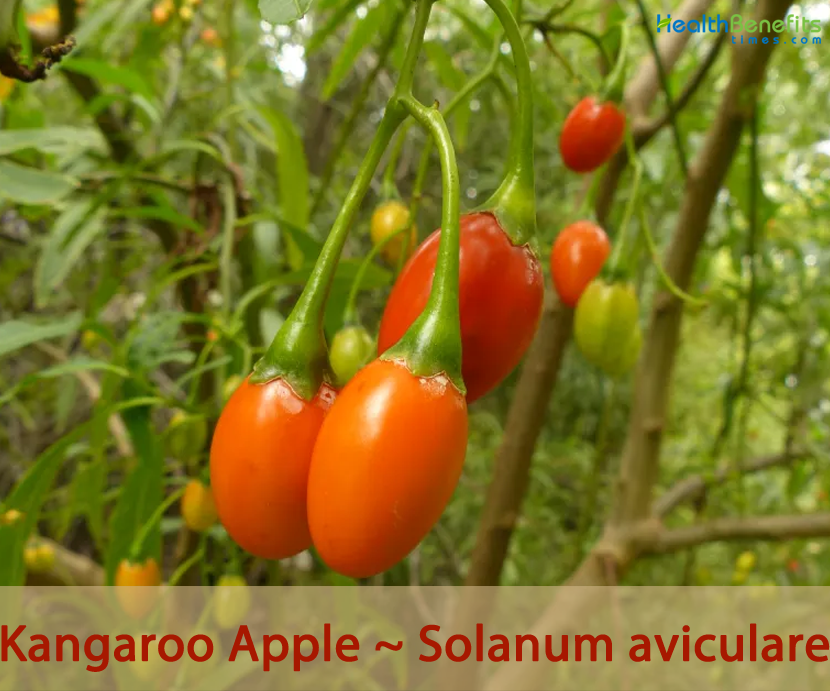
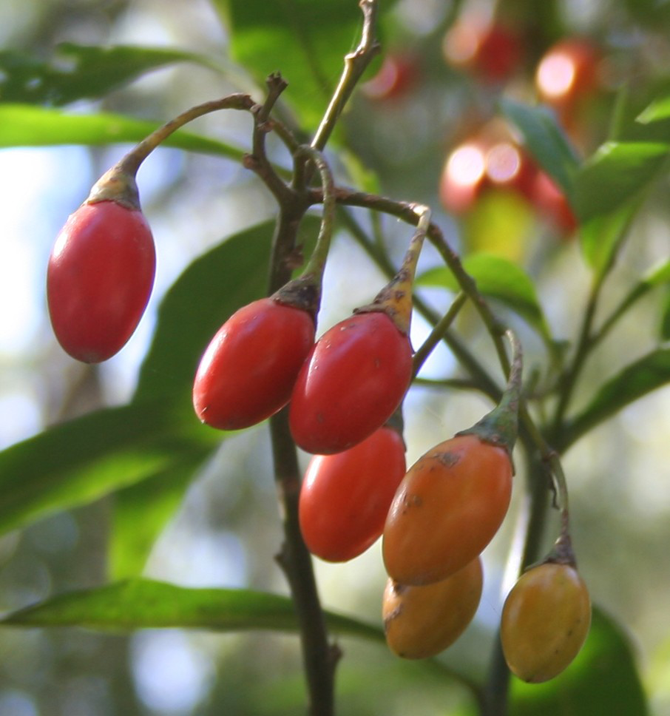
| Colors | Initially bright green and ripen to a yellow-orange or from a pale orange to red |
| Shapes | Small ovoid to ellipsoid berry, about 10–15 mm in diameter |
| Health benefits | Support for heart disease, stroke, cancer, old sores, ulcers, arthritis, blood pressure, treat achy joints and wounds and scabies. |
| Name | Kangaroo Apple |
|---|---|
| Scientific Name | Solanum aviculare |
| Native | South-eastern Asia (i.e. Irian Jaya in Indonesia and Papua New Guinea), eastern Australia (i.e. eastern Queensland, eastern New South Wales and Victoria), Lord Howe Island, Norfolk Island and New Zealand. It also naturalized overseas in Hawaii and western USA (i.e. California and Oregon) |
| Common Names | Kangaroo apple, New Zealand nightshade, poroporo, pōporo, bumurra, pam plum, nightshade, bullibulli |
| Name in Other Languages | Arabic: Biadhinjan ‘usturaliin (باذنجان أسترالي) Chinese: Àozhōu jiā (澳洲茄), Kǔ tiān jiā (苦天茄), Àozhōu jiā (澳洲茄) English: New Zealand nightshade, Kangaroo apple, poroporo German: Känguruapfel, Queensland-Känguruapfel, Känguruh-Apfel Māori: Pōporo, hōreto, peoi Portuguese: Macieira-de-canguru Russian: Paslon ptichiy (Паслён птичий) Swedish: Rött känguruäpple |
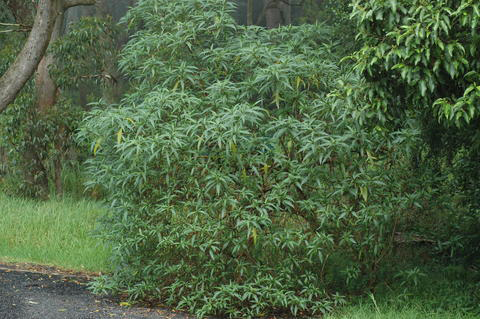
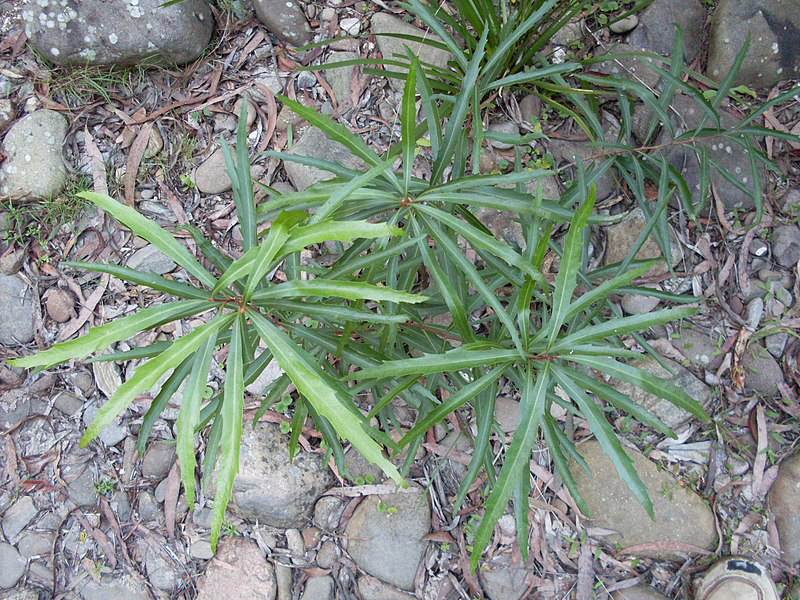
| Plant Growth Habit | Upright to spreading, fast-growing short-lived, soft-wooded evergreen shrub or small tree |
| Growing Climates | Coastal and lowland forest margins and shrub land, Disturbed areas in upland and mountain rain forest, wet forests and rainforest margins |
| Soil | It can be grown in chalky, sandy, loamy or clay laden soils provided they are well draining. Plant seeds in full sun to part shade. It thrives in moist, not wet, soil but will tolerate some drying out. If container grown, the plant can be brought inside if cold snaps are forecast. In terms of pH, the soil can be acid, alkaline or neutral |
| Plant Size | Grow from 1 – 4 meters tall |
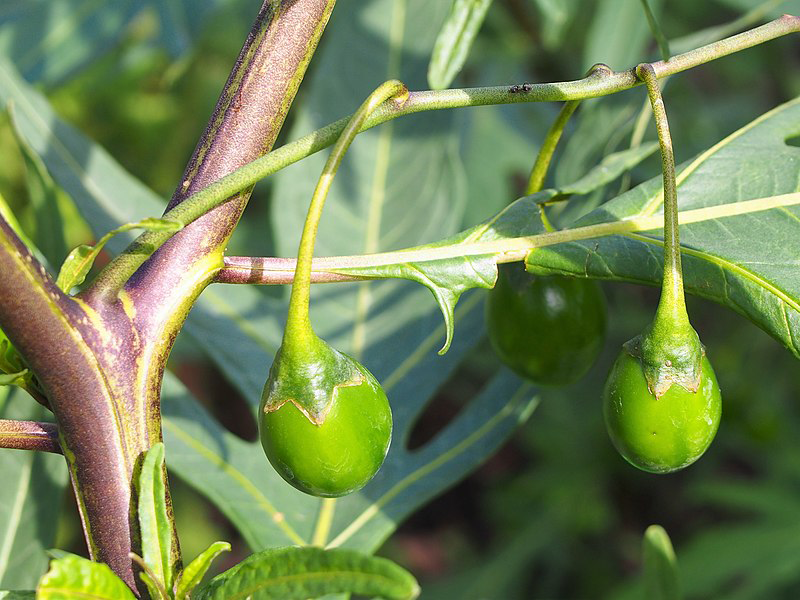
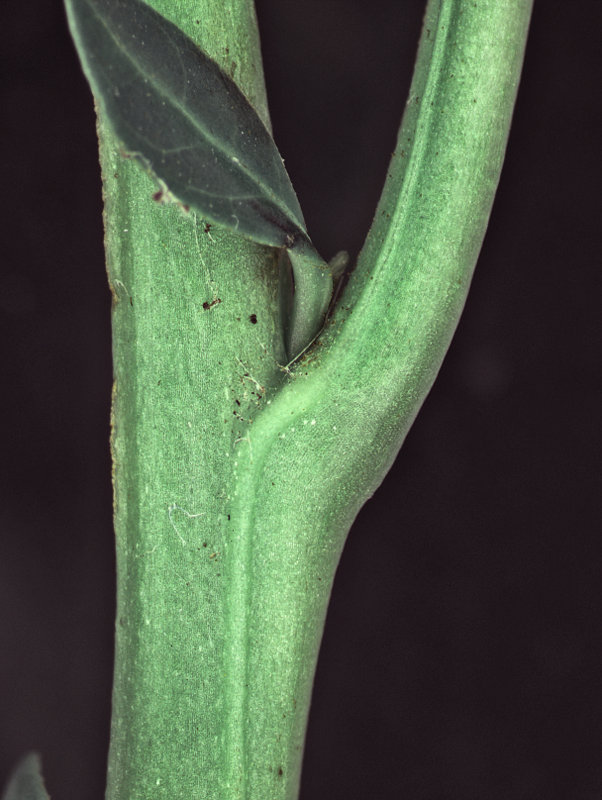
| Stem | Stems of Solanum aviculare are green or purple, 1-3 cm long, and hairless. |
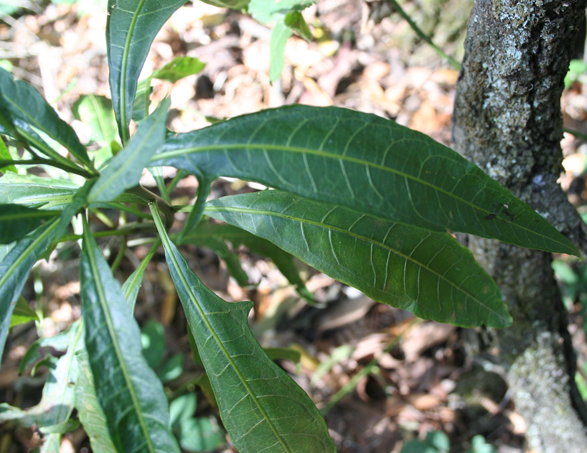
| Leaf | Leaves may be entire or lobed, up to 30 centimetres long, deep green above and lighter green beneath. Our specimens have lobed leaves. |
| Flowering season | July to October |
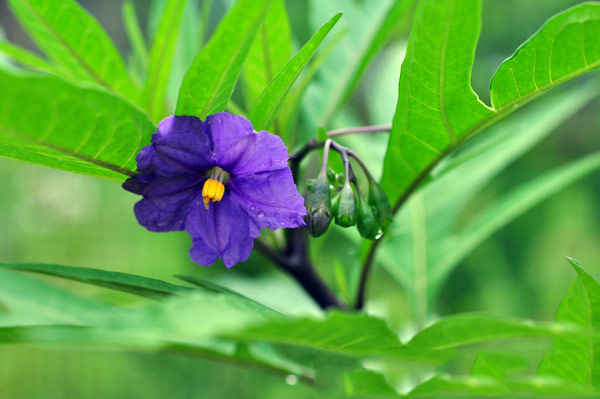
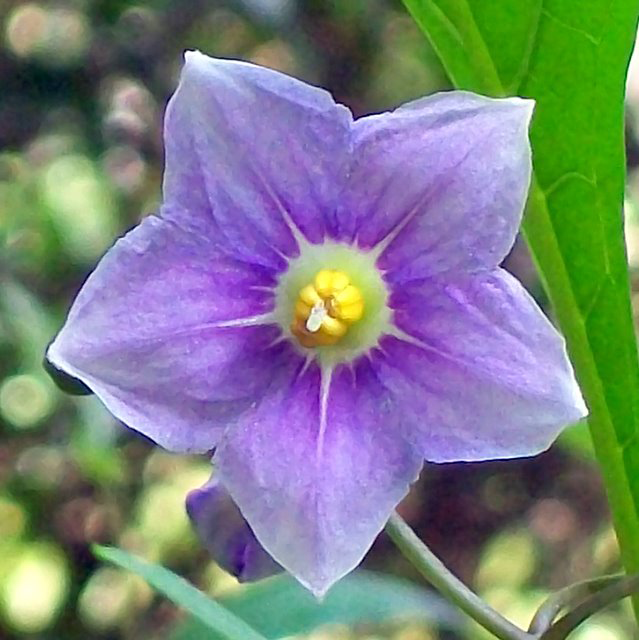
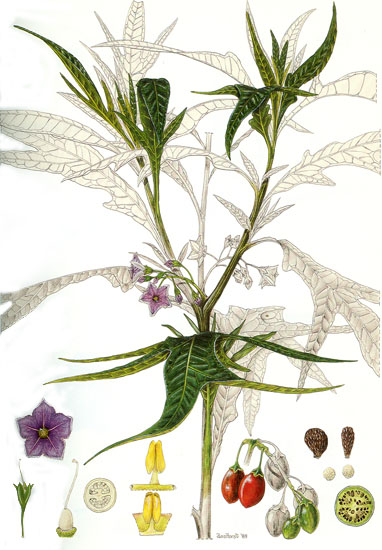
| Flower | Flowers are up to four centimetres across and an eye-catching bluish-violet with a deep violet star-shaped marking at the base and bright yellow anthers. Spring and summer are the main flowering periods when blooms are both profuse and conspicuous. Sporadic flowering occurs at other times. |
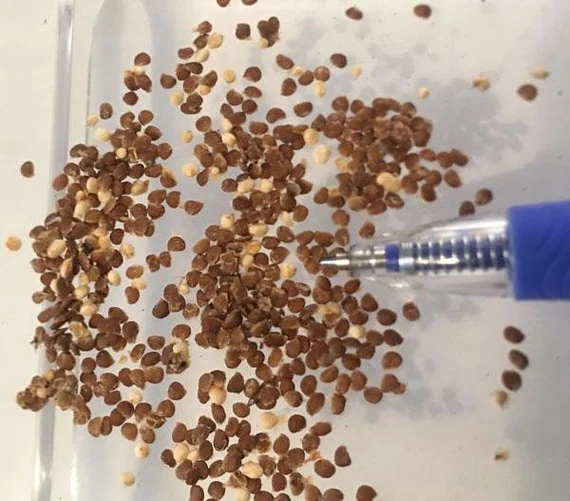
| Fruit Shape & Size | Small ovoid to ellipsoid berry, about 10–15 mm in diameter that contains anywhere from 200 to 600 tiny flat seeds |
| Fruit Color | Initially bright green and ripen to a yellow-orange or from a pale orange to red |
| Propagation | By seeds in the spring and semi-ripe cuttings in the summer |
| Plant Parts Used | Leaves, bark |
| Lifespan | Five to six years |
| Season | August to October |
Plant Description
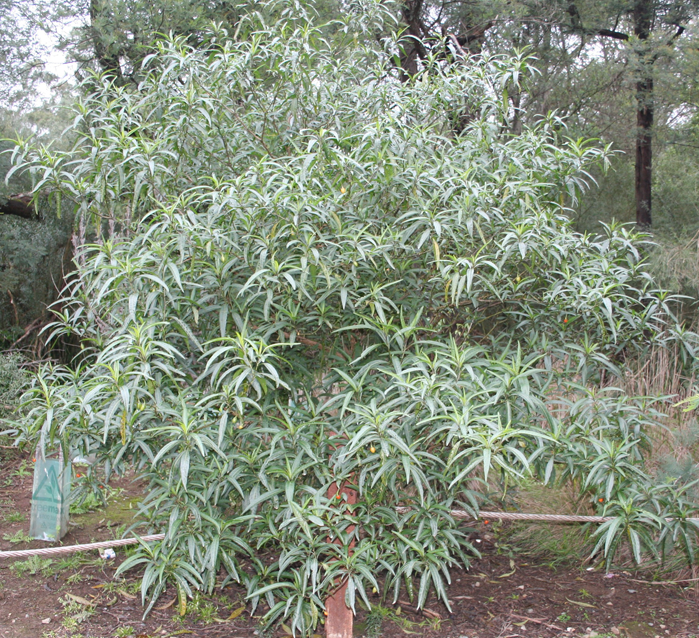
Kangaroo Apple is an upright to spreading, fast-growing short-lived, soft-wooded evergreen shrub or small tree that normally grows about 1 – 4 meters tall. It is a short-lived tree, with soft-wooded trunk and branches persisting for several years, becoming woody at the base and straggly with age. The stems of Solanum aviculare are green or purple, 1-3 cm long, and hairless. The plant is found growing in coastal and lowland forest margins, shrub land, disturbed areas in upland and mountain rain forest, wet forests and rainforest margins. It can be grown in chalky, sandy, loamy or clay laden soils provided they are well draining. Plant seeds in full sun to part shade. It thrives in moist, not wet, soil but will tolerate some drying out. If container grown, the plant can be brought inside if cold snaps are forecast. In terms of pH, the soil can be acid, alkaline or neutral.
Leaves
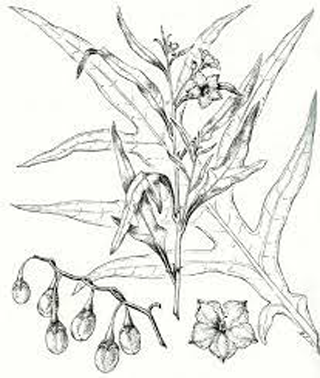
Leaves are lobed or entire, apex acute to acuminate, base attenuate, concolorous and glabrous. Lobed leaves are broad-elliptic to obovate, lamina 15–30 cm long; lobes 1–10 cm long and 0.5–2 cm wide; petiole up to 4 cm long. Entire leaves are lanceolate-elliptic; the lamina is 8–25 cm long and 1–3.5 cm wide and petiole up to 1–2 cm long. The leaves of the Kangaroo Apple are deep green above and lighter green beneath.
Flowers
Inflorescences are simple or forked at base, up to 10-flowered; primary peduncle is 0–3.5 cm long. The hermaphroditic flowers, which appear in spring and summer, range in color from white, through mauve to bluish-violet. They have a deeper coloured star-shaped marking at the base and bright yellow anthers. Flowers on pedicels are 1.5–2 cm long; calyx is 5–6 mm long, lobes triangular, 1.5–3 mm long; corolla is rotate-stellate, 25–40 mm diam., blue-violet, lobes acute; anthers 3.5–4.5 mm long. Flowering normally takes place in between July to October.
Fruits
Fertile flowers are followed by ovoid to ellipsoid berry, about 10–15 mm in diameter. Fruits are initially bright green turning to a yellow-orange or from a pale orange to red as they mature. When ripe, the berries soften and may split exposing 200 to 600 tiny flat seeds. The pulp is juicy and sweet with a hint of melon flavor. Seeds are 1–1.5 mm long, light brown or reddish-brown; stone-cell granules usually 1–1.5 mm long. All of the green parts of the plant and unripe fruit are poisonous. Unripened Kangaroo Apples are bitter and toxic. Eaten by birds, the seeds are spread and germinate in new areas.
History
The Kangaroo Apple is native to southeastern Australia and New Zealand. The two different species that go by the common name Kangaroo Apple share a similar native range, and both have been cultivated for the alkaloid industry. Solanum laciniatum was first written about by Kew botanist and gardener to the King of England, William Aiton in 1789. It is more often found in drier areas. Solanum aviculare was identified in 1786 by Georg Forster. The German explorer and scientist had found the plant during a stop in southeastern Australia while accompanying the famed Captain Cook on his section expedition around the world. The latter species prefers damper environments. It wasn’t until the 1950s that the two plants were determined to be two distinct species, and that one could very well be a hybrid of the other. Kangaroo Apple plants grow wild throughout southeastern Australia, New Zealand, Tasmania, and parts of New Guinea. The plant can be found in limited areas of China and Russia. The seeds are spread by birds, and in some areas the plant is considered an invasive species. The Kangaroo Apple generally grown by home gardeners or specialty plant enthusiasts and is not common outside of its native range.
Health benefits of Kangaroo Apple
Kangaroo Apple is full of several health promoting nutrients. Let’s take a look at some of the benefits of Kangaroo Apple extract
1. Promotes Smother and Stronger Skin
The Kangaroo Apple plant consists of high levels of amino acids. Amino acids are small but powerful skincare heroes, creating and maintaining smooth, healthy, younger-looking skin. They are part of our body natural moisturizing factors (NMFs) which are a mix of several compounds, including amino acids that are naturally present in our skin keeping it hydrated.
Amino acids also play a crucial role in creating collagen, fibrinogen, and elastin. These are the connective and structural proteins that keep your skin strong and smooth looking.
2. Contains Anti-inflammatory Properties
Breakouts, redness and flaky, dry patches are the signs that something isn’t right. Overexposure to UV rays, chemicals in skincare products or environmental allergens can cause your skin to become inflamed and uncomfortable. Kangaroo Apple extract consists of anti-inflammatory properties to soothe irritated, stressed out skin. It also consists of powerful wound healing properties, speeding up the return of scarring to healthy skin.
3. Skin lightening properties
Kangaroo Apple helps to lighten and brighten skin.
Age spots are small to medium-sized areas of hyperpigmentation. These darker patches are a natural part of the ageing process but there are a few lifestyle and environment factors that increase the likelihood of having age spots appear. These include a poor diet, too much UV exposure, smoking, and the level of pollution in our environment.
Usually, you’ll find these spots on exposed areas of skin like your face, back, shoulders, hands, and neck. The good news is age spots can be prevented and reversed with Kangaroo Apple extract. The fruit’s skin brightening properties get to work lightening dark spots and brightening a dull complexion. Given all its natural power to help turn back the skin clock, we use Kangaroo Apple extract in our Anti-Ageing Facial Cream Cleanser. A gentle, purifying cleansing and toning lotion with a lovely creamy texture, the cleanser removes makeup, dead skin and surface impurities while softening and firming the skin.
Traditional uses and benefits of Kangaroo Apple
- It is a source of steroids, much used in the pharmaceutical industry.
- The unripe berries are the richest source.
- The leaves are used for poultices.
- Kangaroo Apple was used by the native Aboriginal people for centuries, as a natural anti-inflammatory and antioxidant.
- Small berries contain phytochemicals called phenols, which are shown to protect against things like heart disease, stroke and cancer.
- It is cultivated in Russia and Hungary for the solasidine which is extracted and used as a base material for the production of steroid contraceptives.
- Australian Aborigines used the fruit as a poultice on swollen joints.
- Inner bark is used in lotion for scabies.
- Pith of the stem of Kangaroo Apple in lotion to be applied to bruises.
- Young leaves are used by a Dr. P. Wilson, Taranaki to make a healing salve, mixed with lard.
- Leaves, berries juice is used for itch or scabies.
- Ointment made from leaves with lard is useful as a simple dressing.
- Inner skin of bark is used for itch.
- In the state of Victoria, Kangaroo Apple has been used by the Wotjobaluk people to treat arthritis and joint pain.
- It is good for treating achy joints and wounds, as well as encourages skin rejuvenation on scarring, pigmentation and aging.
- Leaves and bark of the plant are used to ease the symptoms of colds and flus.
- It is also believed that a tonic made from the tea can help to reduce blood pressure and improve circulation.
- The leaves were beaten and used as a poultice on old sores and ulcers.
- Internally Kangaroo Apple was used by the Maori as an effective contraceptive.
Culinary Uses
- Fruit can be consumed after being cooked.
- It must be thoroughly ripe because the unripe fruit is poisonous.
- It can be used as a sweet fruit or as a vegetable.
- Best harvested once it has fallen from the plant, the fruit will then have lost its unpleasant acidity.
- It tastes much worse than it looks, the fruit is sickly sweet and often bitter.
- The quality varies from plant to plant and even from year to year from the same plant.
- They can be added to baked goods or used to make jams or jellies.
- Roast Kangaroo Apple fruit alongside meats or poultry, or use to make chutney.
- Kangaroo Apple fruit can be dehydrated or dried to preserve.
- Kangaroo Apple fruits are highly perishable once ripe and will keep for a couple of days if refrigerated.
Other Facts
- In warmer climates than Britain this plant is often used as a hedge.
- It is used as a rootstock for the tree tomato.
- An extract of the fruit is used as an ingredient in commercial cosmetic preparations as a skin conditioner.
- Oil extracted from the seeds is used as an ingredient in commercial cosmetic preparations as an antioxidant, humectant, sin conditioner and skin protector.
- Kangaroo apple is regarded as an environmental weed in South Australia and Western Australia.
- Kangaroo Apple fruit must be ripe before it is consumed.
- Flutes are made from woody stems.
- The kangaroo apple is an important food source for many native animals, including koalas, wallabies, and possums.
Precautions
- All green parts of the plant are poisonous and so is the unripe fruit.
- These are bitter tasting and potentially poisonous when consumed frequently.
- Fruits may cause severe stomach upset if eaten.
References:
https://www.itis.gov/servlet/SingleRpt/SingleRpt?search_topic=TSN&search_value=30417#null
https://npgsweb.ars-grin.gov/gringlobal/taxon/taxonomydetail?id=100820
https://pfaf.org/user/plant.aspx?latinname=Solanum+aviculare
https://gd.eppo.int/taxon/SOLAV
http://www.worldfloraonline.org/taxon/wfo-0001026424
https://tropical.theferns.info/viewtropical.php?id=Solanum+aviculare
https://en.wikipedia.org/wiki/Solanum_aviculare
https://www.wikidata.org/wiki/Q1295038
https://www.cabi.org/isc/datasheet/50507
https://species.wikimedia.org/wiki/Solanum_aviculare
https://austplants.com.au/Solanum-aviculare-Kangaroo-Apple
https://plants.usda.gov/home/plantProfile?symbol=SOAV