Health Benefits
    Facebook Twitter Instagram
    Friday, December 5
    Facebook Twitter Pinterest
    Health Benefits
    • Home
    • Dental Health
    • Mental Health
    • Weight Loss
    • Health Wiki
    • Nutrition
    • Healthy Recipe
    • BMI Calculator
    Health Benefits
    Home»Fruits»Know about the Nipa palm
    Fruits

    Know about the Nipa palm

    By s mNovember 11, 2019Updated:November 11, 2019No Comments3 Mins Read
    Facebook Twitter Pinterest LinkedIn Tumblr Email

    Nipa palm is native to China, Bangladesh, Ryuku Islands, the Andaman, Sri Lanka, India and Nicobar Islands, Thailand, Cambodia, Myanmar, Borneo, Vietnam, Maluku, Java, Malaya, Sulawesi, the Philippines, Sumatra and Bismarck Archipelago, the Solomon Islands, New Guinea, the Caroline Islands, the Solomon Islands, the Australian Northern Territory and Queensland. It is naturalized in Nigeria, the Mariana Islands, the Society Islands of French Polynesia, Trinidad and Panama.

    It is classified as palm and has been declared as non-threatened palm in South East Asia. It thrives in mangroves areas in Jambi Province but underutilized. Various parts of nypa tree are utilized such as leaves for thatching, roofing and nypa sap to make sugar. The young inflorescence before flower opening is tapped to yield a copious sap to make sugar called gula Malacca, alcohol or vinegar, molasses or treacle.

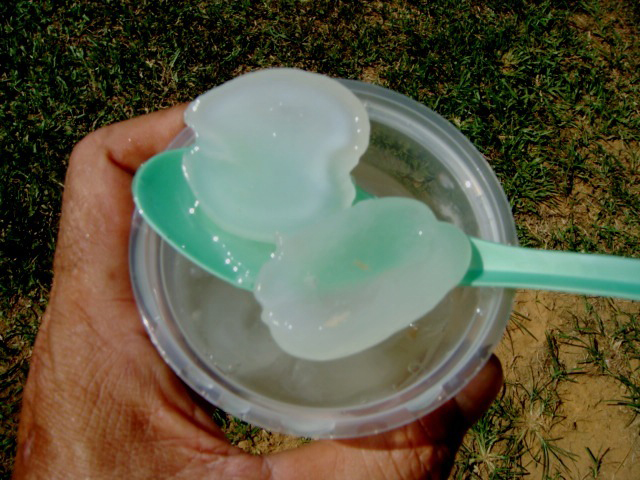
    Young nipa shoots are edible and the flower petals are infused for making aromatic tisane. The heart cabbage is consumed as vegetable. White jelly like endosperm of immature seed is translucent, sweet and consumed raw or preserved in form of syrup or made into gelatinous sweetmeat balls which is used as ingredient in Singapore, Malaysia and also known as Attap chee. Vinegar is made from the sap of Nipa palm.

    Plant description

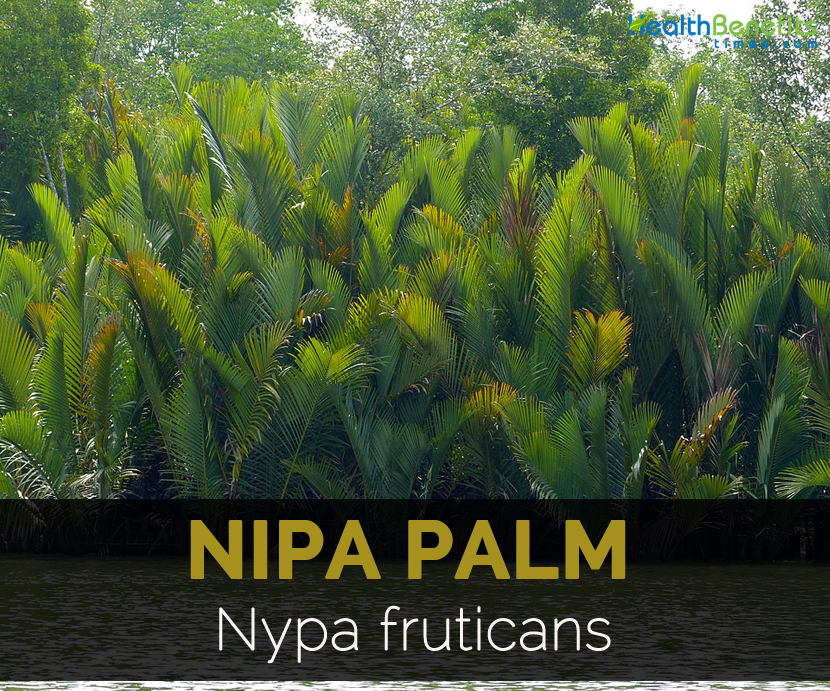
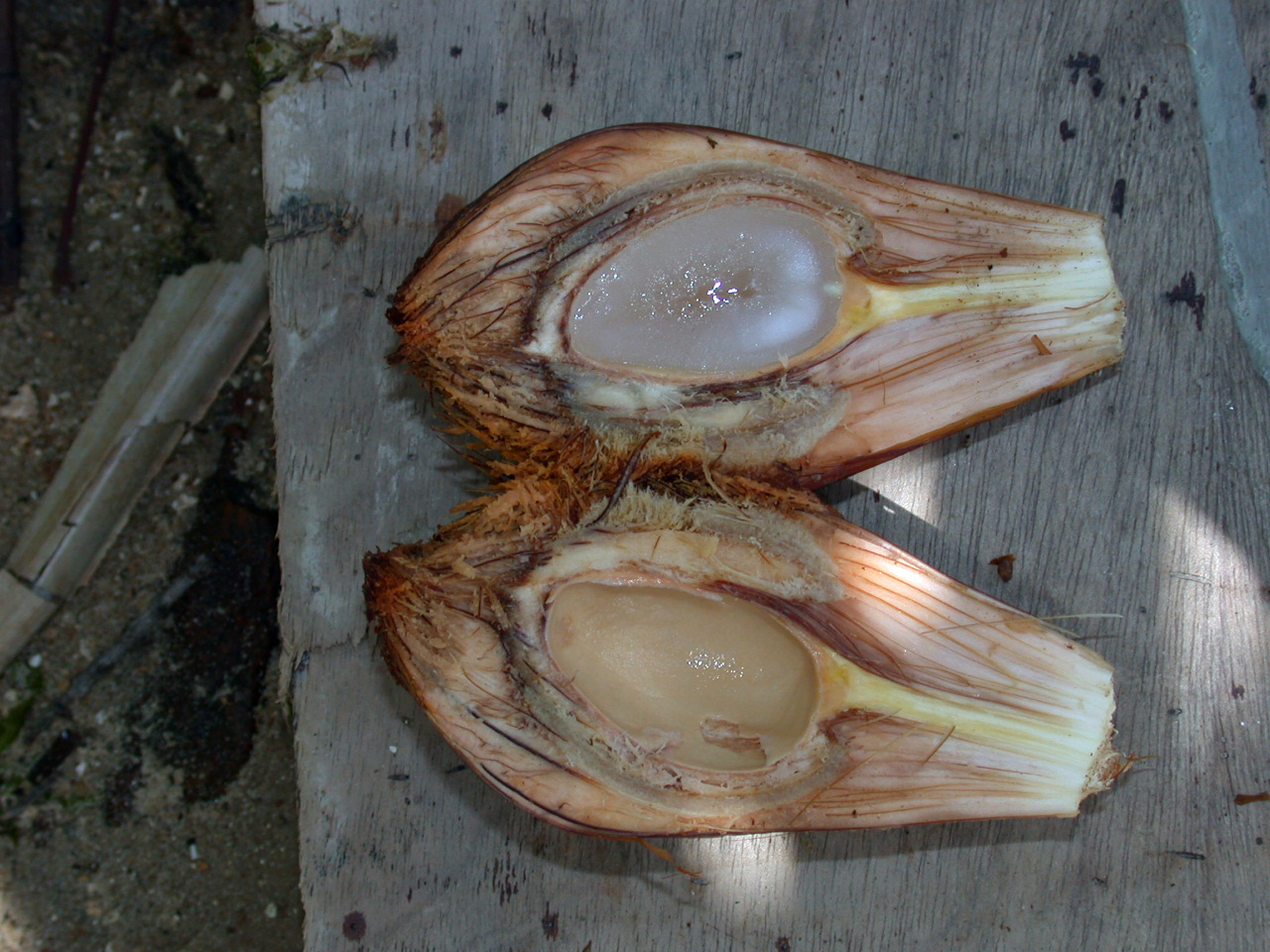
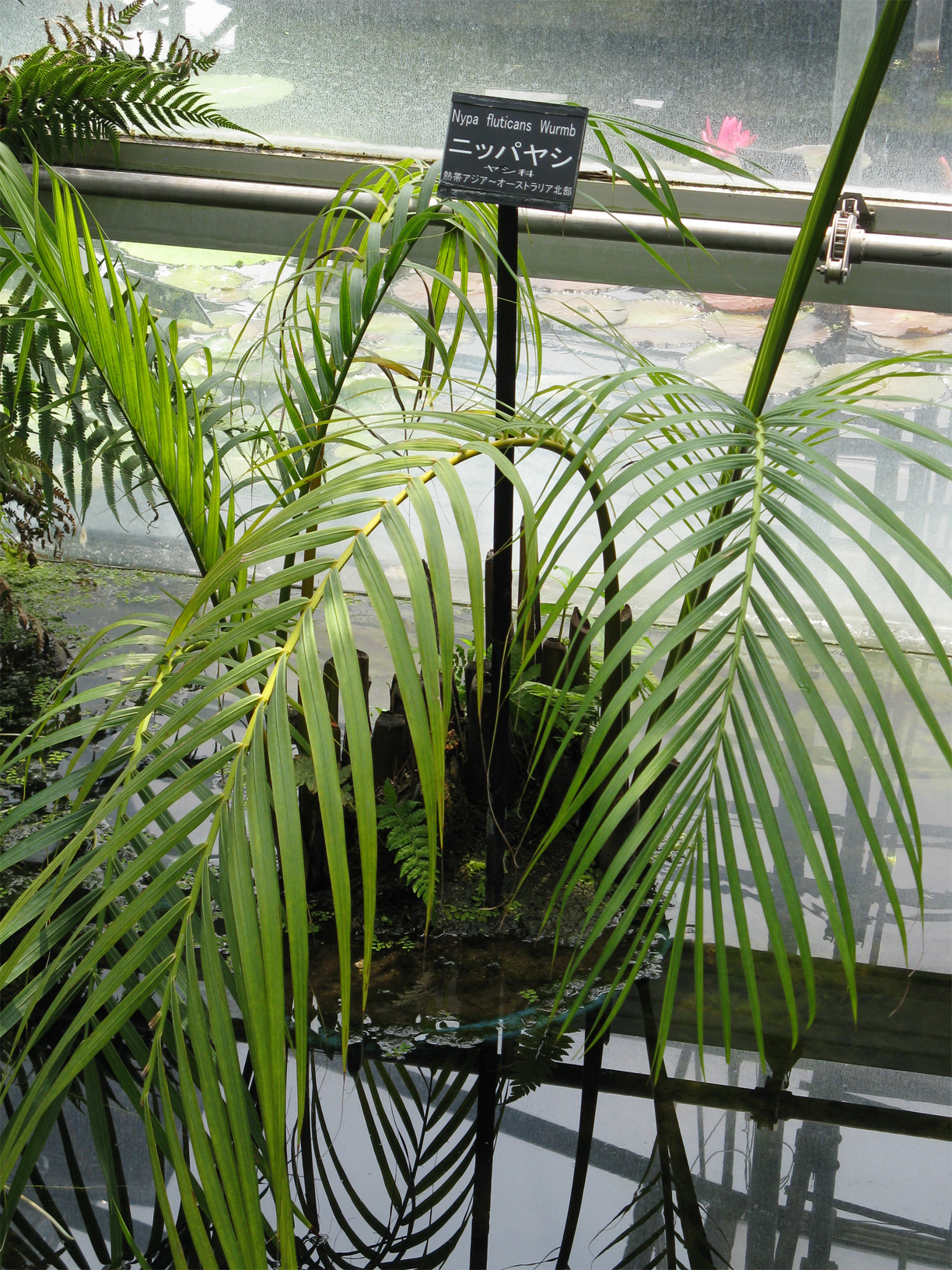
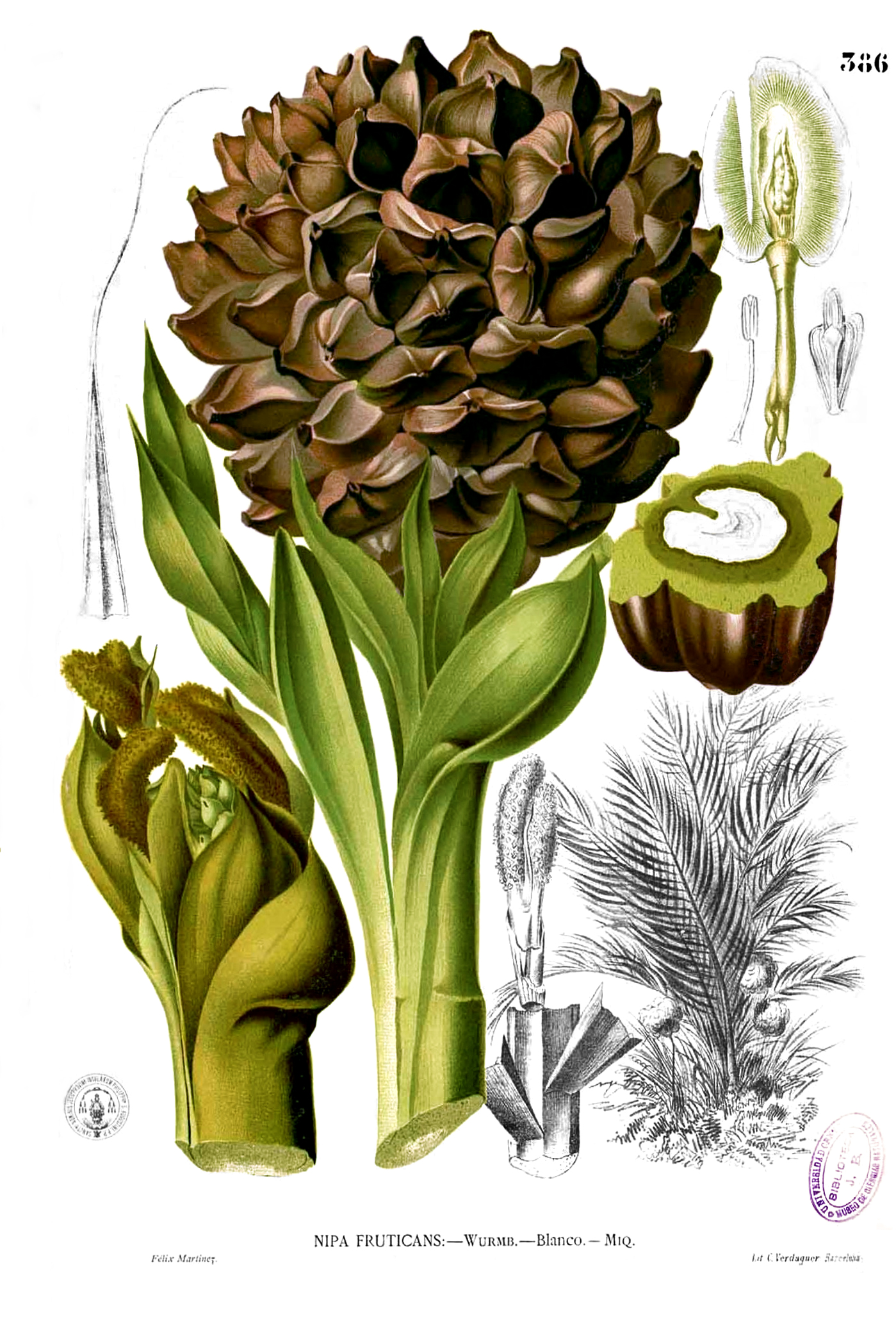
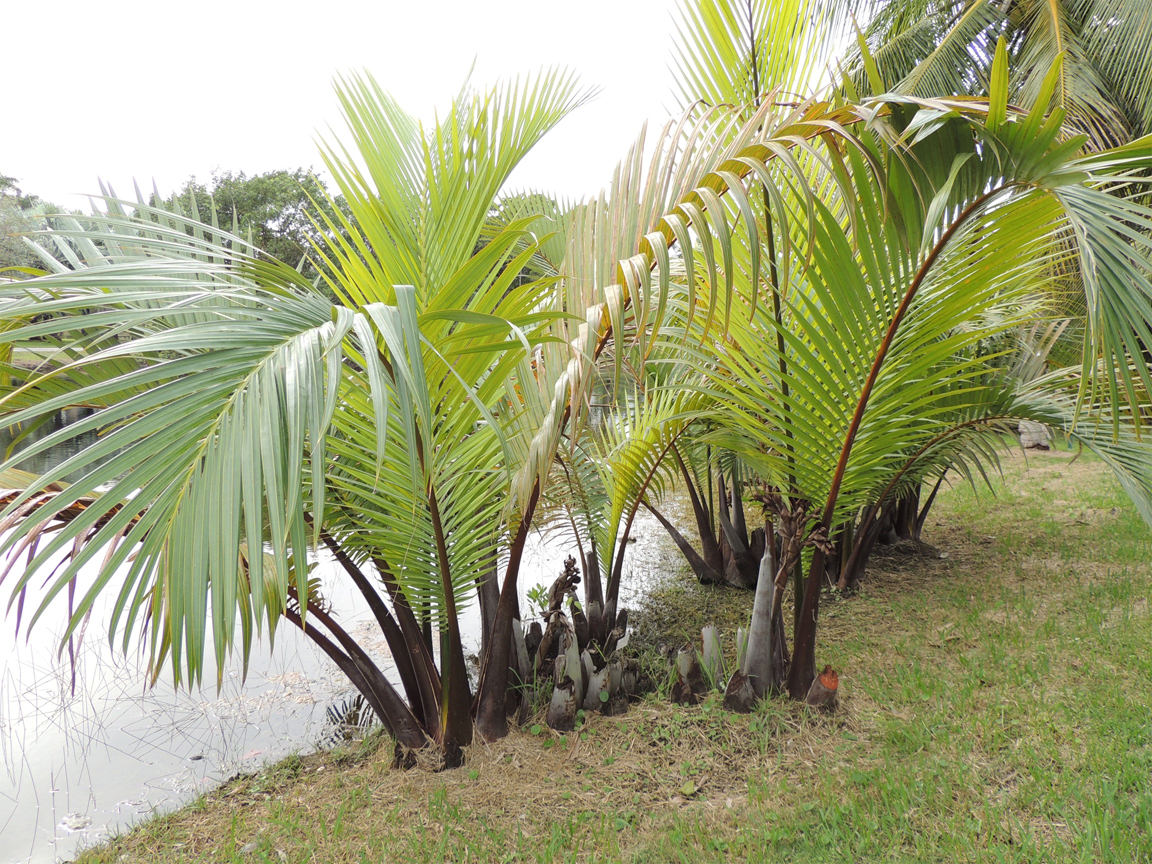
    Nipa palm is trunkless and clumping palm which grows to the height of 10 meters having subterranean horizontal stem which grows beneath the ground and rosette leaves and flower stalk grows upwards above ground surface. Leaves measures 9 meters long and is pinnate, stiffly erect having two ranks of 60 to 130 cm long, stiff, alternating, lanceolate leaflets which is pointing upwards from overlapping stout leaf bases. Leaves have 120 leaflets per leaf and has shiny green upper and powdery lower surface. Rhizomes and leaf bases are light and spongy. Inflorescences are yellow, subterminal, long, sturdy 1 m long stalks which arises from the base of the plant. Stalk has long sheathing spathes and few ascending spathed branches. Spathes are orange tipped olive green. Female inflorescence is densely packed and spherical head of flowers. Male inflorescence is a club shaped spike of closely arranged flowers which emerges from lateral stalks below female inflorescence. Flowers (male) are cream color which are borne on branches and central stalk. Female flowers are lemon yellow and form in round head size of a golf ball which terminates the central stalk. The flower converts into brown, fibrous chestnut which is ovoid, angular, 10-15 cm long and 5-8 cm wide and forms a large and spherical infructenscence about  30-45 cm in diameter. The fruit has one seed which is egg shaped having homogenous, soft and edible endosperm.

    Nipa Palm Image Gallery
    Half-cut-Nipa-Palm Half-cut-Nipa-Palm
    Nipa-palm-flesh Nipa-palm-flesh
    Nipa-palm-leaves Nipa-palm-leaves
    Nipa-palm-plant-illustration Nipa-palm-plant-illustration
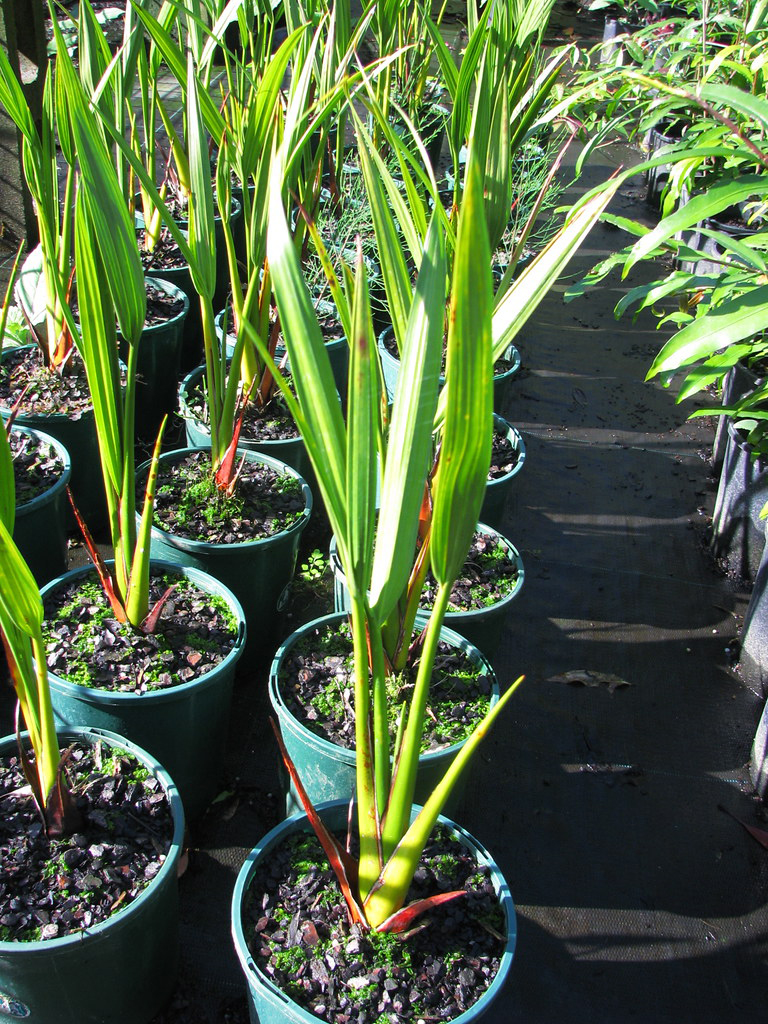
    Nipa-palm-seedlings Nipa-palm-seedlings
    Nipa-palm-plant Nipa-palm-plant
    Culinary uses

    • Seeds are consumed raw and imparts delicious and creamy flavor.
    • Inflorescence is used to extract a sugary sap.
    • It is used to make alcoholic beverage, vinegar and syrup
    • Cook the inflorescence in syrup from extracted from inflorescence to make sweetmeat.

    Traditional uses

    • In Malaysia, the juice extracted from shoots is mixed with coconut milk to treat herpes.
    • In Borneo, the ash of burnt leaves and roots are used for headache and toothache.
    • Use the ash with wood tar in blackening teeth.
    • The leaves decoction is used in Philippines as a lotion for indolent ulcers.
    • It is used for ulcers, toothache and centipede bites.

    References:

    https://www.itis.gov/servlet/SingleRpt/SingleRpt?search_topic=TSN&search_value=507457#null

    http://www.hear.org/pier/species/nypa_fruticans.htm

    https://pfaf.org/user/Plant.aspx?LatinName=Nypa+fruticans

    81%
    81%
    Awesome

    Comments

    comments

    Fruits N
    Share. Facebook Twitter Pinterest LinkedIn Tumblr Email
    Previous ArticleParticle Cream Review: Men, Put Down Your Lady’s Wrinkle Cream and Start Using This
    Next Article Know about the Senegal Date Palm

    Related Posts

    Facts about Saffron Plum

    February 11, 2024

    Health benefits of Assyrian plum

    February 8, 2024

    Facts about Red Chokeberry

    February 4, 2024

    Comments are closed.


    Nipa palm Quick Facts
    Name: Nipa palm
    Scientific Name: Nypa fruticans
    Origin South Asia – Sri Lanka, Bangladesh and Southeast Asia, northern Australia and to the Pacific Islands – Solomon, Marianas, Caroline islands
    Shapes Large globose syncarp
    Flesh colors White
    Taste Delicious, creamy
    Name Nipa palm
    Scientific Name Nypa fruticans
    Native South Asia – Sri Lanka, Bangladesh and Southeast Asia, northern Australia and to the Pacific Islands – Solomon, Marianas, Caroline islands
    Common/English Name Mangrove Palm, Nipa Palm, Nipa, Nipah, Spelt Nipa, Nypa Palm, Water Coconut, Water Palm
    Name in Other Languages Andaman Islands: Poothada;
    Australia: Ki-Bano (Cardwell), Rola (Tiwi Islands), Tacannapoon (Pasco River);
    Bangladesh: Golpata;
    Bengali: Golpatta;
    Brazil: Palmeira-Do-Mangue, Palmeira-Nipa;
    Burmese: Dani;
    Chinese: Shui Ye;
    French: Palmier D’eau, Palmier Des Marais, Palmier Nipa, Palmier Des Marécages;
    German: Attapalme, Mangrovenpalme, Nipapalme;
    India: Gulag, Gabna (Bengali), Nipamu (Telugu);
    Indonesian: Buyuk (Javanese), Nipah (General), Bobo (Moluccas);
    Italian: Palma Delle Paludi;
    Japanese: Nippa Yashi;
    Khmer: Chak;
    Malaysia: Nipah;
    Nigeria: Ayamatangh, Ayangmbakara;
    Papua New Guinea: Biri-Biri (Koriki);
    Philippines:-
    Anipa, Pinok, Tata (Ibanag), Sasa (Pampangan), Pinóg (Itogon), Saga (Sambali), Nipa (S-Filipino), Lasá, Pawid, Pauid, Sasa(Tagalog);
    Portuguese: Palmeira Nipa;
    Russian: Nipa;
    Singapore: Attap Palm;
    Swedish: Nipapalm;
    Sri Lanka: Gim-Pol;
    Thai: Lukchaak, Chaak, Atta;
    Vietnamese: Dừa Nước, Dùa Lá
    Climate Warm humid
    Plant Size 5 m (16ft) by 5 m (16ft)
    Stem Prostrate, rhizomatous
    Leaves Large pinnate, 3-5 m long
    Fruit shape & size Large globose syncarp
    Flavor/aroma Delicious creamy

    Nipa palm Scientific Classification

    Scientific Name: Nypa fruticans

    Rank Scientific Name & (Common Name)
    Kingdom Plantae (Plants)
    Subkingdom Viridiplantae  (Green plants)
    Infrakingdom Streptophyta  (Land plants)
    Superdivision Embryophyta
    Division Tracheophyta  (Vascular plants, tracheophytes)
    Class Magnoliopsida
    Order Arecales
    Family Arecaceae
    Genus Nypa Steck
    Species Nypa fruticans Wurmb (Nipa palm)
    Synonyms
    • Cocos nypa Lour.
    • Nipa arborescens Wurmb
    • Nipa fruticans (Wurmb) Thunb.
    • Nipa fruticans Thunb.
    • Nipa litoralis Blanco
    • Nypa arborescens Wurmb
    • Nypa arborescens Wurmb ex H. Wendl.
    • Nypa fruticans var. neameana F.M. Bailey.
    Categories
    • Beverages (78)
    • Dairy (28)
    • Dental Health (15)
    • Equipment (5)
    • Essential OIls (196)
    • Facts (2,939)
    • Foods (255)
    • Fruits (516)
    • Giveaway (1)
    • Grains and Cereals (36)
    • Health & Beauty (763)
    • Herbs and Spices (1,249)
    • Medicines (9)
    • Mental Health (19)
    • Nutritional value (27)
    • Nuts and seeds (73)
    • Oils (81)
    • Pets (4)
    • Poultry & Seafoods (67)
    • Pulses and Beans (16)
    • Reviews (25)
    • supplement (2)
    • Vegetables (304)
    • Weight Loss (22)

    What is Lupin Bean Flour?

    Science Backed Health Benefits of Durian (Durio zibethinus)

    Science Backed Health Benefits of Feijoa (Pineapple Guava) (Acca sellowiana)

    Science Backed Health Benefits of Gac Fruit (Momordica cochinchinensis)

    Science Backed Health Benefits of Amaranth Leaves (Amaranthus spp)

    Science Backed Health Benefits of Arrowhead (Sagittaria sagittifolia)

    ABOUT
    Home
    About us
    Contact us
    Privacy Policy
    Terms & conditions
    Disclaimer
    Direct Communication
    e-mail: [email protected]
    Gmail: [email protected]
    Whatsapp: +977-9841146511
    Viber: +977-9841146511
    Useful
    Health Wiki
    Nutrition
    Facebook Twitter Pinterest
    © 2025 www.healthbenefitstimes.com All rights reserved.

    Type above and press Enter to search. Press Esc to cancel.

    ×

    Log In

    Forgot Password?

    Not registered yet? Create an Account