

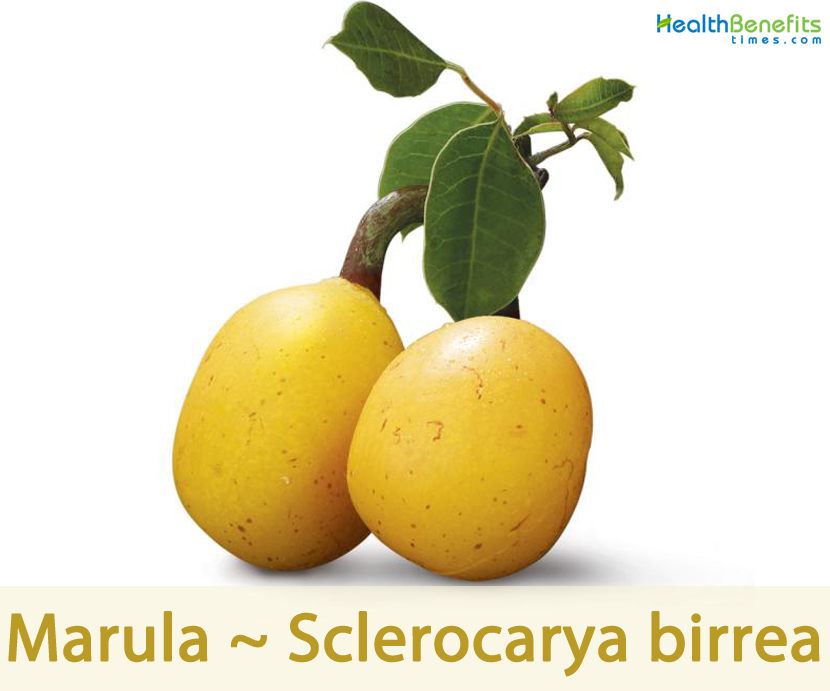
| Marula Fruit Quick Facts | |
|---|---|
| Name: | Marula Fruit |
| Scientific Name: | Sclerocarya birrea |
| Origin | Miombo woodlands of Southern Africa, the Sudano-Sahelian range of West Africa, and Madagascar |
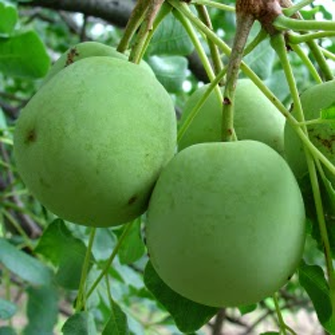
| Colors | Initially green turning to yellow as they mature |
| Shapes | Obovoid to sub-globular drupe 3–3.5 cm in diameter |
| Flesh colors | Whitish |
| Taste | Similar to walnuts or peanuts |
| Health benefits | Supports for healthy skin, Promotes the health of bones, Makes the muscle stronger, Boosts immunity, Supports for hair growth, Slows down aging, Improves brain function, Gives a good mood, Reduces the risk of cancer |
| Name | Marula Fruit |
|---|---|
| Scientific Name | Sclerocarya birrea |
| Native | Miombo woodlands of Southern Africa, the Sudano-Sahelian range of West Africa, and Madagascar |
| Common Names | Jelly plum, cat thorn, Ethiopian marvola nut, Akamil, Daniya, Didissa, morula, cider tree, marula, maroola nut/plum, Canhoeiro, Dania, Elephant Tree, Marriage Tree, Marula Fruit, Mushomo, Mutsomo, Umganu, Dineygama, Eijikai, Ejikai, Ekajijai, Enaimu, Gene, Gummel, Hemaidai, Himed, Katetalam, Kokwaro, Kuma, Likok, M’ckoowee, Mbwegele, Mng’ongo, Mngongo, Mtondooko, Mugongo, Muhonga, Nagna, Ndouas, Ng’ongwa, Ngoringo, Nobse, Nunga, Olmang’wai, Olmangusai, Omugongo, Otitimo, Otitipo, Paatta, Paatta-aguta, Pasha, Yeberha-lomi |
| Name in Other Languages | Afrikaans: Maroela Angola: Gongo, hongo, kaxama, mjong, mungongo, muongo, ngongo, omuogo, ongo, ongongo, uongo Arabic: El hamaidai, hameid, homeid Bambara: Nkuna, nkuntan Botswana: Marula, morula, ufuongo Chad: Gna, kuna, n’guna Chichewa: Mfula Chinese: Mǎ lǔ lā guǒ (馬魯拉果) Congo Democratic Republic: Kamukungu, kani, muhonga, muonga, mwongo, tshikosokoso Danish: Maruela Dutch: Marula English: Marula, cider tree, jelly plum, cat thorn, morula, cider tree, marula, maroola nut/plum Esperanto: Marula arbo Estonian: Maruula-elevandiõunapuu Finnish: Marula French: Nguna, prunier d’Afrique, sclérocarya à bière, prunier jaune, prunier, Marula Fulah: Eedi German: Marula-Baum Ghana: Mu-mugga Hausa: Dania, Danya Hebrew: מרולה Japanese: Marūra (マルーラ) Kenya: Didissa, mngongo, mura, muua, oroluo Komi: Marula (Марула) Korean: Malullanamu (마룰라나무) Lak: Marula (Марула) Madagascar: Sakoa, sakoana, saokao Malawi: Mfula, mtondowoko, musele, musewe Mali: Gna, kuna, kunan Mozambique: Inhamarre, isi-lignamaash, mefula, mepepo, m’kôko, muchangua, mudangua, muganu, mutual, nkanye, ocanheiras, ocanho, okania, tsula, umkanya, unganu Namibia: Goaros, omuongo, omwoongo, ongongo Northern/Southern Ndebele: Iganu, ikanyi, umganu, umkano Persian: Marula (مارولا) Polish: Marula Portuguese: Marula, canhoeiro Russian: Marula (Марула) Senegal: Ber, beri, birr, edi, eri, hedehi, hedi, kede Sotho: Morula South Africa: Amaganu, dikôkô, iganu, ikanyi, kanye, lehlabula, lerula, maroela, marula, mongo, morula, mufula, murula, nganu, nkanya, nkanyi, thambo, thebvu, umganu, umkano Sudan: Homeid Swaziland: Marula, umganu Swahili: Mng’ongo Shona: Mutsomo, mukwakwa, mushomo, muganu, mupfura, pfura, mufura, mafuna, marula Swazi: Emaganu, umganu Swedish: Mng’ongo, mng’ong’o, morula, mungango, Marula Tanzania: Gulgurchandi, mbwegele, mbwejele, mng’ongo, mng’ong’o, mn’gongo, monyangu, mtondoko, muhuri, mungango, ngongo, ng’ongo, olmang’oi, omengwe, omongwe Thai: Mā rū lā (มารูลา) Tshivenda: Mafula Tsonga: Nkanyi Tswana: Morula Turkish: Marula Udmurt: Marula (Марула) Ukrainian: Marula (Марула) West Africa: Arik, Bambara, béri, birr, dania, edi, eri, findibasu, kunan, namabu, nobega, touhila Wolof: Beer Zambia: Mgamu, mongwe, msewe, mubongo, mugongo, mulula, muongo, musebe, muyombo Zimbabwe: Bufuna, ganyi, iganu, ikanyi, manganu, mapfura, marula, mufuna, mufura, mukwakwa, munogo, mupfura, mushomo, musomo, mutsomo, pfura, umganu, umkano Zulu: Umganu, amaganu, umganu |
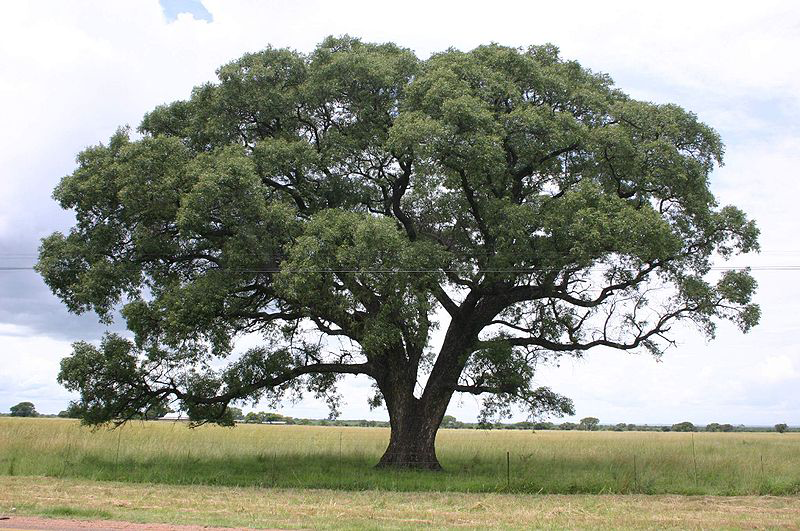
| Plant Growth Habit | Short-boled, small to medium-sized dioecious tree |
| Growing Climates | Drier savannah of the Sahel, wooded grasslands, riverine woodlands and bush lands, mixed deciduous woodland and wooded grassland, often on rocky hills |
| Soil | Sandy or alluvial soils. Tolerates a wide range of soils except areas subject to flooding and waterlogging |
| Plant Size | 9–12 m tall but occasionally up to 18 m, bole short (usually ca. 4 m), up to 120 cm in diameter |
| Root | Taproot and sturdy lateral roots extending as far as 30 m |
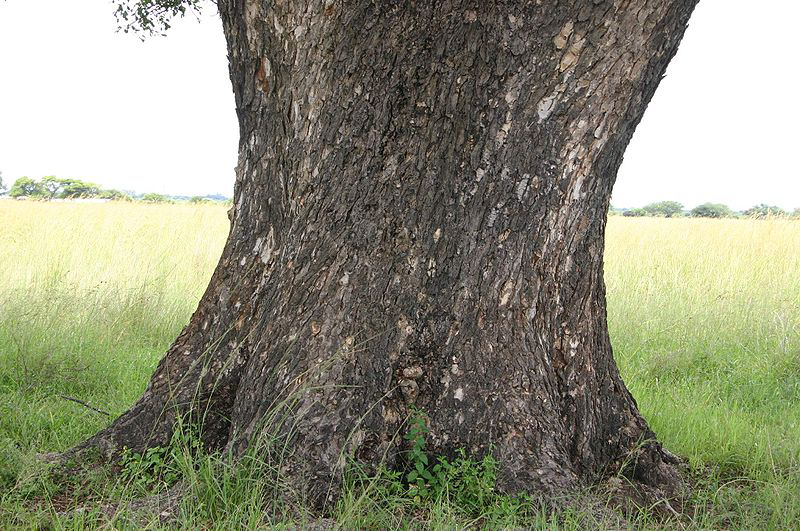
| Bark | Bark pale silvery or purplish-grey on small individuals, rough on large individuals, with flat, roundish scales |
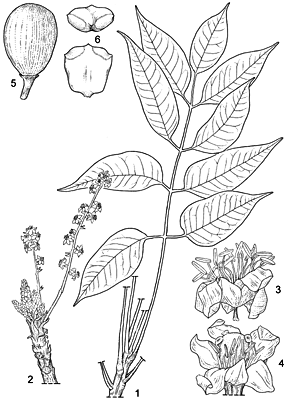
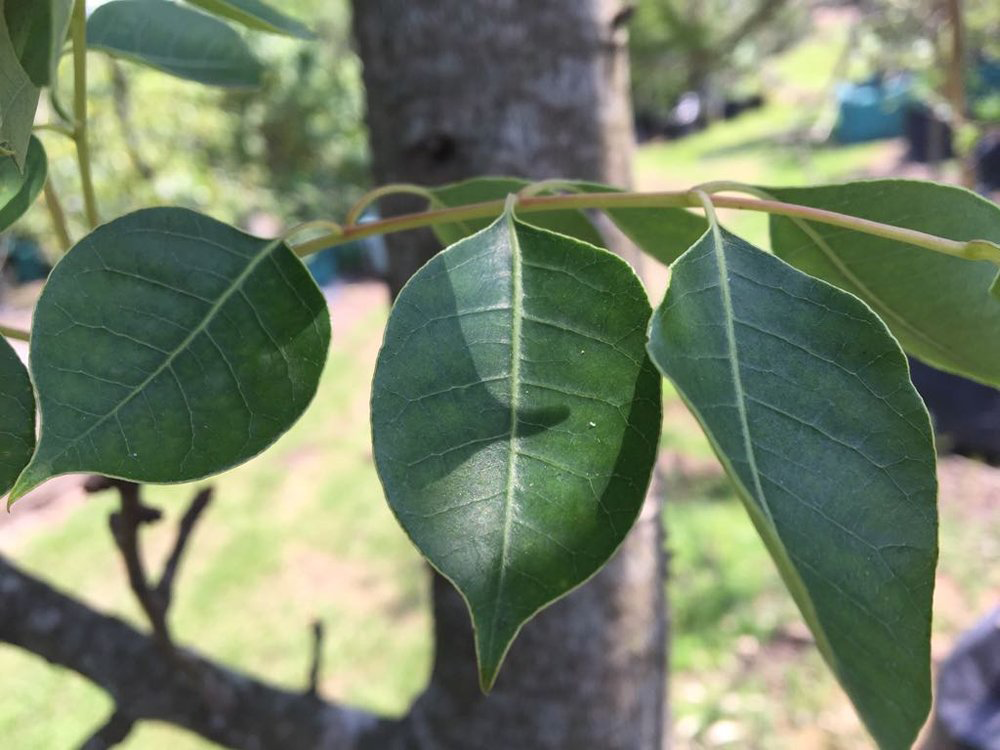
| Leaf | Alternate, crowded near the ends of branches, imparipinnate with 7-15 pairs of ovate to elliptic leaflets and a terminal leaflet, dark green above, paler bluish-green below |
| Flowering season | January to March |
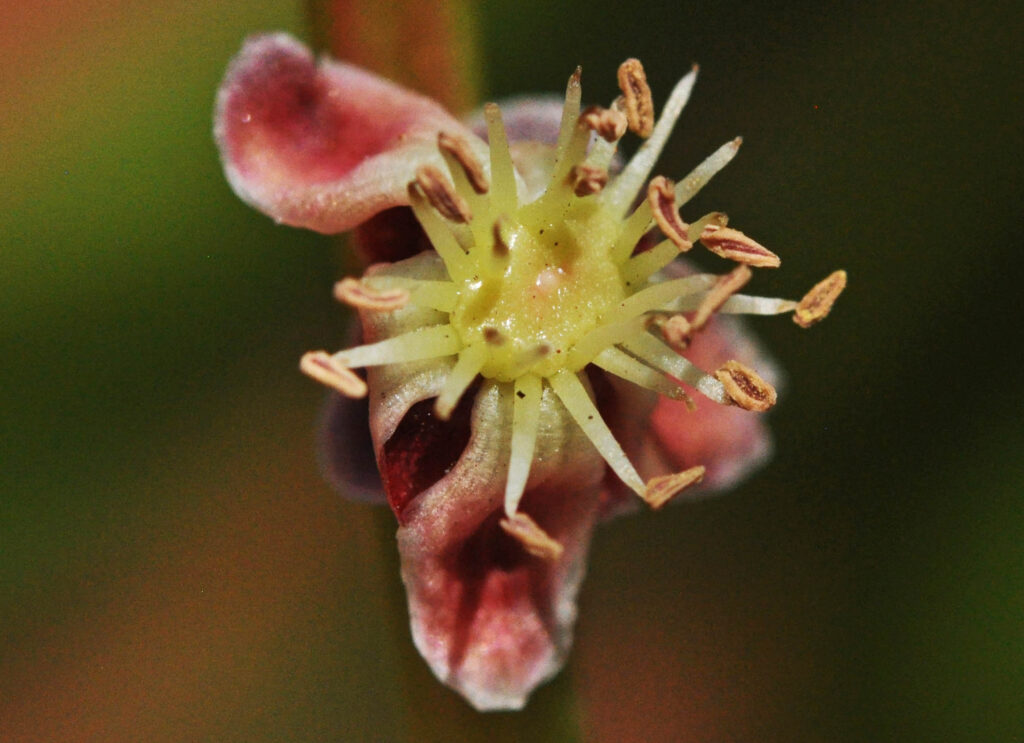
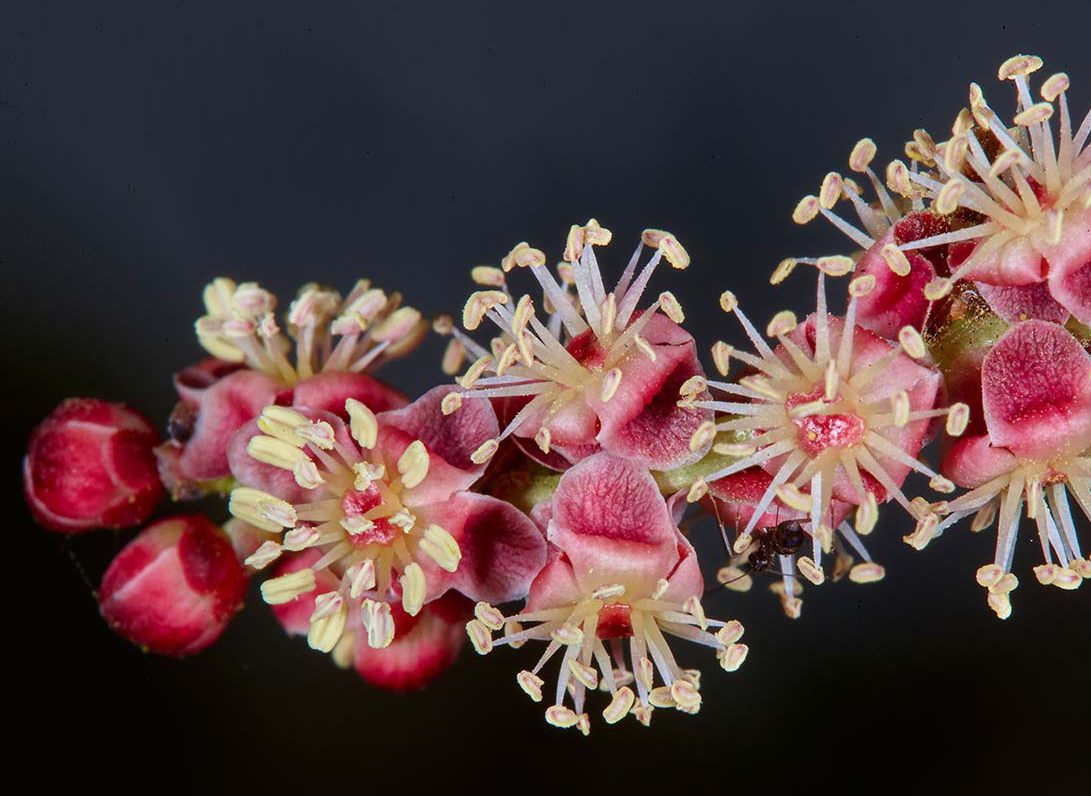
| Flower | Flowers are unisexual, regular, and 4–5-merous; pedicel 0.5–5 mm long in male flowers, 0.5–1 mm long in female flowers. Sepals are free or almost free, ovate-round, 2–3.5 mm long and 1–2.5 mm wide, spreading, usually reddish. Petals are free, obovate to oblong-ovate, 4–6 mm long and 2.5–4 mm wide, becoming reflexed in male flowers, remaining erect in female flowers, yellowish to reddish |
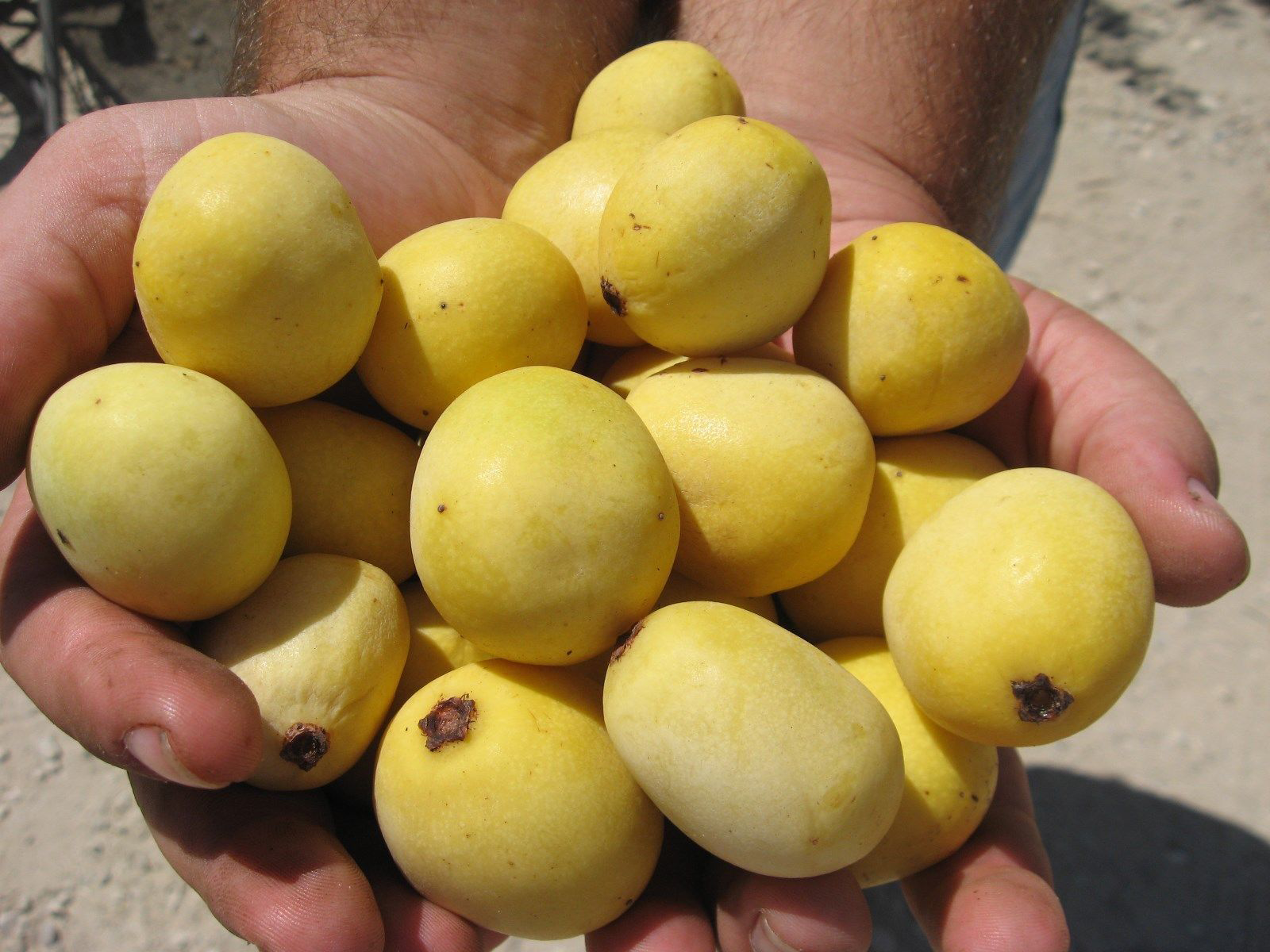
| Fruit Shape & Size | Obovoid to sub-globular drupe 3–3.5 cm in diameter |
| Fruit Color | Initially green turning to yellow as they mature |
| Flesh Color | Whitish flesh |
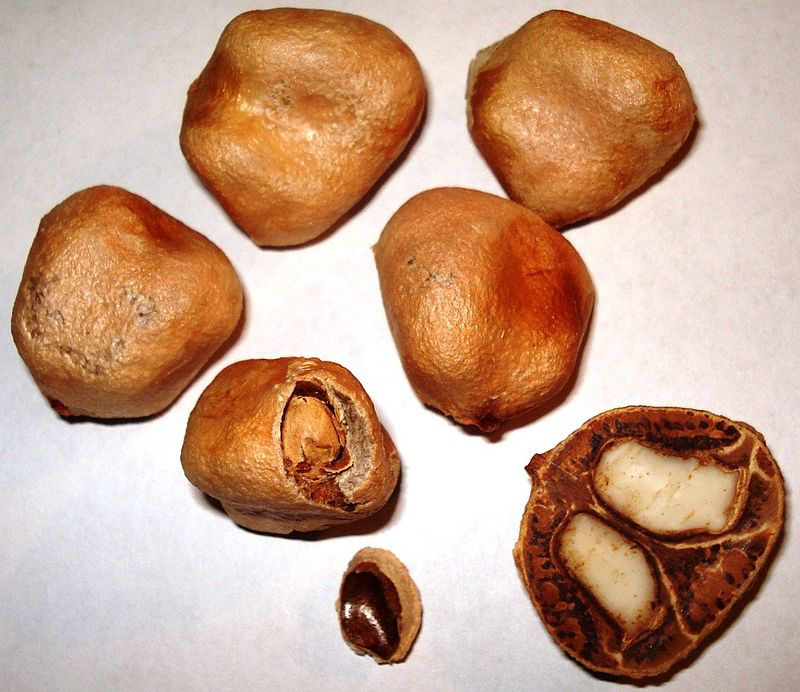
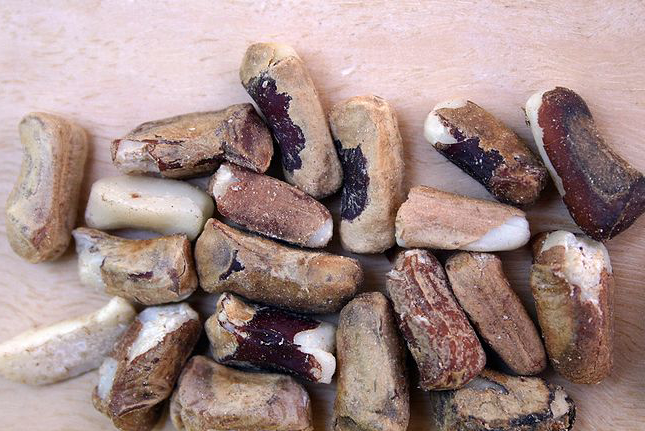
| Seed | Seeds are obclavate, compressed, 15–20 mm long and 4–8 mm wide and 2.5 mm thick, with papyraceous brownish testa |
| Propagation | By seeds or cuttings |
| Taste | Similar to walnuts or peanuts |
| Plant Parts Used | Fruits, nuts, leaves |
| Lifespan | More than 2 years |
| Season | Between April to July |
| Health Benefits |
|
Plant Description
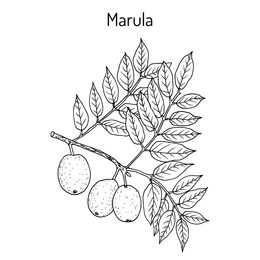
Marula is a short-boled, small to medium-sized, dioecious, single stemmed tree with a wide spreading rounded crown that normally grows about 9–12 m tall but occasionally up to 18 m, bole is short (usually ca. 4 m), up to 120 cm in diameter. The tree has taproot and sturdy lateral roots extending as far as 30 m. Bark is pale silvery or purplish-grey on small individuals, rough on large individuals, with flat, roundish scales. The plant is found growing in drier savannah of the Sahel, wooded grasslands, riverine woodlands and bush lands, mixed deciduous woodland and wooded grassland, often on rocky hills. The plant grows in sandy or alluvial soils. It also tolerates a wide range of soils except areas subject to flooding and waterlogging.
Bark & Branches
The bark is grey with a red/black tinge, slash orange pink with green edges. It flakes off in scales to reveal an orange-pink color underneath, giving a patchwork appearance from far off. Twigs are stout, white and scarred.
Leaves
Leaves tend to be crowded towards the ends of the branches alternately or in rosettes. They are alternate, imparipinnate, 10- 15 cm long, and bear 5-10 pairs of opposite leaflets that are very variable in shape (orbicular, ovate, obovate, elliptic) but are always mucronate with the exception of the terminal odd leaflet. Lateral leaflets are sub-sessile or with petiolules up to 3 cm long and terminal leaflet with a petiolule up to 5 cm, leaflets are round to oblong-elliptical or elliptical, 1–9 cm long and 0.5–3.5 cm wide, length increasing up the rachis, asymmetrical and cuneate or rounded at base, obtuse, acute, acuminate or acuminate-caudate at apex, margin entire or (in juvenile state) dentate-serrate, glabrous, with 6–16 pairs of lateral veins. They are reddish when young, turning blue green when older. Leaflets from roots suckers, young plants or recently felled stumps are often serrated, otherwise they are entire.
Flower
Male inflorescence is terminal or axillary, drooping raceme 5–22 cm long, with flowers in groups of 3–4 towards the base but solitary towards the apex. Female inflorescence is reduced, sub-terminal and spiciform, with 1–3 flowers. Flowers are unisexual, regular, and 4–5-merous; pedicel 0.5–5 mm long in male flowers, 0.5–1 mm long in female flowers. Sepals are free or almost free, ovate-round, 2–3.5 mm long and 1–2.5 mm wide, spreading, usually reddish. Petals are free, obovate to oblong-ovate, 4–6 mm long and 2.5–4 mm wide, becoming reflexed in male flowers, remaining erect in female flowers, yellowish to reddish. Male flowers with (10–)15–25(–30) stamens 3–4 mm long, inserted round a sub entire, yellow disk and female flowers with a superior, sub-globular, 2–3(–4)-celled ovary immersed in the disk, crowned by 2–3 short, lateral styles ending in a capitate stigma, and 15–26 staminodes. Flowering normally takes place in between January to March.
Fruits
Fertile flowers are followed by obovoid to sub-globular drupe 3–3.5 cm in diameter. Fruits are initially green turning to yellow at maturity, on a 10–15 mm long pedicel. Skin is thick and mesocarp fibrous, fleshy and juicy and adherent to the hard stone that is 2.5–3 cm long and 1.5–2.5 cm wide with 3–4 compartments, each with a flattened seed. Seeds are obclavate, compressed, 15–20 mm long and 4–8 mm wide and 2.5 mm thick, with papyraceous brownish testa. Cotyledons are plano-convex. Fruits ripen in between December and March. Fruits are rich in vitamin C about eight times the amount found in an orange.
History of Marula
Marula trees are native to South Africa where the beverage “Amarula” was first prepared. In 1989, this beverage was marketed to public for the first time. Both the nuts and the fruits of this tree have been considered to be sources of nutrition for African people for a very long time.
Health benefits of Marula fruit
The amount of Vitamin C found in a single marula fruit is eight times that of the amount found in an orange, making it an excellent source of the vitamin. Marula fruit is also rich in oleic acids and other antioxidants, the latter of which plays a role in the prevention of diseases such as cancer and heart disease. There are also multiple other benefits for the bones, skin and muscles that the fruit provides. The health benefits of marula fruit are:
1. Supports for healthy skin
Marula fruit has the ability to support healthy skin since it provides vitamin C, or you can read the benefits of taking vitamin c tablets for skin and vitamin c 1000 mg benefits. Moreover, the fruit is also high in antioxidants which are known for the benefit for skin health. When the skin is healthy, it may improve confidence.
2. Promotes the health of bones
Calcium, potassium and magnesium are substances that probably will promote for the health of bones. All of those substances you can find in marula fruit, which makes the fruit tends to prevent some diseases related with bones such as osteoporosis.
3. Makes the muscle stronger
Marula fruit helps to make the muscle stronger. Some substances in the fruit are supposed to strengthen muscles. Additionally, it is better to combine the fruit with some exercises.
4. Boosts immunity
Antioxidants in marula fruit are believed to boost immunity. When the immunity is strong, it may lead to the improving of overall health because the body fights several harmful bacteria or diseases. Thus, the fruit is recommended for those who are having lots of activities.
5. Supports for hair growth
Marula fruit help to support our healthy skin. It also supports our hair growth. It protects the hair from hair loss and that makes the hair grows well. Since then, you will get thick and shiny hair. It is also recommended to take marula oil to get the benefits successfully.
6. Slows down aging
Along with healthy skin, marula fruit slows down the aging. Antioxidants like vitamin C in the fruit help to slow down the aging that probably would be beneficial especially for elderly or woman. Additionally, oleic acid is also one of substances known for the ability to slow down aging.
7. Improves brain function
The oleic acid in marula fruit helps to improve brain function. It is one of the most important benefits of marula fruit since when the function of brain improve, it encourages how the other organs work.
8. Gives a good mood
A good mood influences several aspects and thus it is necessary to control our mood. Oleic acid tends to give good mood. The benefits are proven by a small 3 weeks research. The people with oleic acid-rich diet reduce their anger levels as well as improve their mood.
9. Reduces the risk of cancer
Cancer can affect everyone and some fruits like marula fruit may reduce the risk of cancer due to its antioxidants level. It also supported by oleic acid that has the benefit to reduce the risk of cancer, such as breast and lung cancer, which has been proven by studies.
Traditional uses and benefits of Marula Fruit
- The bark is analgesic and anti-inflammatory.
- An infusion is used in the treatment of stomach-pains and constipation, to ease labor-pains.
- Analgesic action is utilized to suppress a toothache by chewing the bark and placing it in carious cavities in the teeth.
- Bark, especially of the roots and also of the trunk is used as a remedy for snake-bites.
- Pounded to a paste, it must be rubbed on the area until a swelling is raised, then a decoction of the bark is drunk and a dressing applied over the area.
- The leaves may also be used for this purpose.
- Bark is used externally as an anti-inflammation preparation and, with butter added, is applied to the forehead for headache, and to the eyes for blepharitis.
- Decoction is used as a wash on skin-eruptions.
- Root is pounded up with water, and the water is drunk in the treatment of schistosomiasis.
- Water is also used for washing scabies.
- Leaves and fruits are chewed as a treatment for coughs.
- Bark is used both as treatment and a prophylaxis for malaria.
- Leaves are chewed to help indigestion and to treat heartburn.
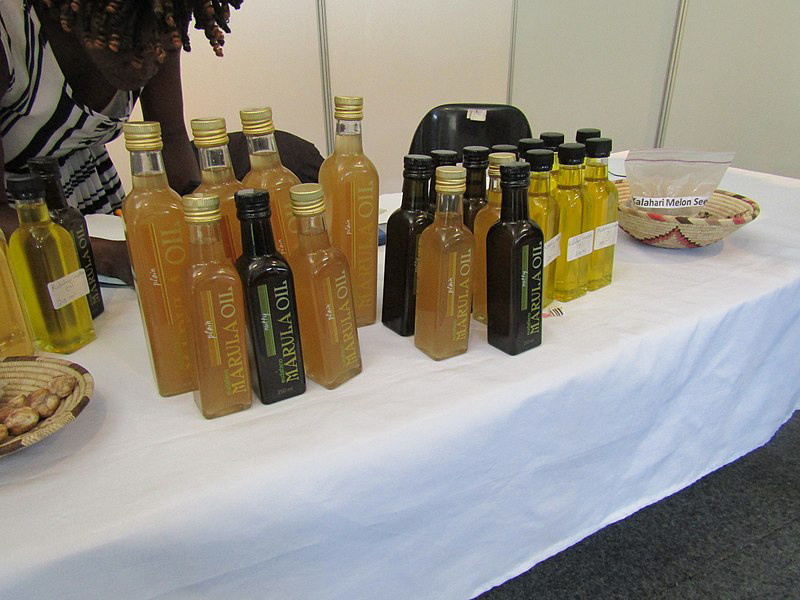
- Marula oil, made from the seed kernel, can be used as a type of skin care oil.
- Bark is said to cure dysentery, labor pains, and stomach-ache, constipation, snakebite, toothache, rheumatism and skin diseases.
- Bark decoctions are administered orally or as enemas to treat diarrhea and dysentery.
- They are also used to treat stomach ailments, fever and ulcers.
- Roots are used to treat sore eyes.
- Skin of the fruit is used to treat blisters caused by hairy caterpillars.
- Powdered bark is used to treat pregnant women to determine the gender of an unborn baby.
- If a pregnant woman wishes to have a girl, she will take a preparation from the female plant and for a boy she will use the male plant.
- Decoction of the bark treats dysentery, diarrhea, and rheumatism and has a prophylactic effect against malaria.
- Bark is an excellent remedy for hemorrhoids.
- Drink made from marula leaves is used for the treatment of gonorrhea.
- Beverage prepared from the inner bark layers can reduce the pain after snake bites or stings from scorpions and other venomous insects.
- The green leaves of this tree are believed to be able to relieve heartburn.
Culinary Uses
- Fruit can be consumed raw or cooked.
- Fully ripe fruits have a mucilaginous texture with a sweetly acid but pleasant taste.
- It is variously described as tasting like a mango, like a guava or as not being tasty at all.
- Often eaten as a snack, travelers out in the bush find them satisfying to suck for their thirst-quenching effects.
- The pulp can be used to prepare jam and wine.
- It can be boiled down to thick black syrup and used as a sweetening agent.
- It consists of four times as much vitamin C as oranges.
- Expressed juice makes an agreeable drink, and in many areas is fermented into an alcoholic beverage.
- Juice may also be boiled down to a thick black consistency used for sweetening guinea-corn gruel.
- Seed are consumed raw or cooked.
- It has a flavor similar to walnuts or peanuts.
- They can be ground into flour.
- Nut contains two or three seeds with oily and edible kernels.
- Edible oil is obtained from the seed.
- The oil has a quality and fatty acid composition comparable to olive oil but with stability that is 10 times greater.
- Fermenting the fruit at household level produces an alcoholic beverage which is either consumed directly or distilled into a strong liqueur.
- Boiled juice is used to flavor and sweeten porridge.
- Kernels are crushed and used to make cakes or biscuits or as a soup ingredient or oil is extracted from them and used as a meat preservative.
- Skin of the fruit can be dried, burned and then used as a coffee substitute.
Other Facts
- The tree is used to provide shade and act as a windbreak.
- Bark yields a strong fiber which is used for making ropes.
- When injured, the bark exudes nearly colorless gum which becomes brittle and friable on drying.
- The bark contains around 20% tannins.
- Seed consists of 56% of non-drying oil.
- Oil obtained from the seed is used for skin care.
- The oil-rich seeds burn brightly like a candle.
- Heartwood is greyish dirty white to red-brown; it is not clearly demarcated from the thin band of sapwood.
- Wood is coarse textured, interlocked grain, light to moderate weight, soft and weak.
- When big enough it is used for mortars and strong black-stained bowls.
- Of the woods used to make these bowls, this species is considered the best.
- In Jebel Marra wooden platters are made of it and in Ethiopia milking vessels and axe-handles.
- Wood is also used for making drums and hollowed-out canoes; pestles and mortars; bowls furniture, saddles and carvings.
- It is also used as fuel wood.
- It is one of the fastest growing trees in South Africa, with a growth rate of up to 1.5 meters per year when young.
- A single female tree can yield 2,100 – 9,100 fruits in a season.
- Each tree produces around 1.100 pounds of fruit per year.
- The fruits fall while still green and ripening on the ground.
- Products of fruits and the tree are useful in crafts and agriculture.
- Gums exudates from the stem are mixed with water and soot to make ink by certain tribes in the region.
- The bark also yields a red-brown dye used in coloring traditional craft ware.
- Fruit infusion is used to bathe tick-infested livestock.
- The fruit is regarded as a powerful insecticide.
- In South Africa, the bark is used to prepare mauve, pink, brown or red dye, the color depending on methods used.
- Wood is used for furniture, paneling, flooring, carvings and household utensils like spoons.
- In Namibia some people use the wood for sledges.
- With all these magical facts, it is no wonder that the Marula is 2019 tree of the year.
- Necklace made of dried nuts is worn as a symbol of love in certain African tribes.
- Africans believe that necklace made of marula can prevent diarrhea and nosebleeds in children.
- Fruits cannot be stored for more than a week, they bruise easily and therefore are difficult to transport.
References:
https://www.gbif.org/species/7160810
https://www.itis.gov/servlet/SingleRpt/SingleRpt?search_topic=TSN&search_value=895125#null
https://pfaf.org/user/Plant.aspx?LatinName=Sclerocarya+birrea
https://gd.eppo.int/taxon/SLCBB
https://uses.plantnet-project.org/en/Sclerocarya_birrea_(PROTA)
https://en.wikipedia.org/wiki/Sclerocarya_birrea
https://plants.jstor.org/compilation/sclerocarya.birrea
https://www.cabi.org/isc/datasheet/49081
https://plants.usda.gov/home/plantProfile?symbol=SCBI3