

| Moss Rose Quick Facts | |
|---|---|
| Name: | Moss Rose |
| Scientific Name: | Portulaca grandiflora |
| Origin | North and Central America, Europe, tropical Africa, southern Brazil, Argentina, Uruguay, India, Asia and the Pacific Islands |
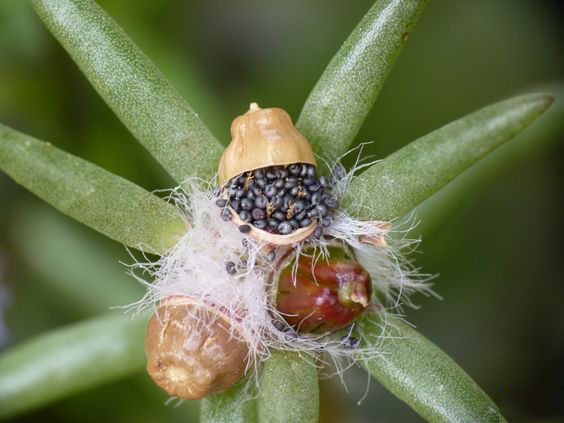
| Shapes | Globose-ovoid shaped dehiscent capsule |
| Taste | Sour |
| Health benefits | Support hepatitis, cirrhosis of the liver with ascites, swelling and pain in the pharynx, burns, scalds, eczema, tumor, scurvy, muscle spasms and neck stiffness |
| Name | Moss Rose |
|---|---|
| Scientific Name | Portulaca grandiflora |
| Native | Widely distributed species in North and Central America, Europe, tropical Africa, southern Brazil, Argentina, Uruguay, India, Asia and the Pacific Islands |
| Common Names | Mexican-rose, eleven-o’clock, moss rose, portulaca, portulaca rose, purslane, rose moss, sun Plant, Moss-rose, Moss-rose Purslane, Garden Purslane, Moss rose, Garden Portulaca, Rose-Moss-Of-Garden, Japanese rose, Portulac |
| Name in Other Languages | Albanian: Burdullak Armenian: Dandurr khoshoratsaghik (Դանդուռ խոշորածաղիկ) Assamese: Na-baji-phul, Puwamaloti Azerbaijani: İriçiçək pərpərən Belarusian: Partulak buynakvetnı (Партулак буйнакветны) Bengali: Time fuul (টাইম ফুল) Burmese: Taing lon chantha Bulgarian: Kaldŭrŭmche (калдъръмче) Chamorro: Bodulagas, botdolagas, donkulu Chinese: Da hua ma chi xian (大花马齿苋 ), Sōngyè mǔdān (松葉牡丹), Bàn zhī lián (半支莲), Lóng xū mǔdān (龙须牡丹), Jīn sī dùjuān (金丝杜鹃), Tàiyáng huā (太阳花), Wǔshí huā (午时花), Yáng mǎ chǐ xiàn (洋马齿苋), Dà huā mǎ chǐ xiàn (大花马齿苋) , Wǔshí huā (午时花), Sōng yè mǔdān (松叶牡丹) Croatian: Portulak Czech: Šrucha velkokvětá Dotyali: Das baje phool (दशबजे फूल) English: Eleven o’clock, Mexican rose, Moss-rose, Portulaca rose, Rose moss, Sunplant, Garden Portulaca, Moss-Rose Purslane, Garden Purslane, Rose-Moss-Of-Garden, Japanese rose, Portulac Esperanto: Grandflora portulako Finnish: Koristeportulakka French: Chevalier-d’onze-heures, Pourpier à grandes fleurs, Pourpier à Grands Fleurs, pourpier fleuri German: Großblütiger Portulak, Portulakröschen, Röschenportulak, Zierportulak Hindi: Nau Bajiya, Nonia (नोनिया), luaniya, portulaaka grandeeflora (पोर्टुलाका ग्रन्डीफ़्लोरा) Hungarian: Kossuth-csillag, Nagyvirágú porcsin, Porcsinrózsa, Kukacvirág, Kővirág Italian: Porcellana a fiori grandi, porcellana grandiflora Japanese: Matsu-ba-botan (マツバボタン), hideri-sô, tsumekiri-sô (ツメキリソウ), Hidesou (ヒデソウ) Kannada: Kaama Sakkare Korean: Chaesonghwa (채송화) Lithuanian: Didžiažiedė portulaka Macedonian: Prkos (Пркос), Prkos rastenie (Пркос растение) Malayalam: Neelakeera Manipuri: Pung mapan satpi Marathi: Chinigulab Nepali: Dashabaje phool (दशबजे फूल) Pakistan: Gul dopheri Persian: گل ناز Polish: Portulaka Wielkokwiatowa Portuguese: Onze-horas, beldroega-de-flores-grandes Punjabi: پھل دوپہری, پھل دوپہری Russian: Portulak krupnotsvetkovyy (портулак крупноцветковый) Sanskrit: Paciri, Paviri Serbian: Arkos (Пркос) Sindhi: دوپھري Slovak: Portulaka veľkokvetá Spanish: Beso de un día, flor de un día, onze horas, Verdolaga de flor Swedish: Praktportlak Tajik: Guli ʙeor (Гули беор) Telugu: Gaddi Roja, Goddu Pavelli, Gaḍḍi gulābi (గడ్డి గులాబి) Thai: Daeng sawan, Phak bia farang (ผักเบี้ยฝรั่ง), Phær seī̀yngḥị̂ (แพรเซี่ยงไฮ้ ) Tongan: Losemalei, matala hoatā Turkish: Kedi tırnağı Ukrainian: Portulak velykokvitkovyy (портулак великоквітковий) Upper Sorbian: Wulki portłak Urdu: Gul-e shama (गुले शमा) Vietnamese: Hoa mur oi gio, Rau sam hoa lớn |
| Plant Growth Habit | Small, succulent, trailing, fast-growing, annual flowering plant |
| Growing Climates | Roadsides and waste places. It is adaptable to most soils, particularly in dry soils in sunny places, and is drought resistant |
| Soil | Grows on different types of soil, but prefers rich, moist, sandy-clay or sandy-loam soils such as riverine alluvial deposits. It does not grow well in heavy soil or smooth soil. Plants like full sun and dry place. It is a heliophilous species that grows in open areas |
| Plant Size | Grows 3 to 9 inches tall with a spread of 6 to 12 inches |
| Root | Tap root with fibrous secondary roots, 10 cm long. New roots can develop from the nodes of the base |
| Stem | Stems are slender, cylindrical, smooth, succulent, and glabrous. Stems and branches are purplish green in color. It is hairless |
| Leaf | Leaves are simple, opposite, lanceolate, alternate and sub sessile. |
| Flowering season | June to July |
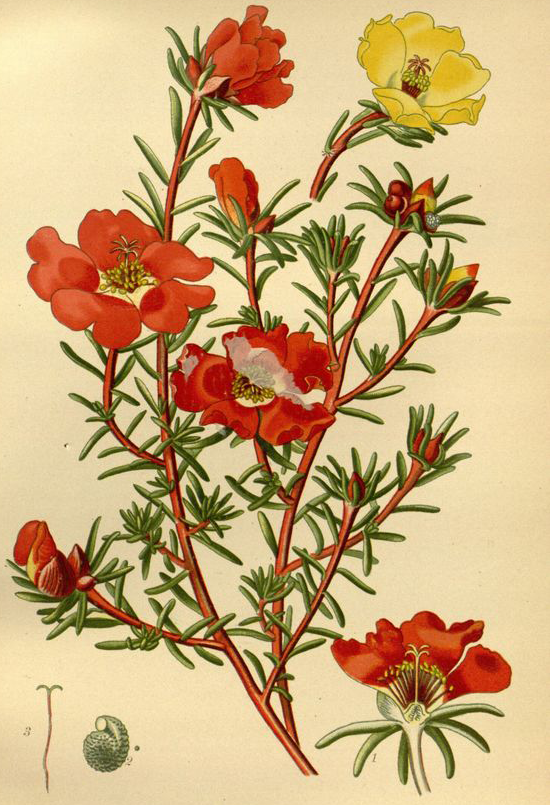
| Flower | Large, rose-like flowers occur solitary or in small groups at the end of the branches but only bloom one after the other. |
| Fruit Shape & Size | Globose-ovoid shaped dehiscent capsule |
| Propagation | By Seed and Stem Cuttings |
| Taste | Sour |
| Plant Parts Used | Roots, Leaves, stems, flowers, juice seeds |
| Season | July to August |
Plant Description
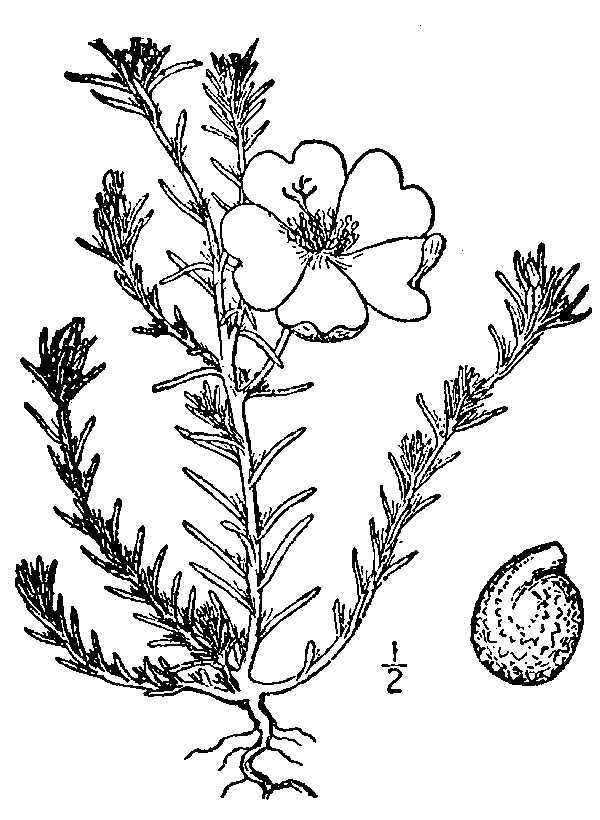
Moss Rose is a small, succulent, trailing, fast-growing, annual flowering plant that normally grows about 3 to 9 inches tall with a spread of 6 to 12 inches. However, if it is cultivated properly, it can easily reach this height. The plant is found growing in roadsides and waste places. It is adaptable to most soils, particularly in dry soils in sunny places, and is drought resistant. The plant grows on different types of soil, but prefers rich, moist, sandy-clay or sandy-loam soils such as riverine alluvial deposits. It does not grow well in heavy soil or smooth soil. Plants like full sun and dry place. It is a heliophilous species that grows in open areas. The plant has tap root with fibrous secondary roots 10 cm long. New roots can develop from the nodes of the base. Stems are slender, cylindrical, smooth, succulent, and glabrous. It is ascending to spreading, branched mostly from near the base to 20(-35) cm long, pubescent at least at the nodes and in inflorescence. Internodes are more or less long. Stems and branches are purplish green in color and is hairless.
Leaves
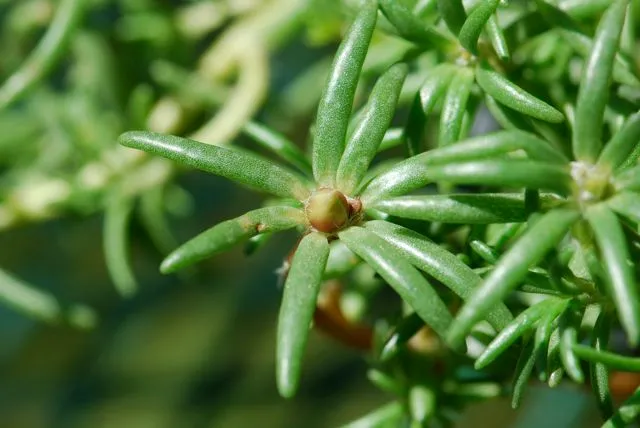
Leaves are simple, opposite, lanceolate, alternate and sub sessile. The lamina is attenuated at the base in a pseudo-petiole. A tuft of short, stiff bristles is located at the axils of the leaves. The lamina is linear lanceolate, at the top in wide corner and elliptic to circular section. It is 2 to 3 cm long and 2 to 3 mm wide. It is thick and succulent and glabrous. Its long leaves can store water and nutrients well; the succulent plant can also survive stressful summer phases.
Flower
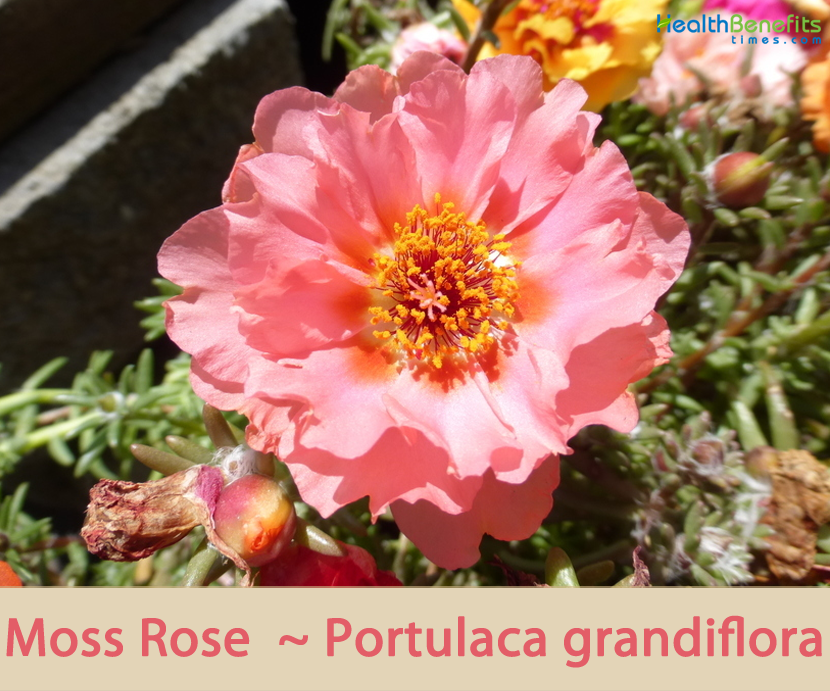
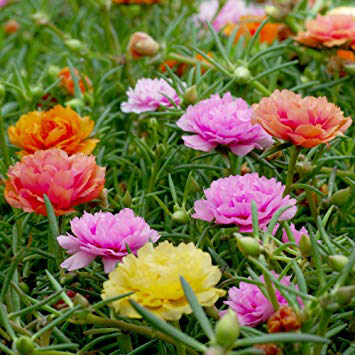
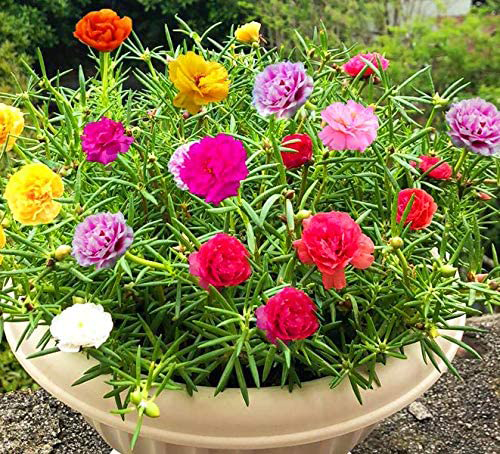
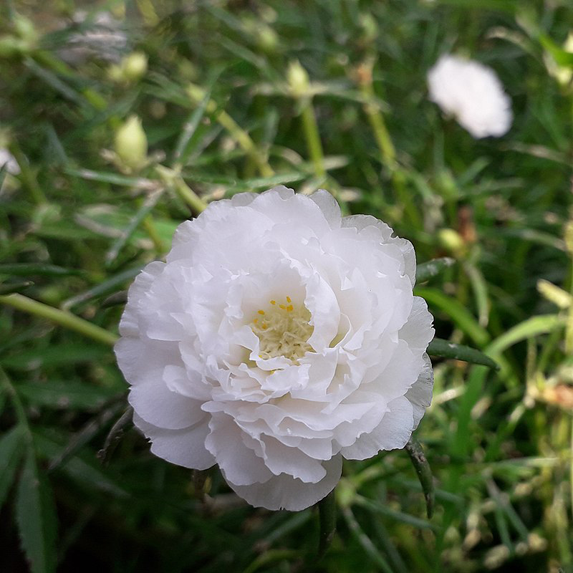
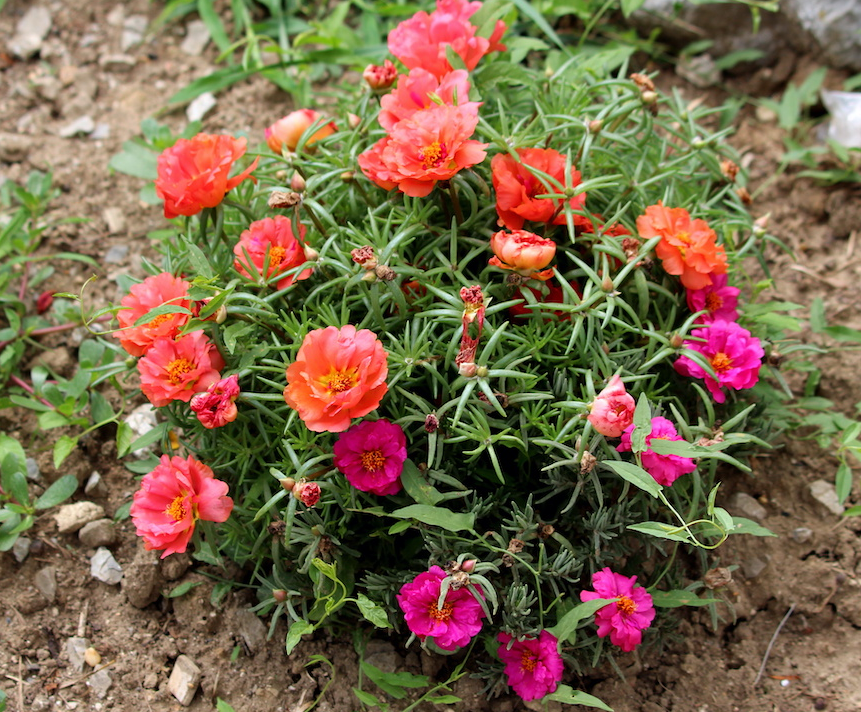
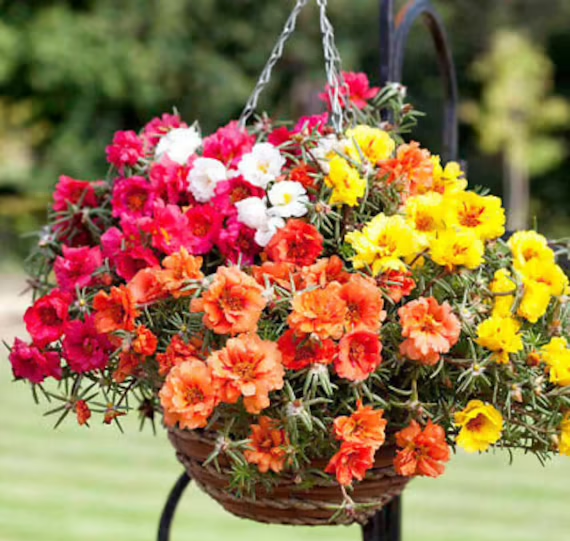
Large, rose-like flowers occur solitary or in small groups at the end of the branches but only bloom one after the other. They often grow in pastel shades, but also with strong tones. The flowers are sessile, yellow, white, orange, pink, salmon, or red and violet in color. The entire color spectrum can also appear in a single plant. The flowers have a diameter of around 15 to 25 mm and, as a rule, only open in the sunshine. The calyx is composed of 2 broad sepals whose base is welded to the ovary and whose upper part, 3 to 4 mm long, is free. The corolla comprises of 5 free petals, emarginate and mucronate at the top. The stamens are very numerous. The ovary is surmounted by a style dividing into 4 to 6 linear ciliated stigmas. The flowers are particularly abundant during warm, dry summers. There are also double-flowered versions. Some varieties have a sweet evening fragrance. Flowering normally takes place in between June to July.
Fruit & Seeds
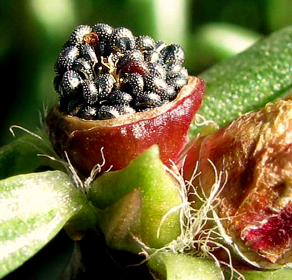
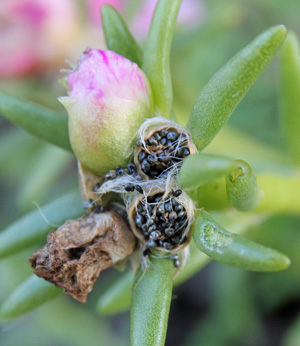
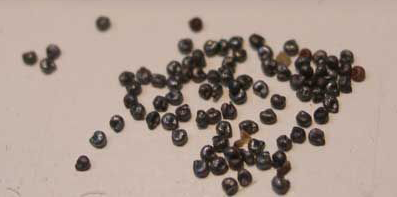
Fertile flowers are followed by a globose-ovoid shaped dehiscent capsule. It is surmounted by two sepals. The dehiscence line is located at the equator of the capsule. It is 6 to 8 mm long and contains many seeds. The seeds are reniform-globose, laterally compressed, with a diameter of 0.75-1 mm. They are steely grey to black, sometimes iridescent or some-what glossy. The tegument is marked with spiny tubers.
History
Portulaca plant is known by the name ‘Nobachi’. Portulaca grandiflora is a succulent flowering plant in the family Portulacaceae, native to Argentina, southern Brazil, and Uruguay, and often cultivated in gardens. It is known by many names, including Nobachi plant, rose moss, eleven o’clock, moss rose, tenbage, Mexican rose, moss rose, sun rose, rock rose, and moss-rose marmalade. It is also seen in South Asia and is widespread in most cities with old 18th- and 19th-century architecture in the Balkans.
Moss Rose Maintenance
Light
To appear and blossom their best, Moss Rose plants require at least six to eight hours of direct sunlight on the majority of days. If you attempt to cultivate them in a shaded location, they will not produce flowers, and the ones they do produce will likely not open.
Soil
The plant requires great drainage and a sandy or rocky soil composition to grow. If your garden bed contains clay soil, grow Moss Rose in containers instead of attempting to enhance the drainage of the clay soil. The plant might easily perish if the soil absorbs too much water.
Water
Moss Rose plants have low water requirements but are not quite as drought-resistant as cacti. The plants can tolerate periods of drought, but (well-drained) soil moisture is typically required for optimal flowering. Plan to water the plant if there is an extended period without precipitation; as a general rule, one deep watering per week throughout the hot summer months should be sufficient.
Temperature and humidity
Moss Rose plants prefer high temperatures and low humidity. As long as it is frost-free, it can survive cool, damp spring conditions. The best development (and flowering) will only occur once the summer heat arrives. Moss Rose is sensitive to frost and will certainly perish with the first severe freeze in the winter (if not earlier).
Fertilizer
These plants can endure poor soil conditions; thus, they normally do not require fertilization. However, supplying the plant with a balanced, slow-release fertilizer at the time of planting can encourage healthy development and abundant flowering. Additionally, you can fertilize twice during the plant’s growing season, this time using a phosphorus-rich mixture for more abundant flowers.
Common plant pests and diseases
There are no significant insect or disease issues with table plants, though aphids may occasionally cause problems in the spring. With aphids, you may observe a sticky material on the leaves as well as yellowing and wilting foliage. To cure the problem, apply insecticidal soap to the afflicted plants.
Traditional uses and benefits of Moss Rose
- The entire plant is depurative.
- It is used in the treatment of hepatitis, cirrhosis of the liver with ascites, swelling and pain in the pharynx.
- Fresh juice of the leaves and stems is applied externally as a lotion to snake and insect bites, burns, scalds and eczema.
- Leaves are used for scurvy.
- One of the ingredients of the Chinese herbal medicine, Tumoclear (Kang zhong pian) formulated for tumor and cancer care.
- Aerial parts used for treatment of sore throat, skin rash and detoxification in Thai medicine.
- Leaves and flowers are worn around the neck to relieve muscle spasms and neck stiffness.
- Flowers and leaves are worn around the neck to ward off evil spirits.
- Nanotechnology has also been used to treat cancer with Portulaca grandiflora.
- Many phytochemicals extracted from plants have been shown to have anti-diabetic properties.
- It helps reducing swelling and pain in the pharynx.
- It is having Vitamin E in it, that’s why Rose Moss is beneficial for hair loss like different hair problems.
- In Chinese herbal pathy, it is used to treat for various tumor growths.
- In traditional believes, it is placed near infants’ bedside to protect kids from evil spirits.
- The gel of 9 o’ clock flower is used in the cure of burn of skin.
- Some people believe that it cures cancer and tumors.
Culinary Uses
- Leaves can be consumed raw or cooked.
- Seed can be consumed raw or cooked.
- It can be ground into a powder and used in soups etc., or can be added to cereals.
- The seed is very small and fiddly to utilize.
- Root can be consumed after being cooked.
Other Facts
- Flowers and leaves are placed on child’s bed to drive evil spirits away.
- Moss Rose is a common weed that is occasionally abundant in irrigated crops and off-season vegetables.
- It is very rare and never abundant in dry crops such as cotton, maize, peanuts and sorghum.
- It is used as ornamental plant and also uses to make seedling in nursery.
- This flower attracts honeybee working as a great source of nectar.
References:
https://www.itis.gov/servlet/SingleRpt/SingleRpt?search_topic=TSN&search_value=20419#null
http://www.hear.org/pier/species/portulaca_grandiflora.htm
https://pfaf.org/user/Plant.aspx?LatinName=Portulaca+grandiflora
https://www.missouribotanicalgarden.org/PlantFinder/PlantFinderDetails.aspx?taxonid=285505
https://en.wikipedia.org/wiki/Portulaca_grandiflora
http://www.theplantlist.org/tpl1.1/record/kew-2573991
http://www.stuartxchange.com/AlasDiyes
http://www.flowersofindia.net/catalog/slides/Moss%20Rose.html
https://gd.eppo.int/taxon/PORGR
https://indiabiodiversity.org/species/show/230806
https://plants.usda.gov/home/plantProfile?symbol=POGR7