

Anosmia is a medical condition characterized by the complete loss of the sense of smell. While a temporary loss of smell often results from common upper respiratory infections, severe allergies, or sinus blockages, permanent anosmia can occur due to traumatic head injuries, nasal polyps, or underlying neurological disorders 1. The olfactory system is closely linked to how the brain processes flavor, meaning individuals with this condition frequently experience a significantly reduced ability to taste food. Beyond diminishing the enjoyment of daily meals, anosmia presents genuine physical safety risks. Without a functioning sense of smell, affected individuals cannot naturally detect environmental hazards such as natural gas leaks, toxic chemical fumes, or smoke from a fire 2. Consequently, medical professionals consider chronic anosmia a serious sensory impairment that requires clinical evaluation and specific household safety adaptations.
Causes of Anosmia
1. Inflammatory and Obstructive Sinus Disorders
These represent the most common causes of anosmia 1. Conditions such as chronic sinusitis, allergic rhinitis, and nasal polyps create physical blockages inside the nasal passages 1. This mechanical obstruction prevents odor molecules in the air from reaching the sensory nerves located at the top of the nasal cavity, effectively shutting down the ability to perceive smells 1.
2. Viral Infections
Respiratory viruses, including influenza and SARS-CoV-2, can directly attack the respiratory and olfactory systems 3. These viruses often cause anosmia by damaging the supporting cells in the nasal lining or directly injuring the olfactory sensory neurons, disrupting the transmission of odor signals to the brain 3. While virus-induced anosmia is often temporary, it can sometimes persist long after the initial infection has cleared 4.
3. Head Trauma and Brain Injuries
Severe physical blows to the head can cause temporary or permanent loss of smell 1. Head trauma can fracture the delicate bones at the base of the skull, physically tearing the olfactory nerve fibers that connect the nose to the brain 1. Additionally, injuries that damage specific areas of the brain, such as the olfactory bulb or cerebral cortex, can permanently prevent the brain from processing scent signals correctly 1.
4. Neurodegenerative Diseases
A progressive loss of smell is frequently recognized as an early warning sign of various neurodegenerative disorders 1. Medical studies link a decreased ability to perceive odors with the early development of conditions like Parkinson’s disease, Alzheimer’s disease, and Lewy body dementia 1. In these conditions, the gradual deterioration of neural pathways in the central nervous system impairs the brain’s ability to interpret sensory information 5.
5. Natural Aging
As individuals grow older, they naturally experience a gradual decline in their sense of smell 1. Normal aging leads to a significant decrease in both the total surface area of the sensory tissue inside the nose and the total number of specialized nerve cells in the olfactory bulb 1. This natural deterioration can eventually result in partial or complete anosmia in older adults 1.
6. Toxic Chemical Exposure and Medications
Prolonged exposure to certain environmental toxins and toxic chemicals can severely damage the delicate sensory receptors in the nose 1. Common culprits include tobacco smoke, harsh industrial vapors, and heavy metals 5. Furthermore, anosmia can occasionally occur as an unwanted side effect of specific prescription medications, such as certain antibiotics, blood pressure drugs, or cancer treatments 3.
7. Congenital Conditions
In rare instances, individuals are born with a complete inability to smell, a condition known as congenital anosmia 6. This is often caused by the failure of the olfactory bulbs to develop properly during fetal growth 6. Congenital anosmia can occur as an isolated genetic defect, or it may present as a symptom of broader genetic disorders, such as Kallmann syndrome or Turner syndrome 1.
Symptoms of Anosmia
1. Complete Inability to Detect Odors
Anosmia is defined as the absolute inability to perceive smells, distinguishing it from hyposmia, which is only a partial reduction in olfactory function. Individuals with this condition cannot detect any scents, whether pleasant fragrances or noxious odors, because the sensory pathway from the nasal cavity to the brain is completely disrupted 2. This absolute loss remains the primary clinical symptom and is typically evaluated by medical professionals using standardized odor identification tests 7.
2. Loss of Flavor Perception
A profound decrease in the ability to taste food is one of the most prominent secondary symptoms reported by individuals with anosmia. Because the human chemosensory system relies heavily on olfactory sensory neurons to distinguish complex flavors, a missing sense of smell renders most foods completely bland and flavorless 2. Patients frequently mistake this olfactory deficit for a primary loss of taste, even though their basic taste buds for sweet, salty, sour, and bitter often remain fully intact 2.
3. Inability to Detect Environmental Hazards
Without a functional olfactory system, individuals lose a critical biological warning mechanism that alerts them to immediate physical dangers. People experiencing anosmia cannot smell leaking natural gas, toxic chemical fumes, smoke from a fire, or spoiled food 8. This sensory deficit places them at a significantly higher risk for accidental poisoning, smoke inhalation, and foodborne illnesses, making it a serious safety hazard rather than just a lifestyle inconvenience 2.
4. Changes in Eating Habits and Malnutrition
The drastic alteration in flavor perception frequently leads to significant dietary shifts and potential nutritional deficiencies. Because eating becomes an unrewarding process, many individuals with anosmia lose their appetite entirely, resulting in unintentional weight loss and generalized malnutrition 9. Conversely, some patients may unconsciously overconsume heavily salted or highly sweetened foods to stimulate their remaining taste receptors, which can dangerously exacerbate conditions like hypertension or diabetes 2.
5. Emotional Distress and Depressive Symptoms
The sudden or chronic loss of smell often triggers severe psychological distress, significantly reducing a person’s overall quality of life. Clinical research indicates that a high percentage of patients with anosmia develop symptoms of clinical depression and anxiety due to the sudden loss of pleasurable sensory experiences and increased social isolation 10. Furthermore, the physical disruption of olfactory neural pathways directly affects the brain’s limbic system, fundamentally altering how the brain processes emotional stimuli 10.
Natural Remedies for Anosmia (Loss of Smell)
1. Olfactory Training (Smell Therapy)
How it may help
Olfactory training acts as physical therapy for the nose. By deliberately and repeatedly sniffing specific, strong scents, it stimulates the damaged sensory nerves in the nasal cavity. This constant sensory stimulation encourages the brain to rebuild essential neural pathways, progressively restoring the lost ability to detect everyday odors 11.
What research says
Clinical studies confirm that structured olfactory training significantly improves smell identification and discrimination, particularly in patients with post-viral anosmia 12. Research demonstrates that patients who consistently perform daily scent therapy experience a faster and more complete recovery of olfactory function compared to those receiving no treatment 13.
How to use it safely
Gather four distinct essential oils, traditionally rose, lemon, clove, and eucalyptus. Twice daily, gently sniff each scent for twenty seconds while focusing your mind on that specific smell, pausing briefly between each oil 11.
Potential precautions or side effects
Never ingest essential oils or apply them directly to bare skin to prevent severe chemical burns. Individuals with asthma must cautiously monitor for respiratory spasms during training 14.
2. Saline Nasal Rinses
How it may help
Saline nasal rinses physically flush out thick mucus, trapped allergens, and inflammatory debris from the nasal passages. By clearing these physical blockages, the rinse allows airborne odor molecules to successfully travel to the specialized sensory nerves located at the roof of the nasal cavity, improving smell detection 1.
What research says
Clinical trials demonstrate that daily saline nasal irrigation significantly improves olfactory function in individuals suffering from chronic sinus inflammation and allergic rhinitis 15. Studies conclude that flushing the nasal cavity reduces swelling and clears blockages, directly leading to a measurable recovery in smell and taste perception 16.
How to use it safely
Mix a commercially prepared saline packet with distilled, sterile, or previously boiled and cooled water. Lean over a sink, tilt your head sideways, and gently squeeze the solution through one nostril using a clean rinse bottle, allowing it to drain out the other 17.
Potential precautions or side effects
Never use untreated tap water, as it risks fatal amoebic infections 17. Flushing too forcefully may cause mild internal stinging or a temporary sensation of ear fullness.
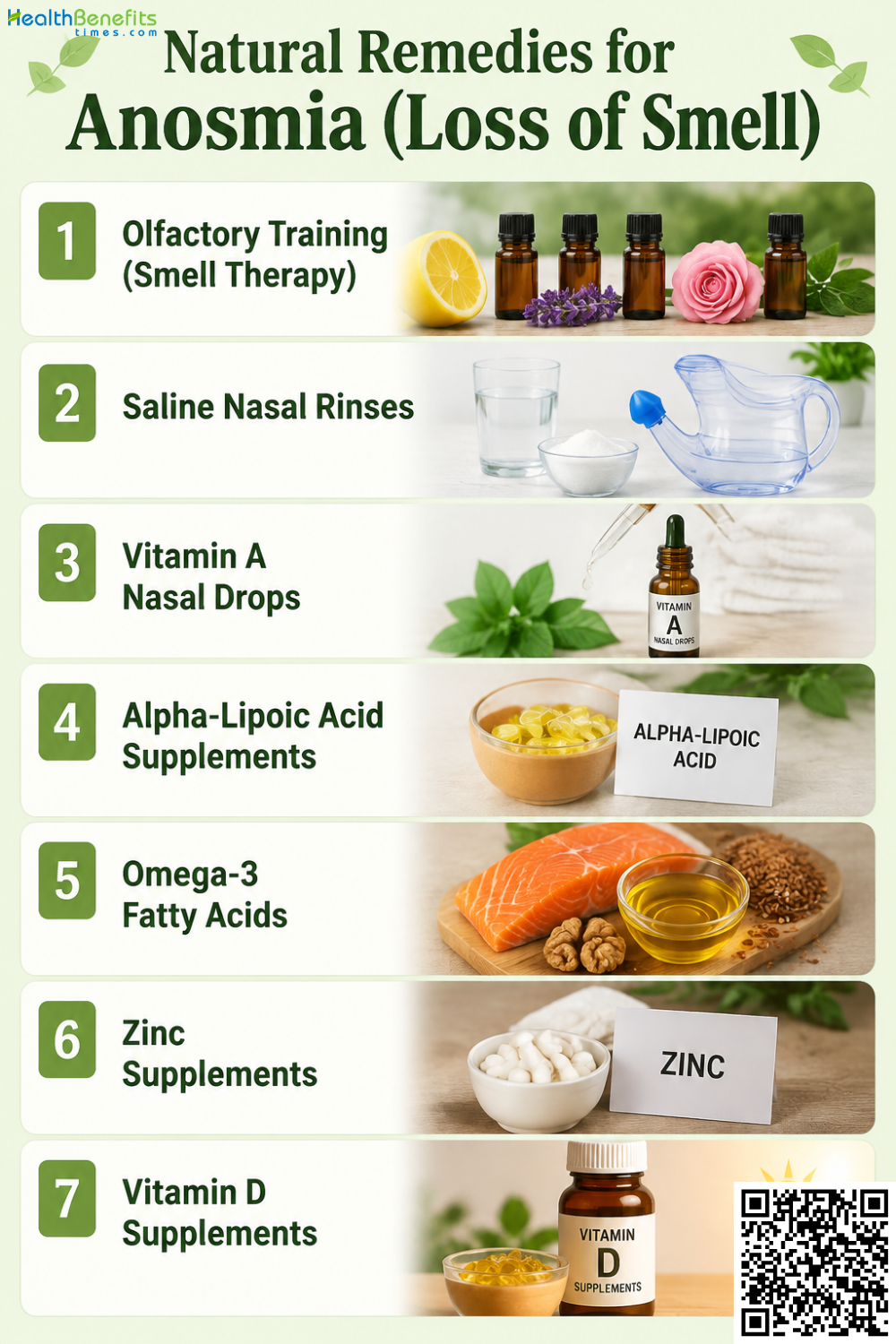
3. Vitamin A Nasal Drops
How it may help
Vitamin A plays a vital biological role in repairing and maintaining the delicate sensory cells inside the nose 18. When delivered directly as nasal drops, it nourishes damaged olfactory tissues, stimulates the regeneration of sensory nerve receptors, and supports the recovery of a lost sense of smell 19.
What research says
Clinical studies confirm that topical vitamin A administration significantly improves olfactory function in patients suffering from post-viral loss of smell 18. Research shows that this treatment encourages the active repair of damaged nasal mucosal cells, resulting in a measurable return of sensory perception for many individuals 19.
How to use it safely
Consult a doctor to obtain a medically approved formulation. Lie down with your head tilted backward, and apply the prescribed number of vitamin A drops directly into each nostril. Remain in that position for a few minutes to ensure the liquid absorbs fully into the nasal tissues.
Potential precautions or side effects
Never use high-dose supplements off-label or apply random oral oils into your nose 20. Overuse can cause local irritation, internal tissue damage, or systemic toxicity. Always follow professional medical guidance.
4. Alpha-Lipoic Acid Supplements
How it may help
Alpha-lipoic acid (ALA) is a dietary supplement known for its antioxidant properties. It may help reduce neuroinflammation and promote the regeneration of olfactory receptor neurons 21. It is hypothesized to improve nerve function and stimulate nerve growth factor, aiding the repair of pathways damaged by viral infections 22.
What research says
Clinical evidence regarding ALA for anosmia remains mixed. Early studies suggested oral ALA improved olfactory function and reduced odor distortion following viral respiratory infections 22. However, recent randomized trials concluded that ALA supplementation provides no significant improvement over standard olfactory training for post-COVID-19 smell loss 23.
How to use it safely
If you consider using ALA, a standard clinical dose evaluated for olfactory and nerve dysfunction is 600 mg per day 24. You should consult your doctor before beginning supplementation to prevent interactions with other treatments or underlying metabolic conditions 25.
Potential precautions or side effects
Oral ALA is generally well-tolerated, but adverse effects can include nausea, heartburn, vertigo, and vomiting 25. Because ALA lowers blood sugar, closely monitor glucose levels if you have diabetes 25.
5. Omega-3 Fatty Acids
How it may help
Omega-3 fatty acids are recognized for their anti-inflammatory and neuroprotective properties. They help maintain the cell membranes of neural tissues. By reducing nerve inflammation and providing antioxidant support, omega-3s are hypothesized to protect the olfactory system and facilitate the regeneration of pathways responsible for the sense of smell 26.
What research says
Clinical evidence regarding omega-3 supplementation for anosmia is inconsistent. While some animal models suggest omega-3s promote olfactory recovery following nerve injury 4, recent randomized clinical trials found that high doses provided no significant short-term or long-term improvement for persistent post-viral smell loss compared to a placebo 27.
How to use it safely
You can naturally increase your intake by consuming fatty fish, flaxseeds, and walnuts, or by taking dietary supplements. Standard safety guidelines advise consuming no more than 3 grams of combined EPA and DHA daily 28. Always consult your doctor before starting any new supplement regimen.
Potential precautions or side effects
Mild side effects include bad breath, heartburn, nausea, and diarrhea. Taking high doses can increase your risk of bleeding problems and may interact with blood-thinning medications 28.
6. Zinc Supplements
How it may help
Zinc is a vital mineral necessary for the growth and maintenance of smell receptors. It activates specific enzymes in the nasal mucosa required to detect odors, meaning adequate zinc levels are essential for healthy olfactory sensory function 29.
What research says
Clinical studies confirm that zinc supplementation effectively restores the sense of smell when anosmia is directly caused by a zinc deficiency 30. However, for smell loss triggered by viral infections, randomized trials indicate zinc provides little to no significant improvement compared to standard recovery therapies 31.
How to use it safely
You can increase zinc intake through diet or oral supplements like zinc gluconate. Keep your total daily intake below the established upper limit of 40 milligrams to prevent toxicity 32. Always consult your healthcare provider before starting any supplementation.
Potential precautions or side effects
High oral doses may cause nausea, stomach cramps, and copper deficiency 32. Strictly avoid intranasal zinc sprays, as they can cause permanent, irreversible loss of smell 33.
7. Vitamin D Supplements
How it may help
Vitamin D offers anti-inflammatory and neuroprotective benefits that support the olfactory system. Receptors for the vitamin are present in neural stem cells, where it influences cell proliferation. By reducing mucosal inflammation and supporting nerve health, maintaining adequate vitamin D levels helps repair and protect pathways responsible for smell 34.
What research says
Clinical studies associate vitamin D deficiency with a significantly higher prevalence of smell impairment 34. While resolving a documented deficiency has successfully restored olfaction in some isolated clinical cases 35, large-scale trials do not definitively prove that supplementation cures viral or age-related anosmia in individuals with sufficient baseline levels.
How to use it safely
The standard recommended daily allowance for adults is 600 to 800 IU, though a doctor may prescribe higher doses if you have a confirmed deficiency 36. Because it is fat-soluble, you should take the supplement with a meal to maximize absorption. Always consult your physician first.
Potential precautions or side effects
Consuming more than 4,000 IU daily can cause toxicity and hypercalcemia. This dangerous buildup of calcium may lead to nausea, muscle weakness, irregular heartbeats, and severe kidney damage 36.
Foods to Avoid When You suffer from Anosmia
When individuals lose their sense of smell, they frequently experience a drastic reduction in flavor perception. This sensory deficit often causes patients to unconsciously alter their eating habits to seek stimulation. Managing dietary choices is crucial during this time to prevent nutritional imbalances, minimize chronic health risks, and avoid accidental foodborne illnesses.
1. Heavily Salted Foods
Patients often over-salt meals to compensate for lost flavor, significantly increasing sodium intake and elevating the long-term risk of severe hypertension and cardiovascular disease 9.
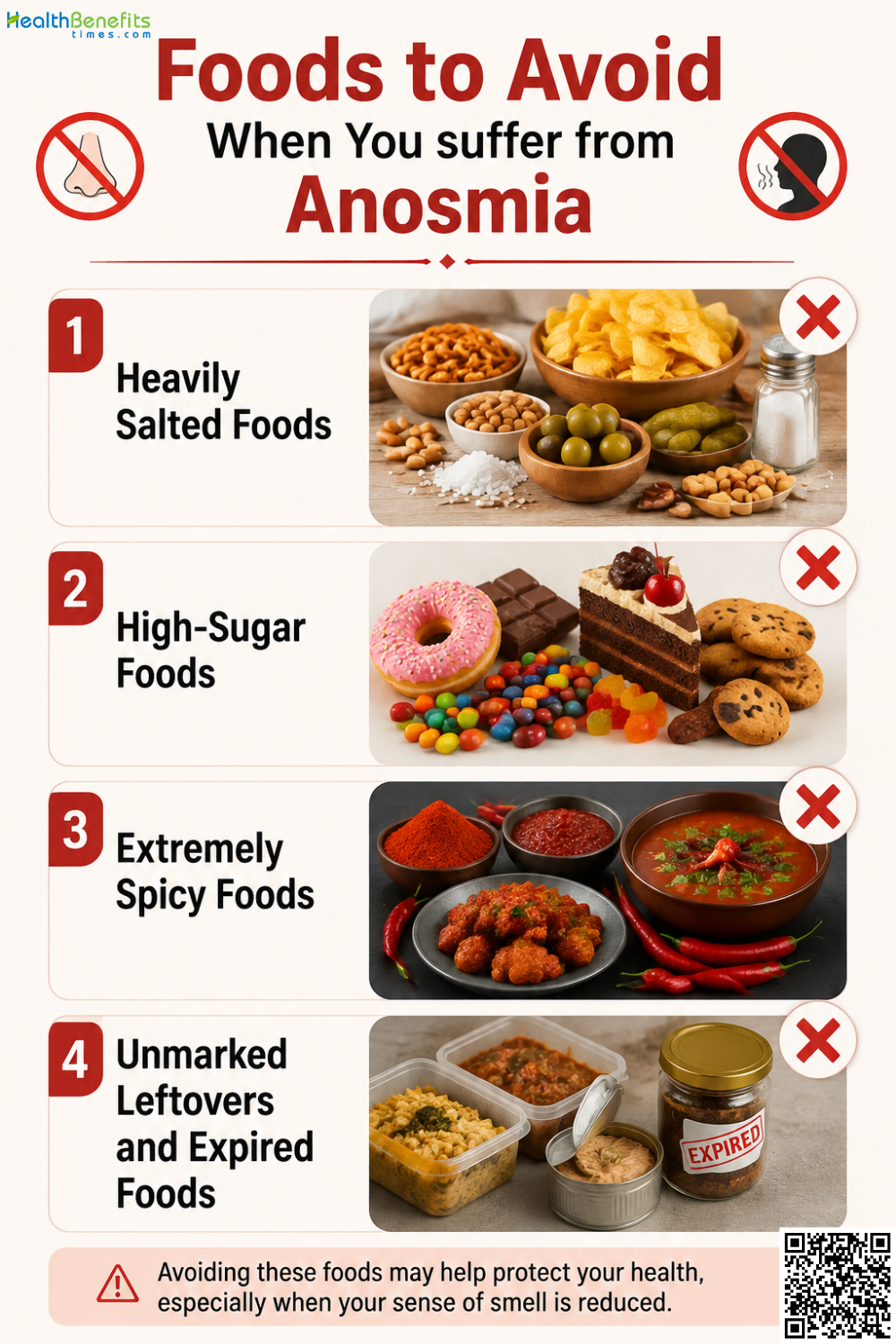
2. High-Sugar Foods
Overconsuming sweets to stimulate remaining taste receptors can lead to dangerous blood glucose spikes, directly increasing the risk of unintended weight gain and metabolic disorders 9.
3. Extremely Spicy Foods
While relying on heat for sensory feedback, individuals may overconsume spicy ingredients, which can irritate the digestive tract and trigger painful acid reflux or oral inflammation 9.
4. Unmarked Leftovers and Expired Foods
Without a functioning olfactory system to detect early spoilage, consuming older leftovers dramatically increases the risk of ingesting harmful bacteria and contracting severe foodborne illnesses 2.
When to see Doctor when you struggle from Anosmia
While a temporary loss of smell frequently resolves on its own after a minor cold or sinus infection, persistent anosmia requires a thorough clinical evaluation. Because the olfactory system is intimately connected to the central nervous system, an unexplained loss of smell can sometimes serve as an early warning sign for underlying neurological conditions, chronic sinus diseases, or undiagnosed head injuries. Seeking timely medical attention ensures an accurate diagnosis and allows for targeted interventions that may restore sensory function or effectively manage serious underlying health issues.
1. Persistent Loss of Smell
Medical evaluation is necessary if a complete loss of smell lasts longer than two to three weeks after a respiratory illness resolves, as this requires thorough clinical investigation 2.
2. Sudden, Unexplained Onset
Immediate medical attention is required if anosmia occurs suddenly without accompanying signs of a cold, allergy, or sinus infection, which may indicate a severe underlying neurological condition 1.
3. Following a Head Injury
Individuals must consult a healthcare provider if smell loss occurs after physical head trauma, as this strongly suggests structural damage or tearing of the delicate olfactory nerve fibers 1.
4. With Memory or Motor Issues
A doctor must be consulted if smell loss is accompanied by memory decline or tremors, as this frequently precedes the clinical diagnosis of progressive neurodegenerative diseases like Parkinson’s 5.
5. With Facial Pain or Bleeding
Specialized medical care is warranted if the sensory loss occurs alongside severe facial pain or unexplained nasal bleeding, which strongly indicates possible severe structural blockages or nasal polyps 1.