

Bromodosis is the clinical term for strong, persistent foot odor. It is primarily caused by the interaction between excessive sweat and naturally occurring bacteria or fungi on the skin’s surface 1. The human foot contains a highly dense concentration of sweat glands, which easily leads to moisture buildup, especially when enclosed in shoes 2. While the sweat itself is entirely odorless, the trapped moisture creates an ideal environment for bacteria to rapidly multiply. As these microorganisms break down the sweat and dead skin cells, they release strong-smelling chemical byproducts 1. Environmental factors like poor ventilation from synthetic footwear or underlying skin infections, such as athlete’s foot, can severely worsen the condition by further accelerating bacterial and fungal growth 2.
Causes of Bad odor from feet
- Excessive Sweating (Hyperhidrosis): The feet possess a high concentration of sweat glands. Overactive sweat glands create a continuously damp environment that traps moisture against the skin, laying the foundation for odor 3.
- Bacterial Activity: Naturally occurring skin bacteria consume trapped sweat and shedding skin cells. As these bacteria break down this organic matter, they release strong-smelling chemicals, such as isovaleric acid, which produce a highly noticeable, foul smell 1.
- Fungal Infections: Fungal conditions, such as athlete’s foot (tinea pedis), damage the outer layer of the skin. The active presence of these fungi contributes directly to the bad smell and makes the skin more vulnerable to secondary bacterial overgrowth 4.
- Non-Breathable Footwear: Wearing shoes or socks manufactured from synthetic materials, such as nylon or plastic, prevents moisture from evaporating. This creates an enclosed, warm, and humid microclimate that rapidly accelerates the multiplication of odor-causing microbes 5.
- Inadequate Foot Hygiene: Failing to thoroughly wash the feet with soap or leaving the areas between the toes damp after bathing allows a continuous buildup of dead skin cells and trapped moisture, directly sustaining bacterial colonies 1.
Symptoms of Bad odor from feet
- Persistent Malodor: A strong, distinct, and unpleasant smell that does not easily fade after washing. This scent is often caused by chemical byproducts, such as isovaleric acid, which are released by skin bacteria 6.
- Excessive Moisture (Plantar Hyperhidrosis): Unusually damp or continuously wet soles and toes throughout the day. This extreme sweating often happens regardless of the surrounding temperature or a person’s level of physical activity 7.
- Macerated Skin: The skin, particularly on the soles or between the toes, appears exceptionally soft, white, and severely wrinkled as a direct result of being constantly soaked in trapped sweat 7.
- Slimy Sensation: A noticeable slippery or slimy feeling on the surface of the feet or inside footwear, caused by the thick buildup of sweat and active bacterial colonies 7.
- Crater-Like Pits: In specific bacterial conditions linked to severe foot odor, such as pitted keratolysis, clusters of small, shallow holes or craters can visibly form on the weight-bearing areas of the heels and soles 7.
- Itchiness and Thick Skin: Persistent itching and a noticeably thickened outer layer of skin are common when the foot odor is accompanied by an underlying fungal infection, such as athlete’s foot 8.
Natural Remedies for Bad odor from feet
1. Application of Essential Oils Like Tea Tree and Juniper
How it may help
Tea tree and juniper essential oils contain natural antimicrobial compounds that destroy the bacteria responsible for producing foot sweat odor. These botanical extracts penetrate and break down bacterial cell walls on the skin, significantly reducing the bacterial population 9. They also provide a mild drying effect that helps control excess moisture.
What research says
Clinical studies confirm that tea tree oil exhibits strong broad-spectrum antibacterial activity, successfully eliminating common skin pathogens 9. Similarly, research concludes that juniper essential oil demonstrates proven antimicrobial efficacy against multiple bacterial strains, verifying both plant extracts as effective therapeutic agents for managing skin surface bacteria 10.
How to use it safely
You must always dilute essential oils before applying them to your skin to prevent chemical irritation. Mix three to five drops of tea tree or juniper oil into a carrier oil or a warm foot basin 11. Soak your clean feet for fifteen minutes daily.
Potential precautions or side effects
Applying undiluted oils frequently causes contact dermatitis, severe skin irritation, or allergic rashes 9. You must stop use immediately if you develop unexpected swelling, painful burning, or persistent itching.
2. Topical Treatments Using Zinc Oxide or Zinc Sulfate
How it may help
Zinc oxide and zinc sulfate function as mild astringents that physically reduce sweat production by temporarily shrinking skin pores. Additionally, these natural mineral compounds directly neutralize the foul-smelling fatty acids produced by normal skin bacteria. By eliminating both excess moisture and odor-causing chemicals, topical zinc applications effectively halt bacterial reproduction and eliminate foot odor 12.
What research says
Clinical trials confirm that topical fifteen percent zinc sulfate solutions significantly reduce foot odor and excessive sweating. Research conclusively demonstrates that treating the skin with zinc effectively decreases bacterial growth and eliminates foul-smelling volatile compounds. Scientists conclude that topical zinc is a highly effective, safe, and inexpensive clinical therapy for managing severe foot odor 13.
How to use it safely
You should wash and completely dry your feet before applying any zinc treatment. Apply a thin, even layer of zinc oxide cream or a formulated zinc sulfate solution directly on the soles and between your toes once daily 14. Let the product dry completely before putting on clean socks.
Potential precautions or side effects
Topical zinc treatments occasionally cause mild skin dryness, localized stinging, or redness 13. You must avoid applying these mineral products to broken skin or open cuts to prevent severe irritation.
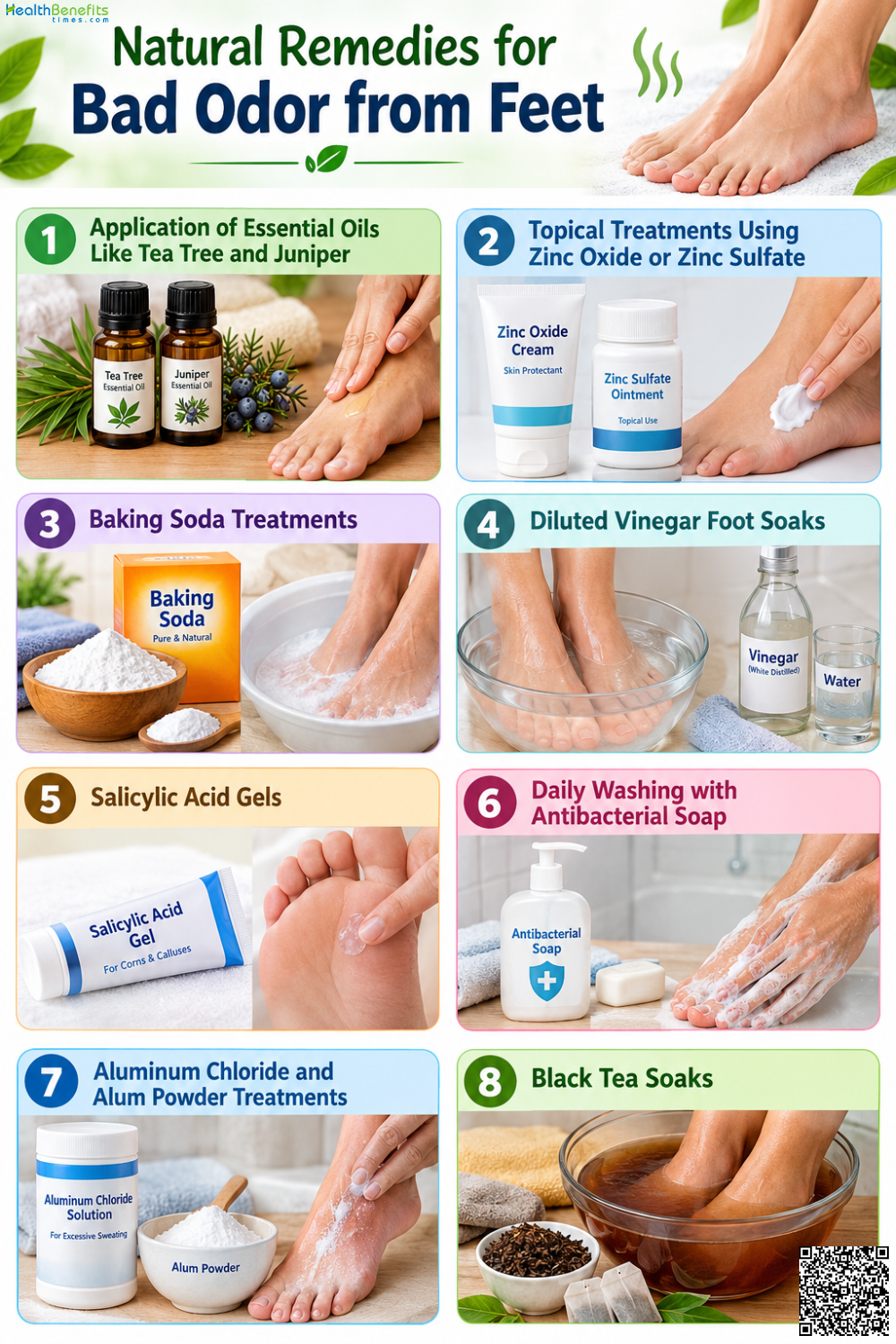
3. Baking Soda Treatments
How it may help
Baking soda, or sodium bicarbonate, acts as a highly effective moisture absorbent that keeps the skin dry. It naturally neutralizes acidic environments on the foot surface, creating an alkaline condition that prevents odor-causing bacteria from thriving. By managing excess sweat and neutralizing foul-smelling acids, this mineral compound effectively eliminates foot odor 15.
What research says
Clinical studies demonstrate that sodium bicarbonate possesses significant antibacterial properties against common skin pathogens. Research concludes that applying baking soda directly alters the skin’s pH level, which rapidly halts bacterial reproduction and eliminates the production of volatile odor compounds on the human skin 16.
How to use it safely
You can sprinkle a thin layer of dry baking soda directly into your clean shoes to absorb moisture daily 17. Alternatively, dissolve two tablespoons of baking soda into a warm foot basin and soak your completely clean feet for fifteen minutes before drying them thoroughly.
Potential precautions or side effects
Frequent application may cause extreme skin dryness, localized redness, or mild irritation 15. You must discontinue use immediately if your skin cracks, peels, or becomes painful.
4. Diluted Vinegar Foot Soaks
How it may help
Vinegar contains acetic acid, a natural antimicrobial substance that lowers the pH level of the skin. This acidic environment effectively destroys the specific odor-producing bacteria thriving on sweaty skin. By eliminating these pathogens and gently exfoliating dead skin, diluted vinegar solutions neutralize foul foot odors directly 18.
What research says
Clinical studies demonstrate that acetic acid possesses potent antibacterial properties, effectively eliminating common skin pathogens. Research concludes that even highly diluted vinegar significantly disrupts bacterial cell membranes, confirming its clinical efficacy as a reliable treatment for controlling excess skin bacteria and neutralizing related body odors 19.
How to use it safely
You must dilute the vinegar with water to prevent chemical skin irritation. Mix one part plain white vinegar with two parts warm water in a basin. Soak your washed feet for fifteen minutes daily, then thoroughly dry your skin before wearing socks 19.
Potential precautions or side effects
Vinegar soaks occasionally cause localized stinging, skin redness, or excessive dryness 18. You must strictly avoid using acidic foot soaks if you have open wounds or active skin cuts.
5. Salicylic Acid Gels
How it may help
Salicylic acid functions as a powerful exfoliating agent that breaks down thick, dead skin cells on the soles. Removing this dead tissue eliminates the primary food source for odor-producing bacteria. Additionally, this mild acid lowers the skin’s surface pH, creating an inhospitable environment that actively prevents bacterial overgrowth and neutralizes odor 20.
What research says
Clinical research confirms that salicylic acid effectively treats localized body odor by reducing bacterial populations. Scientists conclude that applying keratolytic agents significantly disrupts bacterial colonization on the foot surface. Studies demonstrate it is a reliable clinical option for safely managing excessive skin thickening and the resulting foul-smelling bacterial activity 21.
How to use it safely
You must wash and thoroughly dry your feet before application. Apply a thin, even layer of a low-concentration salicylic acid gel directly to the bottom of your feet once daily 20. Allow the clinical gel to absorb completely before wearing clean, breathable cotton socks.
Potential precautions or side effects
Frequent application may cause excessive skin peeling, localized redness, or severe dryness 20. You must avoid applying this gel to open blisters or cuts to prevent painful stinging.
6. Daily Washing with Antibacterial Soap
How it may help
Antibacterial soaps contain active antimicrobial ingredients that effectively destroy the odor-producing bacteria dwelling on human skin. By aggressively washing away accumulated sweat, shed dead skin cells, and thriving bacterial colonies, this daily cleansing mechanism prevents the biological breakdown of foot perspiration into foul-smelling volatile organic compounds 22.
What research says
Clinical research demonstrates that routine washing with antibacterial cleansers significantly reduces the total population of skin flora responsible for body odor. Scientists conclude that maintaining low bacterial counts on the skin surface directly correlates with a substantial decrease in offensive foot malodor, proving it an effective baseline treatment 23.
How to use it safely
You should wash your feet once or twice daily using warm water and a mild antibacterial soap. Vigorously scrub the soles and the spaces between your toes, as bacteria naturally thrive in those narrow areas. You must completely dry your feet with a clean towel afterward to prevent trapping any moisture 24.
Potential precautions or side effects
Frequent use of strong antibacterial soaps can cause severe skin dryness, localized irritation, or allergic contact dermatitis 25. You should discontinue use if your skin becomes visibly red or cracked.
7. Aluminum Chloride and Alum Powder Treatments
How it may help
Aluminum chloride and alum powder act as powerful astringents that physically block sweat production. When these aluminum salts dissolve in skin moisture, they form temporary gel plugs inside sweat glands. This significantly reduces foot moisture, depriving odor-causing bacteria of the wet environment they require to survive 26.
What research says
Clinical research establishes topical aluminum chloride as a highly effective first-line therapy for excessive localized sweating. Scientists conclude that applying these compounds safely obstructs sweat gland ducts, directly leading to a substantial decrease in skin moisture and the subsequent bacterial breakdown that causes foot odor 26.
How to use it safely
You must apply aluminum treatments only to completely dry skin before sleeping, because trapped moisture increases chemical irritation 26. Spread a thin layer on your soles and between toes. You should wash the product off entirely with warm soap and water the following morning.
Potential precautions or side effects
These active treatments frequently cause localized skin stinging, burning, or intense itching. You must strictly avoid applying aluminum chloride to broken skin or open cuts to prevent severe chemical irritation 26.
8. Black Tea Soaks
How it may help
Black tea contains high levels of tannic acid, a natural astringent compound that temporarily shrinks skin pores. By actively decreasing excessive foot moisture and eliminating a constantly wet environment, tannic acid directly prevents the rapid reproduction of the skin bacteria responsible for generating foul-smelling organic compounds 27. \
What research says
Clinical literature confirms that topical tannic acid functions as a reliable astringent agent for managing mild hyperhidrosis. Research conclusively demonstrates that applying tannic acid solutions safely blocks eccrine sweat ducts, significantly decreasing localized foot sweating while simultaneously exhibiting antimicrobial properties against common odor-causing skin pathogens 28.
How to use it safely
You should steep two black tea bags in boiling water for fifteen minutes. Once this concentrated solution cools completely, pour it into a warm foot basin. Soak your properly washed feet for twenty minutes daily before thoroughly drying your skin 28.
Potential precautions or side effects
Frequent concentrated tannic acid applications occasionally cause localized skin irritation, mild skin dryness, or harmless but persistent brownish staining on the soles of your feet 27.
When to see a Doctor when you struggle from Bad odor from feet
You should consult a healthcare provider if foot odor persists despite routine hygiene and natural remedies. Persistent malodor often serves as a primary clinical indicator of underlying dermatological or systemic conditions that require targeted medical intervention rather than home care.
1. Persistent Pits or Craters in the Skin
Small, shallow pits on the soles combined with severe odor indicate pitted keratolysis, a localized bacterial infection requiring prescription antibiotics for eradication 29.
2. Open Sores or Slow-Healing Wounds
Individuals with diabetes or poor circulation must seek immediate medical care for foot ulcers or bleeding, as these pose severe risks for dangerous secondary infections 30.
3. Redness, Swelling, and Warmth
Inflammation, excessive warmth, or red streaks spreading across the foot skin indicate an active soft tissue infection that necessitates urgent medical evaluation and targeted antibacterial therapy 31.
4. Severe Itching and Peeling Skin
Persistent scaling, blistering, and severe itching between the toes suggest tinea pedis, a contagious fungal infection that may require prescription antifungal treatments to resolve completely 32.
5. Uncontrollable Excessive Sweating
If foot moisture remains unmanageable despite clinical antiperspirants, a physician must evaluate for hyperhidrosis, which may require advanced clinical treatments like iontophoresis or prescription medications 33.