


Bulimia nervosa is a serious, potentially life-threatening eating disorder characterized by a continuous cycle of binge eating and compensatory behaviors. During a binge episode, individuals consume unusually large amounts of food within a short timeframe while experiencing a complete loss of control over their eating. To prevent weight gain, they subsequently engage in purging behaviors, which commonly include forced vomiting, excessive exercise, strict fasting, or the misuse of laxatives 1. This condition is deeply linked to severe body image distortion, where an individual’s self-worth becomes heavily dependent on their physical shape and weight. If left untreated, the physical stress of the continuous binge-purge cycle causes significant bodily damage, resulting in chronic gastrointestinal problems, severe dental enamel erosion, and dangerous electrolyte imbalances that can lead to fatal heart complications 2.
Causes of Bulimia
1. Biological and Genetic Factors
Genetics play a significant role in the development of eating disorders. Individuals with a first-degree relative, such as a parent or sibling, who has an eating disorder face a substantially higher risk of developing bulimia. Research concludes that inherited genetic variations affecting brain chemicals, particularly those regulating serotonin, disrupt normal appetite control and mood, making an individual more susceptible to the condition 3.
2. Psychological and Emotional Health
Pre-existing mental health challenges are major contributing factors. Clinical evidence demonstrates that individuals suffering from depression, anxiety disorders, or intense perfectionism frequently struggle with severe body dissatisfaction. These individuals often use the binge-purge cycle as a dysfunctional coping mechanism to manage emotional pain, stress, or perceived lack of control in their lives 4.
3. Societal and Cultural Pressures
External environmental influences heavily impact body image. Scientific consensus indicates that pervasive cultural messages, media representations that glorify extreme thinness, and societal weight stigma directly cause severe psychological distress regarding body shape, acting as a primary trigger for bulimia 5.
4. History of Extreme Dieting
Engaging in rigid, highly restrictive dieting is a recognized physical trigger. Research concludes that the severe caloric deprivation caused by strict fasting creates overwhelming biological starvation signals in the brain. This deprivation almost inevitably leads to an uncontrollable urge to binge eat, which the individual then attempts to counteract through purging behaviors 2.
Symptoms of Bulimia
1. Recurrent Binge Eating
Individuals experience frequent episodes where they consume unusually large amounts of food within a condensed two-hour window. During these episodes, they experience a profound psychological sense of losing control over their eating, feeling completely unable to stop or control what or how much they are consuming 1.
2. Compensatory Purging Behaviors
To counteract the caloric intake of a binge and prevent weight gain, individuals engage in dangerous compensatory actions. Clinical guidelines identify these recurrent behaviors as forced self-induced vomiting, the misuse of laxatives or diuretics, strict prolonged fasting, or engaging in extreme, compulsive physical exercise 4.
3. Dental and Oral Damage
The frequent exposure to strong stomach acid from repeated self-induced vomiting causes distinct physical damage to the oral cavity. Dentists and medical professionals commonly observe severe tooth enamel erosion, increased tooth decay and sensitivity, chronic sore throats, and noticeably swollen salivary glands in the cheek and jaw area 2.
4. Dangerous Electrolyte Imbalances
The continuous cycle of purging rapidly depletes the body of vital fluids and essential minerals, such as potassium, sodium, and calcium. Clinical research concludes that this chronic dehydration and mineral imbalance severely disrupts regular bodily functions and can lead to life-threatening complications, including irregular heartbeats and sudden cardiac arrest 4.
5. Severe Body Image Distortion
A defining psychological symptom is an obsessive, overwhelming preoccupation with physical appearance. An individual’s self-esteem and self-worth become disproportionately tied to their body shape and weight, accompanied by a relentless and intense fear of gaining weight, even if their current weight is considered physically normal 5.
6. Gastrointestinal Complications
The physical stress of the binge-purge cycle heavily damages the digestive system. Individuals frequently suffer from severe chronic acid reflux, intestinal distress, stomach pain, and bowel regulation issues caused by the frequent misuse of stimulant laxatives 2.
Natural Remedies for Bulimia
1. Mindfulness Practices and Meditation
How it may help
Mindfulness and meditation train individuals to focus on the present moment and recognize physical hunger cues without judgment. These practices create a critical mental pause between experiencing emotional distress and acting on the urge to binge or purge, allowing individuals to manage stress and break impulsive eating cycles.
What research says
Clinical trials confirm that mindfulness-based interventions significantly decrease the frequency of binge eating episodes and purging behaviors. Research concludes that these practices effectively reduce emotional eating, lower overall anxiety, and improve self-regulation, making them a highly valuable complementary approach to standard eating disorder treatments 6.
How to use it safely
You should begin with short, guided meditation sessions lasting five to ten minutes daily. For the safest results, work directly with a mental health professional who specializes in eating disorders to carefully integrate mindfulness techniques into your broader clinical treatment plan.
Potential precautions or side effects
Mindfulness can occasionally bring suppressed emotions or past trauma to the surface, temporarily increasing anxiety. You should practice under professional guidance if you have severe co-occurring mental health conditions.
2. Yoga Therapy
How it may help
Yoga therapy combines gentle physical postures with deep breathing to calm the nervous system and build positive body awareness. It helps individuals reconnect with their physical sensations in a non-judgmental way, reducing the intense anxiety and negative body image that often trigger the urge to binge and purge.
What research says
Clinical research demonstrates that incorporating yoga into eating disorder recovery significantly reduces the frequency of binge eating and purging. Studies conclude that consistent practice decreases overall anxiety, lessens obsessive preoccupation with food, and improves body satisfaction compared to standard outpatient care alone 7.
How to use it safely
You should focus on gentle, restorative styles of yoga rather than intense classes designed for fitness or weight loss. Seek sessions led by trauma-informed instructors. Always coordinate this practice with your primary medical team to ensure it safely supports your broader eating disorder recovery plan.
Potential precautions or side effects
You must avoid vigorous yoga styles, which can easily become another form of compulsive exercise. If you experience dizziness or severe fatigue during practice, you should stop immediately.

3. Massage Therapy
How it may help
Massage therapy helps lower cortisol, the body’s primary stress hormone, while increasing dopamine and serotonin levels. For individuals with bulimia, this physical relaxation reduces severe anxiety and depressive symptoms. By improving overall emotional well-being, massage therapy can diminish the intense psychological urges that drive the binge-purge cycle.
What research says
Clinical studies demonstrate that individuals with bulimia who receive regular massage therapy show immediate reductions in anxiety and depressed moods. Research concludes that these individuals experience improved body image, lower stress hormone levels, and decreased eating disorder symptoms over time compared to standard clinical care alone 8.
How to use it safely
You should schedule sessions with a licensed massage therapist, preferably one experienced in treating individuals with trauma or eating disorders. Communicate your comfort levels regarding physical boundaries clearly. Always integrate massage as a supportive practice alongside your primary medical and psychological treatment plan.
Potential precautions or side effects
Massage is generally very safe. However, if you experience severe body dysmorphia or severe discomfort with physical touch, the sessions may temporarily increase anxiety. You must communicate any distress immediately.
4. Probiotics
How it may help
Bulimia severely disrupts the digestive system and the balance of beneficial gut bacteria. Probiotics help restore this healthy bacterial environment, known as the gut microbiome. Because the gut constantly communicates with the brain, improving gut health can positively influence neurotransmitters like serotonin, which helps regulate mood, reduce anxiety, and diminish emotional triggers for binge eating.
What research says
Clinical reviews demonstrate that individuals with eating disorders often have significant imbalances in their gut microbiota compared to healthy populations. Research concludes that single or multi-strain probiotic supplementation helps restore this balance, which can effectively reduce anxiety, improve severe gastrointestinal discomfort, and potentially decrease compulsive overeating behaviors as part of a comprehensive recovery plan 9.
How to use it safely
You should consult a healthcare provider or a registered dietitian before starting any supplements to ensure they do not interfere with your clinical treatment. Select high-quality, third-party tested probiotics containing well-studied bacterial strains, and incorporate them gradually into your daily nutritional recovery plan.
Potential precautions or side effects
Probiotics are generally safe but can cause temporary mild digestive symptoms. You might experience minor bloating, excessive gas, or slight stomach upset during the first few days of use.
5. Omega-3 Fatty Acid Supplements
How it may help
Omega-3 fatty acids, specifically EPA and DHA, are essential nutrients that support healthy brain function and neurotransmitter activity. Because bulimia is deeply intertwined with mood disorders, these nutrients help reduce brain inflammation and stabilize mood, which can alleviate the underlying depression and anxiety that frequently trigger the binge-purge cycle.
What research says
Clinical reviews indicate that individuals with eating disorders often exhibit lower cellular levels of omega-3 fatty acids. Research concludes that while supplementation may not cure the condition directly, it effectively improves co-occurring symptoms of severe depression and anxiety, providing crucial neurological support during the psychological recovery process 10.
How to use it safely
You should consult a healthcare provider or a registered dietitian before starting supplementation. Choose high-quality, third-party tested fish oil or algae-based supplements to ensure purity. Integrate them carefully into a structured nutritional rehabilitation plan, as supplements cannot replace necessary balanced meals.
Potential precautions or side effects
Omega-3 supplements are generally safe but can cause mild digestive upset, such as nausea or fishy burps. High doses may increase bleeding risks if you take blood-thinning medications.
6. Zinc Supplementation
How it may help
Frequent purging and dietary restriction in bulimia often cause severe zinc deficiency. Zinc is a critical mineral that regulates appetite, supports neurotransmitter function, and stabilizes mood. Replenishing zinc levels helps restore normal taste perception, reduces anxiety, and diminishes the psychological urges that drive binge eating.
What research says
Clinical research indicates that individuals with bulimia frequently suffer from zinc deficiency, which can prolong abnormal eating behaviors. Studies conclude that zinc supplementation significantly improves eating disorder psychopathology and helps reduce the frequency of binge eating episodes by positively supporting brain chemistry and appetite regulation 11.
How to use it safely
You should request a blood test from your healthcare provider to confirm a zinc deficiency before starting supplementation. Follow your doctor’s exact dosage instructions carefully, and always take zinc supplements with a meal to maximize absorption and prevent severe stomach irritation.
Potential precautions or side effects
Excessive zinc intake can cause immediate nausea, vomiting, or stomach cramps. Taking high doses over a long period can also cause a dangerous deficiency in essential copper levels.
7. Bright Light Therapy
How it may help
Some individuals with bulimia experience worse symptoms during the winter months, similar to seasonal depression. Bright light therapy uses a specialized lamp to simulate natural sunlight. This exposure helps regulate the body’s internal clock and boosts serotonin levels, which naturally improves mood and reduces the psychological urge to binge eat.
What research says
Clinical studies demonstrate that morning exposure to bright white light significantly decreases depressive symptoms and the frequency of binge-purge cycles [1]. Research concludes that this therapy is an effective short-term treatment for improving mood and eating behaviors, particularly for those who experience seasonal symptom worsening 12.
How to use it safely
You should use a specialized medical light box that provides 10,000 lux of white light. Sit near the device for about thirty minutes every morning shortly after waking up. Always consult your doctor before starting, as bright light can interact negatively with certain psychiatric medications.
Potential precautions or side effects
Light therapy is generally safe. However, you may occasionally experience mild eye strain, slight headaches, or nausea. You should avoid using it late in the day to prevent insomnia.
8. Acupuncture Treatment
How it may help
Acupuncture stimulates specific body points to regulate the central nervous system. For individuals with bulimia, this physical therapy helps lower stress hormones and promotes deep relaxation. By calming the mind and body, acupuncture reduces the severe anxiety and emotional distress that frequently trigger the urge to binge eat.
What research says
Clinical studies indicate that utilizing acupuncture as a complementary therapy for eating disorders significantly decreases symptoms of severe anxiety and perfectionism. Research concludes that regular sessions successfully improve overall psychological well-being and help individuals manage emotional triggers more effectively when combined with standard psychiatric care 13.
How to use it safely
You should seek treatment exclusively from a licensed, certified acupuncturist. Always inform your primary healthcare provider about your sessions, as acupuncture must be used strictly as a supportive, complementary tool alongside your ongoing medical and psychological treatment plan.
Potential precautions or side effects
Acupuncture is generally very safe when performed professionally. However, you may occasionally experience minor bruising, slight soreness at the insertion sites, or temporary dizziness immediately after a session.
Foods to Avoid When You Suffer from Bulimia
While clinical recovery ultimately focuses on food flexibility, avoiding specific items during early treatment can help manage severe digestive discomfort, prevent dental damage, and reduce intense psychological binge triggers.
1. Highly Processed Sugars
Highly refined sugary foods cause rapid blood glucose spikes and crashes, which clinically triggers intense cravings and increases the likelihood of a binge eating episode 14.
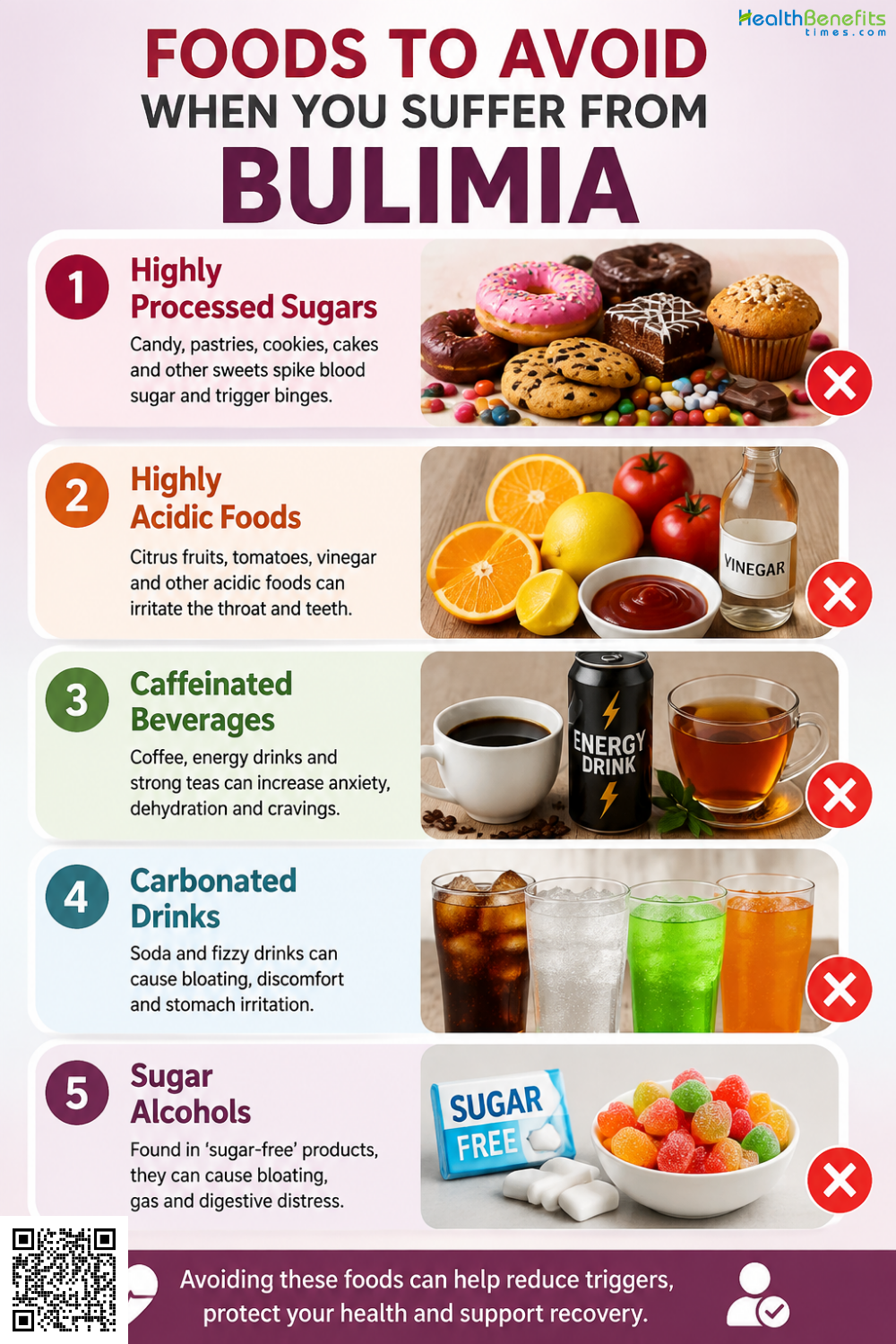
2. Highly Acidic Foods
For individuals who actively purge, consuming highly acidic foods severely accelerates dental enamel erosion and worsens chronic acid reflux and esophageal damage 15.
3. Caffeinated Beverages
Excessive caffeine intake elevates cortisol levels and severe anxiety, which frequently act as primary psychological triggers for compulsive binge-purge cycles 16.
4. Carbonated Drinks
Carbonated beverages significantly exacerbate severe bloating, acid reflux, and gastrointestinal distress in digestive systems that are already physically compromised by repeated purging behaviors 17.
5. Sugar Alcohols
Artificial sweeteners and sugar alcohols cause severe bloating, stomach cramping, and laxative effects that further inflame and disrupt an already damaged digestive tract 18.
When to See a Doctor When You Struggle with Bulimia
Bulimia nervosa is a severe condition that can cause life-threatening physical complications. You must seek immediate medical evaluation if you experience specific physical or psychological warning signs.
- Heart Palpitations and Chest Pain: Frequent purging causes severe potassium depletion, leading to dangerous irregular heartbeats and potential cardiac arrest. Seek emergency care for any sudden chest pain or heart palpitations 4.
- Vomiting Blood: Repeated self-induced vomiting can cause fatal tears in the esophageal lining. You must contact a doctor immediately if you vomit blood or material resembling dark coffee grounds 2.
- Fainting or Severe Dizziness: Chronic purging behaviors rapidly deplete vital bodily fluids, causing extreme dehydration and severe blood pressure drops. Medical intervention is required if you repeatedly faint or experience severe dizziness 4.
- Severe Abdominal Pain: Intense, sharp stomach pain can indicate a life-threatening gastric rupture, severe intestinal blockage, or acute pancreatitis caused by continuous binge-eating and purging cycles 19.
- Suicidal Thoughts: Eating disorders often co-occur with severe depression. You must seek immediate psychiatric help if you experience overwhelming hopelessness, extreme self-harm urges, or active suicidal thoughts 3.