

Few things are as universally annoying as the tight, stinging sensation of dry, cracked lips. Almost everyone has reached for a lip balm at some point, yet many people don’t realize that the right home remedy backed by dermatologists and clinical research can heal chapped lips faster, cheaper, and more safely than a drawer full of products. This guide walks you through what chapped lips actually are, why they happen, and which evidence-based natural remedies the major medical organizations recommend.
What Are Chapped Lips?
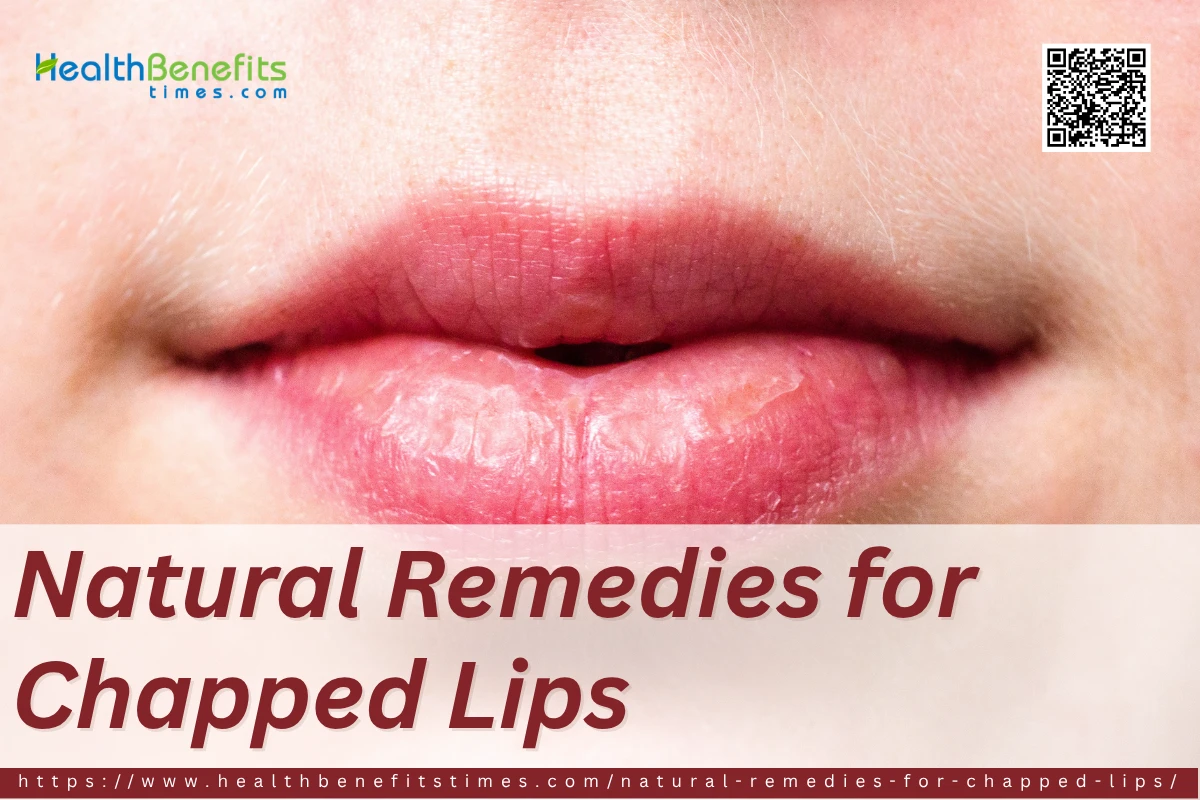
Chapped lips, medically known as cheilitis simplex, is the inflammation, dryness, scaling, and cracking of the skin on the lips, most often caused by environmental exposure, dehydration, or repetitive lip-licking. 1 The skin on your lips is structurally different from skin elsewhere it is thinner, lacks oil (sebaceous) glands, and has very few melanocytes, leaving it more vulnerable to moisture loss, ultraviolet damage, and irritants. 1 Chapped lips are extremely common: most people experience an episode at some point in their lives, and dermatology data show that the area dries out roughly 10 times faster than the rest of the face. 2 While generally harmless, persistent cheilitis can signal an underlying condition such as allergy, autoimmune disease, vitamin deficiency, or, in chronic sun-related cases (actinic cheilitis), a precancerous change. 3
Causes of Chapped Lips
The drivers of cheilitis are wide-ranging. Understanding which apply to you is the first step toward effective treatment.
1. Cold, dry, or windy weather— low humidity strips moisture from the lips’ thin barrier. 1
2. Sun exposure— UV rays damage the lip’s outer layer and, over years, can cause actinic cheilitis. 3
3. Lip licking— saliva contains digestive enzymes that break down the lip’s protective barrier and evaporate quickly, leaving lips drier than before. 4
4. Dehydration— when fluid intake is low, the body diverts water from non-critical areas like the skin and lips. 2
5. Mouth breathing— common with colds or nasal congestion, this dries lips overnight.
6. Irritant or allergic reactions— fragrances, flavorings, lanolin, salicylic acid, propolis, and certain toothpastes can trigger contact cheilitis. 5
7. Medications— retinoids (e.g., isotretinoin) and some chemotherapy agents commonly cause drug-induced cheilitis. 1
8. Vitamin and mineral deficiencies— iron, zinc, and B-vitamins (especially B2, B3, B6, and B12) are linked to chronic chapped lips and angular cheilitis. 6
9. Medical conditions— thyroid disease, autoimmune disorders, eczema, diabetes, and Sjögren’s syndrome can manifest as persistent lip dryness. 7
10. Fungal or bacterial infection—Candida albicansand Staphylococcus aureus often cause angular cheilitis at the corners of the mouth. 8
Symptoms of Chapped Lips
Watch for the following clinical features, which dermatologists use to recognize cheilitis:
- Dry, tight, or scaling lips
- Cracking or fissured skin, sometimes with bleeding
- Peeling or flaking patches
- Itching or a burning sensation
- Mild pain that worsens with citrus, spicy, or salty foods
- Sores or small ulcers on the lips or at the corners of the mouth
- Redness or swelling of the vermilion border
- A pink or brown scaly ring around the mouth (more visible in children who lick) 1
Chapped Lips Facts Table
| Category | Quick Facts |
| Symptoms | Dryness, cracking, peeling, itching, pain, sores, occasional bleeding 1 |
| Causes | Weather, sun, lip-licking, dehydration, allergens, drugs, nutritional deficiencies 3 |
| Types | Cheilitis simplex, actinic, angular, contact (allergic/irritant), eczematous, exfoliative, infective, drug-induced, glandular, granulomatous 1 |
| How it spreads | Not contagious in most forms; infective cheilitis (HSV, Group A strep) can be transmissible 7 |
| Age groups affected | All ages; lip-lick dermatitis peaks in children 7–15; angular cheilitis common in elderly denture wearers and infants 8 |
| Risk factors | Cold/dry climate, outdoor work, smoking, dentures, atopic dermatitis, immunocompromise, iron/B-vitamin deficiency 6 |
| Diagnosis methods | Visual exam; allergy patch testing, skin biopsy, or blood work if persistent 1 |
| Other facts | Lower lip is roughly 12 times more likely to sunburn than upper lip; healing takes 2–3 weeks in severe cases 2 |
Natural Remedies for Chapped Lips
If your lips need first-aid that doesn’t involve a trip to the pharmacy, the following remedies have meaningful research behind them. Use these consistently, and you’ll usually see improvement within days.
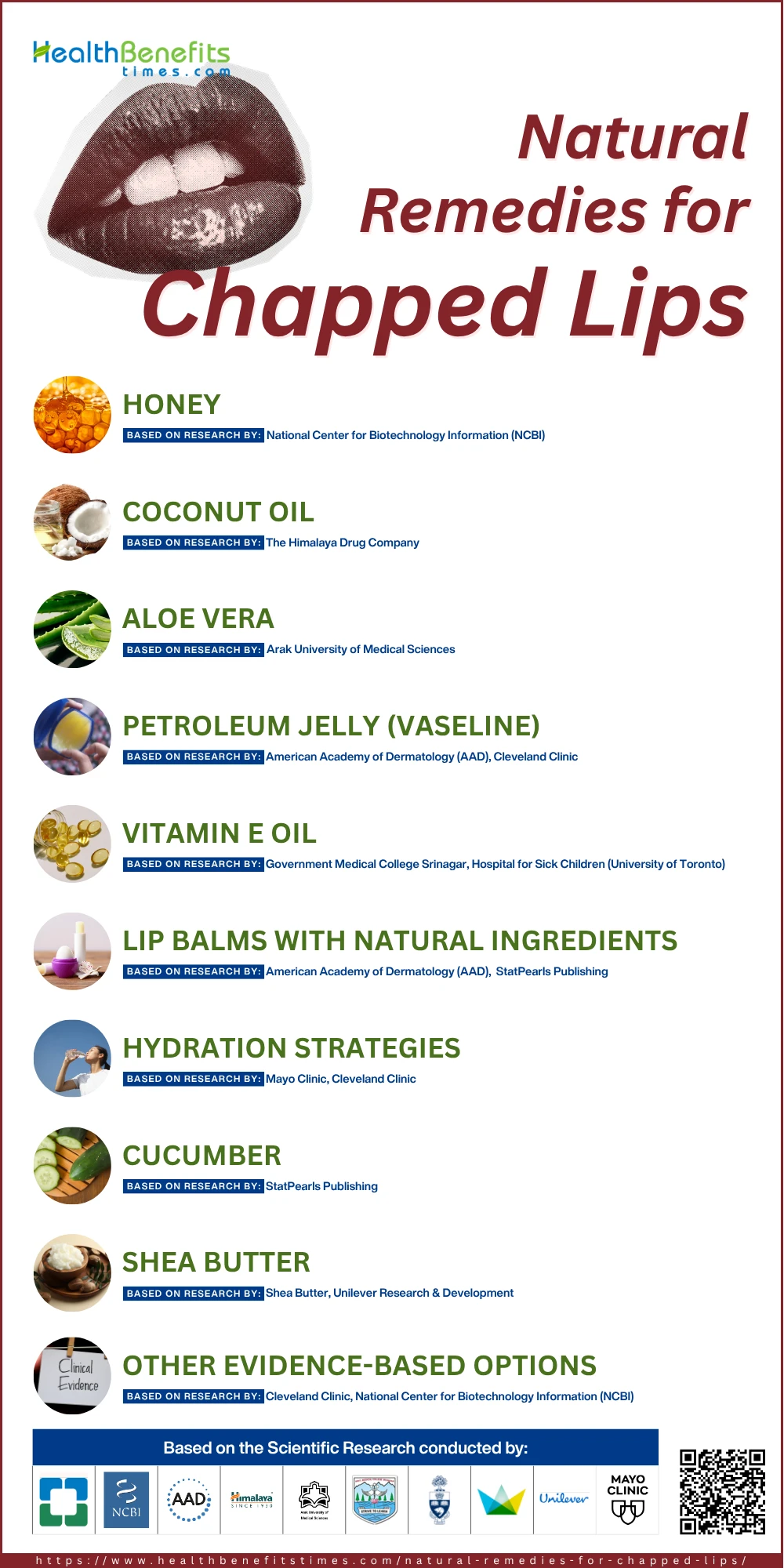
1. Honey
Honey has been used as a wound dressing for thousands of years, and modern research now explains why it works. A review in the Iranian Journal of Basic Medical Sciences (NIH-indexed) reports that raw, unrefined honey carries antibacterial, anti-inflammatory, and antioxidant activity due to its acidity, hydrogen peroxide content, osmotic effects, and immune-stimulating compounds. 9 A separate systematic review in Advances in Wound Care confirmed that medical-grade honey reliably suppresses common skin pathogens such as Staphylococcus aureus. 10 For chapped lips, dab a thin layer of raw honey on clean lips, leave for 10–15 minutes, then gently wipe off. Avoid honey in children under 12 months due to the risk of infant botulism.
 2. Coconut Oil
Virgin coconut oil works on two fronts: it is a proven emollient and it actively calms inflammation. A randomized double-blind trial published on PubMed found extra-virgin coconut oil was as effective and safe as mineral oil at improving skin hydration and surface lipids in patients with mild-to-moderate xerosis (dry skin). 11 A laboratory study indexed by the NIH further showed that virgin coconut oil suppresses inflammatory cytokines (TNF-α, IL-6, IL-8) and boosts skin-barrier proteins involucrin and filaggrin. 12 Apply a pea-sized amount to your lips two or three times daily; the medium-chain fatty acids (mainly lauric acid) also provide mild antimicrobial protection.
3. Aloe Vera
Aloe vera is one of the most extensively studied botanicals for skin healing. A systematic review of 23 clinical trials concluded that topical aloe gel accelerates healing of burns, surgical wounds, and cracked or fissured skin, with a strong safety profile. 13 An NIH herbal-medicine reference notes that aloe also delivers measurable relief for inflammatory skin conditions when applied topically. 14 Squeeze fresh gel from a leaf or use pure (preservative-free) aloe vera gel, and dab a small amount on chapped lips up to three times daily. Patch-test first, since a minority of users develop contact dermatitis.
4. Petroleum Jelly (Vaseline)
White petroleum jelly remains the gold-standard occlusive recommended by the American Academy of Dermatology for severely chapped lips because it seals in water more effectively than waxes or oils. 5 Cleveland Clinic dermatologists confirm that ointment-based products containing petrolatum, glycerin, or mineral oil both heal cracks and prolong moisture retention. 1 Apply a thick layer at bedtime; on damaged lips, the slug-like coat creates the moist environment skin needs to repair.
5. Vitamin E Oil
Vitamin E (alpha-tocopherol) is the main lipid-soluble antioxidant in skin and forms part of its natural moisture barrier. A review in the Indian Dermatology Online Journal (NIH-indexed) summarizes evidence that topical vitamin E stabilizes the skin barrier, scavenges UV-induced free radicals, and is commonly formulated at 0.5–1% in moisturizers. 15 However, a Canadian Family Physician review cautions that high-strength topical vitamin E provides limited scar-reduction benefit and can cause contact dermatitis in roughly one-third of users, so do a 24-hour patch test before applying it to your lips. 16 Pierce a vitamin E capsule and dab a thin layer on the lips at night.
6. Lip Balms with Natural Ingredients
When choosing a balm, you want a humectant + emollient + occlusive combination. The AAD specifies that helpful ingredients include ceramides, dimethicone, hemp seed oil, castor seed oil, shea butter, white petroleum jelly, and mineral oil; SPF 30+ with titanium dioxide or zinc oxide is essential before sun exposure. 5 An NIH StatPearls overview of moisturizers explains how these three ingredient classes work synergistically to repair the barrier and reduce transepidermal water loss. 17 Reapply every two hours outdoors.
7. Hydration Strategies
Mild dehydration alone can leave your lips dry and flaky. The Mayo Clinic recommends roughly 15.5 cups (3.7 L) of total daily fluid for men and 11.5 cups (2.7 L) for women, with extra needed in hot weather, at altitude, or during exercise. 18 Cleveland Clinic dermatologists add that running a humidifier particularly in winter or air-conditioned bedrooms measurably reduces lip dryness by slowing water evaporation from the skin. 2 Pair internal hydration (water, broths, water-rich fruits) with external humidity for the best result.
8. Cucumber
Cucumber slices have long been a household remedy for puffy eyes and dry skin, and the rationale is straightforward: cucumber is roughly 95% water and contains soothing antioxidants, including vitamin C. While direct clinical trials on cucumber for chapped lips are limited, an NIH-indexed moisturizer overview notes that humectant-rich plant extracts help draw water into the upper skin layers. 17 Rub a chilled slice on your lips for several minutes, or mash a few teaspoons of pulp and apply as a brief mask before sealing with an occlusive balm.
9. Shea Butter
Shea butter, extracted from the nuts of the African shea tree, is a rich emollient prized for its fatty-acid profile (oleic, stearic, linoleic) and natural vitamins A and E. A clinical study indexed by the NIH confirmed that a shea-butter-containing moisturizer was well tolerated and produced no adverse skin reactions in subjects with sensitive skin. 19 The same NIH StatPearls review of moisturizers lists shea butter among the recommended emollients for dry-skin conditions because it both softens the skin and forms a partial occlusive layer. 17 Warm a small amount of unrefined shea butter between your fingertips and massage gently into the lips.
10. Other Evidence-Based Options
A handful of additional remedies can complement the staples above. Beeswax acts as a natural occlusive and is a backbone ingredient of many traditional lip balms. Cocoa butter delivers triglycerides and antioxidants for barrier support. Castor seed oil is rich in ricinoleic acid and is among the ingredients dermatologists recommend for healing fissures. 1 Finally, if a deficiency is suspected, your physician may order blood work for iron, ferritin, vitamin B12, folate, and zinc replenishing these nutrients can resolve recurrent cheilitis at its root. 6
Foods and Activities to Avoid
You can sabotage even the best remedy with a few overlooked habits. Steer clear of the following while your lips heal:
- Licking, biting, or picking your lips— these are the single biggest drivers of the chapped-lip cycle. 4
- Lip products with menthol, camphor, eucalyptus, phenol, or salicylic acid— they feel cooling but worsen irritation. 5
- Fragranced or flavored balms(mint, citrus, cinnamon, vanilla) — common allergens in contact cheilitis.
- Lanolin-containing products— named the 2023 Allergen of the Year by the American Contact Dermatitis Society.
- Citrus, spicy, salty, or acidic foods— they sting on damaged skin and prolong inflammation. 1
- Holding metal objects (pens, paperclips, jewelry) between your lips— they trigger irritant contact reactions. 5
- Alcohol and excessive caffeine— both are mild diuretics that contribute to dehydration.
- Smoking and excessive sun without SPF— chronic exposure is the leading cause of precancerous actinic cheilitis. 3
Myths and Misconceptions
| Myth | Reality |
| Licking your lips moisturizes them. | Saliva evaporates quickly and contains digestive enzymes that break down the lip’s barrier, leaving lips drier. 4 |
| Any lip balm will heal chapped lips. | Many balms contain camphor, menthol, fragrance, or lanolin that actively worsen chapping. 5 |
| Chapped lips only happen in winter. | They occur year-round; sun, wind, low humidity, and air conditioning all contribute. 2 |
| If a balm tingles, it’s working. | Tingling or stinging usually means the product is irritating, not healing. 5 |
| Drinking water alone fixes chapped lips. | Hydration helps, but you also need a topical occlusive to prevent moisture loss. 1 |
| Lip balm is addictive. | There is no chemical dependence; over-reliance is usually a sign you’re using the wrong product. |
| Chapped lips never need a doctor. | Persistent cheilitis can signal allergy, infection, vitamin deficiency, or precancerous change. 3 |
Special Considerations
Children. Lip-licker’s dermatitis is most common in children aged 7–15, producing a characteristic red or brown ring around the mouth. Plain petroleum jelly is generally the safest first-line treatment, and parents should avoid flavored balms that encourage licking. 1 Never give honey to infants under 12 months because of botulism risk.
Pregnancy. Hormonal shifts and increased fluid demand commonly cause chapped lips in pregnancy. Petroleum jelly, shea butter, and coconut oil are widely considered safe; however, expectant mothers should avoid lip products containing salicylic acid or high-dose retinoids and consult an obstetrician before starting new topical regimens. 1
Chronic conditions. People with atopic dermatitis, psoriasis, diabetes, thyroid disease, Sjögren’s syndrome, Crohn’s disease, or HIV are more prone to persistent or recurrent cheilitis. 7 In these patients, treating the underlying condition is essential. Patients on isotretinoin or undergoing chemotherapy commonly develop severe drug-induced cheilitis that requires thick occlusive ointments multiple times daily.
Elderly. Older adults are particularly susceptible to angular cheilitis because reduced occlusal vertical dimension from tooth loss or poor-fitting dentures pools saliva at the mouth corners, encouraging Candida and Staphylococcus infection. 6 Nutritional deficiencies (iron, B12, B2) and diminished thirst perception further increase risk. Properly fitting dentures, denture hygiene with chlorhexidine soaks, barrier creams, and B-vitamin supplementation are mainstays of management. 3
Precautions Before Using Natural Remedies
Before slathering on any home remedy, take the following sensible steps:
1. Patch test first.Apply a small amount to your inner forearm and wait 24 hours; discontinue if redness, itching, or swelling develops.
2. Use food-grade or cosmetic-grade products only.Industrial oils and unrefined raw materials may contain contaminants.
3. Check expiration dates.Rancid oils can worsen irritation.
4. Avoid honey in infants under 12 monthsdue to botulism risk.
5. Be cautious with essential oils.Many including peppermint, cinnamon, and eucalyptus are documented lip allergens. 5
6. Don’t combine many remedies at once.Layering products makes it impossible to identify what’s working or causing a reaction.
7. Maintain good oral hygieneto prevent secondary fungal or bacterial infection of cracked corners. 6
8. Stop any product that stings, burns, or tingles.That sensation indicates irritation, not healing. 5
9. Reapply after eating, drinking, or wiping your lips.Most natural remedies are short-acting.
10. Always pair daytime balm with SPF 30+to prevent UV-induced chapping. 1
When to See a Doctor
Home care resolves most chapped lips within two to three weeks. Seek professional evaluation if you experience any of the following:
1. Lips that fail to improve after 2–3 weeks of consistent care.2
2. Persistent bleeding, deep fissures, or open sores.
3. Cracking, crusting, or yeast-like buildup at the mouth corners— suggestive of angular cheilitis. 8
4. Dry, scaly, sandpaper-like or persistently discolored lips— possible actinic cheilitis, which is precancerous. 3
5. Painful blisters, ulcers, or signs of infection(pus, spreading redness, fever).
6. Lip swelling with hives or trouble breathing— call emergency services for possible anaphylaxis. 7
7. Recurrent chapped lips alongside fatigue, hair loss, or pale skin— possible iron, zinc, or B-vitamin deficiency. 6
8. Chapped lips that begin after starting a new medication— particularly retinoids or chemotherapy.
9. A child who cannot stop lip-lickingand develops a worsening rash around the mouth.
10. Any lump, white patch, or non-healing lesionon the lip lasting more than three weeks.
Chapped lips are usually a fleeting nuisance, but they’re also one of the easiest dermatological complaints to solve. By combining steady internal hydration, gentle natural remedies such as honey, coconut oil, aloe vera, shea butter, and petroleum jelly, sun protection, and the avoidance of common irritants, you’ll keep your lips smooth, comfortable, and protected year-round and you’ll know exactly when a deeper medical issue calls for a dermatologist’s attention
Comments
This article is based on Scientific Research Conducted by following Research Organization:
- Chapped Lips–Cleveland Clinic, United States
- How To Get Rid of Chapped Lips–Cleveland Clinic, United States
- Cheilitis–National Center for Biotechnology Information (NCBI), United States
- Lip-Lick Cheilitis and Its Connection to the Brain–National Center for Biotechnology Information (NCBI), United States
- 7 dermatologists' tips for healing dry, chapped lips–American Academy of Dermatology (AAD), United States
- Angular Cheilitis–National Center for Biotechnology Information (NCBI), United States
- Eczema on the Lips (Eczematous Cheilitis)–Cleveland Clinic, United States
- Angular Cheilitis–Cleveland Clinic, United States
- Evidence for Clinical Use of Honey in Wound Healing as an Anti-bacterial, Anti-inflammatory Anti-oxidant and Anti-viral Agent: A Review–National Center for Biotechnology Information (NCBI), United States
- Honey Combination Therapies for Skin and Wound Infections: A Systematic Review of the Literature–National Center for Biotechnology Information (NCBI), United States
- A randomized double-blind controlled trial comparing extra virgin coconut oil with mineral oil as a moisturizer for mild to moderate xerosis
- In vitro anti-inflammatory and skin protective properties of Virgin coconut oil–The Himalaya Drug Company, India
- The Effect of Aloe Vera Clinical Trials on Prevention and Healing of Skin Wound: A Systematic Review–Arak University of Medical Sciences, Iran
- Chapter 3Evaluation of the Nutritional and Metabolic Effects of Aloe vera
- Vitamin E in dermatology–Government Medical College Srinagar, India
- Vitamin E for treating children’s scars–Hospital for Sick Children (University of Toronto), Canada
- Moisturizers–StatPearls Publishing, United States
- Water: How much should you drink every day?–Mayo Clinic, United States
- Skin acceptability of a cosmetic moisturizer formulation in female subjects with sensitive skin–Unilever Research & Development, UK