

 What is Joint Pain?
Imagine a soft, slippery cushion resting between your bones, allowing you to walk, bend, and move with complete ease. When this protective layer wears down, or when your body’s defense system mistakenly attacks the joint area, you experience the painful condition known generally as arthritis. Joint pain is an incredibly common issue that involves aching, soreness, or stiffness in any of the body’s joints, tissues around the joint, and other connected tissues 1. Living with this discomfort is a reality for millions, as musculoskeletal conditions currently affect approximately 1.71 billion people across the globe and stand as the leading contributor to physical disability worldwide 2. Within the United States, an estimated 53 to 54 million adults have been officially diagnosed with some form of arthritis, representing roughly 21.3 percent of the adult population 3. Medical experts expect this number to continue rising rapidly as the general population ages and grows older over time 4.
Causes of Joint Pain
Understanding exactly why a shoulder or knee hurts requires looking closely at how the human body changes over time.
1. Natural Aging and Wear
Over the course of many decades, the continuous mechanical use of our bodies gradually thins out the shock-absorbing cartilage located between bones, causing a common condition called osteoarthritis 5.
2. Autoimmune System Confusion
In some people, the immune system becomes overactive and mistakenly attacks the healthy synovial membrane that encloses the joint, leading to severe inflammatory diseases like rheumatoid arthritis 6.
3. Carrying Excess Body Weight
Having overweight or obesity places an immense, constant physical load on weight-bearing joints, while fatty tissues also actively produce chemicals that trigger widespread inflammation throughout the body 7.
4. Previous Physical Injuries
A history of trauma, such as a sports injury, a bad fall, or an accident, permanently alters the natural biomechanics of a joint and makes it much more likely to break down later in life 8.
5. Lack of Regular Movement
Keeping joints entirely still deprives them of essential nourishment and causes the surrounding support muscles to weaken, leaving the bone structures highly vulnerable to painful friction 9.
Symptoms of Joint Pain
Listen to the signals your body sends when a joint is struggling to function normally.
- Persistent or intermittent aching sensations located deep within the joint space, which may worsen after physical exertion 10.
- Noticeable stiffness that makes it difficult to bend or reach, especially right after waking up in the morning or sitting for a long time 11.
- Visible swelling or puffiness in and around the affected area, indicating an accumulation of excess inflammatory fluid 12.
- A feeling of localized warmth or distinct redness on the skin directly overlying the painful joint 13.
- An unsettling sensation that the joint is somehow loose, unstable, or popping when you try to walk or move it 14.
- Unexplained fatigue, occasional low-grade fevers, or a general loss of appetite, which typically accompany systemic autoimmune types of arthritis 12.
Joint Pain Facts
| Category | Details |
| Symptoms |
|
| Causes |
|
| Types of Joint Pain |
|
| How does spread |
|
| Age Group |
|
| You might be at a higher risk for exposure of this disease if you: |
|
| How doctors diagnose |
|
| Other facts |
|
Exercise and Natural Remedies for Joint Pain
Taking control of your comfort does not always require a trip to the pharmacy. When you implement these natural strategies, you are actively changing the biochemical environment inside your body to promote healing.
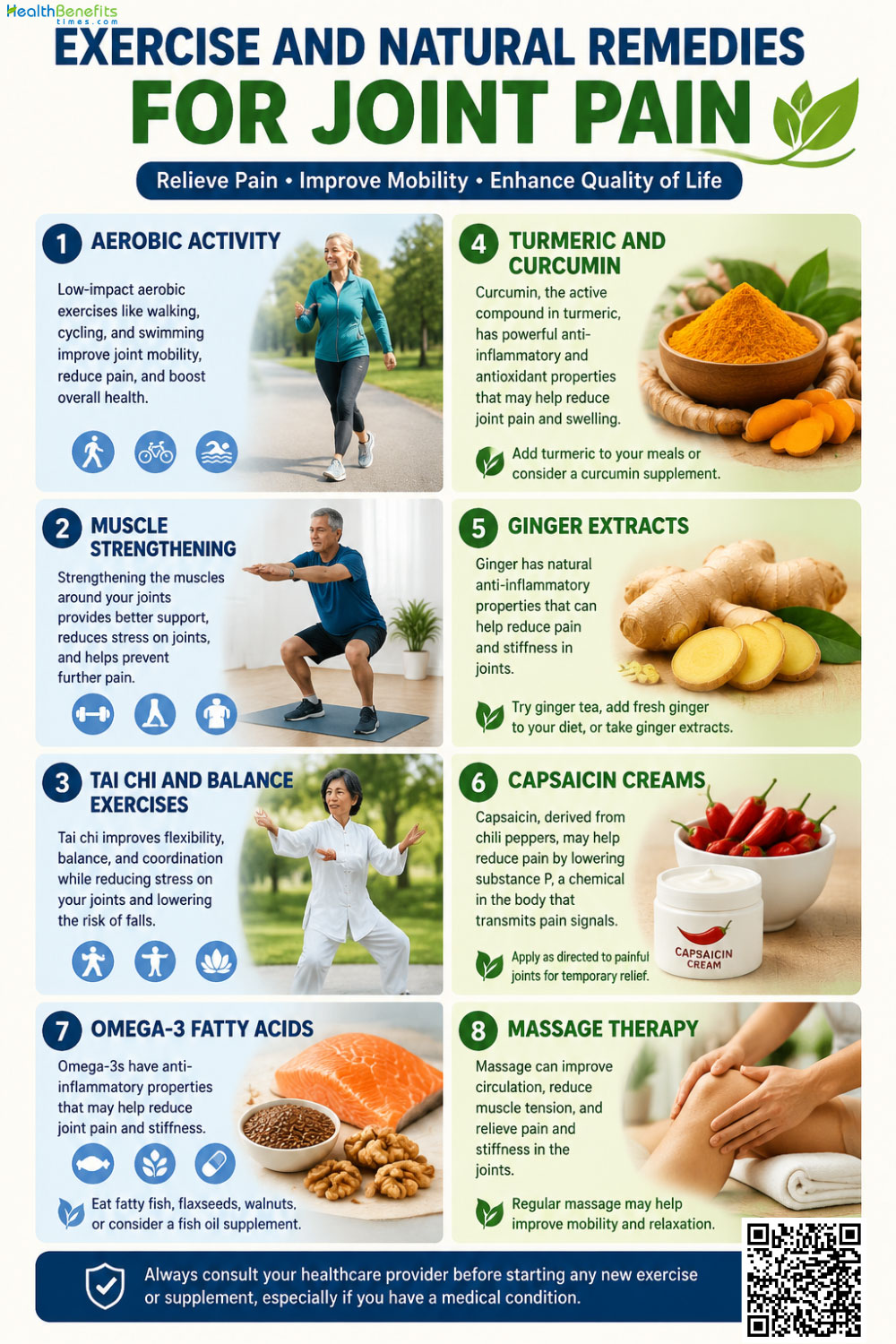
1. Aerobic Activity
Moving your body rhythmically is one of the most powerful medicines available for aching knees and hips. Low-impact aerobic activities such as brisk walking, cycling on a stationary bike, or swimming increase your heart rate without sending harsh shockwaves through your skeleton 20. Health guidelines suggest that you should aim to get at least 150 minutes of moderate physical activity every single week, which can easily be broken up into small, ten-minute chunks of time 21.
Note: Aerobic exercise is commonly used as a daily physical therapy routine to naturally lubricate stiff joints and improve your overall heart health.
2. Muscle Strengthening
You might assume that lifting weights would be terrible for a sore body, but strong muscles actually act as vital shock absorbers. When the muscles surrounding your joints are weak, the underlying cartilage takes the full force of every step you take. By using light dumbbells, stretchy resistance bands, or even just your own body weight, you can build a protective fortress around your vulnerable joints at least two days a week 22.
Note: Resistance training is commonly applied as a fundamental rehabilitation strategy to build supportive muscle mass and take mechanical load directly off fragile cartilage.
3. Tai Chi and Balance Exercises
Finding your center of gravity and gently stretching your connective tissues can work wonders for chronic pain. Mind-body practices like Tai Chi involve incredibly slow, deliberate movements paired with deep, rhythmic breathing that improves physical function and reduces stiffness 23. These practices also heavily challenge your spatial awareness, which is critical because joint pain often alters the way you walk, making accidental falls much more likely 22.
Note: Mind-body exercises are commonly utilized to stretch tight ligaments, calm the central nervous system, and help prevent dangerous falls.
4. Turmeric and Curcumin
Looking into your kitchen spice cabinet can sometimes provide profound medicinal relief. Turmeric, the bright yellow root used in many curries, contains a powerful active chemical known as curcumin that naturally blocks inflammatory enzymes from damaging joint tissue 24. Clinical evaluations indicate that curcumin is highly beneficial for treating active rheumatoid arthritis and reducing localized swelling 25.
Note: Turmeric is commonly eaten in savory foods or taken as a concentrated oral dietary supplement to lower systemic inflammation.
5. Ginger Extracts
Another potent root with a long history in traditional healing is ginger. Modern scientific analysis reveals that ginger contains specific bioactive compounds, like 6-shogaol, which possess powerful antioxidant capacities that help preserve joint cartilage 26. Consuming ginger regularly has been shown to lower the levels of inflammatory markers circulating in the blood of patients with severe joint pain 27.
Note: Ginger is commonly consumed as a warm, soothing tea or applied as a targeted topical gel to block inflammatory chemical pathways.
6. Capsaicin Creams
The very thing that gives chili peppers their fiery heat can actually extinguish the burning sensation of an arthritic knee. Capsaicin is a potent botanical compound that interacts directly with the pain-sensing nerves located in your skin 28. Formulations containing a small amount of capsaicin, when applied four times a day, have proven to be moderately effective in reducing stubborn osteoarthritis pain over several weeks 29.
Note: Capsaicin is applied strictly as a topical cream directly over the painful joint to temporarily numb local nerve endings and intercept pain signals.
7. Omega-3 Fatty Acids
Healthy fats are a foundational building block for a calm, pain-free body. Omega-3 fatty acids, which are found abundantly in cold-water fish like salmon and sardines, act as natural anti-inflammatory agents that help clear up morning stiffness 6. Nutritional evidence highlights that omega-3s are incredibly helpful when used as an addition to your normal pain management routine for autoimmune joint conditions 30.
Note: Omega-3s are commonly eaten through a diet rich in oily fish or taken daily via gel capsules to suppress the immune system’s overactive inflammatory response.
8. Massage Therapy
The simple, gentle power of human touch should never be underestimated when dealing with musculoskeletal misery. Massage therapy works by manually manipulating the soft tissues and muscles that surround a distressed joint, which yields a noticeable reduction in pain and improvement in physical functioning 31. This gentle pressure increases local blood circulation, bringing fresh oxygen to damaged tissues to speed up healing 32.
Note: Massage is commonly applied directly to the body by a trained therapist to physically break up tissue tension and provide immediate, soothing pain relief.
Foods and Activities to Avoid When You suffer from Joint Pain
Your daily choices can either cool down the swelling in your body or throw gasoline on the fire. To protect your vulnerable cartilage, you should be deeply mindful of what goes onto your plate and how you move throughout your day.
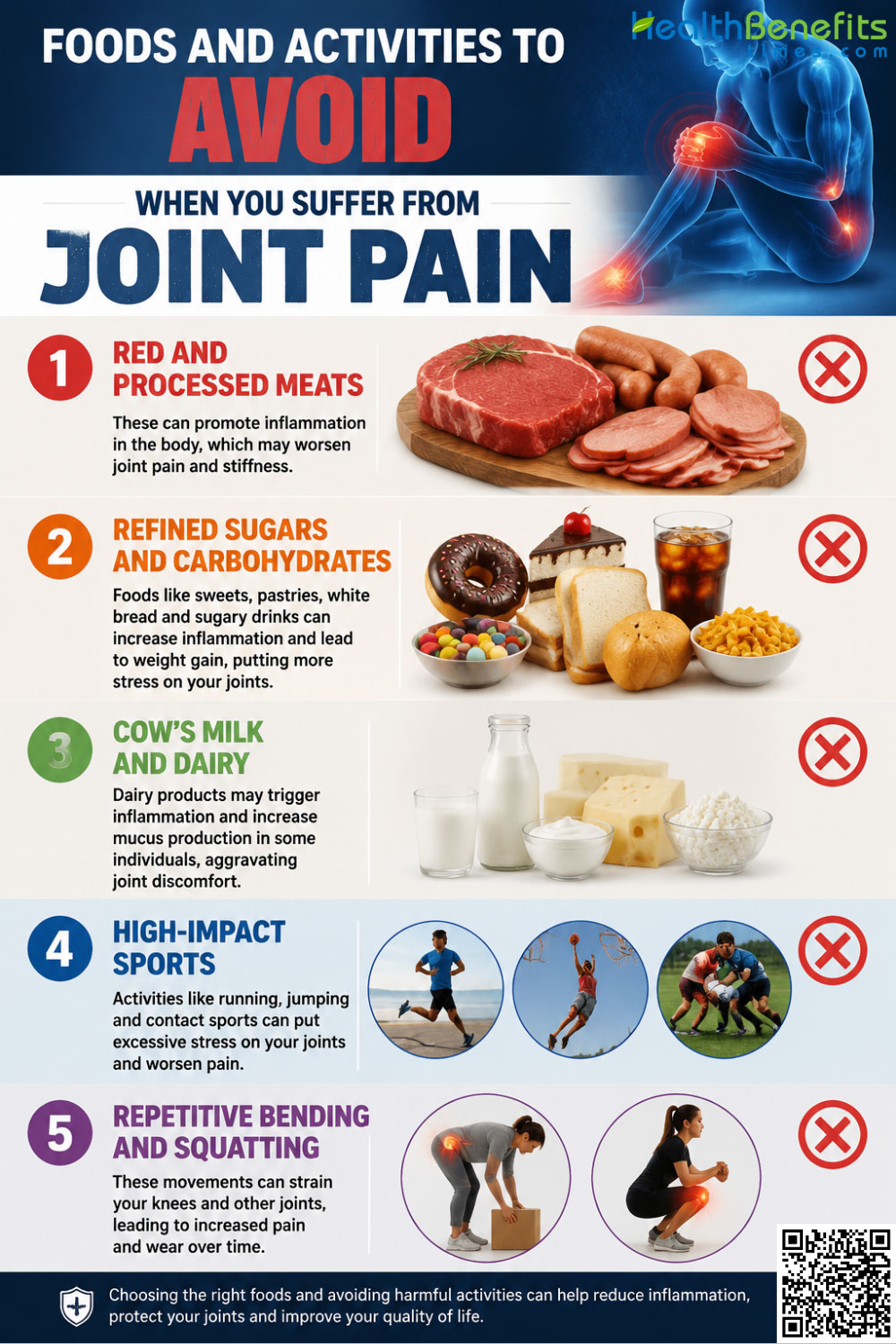
1. Red and Processed Meats
You should strictly limit foods like bacon, hot dogs, and heavy steaks, as they are high in trans-fatty acids and saturated fats that directly increase the presence of inflammatory markers in your body 33.
2. Refined Sugars and Carbohydrates
You must avoid highly processed sweets, white bread, and white rice, because these foods cause rapid spikes in blood sugar that fuel persistent, chronic inflammation 34.
3. Cow’s Milk and Dairy
You might want to skip full-fat dairy products, as the saturated fatty acids present in regular cow’s milk can trigger an immunological response that worsens arthritis symptoms for many people 33.
4. High-Impact Sports
You need to avoid activities that involve repetitive, hard pounding on rigid surfaces, which sends violent shockwaves straight through your cartilage and joints 35.
5. Repetitive Bending and Squatting
You should try to avoid chores or job tasks that force you to repeatedly bend your knees, as this drastically accelerates the mechanical wear and tear of the joint space 36.
Myths and Misconceptions
| Myth | Reality |
| Cracking your knuckles causes severe arthritis over time. | Extensive studies show absolutely no link between habitual knuckle cracking and the development of arthritis, though chronic crackers might experience slightly reduced grip strength. |
| Joint pain is exclusively a normal, inevitable part of getting old. | While wear-and-tear increases with age, it is not inevitable, and arthritis can actually strike at any age, affecting hundreds of thousands of young children. |
| Exercising a painful joint will only cause more permanent damage.
38. |
Gentle, low-impact exercise is actually highly recommended to manage arthritis, as it builds supportive muscle, reduces deep pain, and actively delays physical disability. |
| Women diagnosed with severe arthritis cannot have children.
39. |
Women with arthritis can successfully have healthy babies, but careful medical planning is required because certain potent arthritis medications are highly unsafe during pregnancy. |
Special Considerations
1. Children
It is a heartbreaking reality that babies, toddlers, and teenagers can suffer from severe joint pain just like adults. In the United States, childhood arthritis begins when a young immune system becomes overactive, leading to joint swelling, severe pain, and loss of motion 12. Because their bones are still actively growing, unchecked inflammation can cause permanent physical damage that makes it hard for a child to walk, play, or dress themselves 18. Furthermore, these young patients face a significantly higher prevalence of mental health struggles, requiring careful emotional support alongside physical treatments 17.
2. Pregnancy
The intersection of joint pain and pregnancy presents a fascinating and delicate biological puzzle. For many expectant mothers, the natural changes in the immune system during pregnancy actually cause their joint pain symptoms to magically improve or temporarily go away 40. However, careful medication management is absolutely critical, as several highly effective drugs used to control arthritis are strictly prohibited during pregnancy due to severe risks to the developing baby 41.
3. Chronic conditions
Joint pain rarely exists in isolation; it frequently travels alongside other serious health conditions that complicate the healing process. People suffering from chronic joint pain often deal with overlapping issues like severe obesity, heart conditions, and persistent anxiety 9. The relentless nature of chronic pain makes individuals vastly more susceptible to clinical depression, requiring a holistic medical approach to treat the entire person 42.
4. Elderly
For older adults, joint pain presents a unique and immediate physical danger related to falls and balance. As arthritis degrades the knees and hips, a senior’s natural gait becomes compromised, increasing the risk of taking a dangerous tumble. Therefore, older adults are strongly encouraged to aim for a mix of aerobic exercises, muscle-strengthening, and specific balance activities each week to keep them safely on their feet 20.
Precaution before use of natural remedies when you have Joint Pain
Safety must always come first when you decide to add new herbal supplements or natural remedies to your daily health routine.
1. Watch for Severe Drug Interactions
You must always talk with your health care provider before starting supplements, because herbs can interact with your prescription medications in dangerous ways, either increasing or decreasing their intended effects 43.
2. Beware of Tainted Supplements
You should be highly cautious of over-the-counter arthritis pills sold online, as the FDA frequently finds that some “all-natural” pain products are illegally secretly laced with hidden, dangerous prescription chemicals 44.
3. Monitor Your Liver Health
You need to be careful with highly enhanced turmeric products designed to boost absorption, as these specific high-bioavailability formulations have been directly linked to reported cases of severe liver damage 45.
4. Be Aware of Pregnancy Risks
You should avoid starting new herbal remedies if you are pregnant or breastfeeding, as supplements like turmeric may be unsafe for the baby in large medicinal quantities 46.
When to see Doctor
Sometimes, a warm bath and a cup of ginger tea are simply not enough to keep your body safe from permanent harm. You must reach out to a medical professional right away if you notice any severe warning signs.
1. You experience a sudden, dramatic fever
If your joint pain is accompanied by a high fever or feeling unusually tired, it could signal a dangerous systemic infection or a severe autoimmune flare-up 18.
2. You notice visible joint deformities
If the joint looks completely out of shape, unstable, or swollen beyond recognition, you need immediate medical imaging to check for severe damage 5.
3. Your pain completely limits movement
If the pain stops you from bearing any weight or restricts your ability to perform basic daily activities like walking or dressing, it is time to seek professional intervention 18