


Dermatomyositis is a rare, long-lasting condition that causes inflammation in the muscles and skin. While the exact cause is unknown, it is considered an autoimmune disorder where the immune system mistakenly attacks blood vessels within the skin and muscles. The hallmark signs include gradually worsening muscle weakness, primarily in areas closest to the center of the body, such as the hips, shoulders, and neck. This weakness makes everyday activities like climbing stairs or lifting objects difficult. Alongside muscle symptoms, individuals typically develop distinct skin changes, most notably a patchy, purple-red rash that frequently appears on the eyelids, knuckles, elbows, and knees. Although it primarily impacts the skin and muscles, dermatomyositis can also affect the lungs and esophagus. The condition occurs in both children and adults, and it is generally more common in females.
Causes of Dermatomyositis
1. Genetic Susceptibility
Inherited variations in specific human leukocyte antigen (HLA) genotypes (such as HLA-A68, HLA-DRB10301, HLA-DQA1, and HLA-DQB1) place individuals at a higher risk for developing the disease.
2. Immunologic Dysfunction
An abnormal immune response where T cells, B cells, and the complement system launch a humoral attack against the endothelium of arterioles and muscle capillaries.
3. Viral and Bacterial Infections
The onset of the disease can be triggered by infectious agents, including Coxsackievirus, Parvovirus B19, Enterovirus, Streptococcus, Toxoplasma species, Borrelia species, and Human T-cell lymphotropic virus type 1 (HTLV-1).
4. Medications and Pharmacological Agents
Certain drugs are known to induce the condition, including statins, antineoplastic agents (hydroxyurea, cyclophosphamide), anti-infectious medications (penicillin, sulfonamides, isoniazid), non-steroidal anti-inflammatory drugs (diclofenac, phenylbutazone), D-penicillamine, and quinidine.
5. Environmental Exposures
Prolonged or intense exposure to high-intensity ultraviolet (UV) radiation is recognized as a significant environmental trigger.
6. Malignancy (Paraneoplastic Syndrome)
Underlying cancers (such as breast, pulmonary, cervical, rectal, or gastrointestinal adenocarcinoma) can trigger dermatomyositis, with the muscular and cutaneous symptoms acting as a paraneoplastic phenomenon. 1, 2, 3, 4
Symptoms of Dermatomyositis
- Symmetric proximal muscle weakness (e.g., difficulty lifting objects, climbing stairs, combing hair, or rising from a seated position)
- Gottron papules (red or violaceous bumps over the knuckles, elbows, or knees)
- Heliotrope rash (purplish or red rash on the upper eyelids, often accompanied by periorbital swelling)
- Facial erythema (redness extending across the cheeks, nasal bridge, and forehead)
- Erythematous rashes on the upper chest, back, and anterior neck
- Photosensitivity (increased skin sensitivity to sunlight)
- Pruritus (itching of the skin)
- Dysphagia (difficulty swallowing solids and liquids)
- Dysphonia (changes in voice or difficulty speaking)
- Exertional dyspnea (shortness of breath during physical activity) and non-productive cough
- Non-erosive polyarthritis or arthralgia (joint pain or swelling, typically in the hands)
- Muscle pain, tenderness, and stiffness
- Nail changes (swollen blood vessels or redness at the nail folds)
- Alopecia (hair loss)
- Raynaud’s phenomenon (fingers turning white or blue in response to cold exposure)
- Systemic symptoms (unexplained fever, fatigue, general malaise, or weight loss), 5
Natural Remedies for Dermatomyositis
1. Targeted Exercise and Physical Therapy for Muscle Rehabilitation
How it may help
Targeted physical therapy restores impaired muscle performance and actively combats disuse atrophy in patients with dermatomyositis 6. Structured aerobic and resistance programs specifically enhance mitochondrial function and capillary density, which improves local muscle aerobic capacity and systemic endurance 7.
What research says
Clinical studies demonstrate that structured exercise regimens effectively improve maximum oxygen consumption and significantly lower creatine phosphokinase levels in affected individuals 8. Furthermore, systematic reviews confirm these physical interventions successfully increase overall muscle strength without exacerbating baseline disease activity or triggering inflammatory flares 9.
How to use it safely
Begin your exercise routine strictly under the guidance of a trained physical therapist or rehabilitation specialist. You should start with low-intensity range-of-motion activities and progressively incorporate submaximal resistance training 10. Always adjust your exertion based on current disease stability to prevent undue fatigue.
Potential precautions or side effects
Overexertion may cause severe delayed muscle soreness or profound exhaustion. You must stop immediately and consult your physician if you experience sudden, severe weakness or sharp, unusual muscle pain.
 2. Strict Sun Protection and UV Avoidance Strategies
How it may help
Ultraviolet radiation directly exacerbates dermatomyositis by altering cellular function and increasing the expression of specific autoantigens, such as the Mi-2 protein 11. By strictly avoiding UV exposure and implementing rigorous sun protection, patients can prevent localized skin inflammation, limit systemic autoimmune flare-ups, and reduce disease-specific autoantibody production.
What research says
Research indicates that high-intensity ultraviolet radiation exposure significantly correlates with the geographic distribution and increased prevalence of dermatomyositis, particularly among women 12. Furthermore, clinical evidence demonstrates that UV exposure rapidly stimulates the excessive translation and stability of autoantigens in the skin, which subsequently drives aggressive autoimmune responses 13.
How to use it safely
You should apply a broad-spectrum, high-SPF physical sunscreen daily, ensuring it comprehensively blocks both UVA and UVB rays 14. Additionally, you must wear full-body protective clothing and wide-brimmed hats while strictly avoiding direct sunlight during peak hours to manage photosensitivity effectively.
Potential precautions or side effects
Strict sun avoidance naturally reduces your body’s ability to synthesize vitamin D. You may require routine blood monitoring and oral vitamin D supplementation to prevent nutritional deficiencies and bone loss.
3. Creatine Supplementation to Support Muscle Strength
How it may help
Creatine supplementation improves cellular energy metabolism in patients with dermatomyositis by increasing the local availability of phosphocreatine in muscle tissues 15. This essential reserve enhances natural energy production, which helps restore diminished physical strength, combat severe muscle fatigue, and support sustained functional endurance in affected individuals.
What research says
Clinical evidence confirms that creatine significantly improves overall functional performance and increases muscle strength in patients with idiopathic inflammatory myopathies 16. High-quality trials demonstrate that individuals utilizing this supplement experience tangible improvements in daily physical activities without triggering systemic inflammation or exacerbating underlying autoimmune disease activity.
How to use it safely
You should discuss specific dosage protocols with your specialist, though clinical trials safely utilize an initial loading phase of twenty grams daily for eight days, followed by a maintenance dose of three grams daily 17. Always combine your regimen with consistent hydration and a supervised exercise program.
Potential precautions or side effects
While generally safe, high doses may occasionally cause mild digestive distress, rapid water weight gain, or muscle cramping 18. You must monitor your kidney function through routine blood tests.
4. Vitamin D Optimization for Autoimmune Health
How it may help
Vitamin D functions as a powerful regulator of the immune system by suppressing the overactive cells responsible for attacking healthy tissue 19. Additionally, this vital nutrient directly supports muscle fiber regeneration and helps reverse the profound physical weakness commonly experienced by individuals with autoimmune conditions 20.
What research says
Clinical evaluations reveal that patients with dermatomyositis consistently exhibit significantly lower levels of blood vitamin D compared to healthy populations, which directly correlates with worse muscle weakness and higher disease activity 21. Correcting this deficiency successfully decreases systemic inflammation markers and improves overall muscular endurance 22.
How to use it safely
You should request a standard blood test from your doctor to determine your baseline vitamin D levels before beginning any supplementation 23. Based on your specific deficit, your physician will recommend an appropriate daily dose of vitamin D3 to safely achieve an optimal therapeutic range 24.
Potential precautions or side effects
Excessive intake can cause dangerous calcium buildup in your blood, leading to nausea, weakness, and kidney stones 25. You must strictly follow prescribed dosages and attend regular monitoring appointments.
5. Omega-3 Fatty Acids to Modulate Systemic Inflammation
How it may help
Omega-3 fatty acids, specifically EPA and DHA, act as potent immunonutrients that actively disrupt the cellular signaling pathways responsible for systemic inflammation 26. By lowering the production of inflammatory cytokines, these essential fats help reduce the chronic muscle and skin inflammation characteristic of dermatomyositis.
What research says
Scientific literature demonstrates that omega-3 supplementation significantly alters specific chemical pathways, leading to a marked decrease in the overall systemic inflammatory response 27. Extensive data confirm that these fatty acids effectively lower disease-associated inflammatory biomarkers across various immune-mediated and autoimmune conditions 28.
How to use it safely
You should obtain omega-3s through dietary sources like fatty fish or take high-quality supplements. The FDA recommends limiting total daily intake to three grams of combined EPA and DHA, with a maximum of two grams coming directly from dietary supplements 29.
Potential precautions or side effects
High doses can cause mild indigestion. You must consult your doctor before starting, as omega-3s inhibit platelet aggregation and significantly increase bleeding risks, especially alongside blood thinners 30.
6. Adopting a Nutrient-Dense, Anti-Inflammatory Diet
How it may help
A nutrient-dense, anti-inflammatory diet actively reduces the chronic oxidative stress and immune overactivation that damage muscle fibers in autoimmune myopathies 31. By providing essential antioxidants and eliminating processed foods, this dietary approach helps stabilize systemic immune responses, thereby reducing the severity of painful skin rashes and progressive muscle weakness 32.
What research says
Scientific evaluations reveal that adhering to anti-inflammatory dietary patterns significantly lowers blood markers of systemic inflammation, such as C-reactive protein, in individuals with immune-mediated conditions 33. Nutritional studies confirm that sustained, high intakes of dietary antioxidants successfully protect healthy muscle tissues from progressive autoantibody-driven degradation 34.
How to use it safely
You should collaborate with a registered clinical dietitian to design a personalized Mediterranean-style meal plan that safely meets your metabolic needs 35. Focus on consuming fresh vegetables and lean proteins while strictly eliminating refined sugars, trans fats, and highly processed carbohydrates 36.
Potential precautions or side effects
Extreme dietary restrictions can cause severe nutritional deficiencies and dangerous weight loss 37. You must also modify food textures if you experience disease-related throat muscle weakness or swallowing difficulties 38.
7. Mind-Body Practices for Fatigue and Stress Management
How it may help
Mind-body practices like mindfulness meditation actively reduce the production of stress hormones that trigger systemic immune flare-ups 39. By regulating the autonomic nervous system, these therapeutic techniques help alleviate the profound physical fatigue and chronic emotional exhaustion frequently associated with unpredictable autoimmune muscle diseases 40.
What research says
Clinical studies demonstrate that regular mindfulness and relaxation therapies significantly lower pro-inflammatory blood markers in patients with chronic immune disorders 41. Scientific reviews confirm that patients utilizing structured mind-body interventions experience measurable improvements in their daily energy levels and report enhanced overall psychological well-being 42.
How to use it safely
You should start with low-impact practices like deep breathing exercises or guided imagery before attempting physical movements 43. If choosing yoga, you must select restorative classes led by instructors experienced in accommodating severe muscle weakness to prevent accidental injuries 44.
Potential precautions or side effects
Holding static poses can overstrain weakened muscles or destabilize vulnerable joints 45. You must promptly release any stretch that causes sharp pain, shortness of breath, or sudden muscle tremors 46.
8. Prioritizing Quality Sleep and Restorative Rest Protocols
How it may help
Quality sleep actively regulates the immune system by shifting the physiological balance away from pro-inflammatory markers toward essential cellular repair processes. Establishing consistent, restorative rest protocols helps mitigate the profound fatigue characteristic of autoimmune conditions, supporting natural muscle tissue regeneration and minimizing the frequency of systemic inflammatory flare-ups.
What research says
Scientific evidence demonstrates that insufficient sleep directly upregulates the production of pro-inflammatory cytokines, including interleukin-6 and tumor necrosis factor-alpha, which actively exacerbate systemic autoimmune disease activity 47. Furthermore, achieving deep slow-wave sleep naturally supports adaptive immune responses and significantly decreases the severity of chronic fatigue frequently experienced by individuals with inflammatory disorders 48.
How to use it safely
You should establish a strict sleep hygiene routine by maintaining consistent bedtime hours and optimizing your bedroom for cool temperatures specifically between 60 and 67 degrees Fahrenheit 49. Incorporate supportive mattresses or specialized positioning pillows to alleviate direct physical pressure on inflamed or weakened muscles during the night.
Potential precautions or side effects
You must consciously avoid prolonged daytime bed rest. Excessive immobility rapidly accelerates muscle atrophy and significantly degrades overall physical strength, which severely compounds the disease-induced muscle weakness characteristic of dermatomyositis 50.
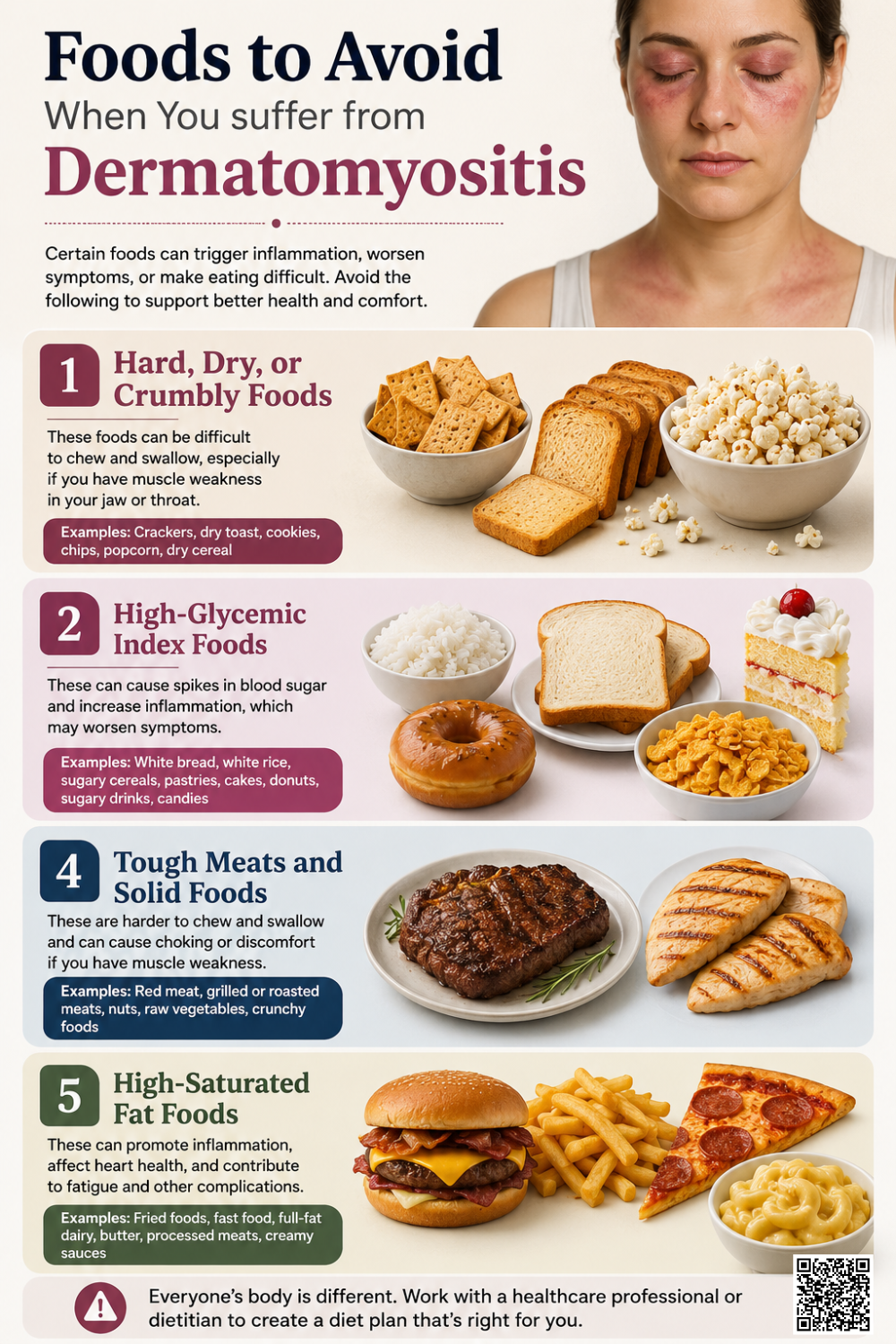 Foods to Avoid When You suffer from Dermatomyositis
1. Hard, Dry, or Crumbly Foods
Dermatomyositis often causes dysphagia. Avoid dry, crumbly foods to prevent dangerous choking and aspiration risks. Choose pureed or soft foods instead. 51, 52
2. High-Glycemic Index Foods
Foods like pastries rapidly elevate blood glucose, exacerbating systemic inflammation. This worsens dermatomyositis skin rashes and disrupts metabolic health. 53
3. Alcoholic Beverages
Alcohol promotes systemic inflammation and interacts poorly with immunosuppressants. Abstinence prevents further muscle toxicity and aids autoimmune management. 54, 55, 56
4. Tough Meats and Solid Foods
Oropharyngeal muscle weakness heightens the risk of aspiration pneumonia. Consuming solid foods or tough meats is dangerous, making pureed substitutions necessary. 57, 58
5. High-Saturated Fat Foods
High-saturated fat diets disrupt lipid metabolism and increase systemic inflammation. This imbalance severely worsens dermatomyositis clinical phenotypes. 59, 60
When To see Doctor when you have Dermatomyositis
1. Shortness of Breath
Immediate medical attention is required for sudden or worsening shortness of breath. This indicates interstitial lung disease, a severe, potentially life-threatening complication highly common in dermatomyositis. 61, 62
2. Severe Difficulty Swallowing
Seek urgent care if experiencing frequent choking or an inability to swallow solid foods. Dysphagia severely increases the risk of dangerous aspiration pneumonia, requiring immediate intervention. 63, 64
3. Rapid Loss of Muscle Strength
Contact a doctor if profound weakness abruptly prevents standing, lifting arms, or basic daily tasks. This signals a severe active disease flare requiring urgent medication adjustments. 65, 66
4. New Skin Ulcerations
Promptly report the appearance of deep skin ulcers or rapidly worsening rashes. Ulcerative lesions often indicate underlying systemic vasculitis and correlate with severe, progressive disease phenotypes. 67, 68
5. High Fever or Infection Signs
Immunosuppressive therapies significantly increase infection vulnerability. Immediately evaluate high fevers or productive coughs, as opportunistic infections can escalate rapidly and require targeted antimicrobial therapy. 69, 70