

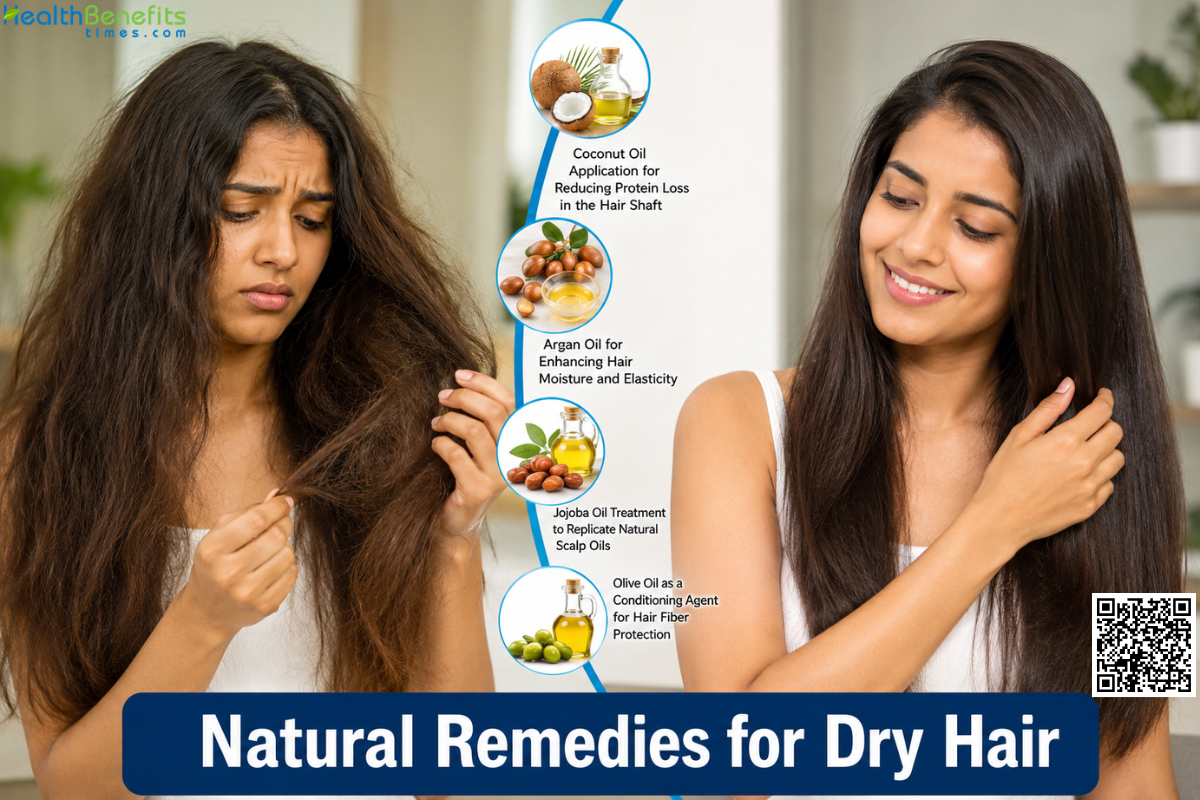
Dry hair develops when the hair shaft cannot retain adequate moisture or when the scalp fails to produce sufficient natural oils (sebum) to lubricate the fiber. The hair shaft consists of three primary layers, with the outermost layer known as the cuticle. The cuticle is formed by overlapping flat cells covered by a lipid coating that protects the inner structural proteins and locks in hydration 1. When this cuticle is damaged by mechanical friction, ultraviolet radiation, or harsh chemical treatments, the protective barrier diminishes. Consequently, the hair fiber loses its natural water content and transitions to a negatively charged, hydrophilic state 2. This structural deterioration leaves the hair brittle, dull, and highly susceptible to tangling and breakage. Furthermore, age-related declines in sebum production can prevent the natural lubrication necessary to maintain the hair’s elasticity and overall health 3.
Causes of Dry Hair
1. Chemical Treatments
The use of hair dyes, bleaching agents, and chemical relaxers alters the internal structure of the hair. These processes lift the protective cuticle layer and strip the hair of its natural lipids and structural proteins, leaving the hair shaft highly porous and incapable of retaining water.
2. Thermal Styling
The frequent use of heated styling tools, such as blow dryers, curling irons, and flat irons, causes the rapid evaporation of water from within the hair shaft. This extreme, concentrated heat damages the keratin proteins and causes the outer cuticle to blister and crack, leading to severe structural dryness and physical breakage.
3. Harsh Cleansing Practices
Washing hair too frequently or using shampoos that contain strong surfactants strips away sebum, the essential natural oil produced by the scalp. Without this natural lipid layer, the hair loses its lubrication and barrier function, resulting in accelerated moisture loss 4.
4. Environmental Exposure
Prolonged exposure to ultraviolet (UV) radiation from the sun degrades the amino acids present in the hair fiber. Furthermore, exposure to harsh winds and low-humidity environments extracts moisture directly from the hair shaft, which compromises the protective outer layer and increases brittleness 5.
5. Medical Conditions
Systemic diseases, particularly endocrine disorders like hypothyroidism, slow down the body’s overall metabolism. This metabolic decline directly reduces the activity of sebaceous glands on the scalp, which stops the adequate production of natural oils needed to moisturize the hair fiber 6.
5. Nutritional Deficiencies
A lack of essential macronutrients and micronutrients impairs the body’s cellular ability to produce robust hair fibers. Deficiencies in specific vitamins, minerals, and proteins weaken the structural integrity of the hair from the root, making the emerging hair naturally prone to dryness and structural defects 7.
6. Aging Process
As human bodies age, cellular activity and hormone levels naturally decline. This biological aging process leads to a significant reduction in natural sebum production on the scalp, causing the hair to lose its natural conditioning agents and become progressively drier over time.
Symptoms of Dry Hair
1. Dull Appearance
Healthy hair features a smooth outer layer that reflects light evenly. When hair loses its internal moisture, this outer cuticle lifts and becomes irregular. This structural change scatters light instead of reflecting it, leaving the hair looking flat and devoid of natural shine.
2. Rough Texture
The depletion of natural protective oils and the physical uplifting of the hair’s overlapping cuticle cells cause the individual hair fibers to feel coarse, stiff, and uneven when touched.
3. Excessive Tangling and Frizz
The jagged, raised edges of a dry and damaged cuticle catch and interlock with adjacent hair strands, leading to severe friction and stubborn knots. Furthermore, the high porosity of dry hair allows it to absorb ambient moisture from the air irregularly, which causes the hair fibers to swell and create uncontrollable frizz.
4. Brittleness and Breakage
Dehydrated hair suffers a significant reduction in its natural elasticity and tensile strength. Because the hair fiber lacks the moisture required to stretch normally under physical tension, the weakened shaft snaps or breaks off easily during standard grooming practices such as brushing, combing, or washing.
5. Split Ends
Prolonged dryness and environmental weathering gradually destroy the protective cuticle at the oldest and most vulnerable section of the hair. This structural failure exposes the inner core, forcing the protein fibers to unravel and fracture into separate strands at the tips 8.
 Natural Remedies for Dry Hair
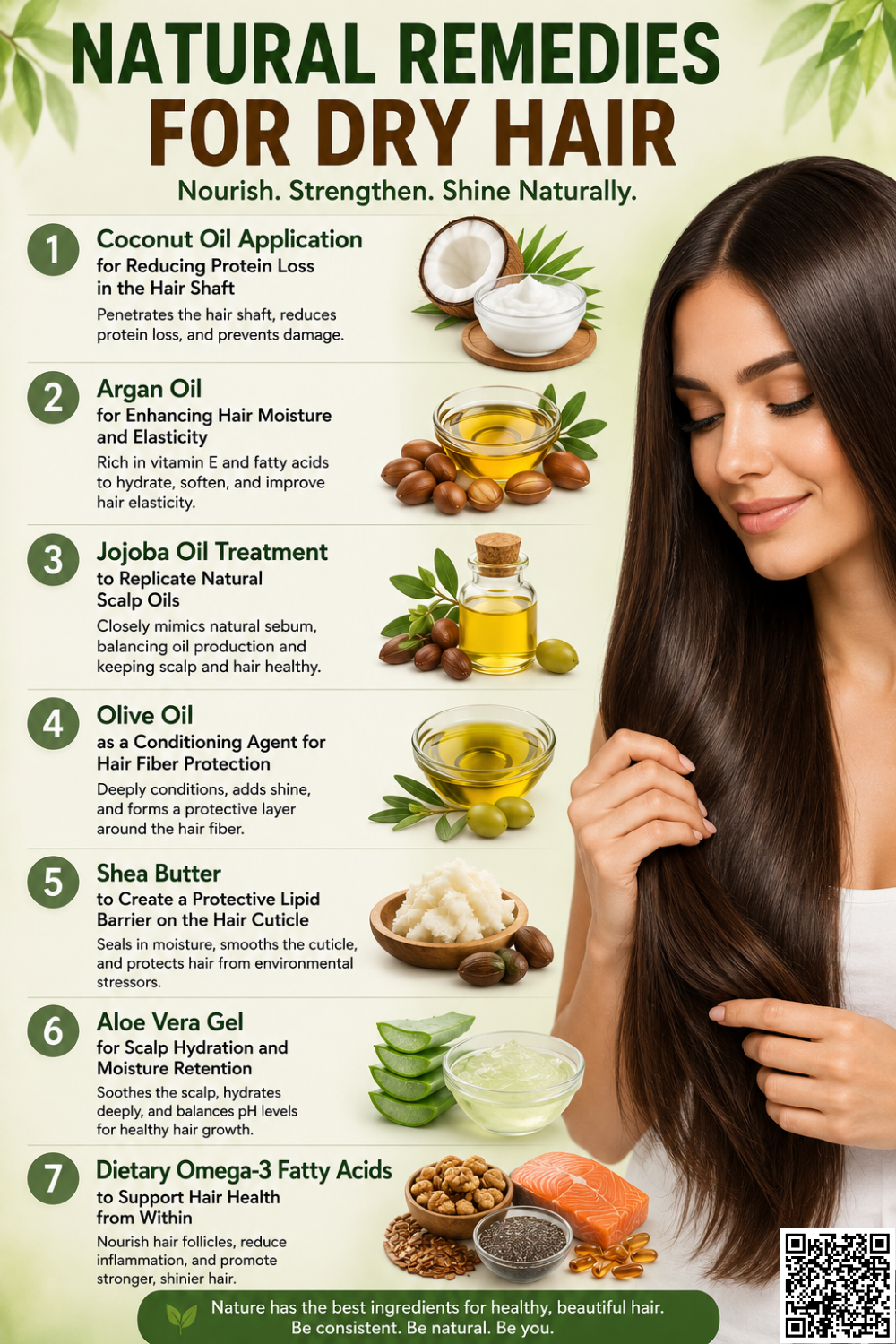
1. Coconut Oil Application for Reducing Protein Loss in the Hair Shaft
How it may help
Coconut oil is primarily composed of lauric acid, a fatty acid with a low molecular weight and a straight molecular structure. This unique chemical makeup allows the oil to easily penetrate deep inside the hair shaft, protecting the natural moisture barrier and preventing structural fiber damage 9.
What research says
Clinical studies conclude that coconut oil significantly reduces protein loss in both healthy and chemically damaged hair. Research confirmed that coconut oil uniquely prevents the depletion of internal hair proteins whether applied before or after washing, which directly maintains the hair’s mechanical strength and moisture retention.
How to use it safely
Warm a small amount of pure, unrefined coconut oil between your palms. Gently massage the oil into your hair strands, focusing mainly on the dry ends. Leave the treatment in your hair for at least thirty minutes before washing it out thoroughly with a gentle shampoo.
Potential precautions or side effects
Applying excessive amounts can create residue, making your hair feel stiff or overly greasy. Avoid applying the oil directly to your scalp if you are prone to acne or dandruff.
2. Argan Oil for Enhancing Hair Moisture and Elasticity
How it may help
Argan oil is rich in essential fatty acids, such as oleic and linoleic acids, along with vitamin E. These natural compounds coat the outer layer of the hair shaft, forming a protective barrier that seals in moisture. This lubrication softens the hair fiber, reduces friction, and restores natural elasticity.
What research says
Clinical evaluations demonstrate that applying natural oils like argan oil significantly improves hair moisture retention and protects the hair fiber from structural breakdown. Research concludes that its high antioxidant content effectively shields the hair cuticle from oxidative damage caused by environmental factors and harsh chemical treatments.
How to use it safely
Dispense two to three drops of pure argan oil into your hands and rub your palms together. Smooth the oil evenly over damp or dry hair, focusing primarily on the middle lengths and the dry ends. You can use this daily as a lightweight, leave-in moisturizer.
Potential precautions or side effects
Argan oil is generally safe, but applying too much causes greasy buildup. If you have nut allergies, perform a skin patch test first to prevent an allergic skin reaction.
3. Jojoba Oil Treatment to Replicate Natural Scalp Oils
How it may help
Jojoba oil is chemically classified as a liquid wax ester rather than a traditional botanical oil. This unique molecular structure closely mimics human sebum, the natural oil produced by the scalp. Because of this biological similarity, jojoba oil effectively conditions the hair fiber and restores the natural lipid barrier.
What research says
Clinical reviews confirm that jojoba oil consists of nearly 98% pure wax esters, making it highly biocompatible with human skin and hair. Research demonstrates that this composition effectively seals moisture into the hair cuticle and prevents water evaporation without disrupting the scalp’s native lipid balance 10.
How to use it safely
Apply three to five drops of pure, cold-pressed jojoba oil directly to your scalp and massage gently. Comb the remaining oil through the lengths of your hair. You can leave it in overnight as a deep conditioning treatment before washing it out with a mild shampoo.
Potential precautions or side effects
Jojoba oil is hypoallergenic and generally very safe for topical use. However, applying excessive quantities can leave a heavy, waxy residue on the hair. Always perform a patch test first.
4. Olive Oil as a Conditioning Agent for Hair Fiber Protection
How it may help
Olive oil is rich in oleic acid, squalene, and natural antioxidants. These heavy emollients coat the outer cuticle of the hair shaft, creating a thick physical barrier. This protective layer smooths the rough, damaged edges of the hair fiber, seals in internal moisture, and prevents further water evaporation.
What research says
Scientific analysis indicates that the heavy monounsaturated fatty acids in olive oil strongly adhere to the hair surface. Research concludes that topically applying olive oil significantly increases the mechanical strength of the hair fiber, effectively reducing friction-induced breakage and protecting against environmental weathering 11.
How to use it safely
Warm one to two tablespoons of extra virgin olive oil. Apply it evenly through damp hair, focusing entirely on the mid-lengths and dry ends while avoiding the scalp. Leave the oil in for twenty minutes, then wash thoroughly with a clarifying shampoo to remove all residue.
Potential precautions or side effects
Because olive oil is heavy, it can weigh down fine hair and cause greasiness. It may also worsen dandruff or scalp acne if applied directly to the skin.
5. Shea Butter to Create a Protective Lipid Barrier on the Hair Cuticle
How it may help
Shea butter is a dense plant fat rich in oleic and stearic acids. It functions as a powerful emollient that coats the hair shaft. This creates a thick physical lipid barrier over the cuticle, which effectively seals in internal moisture, smooths rough edges, and protects the hair from environmental damage.
What research says
Research shows that plant-derived butters containing high levels of triterpenes and fatty acids significantly improve tissue barrier function. Clinical studies conclude that topically applying shea butter effectively prevents structural water loss, maintaining optimal hydration levels and physical elasticity within the underlying keratin fibers 12.
How to use it safely
Melt a small, pea-sized amount of raw shea butter between your palms until it turns into a liquid oil. Gently press it into the damp ends of your hair to seal in moisture. Avoid applying it directly to your scalp to prevent clogged pores.
Potential precautions or side effects
Raw shea butter is extremely heavy and can leave fine hair looking greasy or stiff. People with tree nut allergies should perform a skin patch test before use.
6. Aloe Vera Gel for Scalp Hydration and Moisture Retention
How it may help
Aloe vera gel acts as a natural humectant due to its high concentration of mucopolysaccharides. These specific sugar molecules actively draw water from the environment and bind it directly to the hair shaft and scalp. This process restores lost hydration, smooths the cuticle, and improves the fiber’s overall flexibility.
What research says
Clinical reviews verify that the mucopolysaccharides in aloe vera provide exceptional moisture-retaining properties for keratinized tissues. Research concludes that topically applying pure aloe vera effectively increases cellular hydration levels and reduces tissue inflammation, creating a healthier, more moisturized scalp environment necessary for sustaining healthy hair 13.
How to use it safely
Extract fresh gel from an aloe vera leaf or use a pure, commercial formulation without added alcohols. Massage the gel generously into your scalp and smooth it through the lengths of damp hair. Leave it on for thirty minutes before rinsing thoroughly with cool water.
Potential precautions or side effects
While generally safe, topical aloe vera can occasionally cause allergic contact dermatitis or mild skin irritation. Always perform a small skin patch test before applying it entirely to your scalp.
7. Dietary Omega-3 Fatty Acids to Support Hair Health from Within
How it may help
Omega-3 fatty acids are essential nutrients that feed the hair roots and the scalp from inside the body. They reduce swelling and inflammation around the hair roots, improve blood flow to the scalp, and support the natural production of protective scalp oils that keep the hair strands lubricated and strong.
What research says
Clinical studies show that taking omega-3 supplements significantly improves hair density and reduces hair loss. Research concludes that these essential fats increase overall hair diameter, reduce the amount of resting hair roots, and supply the underlying scalp tissues with vital nutrients required to build a stronger moisture-retaining barrier 14.
How to use it safely
Increase your intake of omega-3s by regularly eating fatty fish like salmon or plant foods like walnuts and flaxseeds. If you prefer taking daily fish oil or algae supplements, consult your doctor first to establish a safe and effective amount for your personal needs.
Potential precautions or side effects
High doses of omega-3 supplements can cause mild digestive upset or thin your blood. Stop taking them before scheduled surgeries, and always check for allergies to fish or shellfish.
 Foods to Avoid When You Suffer from Dry Hair
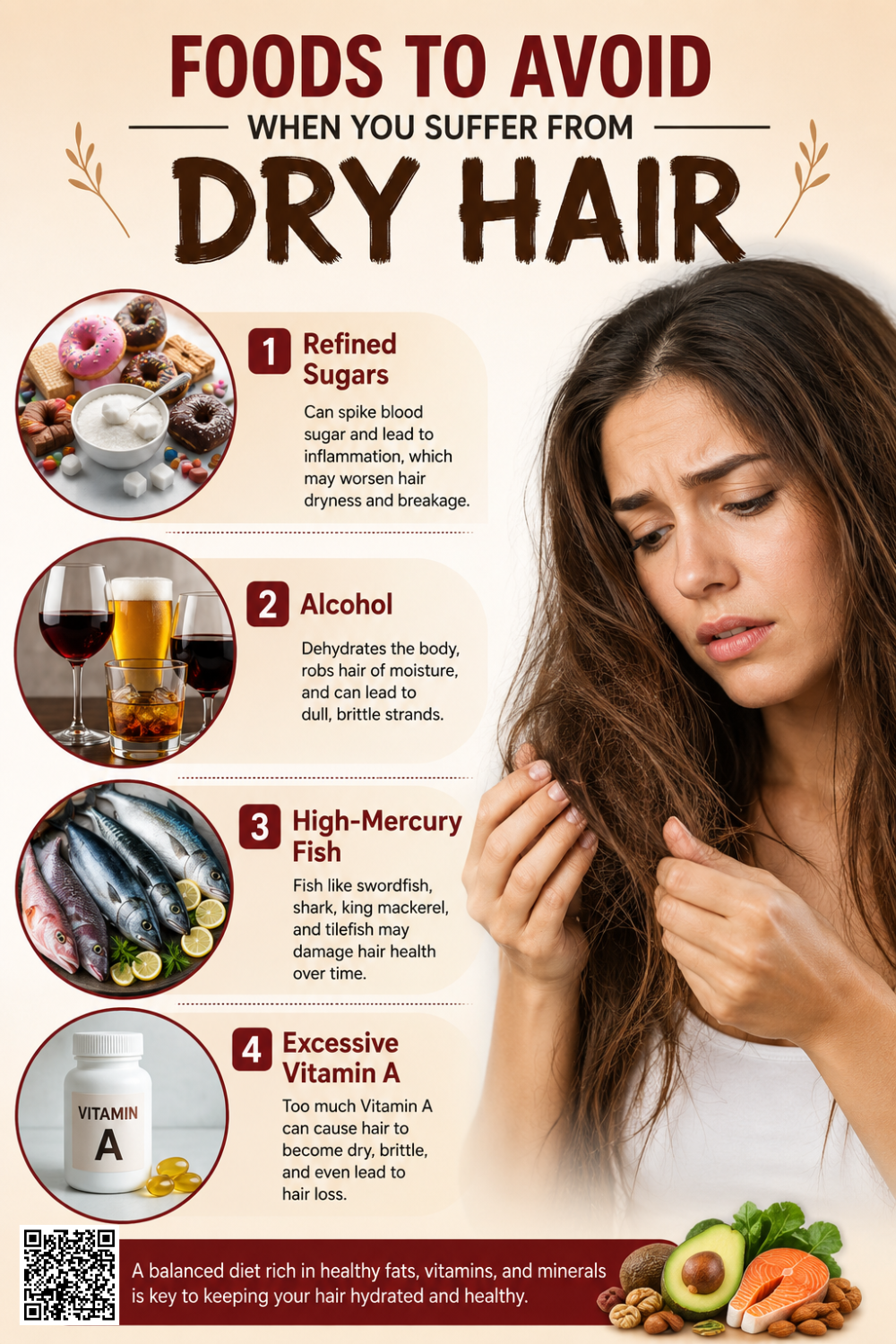
1. Refined Sugars
Diets high in refined sugars create advanced glycation end products. These compounds degrade keratin proteins, weakening the hair structure and severely reducing its ability to retain moisture.
2. Alcohol
Alcohol consumption heavily impairs the intestinal absorption of essential trace minerals like zinc. Zinc deficiency directly disrupts keratinization, resulting in structurally weak, dry, and brittle hair fibers.
3. High-Mercury Fish
Frequent consumption of high-mercury fish, like swordfish, disrupts natural cellular function. Mercury toxicity directly impairs the protein synthesis required to build strong, properly hydrated hair shafts 15.
4. Excessive Vitamin A
Consuming extreme amounts of vitamin A, often through dietary supplements, triggers cellular toxicity in follicles. This abrupt disruption causes hair to become excessively dry, fragile, and prone to breakage.
When To See a Doctor When You Suffer from Dry Hair
1. Sudden Physical Changes
Consult a physician if extreme dry hair appears alongside fatigue or unexpected weight gain. These are primary clinical indicators of an underlying thyroid hormone disorder.
2. Noticeable Hair Thinning
Seek medical evaluation if dry, brittle hair is accompanied by significant hair shedding. This combination strongly suggests severe internal nutritional deficiencies requiring clinical blood analysis.
3. Severe Scalp Inflammation
See a dermatologist if hair dryness is paired with persistent itching, redness, or heavy flaking. This indicates chronic inflammatory skin conditions requiring targeted prescription therapies 16.
4. Treatment Resistance
Consult a medical professional if extreme dryness persists despite proper conditioning. Chronic unresponsiveness may indicate underlying genetic structural defects within the hair shaft requiring specialized diagnosis.