


Most of us deal with aches and pains at some point. But fibromyalgia is something different it’s a chronic condition that causes widespread pain across your muscles and joints, and it can drain your energy in ways that make even simple daily tasks feel overwhelming 1. Here’s what makes it unusual: the pain isn’t really coming from your tissues. It starts in your brain and spinal cord. Your central nervous system essentially amplifies everyday signals, so sensations that wouldn’t bother most people can feel intense or even painful to you 2. And it doesn’t stop at pain. You may also struggle with sleep that never feels restful, heavy fatigue in the morning, and memory issues commonly known as “fibro fog.” Diagnosing it isn’t straightforward either there’s no single blood test or scan that confirms it. Instead, your doctor will typically rule out other conditions first before helping you manage your symptoms.
Fibromyalgia Facts
| Symptoms
1. |
|
| Causes |
|
| Types of Fibromyalgia |
|
| How does spread |
|
| Caused of Fibromyalgia |
|
| Age Group |
|
| You might be at a higher risk for exposure of this disease if you:
4.
|
|
| How doctors diagnose 5. |
|
| Remedies for Fibromyalgia |
|
| Other facts
6. |
|
Natural Remedies for Fibromyalgia
1. Vitamin D Supplementation
Most people don’t get nearly enough vitamin D. That gap matters more than you might think when it comes to fibromyalgia pain and fatigue. Many people with widespread muscle pain turn out to have low vitamin D levels, and that deficiency can ramp up inflammation and make you more sensitive to pain. When you bring your blood levels into a healthy range between 32 and 48 ng/ml through oral supplementation, you may notice real improvements. Studies show it can reduce pain and ease that heavy, hard-to-shake fatigue you feel in the morning 7. One of the best parts? The pain relief often sticks around even after you stop the high-dose phase, making it a safe and affordable option. That said, ask your doctor to check your levels with a simple blood test before you start. You want to confirm there’s an actual deficiency before reaching for high-potency capsules.
2. Magnesium and Malic Acid
Magnesium and malic acid work together to support two things your muscles desperately need relaxation and energy production. If your muscles constantly feel cramped and worn out, it’s often a sign that your cells aren’t producing energy the way they should. Magnesium helps your muscle fibers relax, while malic acid a natural acid found in fruits helps your cells generate energy. Taking higher daily doses, such as 300 to 600 mg of magnesium and 1200 to 2400 mg of malic acid, may help reduce the low oxygen levels in your tissues that contribute to deep, widespread pain 8. Together, they support more efficient ATP energy production in your cells. Over time, this can ease tightness in your trigger points and bring back a greater sense of ease in your everyday movements.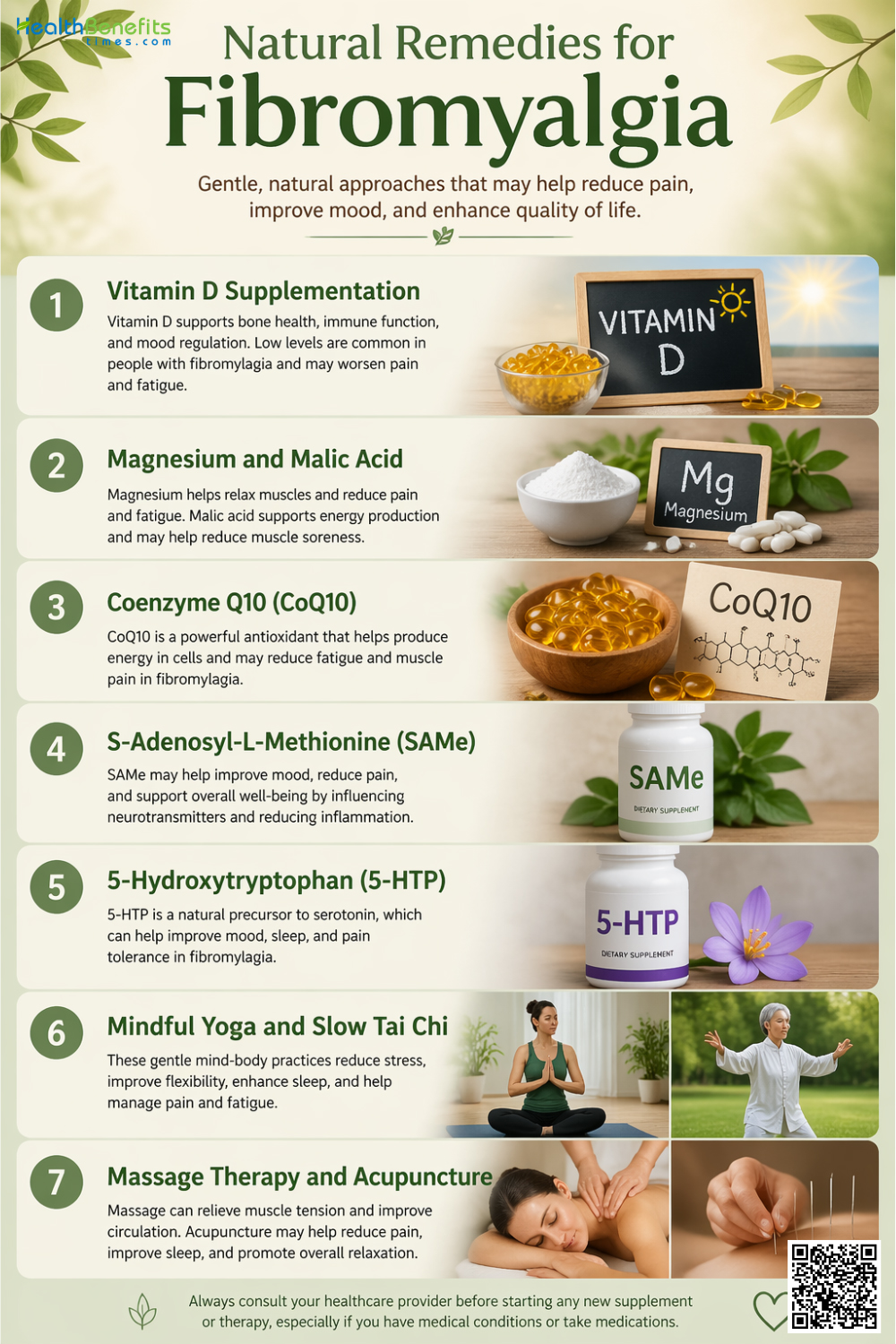
3. Coenzyme Q10 (CoQ10)
Your body responds to Coenzyme Q10 in a specific way one that directly supports the tiny energy producers inside your cells, called mitochondria. When these mitochondria don’t get what they need, the result is often fatigue, pain, and a buildup of oxidative stress. Supplementing with CoQ10 has shown real promise in easing the widespread fatigue, anxiety, and deep pain that come with fibromyalgia 9. A daily dose of about 150 to 300 mg of ubiquinol the active, more easily absorbed form of CoQ10 can help reduce tissue inflammation. It also lowers free cholesterol levels in your blood. And if you’re already taking a nerve-pain medication like pregabalin, CoQ10 may actually make it work better. At the same time, it helps shield your cells from further mitochondrial damage 10.
4. S-Adenosyl-L-Methionine (SAMe)
Most people haven’t heard of SAMe, yet it plays a key role in how your body produces serotonin and dopamine two neurotransmitters that help regulate both mood and pain perception 11. Taking around 800 mg of oral SAMe daily has been shown to improve joint stiffness, physical fatigue, and mild depression, with effects that in some cases match those of tricyclic antidepressants 12. It can take a few weeks to build up in your system, but SAMe is generally better tolerated than many pharmaceutical options, which makes it worth considering as a longer-term approach.
5. 5-Hydroxytryptophan (5-HTP)
If you’ve ever wondered why fibromyalgia makes sleep feel nearly impossible, the answer often comes back to serotonin. 5-HTP is an amino acid that comes from the seeds of an African plant, and your body uses it as a direct building block to produce serotonin 13. Low serotonin is one of the key reasons your brain keeps pain signals turned up high. Taking 50 to 300 mg of 5-HTP may help ease morning stiffness, balance your appetite, and improve your sleep. That said, this supplement calls for real caution. Mixing it with prescription antidepressants can trigger a dangerous chemical overload in your brain.
6. Mindful Yoga and Slow Tai Chi
Moving your body when you’re already in pain sounds like the last thing you’d want to do. But gentle, mindful movement is actually one of the most effective tools you have. Practices like yoga and tai chi combine slow stretching with deep breathing and meditation. This combination helps calm your nervous system, which tends to stay in overdrive with fibromyalgia 14. Over time, these practices help retrain your brain. You start learning that movement doesn’t have to mean pain, and your overall sensitivity gradually decreases. Your range of motion improves, too. The meditation side also helps lower daily stress and anxiety both well-known triggers for symptom flare-ups.
7. Massage Therapy and Acupuncture
Most of us deal with muscle tension at some point but when it’s constant and tied to fibromyalgia, sometimes you need hands-on help to get any relief. Regular massage works by physically moving your soft tissues. This lowers your resting heart rate and encourages your body to produce its own natural pain-relieving chemicals 15. Acupuncture takes a different approach. It uses thin needles placed at specific points to stimulate your nervous system and trigger the release of endorphins. How well these therapies work varies from person to person. But finding a practitioner who understands how fibromyalgia affects your pain processing can make a real difference in managing day-to-day discomfort.
Traditional and Ayurvedic Herbal Practices
1. Ashwagandha (Withania somnifera)
For people living with chronic pain, the body can get stuck in a permanent “fight or flight” mode and finding a way to calm that response becomes essential. Ashwagandha is a well-known herb in Ayurvedic medicine, classified as an adaptogen. That means it helps your body handle physical and emotional stress by lowering cortisol levels 16. Taking 250 to 500 mg per day of the root extract may reduce depressive symptoms, improve energy, and help protect brain cells from damage linked to chronic pain 17. It works as a gentle nerve tonic supporting your nervous system without the heavy sedative effect of many medications.
2. Turmeric (Curcuma longa)
Getting curcumin from turmeric and getting it from a supplement aren’t the same thing your body responds differently to each. Turmeric contains curcumin, the yellow compound responsible for its color, which works as a natural anti-inflammatory in the body 18. Widespread muscle pain isn’t usually caused by localized swelling. But lowering the overall inflammation in your body can ease that secondary joint stiffness and the general aches you wake up with each morning. You can add turmeric to your meals or take it as a supplement. Pairing it with black pepper improves absorption, making it a safe and practical way to reduce discomfort in your tissues.
3. Boswellia (Indian Frankincense)
Boswellia, also known as Indian frankincense, has been used in Ayurvedic medicine for centuries as a natural anti-inflammatory. Modern research is now beginning to understand why. The resin contains boswellic acids, which appear to block specific inflammatory chemicals in your body. If your fibromyalgia pain overlaps with conditions like osteoarthritis or rheumatoid arthritis, boswellia may help reduce joint swelling and bring pain down to more manageable levels 19. It’s worth considering as part of a broader approach when joint inflammation is making things worse.
4. Guggulu (Commiphora mukul)
In traditional Indian medicine, guggulu has been used for centuries as a powerful cleansing resin. Modern researchers are now examining those traditional claims more closely. The idea behind it is straightforward: Ayurveda teaches that many chronic health problems start when metabolic waste called “ama” builds up deep in your tissues over time. Guggulu is believed to work by breaking down and clearing out that buildup, helping your body reset. Practitioners also value it for its ability to ease inflammation and relieve pain. The thinking is that once stagnation in your muscles is reduced, oxygen-rich blood can flow more freely and support your body’s natural healing process.
5. Ginger (Zingiber officinale)
You probably already know ginger settles an upset stomach. What you might not know is that it also works against physical pain. Ginger contains natural compounds that work much like over-the-counter anti-inflammatory drugs. These compounds help block the pathways your body uses to signal pain. Drinking strong ginger tea or adding fresh ginger to your meals can help warm the body and improve blood circulation. Better circulation helps clear out lactic acid and built-up fluids from tight, sore muscles.
6. Panchakarma and Abhyanga Massage
Your body responds to warm oil massage in a specific way one that Ayurvedic practitioners have understood for centuries. Sometimes, swallowing a supplement isn’t enough to calm a nervous system that’s been stuck in overdrive. That’s where hands-on treatments come in. Abhyanga is a slow, rhythmic massage using warm herbal oils, designed to settle overactive nerves through steady, repetitive touch. When paired with Panchakarma a multi-day detoxification process aimed at rebalancing your doshas these therapies work together to help your body release built-up stress and waste. The goal is simple: leave you feeling deeply rested and restored.
Precaution before use of natural remedies
1. Beware of the Dreaded Serotonin Syndrome
The idea that natural supplements are automatically safe is so widespread that most people accept it without question. It’s also largely incorrect. Supplements like 5-HTP, SAMe, and St. John’s Wort can interact with prescription antidepressants such as duloxetine or sertraline in serious ways. One of the biggest risks is a condition called serotonin syndrome it happens when too much serotonin builds up in your brain 20. Symptoms can include agitation, heavy sweating, tremors, and in severe cases, muscle breakdown that may need emergency treatment 21. If you’re taking any mood-related supplements alongside a prescription antidepressant, make sure your doctor knows about all of them. That one conversation can prevent a dangerous overlap.
2. Watch Out for Hidden Bleeding Risks
Getting curcumin from turmeric and getting it from a supplement aren’t the same thing your body responds differently to each. And the same careful thinking applies when you’re combining any natural remedy with prescription medications. Many common medications used for nerve pain, such as SNRIs, already carry a small risk of increased bleeding and bruising on their own. If you add high doses of natural anti-inflammatories like turmeric, ginger, or even over-the-counter ibuprofen on top of that, the combined effect can raise your risk of gastrointestinal bleeding significantly 22. It’s always a good idea to have your pharmacist review your herbal supplements alongside your prescriptions before you start anything new.
3. Perioperative Precautions Before Surgery
For people preparing for surgery, natural supplements carry implications that go beyond general health advice. Some botanicals can throw off your heart rhythm or clash with the strong painkillers used during major operations. That’s a serious concern when your surgical team is working to keep everything stable. There’s another detail worth knowing. If you use alternative approaches like low-dose naltrexone for immune support, you need to stop taking it at least 72 hours before surgery. If you don’t, the opioid painkillers given during your procedure may simply not work 23.
4. Interactions with Addiction and Opioid Treatments
For people recovering from substance use disorders, managing chronic pain with natural approaches is a meaningful goal but it carries implications that go beyond general wellness advice. You still need close guidance from a healthcare professional before making any changes. The American Society of Addiction Medicine recommends non-drug therapies first. These include cognitive-behavioral therapy and physical therapy, rather than substances that could become habit-forming 24. This is especially important if you’re taking agonist therapies like buprenorphine or methadone. Adding untested herbal remedies on your own can change how your liver processes these medications and those medications may be keeping your recovery on track.
5. The Harsh Reality of Unregulated Supplements
The gap between what’s on a supplement label and what’s actually inside the bottle is larger than most labels suggest. In the U.S., dietary and herbal supplements don’t go through the same strict FDA testing that prescription drugs do 25. That matters more than you might think. A poorly made product could contain the wrong dosage or worse, hidden contaminants you’d never expect. To stay safe, look for products with a verified seal from an independent testing lab. It’s one of the simplest ways to make sure you’re actually getting what you paid for.