

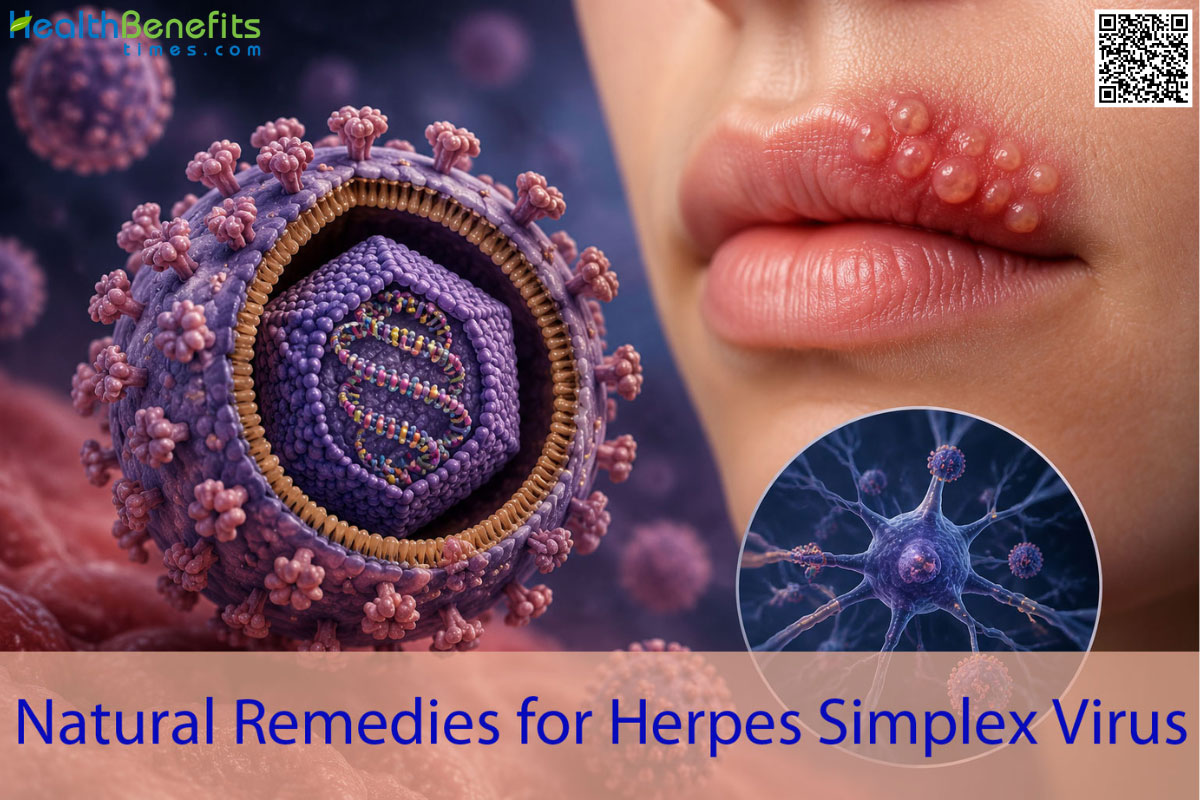
The herpes simplex virus is a widespread viral infection that primarily exists in two forms: type 1 (HSV-1), which typically causes oral cold sores, and type 2 (HSV-2), which is the main cause of genital outbreaks 1. Millions of people interact with this condition every single day without realizing it. In fact, an estimated 3.8 billion individuals under the age of 50 carry the oral strain, while roughly 520 million people aged 15 to 49 live with the genital strain worldwide 2. Once the virus enters the human body, it travels along the nerve pathways and rests there quietly for life, occasionally waking up to cause physical symptoms 3. While modern science has not yet discovered a permanent cure to completely clear the infection, there are many highly effective clinical and natural ways to manage the condition, heal skin sores quickly, and help affected individuals live comfortably 4.
Causes of Herpes Simplex Virus
1. Direct Skin-to-Skin Contact
The most frequent way the virus spreads is through direct, physical contact with an infected patch of skin, usually during intimate or closely affectionate moments 5.
2. Sharing Saliva and Personal Items
Kissing a loved one or casually sharing items that touch the lips, like water bottles, silverware, or lip balm, can easily pass the oral strain of the virus 6.
3. Intimate Sexual Contact
Engaging in vaginal, anal, or oral sex without using a protective barrier is the primary biological cause of genital transmission 7.
4. Asymptomatic Shedding
People often spread the virus without ever realizing they carry it, because the virus can shed microscopic particles on the surface of the skin even when no visible sores or symptoms are present 8.
5. Maternal Transmission
Though quite rare, a mother experiencing a new, active outbreak late in her pregnancy can inadvertently pass the infection to her baby during a traditional vaginal childbirth 9.
Symptoms of Herpes Simplex Virus
Recognizing the early warning signs helps individuals take action quickly and seek treatments that can significantly shorten the outbreak.
1. Early Tingling and Itching
Many people experience a distinct itching, burning, or vibrating sensation around their lips or genitals a day or two before any visible bumps actually appear on the skin 10.
2. Small Fluid-Filled Blisters
The most classic visible sign is the rapid appearance of small, hard, red bumps that quickly fill with a clear fluid 5.
3. Painful Open Ulcers
As the blisters grow, they inevitably burst open, leaving behind shallow, tender sores that may ooze fluid and cause significant pain 1.
4. Crusting and Healing
After several days, the oozing sores will naturally dry out, forming a yellow or brown crusty scab as the new, healthy skin heals underneath 10.
5. Flu-Like Body Aches
During a person’s very first outbreak, their immune system fights hard, often resulting in a fever, headaches, muscle soreness, and swollen lymph nodes in the neck or groin 7.
6. Discomfort When Urinating
If blisters develop around the genital or urinary tract, the natural acidity of urine passing over the open sores can cause sharp, stinging pain 5.
Herpes Simplex Virus Facts
| Symptoms |
|
| Causes |
|
| Types of Herpes Simplex Virus
|
|
| How does spread |
|
| Age Group |
|
| You might be at a higher risk for exposure of this disease if you: |
|
| How doctors diagnose |
|
| Other facts |
|
Natural Remedies of Herpes Simples Virus
1. L-Lysine Supplements
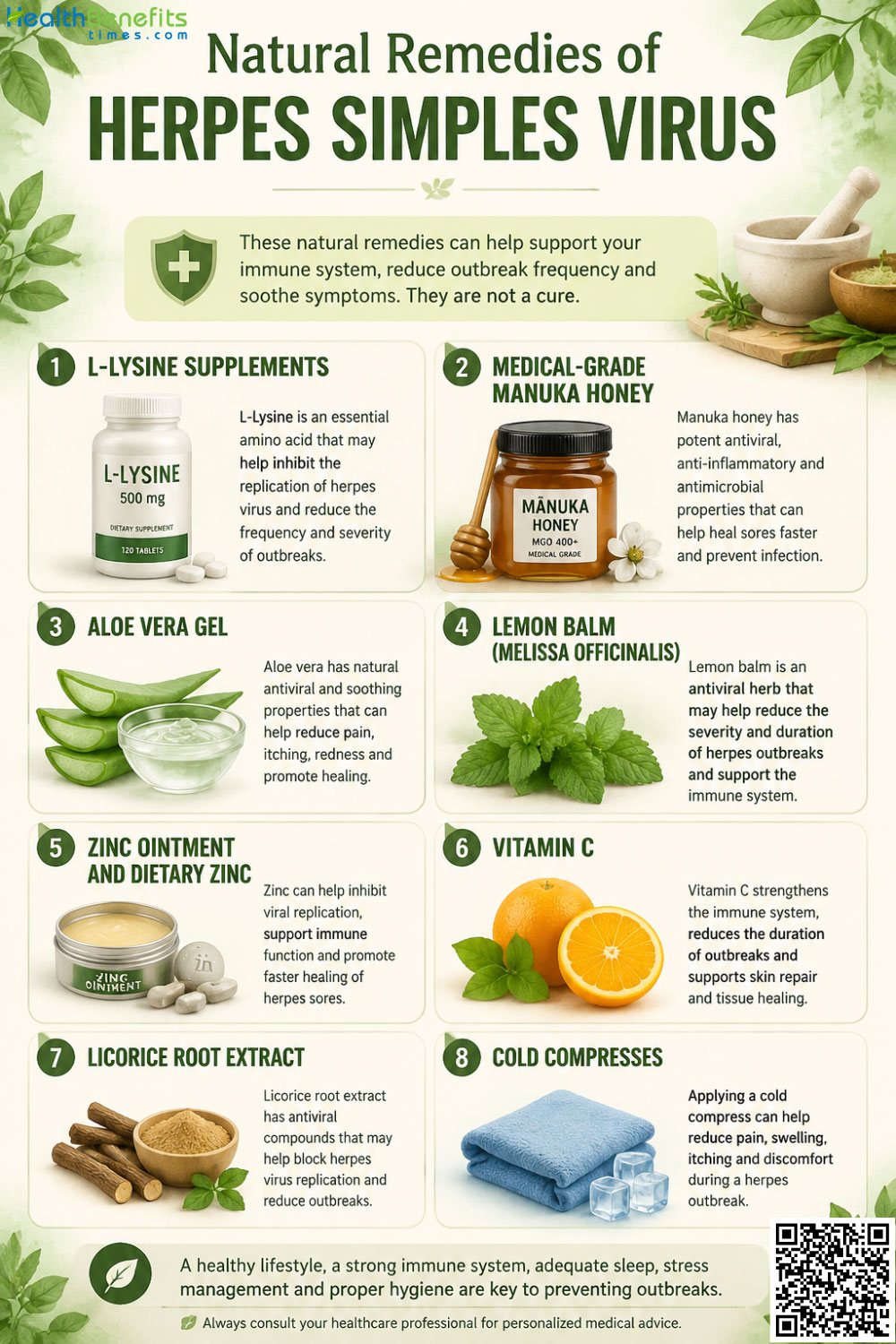
Balancing the nutrients in your body can create a harsh environment for viruses. The herpes virus requires a specific amino acid called arginine to multiply and spread across your skin. Lysine is a different amino acid that competes directly with arginine, effectively slowing down the virus’s ability to copy itself. Clinical observations indicate that taking lysine supplements can significantly reduce the frequency, severity, and healing time of recurrent outbreaks 15.
Note: Lysine is commonly taken as a daily oral dietary supplement capsule, or it can be applied directly to the skin as an over-the-counter healing cream.
2. Medical-Grade Manuka Honey
Nature provides some of the best wound-healing elements available, and honey is a prime example. Medical-grade Manuka honey possesses potent natural antiviral and antibacterial properties. Applying it to your sensitive skin keeps the sores moist, prevents painful cracking, and has been documented to heal cold sores faster than some conventional treatments while actively reducing local pain and itching 16.
Note: This remedy is used topically by dabbing a small amount of pure, medical-grade honey directly onto the sore using a clean cotton swab several times a day.
3. Aloe Vera Gel
Soothing irritated, burning skin is essential for your daily comfort. The cooling properties of the aloe vera plant are excellent for bringing down the fiery sensation of fresh blisters. Aloe vera contains natural anti-inflammatory and antioxidant compounds that calm the skin, and specialized aloe extracts can significantly shorten the overall healing time of persistent lesions 17.
Note: Aloe vera is applied topically by spreading a thin layer of pure gel or a formulated 0.5% aloe cream over the affected area up to three times daily.
4. Lemon Balm (Melissa officinalis)
Utilizing gentle botanical extracts can provide quick relief without relying on harsh chemicals. Lemon balm has been heavily studied for its unique ability to prevent the virus from penetrating your healthy cells. By blocking the virus’s entry at the cellular level, it stops the infection from spreading further across your skin, which helps reduce symptom severity rapidly 15.
Note: Lemon balm is typically used as a 1% topical cream or healing lip balm, applied directly to the site at the very first sign of tingling or redness.
5. Zinc Ointment and Dietary Zinc
Supporting your skin’s outer barrier and your internal immune system simultaneously yields excellent results. Topical zinc oxide has a mild drying effect on oozing blisters and directly inhibits the virus’s ability to copy its DNA. Ensuring you have enough zinc in your daily diet also helps boost your overall immune response, potentially increasing the time between your future outbreaks 18.
Note: Zinc can be taken orally as a standard dietary vitamin supplement or applied topically as a 0.3% zinc oxide cream directly to the sores every two hours.
6. Vitamin C
Equipping your body with powerful antioxidants is a practical way to fight off viral invaders. Vitamin C helps stimulate the immune system and protects your cells from oxidative stress during an infection. Studies have shown that when paired with a healthy diet or antiviral treatments, vitamin C can significantly reduce the amount of time it takes for sores to reach full remission 19.
Note: Vitamin C is naturally eaten in citrus fruits, bell peppers, and strawberries, or it can be taken daily as an oral dietary supplement pill.
7. Licorice Root Extract
Addressing inflammation and viral activity at the exact same time is a great way to find lasting comfort. Licorice root contains a powerful active ingredient called glycyrrhizin, which serves as both an anti-inflammatory and an antiviral agent. It soothes the intense redness and swelling of an existing flare-up while actively fighting the virus underneath the skin 20.
Note: Licorice root extract can be applied topically directly onto the skin without needing to be diluted, or it can be enjoyed orally as a warm, soothing herbal tea.
8. Cold Compresses
Sometimes the simplest physical interventions provide the most immediate and profound relief. While ice will not cure the underlying virus, the cold temperature constricts your blood vessels, which drastically reduces local swelling, redness, and the throbbing pain associated with fresh blisters. Applying cold early can even help slow down the visible progression of the sore 18.
Note: This is applied physically by wrapping ice cubes or an ice pack in a clean, soft cloth and gently pressing it against the affected skin for 5 to 10 minutes at a time.
Foods and Activities to Avoid When You suffer from Herpes Simplex Virus
1. Eating Nuts and Seeds
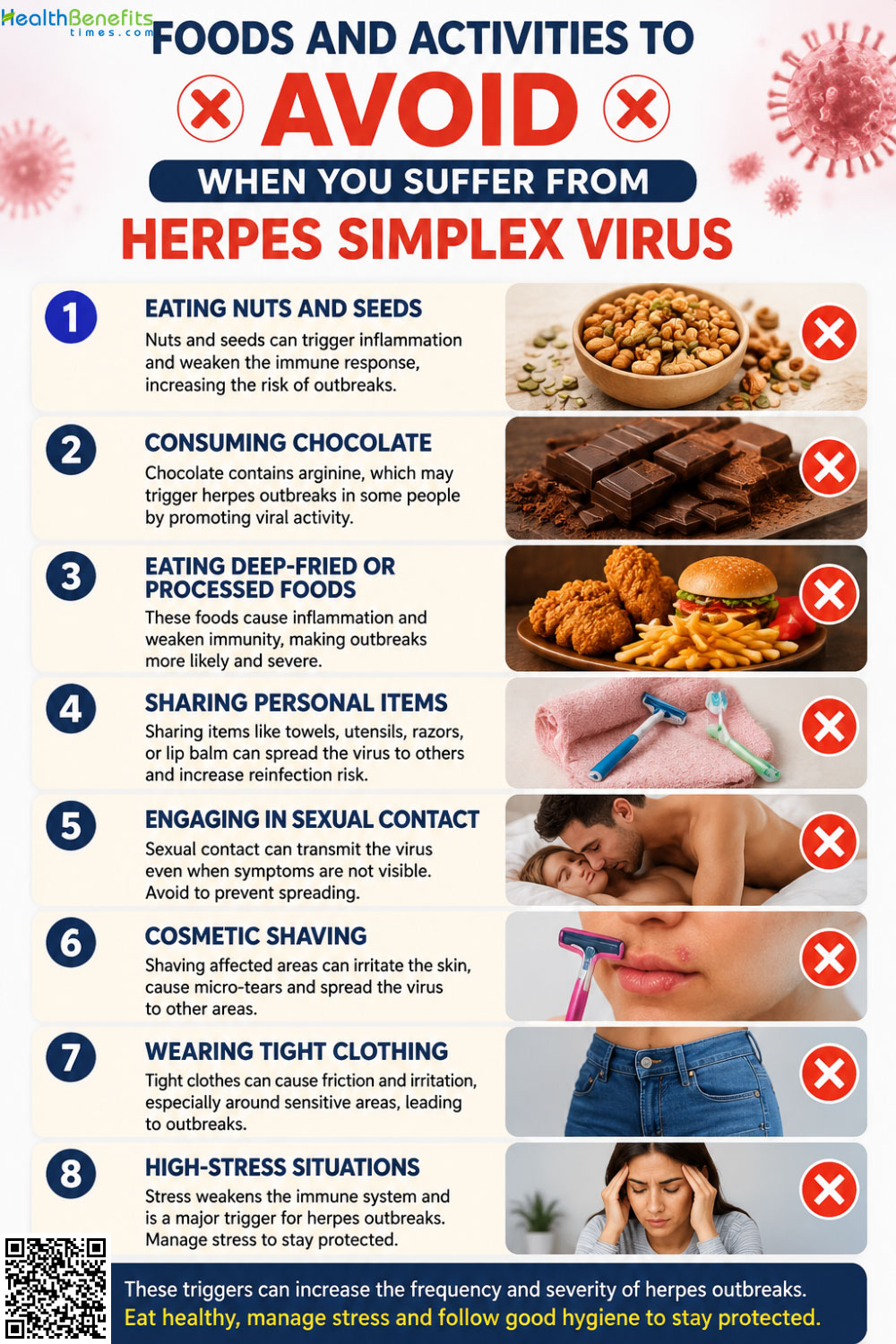
Peanuts, almonds, and sunflower seeds are extremely high in arginine, the amino acid that fuels viral growth, so you should remove them from your diet during an active breakout 21.
2. Consuming Chocolate
While delicious, chocolate contains high levels of arginine and is widely recognized by dermatologists as a frequent dietary trigger for oral cold sores 22.
3. Eating Deep-Fried or Processed Foods
Heavy, greasy, and highly processed foods cause bodily inflammation and suppress your immune system, making it much harder for you to fight off the infection naturally 3.
4. Sharing Personal Items
You should never share your towels, lipsticks, toothbrushes, or dining utensils with others while you have a sore, as the virus can temporarily survive on moist surfaces 23.
5. Engaging in Sexual Contact
To protect your partner, you must completely avoid all vaginal, anal, and oral sex from the moment you feel a tingle until the skin is entirely healed and smooth again 24.
6. Cosmetic Shaving
Shaving over your sensitive skin during an outbreak can slice open protective blisters and rapidly spread the viral fluid to surrounding, healthy areas 25.
7. Wearing Tight Clothing
If you suffer from genital sores, you should avoid tight nylon underwear and restrictive pants, which create painful friction and trap heat against the sensitive skin 26.
8. High-Stress Situations
Emotional and physical stress are major triggers that wake the virus up from its dormant state, so you must avoid overworking yourself and prioritize restful sleep 27.
Myths and Misconceptions
One of the most common myths is the belief that the virus can only be passed when a person has a visible, painful blister. Research clearly shows that the virus frequently sheds on the surface of normal-looking skin, meaning a person can unknowingly pass the infection to others at any given time 8. Because of this silent shedding, most people who contract the virus get it from a partner who showed no visible signs of illness at all 24.
Another harmful misconception is that catching this virus means an individual has been reckless or promiscuous. Medical statistics disprove this entirely; billions of people globally carry the virus, and many acquire the oral form during simple childhood interactions, making it an ordinary and unavoidable part of the human experience 28.
Some people incorrectly assume that it is easy to catch a genital infection from toilet seats, public swimming pools, or shared hot tubs. Because the virus relies heavily on immediate, warm skin-to-skin contact and dies very rapidly when exposed to open air and hard surfaces, catching it from a bathroom fixture is highly improbable 26.
Finally, there is a dangerous rumor that certain herbs or unregulated pills can permanently cure the infection. While antiviral medicines and natural therapies are incredibly effective at managing the symptoms, minimizing pain, and suppressing outbreaks, medical science confirms that the virus currently remains in the body for life 29.
Special Considerations
1. Children
Infants have highly vulnerable, underdeveloped immune systems. If a newborn baby is exposed to the virus, they can develop a rare but devastating condition called neonatal herpes, which can lead to severe organ damage or long-term neurological disabilities 9. Because of this extreme risk, adults with active cold sores should exercise extreme caution and never kiss infants.
2. Pregnancy
Expectant mothers require diligent medical monitoring throughout their journey. If a pregnant woman contracts a brand-new genital infection during her third trimester, the risk of transmitting the virus to her infant during a natural delivery is significant 30. Doctors frequently recommend preventative antiviral therapy in late pregnancy and will typically perform a Cesarean section if sores or early tingling symptoms are present during labor to fully protect the child 31.
3. Chronic conditions
Individuals dealing with persistent health challenges face higher risks of complications. For example, people with atopic dermatitis (severe eczema) can suffer from Eczema herpeticum, a rapid and dangerous spread of the herpes virus across their compromised, broken skin 32. Additionally, patients living with HIV or other immune-suppressing conditions often experience outbreaks that are far more frequent, highly painful, and considerably harder to heal 33.
4. Elderly
As individuals enter their senior years, their natural immune responses gradually weaken in a process known as immune senescence. While most elderly adults who have carried the virus for decades experience very few outbreaks, the infection can unexpectedly reactivate during times of severe physiological stress or when battling other age-related diseases 34. Maintaining a healthy lifestyle is crucial for keeping the virus dormant in later life.
Precaution before use of natural remedies when you have Herpes Simplex Virus
1. Dilute All Essential Oils
You must never place highly concentrated plant oils directly onto your skin. Always mix potent oils, like tea tree or peppermint, with a gentle carrier oil such as coconut or sweet almond oil to prevent painful chemical burns 35.
2. Conduct a Patch Test
Before you slather a new cream or herbal remedy over a delicate sore, dab a tiny amount on the inside of your forearm. Wait a few hours to ensure you do not develop a harsh, itchy allergic reaction or hives 36.
3. Do Not Ingest Topical Products
You should only use skin-formulated oils and ointments externally. Never swallow these products or apply them near your eyes, as natural extracts can be toxic when used incorrectly 36.
4. Avoid Using Your Bare Fingers
Whenever you apply a remedy to an active blister, use a clean cotton swab. Touching the sore with your bare fingers can spread the viral infection to other parts of your body or contaminate your medicine jar 37.
5. Do Not Discard Prescription Medications
You should view natural remedies as supportive care, not a replacement for modern medical science. If a doctor has prescribed daily antiviral pills, continue taking them exactly as directed while utilizing natural symptom relief alongside them 18.
When to see Doctor
1. If You Are Experiencing Your First Outbreak
The very first episode is notoriously painful and long-lasting, but a healthcare provider can prescribe strong antiviral medications that dramatically lessen your discomfort and speed up your overall recovery 38.
2. If You Are Pregnant or Planning a Pregnancy
You must inform your obstetrician immediately if you have any history of the virus or feel new symptoms, as professional medical management is strictly required to ensure your baby’s safety 31.
3. If Your Symptoms Refuse to Heal
Normal blisters should dry up and heal completely within a couple of weeks. If your sores persist beyond two to four weeks, you need to see a physician for a clinical evaluation 37.
4. If You Notice Sores Near Your Eyes
You must seek emergency medical care if you experience a gritty feeling, unusual redness, or blisters close to your eyes, as the virus can cause severe and permanent vision damage if left untreated 37.
5. If You Have a Compromised Immune System
If you are undergoing treatments like chemotherapy, taking immunosuppressants, or living with a chronic illness, you should consult a doctor immediately during a flare-up, as the infection can escalate rapidly 18.
6. If You See Blisters Spreading Over Eczema Patches
If you suffer from chronic eczema and suddenly notice a rapid cluster of punched-out sores spreading across your skin, you need urgent medical intervention to prevent a serious systemic infection 39.