

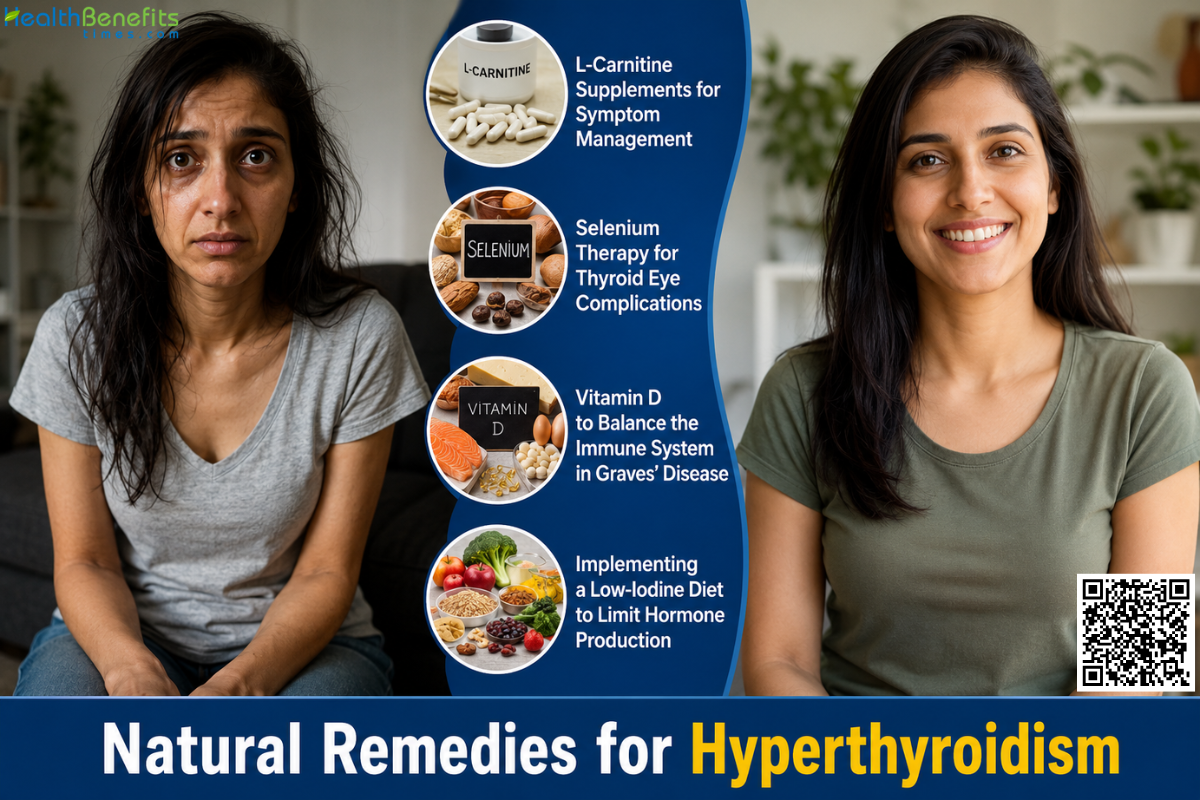
Hyperthyroidism is a medical condition that occurs when the thyroid gland produces an excessive amount of thyroid hormones. This small, butterfly-shaped gland located in the front of the neck controls how the body uses energy. When it becomes overactive, it releases too much thyroxine (T4) and triiodothyronine (T3) into the bloodstream, which accelerates the body’s natural metabolism 1. Consequently, individuals may experience unintentional weight loss, a rapid or irregular heartbeat, excessive sweating, and heightened anxiety. Graves’ disease, an autoimmune disorder, stands as the most common underlying cause of this condition in developed nations 2. Other potential triggers include thyroid nodules and inflammation known as thyroiditis. If left untreated, the continuous overproduction of hormones can lead to serious complications affecting the heart, bones, and reproductive systems, making proper clinical diagnosis and treatment essential for long-term health 3.
Causes of Hyperthyroidism
1. Graves’ Disease
Graves’ disease is an autoimmune disorder and the most frequent cause of hyperthyroidism. In this condition, the immune system mistakenly produces antibodies that bind to thyroid receptors, forcing the gland to enlarge and continuously overproduce thyroid hormones. This continuous stimulation causes a generalized acceleration of the body’s metabolic processes 4. Because of the systemic autoimmune response, affected individuals often develop unique complications such as tissue inflammation around the eyes or thickened skin on the lower legs 5.
2. Toxic Nodular Goiter
Toxic nodular goiter develops when one or more abnormal lumps, known as nodules, grow on the thyroid gland and independently secrete excess thyroid hormones. These hyperactive nodules ignore the body’s normal regulatory signals, releasing hormones even when the bloodstream already has a sufficient supply 6. This condition is prevalent among older adults and individuals living in regions with historically low dietary iodine 7.
3. Thyroiditis
Thyroiditis is an inflammation of the thyroid gland triggered by viral infections, immune system dysfunction, or specific pharmaceutical drugs. The inflammatory process damages the cells of the thyroid, allowing large amounts of pre-formed hormones stored inside the gland to leak directly into the bloodstream. This rapid leakage creates a temporary state of thyrotoxicosis that typically lasts for several weeks before the hormone stores are completely depleted.
4. Excessive Iodine Intake
Iodine is an essential mineral required to manufacture thyroid hormones, but consuming an excessive amount can overstimulate hormone production. Iodine-induced hyperthyroidism primarily affects individuals with pre-existing thyroid nodules or long-standing iodine deficiency who are suddenly exposed to large iodine doses through nutritional supplements, kelp, or medical contrast dyes 8. The sudden abundance of the mineral allows the autonomous thyroid tissues to rapidly synthesize an unhealthy surplus of hormones 9.
5. Excessive Thyroid Medication
Hyperthyroidism can also occur as a direct result of ingesting too much synthetic thyroid hormone. Patients treated for an underactive thyroid may develop iatrogenic, or medically induced, hyperthyroidism if their prescribed dosage of hormone replacement therapy exceeds their body’s actual requirements. Regular clinical monitoring of hormone levels is necessary to prevent this artificial oversupply and maintain metabolic balance.
Symptoms of Hyperthyroidism
1. Unintentional Weight Loss
An overactive thyroid drastically increases the resting metabolic rate, forcing the body to burn calories at an abnormally fast pace. This hypermetabolic state typically results in rapid, unintended weight loss, even when an individual experiences a heightened appetite and consumes significantly more food than usual 10.
2. Cardiovascular Changes
Excess thyroid hormones have a direct, stimulating effect on the heart muscle and the broader cardiovascular system. This constant overstimulation frequently causes a rapid resting heart rate (tachycardia), forceful heart palpitations, and a heightened risk of atrial fibrillation, which is an irregular heart rhythm that can compromise overall blood flow 11.
3. Nervous System Overactivity
Unusually high levels of circulating thyroid hormone overexcite the central nervous system, severely impacting mood and physical stability. Affected individuals often report persistent anxiety, irritability, and fine, involuntary trembling in their hands and fingers, which can make delicate motor tasks difficult to perform.
4. Heat Intolerance and Sweating
Because the accelerated metabolism acts like an engine running in overdrive, it generates a substantial surplus of internal body heat. This excessive heat production alters the body’s normal temperature regulation, leading to a severe intolerance to warm environments and triggering heavy, unexplained sweating 12.
5. Muscle Weakness and Fatigue
Although hyperthyroidism creates a hyperactive state, the continuous overproduction of hormones accelerates the breakdown of muscle proteins, leading to a clinical condition known as thyrotoxic myopathy. This tissue breakdown manifests as profound physical weakness, particularly in the large muscles of the thighs and upper arms, and is heavily linked to chronic, debilitating exhaustion 13.
6. Gastrointestinal Acceleration
Thyroid hormones closely regulate the speed at which food moves through the digestive tract. An excessive supply of these hormones significantly speeds up digestion and intestinal contractions, frequently causing a noticeable increase in daily bowel movements and, in some cases, chronic diarrhea 14.
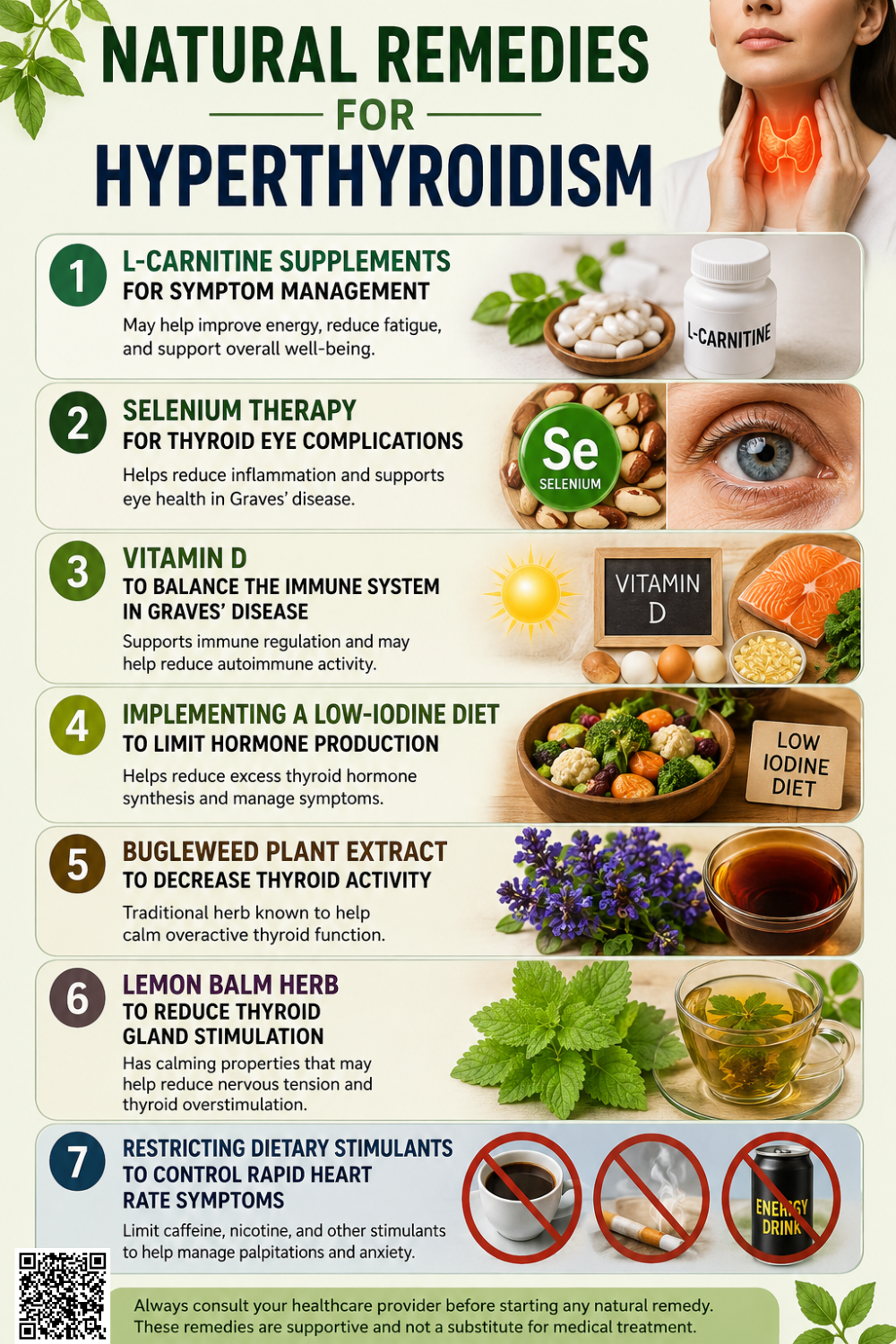 Natural Remedies for Hyperthyroidism
1. L-Carnitine Supplements for Symptom Management
How it may help
L-carnitine is a natural compound that prevents excess thyroid hormones from entering cell nuclei. By blocking this cellular uptake, it reduces the physical impact of overactive thyroid hormones on body tissues, helping alleviate symptoms like muscle weakness, rapid heartbeat, and severe fatigue without altering the actual hormone levels in the blood 15.
What research says
Clinical studies conclude that daily supplementation with L-carnitine effectively manages and reverses physical symptoms associated with hyperthyroidism, including nervousness, insomnia, and tremors. Furthermore, research indicates that it provides protective benefits for bone health, preventing the bone density loss frequently caused by prolonged exposure to excess thyroid hormones 16.
How to use it safely
To safely manage symptoms, you should consult your doctor before starting supplementation. Clinical protocols typically recommend a dosage of 2 to 4 grams of L-carnitine per day for adults. Always take it alongside standard medical therapies rather than using it as a replacement for prescription thyroid medications.
Potential precautions or side effects
High doses of L-carnitine can cause mild digestive issues, such as nausea, abdominal cramps, and diarrhea, as well as a harmless but noticeable fishy body odor 17.
2. Selenium Therapy for Thyroid Eye Complications
How it may help
Selenium is an essential mineral that functions as a powerful antioxidant within the body. It helps reduce inflammation and tissue swelling around the eyes. By neutralizing harmful molecules called free radicals, selenium protects eye tissues from the damage and irritation frequently caused by Graves’ disease 18.
What research says
Clinical trials conclude that taking selenium supplements significantly improves overall quality of life and reduces the severity of eye symptoms in patients with mild Graves’ eye disease. Research demonstrates that six months of daily selenium therapy slows the progression of eye complications better than a placebo.
How to use it safely
You should consult your doctor to determine if selenium therapy is appropriate for your condition. Clinical guidelines typically recommend a daily dose of 200 micrograms for managing thyroid eye complications. Ensure your total daily intake never exceeds 400 micrograms to prevent accidental overdose 19.
Potential precautions or side effects
Consuming excessive amounts of selenium can lead to toxicity. You must watch for adverse side effects like brittle nails, unexplained hair loss, nausea, and a distinct garlic-like breath odor.
3. Vitamin D to Balance the Immune System in Graves’ Disease
How it may help
Vitamin D functions as a vital regulator for the immune system. It helps calm the abnormal immune response seen in Graves’ disease, decreasing the body’s production of harmful antibodies that mistakenly attack and continuously overstimulate the thyroid gland 20.
What research says
Clinical research concludes that individuals diagnosed with Graves’ disease frequently suffer from significant Vitamin D deficiency. Studies show that restoring this nutrient to normal levels substantially lowers thyroid-stimulating antibodies and improves overall treatment outcomes for autoimmune thyroid disorders 21.
How to use it safely
You should have your doctor perform a blood test to evaluate your baseline levels before starting supplements. Clinical guidelines generally recommend adults consume between 600 and 4,000 International Units (IU) daily to safely correct deficiencies and maintain proper immune function 22.
Potential precautions or side effects
Taking excessive Vitamin D can cause a dangerous calcium buildup in your blood. You must watch for toxicity symptoms, including severe nausea, frequent urination, muscle weakness, and kidney stones.
4. Implementing a Low-Iodine Diet to Limit Hormone Production
How it may help
The thyroid gland requires dietary iodine to manufacture thyroid hormones. By strictly limiting your iodine intake, the gland is deprived of this essential building block. This deliberate restriction helps slow down the excessive production of hormones, directly reducing the systemic overactivity associated with hyperthyroidism 23.
What research says
Clinical evidence demonstrates that a low-iodine diet effectively decreases the rapid synthesis of thyroid hormones in hyperactive glands. Research also confirms this specific dietary restriction is a necessary preparatory step that significantly improves the success and absorption rate of targeted radioactive iodine medical treatments 24.
How to use it safely
You should work with a medical professional to maintain overall nutritional balance. To effectively limit intake, you must strictly avoid iodized salt, all seafood, dairy products, and egg yolks, focusing instead on fresh fruits, raw vegetables, and non-iodized salt for flavoring 25.
Potential precautions or side effects
You must only follow this restrictive diet temporarily. Prolonged severe iodine restriction can cause dangerous malnutrition and paradoxically trigger an enlarged thyroid gland or severe hypothyroidism 26.
5. Bugleweed Plant Extract to Decrease Thyroid Activity
How it may help
Bugleweed contains specific plant compounds that block the action of thyroid-stimulating antibodies and inhibit the gland’s ability to release excess hormones. By interfering with these mechanisms, it directly lowers thyroid activity and calms overactive physical symptoms like a racing heart 27.
What research says
Clinical research concludes that administering bugleweed extract to patients with mild hyperthyroidism significantly reduces their elevated resting heart rates. The studies demonstrate it is an effective, plant-based therapy for decreasing the physical distress of an overactive thyroid without producing severe clinical side effects.
How to use it safely
You must consult your doctor to determine the appropriate dosage of bugleweed extract. Ensure your physician continuously monitors your hormone levels, and never use this botanical treatment as a direct replacement for your primary prescription anti-thyroid medications.
Potential precautions or side effects
You must avoid bugleweed if pregnant or breastfeeding. Never abruptly stop taking it, as sudden withdrawal can trigger a rapid, dangerous surge in thyroid hormones.
6. Lemon Balm Herb to Reduce Thyroid Gland Stimulation
How it may help
Lemon balm contains active plant compounds that block thyroid-stimulating antibodies from attaching to the thyroid gland. By preventing this cellular binding, the herb effectively stops these immune antibodies from forcing the gland into overdrive, naturally reducing the excessive production of thyroid hormones 28.
What research says
Clinical case studies and laboratory research demonstrate that lemon balm extract successfully inhibits thyroid hormone overproduction. Research concludes that it helps normalize thyroid antibody levels and restores proper metabolic balance in patients suffering from Graves’ disease without causing severe chemical toxicity 29.
How to use it safely
You should always consult your healthcare provider before adding lemon balm to your routine, as it frequently interacts with standard thyroid medications. It is typically consumed as a steeped herbal tea or a concentrated liquid extract under professional clinical supervision.
Potential precautions or side effects
Lemon balm may cause mild side effects like drowsiness, dizziness, and increased appetite. You must avoid using this herb if you already have an underactive thyroid (hypothyroidism).
7. Restricting Dietary Stimulants to Control Rapid Heart Rate Symptoms
How it may help
Hyperthyroidism naturally overstimulates the cardiovascular system, causing a rapid heart rate. Dietary stimulants like caffeine compound these effects by further accelerating heart rhythm. Removing coffee and energy drinks prevents this additional cardiovascular strain, helping to calm an elevated resting pulse without interfering with medical treatments.
What research says
Clinical guidelines indicate that consuming caffeine worsens the cardiovascular complications of an overactive thyroid. Research confirms that eliminating these dietary stimulants significantly reduces the severity of heart palpitations, tremors, and nervousness, allowing standard medical therapies to stabilize the heart rate more effectively.
How to use it safely
You should carefully read beverage labels to identify hidden caffeine. Replace coffee and energy drinks with caffeine-free alternatives like water. Maintain this strict dietary restriction until your doctor confirms your thyroid hormone levels are completely normal 30.
Potential precautions or side effects
Suddenly stopping caffeine can trigger temporary withdrawal symptoms. You may experience headaches, fatigue, and mild irritability for several days before your central nervous system adjusts 31.
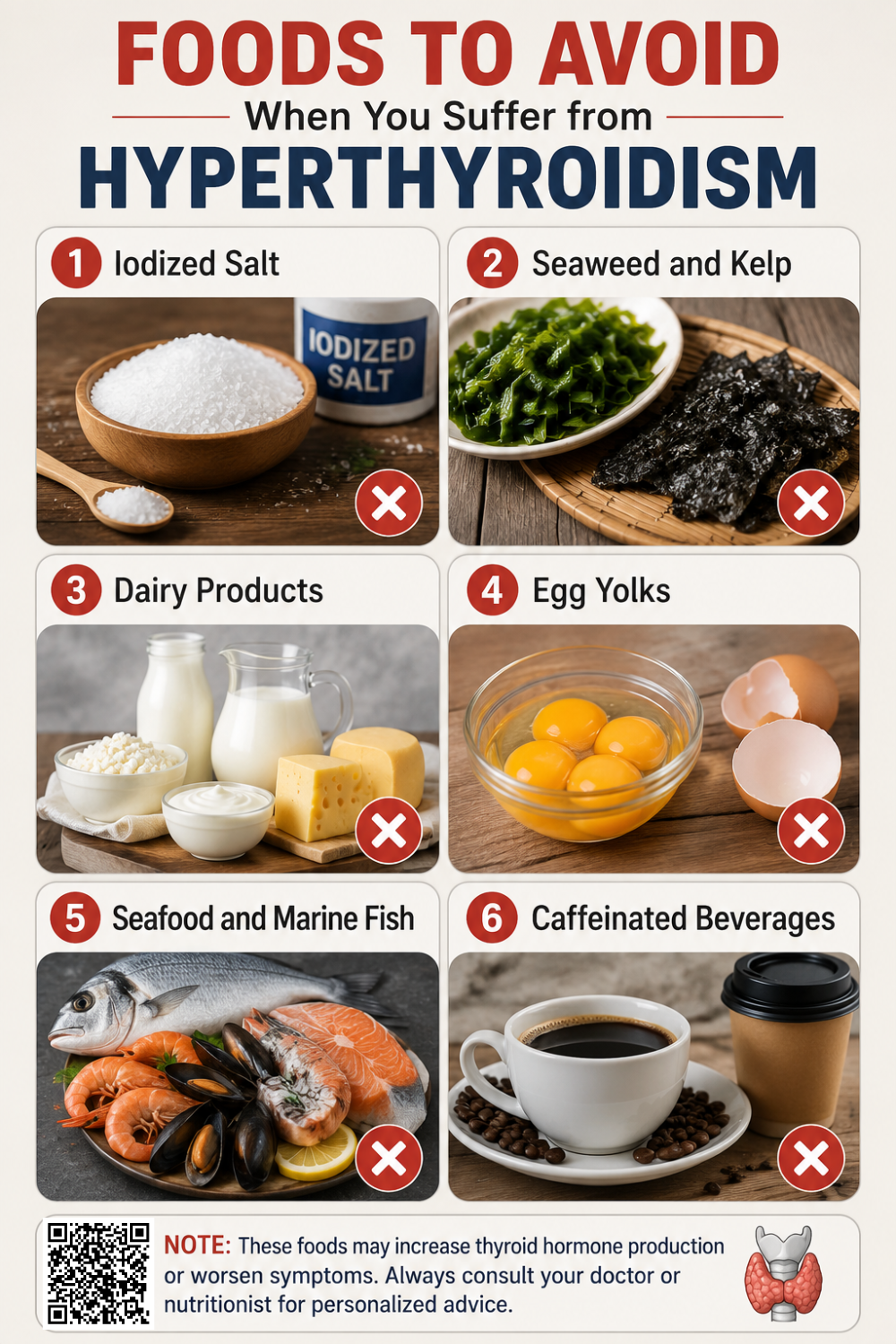 Foods to Avoid When You suffer from Hyperthyroidism
1. Iodized Salt
Consuming iodized salt provides excess iodine, which directly fuels the thyroid gland to overproduce hormones, rapidly worsening clinical hyperthyroidism symptoms.
2. Seaweed and Kelp
Sea vegetables contain exceptionally high, concentrated levels of iodine. Eating them severely overstimulates an overactive thyroid, complicating medical treatments and hormone regulation.
3. Dairy Products
Milk, cheese, and yogurt absorb iodine from commercial animal feed. Restricting dairy limits unnecessary iodine intake that drives excess thyroid hormone synthesis.
4. Egg Yolks
While egg whites are safe, egg yolks naturally store high amounts of dietary iodine. Avoiding them helps maintain the low-iodine environment needed to slow thyroid activity.
5. Seafood and Marine Fish
Ocean fish and shellfish absorb large quantities of iodine from seawater. Consuming marine life significantly increases iodine levels, directly promoting excessive thyroid hormone production.
6. Caffeinated Beverages
Coffee and energy drinks heavily stimulate the central nervous system. Caffeine exacerbates severe hyperthyroidism symptoms, notably accelerating the resting heart rate and worsening physical tremors.
When To See a Doctor When You Suffer from Hyperthyroidism
1. Irregular or Rapid Heartbeat
You must seek immediate medical evaluation if you experience a consistently rapid resting heart rate or irregular palpitations, as this indicates dangerous cardiovascular strain.
2. Severe Unexplained Weight Loss
Consult a physician if you rapidly lose weight without changing your diet. This hypermetabolic state requires clinical blood tests to confirm excessive thyroid hormone levels.
3. Visible Neck Swelling
Schedule an examination if you notice a visible lump or generalized swelling at the base of your neck, which clinically indicates an enlarged thyroid gland 32.
4. Bulging Eyes or Vision Changes
You should see a specialist promptly if your eyes bulge, become chronically red, or if you experience double vision, signaling severe Graves’ disease eye complications 33.
5. Thyroid Storm Symptoms
Seek emergency care immediately if you develop a sudden high fever, severe agitation, or delirium. These symptoms indicate a life-threatening, massive surge of thyroid hormones 34.