


Lupus arthritis is a common joint condition that occurs in people living with systemic lupus erythematosus (SLE), a chronic autoimmune disease 1. In autoimmune diseases like lupus, the body’s immune system mistakenly attacks its own healthy tissues, leading to inflammation and damage. When this inflammation targets the joints, it results in pain, swelling, and stiffness 2. Nearly all joints can be affected, but the condition most frequently involves the small joints of the hands, as well as the knees 3. This form of arthritis is known for being typically non-erosive, meaning it does not usually cause permanent bone destruction-. However, joint pain is among the most widespread symptoms of lupus, with many patients experiencing arthritis or joint pain (arthralgia) at some point-. Treatment focuses on controlling inflammation and managing symptoms, often with medications such as nonsteroidal anti-inflammatory drugs, antimalarials, and other therapies 4.
Causes of Lupus Arthritis
Lupus arthritis is a common manifestation of systemic lupus erythematosus (SLE) caused by the immune system mistakenly attacking the body’s own joint tissues. While no single cause has been identified, research points to a complex interplay of the following factors:
- Autoantibodies: Pathogenic self-reactive antibodies, such as anti-dsDNA, anti-ribonucleoprotein, anti-histone, and anti-proliferating cell nuclear antigen, attack joint tissues directly, causing inflammation and damage 5.
- Cytokines & Inflammation: Inflammatory proteins (e.g., IL-6, IL-1β, TNF-α, IL-18) are elevated in SLE patients and directly contribute to synovial inflammation, joint damage, and deformity 6, 7
- Genetic Susceptibility: Variations in genes related to immune function (e.g., ITGAM gene) are linked to an increased risk of both SLE and its arthritis symptoms 8.
- Loss of Immune Tolerance: The body fails to regulate its immune system effectively, leading to chronic activation of myeloid-lineage cells (e.g., macrophages) that perpetually drive joint inflammation 6.
- Stress & Trauma: Psychological stress may act as a trigger for disease onset or flares, and there is emerging evidence that childhood trauma is associated with worse adult health outcomes in SLE 9.
Symptoms of Lupus Arthritis
- Joint Pain (Arthralgia)
- Joint Swelling (Arthritis)
- Morning Stiffness
- Symmetrical Joint Involvement (affecting the same joints on both sides of the body)
- Involvement of Small Joints (fingers, hands, wrists, knees)
- Tendonitis
- Tenosynovitis
- Tendon Rupture
- Avascular Necrosis (AVN) (causing joint pain and disability, typically in larger joints such as the hip and knee)
- Periarticular Inflammation
Natural Remedies of Lupus Arthritis
1. Omega-3 Fatty Acids
How it may help
Omega-3 fatty acids help manage lupus arthritis by actively reducing inflammation. These essential fats, specifically EPA and DHA, decrease the production of inflammatory chemicals and regulate immune system activity. By enriching cell membranes, omega-3s help lessen joint pain and suppress the abnormal autoimmune responses commonly seen in systemic lupus erythematosus 13.
What research says
Clinical trials show that omega-3 supplementation meaningfully improves lupus symptoms. Patients receiving omega-3 concentrates demonstrated corrected nutritional deficiencies and reduced disease activity scores 14. Furthermore, systematic reviews confirm that these supplements consistently lower clinical disease activity measures and reduce biological markers of oxidative stress in lupus patients 15.
How to use it safely
To safely use omega-3s, consume fatty fish or take high-quality supplements. Experts advise limiting combined EPA and DHA from dietary supplements to no more than two grams daily. Always consult your healthcare provider to establish the correct and safe dosage tailored specifically to your individual health needs.
Potential precautions or side effects
High doses of omega-3 supplements can increase bleeding risk. You must exercise caution if taking blood thinners or nonsteroidal anti-inflammatory drugs to prevent dangerous interactions 16.
2. Vitamin D Supplementation
How it may help
Patients with lupus frequently develop severe vitamin D deficiency because their extreme sensitivity to sunlight requires strict sun avoidance 17. Supplementing this essential nutrient acts as an immune system regulator that balances cell activity and reduces widespread inflammation, which can directly ease joint swelling and arthritis discomfort.
What research says
Extensive medical evaluations confirm that targeted supplementation leads to a statistically significant decrease in lupus disease activity scores 18. Clinical findings demonstrate that restoring deficient levels effectively reduces overall bodily inflammation, significantly lowers severe fatigue, and improves general bone health without triggering unwanted disease flare-ups 19.
How to use it safely
Because natural sun exposure triggers lupus symptoms, you should rely strictly on oral supplements to safely restore your nutrient levels. Your doctor should monitor your blood periodically to maintain a healthy internal range and determine your exact daily dosage needs 20.
Potential precautions or side effects
Taking extremely high doses can cause vitamin D toxicity, leading to a dangerous buildup of calcium in the blood 21. This may trigger severe nausea, extreme weakness, and kidney complications.
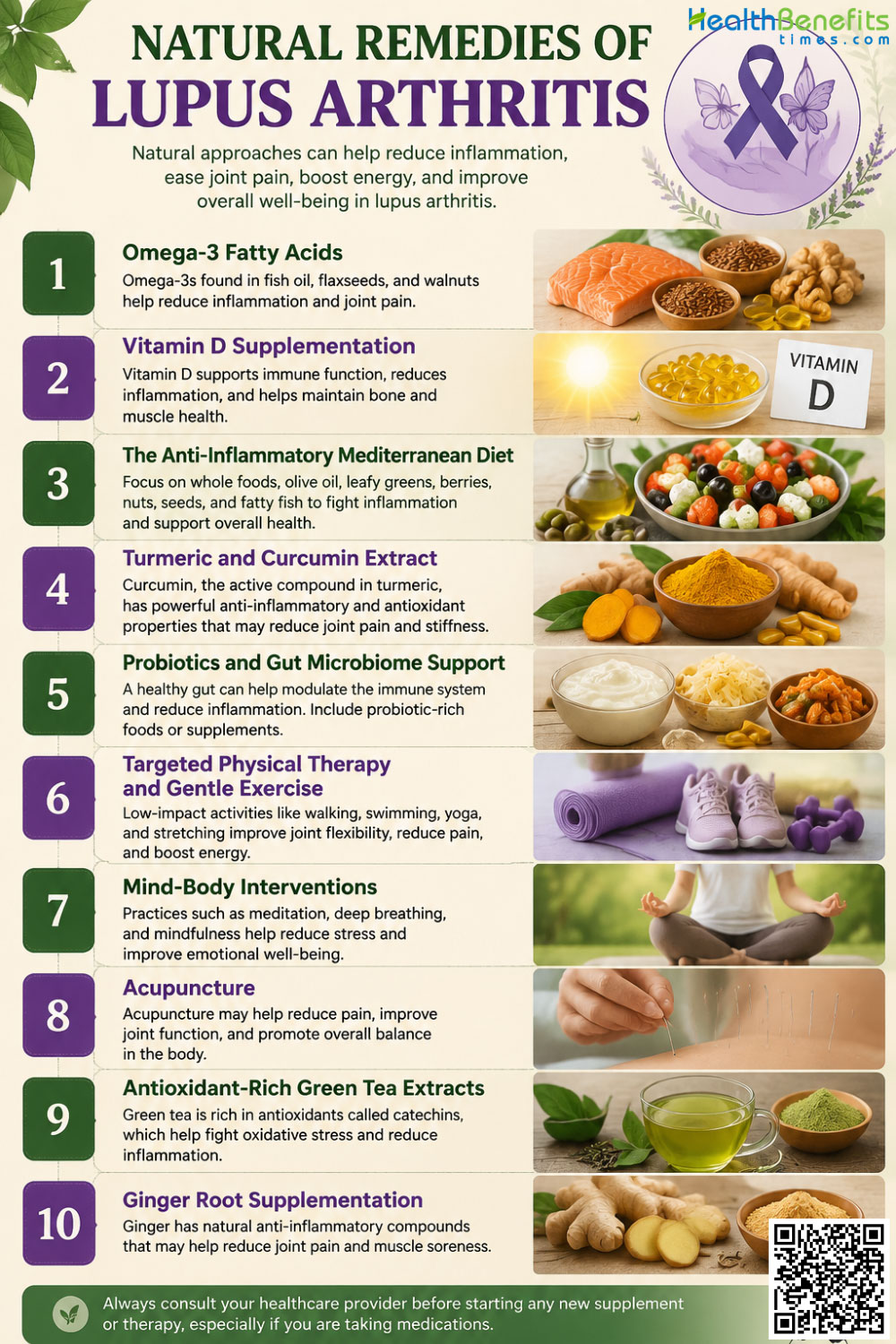
3. The Anti-Inflammatory Mediterranean Diet
How it may help
The Mediterranean diet reduces systemic inflammation through high concentrations of omega-3 fatty acids, polyphenols, and fiber found in olive oil, fish, and vegetables 22. These nutrients inhibit inflammatory cytokines and decrease oxidative stress, which helps manage the immune system imbalances and chronic joint pain characteristic of lupus arthritis 23.
What research says
Clinical research demonstrates that consistent adherence to the Mediterranean diet is associated with significantly lower lupus disease activity and reduced arterial stiffness 24. High compliance with this dietary pattern lowers the overall risk of developing systemic lupus erythematosus while improving protective kidney and liver function biomarkers 25.
How to use it safely
To adopt this diet safely, you should prioritize plant-based whole foods, extra virgin olive oil, and fatty fish while avoiding processed items and refined sugars 26. Always consult your rheumatologist or a clinical dietitian to tailor the meal plan to your specific lupus medications and nutritional requirements 27.
Potential precautions or side effects
You should monitor for potential food allergies, particularly to nuts or seafood. Additionally, increasing your daily fiber intake too rapidly may cause temporary gastrointestinal discomfort and bloating 28.
4. Turmeric and Curcumin Extract
How it may help
Curcumin, the active compound in turmeric, possesses potent anti-inflammatory properties that help regulate the immune system 29. It works by blocking specific inflammatory pathways and enzymes, such as tumor necrosis factor-alpha and cyclooxygenase-2, which are responsible for the severe joint pain and swelling characteristic of lupus arthritis.
What research says
Clinical trials indicate that curcumin supplementation significantly decreases disease activity in patients with systemic lupus erythematosus 30. Sustained intake effectively reduces critical inflammatory markers and lowers anti-double-stranded DNA antibody levels, demonstrating its value as a supplementary therapy for managing lupus-associated joint inflammation.
How to use it safely
Because the body absorbs curcumin poorly on its own, you should consume it alongside black pepper extract, known as piperine, to significantly improve its bioavailability 31. Take turmeric supplements with meals containing healthy fats, and always consult your doctor to determine the safest dosage for your specific needs.
Potential precautions or side effects
Curcumin possesses anticoagulant properties that can increase your risk of bleeding 32. You must stop taking it prior to surgeries and avoid mixing it with prescription blood thinners.
5. Probiotics and Gut Microbiome Support
How it may help
A balanced gut microbiome regulates the immune system and maintains the intestinal barrier, preventing the overactive immune responses that trigger lupus arthritis. 33 Probiotics introduce beneficial bacteria that restore digestive stability, lower systemic inflammation, and strengthen the intestinal lining to stop inflammatory triggers from entering the bloodstream. 34
What research says
Research indicates that individuals with systemic lupus erythematosus experience significantly reduced gut microbial diversity compared to healthy individuals. 35 Furthermore, studies confirm that specific probiotic strains successfully decrease inflammatory markers, promote immune tolerance, and suppress the excessive immune cell activity responsible for autoimmune joint damage. 36
How to use it safely
Consult your rheumatologist before adding probiotics to your regimen. You should select high-quality supplements featuring well-researched bacterial strains like Lactobacillus. 37 Begin with a lower dosage to let your body adjust, and incorporate prebiotic fibers into your diet to naturally nourish these beneficial microbes. 38
Potential precautions or side effects
Probiotics can initially cause mild digestive discomfort. Because lupus medications suppress the immune system, introducing live bacteria carries a rare risk of infection in immunocompromised patients. 39
6. Targeted Physical Therapy and Gentle Exercise
How it may help
Targeted physical therapy and gentle exercises, such as walking or stretching, help maintain joint mobility and muscle strength. Engaging in low-impact activities reduces joint stiffness and combats the severe fatigue often associated with lupus 40. Regular movement also supports cardiovascular health without placing excessive stress on vulnerable joints 41.
What research says
Clinical reviews demonstrate that therapeutic exercise is safe for patients and does not worsen systemic lupus erythematosus activity 42. Studies confirm that structured physical activity significantly lowers depression, reduces profound fatigue, and improves cardiorespiratory fitness 43. Experts recommend personalized aerobic and resistance training programs to optimize health outcomes 44.
How to use it safely
You should start with low-impact activities like swimming or short walks, slowly increasing the intensity over time. Always collaborate with a physical therapist to design a customized plan. Listen to your body, take frequent rest periods, and ensure strict sun protection when exercising outdoors 45.
Potential precautions or side effects
Avoid high-impact workouts during active disease flare-ups to prevent severe joint strain. Overexertion can trigger extreme exhaustion, so stop immediately if you experience sharp pain or worsening inflammation.
7. Mind-Body Interventions
How it may help
Mind-body interventions, such as yoga, tai chi, and mindfulness meditation, focus on connecting mental awareness with physical relaxation to reduce the body’s stress response. In systemic lupus erythematosus, managing psychological and physical stress is vital because heightened tension frequently triggers disease flare-ups and worsens inflammatory joint pain 46. These therapies help relax muscles and promote joint flexibility.
What research says
Clinical evidence indicates that mindfulness-based stress reduction significantly improves overall quality of life and reduces pain-related psychological inflexibility in lupus patients 47. Furthermore, systematic reviews of non-pharmacological therapies confirm that regular participation in mind-body exercises substantially decreases chronic fatigue and alleviates arthritis pain intensity associated with the condition 48.
How to use it safely
Consult your rheumatologist before beginning any new physical practice to ensure it suits your current health status. Start with gentle, restorative techniques like modified chair yoga or slow-paced tai chi to avoid placing unnecessary strain on vulnerable joints 49. Work with certified instructors who understand autoimmune physical limitations.
Potential precautions or side effects
During active lupus arthritis flare-ups, avoid weight-bearing poses or intense stretching that could exacerbate joint inflammation 50. Pushing past physical limits may lead to severe overexertion and worsening fatigue.
8. Acupuncture
How it may help
Acupuncture involves inserting very thin needles into specific body points to relieve lupus-related joint pain. This practice releases natural pain-relieving chemicals called endorphins into the nervous system 51. It also helps regulate immune cells, reducing the overall body inflammation that directly causes joint swelling and discomfort 52.
What research says
Recent reviews show that combining acupuncture with standard medical treatments improves overall symptom relief for systemic lupus erythematosus 53. Studies note that patients experience measurable reductions in chronic joint pain and daily fatigue 54. This therapy also helps stabilize immune function markers without interfering with routine medications 55.
How to use it safely
Because lupus medications often weaken your immune system, you must only visit licensed and certified acupuncture professionals 56. Always confirm that practitioners use single-use, sterile needles and properly disinfect your skin. Consult your rheumatologist before starting any complementary therapy to ensure it fits your current medical plan.
Potential precautions or side effects
Minor side effects include temporary pain, bruising, or mild bleeding. Serious infections can occur if unsterilized needles are used, especially in patients with weakened immune systems 57.
9. Antioxidant-Rich Green Tea Extracts
How it may help
Green tea contains a powerful antioxidant called epigallocatechin-3-gallate, which helps reduce joint swelling and immune system overactivity in autoimmune conditions 58. This active compound naturally blocks specific inflammatory pathways, protecting connective tissues and minimizing the chronic pain associated with lupus arthritis 59.
What research says
Clinical trials demonstrate that taking green tea extracts significantly lowers overall disease activity in individuals diagnosed with systemic lupus erythematosus 60. Furthermore, studies confirm that these antioxidant supplements successfully decrease the production of disease-triggering antibodies and improve physical vitality 61. Additional findings show they help prevent severe kidney complications 62.
How to use it safely
You should always consult your healthcare provider before starting green tea extract supplements, as they can negatively interact with various prescription medications 63. Follow your doctor’s exact dosage instructions carefully and select high-quality products from reputable manufacturers to ensure safety and standard purity 64.
Potential precautions or side effects
High doses can cause nausea, constipation, or uncommon liver injury 65. Additionally, these extracts may reduce the effectiveness of blood pressure medications and could flare autoimmune skin conditions 66.
10. Ginger Root Supplementation
How it may help
Ginger root contains active plant chemicals like gingerols and shogaols, which possess strong anti-inflammatory properties 67. These natural compounds block inflammatory pathways in the body, which helps reduce the painful joint swelling, tenderness, and stiffness commonly experienced by individuals dealing with systemic autoimmune conditions.
What research says
Clinical studies show that ginger supplementation successfully decreases essential inflammatory biomarkers in the bloodstream 68. Furthermore, research demonstrates that gingerols directly suppress the release of hyperactive immune structures called neutrophil extracellular traps, which trigger autoantibody production and drive severe lupus symptoms 69.
How to use it safely
You can consume this medicinal root whole, steep it in teas, or take it as a dried extract 70. The standard daily dosage ranges from 170 to 1,000 milligrams. Always consult your healthcare provider before starting supplementation to determine the safest and most effective dose for your body.
Potential precautions or side effects
Taking high doses can cause mild heartburn or stomach upset. Because ginger impacts platelet function, it increases bleeding risks when combined with prescribed blood thinners or anticoagulant medications 71.
Foods to Avoid When You Suffer from Lupus Arthritis
1. Alfalfa Sprouts
Contains L-canavanine, an amino acid shown to overstimulate the immune system, which can reactivate or severely exacerbate lupus arthritis symptoms. 72, 73
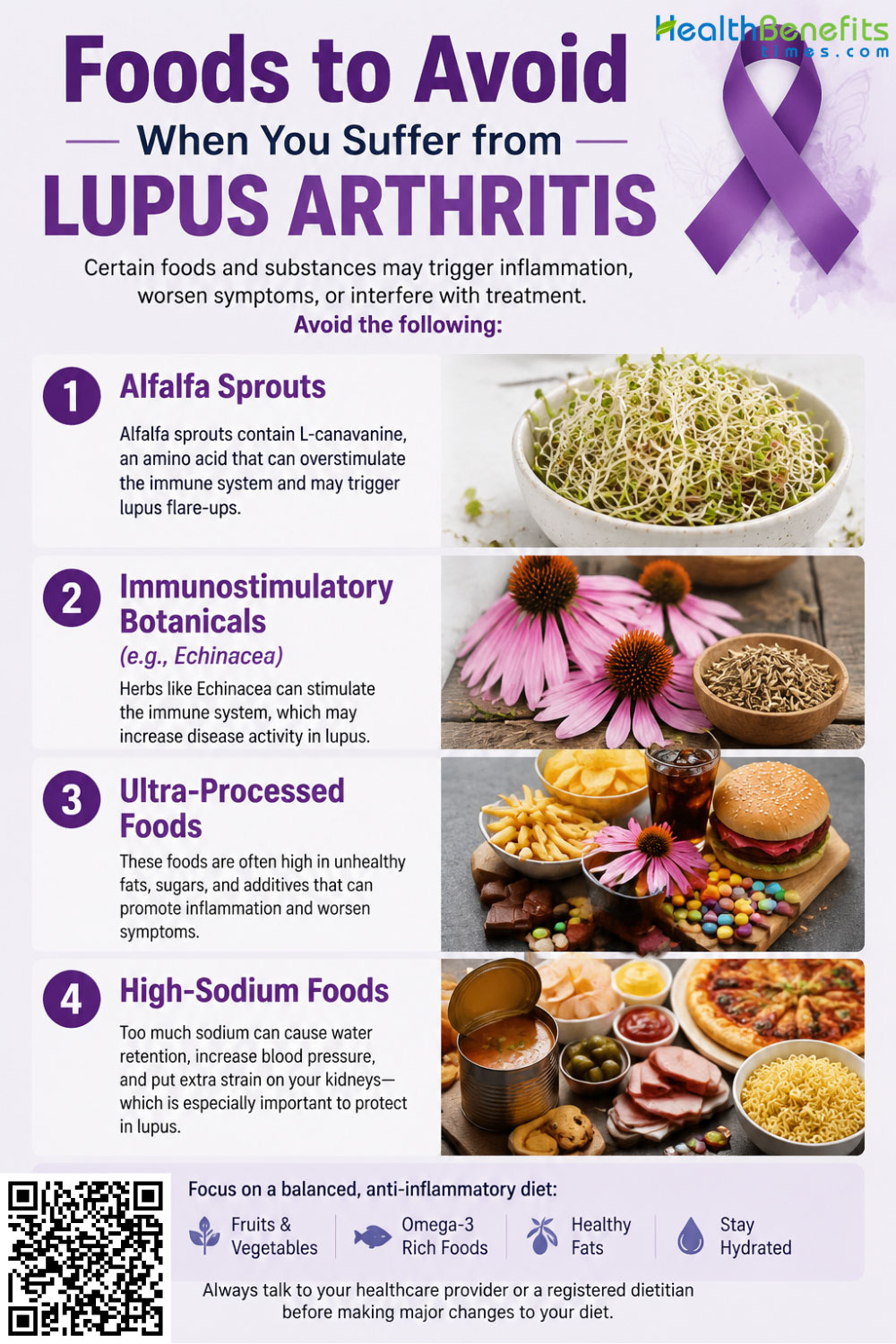
2. Immunostimulatory Botanicals (e.g., Echinacea)
Botanicals like echinacea activate immune cells. In autoimmune conditions like lupus, this immunostimulation can provoke harmful inflammatory responses and clinical disease flares. 74, 75
3. Ultra-Processed Foods
Diets high in ultra-processed foods drive systemic inflammation and have been strongly associated with increased disease severity and systemic lupus erythematosus risk. 76, 77
4. High-Sodium Foods
High dietary sodium accumulates in tissues, worsening inflammation and lupus disease activity. It also exacerbates hypertension, a major risk for patients taking corticosteroid medications. 78, 79
When to See Doctor when you have Lupus Arthritis
1. Unexplained Fever
Seek immediate care if you experience a new or unexplained fever, as it can indicate a serious infection or a severe lupus flare requiring urgent treatment. 10, 80
2. Severe Joint Swelling
Contact your rheumatologist if joint swelling, stiffness, or pain suddenly worsens significantly, indicating that your current lupus arthritis treatment plan may need adjustment. 81, 82
3. Chest Pain or Shortness of Breath
If your joint pain is accompanied by chest pain or shortness of breath, get emergency medical help, as this suggests dangerous inflammation around your heart or lungs. 83, 84
4. Inability to Use the Joint
See a doctor if joint pain becomes so severe that you cannot bear weight or use the affected limb, as this could signal a severe flare or joint damage. 85, 86
5. New or Worsening Rashes
Inform your healthcare provider if new skin rashes appear alongside your arthritis, as lupus often affects multiple systems simultaneously during an active disease flare. 87, 88