

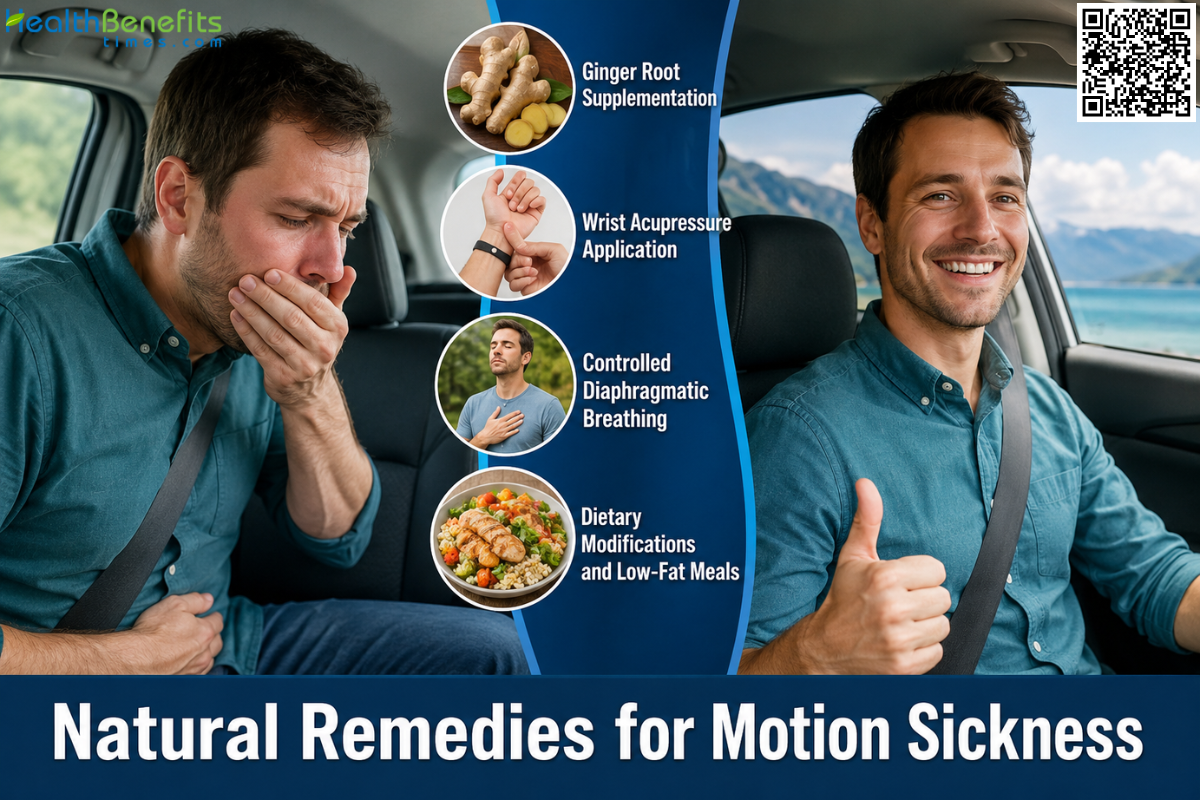
Motion sickness is a common, temporary physiological response that occurs when the brain receives conflicting information from the body’s sensory systems. Normally, the eyes, the inner ear, and the body’s muscles and joints work together to send consistent signals about physical movement and spatial position. However, when these sensory inputs disagree—such as when a person reads in a moving car, causing the eyes to perceive stillness while the inner ear detects motion—a neural mismatch arises 1. This sensory conflict triggers an acute stress reaction in the central nervous system, leading to the physical symptoms characteristic of the condition. The progression typically begins with early signs like yawning and lethargy, which quickly escalate to cold sweats, facial paleness, severe nausea, and vomiting 2. Clinical evidence concludes that anyone with a functioning inner ear can experience this syndrome if the contradictory motion stimulus is sufficiently intense 3.
Causes of Motion Sickness
1. Sensory Mismatch
The fundamental cause is a conflict between the body’s sensory systems, which occurs when the inner ear, eyes, and muscles send contradictory movement signals to the brain 4.
2. Passive Transportation
Riding in moving environments, including cars, buses, trains, airplanes, and boats, frequently triggers symptoms because the body feels motion while the eyes often perceive a stationary interior.
3. Visual Illusions
The condition can develop from the illusion of motion without any actual physical movement, which is commonly experienced when individuals use virtual reality headsets, operate flight simulators, play immersive video games, or watch 3D movies 5.
4. Visual Tasks During Travel
Focusing on stationary objects inside a moving vehicle, such as reading a book or looking at a mobile screen, worsens the conflict between what the eyes see and what the inner ear feels.
5. High-Intensity Motion
Extreme, rapid, or unpredictable physical movements, such as the sudden drops and spins experienced on roller coasters and amusement park rides, quickly overwhelm the inner ear’s balance mechanisms.
6. Active Head Movements
Turning, tilting, or moving the head around while being passively transported in a vehicle further confuses the brain’s spatial processing and can directly provoke.
7. Microgravity Environments
Traveling in outer space removes standard gravitational cues, which prevents the inner ear from correctly sensing physical balance and orientation.
Symptoms of Motion Sickness
1. Nausea and Vomiting
The primary and most recognized symptoms occur as the central nervous system responds to conflicting sensory signals, often leading to severe stomach upset and eventual vomiting if the motion stimulus continues.
2. Facial Pallor and Cold Sweating
Before the onset of severe nausea, individuals frequently experience a noticeable loss of color in the face accompanied by sudden, unprovoked sweating.
3. Increased Salivation
An unusual and excessive production of saliva often develops as an early physiological warning sign before the gastrointestinal distress peaks.
4. Drowsiness and Fatigue
Also recognized clinically as sopite syndrome, this presentation involves profound lethargy, apathy, and sleepiness that can persist for hours or even days after the motion stops.
5. Dizziness and Disorientation
The neural mismatch directly disrupts spatial orientation, causing individuals to feel unsteady, confused, or lightheaded during and immediately following the movement.
6. Frequent Yawning and Bodily Warmth
Uncontrollable yawning combined with a sudden, generalized sensation of bodily heat frequently serves as the initial indicator that the sickness is progressing.
7. Headaches and Eyestrain
While possible during physical travel, severe headaches, visual fatigue, and difficulty concentrating occur at significantly higher rates when the sickness is triggered by virtual reality headsets or visual simulators.
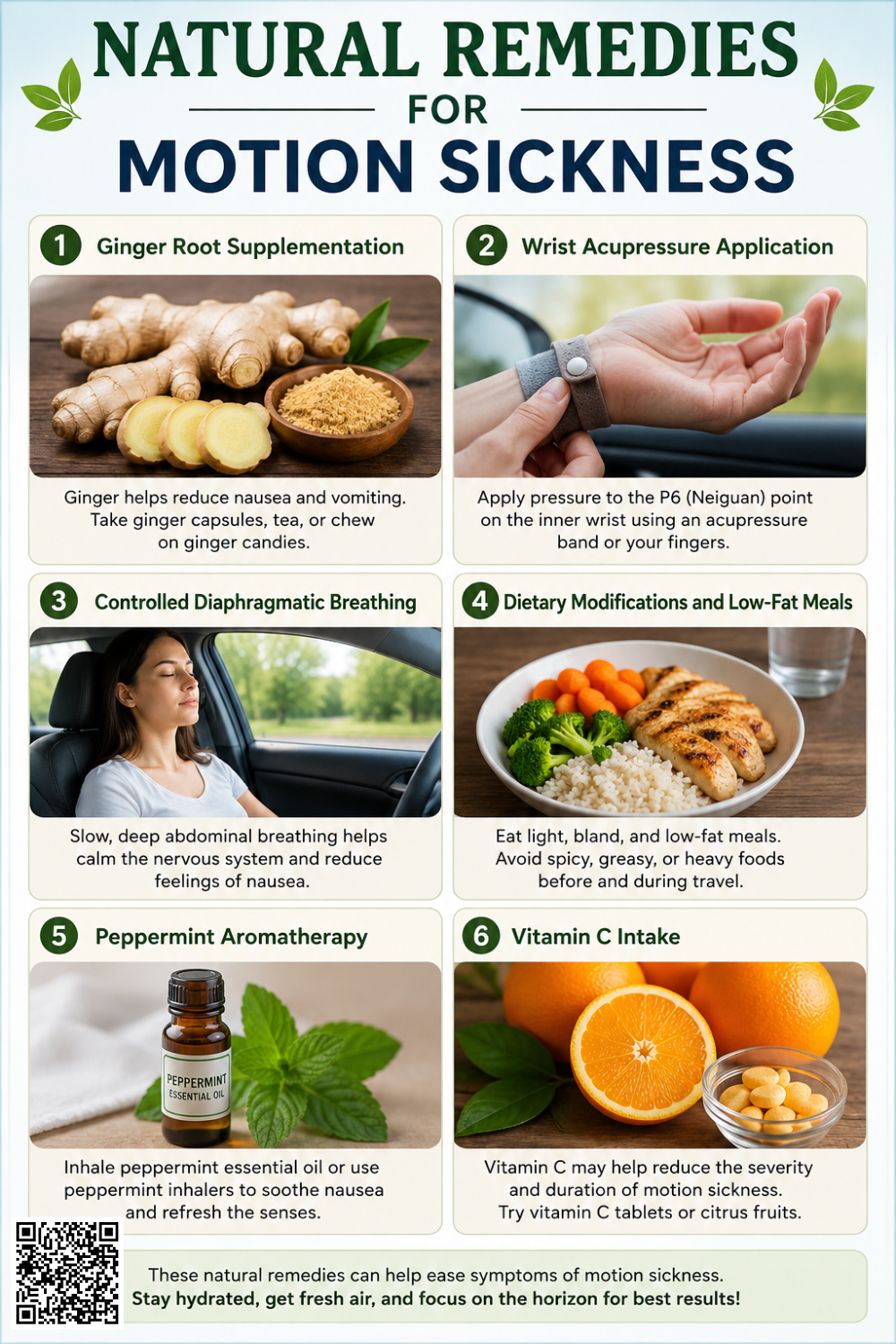 Natural Remedies for Motion Sickness
1. Ginger Root Supplementation
How it may help
Ginger root primarily targets the digestive system to relieve motion sickness. Active compounds like gingerols and shogaols accelerate stomach emptying and reduce irregular gastrointestinal contractions 6. Unlike standard pharmaceutical medications, ginger acts directly on the digestive tract rather than altering central nervous system functions 7.
What research says
Clinical trials confirm that consuming ginger prior to travel significantly reduces the severity of nausea and vomiting compared to a placebo 8. Systematic reviews demonstrate that a single gram of ginger root effectively prevents motion-induced gastric distress without causing drowsiness, outperforming inactive treatments.
How to use it safely
To prevent symptoms, consume 1 to 2 grams of a standardized ginger root capsule or powder roughly 30 to 60 minutes before your journey begins. You can also chew a piece of fresh ginger or drink strong ginger tea if capsules are unavailable.
Potential precautions or side effects
Mild side effects include heartburn, stomach upset, and mouth irritation 9. High doses may increase bleeding risks, so consult a doctor if you take daily blood-thinning medications.
2. Wrist Acupressure Application
How it may help
Wrist acupressure targets the P6 (Neiguan) meridian point, located near the median nerve. Applying continuous physical pressure to this area stimulates the median nerve, which alters the transmission of neural signals between the central nervous system and the stomach. This neurological interruption reduces the intensity of gastric contractions and suppresses the vomiting reflex 10.
What research says
Clinical studies indicate that P6 acupressure effectively delays the onset and reduces the severity of motion sickness symptoms 11. Systematic reviews confirm that stimulating this specific acupoint significantly lowers the overall incidence of nausea and vomiting, functioning comparably to standard antiemetic medications without causing central nervous system depression 12.
How to use it safely
Place three fingers on the inside of your opposite wrist, positioned just below the bottom crease of your hand. The correct point lies directly between the two central tendons. Apply firm, steady pressure to this area or wear an elastic acupressure wristband throughout your travel.
Potential precautions or side effects
This non-invasive intervention is highly safe. Minor, temporary side effects are self-limiting and may include local skin irritation, mild bruising, or localized redness at the application site.
3. Controlled Diaphragmatic Breathing
How it may help
Controlled diaphragmatic breathing directly stimulates the parasympathetic nervous system, which manages the body’s rest and digest functions. This intentional, slow breathing increases heart rate variability and counteracts the acute stress response triggered by sensory conflict. Consequently, it calms the gastrointestinal tract and suppresses the neurological pathways responsible for nausea 13.
What research says
Clinical evidence demonstrates that individuals who practice paced, slow breathing experience significantly fewer motion sickness symptoms compared to those who breathe normally 14. Studies confirm that maintaining a steady rate of approximately six breaths per minute effectively raises parasympathetic tone, reducing both the onset and severity of nausea during motion exposure 15.
How to use it safely
To apply this technique, focus on expanding your abdomen rather than your upper chest. Inhale slowly through your nose for about four seconds, exhale gently for two seconds, and pause for four seconds. Maintain this steady rhythm of roughly six breaths per minute throughout the motion exposure.
Potential precautions or side effects
This behavioral technique is exceptionally safe and carries no medical risks. However, forcing the breath too aggressively or breathing too rapidly may cause mild lightheadedness from hyperventilation 16.
4. Dietary Modifications and Low-Fat Meals
How it may help
Eating high-protein, low-fat meals keeps the stomach settled and maintains normal digestion. Dietary fat slows down stomach emptying, which increases the chances of feeling sick. In contrast, protein stabilizes the stomach and prevents the irregular muscle contractions caused by confusing motion signals 17.
What research says
Clinical studies demonstrate that consuming a protein-rich meal before experiencing motion significantly reduces nausea compared to eating high-fat foods, heavy carbohydrates, or fasting. Research confirms that protein effectively suppresses irregular stomach rhythms and lowers overall sickness scores during travel.
How to use it safely
To minimize symptoms, eat a light, protein-rich meal—such as a protein drink, lean poultry, or low-fat yogurt—roughly 30 to 60 minutes before traveling 18. Always avoid heavy, greasy foods, and never begin your journey on a completely empty stomach.
Potential precautions or side effects
Changing your pre-travel diet is completely safe. However, eating excessively large meals before a trip can cause bloating or worsen nausea. Keep your portions small and easily digestible.
5. Peppermint Aromatherapy
How it may help
Peppermint contains menthol, an active compound that naturally relaxes the stomach muscles and suppresses irregular gastrointestinal contractions. When inhaled, peppermint aromatic molecules quickly enter the bloodstream through the lungs and interact with the central nervous system to block nausea-triggering signals, overriding the brain’s sickness response 19.
What research says
Clinical trials confirm that inhaling peppermint essential oil significantly reduces the severity and frequency of nausea compared to placebos. Systematic reviews demonstrate that individuals utilizing peppermint aromatherapy experience rapid relief from gastric distress, often matching the effectiveness of standard anti-nausea medications but without causing severe drowsiness.
How to use it safely
Apply one to two drops of high-quality peppermint essential oil to a clean tissue, cotton ball, or personal inhaler. Hold the item a few inches from your face and take slow, deep breaths through your nose when motion sickness symptoms begin 20.
Potential precautions or side effects
Peppermint aromatherapy is highly safe. However, applying concentrated essential oils directly to the skin without proper dilution can cause irritation, and excessive inhalation may occasionally trigger mild headaches 21.
6. Vitamin C Intake
How it may help
Vitamin C functions as a powerful antioxidant and a mild natural antihistamine. During motion sickness, the body releases excess histamine in response to sensory conflict, which triggers severe nausea. High levels of vitamin C help break down and clear this excess histamine from the bloodstream, calming the body’s sickness response 22.
What research says
Clinical research demonstrates that taking a strong dose of vitamin C before travel significantly reduces the onset and severity of motion-induced nausea. Studies involving individuals exposed to heavy motion, such as rough sea conditions, confirm that oral vitamin C effectively lowers symptom scores without causing the drowsiness associated with traditional antihistamine medications.
How to use it safely
To prevent symptoms, take up to 2 grams (2,000 milligrams) of oral vitamin C roughly one hour before your journey begins. You can use chewable tablets, standard capsules, or effervescent powders dissolved in water for quick absorption.
Potential precautions or side effects
Taking high doses of vitamin C is generally safe, but consuming more than 2,000 milligrams in a single day may cause mild stomach cramps, bloating, or diarrhea 23.
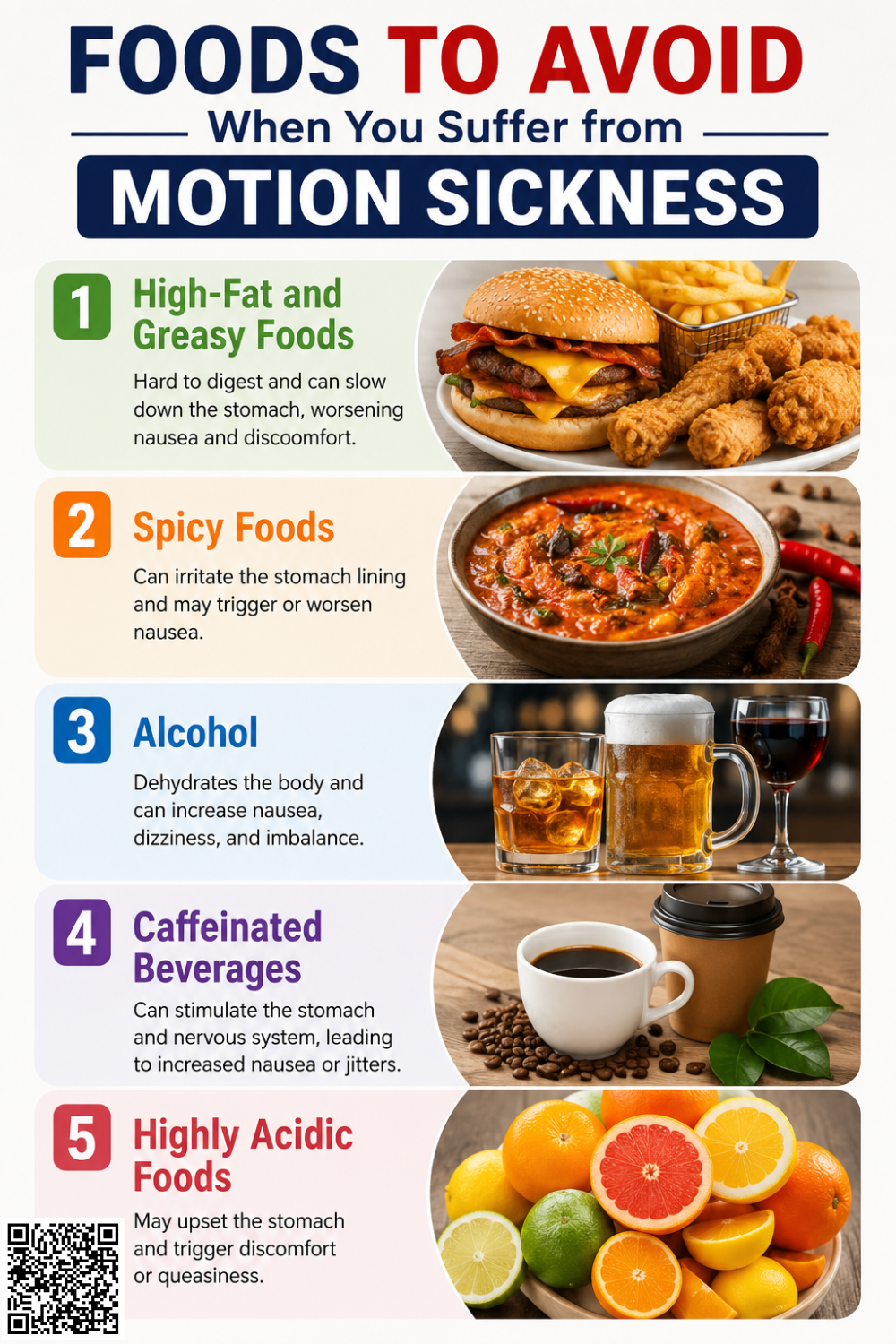 Foods to Avoid When You Suffer from Motion Sickness
1. High-Fat and Greasy Foods
Consuming heavy, fatty meals significantly slows stomach emptying, which prolongs digestion and increases your susceptibility to motion-induced nausea and vomiting.
2. Spicy Foods
Heavily spiced meals irritate the gastrointestinal lining and stimulate excess acid production, worsening stomach upset during periods of sensory conflict 24.
3. Alcohol
Alcoholic beverages disrupt the inner ear’s fluid balance, amplify sensory confusion, and irritate the stomach lining, severely escalating the risk of vomiting.
4. Caffeinated Beverages
Coffee and energy drinks stimulate gastric acid secretion and increase central nervous system alertness, which heightens the body’s physical sensitivity to motion-induced stress.
5. Highly Acidic Foods
Citrus fruits and acidic juices lower the stomach’s pH level, causing rapid irritation that can quickly trigger the vomiting reflex during travel.
When To See a Doctor When You Suffer from Motion Sickness
1. Persistent Symptoms
Consult a physician if your dizziness, nausea, or disorientation continues for days after the travel stops, as this may indicate an underlying vestibular disorder 25.
2. Signs of Dehydration
Seek immediate medical care if continuous vomiting prevents you from keeping fluids down, leading to severe dehydration that requires clinical intervention.
3. Spontaneous Onset
Contact a doctor immediately if you experience typical motion sickness symptoms while completely stationary, which strongly suggests a separate neurological or inner ear condition.
4. Accompanying Warning Signs
Seek emergency evaluation if your motion-induced nausea occurs alongside severe headaches, sudden hearing loss, or weakness, as these indicate more serious medical emergencies.
5. Prescription Needs
Schedule an appointment if natural remedies consistently fail, allowing a physician to prescribe targeted medications like scopolamine patches for future travel.