


Jet lag is a temporary sleep problem that affects individuals traveling quickly across multiple time zones. It occurs because the body’s internal clock, known as the circadian rhythm, remains set to the time of the original location rather than the new destination 1. This biological mismatch disrupts natural sleep-wake patterns and other essential bodily functions. As a result, travelers often experience excessive daytime sleepiness, difficulty falling asleep at night, stomach problems, and reduced focus 2. Research concludes that the severity of these symptoms is directly related to the direction of travel and the number of time zones crossed, with the human body generally requiring about one full day to naturally adjust to each new time zone.
Causes of Jet Lag
1. Rapid Time Zone Changes
The main cause of jet lag is crossing multiple time zones faster than the body can adjust, which misaligns the internal 24-hour sleep-wake cycle with the local time of the destination.
2. Shifted Light Exposure
Sunlight is the strongest signal that tells the body when to be awake and when to sleep; traveling to a new time zone alters light exposure timing, which disrupts the brain’s ability to release melatonin, a sleep-regulating hormone, at the correct time.
3. Direction of Travel
Flying east causes more severe jet lag than flying west, because it is biologically more difficult for the body to advance its internal clock (falling asleep earlier) than to delay it (staying awake later).
4. Airplane Cabin Environment
Environmental factors during flight, such as low cabin pressure, reduced oxygen levels, and dry air, do not directly alter the body’s clock but cause dehydration and physical fatigue, which significantly intensify the symptoms of jet lag.
Symptoms of Jet Lag
1. Sleep Disturbances
The most common sign is a disrupted sleep cycle, which includes severe difficulty falling asleep, waking up unusually early in the morning, or experiencing overwhelming sleepiness during the daytime.
2. Cognitive Impairment and Mood Shifts
Individuals frequently experience a reduced ability to concentrate, short-term memory issues, slower physical reflexes, and noticeable mood changes such as irritability or mild anxiety.
3. Gastrointestinal Issues
Because the digestive system operates on its own internal clock, sudden time zone changes often lead to a loss of appetite, nausea, indigestion, constipation, or diarrhea.
4. Physical Exhaustion and Malaise
Beyond standard tiredness, travelers typically experience persistent physical weakness, headaches, and an overall sense of feeling unwell or sluggish throughout the day.
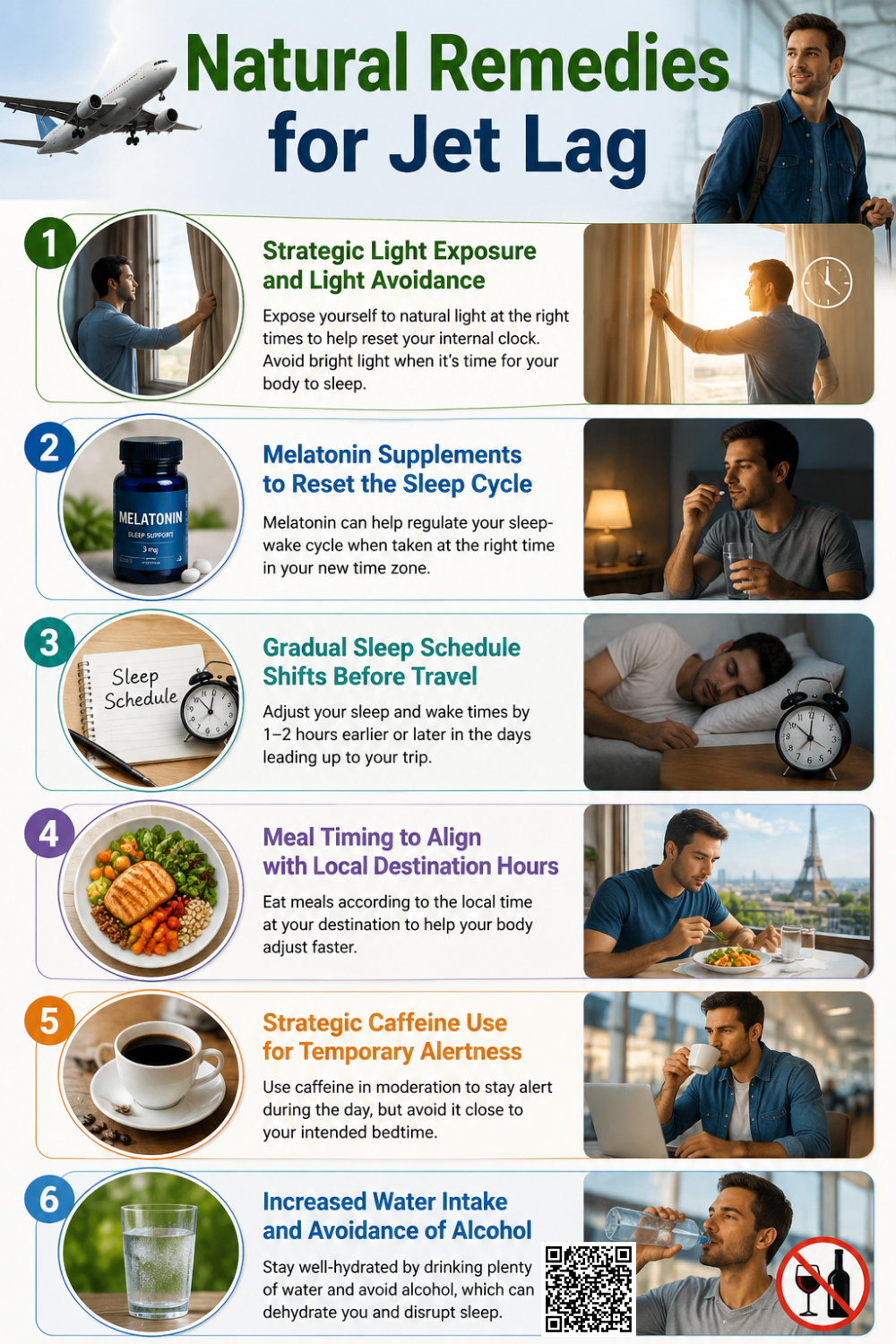 Natural Remedies for Jet Lag
1. Strategic Light Exposure and Light Avoidance
How it may help
Light is the primary environmental signal that regulates the body’s internal clock. Strategic exposure to natural sunlight or bright artificial light cues the brain to stay awake, while deliberately avoiding light encourages the release of sleep-promoting hormones. This method directly resets the sleep-wake cycle to match a new destination.
What research says
Clinical studies demonstrate that timed light exposure and light avoidance are the most effective strategies for shifting the circadian rhythm. Research concludes that carefully scheduling light exposure can accelerate the body’s adjustment to new time zones by several hours per day, significantly reducing the overall duration of jet lag symptoms.
How to use it safely
If you travel east, seek morning sunlight and avoid late afternoon light. When traveling west, seek evening light and avoid morning light. Use dark sunglasses or sleep masks to block unwanted light during your transit and upon arrival to safely guide your body’s clock.
Potential precautions or side effects
Exposing yourself to bright light at the wrong time of day can push your internal clock further out of sync, making your jet lag symptoms noticeably worse.
2. Melatonin Supplements to Reset the Sleep Cycle
How it may help
Melatonin is a natural hormone produced by the brain to signal that it is time to sleep. Taking a melatonin supplement mimics this natural process, tricking the body into feeling sleepy at the desired time in a new time zone. This helps align the internal clock with local night hours.
What research says
Clinical research demonstrates that melatonin supplements are highly effective for reducing jet lag, particularly for flights crossing five or more time zones. Studies conclude that taking melatonin close to the target bedtime at the destination significantly decreases sleep disruptions and improves daytime alertness.
How to use it safely
Take a dose of melatonin, typically between 0.5 and 5 milligrams, roughly two hours before your planned bedtime at your new destination. Only use it for the first few days of your trip until your natural sleep cycle adjusts completely.
Potential precautions or side effects
Melatonin may cause mild side effects like morning grogginess, headaches, or dizziness. Avoid taking it before driving, and consult a doctor if you take other medications.
3. Gradual Sleep Schedule Shifts Before Travel
How it may help
Gradually changing your sleep schedule before departure slowly realigns the body’s internal clock closer to the destination’s time zone. This proactive method reduces the biological shock of sudden time changes, allowing travelers to adapt faster and experience fewer sleep disruptions upon arrival.
What research says
Clinical guidelines indicate that shifting sleep schedules by one to two hours before a trip significantly decreases the severity of jet lag. Research concludes that preparing the circadian rhythm in advance reduces post-flight daytime fatigue and improves overall sleep quality during the initial days of travel.
How to use it safely
Starting three days before your flight, shift your bedtime by 30 to 60 minutes each night. Go to sleep earlier if traveling east, or stay up later if traveling west. Combine this schedule change with matched light exposure to gently adjust your internal clock.
Potential precautions or side effects
This method may cause temporary mild fatigue before travel begins. It requires strict schedule discipline and may temporarily conflict with normal daily work or family responsibilities.
4. Meal Timing to Align with Local Destination Hours
How it may help
The digestive system operates on its own internal clock. Aligning meal times with the new time zone signals the body to adjust these peripheral clocks. This synchronizes digestion with the main sleep-wake cycle, reducing stomach discomfort and helping the body adapt faster to the local schedule.
What research says
Clinical research concludes that peripheral circadian clocks, like those in the liver and gut, respond strongly to food intake. Studies indicate that shifting meal times to local destination hours significantly reduces gastrointestinal jet lag symptoms and reinforces the overall shifting of the body’s primary sleep clock.
How to use it safely
Begin eating your meals according to the destination’s schedule as soon as you board your flight. Avoid heavy meals during the destination’s nighttime hours, and eat light, balanced meals during the day to help your digestive system adjust smoothly to the new routine.
Potential precautions or side effects
Forcing heavy meals at unusual biological times can cause indigestion, bloating, or mild nausea. Travelers with diabetes must consult a doctor to safely adjust medication and meal timing.
5. Strategic Caffeine Use for Temporary Alertness
How it may help
Caffeine acts as a stimulant that temporarily blocks the brain chemicals responsible for promoting sleep. By increasing alertness and reducing daytime fatigue, strategic caffeine consumption helps travelers stay awake during the daylight hours of their new destination, which indirectly supports the adjustment to a new schedule.
What research says
Clinical guidelines conclude that while caffeine effectively increases daytime alertness and physical performance, it does not actually reset the body’s internal clock. Research indicates that caffeine is highly useful for managing the symptom of daytime sleepiness but must be timed correctly to avoid disrupting nighttime rest.
How to use it safely
Consume moderate amounts of caffeinated beverages, such as coffee or tea, only during the morning and early afternoon hours of your destination. Stop all caffeine intake at least six to eight hours before your planned bedtime to ensure it does not interfere with sleep.
Potential precautions or side effects
Consuming caffeine too late in the day worsens jet lag by causing nighttime insomnia. Overuse can also lead to dehydration, rapid heart rate, anxiety, and stomach irritation.
6. Increased Water Intake and Avoidance of Alcohol
How it may help
Airplane cabins have very dry air, which quickly causes dehydration. Dehydration worsens common jet lag symptoms like headaches, severe fatigue, and poor concentration. Drinking plenty of water keeps the body functioning normally. Conversely, avoiding alcohol prevents further fluid loss and protects the quality of your sleep.
What research says
Clinical guidelines emphasize that while dehydration does not cause a biological time shift, it significantly amplifies physical travel exhaustion. Research concludes that alcohol consumption during flights fragments sleep and intensifies dehydration, thereby making the body’s natural recovery and adjustment to a new time zone much more difficult.
How to use it safely
Drink a glass of water before boarding and continue drinking water regularly throughout your flight. Completely avoid alcoholic beverages and limit salty airplane snacks while flying. Upon arrival, maintain high water intake for the first few days to help your body recover smoothly.
Potential precautions or side effects
Drinking excessive amounts of water just before bedtime may cause frequent nighttime bathroom trips, which directly disrupts sleep. Balance your fluid intake earlier in the day to avoid interruptions.
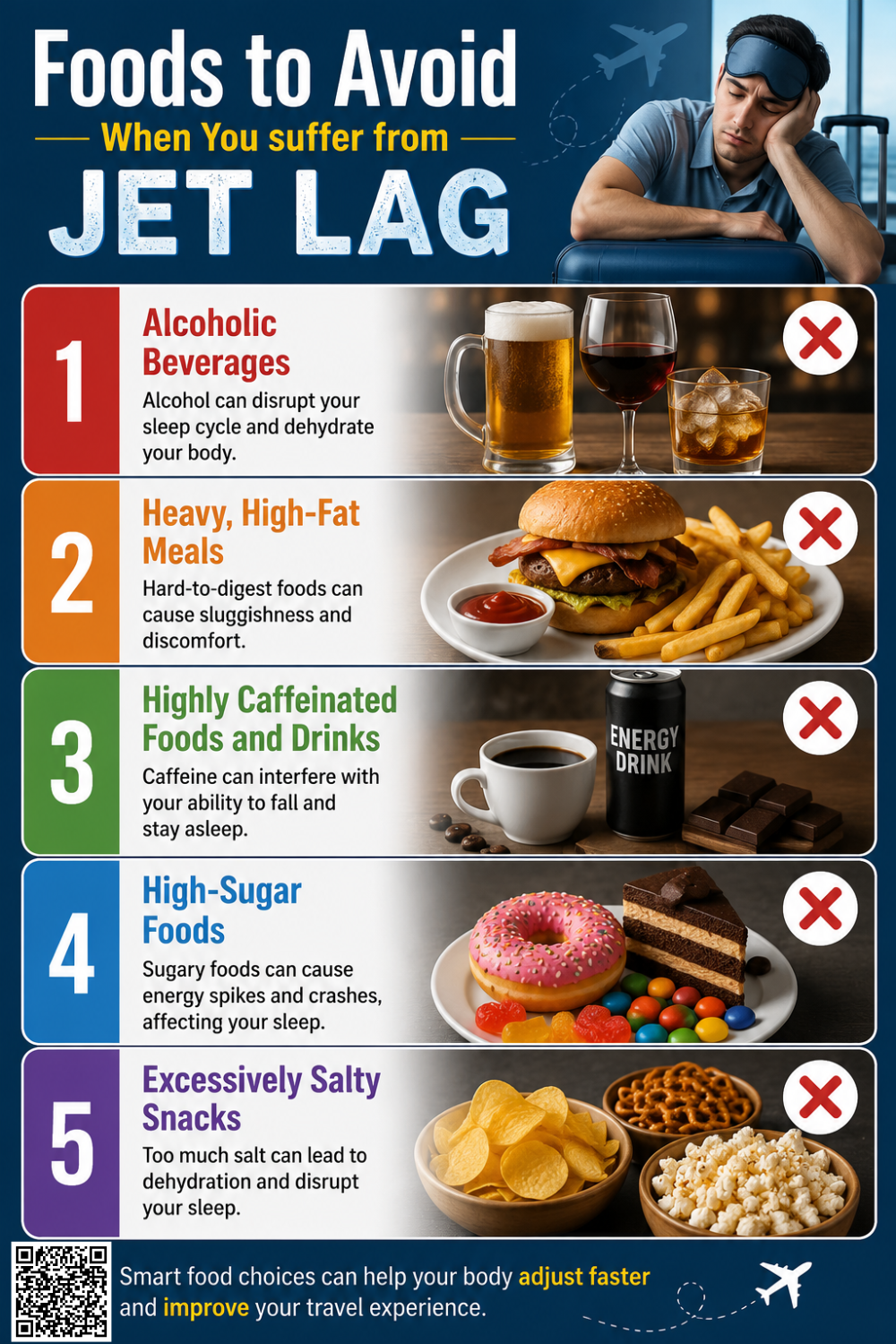 Foods to Avoid When You suffer from Jet Lag
1. Alcoholic Beverages
Alcohol increases dehydration, fragments sleep cycles, and hinders the body’s natural circadian adjustment to new time zones.
2. Heavy, High-Fat Meals
Rich or greasy foods delay digestion, which can cause gastrointestinal distress and disrupt nighttime sleep when consumed close to bedtime.
3. Highly Caffeinated Foods and Drinks
Consuming chocolate, energy drinks, or coffee late in the day stimulates the nervous system and directly prevents necessary nighttime rest.
4. High-Sugar Foods
Refined sugars cause rapid blood sugar spikes followed by sharp crashes, which severely worsens daytime fatigue and mood instability.
5. Excessively Salty Snacks
Heavily processed, salty foods exacerbate travel-induced dehydration, which amplifies physical exhaustion and common jet lag symptoms like headaches.
When To see Doctor when you suffer from Jet Lag
1. Prolonged Symptoms
If sleep disturbances and fatigue last for more than two weeks after arriving at your destination, consult a doctor to rule out other sleep disorders.
2. Frequent Travel Disruptions
Frequent travelers should seek medical advice if chronic jet lag causes ongoing memory issues, performance decline, or extreme daytime sleepiness.
3. Severe Mood Changes
Contact a healthcare provider immediately if sleep deprivation from travel leads to severe anxiety, depression, or significant emotional instability.
4. Need for Medication
If natural remedies fail and you are considering prescription sleep medications to manage severe insomnia, a doctor must evaluate you to ensure safe usage.