

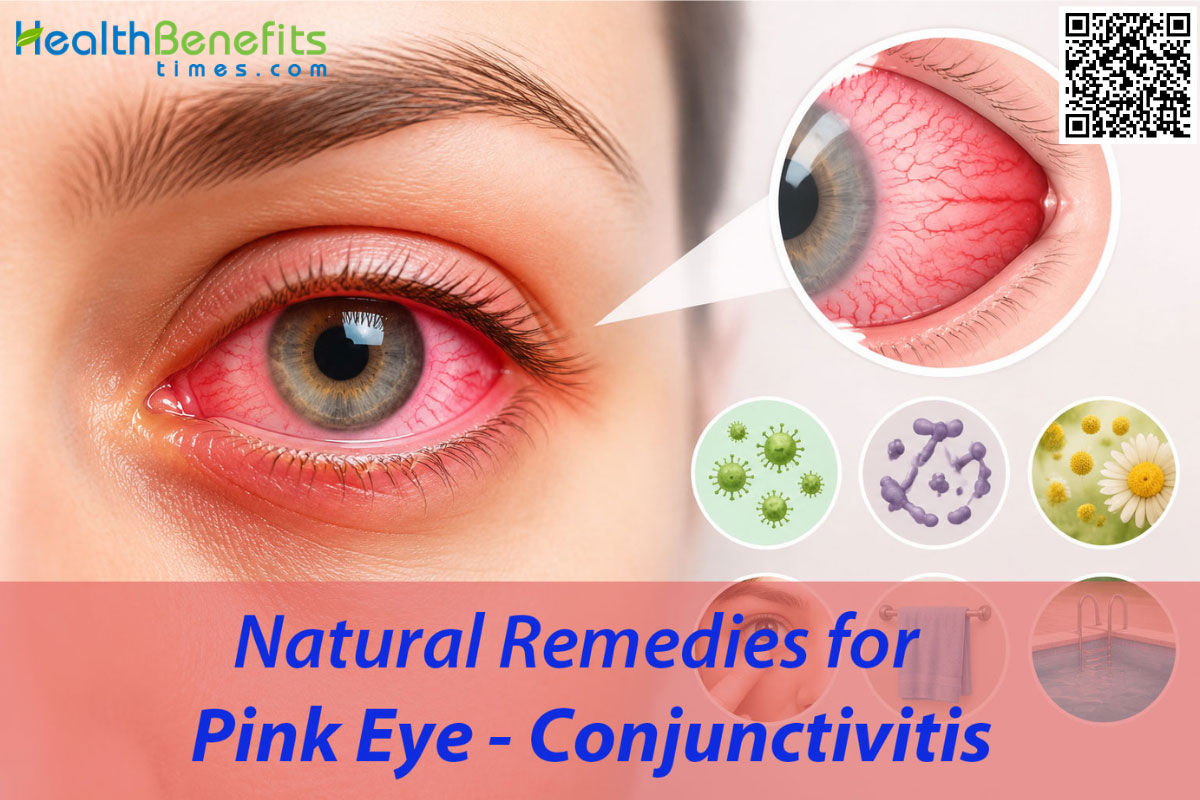
Conjunctivitis affects millions of people every year and in the United States alone, it impacts over nine million children annually 1. Most people know it simply as pink eye. The condition is an inflammation of the conjunctiva, the thin, clear membrane that covers the white of the eye and lines the inside of the eyelids 2. When this membrane becomes irritated, the tiny blood vessels within it swell and become visible. That’s what gives the eye its characteristic pink or red color 3. Seeing it in the mirror for the first time can be alarming. But in most cases, the condition is temporary and doesn’t cause lasting damage to vision. The bigger concern is contagion the infectious forms spread easily, which is why knowing what you’re dealing with is the first step to managing it safely.
Causes of Pink Eye – Conjunctivitis
Many different everyday factors can irritate the delicate surface of the eye and trigger inflammation. Identifying the specific underlying cause is incredibly helpful for understanding how the condition will progress and how it should be handled.
1. Viral Infections
The vast majority of contagious cases are caused by viruses, with adenoviruses being the most frequent culprit behind the infection 4. Other viruses, such as the herpes simplex virus, varicella-zoster virus, and the common cold virus, can also cause the eyes to become red and inflamed.
2. Bacterial Infections
Certain strains of bacteria are the second most common infectious cause, and these cases are especially prevalent among school-aged children. Common bacterial culprits include Staphylococcus aureus, Streptococcus pneumoniae, and Haemophilus influenzae 5.
3. Allergic Reactions
An overactive immune response to harmless environmental substances frequently leads to intense eye irritation. Common triggers for allergic conjunctivitis include tree and grass pollen, animal dander, dust mites, and mold spores 3.
4. Environmental Irritants
Exposure to harsh chemicals or physical irritants in the air can quickly inflame the eye’s surface. Frequent culprits include pool chlorine, smog, cigarette smoke, harsh cosmetics, and even certain types of shampoo or soap 6.
5. Foreign Objects and Contact Lenses
Wearing contact lenses that have not been properly cleaned, utilizing extended-wear lenses for too long, or getting a loose eyelash trapped under the lid can introduce bacteria or cause mechanical friction that deeply inflames the conjunctiva.
Symptoms of Pink Eye – Conjunctivitis
Knowing what specific signs to look for makes it much easier to figure out what is happening to your body. While some symptoms overlap regardless of the cause, the hallmark signs usually include:
- A noticeable pink or reddish discoloration in the white part of one or both eyes.
- An intense, persistent itchiness, which is especially prominent in allergic reactions 7.
- A gritty, uncomfortable sensation that mimics the feeling of sand or a tiny eyelash trapped under the eyelid.
- Excessive tearing or heavily watery eyes, which is a classic feature of viral infections and allergic responses.
- A thick fluid discharge that may appear yellow, white, or green, often indicating a bacterial infection.
- Crusting of the eyelashes and eyelids during sleep, which can cause the eyes to feel glued shut upon waking in the morning.
- Mild swelling and puffiness of the conjunctiva or the surrounding eyelids.
- A slight sensitivity to bright indoor lights or sunlight.
Pink Eye – Conjunctivitis Facts
| Symptoms |
|
| Causes |
|
| Types of Pink Eye – Conjunctivitis |
|
| How it spreads |
|
| Age Group |
|
| You might be at a higher risk for exposure of this disease if you: |
|
| How doctors diagnose |
|
| Other facts |
|
Natural Remedies for Pink Eye – Conjunctivitis
1. The Soothing Power of Cool Compresses
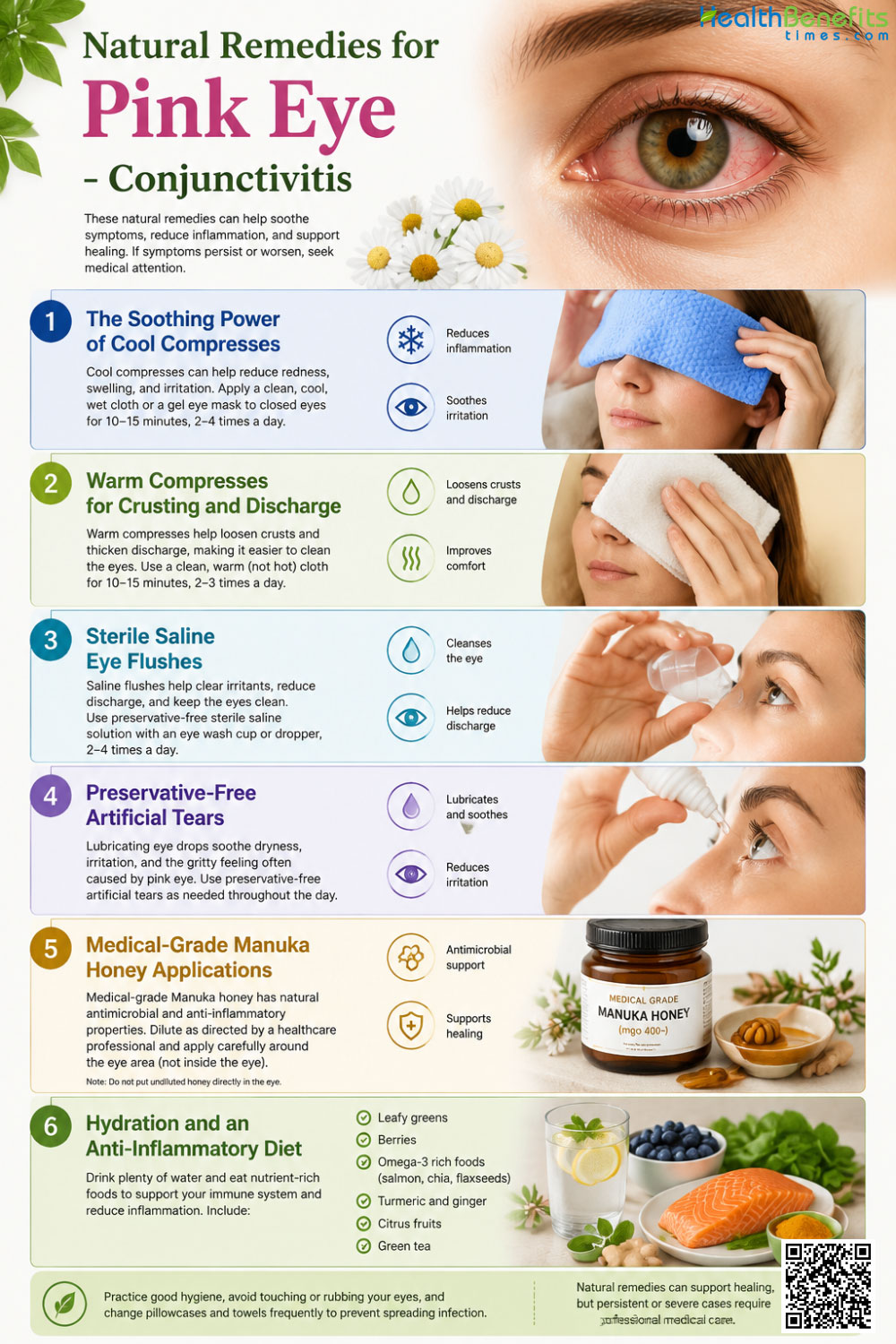
Applying a cool temperature to inflamed human tissues is one of the oldest, simplest, and most effective ways to find immediate relief. When your eyes are intensely itchy, swollen, or burning particularly due to an allergic reaction or a viral infection, a cool compress helps constrict the swollen blood vessels in the eye. You simply need to take a clean, lint-free washcloth or hand towel, soak it in cold water, and wring out the excess moisture. Place the damp cloth gently over your closed eyelids for a few minutes, allowing the cooling sensation to numb the irritation and reduce the swelling 8. Always remember to use a freshly laundered cloth for each application, and never touch both eyes with the same towel if only one eye is infected.
Note: A cool compress is applied topically to the closed eyelids to naturally reduce inflammation, numb intense itching, and draw out uncomfortable heat from the irritated ocular surface.
2. Warm Compresses for Crusting and Discharge
Waking up to find your eyelids glued shut by dried, sticky discharge is a very common and unpleasant experience, especially if you are dealing with bacterial conjunctivitis. Instead of rubbing or pulling at your delicate eyelashes, you should use a warm compress to gently melt the sticky mucus. Soak a clean hand towel in warm (but never scalding hot) water, wring it out completely, and rest it over your closed eyes. The gentle heat will safely loosen the crust that forms on your eyelashes and reduce the sticky buildup on your eyelids 9. After resting with the compress for a few minutes, you can use the same cloth to gently and carefully wipe the debris away. As always, use a different, clean cloth for each eye to halt the spread of germs.
Note: A warm compress is applied topically to the closed eyes to soften hardened mucus, open up blocked oil glands, and provide comforting relief from a gritty sensation.
3. Sterile Saline Eye Flushes
Washing out the physical irritants, microscopic allergens, or infectious debris from your eye can significantly speed up your recovery time and improve comfort. You can use a sterile saline solution, which closely mimics the natural salt concentration of your own tears, to gently flush the ocular surface. If you choose to make this at home, it is absolutely critical to use distilled water or tap water that has been rapidly boiled for at least 20 minutes to kill any dangerous bacteria or amoebas. Mix one cup of the sterilized, cooled water with a half-teaspoon of non-iodized salt until it is completely dissolved 10. You can gently drip this cooled solution into your eye to wash away foreign particles and soothe the tissue.
Note: Sterile saline is applied as a liquid eye wash to manually irrigate the conjunctiva, clear away inflammatory allergens, and restore natural moisture balance to the eye.
4. Preservative-Free Artificial Tears
Fighting off an infection or an allergic response puts a lot of stress on your eyes, and they often struggle to maintain a healthy, lubricating tear film during this time. You can easily supplement your eye’s natural defenses by using over-the-counter, preservative-free artificial tears. These gentle lubricating drops help to physically flush out allergens, dilute inflammatory chemicals like histamine that your body is naturally producing, and relieve the severe dryness that often accompanies the condition 11. Because they do not contain harsh chemical preservatives, you can safely use them multiple times a day without causing further irritation to your delicate eye tissues.
Note: Artificial tears are applied as drops directly into the open eye to provide mechanical lubrication, wash away viral shedding, and ease the painful friction caused by blinking.
5. Medical-Grade Manuka Honey Applications
Exploring alternative therapies reveals that medical-grade honey, specifically Manuka honey, holds remarkable promise for supporting ocular health. This specific type of honey contains naturally occurring compounds that exhibit potent antibacterial and anti-inflammatory properties. Clinical studies have demonstrated that applying specialized medical-grade Manuka honey eye drops or gels can significantly reduce the colony-forming units of bacteria on the eyelid margin and improve overall tear film stability 12. While the application may cause a brief, temporary stinging sensation, it works efficiently to reduce redness and fight surface bacteria. It is vital that you only use sterile, medical-grade ocular honey products specifically designed for eyes, and never raw honey from a grocery store.
Note: Medical-grade Manuka honey is applied as a specialized clinical drop or gel to utilize its natural antibacterial properties, combat localized infection, and stabilize the tear film.
6. Hydration and an Anti-Inflammatory Diet
Supporting your body’s ability to fight off an eye infection is deeply connected to your overall immune health and your daily nutritional intake. You should focus on keeping your body highly hydrated by drinking plenty of water and eating water-rich foods like cucumbers, celery, and watermelon. Furthermore, incorporating an anti-inflammatory diet rich in vitamins A, C, and Zinc can help alleviate dry eye symptoms and reduce systemic inflammation. Vitamins A and C, abundant in leafy greens, carrots, and citrus fruits, are crucial for repairing the cellular structure of the eye and boosting your immune system’s response to the underlying virus or bacteria 13.
Note: Anti-inflammatory foods and intense hydration are consumed internally to boost systemic immunity, reduce total body inflammation, and provide the cellular building blocks needed for rapid tissue repair.
Foods and Activities to Avoid When You Suffer from Pink Eye – Conjunctivitis
Healing requires not just adding beneficial remedies to your routine, but also actively avoiding certain behaviors and dietary choices that can worsen your condition. When you are managing an active eye infection, your daily habits need to be temporarily adjusted to protect your eyes from further harm and prevent spreading the disease to others.
1. Avoid Wearing Contact Lenses
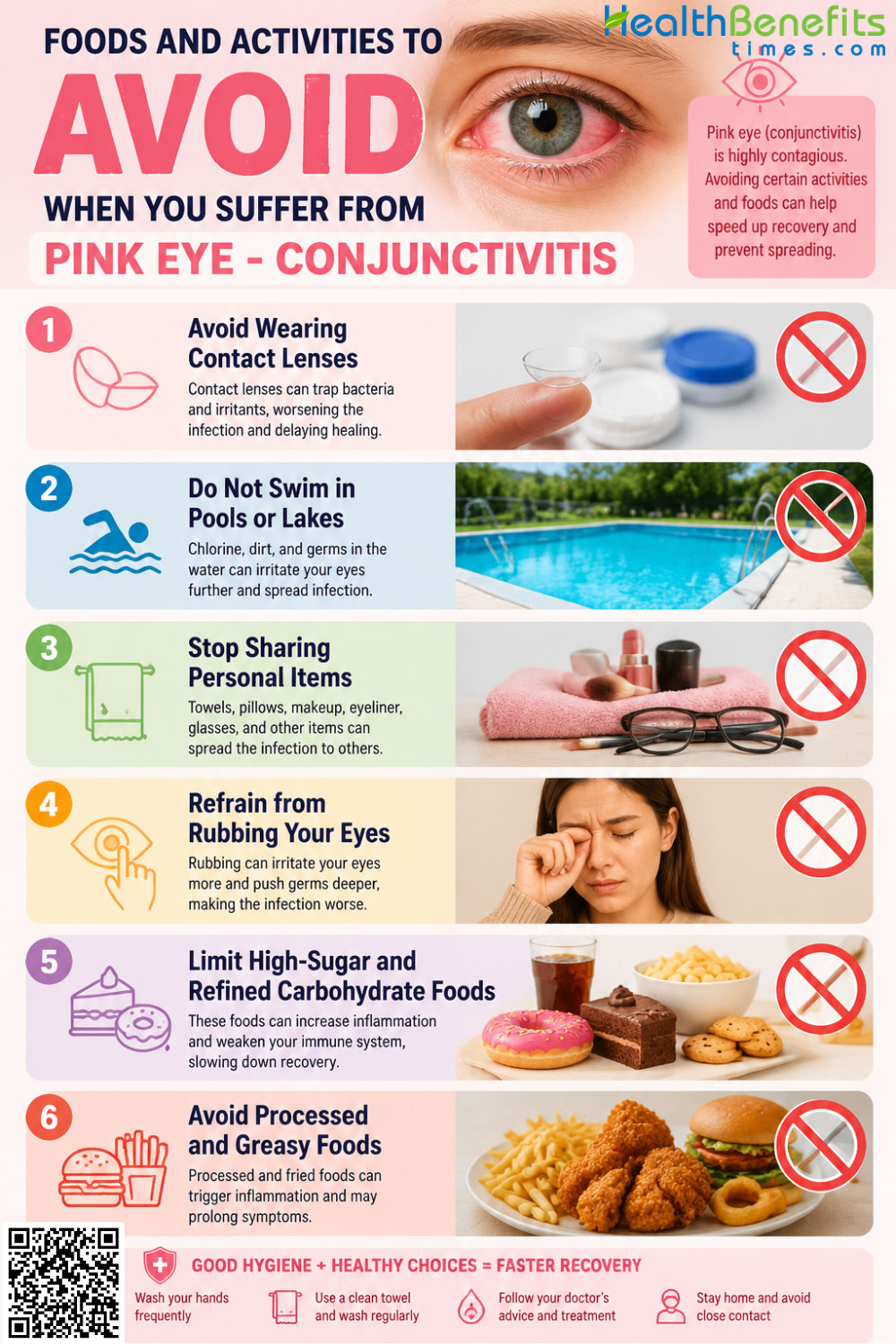
You must immediately stop wearing contact lenses the moment any symptoms appear. Lenses trap viruses and bacteria tightly against the surface of your eye, worsening the infection and increasing the risk of severe, permanent corneal damage. You should throw away any disposable lenses and cases you used prior to the infection to prevent re-infecting yourself later 14.
2. Do Not Swim in Pools or Lakes
You should completely avoid swimming in pools, hot tubs, or natural bodies of water until your eyes are completely clear. Swimming not only spreads your highly contagious infection to others in the water, but it also exposes your vulnerable, inflamed eyes to dangerous pathogens in the water, which can cause devastating secondary infections 15.
3. Stop Sharing Personal Items
You need to be incredibly vigilant about your personal hygiene at home. Never share towels, washcloths, pillowcases, eyeglasses, or eye makeup with anyone else in your household. You should wash your linens daily in hot water and detergent to kill lingering germs 16.
4. Refrain from Rubbing Your Eyes
Even though the itching can sometimes feel maddening, you must consciously avoid rubbing your eyes. Rubbing causes further mechanical damage to the swollen blood vessels, exacerbates the release of allergy-inducing histamines, and contaminates your hands, making it easier to spread the infection to your other eye or to surrounding surfaces.
5. Limit High-Sugar and Refined Carbohydrate Foods
You should actively cut back on sugary snacks, white bread, pastries, and pasta. These simple carbohydrates cause sharp, rapid spikes in your blood sugar, which triggers systemic inflammation throughout the body and can noticeably delay the healing of your inflamed ocular tissues 17.
6. Avoid Processed and Greasy Foods
You are heavily advised to steer clear of hot dogs, bacon, deli meats, and heavily deep-fried foods. These items are loaded with excessive sodium, trans fats, and saturated fats, which elevate your body’s inflammatory load, restrict healthy blood vessel flow, and can ultimately worsen the unpleasant symptoms of your eye condition 18.
Myths and Misconceptions
Navigating the vast amount of medical advice available on the internet can be highly confusing, especially when outdated folklore mixes with modern science. Understanding the reality behind common myths is absolutely essential for a safe, speedy recovery.
| Myth | Reality |
| Only young children get pink eye.
19. |
While the condition is highly common in crowded daycares, it readily affects people of all ages. In fact, viral and allergic types actually occur more frequently in the adult population than in children |
| Pink eye is always highly contagious. | Not all forms of the disease spread between people. Allergic conjunctivitis and irritant-induced conjunctivitis are completely non-contagious and pose no threat to family members. |
| Any redness in the eye means you have pink eye. 31. |
Eye discoloration can be caused by many different things, including glaucoma, corneal ulcers, minor injuries, or foreign objects. Not all red eyes are conjunctivitis |
| You always need prescription antibiotics to cure it. | Antibiotics are completely useless against viruses and allergens. Most viral cases will clear up naturally on their own within 1 to 2 weeks without any prescription medication. |
| Breast milk or redness-reducing drops are great home remedies. | These are actually quite dangerous. Breast milk can introduce new, unsterile bacteria into the eye, and redness-reducing drops can worsen pain, cause rebound redness, and mask serious symptoms. |
| You can develop a permanent immunity once you catch it.
21. |
Your body cannot develop lasting immunity to the condition. Because the disease is caused by numerous different viral and bacterial strains, you can easily catch it multiple times throughout your life |
Special Considerations
While the average healthy adult can easily weather a bout of ocular inflammation with minimal fuss, certain demographics require a far more cautious and specialized approach to management and care.
1. Children
Pediatric populations are disproportionately affected by the bacterial form of this disease due to their close physical proximity in schools and a general tendency to rub their eyes and neglect handwashing. A particularly severe concern in this age group is neonatal conjunctivitis, which occurs in newborn babies. Babies can contract dangerous bacteria, such as chlamydia or gonorrhea, as they pass through the birth canal of an infected mother. If left untreated, this specific form of the disease can cause permanent corneal scarring and blindness, which is why hospitals routinely apply antibiotic ointments to newborns’ eyes immediately after birth to prevent devastating consequences 22.
2. Pregnancy
Expectant mothers undergo massive immune and hormonal shifts that make them just as susceptible to eye infections as the general population, if not more so. However, the treatment paradigm shifts significantly during pregnancy. Because many medications can cross the placenta and affect fetal development, systemic treatments and certain prescription eye drops are generally avoided unless absolutely necessary. Expectant mothers are strongly encouraged to rely on conservative, natural treatments first, such as cool compresses and preservative-free artificial tears, before seeking pharmaceutical intervention from their obstetrician 23.
3. Chronic Conditions
Individuals living with chronic systemic illnesses, such as diabetes or HIV, face a heightened risk of severe complications from seemingly minor infections. An immunocompromised state diminishes the body’s natural ability to fight off opportunistic pathogens. In patients with advanced HIV, what appears to be simple conjunctivitis could actually mask more severe underlying opportunistic viral attacks on the retina, which can lead to vision loss if missed. Furthermore, diminished immune function means that a standard, self-limiting bacterial infection could easily escalate into dangerous corneal ulcerations or persistent chronic inflammation lasting weeks 24.
4. Elderly
Advanced age brings notable changes to the ocular surface, including naturally diminished tear production and a thinning of the protective conjunctival tissues. Elderly individuals are far more prone to dry eye syndrome, which impairs the eye’s mechanical ability to wash away invading pathogens or allergens. When treating the elderly, care providers must ensure that unverified natural remedies, such as herbal washes, are strictly avoided due to the higher risk of toxic reactions and secondary infections in fragile, aging eyes 25.
Precaution before Use of Natural Remedies When You Have Pink Eye – Conjunctivitis
Taking matters into your own hands with natural healing is an empowering feeling, but the eye is an incredibly delicate and sensitive organ. You must exercise extreme caution to avoid turning a minor, temporary inconvenience into a vision-threatening emergency.
1. Avoid Herbal Teas and Poultices
You should never use homemade herbal remedies like chamomile tea bags or eyebright directly on your eyes. Despite their widespread popularity in traditional folk medicine, these plants belong to the same botanical family as ragweed and daisies. Using them as an eye wash frequently triggers severe allergic reactions, contact dermatitis, and in rare cases, life-threatening anaphylaxis 26.
2. Demand Absolute Sterility with Water
If you are creating a saline flush or simply washing your face, you must ensure the water is perfectly safe. Never use unboiled tap water to rinse your eyes, clear your sinuses, or store contact lenses. Standard tap water can harbor Acanthamoeba, a microscopic organism that causes aggressive, painful, and often blinding infections of the cornea 27.
3. Do Not Cross-Contaminate
You must treat each of your eyes as a separate, isolated environment. If you are applying a warm compress or wiping away crusty discharge, never use the same tissue, cotton ball, or section of cloth on both eyes. Doing so is the absolute fastest way to spread a localized infection from one eye to the other 28.
4. Discard Contaminated Cosmetics
You need to ruthlessly throw away any eye makeup, such as mascara, eyeshadow, or eyeliner, that you used just before or during your infection. Makeup harbors bacteria beautifully, and reusing these contaminated products will almost certainly re-infect your eyes once you have finally healed.
5. Consult Before Using Supplements
Before you begin taking high doses of dietary supplements like Vitamin A, Zinc, or Omega-3s to boost your immune system, you should quickly check with your healthcare provider to ensure they do not interact negatively with your existing medications or health conditions.
When to See a Doctor
While patience and gentle home care are very often the best and only approach needed, certain warning signs indicate that the infection has bypassed your standard defenses and requires immediate professional medical intervention. You should seek urgent care from an eye specialist or doctor if you experience:
1. Intense, Throbbing Eye Pain
Mild discomfort or a gritty feeling is completely normal, but severe, deep aching pain indicates the infection may have spread to the deeper, more sensitive structures of the eye, such as the cornea or uvea 29.
2. Extreme Sensitivity to Light
If you find yourself unable to open your eyes in normal indoor lighting, or if stepping outside into the sun causes sharp pain, this condition (called photophobia) is a major red flag for serious, vision-threatening inflammation.
3. Changes in Your Vision
Blurry vision that does not temporarily clear up after you blink away mucus is a sign that the optical clarity of your eye is compromised and needs an expert evaluation.
4. Worsening Symptoms After 72 Hours
If your condition rapidly deteriorates or fails to show any signs of improvement after a few days of consistent home care, the pathogen might be highly resistant or you may require specific prescription antivirals or antibiotic drops 30.
5. You Have a Weakened Immune System
If you are currently undergoing cancer treatment, living with a chronic condition like HIV, or taking immunosuppressant medications, you should not wait for symptoms to worsen. Contact a doctor immediately to prevent severe, unchecked spread of the infection.