

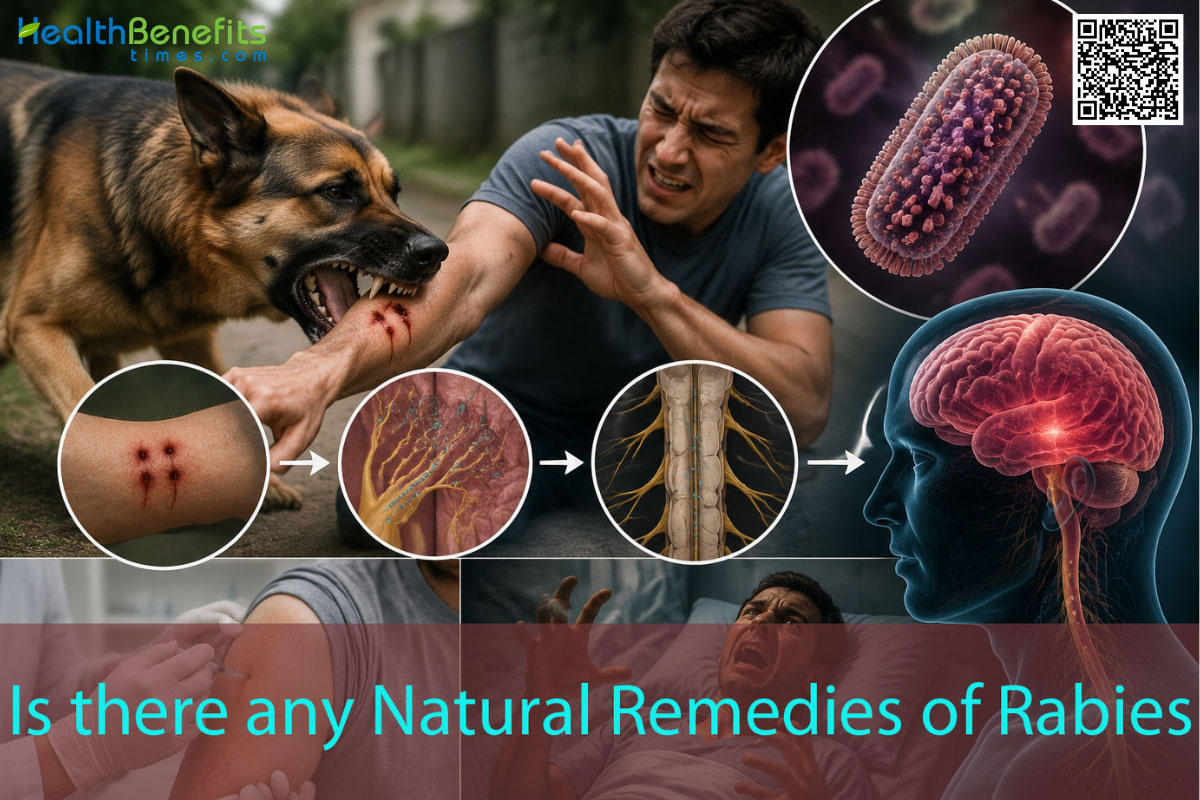
Rabies is a viral disease that attacks the brain and spinal cord 1. It spreads mainly through the saliva of an infected animal. Once inside the body, the virus travels quietly along nerve pathways toward the brain, where it causes severe inflammation 2. Globally, it kills tens of thousands of people every year. Asia and Africa carry most of that burden, and children under fifteen account for nearly 40% of all deaths 3. Tens of thousands of deaths per year is not a minor statistic it’s what makes timing so critical. Once symptoms appear, rabies is nearly always fatal. But if you act quickly after an exposure, post-exposure treatment can stop the virus before it reaches that point 4. Understanding how the virus works and why speed matters puts you in a much better position to protect yourself and your family.
Causes of Rabies
1. Animal Bites
The most common and successful way the virus spreads is through the direct bite of an infected animal, where virus-laden saliva breaks the skin and directly enters the body’s tissues 5.
2. Scratches and Abrasions
Even without a full bite, a deep scratch from a rabid animal that carries fresh saliva on its claws can be enough to transmit the disease into the bloodstream 6.
3. Mucous Membrane Contact
In rare instances, if the infected saliva of an animal gets directly into an open, fresh wound or accidentally splashes into the eyes, nose, or mouth, a serious infection can occur 7.
4. Wild Animal Reservoirs
In regions like North America, the virus is primarily kept alive in the wild through local populations of bats, raccoons, skunks, and foxes, making wildlife encounters a notable risk factor 8.
5. Domestic Animal Vectors
In many developing countries around the world, free-roaming or stray dogs are the primary carriers, causing the vast majority of viral transmissions to humans 9.
6. Organ Transplantation
Although exceedingly rare, there have been historically isolated incidents where the virus was unintentionally transmitted through the transplantation of organs or tissues from an infected donor 10.
Symptoms of Rabies
When the body first encounters this virus, it usually remains completely silent during an incubation period that can last for weeks or even months. Once the virus reaches the brain, however, it triggers severe neurological inflammation, and alarming signs begin to show rapidly.
-
Early Prodromal Signs
- General body weakness, profound fatigue, and unexplained physical discomfort 11.
- Fever, chills, and severe headaches that closely resemble a bad case of the flu {% my.clevelandclinic.org/health/diseases/13848-rabies %}.
- Unusual tingling, prickling, numbness, or intense itching exactly at the site of the original bite or scratch 12.
-
Furious Rabies Symptoms
- Extreme agitation, restlessness, and sudden bursts of aggressive behavior 13.
- Visual or auditory hallucinations combined with severe mental confusion 14.
- Intense muscle spasms, involuntary twitching, and an abnormally racing heart.
- Excessive drooling and hypersalivation due to difficulty controlling the throat muscles.
- Hydrophobia (an intense, uncontrollable physical fear of water or drinking) and aerophobia (fear of drafts or fresh air).
-
Paralytic (Dumb) Rabies Symptoms
- Gradual muscle weakness that typically starts at the site of the bite and spreads slowly outward 15.
- Noticeable neck stiffness and generalized, flaccid paralysis affecting the limbs.
- A slow progression into a deep coma, eventually leading to respiratory failure.
Rabies Facts
| Symptoms |
|
| Causes |
|
| Types of Rabies |
|
| How does spread |
|
| Age Group |
|
| You might be at a higher risk for exposure of this disease if you: |
|
| How doctors diagnose |
|
| Other facts |
|
Is there any Natural Remedies of Rabies
There are no effective natural or herbal remedies to treat rabies once symptoms appear. Rabies is nearly 100% fatal without immediate medical intervention in the form of post-exposure prophylaxis
Foods and Activities to Avoid When You Suffer from Rabies
1. Heavy Alcohol Consumption
Drinking alcohol, especially in large, frequent amounts, actively suppresses the human immune system. It can directly interfere with your body’s critical ability to produce the protective antibodies needed to fight off the virus after receiving your vaccination 17. It is always best to avoid alcohol entirely during your important treatment window 18.
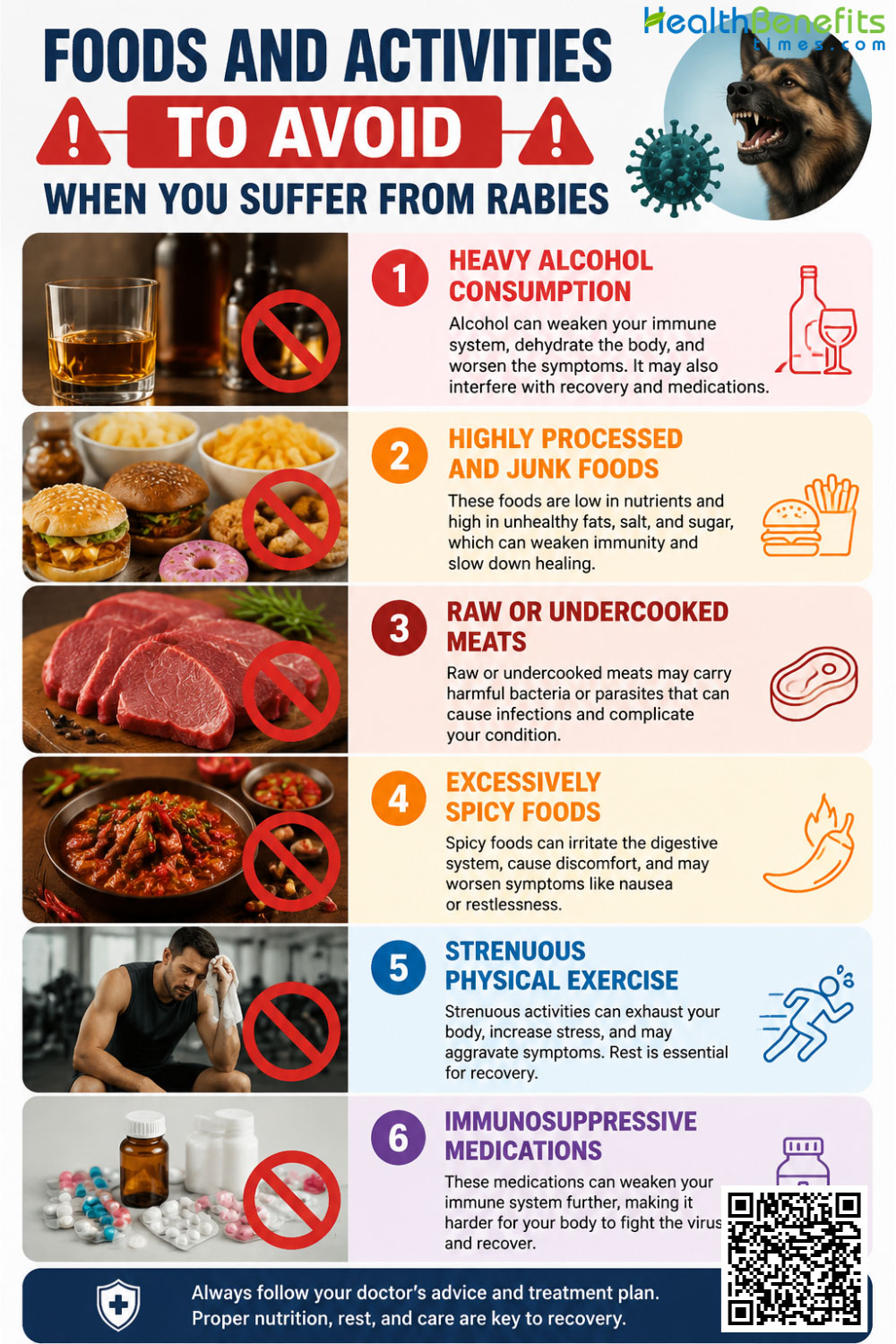
2. Highly Processed and Junk Foods
Pre-packaged foods like instant noodles, sugary candies, and greasy fast food completely lack the essential vitamins and minerals your body requires to mount a strong, healthy defense. High sugar intake can cause your blood glucose to spike, which momentarily paralyzes your protective immune cells.
3. Raw or Undercooked Meats
Eating raw meats, undercooked seafood, or runny eggs puts your body at a high risk for acquiring foodborne illnesses like Salmonella or E. coli. Fighting a secondary stomach bug will aggressively divert your immune system’s vital energy away from building your necessary rabies immunity 19.
4. Excessively Spicy Foods
While spicy dishes do not directly interact with medical vaccines, they can quickly upset your stomach and cause highly uncomfortable gastrointestinal distress. A calm, well-functioning digestive system is important for overall physical recovery and optimal nutrient absorption 20.
5. Strenuous Physical Exercise
Pushing your physical body to the absolute limit with heavy weight lifting, intense running, or total exhaustion rapidly drains your daily energy reserves. While light walking is perfectly fine, extreme physical stress should be entirely avoided until your medical treatments are complete.
6. Immunosuppressive Medications
Unless it is absolutely required by your doctor for a severe chronic condition, avoid starting high-dose steroids or specific anti-malarial drugs (like chloroquine), as these medications can directly block the success of the post-exposure vaccines 21.
Myths and Misconceptions
Throughout human history, a deep fear of the unknown has generated a massive, tangled web of folklore and legends surrounding this particular disease. Clearing up these harmful misunderstandings is a vital step in modern public health.
One of the most dangerous myths circulating today is the belief that rabies can be cured even after the classic symptoms, like an intense fear of water or severe hallucinations—have visibly started 22. In reality, once clinical signs appear, the virus has already caused irreversible damage to the fragile brain tissues, and modern medicine can only provide compassionate comfort care 16. Another widespread misconception is that traditional healers and botanical medicines alone can perfectly cure a rabid dog bite. While herbs offer excellent supportive care, clinical studies consistently show they cannot neutralize the virus on their own, making modern medical prophylaxis absolutely mandatory for survival 8. Interestingly, traditional healers often report a 98% apparent success rate, but statistics reveal this is largely because the vast majority of biting dogs are not actually infected with rabies in the first place, rather than the herbal remedy actively curing the disease.
Many well-meaning people also falsely assume that only aggressive, foaming-at-the-mouth dogs carry the disease. Actually, infected animals might appear overly shy, unusually tame, or move very slowly, and any mammal, including tiny bats, stray cats, and gentle cows, can successfully transmit the virus. Finally, there is a dangerous myth that simply washing a wound is a complete cure in itself. While washing a wound is the brilliant and necessary first step to reduce the immediate amount of virus, it is not a standalone cure and must always be followed by professional medical evaluation.
Special Considerations
1. Children
Kids are naturally highly curious and frequently play closely with household pets and wild neighborhood animals. Because their physical bodies are smaller, animal bites often occur on the face, neck, or hands, which means the virus has a much shorter distance to travel to reach the brain. Furthermore, children might purposefully hide minor animal scratches out of a fear of getting in trouble. They must be monitored closely, and medical prophylaxis is considered completely safe and highly effective for both infants and youths 23.
2. Pregnancy
Expectant mothers understandably often worry about taking heavy medications, but pregnancy is absolutely not a medical contraindication for rabies treatment. Both the modern vaccine and the targeted immune globulin are entirely safe for the mother and the developing baby, and these critical, life-saving treatments should never be delayed for any reason.
3. Chronic Conditions and Immunocompromised Individuals:
For those currently living with HIV, undergoing intense chemotherapy, or taking daily immunosuppressive drugs, the body’s natural ability to respond to a vaccine is significantly weakened. Doctors adjust for this specific risk by carefully administering a robust five-dose vaccine series instead of the standard four 24. They will also run a specific blood test a few weeks later to guarantee the body has successfully built enough protective antibodies.
4. Elderly
Older adults may naturally have somewhat slower immune responses or be currently managing multiple underlying health conditions. They should follow the standard post-exposure medical protocols very diligently and rely closely on their healthcare providers to monitor for any mild vaccine side effects, ensuring their aging immune system effectively builds the necessary viral defenses.
When to See a Doctor
1. You Are Bitten or Scratched
If any unfamiliar dog, stray outdoor cat, or wild animal (like a raccoon, fox, or skunk) unexpectedly bites or scratches you and successfully breaks the skin, go to a clinic immediately.
2. You Wake Up Near a Bat
Bats have incredibly tiny, razor-sharp teeth that often leave no mark. If you wake up and unexpectedly find a bat in your bedroom, or find one flying in a room with an unattended sleeping child or someone with a physical disability, you must safely assume a bite occurred and immediately see a doctor 25.
3. Saliva Touches Open Skin
If a highly suspicious, unknown animal gently licks a fresh cut, scrape, or an open wound on your body, you still urgently need a professional medical evaluation.
4. The Animal Acts Strangely
If your own vaccinated pet or a familiar neighborhood animal is suddenly highly aggressive, unusually friendly, or having severe trouble swallowing its food, distance yourself safely and quickly contact a local public health official or animal control expert.
5. You Experience Unexplained Symptoms
If you suddenly develop strange numbness, or an intense, unexplained itching at an old wound site, strongly paired with a high fever or severe headache, seek professional emergency care immediately.