

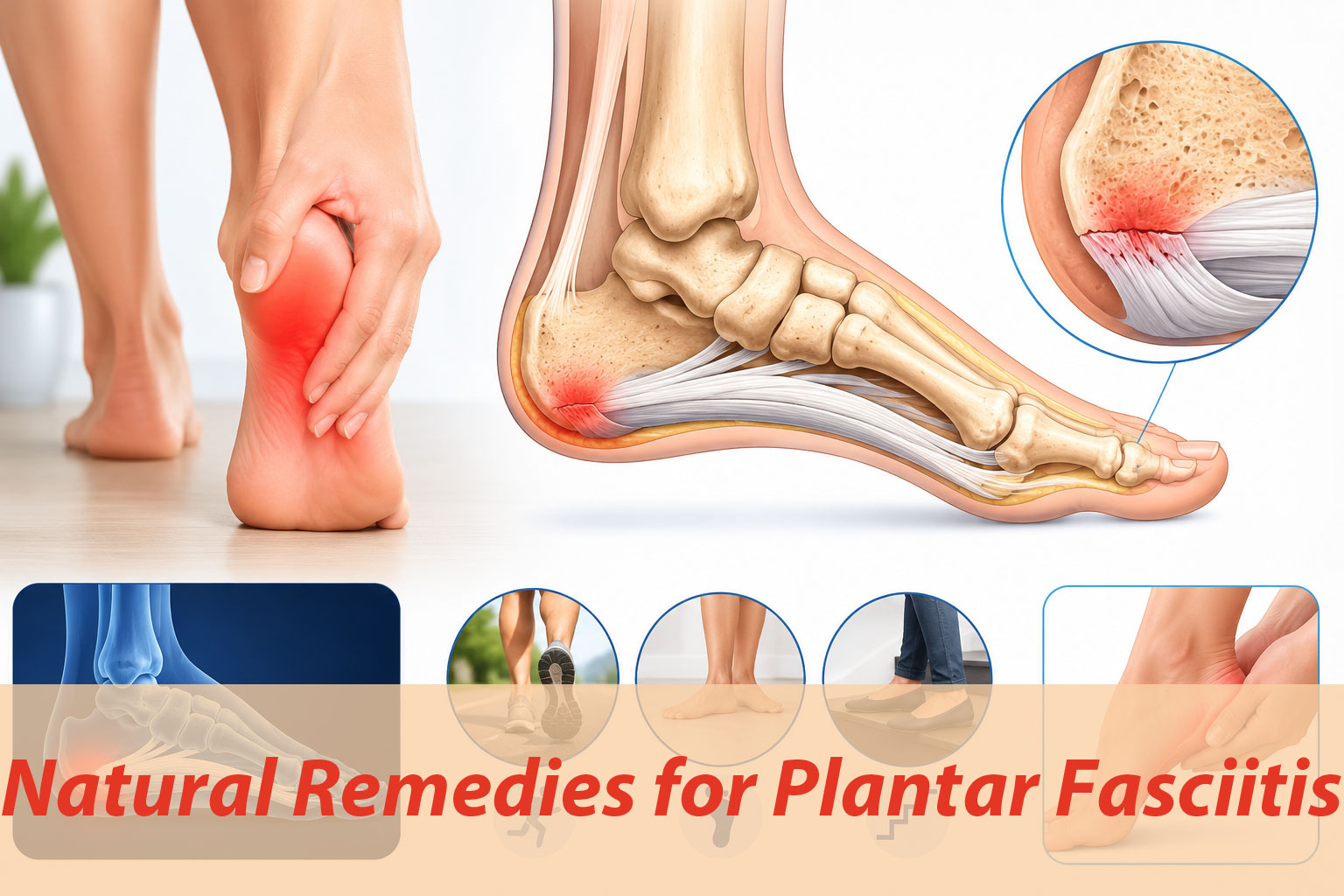
The human foot is an extraordinary piece of biological engineering, designed to carry our entire body weight while absorbing the intense shock of every step. Running along the very bottom of this complex structure is a thick, resilient band of connective tissue called the plantar fascia. This fibrous ligament-like band originates at the base of the heel bone (the calcaneus) and extends forward, fanning out into five separate bands that attach securely to the base of each toe 1. Its primary job is to support the arch of the foot, acting much like the string on an archer’s bow to keep the foot structurally sound during weight-bearing movements.
Problems arise when this vital tissue is subjected to excessive daily tension, repetitive stress, or sudden increases in mechanical load. The resulting condition, widely known as plantar fasciitis, is the most common cause of heel pain worldwide. It affects approximately ten percent of the general population over their lifetimes and accounts for millions of clinical visits annually 2. Interestingly, modern medical imaging and tissue analysis have revealed that the traditional name is slightly misleading. The suffix “-itis” usually indicates active inflammation, but researchers have discovered that this condition often completely lacks inflammatory cells. Instead, it is primarily characterized by micro-tears, collagen breakdown, and degenerative scarring at the point where the tissue inserts into the heel bone 3. Because of this chronic wear-and-tear process, many medical professionals now refer to the condition more accurately as plantar fasciosis or plantar fasciopathy, highlighting the need for restorative healing rather than just anti-inflammatory treatments 4.
Causes of Plantar Fasciitis
Understanding how heel pain begins requires a close look at our daily habits, physical environments, and unique anatomy. The breakdown of the plantar fascia rarely happens overnight due to a single traumatic event. Rather, it is typically the result of accumulated stress over time. Several prominent factors contribute to this painful condition:
1. Repetitive High-Impact Overuse
Engaging in sports or recreational activities that involve relentless pounding of the feet places immense mechanical strain on the lower extremities. Distance running, ballet dancing, step aerobics, and tennis force the plantar fascia to rapidly stretch and snap back into place thousands of times per session. When the tissue does not receive adequate time to rest and repair between these intense sessions, microscopic tears begin to form and multiply, eventually leading to severe structural irritation 31.
2. Occupational Standing and Hard Surfaces
Many careers demand that individuals remain on their feet for eight to twelve hours a day. Healthcare workers, factory assembly line operators, teachers, and retail workers often stand on unyielding surfaces like concrete or hard tile. This constant, unchanging downward pressure slowly exhausts the shock-absorbing capacity of the foot’s arch. Without periods of rest to allow the tissue to rebound, the continuous compression weakens the fascia’s structural integrity 6.
3. Structural Foot Variations
Every person is born with a unique foot architecture, and certain shapes are naturally more prone to ligament strain. Individuals with noticeably flat feet (pes planus) lack a supportive arch, meaning their entire foot rolls inward (overpronation) when they walk. This abnormal biomechanical rolling forcefully stretches the plantar fascia with every single stride. Conversely, people with exceptionally high arches (pes cavus) have very rigid feet that fail to absorb shock effectively, channeling the harsh impact of walking directly into the heel bone and its attached tissues 7.
4. Muscular Tightness in the Lower Leg
The muscles of the calf and the tissues of the foot are intimately connected through a complex biomechanical chain. When the large calf muscles (the gastrocnemius and soleus) or the Achilles tendon are excessively tight, they physically restrict the ankle’s ability to bend upward toward the shin a movement called dorsiflexion. Because the ankle cannot flex adequately during a normal walking stride, the body compensates by forcing the plantar fascia to stretch further than it was designed to, absorbing the tension that the calf should have handled 8.
5. Sudden Spikes in Physical Activity
The human body adapts beautifully to exercise, provided the increase in demand is gradual. A very common trigger for heel pain is the “too much, too soon” phenomenon. This happens when an individual abruptly doubles their running mileage, suddenly begins hiking steep inclines on weekends, or transitions from a sedentary lifestyle to an aggressive daily walking routine. The connective tissues in the foot simply cannot build new collagen fast enough to withstand the sudden surge in mechanical load.
6. Increased Body Weight
Carrying excess body weight places a relentless, heavy burden on the feet. Research consistently shows that a Body Mass Index (BMI) greater than 30 significantly amplifies the daily mechanical load on the structural supports of the foot. The heavier the downward force, the more the arch is forced to flatten out, pulling aggressively on the delicate attachment point at the heel bone and accelerating degenerative changes 9.
7. Inadequate or Worn-Out Footwear
Shoes act as the vital interface between our feet and the hard modern world. Wearing footwear that lacks structural support such as flimsy flip-flops, worn-out running shoes with compressed midsoles, or unsupportive high heels leaves the foot entirely unprotected. Without adequate arch support to distribute weight or cushioning to absorb shock, the plantar fascia is left to manage the full brunt of gravity and momentum on its own.
Symptoms of Plantar Fasciitis
Identifying this specific type of heel pain is generally straightforward because the symptoms follow a highly predictable and distinctive pattern. The clinical presentation is closely tied to the daily cycles of rest and movement.
- A sharp, stabbing, or piercing pain located directly on the underside of the heel, sometimes radiating slightly forward into the central arch of the foot.
- Intense, breathtaking pain during the very first steps taken in the morning immediately after getting out of bed 10.
- Noticeable stiffness and a recurrence of sharp pain when standing up to walk after a prolonged period of sitting, such as finishing a long car ride or watching a movie.
- Pain that temporarily lessens, transitions to a dull ache, or completely disappears as the foot warms up through mild movement and walking.
- Aggravated heel discomfort that peaks after intense exercise or physical exertion is completed, rather than hurting severely during the activity itself 1.
- Specific tenderness that can be felt when pressing a thumb firmly against the bottom of the heel bone, particularly on the inner (medial) side of the foot.
- Discomfort that flares up noticeably when attempting to walk barefoot on hard surfaces like kitchen tiles or hardwood floors.
Plantar Fasciitis Facts
Consolidating the clinical details into a clear framework helps build a comprehensive understanding of the condition and how it behaves.
| Feature | Details |
| Symptoms |
|
| Causes |
|
| Types of Plantar Fasciitis |
|
| How does it spread |
|
| Age Group |
|
| You might be at a higher risk for exposure of this disease if you: |
|
| How doctors diagnose
11. |
|
| Other facts |
|
Natural Remedies for Plantar Fasciitis
Taking control of your foot health often begins right in your own living room. Because this condition is rooted in mechanical stress and tissue wear, the most effective treatments involve reducing that stress and gently encouraging the tissue to repair itself. The following natural remedies are widely celebrated for their ability to soothe discomfort, rebuild flexibility, and restore your mobility without the need for invasive surgeries or prolonged medication use.
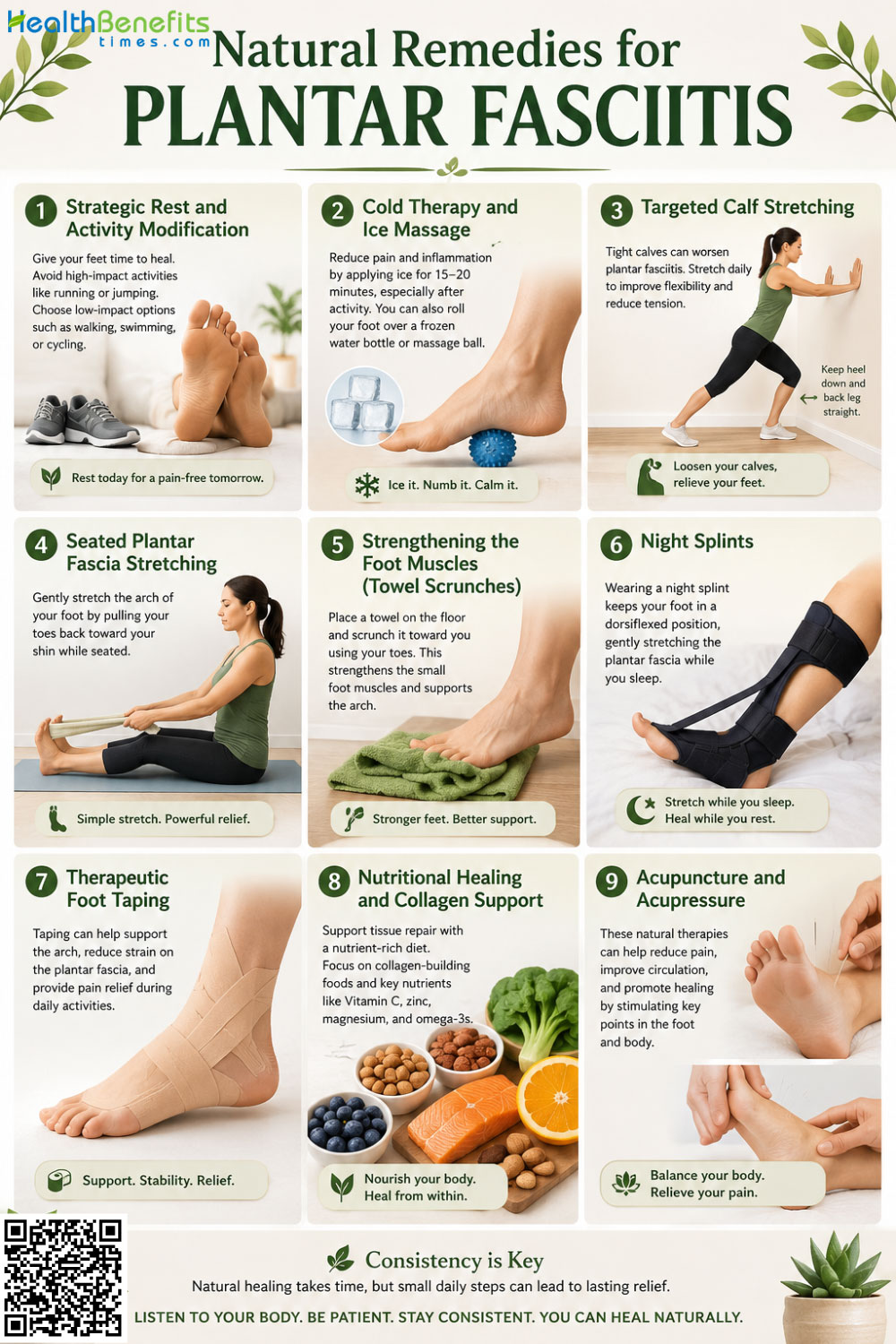
1. Strategic Rest and Activity Modification
Listening to your body is the foundational step in allowing damaged tissues to heal. You need to temporarily pause high-impact activities like running, jumping, or dancing, which aggressively pound your feet against hard ground. Continuing to push through the sharp pain only creates more microscopic tears in the ligament. Instead, you can switch your exercise routine to low-impact alternatives such as swimming, stationary cycling, or water aerobics. These activities keep your cardiovascular system strong and maintain your fitness levels while providing your feet a much-needed vacation from gravity and heavy impact 13. Giving the connective tissue a physical break is absolutely necessary to halt the cycle of degeneration.
Note: Applied by consciously avoiding heavy foot impact for several weeks to allow natural, undisturbed biological tissue repair.
2. Cold Therapy and Ice Massage
Applying cooling temperatures to a highly irritated heel is one of the quickest ways to numb sharp nerve pain and calm localized swelling. You can easily create a highly effective physical therapy tool right in your kitchen by freezing a standard plastic water bottle. While seated comfortably in a chair, place the frozen bottle on the floor and gently roll your bare foot back and forth over it, moving slowly from the ball of your foot down to the heel. This technique provides a powerful dual benefit: the ice cools the tissue to lower inflammation, while the rolling cylindrical shape gently massages and stretches the tight fascia 14.
Note: Applied by rolling the foot over a frozen object for 10 to 15 minutes, up to three times a day, providing medicinal pain relief and reduced tissue heat.
3. Targeted Calf Stretching
Restoring flexibility to the back of your lower legs is a crucial biomechanical strategy for relieving tension on your heel bone. Because the large calf muscles merge into the Achilles tendon, which then wraps around the heel to connect to the plantar fascia, a tight calf directly yanks on the bottom of your foot with every step. You can perform a highly effective wall-facing calf stretch by standing an arm’s length away from a wall and placing your hands flat against it. Extend your painful leg straight backward, keeping the heel firmly planted on the floor, and bend your front knee forward. Lean your hips toward the wall until you feel a deep, satisfying pull in the back of your calf 15.
Note: Applied by holding the static stretch for 20 to 30 seconds, repeating three times daily to structurally lengthen the tissues and offload heel tension.
4. Seated Plantar Fascia Stretching
Directly stretching the bottom of the foot helps reorganize the healing collagen fibers, making the tissue more flexible and less prone to tearing when you stand up. You can perform this specific stretch before you even get out of bed in the morning, which helps prevent that agonizing first step. Sit up and cross your painful foot over your opposite knee. Using your hand, grasp all of your toes especially the big toe and gently pull them backward toward your shin. You should feel a tight band pop up along the arch of your foot; you can use your other hand to gently massage this band while it is stretched taut 16.
Note: Applied manually to the foot for 20 seconds at a time to increase elasticity and provide remedial relief from morning stiffness.
5. Strengthening the Foot Muscles (Towel Scrunches)
Building up the small, intrinsic muscles located within the foot itself provides better natural support for your arch, taking the heavy lifting off the plantar fascia. You can easily strengthen these muscles using a simple hand towel. Sit in a chair bare-footed and place the towel flat on the smooth floor in front of you. Place your foot on the edge of the towel, spread your toes wide, and use them to grab and scrunch the fabric, pulling the towel toward you. Once you have pulled the whole towel in, smooth it out and repeat the process. As your foot grows stronger over the weeks, you can place a small weight, like a soup can, on the far end of the towel to increase the resistance 14.
Note: Applied as a daily exercise routine to structurally strengthen foot muscles, acting as a natural, internal remedial support system.
6. Night Splints
Preventing your foot from tightening up while you sleep is the ultimate key to conquering morning pain. When you sleep under heavy blankets, your feet naturally relax and point downward. This position allows the plantar fascia to shorten, contract, and stiffen over eight hours. When you stand up in the morning, the sudden stretch violently tears the tight tissue. You can disrupt this cycle by wearing a specialized brace called a night splint, which holds your ankle in a rigid, 90-degree position. This creates a gentle, continuous stretch that keeps the tissue elongated throughout the night, ensuring it is fully prepared to bear weight the moment your feet hit the floor in the morning 12.
Note: Applied by wearing the brace over the lower leg during sleep for preventative and remedial elongation of the fascia.
7. Therapeutic Foot Taping
Providing external physical support to the arch of your foot can significantly absorb the shock experienced during walking, acting like an artificial ligament. You can use strong athletic tape or flexible kinesiology tape to bind the foot in specific biomechanical patterns. By securely anchoring the tape at the heel and pulling it tightly across the arch toward the base of the toes, the tape takes on some of the mechanical load. This prevents the foot from flattening out excessively when you place your body weight on it, creating a simple physical barrier that protects the damaged tissue from over-stretching during your daily activities 17.
Note: Applied directly to the skin of the sole to physically support the arch and provide remedial offloading of tension.
8. Nutritional Healing and Collagen Support
Nourishing your body from the inside out equips your tissues with the precise biological building blocks they need to repair microscopic tears. You can support tendon and ligament recovery by increasing your dietary intake of Vitamin C and collagen peptides. Research demonstrates that Vitamin C plays a mandatory role in stabilizing the mRNA that encodes for collagen proteins, essentially telling your body to produce more healthy connective tissue while simultaneously cleaning up damaged cells 18. Furthermore, integrating collagen supplements and omega-3 fatty acids into your daily routine helps systematically dial down inflammation and accelerate the structural repair of the foot.
Note: Consumed daily as part of a balanced diet or supplement routine to provide internal medicinal benefits that repair tissue architecture.
9. Acupuncture and Acupressure
Tapping into ancient, holistic wellness practices can sometimes unlock profound modern pain relief, especially when conventional stretching plateaus. You can visit a licensed acupuncturist who will carefully insert hair-thin, sterile needles into specific points on your body. This precise stimulation is believed to normalize hyper-excitable pain nerves, increase local blood flow, and trigger the release of natural pain-relieving endorphins. Clinical studies have shown that acupuncture offers significant, safe, and effective short-term pain relief for individuals suffering from stubborn plantar fasciitis, making it an excellent complementary therapy to your physical exercises 19.
Note: Applied by a professional directly to specific body points to provide short-term, remedial neuro-muscular pain relief.
Foods and Activities to Avoid When You Suffer from Plantar Fasciitis
Protecting your feet from further harm requires knowing exactly what triggers your symptoms and worsens tissue breakdown. To ensure your recovery stays on a positive trajectory, you should actively avoid certain daily habits, movements, and dietary choices that encourage systemic inflammation.
1. Walking Barefoot
You should strictly avoid walking without shoes, especially on hard, unyielding surfaces like kitchen tiles, hardwood floors, or concrete. Barefoot walking provides absolutely zero shock absorption, forcing your injured heel to take the full impact of gravity.
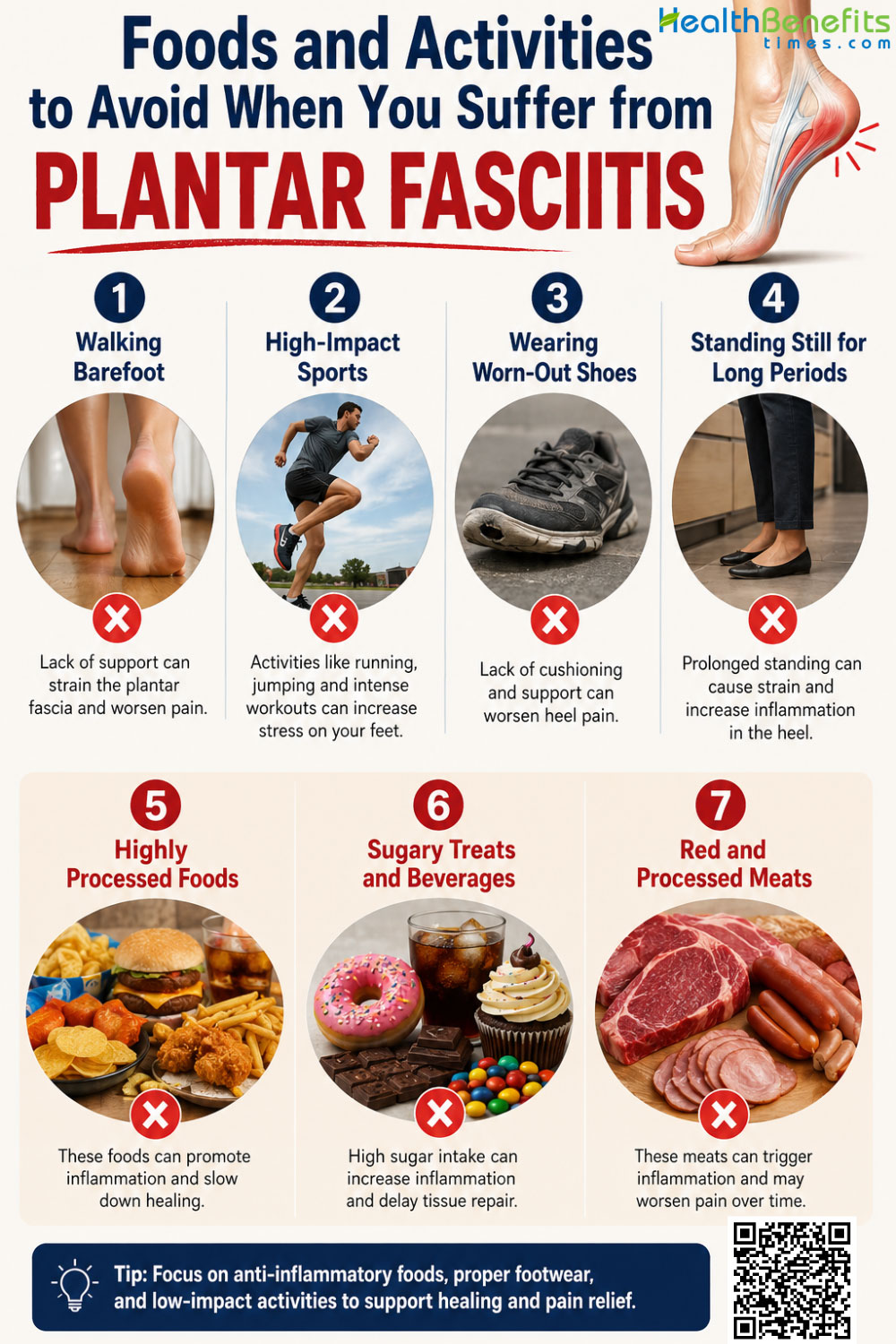
2. High-Impact Sports
You need to pause activities that involve explosive movements, such as distance running, jump roping, basketball, or plyometrics, as these forcefully stretch the fascia and instantly undo weeks of healing.
3. Wearing Worn-Out Shoes
You should thoroughly inspect your daily footwear and discard any old sneakers or flats that have uneven wear patterns or compressed foam. Shoes that have lost their cushioning actively hinder your recovery.
4. Standing Still for Long Periods
You should try to avoid standing completely still in one spot for hours on end. If your job requires it, ensure you are standing on a thick, specialized anti-fatigue mat and frequently shift your weight.
5. Highly Processed Foods
You should limit your intake of heavily processed fast foods, packaged snacks, and refined carbohydrates (like white bread and pasta). These foods cause rapid blood sugar spikes that promote systemic, low-grade inflammation, delaying the biological healing of connective tissues 9.
6. Sugary Treats and Beverages
You should cut back on sodas, candies, and sweet baked goods. Elevated blood sugar levels can weaken collagen fibers through a process called glycation, making your ligaments stiffer and more prone to tearing.
7. Red and Processed Meats
You should avoid the daily consumption of bacon, sausages, and heavy red meats, which contain high levels of saturated fats that are biochemically linked to triggering inflammatory pathways throughout the body.
Myths and Misconceptions
Navigating the vast sea of health information can be confusing, but separating clinical fact from popular fiction is essential for guiding your treatment properly and easing your peace of mind.
| Myth | Reality |
| Heel spurs are the primary cause of the pain. | While bone spurs on the heel are frequently seen on X-rays of people with plantar fasciitis, the bony growth itself is almost never the source of the pain. The pain originates from the tight, damaged connective tissue pulling away from the bone. |
| Plantar fasciitis means your foot is severely inflamed. | Despite the “-itis” in the name, chronic cases actually show a distinct lack of inflammatory cells under a microscope. It is predominantly a degenerative condition (fasciosis) involving the wear, tear, and breakdown of collagen structure. |
| Surgery is the only way to permanently fix the issue. | Surgical intervention is highly uncommon and reserved as an absolute last resort. Over 98% of individuals experience complete symptom resolution by using simple, natural, conservative remedies like stretching and rest. |
| You should push through the pain to “stretch it out”. | Pushing through sharp, severe agony can actually cause a complete, traumatic rupture of the fascia. Stretching should only induce a feeling of gentle, tolerable tension, never sharp, breathtaking pain. |
| Rest alone is enough to cure the condition. | While rest is crucial initially, absolute prolonged rest can cause the tissue to heal in a shortened, stiff position. Gentle loading and stretching are required to align the new collagen fibers properly. |
Special Considerations
Because every human body is beautifully unique, heel pain can present differently depending on a person’s age, life stage, underlying genetics, and overall medical history. Understanding these nuances helps tailor the right approach to healing.
1. Children
It might surprise you to learn that when young children or active teenagers complain of severe heel pain, the culprit is frequently not plantar fasciitis. Instead, pediatric heel pain is most commonly caused by a condition called Sever’s disease, which is an irritation of the cartilaginous growth plate located at the very back of the heel bone 23. This condition typically strikes highly active children during rapid growth spurts when the bones grow faster than the surrounding muscles, causing the Achilles tendon to pull tightly on the fragile growth plate. Diagnosing the exact cause is crucial often done using a simple physical “squeeze test” on the sides of the heel because the structural treatments and activity restrictions for growth plate irritation differ from those used for adult ligament tears 24.
2. Pregnancy
Carrying a child initiates a cascade of profound physical and hormonal changes that directly impact foot mechanics. As pregnancy progresses, the body releases specific hormones designed to naturally relax ligaments and joints in preparation for childbirth. Combined with rapid, natural weight gain, this systemic laxity causes the arch of the foot to drop and flatten, significantly elongating the foot and altering the way weight is distributed 25. Ultrasound imaging reveals that pregnant women often develop a noticeably thicker plantar fascia as the body urgently attempts to compensate for this new, heavier weight distribution, vastly increasing the risk of developing painful morning heel symptoms 26.
3. Chronic Conditions
Underlying metabolic and autoimmune diseases can severely complicate foot health and delay recovery. Individuals with diabetes face a notably higher risk of developing plantar fasciitis because chronically elevated blood sugar levels can weaken connective tissues, promote tissue stiffness, and impair healthy blood circulation to the extremities 27. Furthermore, diabetic nerve damage (neuropathy) might dangerously mask the early warning pain signals of foot strain, allowing the microscopic tissue tears to worsen significantly before the patient even notices. Additionally, chronic heel pain occurring in both feet simultaneously can sometimes be an early clinical symptom of broader systemic inflammatory conditions, such as rheumatoid arthritis or ankylosing spondylitis, particularly if the heel pain is accompanied by unexplained joint stiffness in the hips or hands 28.
4. Elderly
As the human body ages, the natural protective shock-absorbing mechanisms in the foot begin to wear down and deteriorate. In elderly individuals, heel pain is frequently misdiagnosed as plantar fasciitis when the true, underlying culprit is actually a condition called heel fat pad atrophy. Over the decades, the thick, protective cushion of fat and collagen located directly beneath the heel bone gradually thins out, losing its water content and vital elasticity 29. Without this robust protective fat pad acting as a barrier, walking on hard surfaces causes a deep, bruising ache right in the center of the heel bone. This condition requires specialized management, focusing heavily on highly cushioned footwear and gel heel cups rather than the aggressive calf stretching used for plantar fasciitis 30.
Precaution before Use of Natural Remedies When You Have Plantar Fasciitis
Taking initiative in your personal healing journey is empowering, but you must approach home therapies with care, patience, and bodily awareness. Before you begin aggressively applying natural remedies, it is vital to keep a few safety guidelines in mind to prevent accidental harm or prolonged injury.
1. Confirm Your Diagnosis Professionally
You should ensure that your pain is actually plantar fasciitis and not a hairline stress fracture, nerve entrapment (like tarsal tunnel syndrome), or fat pad atrophy. Treating the wrong condition with aggressive stretching can severely worsen your symptoms 2.
2. Do Not Overstretch the Tissue
You must avoid aggressively yanking on your toes or bouncing while stretching your calf muscles. Stretching should be a gentle, static, and controlled process to prevent causing a complete, traumatic rupture of the already fragile fascia.
3. Monitor Skin Sensitivity with Ice
You should always keep the frozen water bottle moving back and forth, or place a thin cloth between ice packs and your skin. Leaving ice stationary on bare skin can quickly cause frostbite and damage superficial nerves.
4. Introduce Orthotics Gradually
You need to give your feet, knees, and hips time to adapt to new, rigid arch supports. Wear them for just one or two hours a day initially, gradually increasing the time to prevent unfamiliar aches from developing in your lower back.
5. Be Mindful of Medical Conditions
If you have diabetes, neuropathy, or poor circulation, you must inspect your feet daily for blisters, cuts, or skin breakdown that could easily result from wearing tight night splints, stiff new shoes, or aggressive tape jobs.
When to See a Doctor
While the vast majority of heel pain resolves beautifully with patience, activity modification, and natural home care, there are critical moments when professional medical intervention becomes absolutely necessary. You should promptly schedule an appointment with a healthcare provider, physical therapist, or a foot specialist (podiatrist) if you experience any of the following red flags.
1. Severe Pain That Persists for Months
You should see a doctor if your heel pain does not show any signs of improvement after several weeks of dedicated rest, daily stretching, icing, and supportive footwear.
2. Numbness, Tingling, or Burning
You must seek medical attention if the heel pain is accompanied by a “pins and needles” sensation or a loss of feeling in your toes, which strongly suggests nerve compression rather than a simple ligament issue.
3. Total Inability to Bear Weight
You should get evaluated immediately if the pain is so excruciating that you cannot stand on the affected foot at all, which may indicate a severe bone fracture or a completely ruptured tendon.
4. Visible Swelling, Redness, or Heat
You need a professional clinical assessment if your heel becomes highly swollen, warm to the touch, or visibly red. These are classic, urgent signs of an active biological infection or a severe acute injury rather than standard chronic plantar fasciitis.
5. Night Sweats or Systemic Fever
You must consult a doctor right away if your foot pain is paired with systemic bodily symptoms like fever, unexplained weight loss, or throbbing pain that actively wakes you up from a deep sleep, as these could point to underlying systemic issues, rheumatic diseases, or tumors.