

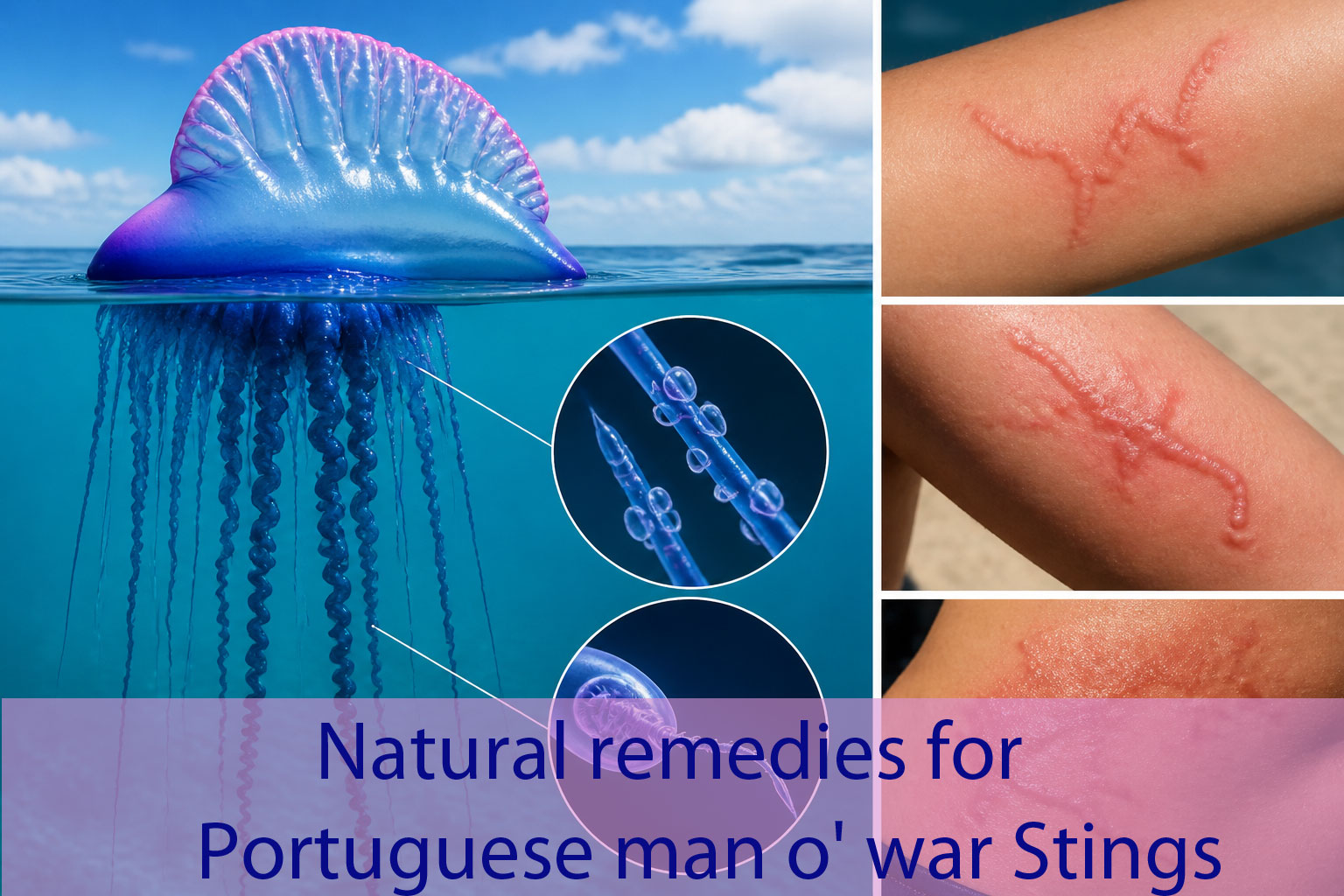
You’ve probably seen one without realizing what it was a shimmering, translucent balloon resting on the sand, glowing in shades of blue, pink, or violet. That’s a Portuguese man o’ war, and while it looks stunning, it’s one of the more dangerous creatures you can encounter at the beach. Most people assume it’s just another jellyfish. It’s not. The man o’ war actually belongs to an entirely different group of animals called siphonophores 1. Instead of being a single animal, it’s a colony made up of genetically identical clones known as zooids 2. Each zooid takes on a different shape and job some handle floating, others capture prey, digest food, or reproduce. Together, they function as one unified organism 3. Here’s what makes them unpredictable: they can’t swim on their own. They drift entirely at the mercy of ocean currents and wind. A strong gust can push large groups of them straight into popular swimming areas 4. It’s a remarkable piece of nature’s engineering but one you’ll want to admire from a safe distance.
Understanding the Venom of Portuguese man o’ war Stings
1. The Microscopic Harpoon System
The Portuguese man o’ war’s long tentacles are covered with millions of tiny stinging cells, each containing a small coiled tube filled with venom that fires automatically on contact and because this reaction is purely mechanical rather than controlled by a brain, even detached or dead tentacles washed up on a beach can still deliver a painful sting for weeks. 5 6
2. The Astonishing Speed of the Sting
The Astonishing Speed of the Sting When you touch a jellyfish tentacle, its stinging cells fire a tiny harpoon into your skin in just milliseconds one of the fastest cellular actions in nature delivering venom deep into your tissue before you even feel the pain 7 8.
3. A Highly Complex Chemical Cocktail
Once the microscopic harpoons pierce your skin, they inject a toxic, protein-rich venom whose key destructive ingredient, physalitoxin, tears tiny holes in cell membranes 9 designed to paralyze small prey but capable, in humans, of acting as a powerful neurotoxin and cardiotoxin that hijacks pain receptors and causes severe tissue damage lasting days 10.
4. Vulnerability to Chemical Imbalances
The stinging cells are extremely sensitive to changes in their surrounding chemical environment, so applying the wrong liquid to a sting can trigger the remaining unfired cells on the skin to burst open through osmotic shock and release even more venom, making the pain significantly worse. 11 12
5. Heat Sensitivity of the Venom Proteins
The toxic proteins in venom are heat-sensitive, meaning they break down at high temperatures, and applying sustained heat directly to the sting site can safely neutralize the toxins and provide effective pain relief without medication. 13 14
What other Symptoms could be notice from Portuguese man o’ war Stings
1. Instant, Electrifying Pain
A Portuguese man o’ war sting causes immediate, intense burning pain across a wide area of the body, often compared to an electric shock, which can make it hard to think or move, and while the pain usually peaks within minutes, it can last anywhere from a few hours to three days 15 16.
2. Distinctive Red Track Marks
Distinctive Red Track Marks After a jellyfish sting, raised red or dark whip-like welts appear on the skin in the shape of the tentacles, and in severe cases, these marks can blister, bruise deeply, or even cause permanent scarring 17 18.
3. Severe Gastrointestinal Distress
Severe Gastrointestinal Distress Venom from a sting can travel through the bloodstream and cause serious stomach problems such as nausea, cramping, and vomiting, especially in young children, because the toxins disrupt the nervous system and trigger strong inflammatory responses in the body. 19 20
4. Heart and Breathing Complications
In rare but serious cases, the venom can affect the heart and breathing by causing irregular heartbeat, drop in blood pressure, chest pressure, muscle spasms, and difficulty breathing, and while deaths are very rare, severe stings can sometimes lead to heart and lung failure that requires emergency treatment 21 22
5. Long-Lasting Nerve Damage
Although most people recover fully, some experience lasting nerve pain for months because the venom can damage peripheral nerves, and in some cases, patients have developed a condition called sural compression neuropathy requiring physical therapy and nerve medications for over a year 11 20.
Portuguese man o’ war Stings Facts
| Key facts
|
|
| Symptoms of Portuguese man o’ war Stings |
|
| Types of Portuguese man o’ war and its Stings |
|
| How long does sting last in our body |
|
| You might be at a higher risk for Portuguese man o’ war Stings if you: |
|
| Other facts |
|
Natural Remedies Portuguese man o’ war Stings
1. Generous Rinsing with Household Vinegar
The moment you get out of the water, your first priority is dealing with the millions of tiny venom capsules still stuck to your skin. Pour undiluted white vinegar over the entire sting area and keep rinsing for at least 30 seconds. This is the single most important first step you can take and it’s backed by solid evidence 33.
Here’s why it works. The acid in vinegar essentially freezes the unfired stinging cells in place, so they can’t release any more venom into your body. It won’t make the pain disappear instantly nothing does but studies using live tissue models have shown it’s the only reliable liquid that actually stops the stinging process. Once that’s done, you can safely remove the tentacles 34.
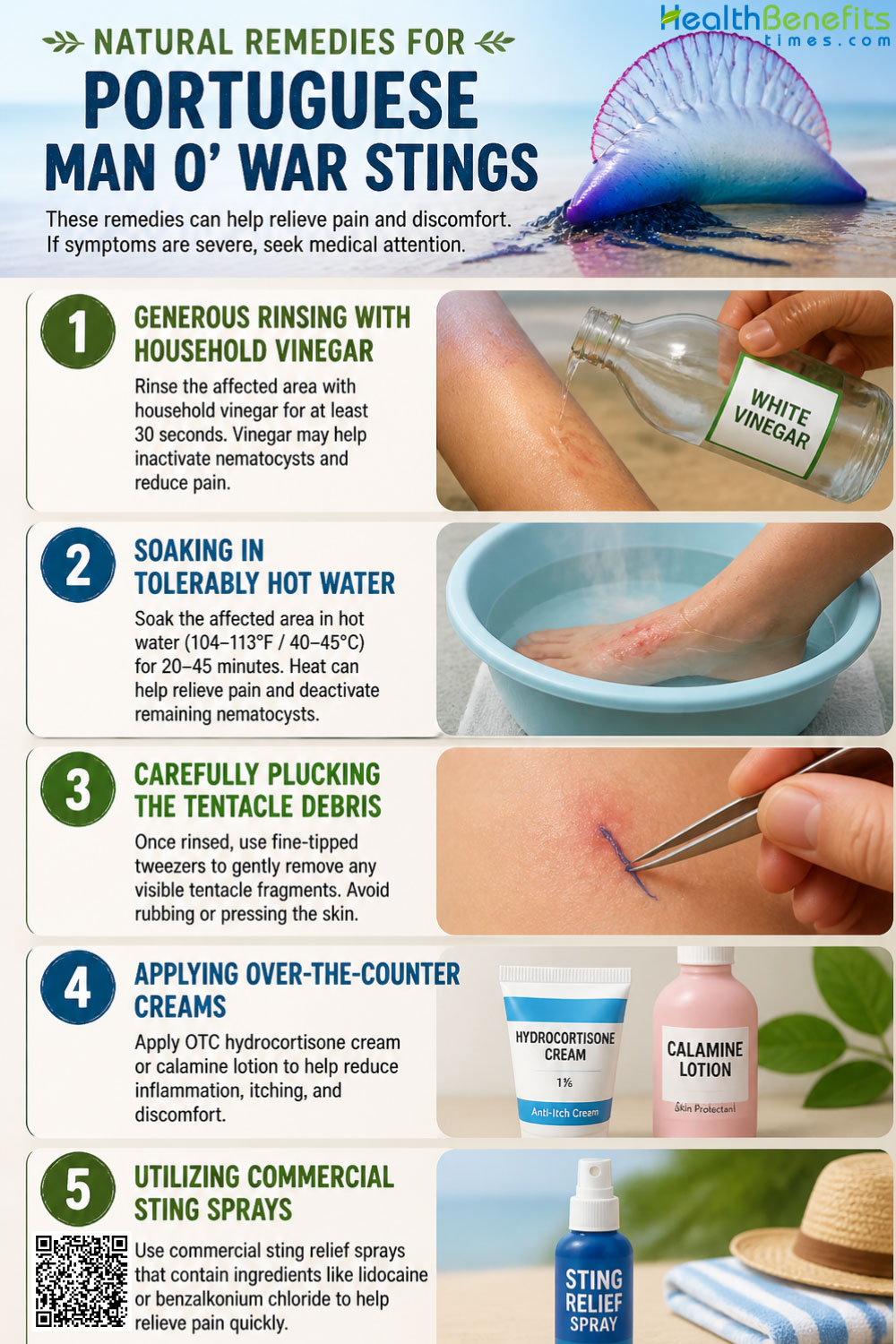
2. Soaking in Tolerably Hot Water
Once vinegar has neutralized the surface cells, you still need to deal with the pain already spreading through your limb. The most effective method is simple: submerge the sting in hot water between 43°C and 45°C (110°F to 113°F) for about 20 to 45 minutes, or until the throbbing starts to ease 35.
The way hot water affects venom comes down to a relatively simple mechanism: sustained heat breaks apart the complex proteins responsible for triggering your pain receptors. This process, called denaturing, essentially disables the venom’s ability to cause harm. If you’re helping someone else, test the water on your own skin first. The person stung may be in too much pain to judge whether the water is safe, which makes accidental scalding a real risk 36.
3. Carefully Plucking the Tentacle Debris
How you remove the leftover tentacle fragments matters more than most people realize rushing this step can trigger a fresh wave of stinging. After rinsing the area with vinegar, you’ll likely notice sticky, stringy bits of blue tentacle still clinging to your skin. These need to come off, because as long as they’re there, they can keep releasing venom and making the irritation worse 37.
Grab a pair of fine-tipped tweezers and gently lift the fragments away. Go slow. Treat the area like a fragile wound don’t scrub or wipe at it. If you don’t have tweezers, put on thick gloves or wrap a dry towel around your fingers before touching anything. The key is to never handle the tentacle material with bare skin 38.
4. Applying Over-the-Counter Creams
After you’ve handled the immediate sting neutralized the venom, pushed through the worst of the pain your skin still needs some care. A mild hydrocortisone cream (0.5% to 1%) or plain calamine lotion applied to the welts twice a day can go a long way toward easing the itching and swelling that lingers 39.
Keep the area clean with a gentle soap, too. Open blisters can pick up bacterial infections if you’re not careful. Medical guidelines also recommend pairing these creams with a standard oral antihistamine. That combination helps your immune system settle down and speeds up healing noticeably 35.
5. Utilizing Commercial Sting Sprays
If you spend a lot of time surfing or swimming in areas where Portuguese Man O’ War are common, it’s worth keeping a sting spray in your beach bag. Products like Sting No More® were developed specifically for serious marine stings. They use a carefully balanced acid formula designed to neutralize venom on contact 40.
These sprays have been tested in lab settings and shown to stop stinging cells from firing in some cases, even more effectively than regular household vinegar. Safety reviews confirm they’re safe to use, making them a practical option if you want something reliable and ready to go for your family’s next beach trip 34.
What Not to Do After a Portuguese man o’ war Stings
1. Do Not Urinate on the Wound
Few foods have had their reputation reversed as dramatically as this old beach remedy. Once treated as gospel thanks largely to classic sitcoms the idea that urine can cure a sting is now thoroughly debunked by science. Human urine doesn’t contain enough ammonia or the right chemical makeup to neutralize venom 41. It’s not just useless it can actually make things worse. Urine has a much lower salt concentration than seawater. When it hits the stinging capsules still embedded in your skin, it acts like a chemical shock. This triggers millions of dormant cells to fire all at once, flooding your body with even more toxic proteins and dramatically increasing your pain 42.
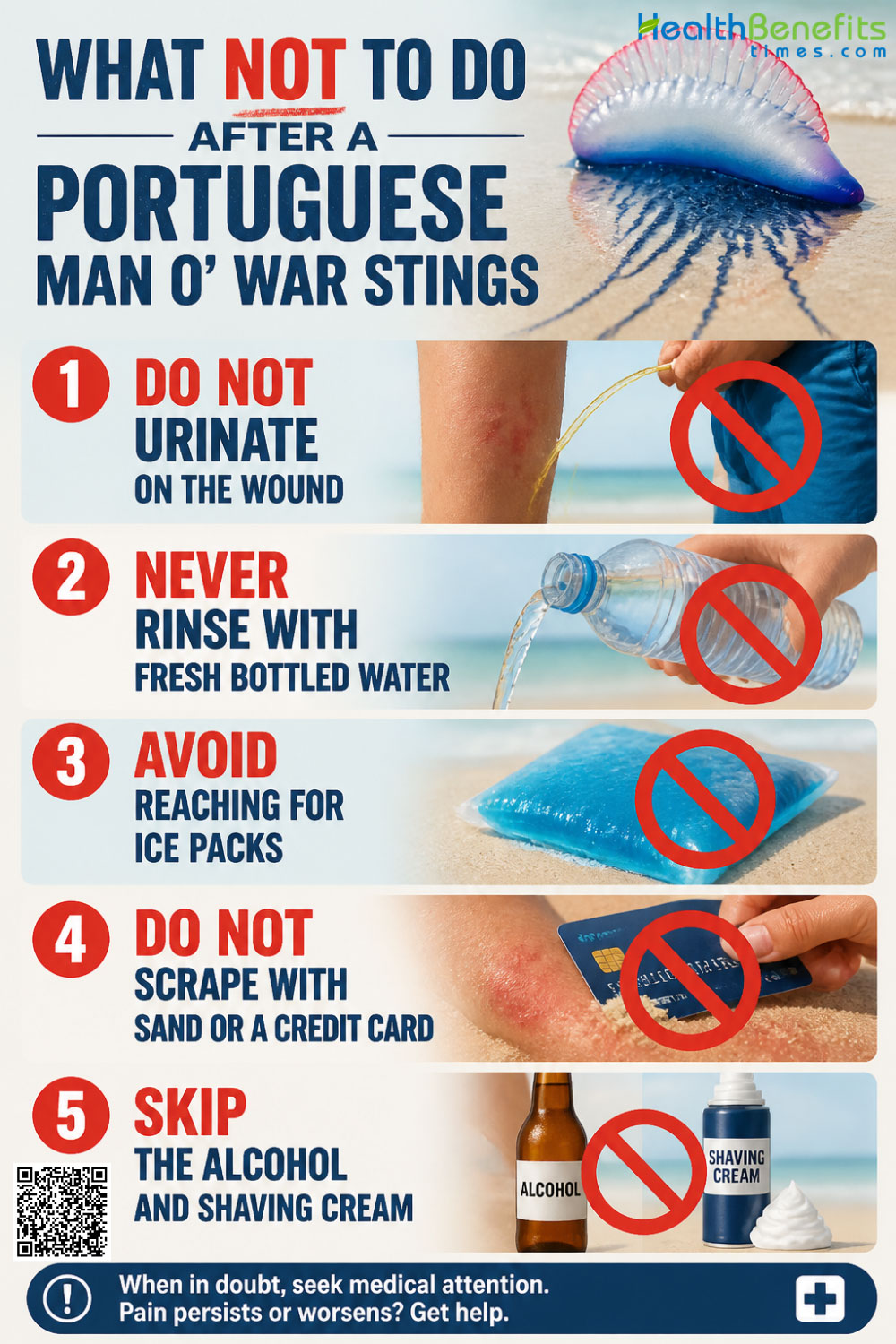
2. Never Rinse with Fresh Bottled Water
Your first instinct after dragging yourself onto the sand might be to grab a water bottle or head for the beach showers. That’s understandable but it’s actually one of the worst things you can do. Exposing a fresh sting to any kind of freshwater can make things significantly worse 43.
Here’s why. The stinging cells left on your skin are built for saltwater. When fresh water hits them, the sudden change in salt concentration creates an osmotic shock. The cells that haven’t fired yet swell rapidly and burst open, releasing a second wave of venom straight into your skin 44.
3. Avoid Reaching for Ice Packs
If you’ve ever wondered why a jellyfish sting keeps burning long after you’ve left the water, the answer often comes back to how you treat it in those first few minutes. Grabbing an ice pack feels like the obvious move it works for burns, bug bites, and just about everything else. But marine venom doesn’t follow the same rules.
Cold actually works against you here. Research has shown that applying ice packs to a bluebottle sting slows down venom breakdown and makes the pain last longer 14. Where hot water helps by breaking apart the venom’s proteins, cold does the opposite it keeps those proteins intact, letting them continue to damage your cells for hours. In lab tests, stings treated with standard emergency ice packs caused more than twice the tissue damage compared to stings that were simply left alone at room temperature 34.
4. Do Not Scrape with Sand or a Credit Card
You’ve probably heard this one before grab a fistful of wet sand or a credit card and scrape those tentacles right off. It sounds logical enough. But when experts actually tested this approach, they found it does far more harm than good 45.
Here’s why. The venom capsules on the tentacles are extremely sensitive to pressure. So when you drag something hard across your skin, you’re essentially triggering every single capsule you touch. That forces the remaining venom out and smears the tentacle material across a wider area of skin that wasn’t even affected before 40. In short, you end up making the sting worse and spreading it further.
5. Skip the Alcohol and Shaving Cream
You’ve probably heard that pouring your beach cocktail, rubbing alcohol, or even shaving cream over the sting will help disinfect it. Don’t do it. These substances are harsh on the delicate stinging cells still embedded in your skin, and they’ll make things significantly worse 41. Instead of calming the irritation, chemicals like ethanol and aerosolized creams trigger the remaining cells to fire all at once releasing even more venom into your skin. Research consistently shows these home remedies don’t stop further stinging. They just ensure the pain drags on far longer than it needs to 34.
When to see Doctor
1. Experiencing a Severe Allergic Reaction
Most jellyfish stings cause pain right where they happen and that’s usually the worst of it. But in some cases, your immune system overreacts to the venom proteins and triggers anaphylaxis, a serious whole-body reaction. If your face, lips, or tongue start swelling quickly, or if a widespread rash with hives spreads well beyond the sting site, you’re dealing with a medical emergency 17.
These symptoms can escalate fast. Your throat may begin to close, cutting off your airway within minutes. If this happens, you need emergency care right away. At the hospital, doctors can give you epinephrine and intravenous steroids to stop the reaction before it becomes life-threatening 43.
2. When Systemic Symptoms Take Over
For most people, a jellyfish sting stays local pain, redness, maybe some swelling. But there are situations where the body’s response goes far beyond the skin, and recognizing that shift quickly can be lifesaving. If you start feeling intensely nauseous, dizzy, or confused shortly after leaving the water, don’t brush it off. These symptoms suggest the venom has moved past the sting site and entered your bloodstream 21.
The same goes for sudden, uncontrollable muscle spasms in your back, tightness building in your chest, or an irregular heartbeat. These aren’t signs to wait out on the beach. They point to cardiac and respiratory complications that need emergency care right away in rare cases, severe envenomation can lead to cardiovascular collapse 11.
3. Stings Involving the Eyes or Face
Getting stung on your leg or arm is painful enough. But a sting near your face or eyes is a different situation entirely one that calls for immediate medical attention. Your eyes are especially vulnerable. The delicate membranes can’t withstand the tissue-damaging effects of the venom. If you wait too long to get help, the result can be permanent corneal scarring or even partial vision loss 35.
If a tentacle strikes your face, you’ll likely notice intense tearing, sharp sensitivity to light, and a deep burning pain around the eye socket. Doctors say these kinds of stings need professional care right away. Specialists will flush the eye with large volumes of saline and use safe ophthalmic pain medications to protect your vision 46.
4. Navigating Severe Acute Pain Without Opioids
The real-world question isn’t whether hot water remedies help with pain most evidence suggests they do but what to do when the pain is too severe for them to work. If you’ve reached that point, it’s time to head to the emergency room for professional help. You might worry that doctors will just hand you addictive narcotic painkillers. But modern hospital guidelines have significantly changed how severe acute pain is treated 47. National health organizations now encourage a strategy called Multimodal Analgesia. The idea is straightforward: treat your pain with effective, non-addictive options first, before considering controlled substances.
In practice, this means emergency doctors will typically reach for things like intravenous NSAIDs, nerve blocks, or topical anesthetics. These approaches can keep you comfortable without exposing you to the risks of opioid dependency 48.
5. Protecting Patients in Addiction Recovery
For people already in recovery and enrolled in Medication for Opioid Use Disorder (MOUD) programs, a severe marine sting creates a tricky situation. Pain management has to be handled with extra care and that takes coordination between your medical teams. If you’re currently taking maintenance medications like buprenorphine or methadone, your doctors should not abruptly stop your treatment just because you’ve been hurt 49.
The goal is to manage your pain without disrupting your recovery. Addiction specialists recommend adjusting your dosing schedule instead for example, splitting your normal buprenorphine dose across the day to get more of its built-in pain relief. At the same time, strong non-opioid anti-inflammatory medications can help control the pain. This team-based approach keeps your sting pain under control without putting your long-term sobriety at risk 50.