

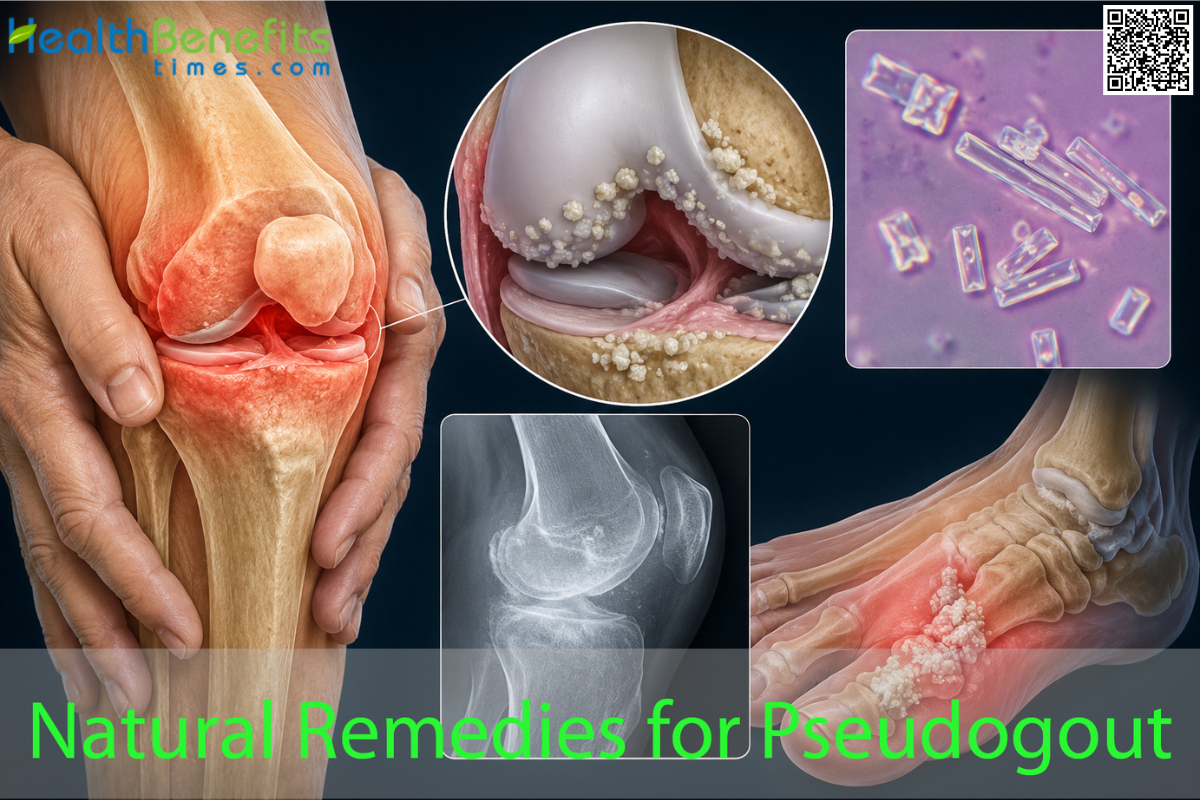
Pseudogout is a painful form of inflammatory arthritis that causes sudden swelling, severe stiffness, and warmth in the joints. It most commonly affects the knees, but can also develop in the wrists, ankles, or hips. Unlike typical gout, which is caused by a buildup of uric acid, pseudogout occurs when calcium pyrophosphate crystals form in the cartilage and fluid surrounding a joint. These sharp crystals trigger a strong immune response, leading to rapid and intense joint inflammation. The condition appears most frequently in older adults and can cause long-term structural joint damage if left unmanaged. While there is currently no medical cure to dissolve the underlying crystals, clinical treatments focus on reducing immediate pain, limiting active inflammation, and preventing future flare-ups to preserve normal joint mobility. 1
Causes of Pseudogout
- Advanced age: The primary risk factor, with the prevalence of calcium pyrophosphate crystal deposition increasing significantly in older individuals.
- Prior joint trauma or surgery: Physical injury, joint microtrauma, or surgical interventions can precipitate crystal shedding and localized inflammation.
- Osteoarthritis: Existing joint degeneration and cartilage matrix damage strongly predispose affected joints to pseudogout.
- Hemochromatosis: A metabolic condition characterized by excessive iron accumulation in the body.
- Hyperparathyroidism: Overactivity of the parathyroid glands, which disrupts normal calcium and phosphorus homeostasis.
- Hypomagnesemia: Deficient levels of magnesium in the bloodstream.
- Hypophosphatasia: A rare genetic metabolic disorder that disrupts bone and cartilage mineralization.
- Hypophosphatemia: Abnormally low levels of phosphate in the blood.
- Hypothyroidism: Reduced function of the thyroid gland is a recognized metabolic risk factor.
- Genetic mutations: Hereditary variants, particularly autosomal dominant mutations in the ANKH gene (which regulates extracellular inorganic pyrophosphate transport) and the COL2A1 gene (which affects cartilage structural proteins).
- History of gout: Prior occurrences of monosodium urate crystal arthritis.
Symptoms of Pseudogout
- Sudden, severe joint pain, most commonly affecting the knees, wrists, ankles, shoulders, or hips.
- Visible swelling and localized edema in the affected joint.
- Warmth emitting from the joint area.
- Redness (erythema) or purplish discoloration of the skin over the affected joint.
- Extreme tenderness upon touch or movement.
- Decreased range of motion and joint stiffness, which may present as early morning stiffness.
- Systemic symptoms, such as fever, chills, and malaise, occasionally occurring during acute. 2, 3
Natural Remedies for Pseudogout
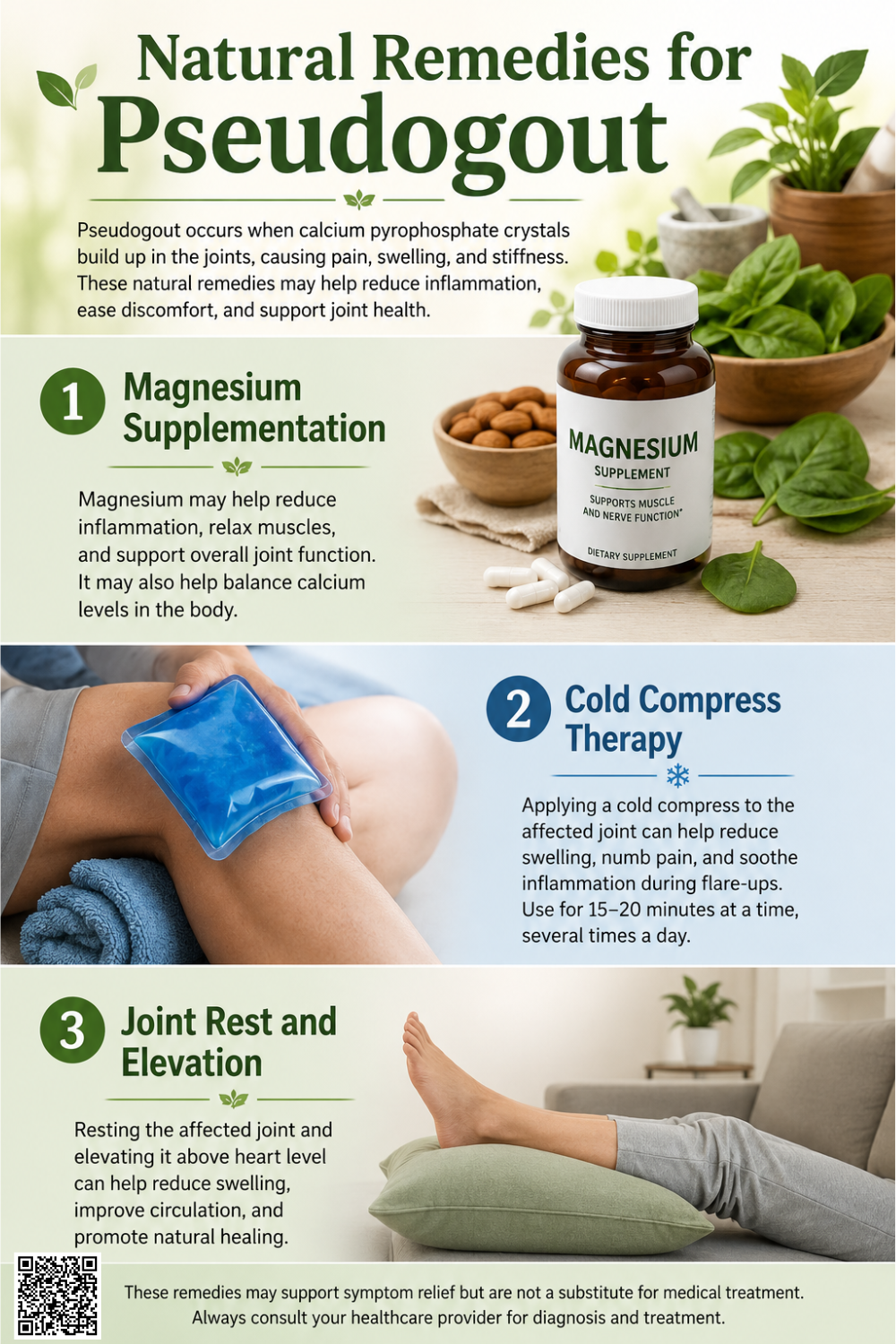 1. Magnesium Supplementation
Magnesium acts as a necessary tool for the body’s enzymes to break down excess calcium compounds, which helps keep calcium crystals from forming and settling in the joints. Medical literature indicates that low magnesium levels can speed up crystal buildup in joint tissue. Long-term correction of this deficiency may slowly decrease joint calcification. 4 You can increase your intake through magnesium-rich foods like leafy greens or by taking standard oral supplements daily. High doses can cause stomach upset or diarrhea. You should consult a doctor before starting supplements, especially if you have reduced kidney function.
2. Cold Compress Therapy
Applying cold directly to the joint narrows the blood vessels, which reduces tissue swelling, numbs nerve endings, and lowers the local immune response that causes pain. Clinical guidelines recognize cool packs as a highly effective, non-medical therapy to shorten the duration and lower the severity of a sudden pseudogout attack. 5 You should apply an ice pack wrapped in a thick towel to the painful joint for 15 to 20 minutes several times a day. You must never apply ice directly to bare skin, as it can cause severe tissue damage or frostbite. Limit your use to short periods.
3. Joint Rest and Elevation
Resting the joint reduces physical friction. This prevents the existing calcium crystals from shedding into the joint fluid, which would otherwise trigger a secondary immune reaction and worsen the swelling. Temporary joint rest is a documented and standard approach in medical care protocols to protect the joint space and limit physical injury during an active crystal flare-up. You should elevate the affected limb and completely stop any heavy physical activity involving the swollen joint until the sharpest pain passes. You should avoid keeping the joint completely still for more than a few days. Prolonged resting can lead to muscle weakness and stiffness, so you must slowly return to normal movement once the active swelling drops.
Foods to Avoid When You Suffer from Pseudogout
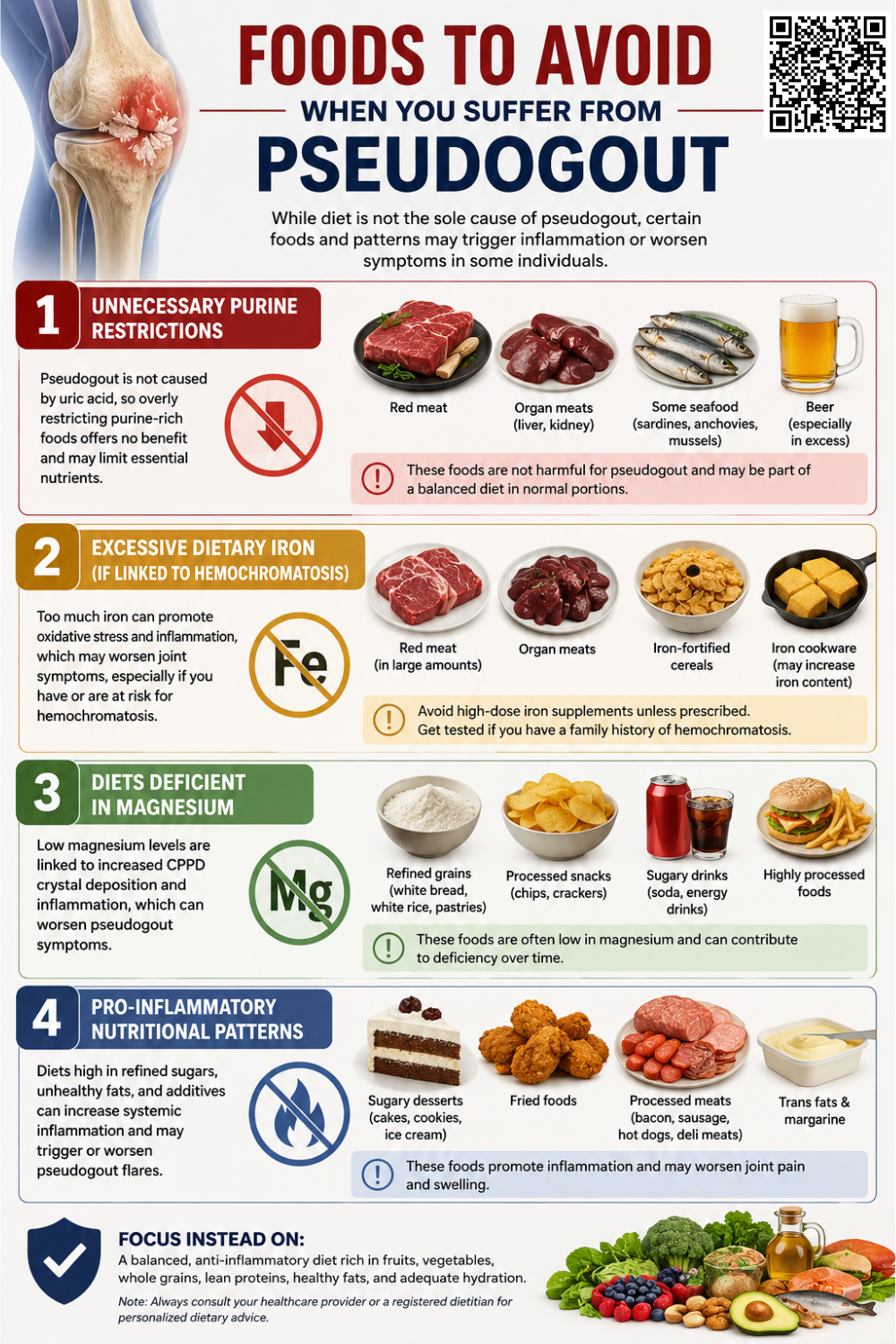 1. Unnecessary Purine Restrictions
Many patients mistakenly avoid purine-rich foods, such as red meat and shellfish, assuming pseudogout responds to the same dietary treatments as traditional gout. Research highlights that patients frequently suffer from confusion regarding the role of diet in the cause and treatment of CPPD, often unnecessarily restricting their eating habits. Restricting purines has no impact on calcium pyrophosphate crystals and only deprives the body of essential nutrients without providing joint relief. 6, 7
2. Excessive Dietary Iron (If Linked to Hemochromatosis)
Pseudogout is heavily associated with hemochromatosis, a genetic condition that causes toxic total body iron overload. If your CPPD is linked to this metabolic disorder, it is critical to avoid consuming excess iron, heavily iron-fortified cereals, or taking vitamin C supplements alongside iron-rich meals. For these patients, early treatment through low-iron dietary modification and clinical management can be highly effective. Reference Links: 8, 9
3. Diets Deficient in Magnesium
Hypomagnesemia, which is characterized by abnormally low magnesium levels in the blood, is a well-documented metabolic trigger that predisposes individuals to calcium pyrophosphate deposition disease (Joshi & Chokkalingam, 2018). Therefore, avoiding a diet that lacks sufficient magnesium—as well as avoiding excessive alcohol and certain medications that deplete the body’s magnesium reserves—is a vital aspect of managing this specific metabolic pathway. 10, 11
4. Pro-Inflammatory Nutritional Patterns
Because CPPD involves a vigorous and highly destructive inflammatory response to crystal deposits in the articular tissues, it is prudent to avoid general pro-inflammatory foods. While avoiding excessive sugars, ultra-processed foods, and unhealthy fats will not dissolve the existing calcium crystals, minimizing these foods can help dampen the systemic inflammatory cascade and protect against exacerbating the severe joint damage and osteoarthritis that typically accompany CPPD. 2, 12
When To See a Doctor for Pseudogout
1. Acute Monoarticular or Oligoarticular Flares
An acute pseudogout attack typically presents with the sudden onset of intense pain, warmth, redness, and severe swelling in one or more joints—most commonly the knee, wrist, or hip. Because these symptoms are clinically indistinguishable from acute gout or septic arthritis (a severe and potentially destructive joint infection), prompt medical analysis of the synovial fluid is required for an accurate diagnosis. If a large joint is affected and you develop systemic symptoms such as fever, chills, and malaise, emergency evaluation is necessary. 13
2. Severe Spinal Pain and Neurological Symptoms
Although rare, CPPD crystals can deposit in the spinal ligaments, intervertebral discs, and the epidural space. You should seek immediate care if you develop worsening neck or lower back pain accompanied by neurological deficits such as weakness, numbness, or gait disturbances. Involvement of the cervical spine, particularly in the form of crowned dens syndrome, can cause severe cervico-occipital pain, neck stiffness, and fever, often mimicking meningitis or infectious spondylodiscitis. 14, 15
3. Cranial, Facial, or Jaw Complications
When pseudogout affects the skull base or the temporomandibular joint (TMJ), it can manifest as an extending mass mimicking a tumor. Medical evaluation is crucial if you experience unexplained jaw pain, difficulty chewing, unilateral facial numbness, or sudden hearing loss. These destructive pseudo-tumoral presentations can erode the surrounding bone and usually require surgical resection and pathological analysis. 16, 17
4. Persistent Morning Stiffness and Progressive Deformity
Some subtypes of the disease manifest as chronic CPP inflammatory crystal arthritis (formerly known as pseudo-rheumatoid arthritis), which involves persistent, symmetrical, and deforming polyarthritis. If you experience chronic joint pain, early morning stiffness, persistent bilateral shoulder pain, or a sudden, rapid deterioration of a joint affected by osteoarthritis, a physician should evaluate you to manage the inflammatory cascade and help prevent permanent structural damage. 18