

Teeth grinding, or bruxism, is the involuntary clenching or grinding of teeth, often during sleep, which can lead to dental damage and jaw discomfort.
Sleep bruxism is the involuntary grinding or clenching of teeth during sleep, often linked to stress or sleep disorders.
Awake bruxism involves conscious teeth clenching or grinding during the day, usually triggered by stress, anxiety, or focus.
Top remedies for teeth grinding focus on protective devices, stress management, dietary changes, jaw relaxation, and improved sleep habits.
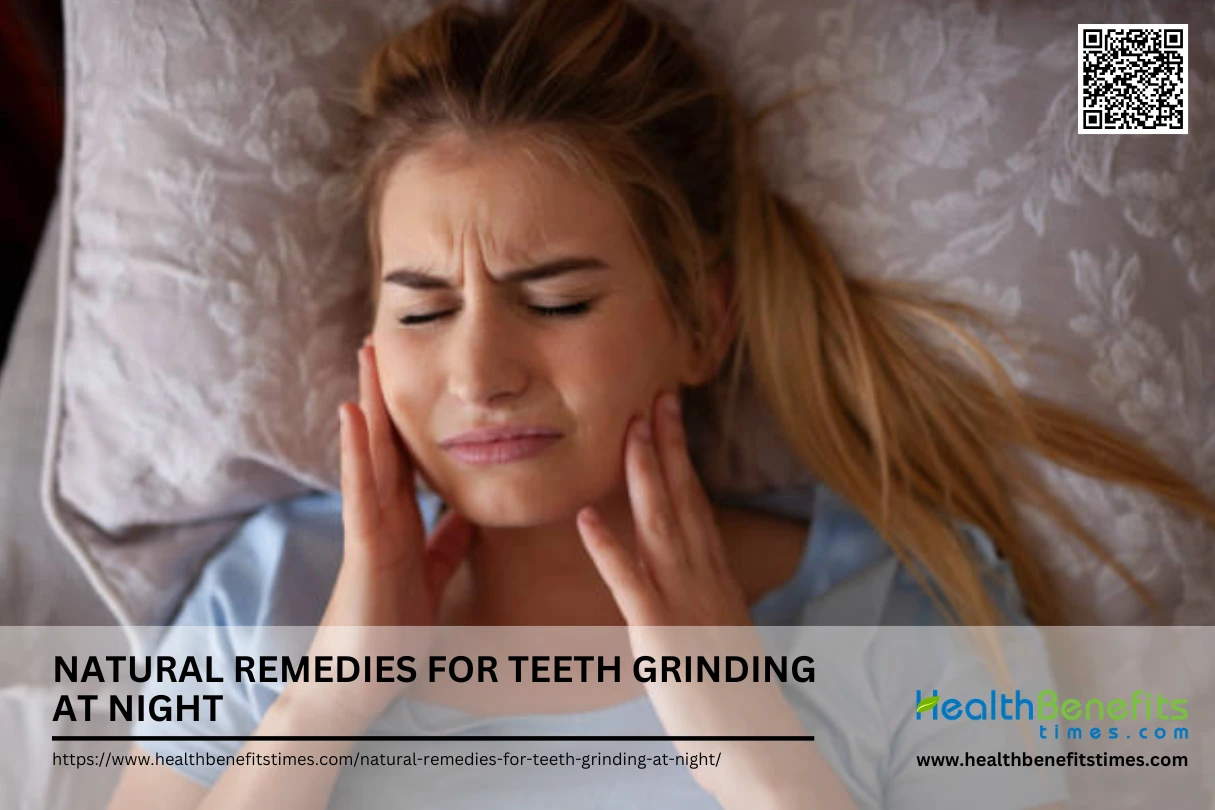
Teeth grinding, medically known as bruxism, is a condition where you unconsciously clench or grind your teeth. This can happen during the day or while you sleep, often without you realizing it. Sleep bruxism is more common and tends to occur during the lighter stages of sleep, making it hard to detect unless someone points it out. Bruxism is typically associated with stress, anxiety, or poor sleep habits, but it can also stem from underlying conditions like sleep apnea or even certain medications. Over time, this repetitive grinding can lead to tooth damage, headaches, jaw pain, and other complications, making it essential to address the issue promptly.
Bruxism comes in two forms:
- Sleep bruxism occurs at night while you’re asleep.
- Awake bruxism happens when you’re conscious, often as a response to stress or concentration.
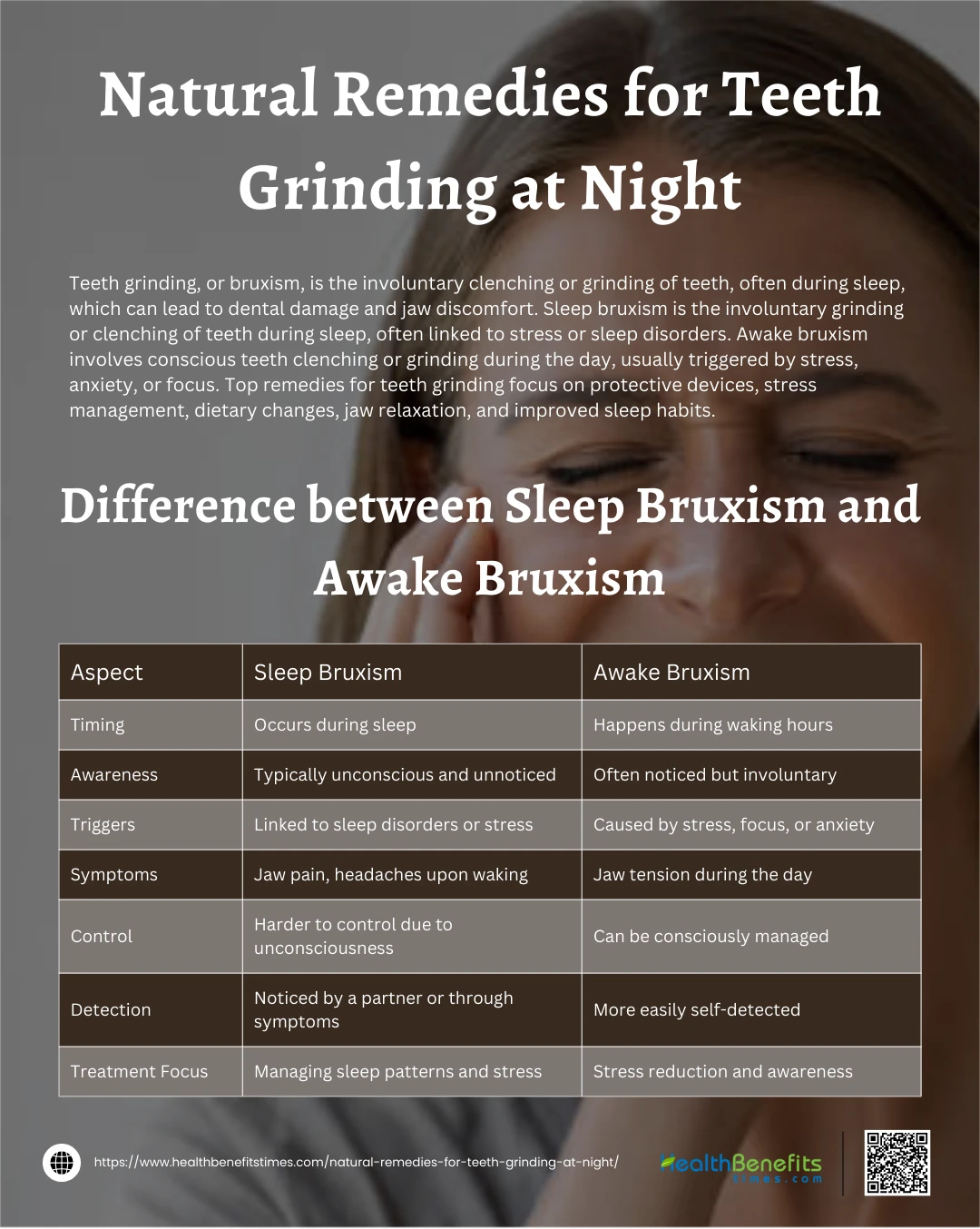
Difference between Sleep Bruxism and Awake Bruxism
Teeth grinding, or bruxism, can occur in two forms: awake bruxism and sleep bruxism. Awake bruxism typically happens during the day when you unconsciously clench your jaw or grind your teeth, often triggered by stress or focus-related tension. Sleep bruxism, on the other hand, occurs during the lighter stages of sleep, making it harder to notice and control. Both forms can lead to similar complications, but their causes and patterns of occurrence differ.
| Aspect | Sleep Bruxism | Awake Bruxism |
| Timing | Occurs during sleep | Happens during waking hours |
| Awareness | Typically unconscious and unnoticed | Often noticed but involuntary |
| Triggers | Linked to sleep disorders or stress | Caused by stress, focus, or anxiety |
| Symptoms | Jaw pain, headaches upon waking | Jaw tension during the day |
| Control | Harder to control due to unconsciousness | Can be consciously managed |
| Detection | Noticed by a partner or through symptoms | More easily self-detected |
| Treatment Focus | Managing sleep patterns and stress | Stress reduction and awareness |
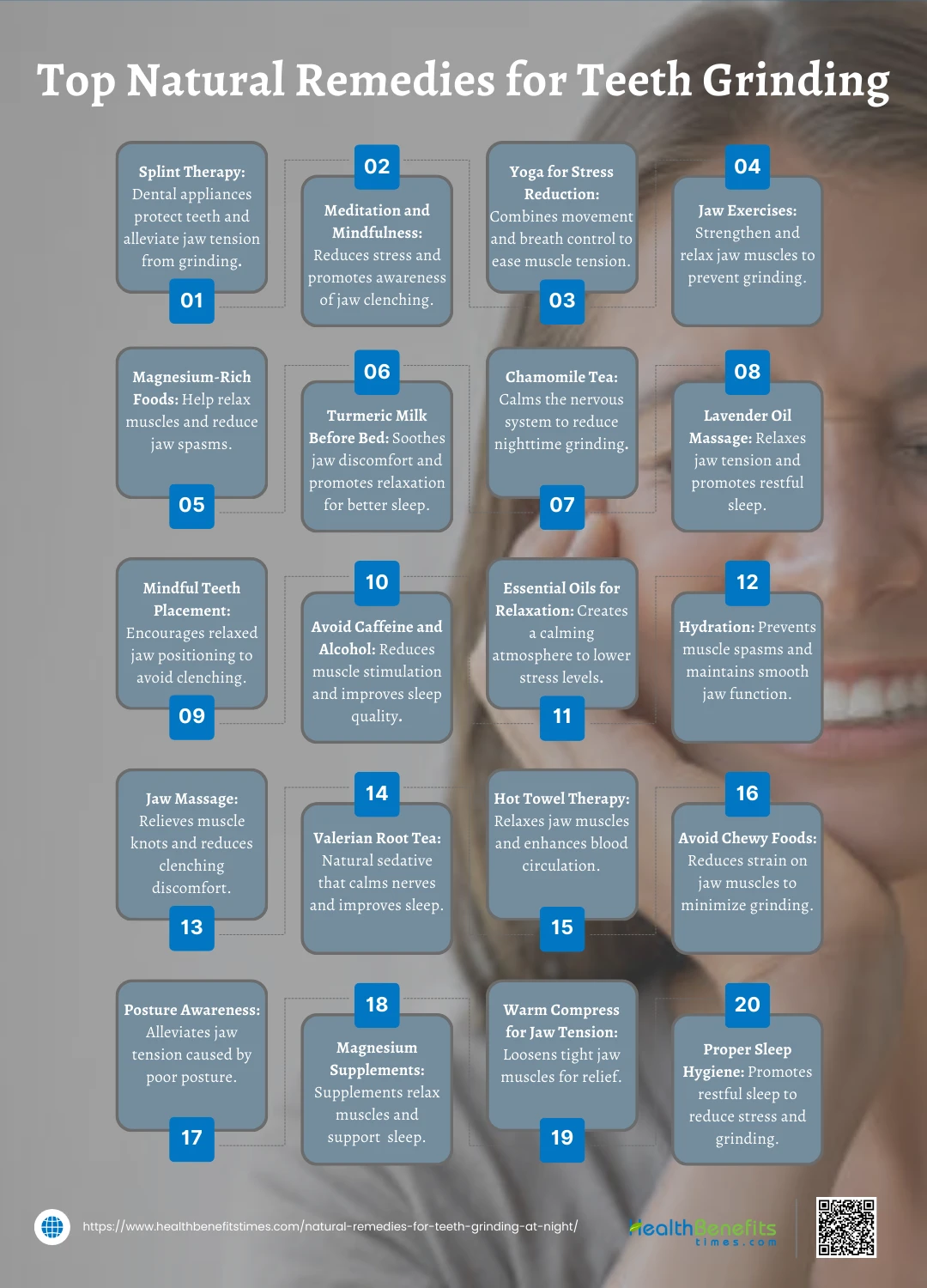
 Top Natural Remedies for Teeth Grinding
Teeth grinding, or bruxism, can cause discomfort, damage to teeth, and sleep disruption. While professional treatment is often necessary for severe cases, natural remedies can significantly alleviate symptoms and address underlying causes like stress, muscle tension, or poor sleep habits. Here are 20 effective natural remedies to help you manage and reduce teeth grinding.
1. Splint Therapy
Splint therapy is one of the most effective treatments for managing teeth grinding, or bruxism. It involves the use of a dental appliance, such as a night guard or occlusal splint, that is worn over the teeth to prevent damage and alleviate symptoms caused by grinding or clenching. This non-invasive approach protects your teeth, reduces jaw tension, and helps manage long-term complications associated with bruxism.
2. Meditation and Mindfulness
Practicing meditation helps you calm your mind, release built-up tension, and become aware of involuntary clenching during the day. Mindfulness also teaches you to recognize when you’re tensing your jaw and consciously relax it.
3. Yoga for Stress Reduction
Yoga combines physical movement with breath control, reducing stress and muscle tension. Poses that stretch the neck, shoulders, and jaw are particularly effective in alleviating the triggers for bruxism.
4. Jaw Exercises
Exercises such as opening your mouth wide and moving the jaw side-to-side can strengthen jaw muscles and relieve tension. These exercises improve alignment and help break the grinding habit.
5. Magnesium-Rich Foods
Magnesium helps regulate muscle function and prevent spasms. Adding foods like leafy greens, nuts, seeds, and whole grains to your diet can naturally reduce jaw tension associated with grinding.
6. Turmeric Milk Before Bed
Drinking warm milk with turmeric provides a dual benefit: the tryptophan in milk promotes relaxation and sleep, while turmeric’s anti-inflammatory properties soothe jaw discomfort caused by grinding.
7. Chamomile Tea
Chamomile tea is renowned for its calming effects on the nervous system. Drinking a warm cup before bed can help you relax, reduce stress, and lower the chances of nighttime teeth grinding.
8. Lavender Oil Massage
Massaging lavender oil onto your jawline not only reduces tension but also has an aromatherapeutic effect that calms the mind. This makes it easier to drift into a restful sleep free of clenching.
9. Mindful Teeth Placement
Train yourself to maintain a small gap between your upper and lower teeth during the day. This conscious effort prevents unnecessary clenching and retrains your jaw to stay relaxed.
10. Avoid Caffeine and Alcohol
Caffeine and alcohol stimulate jaw muscles and disrupt sleep quality. Limiting their intake, particularly in the evening, can significantly reduce grinding episodes.
11. Essential Oils for Relaxation
Using essential oils like chamomile, cedarwood, or bergamot in a diffuser or massage oil creates a calming atmosphere. This relaxation technique reduces stress levels, one of the main triggers of bruxism.
12. Hydration
Dehydration can contribute to muscle spasms, including jaw tension. Drinking enough water throughout the day keeps your muscles, including those in your jaw, functioning smoothly.
13. Jaw Massage
A regular jaw massage helps release knots and tension in the muscles surrounding the jaw. Massage techniques like circular motions or gently stretching the jaw provide relief from clenching.
14. Valerian Root Tea
Valerian root is a natural sedative that helps reduce anxiety and improve sleep. Drinking valerian tea an hour before bed can calm the nervous system and lower the chances of nighttime grinding.
15. Hot Towel Therapy
Wrapping a warm towel around your jaw not only feels soothing but also relaxes muscles and improves blood flow, reducing tension that contributes to grinding.
16. Avoid Chewy Foods
Chewing gum, tough meats, and sticky candies strain jaw muscles and exacerbate grinding. Opting for softer foods can prevent additional stress on your jaw.
17. Posture Awareness
Poor posture can cause neck and jaw tension, indirectly contributing to bruxism. Maintain good posture by sitting upright with your shoulders relaxed, which helps reduce strain on your jaw.
18. Magnesium Supplements
If your diet lacks sufficient magnesium, supplements can help relax your muscles and improve sleep quality. Always consult a doctor before starting supplements to determine the right dosage.
19. Warm Compress for Jaw Tension
Applying a warm compress to the sides of your jaw can relax overworked muscles and improve blood flow. This simple remedy reduces stiffness and discomfort in the jaw, especially when used before bedtime.
20. Proper Sleep Hygiene
Establishing a consistent sleep routine, avoiding electronic screens before bed, and creating a calm, dark sleeping environment promote better sleep. Restful sleep reduces the risk of bruxism by relaxing the body and mind.
 Causes of Teeth Grinding (Bruxism)
Teeth grinding, or bruxism, can result from a combination of physical, psychological, and lifestyle factors. While stress and anxiety are among the most common triggers, bruxism can also be linked to sleep disorders, medications, or dental issues. Identifying the root cause is essential for effective treatment.
- Stress and Anxiety: Emotional tension often leads to jaw clenching and grinding, especially during sleep.
- Sleep Disorders: Conditions like sleep apnea and restless leg syndrome can increase the likelihood of bruxism.
- Caffeine, Alcohol, and Tobacco: These substances stimulate muscle activity in the jaw, making grinding more likely.
- Medications: Certain drugs, such as antidepressants or stimulants, may have bruxism as a side effect.
- Dental Misalignment: An improper bite or misaligned teeth can cause your jaw to overcompensate, leading to grinding.
- Genetic Predisposition: Bruxism can run in families, suggesting a potential hereditary link.
- Hyperactive Lifestyle: High-energy individuals or those with excessive physical or mental activity may experience increased jaw tension.
- Neurological Conditions: Disorders like Parkinson’s disease or epilepsy are sometimes associated with teeth grinding.
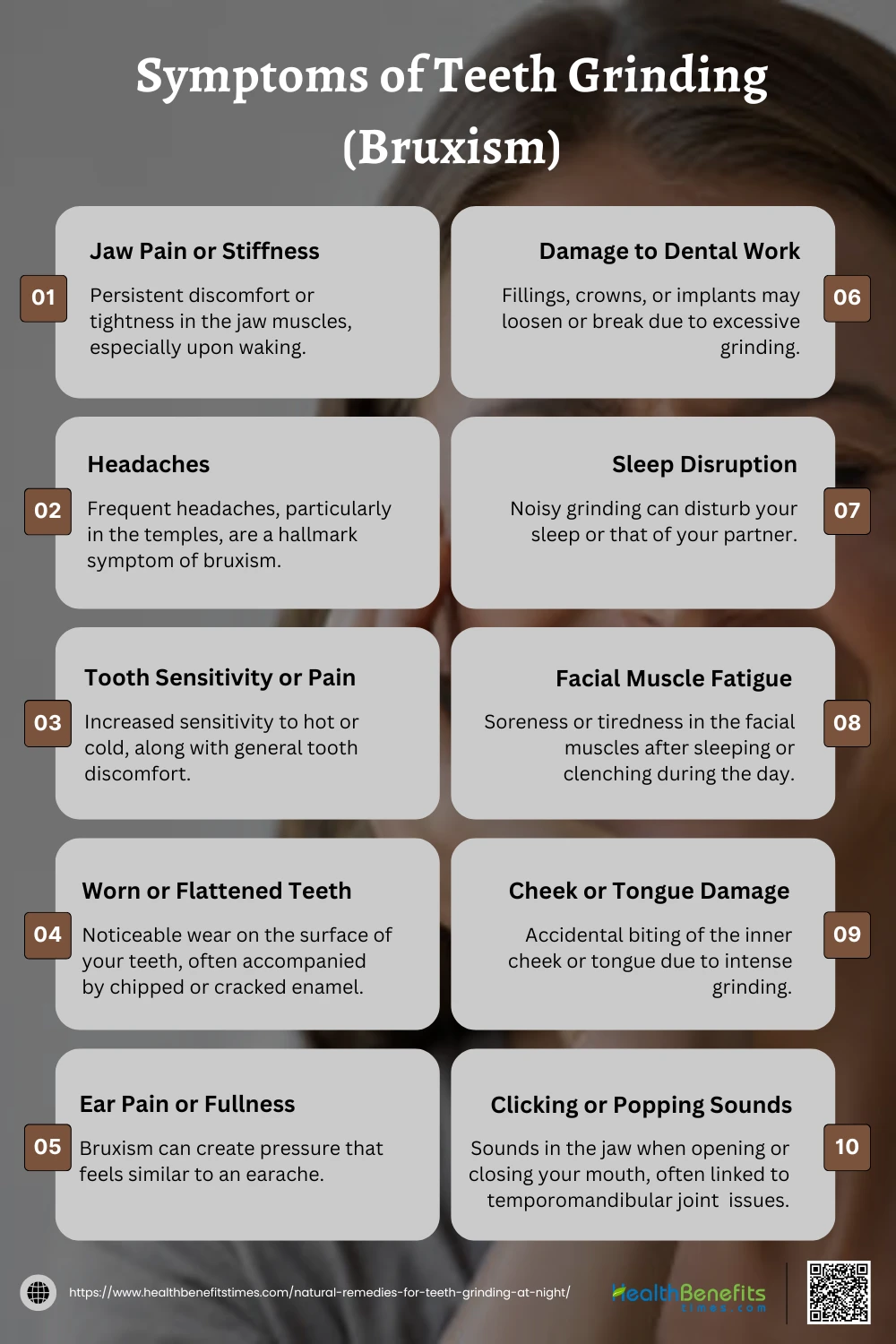
 Symptoms of Teeth Grinding (Bruxism)
Teeth grinding, or bruxism, often goes unnoticed until its symptoms begin to affect your daily life. Common signs include discomfort in the jaw, headaches, and noticeable wear on the teeth. These symptoms can range from mild to severe, depending on the frequency and intensity of grinding.
- Jaw Pain or Stiffness: Persistent discomfort or tightness in the jaw muscles, especially upon waking.
- Headaches: Frequent headaches, particularly in the temples, are a hallmark symptom of bruxism.
- Tooth Sensitivity or Pain: Increased sensitivity to hot or cold, along with general tooth discomfort.
- Worn or Flattened Teeth: Noticeable wear on the surface of your teeth, often accompanied by chipped or cracked enamel.
- Ear Pain or Fullness: Bruxism can create pressure that feels similar to an earache.
- Damage to Dental Work: Fillings, crowns, or implants may loosen or break due to excessive grinding.
- Sleep Disruption: Noisy grinding can disturb your sleep or that of your partner.
- Facial Muscle Fatigue: Soreness or tiredness in the facial muscles after sleeping or clenching during the day.
- Cheek or Tongue Damage: Accidental biting of the inner cheek or tongue due to intense grinding.
- Clicking or Popping Sounds: Sounds in the jaw when opening or closing your mouth, often linked to temporomandibular joint (TMJ) issues.
 Side Effects and Long-Term Effects of Teeth Grinding
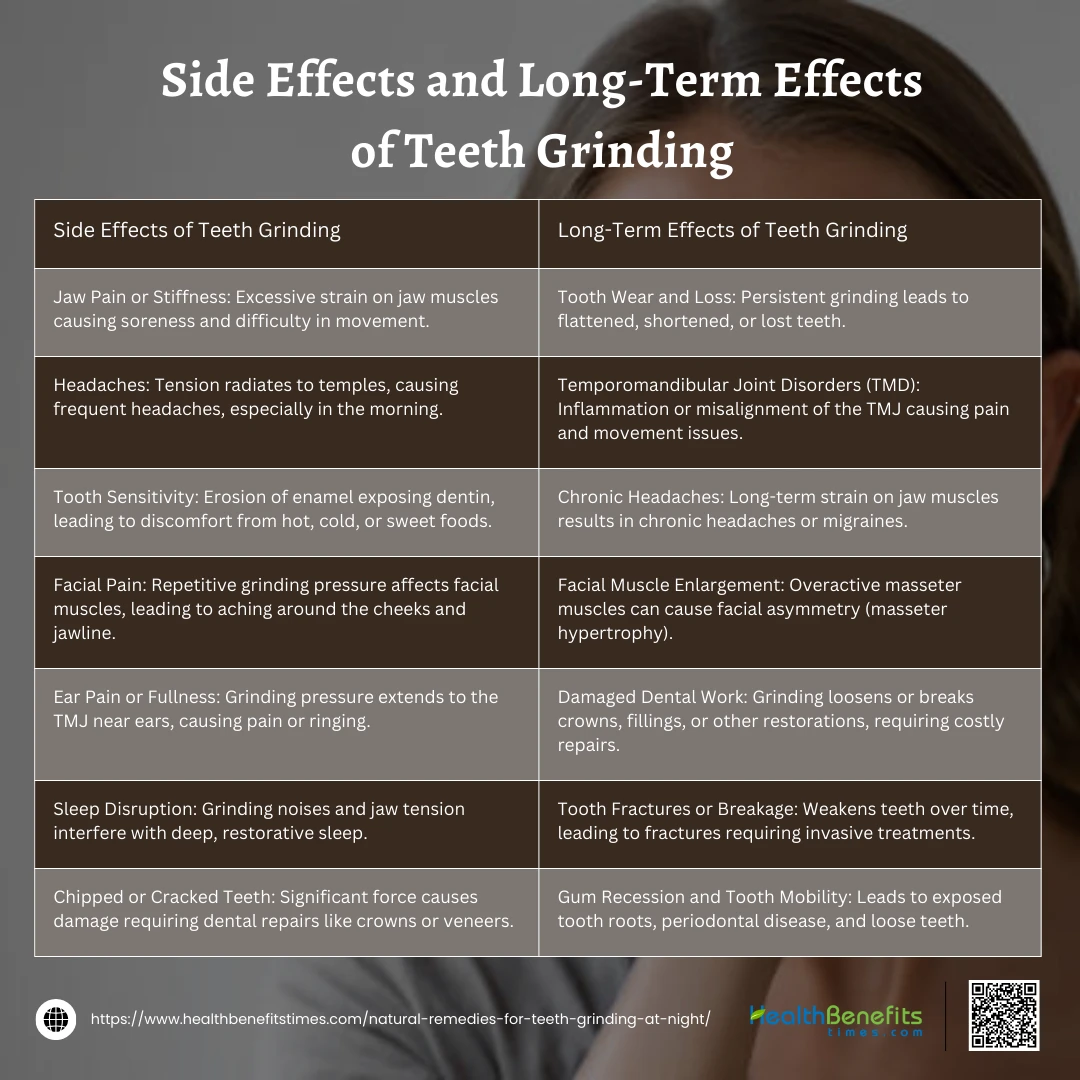
Teeth grinding, or bruxism, may seem like a minor issue at first, but its side effects can significantly impact your oral and overall health over time. If left untreated, bruxism can lead to immediate discomfort and long-term complications that may require extensive dental or medical intervention. Understanding these effects is essential to managing and preventing further damage.
Side Effects of Teeth Grinding
- Jaw Pain or Stiffness
Teeth grinding puts excessive strain on the jaw muscles, leading to soreness, stiffness, and difficulty in movement. This pain can worsen during chewing or talking and may feel like a persistent ache in the jaw area. - Headaches
Bruxism-related tension often radiates to the temples, causing frequent headaches, particularly upon waking. These headaches result from the continuous clenching of jaw muscles and can interfere with daily activities. - Tooth Sensitivity
Repeated grinding erodes the protective enamel on your teeth, exposing the dentin layer underneath. This makes teeth highly sensitive to hot, cold, or sweet foods and drinks, leading to discomfort during meals. - Facial Pain
The repetitive pressure from grinding affects not only the jaw but also the facial muscles. Over time, this can cause general discomfort or aching around the cheeks and jawline. - Ear Pain or Fullness
The pressure from teeth grinding can extend to the temporomandibular joint (TMJ), located near the ears. This often results in ear pain, a sensation of fullness, or even ringing in the ears. - Sleep Disruption
Grinding noises can disturb your sleep or that of your partner, reducing the overall quality of rest. Additionally, the physical tension in your jaw may prevent you from achieving deep, restorative sleep. - Chipped or Cracked Teeth
Bruxism exerts significant force on your teeth, often leading to chips, cracks, or fractures. This can compromise your smile and require dental repairs like fillings, crowns, or veneers.
Long-Term Effects of Teeth Grinding
- Tooth Wear and Loss: Persistent grinding wears down tooth enamel, causing teeth to flatten, become shorter, and lose their natural shape. Over time, severe wear can lead to tooth loss, requiring dentures, implants, or bridges.
- Temporomandibular Joint Disorders (TMD): The TMJ, which connects the jawbone to the skull, can become inflamed or misaligned due to bruxism. This leads to pain, clicking sounds, and difficulty opening or closing the mouth, often requiring medical intervention.
- Chronic Headaches: The strain on jaw muscles from prolonged grinding can lead to chronic headaches or migraines. These often begin in the temples and can radiate across the head and neck.
- Facial Muscle Enlargement: Overactive jaw muscles, particularly the masseter, can enlarge over time due to repeated use. This condition, called masseter hypertrophy, may alter the shape of your face and cause an asymmetrical appearance.
- Damaged Dental Work: Crowns, fillings, and other dental restorations can be loosened or broken by grinding, leading to costly repairs. In severe cases, extensive dental work may need to be replaced entirely.
- Tooth Fractures or Breakage: The force of grinding can weaken teeth over time, making them more prone to fractures. These fractures may require invasive treatments, such as root canals, extractions, or implants.
- Gum Recession and Tooth Mobility: Bruxism can contribute to gum recession, exposing tooth roots and increasing the risk of periodontal disease. This condition may cause teeth to loosen, further endangering oral health.
- Sleep Apnea or Breathing Issues: Teeth grinding is often associated with obstructive sleep apnea, a condition that causes interrupted breathing during sleep. This can lead to fatigue, poor concentration, and long-term health risks if untreated.
- Chronic Neck and Shoulder Pain: The tension from bruxism doesn’t stop at the jaw. It often extends to the neck and shoulders, causing chronic muscle pain and stiffness in these areas, which can affect posture and daily comfort.
- Psychological Effects: The discomfort, sleep disruptions, and dental complications caused by bruxism can lead to emotional stress, anxiety, and even depression. These psychological effects may reduce your quality of life over time.
 When to Seek Professional Help
While mild cases of teeth grinding (bruxism) can often be managed with natural remedies and preventive measures, certain signs indicate the need for professional intervention. Persistent pain, visible dental damage, or sleep disruptions are not only uncomfortable but may lead to long-term complications if left untreated. Consulting a dentist or healthcare provider ensures that the root cause of your grinding is addressed and proper treatment is provided.
Indicators That It’s Time to See a Professional:
- Chronic Jaw Pain or Stiffness: If jaw discomfort persists despite home remedies, it may indicate a more serious issue like temporomandibular joint disorder (TMD).
- Frequent Headaches or Facial Pain: Regular headaches, particularly in the temple area, or facial aches could be linked to severe grinding.
- Tooth Damage: Signs such as worn, chipped, or cracked teeth require immediate dental attention to prevent further deterioration.
- Difficulty Opening or Closing Your Mouth: Restricted jaw movement or pain during these actions may suggest underlying structural issues.
- Disrupted Sleep: Grinding that causes sleep interruptions for you or your partner, or is associated with conditions like sleep apnea, warrants medical evaluation.
- Loose or Damaged Dental Work: If fillings, crowns, or other restorations become loose or break due to grinding, professional care is essential.
- Ineffective Natural Remedies: When home remedies and preventive measures fail to alleviate symptoms, consulting a professional ensures appropriate treatment.
- Suspected Underlying Conditions: Grinding linked to stress, anxiety, or disorders like sleep apnea requires a comprehensive approach that a healthcare provider can offer.
Conclusion
Managing teeth grinding, or bruxism, requires a combination of awareness, natural remedies, and preventive strategies to address both the symptoms and underlying causes. By adopting a holistic approach that includes lifestyle adjustments, stress management, and regular dental care, you can effectively reduce grinding and its long-term effects. While natural remedies provide a safe and non-invasive way to find relief, seeking professional help when symptoms persist ensures proper diagnosis and treatment. Taking proactive steps not only protects your oral health but also enhances your overall well-being, allowing you to enjoy a life free from the discomfort and complications of teeth grinding.
FAQs
- Can children experience teeth grinding, and how is it treated?
Yes, teeth grinding is common in children, especially during sleep. It can occur due to teething, misaligned teeth, or stress. While many children outgrow bruxism, managing stress, ensuring proper dental alignment, and consulting a pediatric dentist for a custom mouthguard can help prevent complications. - Is teeth grinding hereditary?
Research suggests a genetic link to teeth grinding, as it often runs in families. If your parents or siblings have a history of bruxism, you may be more likely to experience it as well. Discussing family history with your dentist can help in early identification and management. - Can bruxism lead to gum disease?
While bruxism doesn’t directly cause gum disease, the excessive pressure on teeth and gums can lead to gum recession and make teeth more vulnerable to periodontal issues. Maintaining good oral hygiene and addressing grinding early can help mitigate this risk. - Are there specific medications that can cause teeth grinding?
Certain medications, such as antidepressants (SSRIs) or stimulants used for ADHD, may cause bruxism as a side effect. If you suspect your medication is contributing, consult your doctor to discuss alternatives or complementary treatments. - How does posture affect teeth grinding?
Poor posture, particularly in the neck and shoulders, can contribute to jaw misalignment and tension, increasing the likelihood of teeth grinding. Practicing good ergonomics at work and maintaining a neutral neck and jaw position can help reduce bruxism-related strain.