

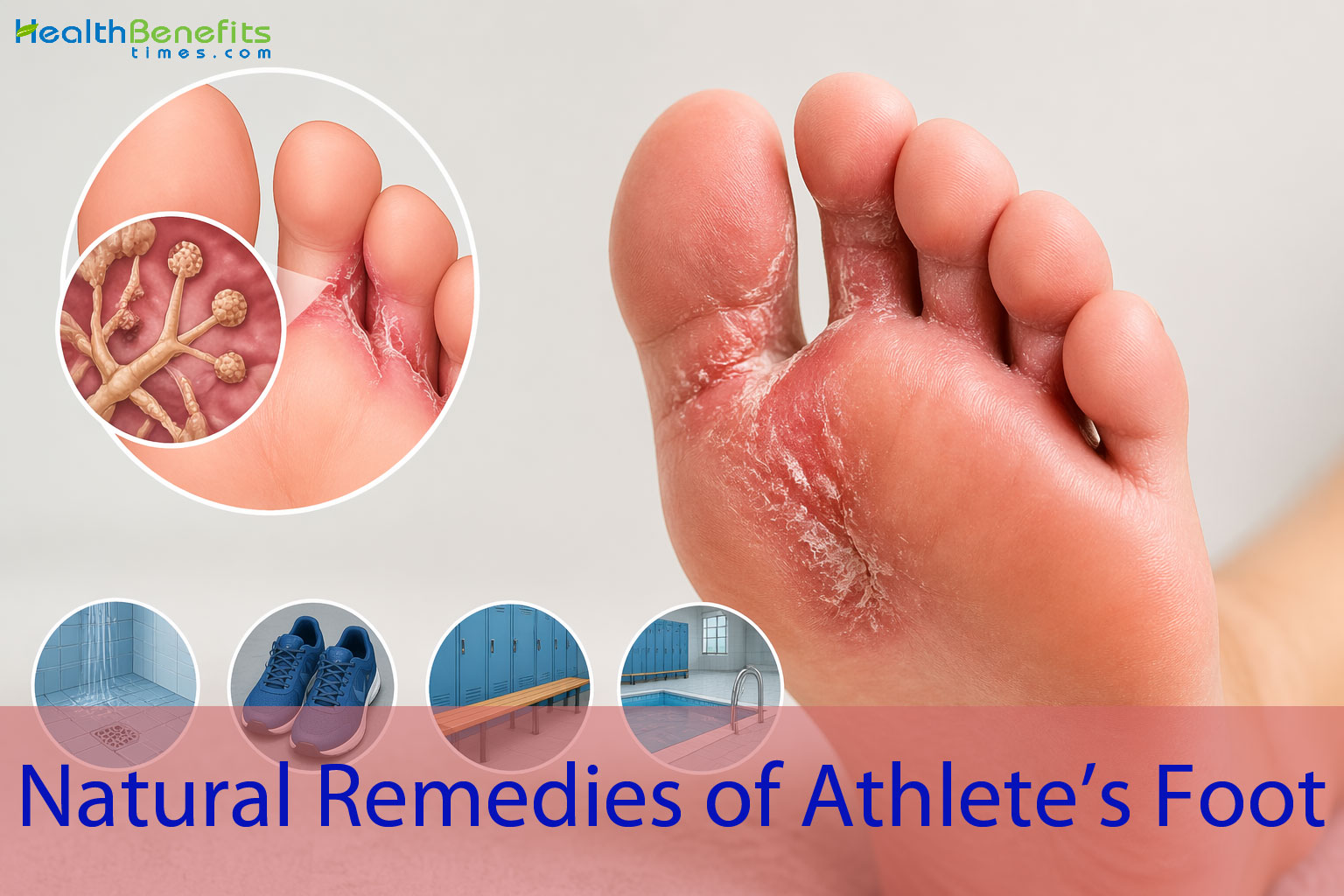
Fungal infections are one of the most common skin problems worldwide and athlete’s foot is among the most stubborn. It happens when a type of fungus called dermatophytes settles into the outer layers of your skin. You’ll usually notice itching, flaking, and red, cracked skin, especially between your toes. The fungi behind it love warm, dark, moist environments, which makes closed shoes the perfect breeding ground. Despite the name, you don’t need to be an athlete to get it. Anyone can pick it up, regardless of age or activity level. And if you ignore it, the skin damage can open the door to more serious bacterial infections. Understanding how this fungal infection works is key to finding treatments that do more than just ease the symptoms temporarily. 1
Athlete’s Foot Facts
| Symptoms |
|
| Causes |
|
| Types of Athlete’s Foot |
|
| How does spread |
|
| Caused of Athlete’s Foot |
|
| Age Group |
|
| You might be at a higher risk for exposure of this disease if you: |
|
| How doctors diagnose |
|
| Remedies for Athlete’s Foot |
|
| Other facts |
|
Natural Remedies of Athlete’s Foot
1. Tea Tree Oil Applications
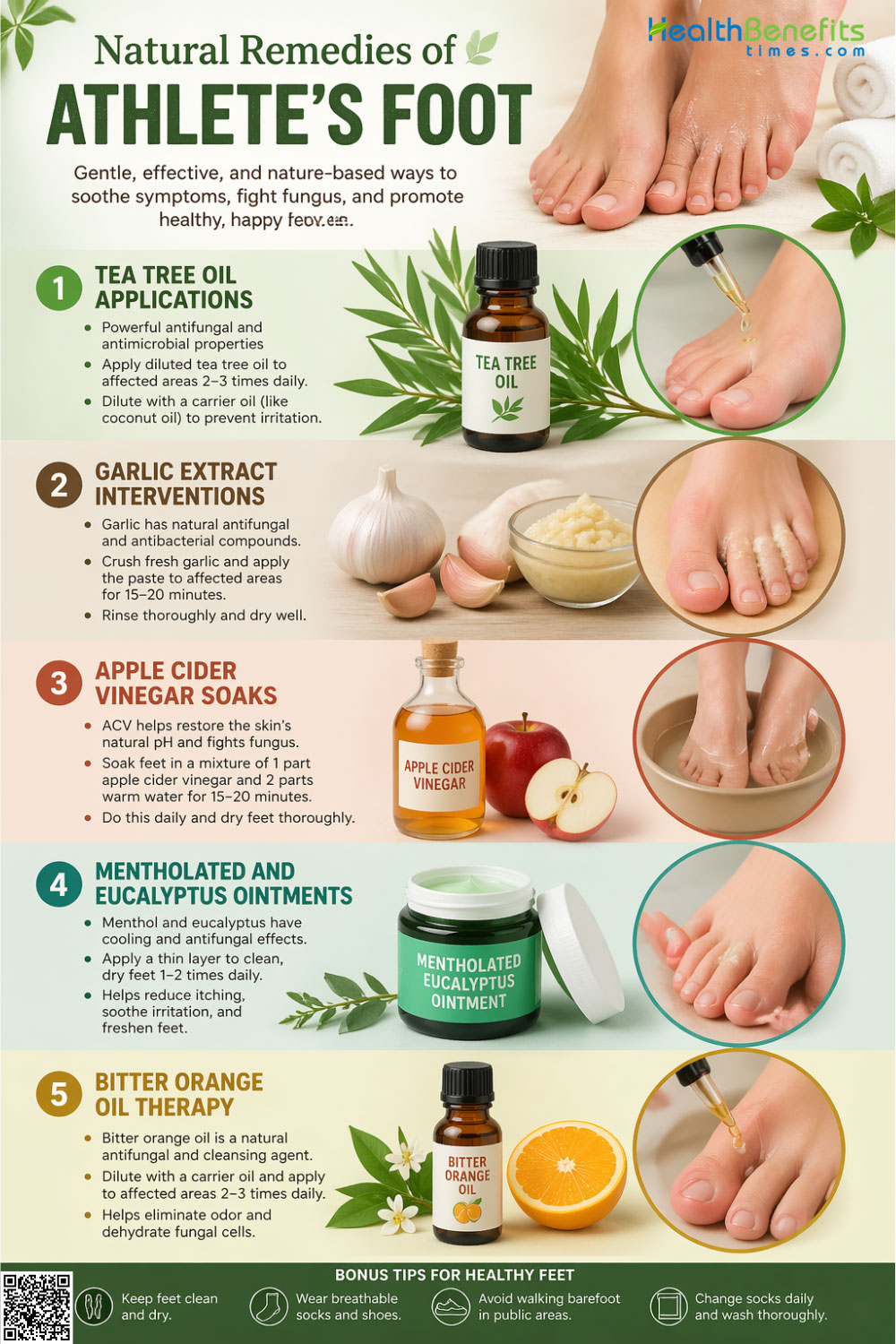
What sets tea tree oil apart from other natural remedies is its active compound, terpinen-4-ol, which researchers have identified as the main driver behind its antifungal power. The oil itself comes from the leaves of the Melaleuca alternifolia tree, native to Australia, and contains over a hundred different chemical compounds. 21 Terpinen-4-ol works by damaging the fungal cell wall, breaking down its structure until the cell membrane ruptures and the contents leak out, killing the fungus. 22 When applied to the skin, tea tree oil has been shown to reduce common symptoms like scaling, inflammation, and itching at rates similar to tolnaftate, a widely used over-the-counter antifungal treatment. 23
2. Garlic Extract Interventions
Most people don’t think of garlic as medicine, but it consistently ranks among the more effective natural antifungals available. When you crush a raw garlic clove, it releases two key sulfur compounds ajoene and allicin that have strong antifungal effects. 24These compounds work by disrupting how the fungus communicates and survives. They interfere with its internal processes, making it harder for the infection to spread across your skin. 25 Studies show that applying concentrated ajoene directly to the skin clears the infection in a large majority of cases. If you’re dealing with a stubborn case of athlete’s foot, garlic-based treatments may be a practical option worth considering. 26
3. Apple Cider Vinegar Soaks
If you’ve ever wondered why something as simple as a vinegar soak keeps showing up in home remedy lists, the answer comes back to pH. Apple cider vinegar is one of the most common choices for therapeutic foot baths, and the logic behind it is straightforward. The acetic acid in vinegar lowers the pH on the surface of your skin. 27 That matters because the fungi responsible for athlete’s foot need a neutral or slightly alkaline environment to produce the enzymes they use to break down skin tissue. When you make the skin more acidic, you’re essentially making it harder for them to thrive and spread. 28The typical approach is to mix one part vinegar with two parts warm water and soak your feet in it. This can help ease the burning sensation and slow down fungal growth on the surface of the skin. 29
4. Mentholated and Eucalyptus Ointments
Few foods or in this case, medicine cabinet staples have had their reputation shifted as unexpectedly as Vicks VapoRub. Originally made for chest colds, it turns out the mix of eucalyptus oil, menthol, and camphor may also help fight the fungus behind athlete’s foot. 30 When researchers tested it on stubborn toenail fungus, most participants saw positive results. Some even cleared the infection completely after using it consistently over several months. 31 The thick, petroleum jelly base plays a role too. It holds the active oils against your skin longer, helping them absorb more deeply instead of evaporating right away. 32
5. Bitter Orange Oil Therapy
In parts of South America, bitter orange has been used for centuries to treat skin infections. Now, researchers are looking more closely at why it works. 1The essential oil from this fruit is rich in limonene and linalool two natural compounds that fight the fungi responsible for athlete’s foot. When you apply a well-diluted form of bitter orange oil directly to the affected skin, studies show it can help clear the infection relatively quickly. 33
Traditional and Ayurvedic Herbal Practices
1. Neem (Azadirachta indica) Therapy
In Southeast Asia, neem has been used for centuries as a go-to remedy for skin infections. Now, researchers are examining those traditional claims more closely. The leaves and seed oil contain active compounds specifically nimbidin, nimbin, and gedunin that work against Trichophyton fungi by breaking down their cell membranes. 34 In traditional Ayurvedic practice, you’d either crush the fresh leaves into a thick paste or brew them in warm water and soak your feet. Both approaches help reduce the fungal load while also calming the redness and irritation around the affected area. 35
2. Turmeric (Curcuma longa) Applications
Turmeric doesn’t just provide antioxidants it also appears to influence how your body’s inflammatory signaling pathways switch on and off. That’s one reason it has been a cornerstone of traditional Indian medicine for centuries, thanks to its rich supply of bioactive curcuminoids. When tested head-to-head against modern synthetic antifungals, turmeric sometimes falls slightly short at fully eliminating the fungus itself. However, it holds its own when it comes to relieving intense itching and shrinking the inflamed, raised edges of infection patches. 36 Ayurvedic practitioners often mix turmeric powder with a fat-based carrier like cold-pressed coconut oil. This isn’t just for easier application. Coconut oil contains lauric acid, a medium-chain fatty acid that fights microbes on its own, giving you an extra layer of protection alongside the turmeric. 37
3. Arogyavardhini Vati and Systemic Formulations
In Ayurvedic tradition, Arogyavardhini Vati has been used for centuries as a go-to remedy for liver problems, digestive issues, and stubborn skin conditions. Now, practitioners of holistic medicine are applying it with a specific goal in mind treating infections from the inside out. 38 This multi-herb formulation combines minerals with plant ingredients like Kutki (Picrorhiza kurroa) and Triphala, an astringent herbal blend. Both are known for their liver-protective properties. According to traditional Ayurvedic texts, supporting liver health helps your body naturally shed infected, flaky skin. 39
4. Chitrakadi Gutika for Digestive Equilibrium
The way Chitrakadi Gutika works against fungal infections comes down to a core Ayurvedic principle: fix digestion first, and the rest follows. 40 Practitioners use this formulation to reignite what Ayurveda calls Agni your digestive fire. When that fire weakens, your body doesn’t fully break down food. The leftover waste, known as Ama, builds up in your tissues over time. This weakens your immune defenses and leaves your skin more vulnerable to fungal invaders. {% https://www.sreedhareeyam.com/hospital/blog/ayurvedic-treatment-for-fungal-infections-127 %} Chitrakadi Gutika contains strong, pungent alkaloids that stimulate your digestive and absorptive pathways. The goal is straightforward by restoring proper digestion, you cut off the internal conditions that let fungal infections take hold in the first place. 41
5. Mexican Ethnomedical Botanicals
In Mexico, certain plants have been used for centuries as natural remedies for skin infections. Now, researchers are examining those traditional claims more closely and some of the results are striking. Two plants in particular have moved from folk medicine into formal clinical testing: Solanum chrysotrichum and Ageratina pichinchensis. Standardized extracts from both have been put through double-blind trials, the gold standard in medical research. 42 Topical treatments made from Solanum chrysotrichum showed an effectiveness rate above 96% nearly matching the performance of ketoconazole, a widely used synthetic antifungal. 43 Higher concentrations of Ageratina pichinchensis extract, which contains an active compound called encecalin, also showed strong cure rates. 44 That’s significant because it suggests these plants aren’t just mild supplements they may work well enough to serve as standalone treatments.
Precaution before use of natural remedies
1. Dangers of Harsh Household Chemicals
Most people assume a little hydrogen peroxide or bleach can handle a minor skin infection. But that assumption doesn’t hold up when you look at what these chemicals actually do to your skin. When a foot infection seems small, it’s tempting to reach for whatever’s under the kitchen sink. Hydrogen peroxide foot soaks are one of the most common examples and one of the most harmful. Research now shows that hydrogen peroxide is toxic to fibroblasts, the cells your skin needs to repair itself. Instead of helping, it irritates damaged skin and shuts down your body’s natural healing process entirely. 45 Bleach is no better. Applying diluted bleach to infected skin damages the outer protective layer your stratum corneum which is already weakened. This doesn’t fight the fungus. It actually makes it easier for bacteria to get in, while offering no lasting antifungal benefit. 46
2. Essential Oil Dilution Mandates
Just because something comes from nature doesn’t mean it’s automatically safe for your skin and essential oils are a perfect example. Oils like pure tea tree oil and bitter orange extract are extremely concentrated. You should never apply them directly to your skin without first mixing them with a carrier oil, such as coconut or jojoba oil. 47 Tea tree oil, for instance, contains a compound called 1,8-cineole. At high concentrations, this compound is a known allergen that can trigger contact dermatitis making irritation and inflammation worse, not better. {% https://www.herbalgram.org/resources/herbclip/issues/2013/bin_487/081324-487/ %} The same goes for apple cider vinegar. You might have heard it works as a home remedy, but applying it undiluted is risky. The concentrated acetic acid can cause chemical burns, especially on cracked or damaged skin. Always dilute it properly before use. 48
3. Risks of Severe Secondary Complications
For most people, athlete’s foot starts as a mild, surface-level skin issue. There are, however, a few situations where it can become something far more serious particularly if you ignore early warning signs. The fungus creates tiny cracks in the skin between your toes. Those small breaks might not look like much, but they give bacteria especially Staphylococcus and Streptococcus a direct way into deeper tissue. Once bacteria get in, you’re at risk for cellulitis, a deep tissue infection that can threaten the entire limb. 49 And it doesn’t always stop there. If cellulitis goes untreated, it can lead to abscesses filled with pus or a condition called lymphangitis. That’s when the infection spreads through your lymphatic system. You might notice red streaks traveling up your leg, along with fever both signs that the infection is no longer local. 50 The takeaway is straightforward: what begins as a minor itch between your toes can escalate quickly if you skip proper precautions.
4. Vulnerabilities in Diabetic Patients
For people with diabetes, a simple skin-level fungal infection carries risks that go far beyond what most would expect. Chronic high blood sugar damages the small blood vessels in your feet and gradually destroys nerve function a condition called diabetic neuropathy. 51 This nerve damage is what makes things dangerous. You may not feel the itching or the early cracking of the skin. Without those warning signs, the infection can quietly spread deeper, eating into the tissue and eventually reaching the bones of your foot. When that happens, it’s called osteomyelitis and it often leads to surgical amputation. 52 Even basic foot care advice needs adjusting if you have diabetes. You should avoid applying moisturizer between your toes, because the extra moisture trapped there can cause fungus to spread rapidly. 53
Environmental Sanitization and Footwear Strategies
1. Thermal Laundering and Ultraviolet Irradiation
You could clear the fungus from your skin entirely and still get reinfected the next morning by slipping on the same pair of shoes. That’s because socks and the dark, warm insides of your footwear hold onto fungal spores remarkably well, acting as a constant source of reinfection. 54 Washing your socks in hot water above 60°C for at least forty-five minutes is enough to kill the fungal proteins and destroy active spores. 54 But what about shoes you can’t toss in the washing machine? That’s where newer tools come in. UV-C LED devices that emit light at 280 nm can damage the fungus’s DNA enough to stop T. rubrum from growing inside your shoes. 55 Another option is ozone treatment placing your shoes in a sealed chamber with concentrated ozone gas, which breaks down microbial cell walls and can fully sanitize footwear in as little as two minutes. 56
2. Moisture-Wicking Material Science
Not all sock fabrics are created equal. The one you choose makes a meaningful difference in whether your feet stay dry and whether fungus gets a chance to grow. Cotton is the main offender. It soaks up sweat quickly, but then holds that moisture right against your skin. That creates the warm, damp environment fungi love. 57 Synthetic performance fabrics work differently. They’re designed to pull sweat away from your skin and move it to the outer surface, where it can evaporate faster. 58 But if you want the best option for preventing fungal infections, podiatrists consistently point to Merino wool. 59 Merino fibers can absorb up to thirty percent of their dry weight in moisture without ever feeling damp against your skin. On top of that, the natural protein structure of the fiber helps neutralize odor-causing bacteria. 60 Together, these properties keep your feet drier and make it much harder for fungus to take hold especially the kind that burrows into deeper skin layers and leads to stubborn, recurring infections. 61