

Seasonal flu recovery is the biological process by which the immune system clears the influenza virus and repairs inflamed respiratory tissues. For most healthy individuals, acute symptoms resolve within a few days to less than two weeks 1. However, the infection can trigger an extreme inflammatory response, potentially leading to severe complications such as pneumonia or the worsening of chronic medical conditions like asthma and heart disease 1. Age plays a critical role in how quickly a person heals, as age-related declines in immune function reduce the effectiveness of essential immune cells, significantly delaying virus clearance and increasing vulnerability to secondary bacterial infections 2. Because the body exhausts substantial energy to fight the virus, complete recuperation requires extended rest and proper hydration. If you belong to a high-risk group or experience emergency warning signs, you should consult a medical professional promptly to ensure a safe recovery.
Causes of Seasonal Flu Recovery
1. Innate and Adaptive Immunity
The primary driver of recovery is the combined effect of the body’s innate and adaptive immune responses, which naturally clear the influenza virus in most individuals [cite: 1.2.1] 3. Specific immune cells called T-cells rely on counter-regulatory mechanisms to strictly control inflammation, which minimizes internal tissue damage while the body destroys the virus [cite: 1.2.3] 4.
2. Interferon Production
When host cells detect the viral infection, they release proteins called interferons, activating an early and potent defense system that restricts the virus from spreading to healthy cells [cite: 1.2.1] 3.
3. Respiratory Tissue Repair
The influenza virus causes significant inflammation and destroys the upper protective layer of cells lining the respiratory tract, but the underlying base layer of cells survives this attack and systematically regenerates the damaged airways [cite: 1.2.2] 5.
4. Antiviral Intervention
Prescription antiviral drugs, such as oseltamivir and zanamivir, act as neuraminidase inhibitors that block the viral enzyme required for the virus to escape infected cells and spread further [cite: 1.3.1] 6. Other medications, such as baloxavir, interfere directly with the virus’s ability to replicate, rapidly reducing the concentration of the virus in the respiratory system [cite: 1.3.2] 7.
Symptoms of Seasonal Flu Recovery
- Lingering Dry Cough: While high fevers and severe body aches typically resolve within the first week, a non-productive, dry cough frequently persists for two weeks or more as the respiratory system repairs the cellular damage caused by the virus 8.
- Post-Viral Fatigue: Profound tiredness and generalized weakness are hallmark symptoms of the recovery period, occurring because the body exhausts significant metabolic energy to mount a massive immune defense and clear the infection 1.
- Mild Respiratory Secretions: Individuals often experience continuous, low-level nasal discharge, sinus congestion, and throat irritation as the mucous membranes naturally flush out viral debris and regenerate the protective lining of the airway 9.
- Reduced Physical Endurance: Even after the primary viral threat is neutralized, general physical stamina remains temporarily compromised, leading to a noticeable reduction in exercise tolerance and a feeling of being easily exhausted by routine daily tasks 10.
Natural Remedies to Support Seasonal Flu Recovery
1. Adequate Bed Rest and Sleep Management
How it may help
Complete bed rest conserves vital physical energy, allowing the immune system to focus entirely on clearing the influenza virus. Sleep naturally increases the production of essential infection-fighting proteins called cytokines, which direct the body’s immune response and safely reduce severe airway inflammation during acute respiratory infections 11.
What research says
Clinical research confirms that proper sleep is critical for optimal immune defense. Studies demonstrate that sleep physically enhances the activation of T-cells—specialized white blood cells that target and destroy virus-infected cells—thereby accelerating viral clearance and significantly reducing the overall duration of clinical illness 12.
How to use it safely
You should aim for seven to nine hours of continuous nighttime sleep while resting frequently during the day. Create a dark, cool, and quiet room to promote deep rest. When awake, routinely incorporate light stretching or short walks around your home to maintain healthy blood circulation 13.
Potential precautions or side effects
Excessive, prolonged bed rest without any routine physical movement can cause muscle stiffness, joint discomfort, and in rare cases, increase the risk of developing dangerous blood clots 14.
2. Proper Hydration and Fluid Replacement
How it may help
Drinking adequate fluids prevents the severe dehydration commonly caused by high flu fevers and excessive sweating. Proper hydration also helps thin respiratory secretions, making it much easier for the body to expel thickened mucus and clear viral debris from the lungs and nasal passages 11.
What research says
Medical guidelines confirm that maintaining fluid balance is essential during acute viral respiratory infections. Research indicates that systemic hydration preserves the protective mucous barrier of the respiratory tract, helping immune cells efficiently trap and remove the influenza virus while preventing severe airway irritation 15.
How to use it safely
You should consume clear liquids like water, warm broths, or oral rehydration solutions continuously throughout the day. Avoid caffeinated beverages and alcohol, which increase fluid loss. Monitor your hydration by ensuring your urine remains a pale, clear yellow color 13.
Potential precautions or side effects
Excessive water intake without balancing electrolytes can cause dangerously low blood sodium levels. Individuals with chronic kidney or heart disease must strictly follow medically prescribed daily fluid restrictions 16.
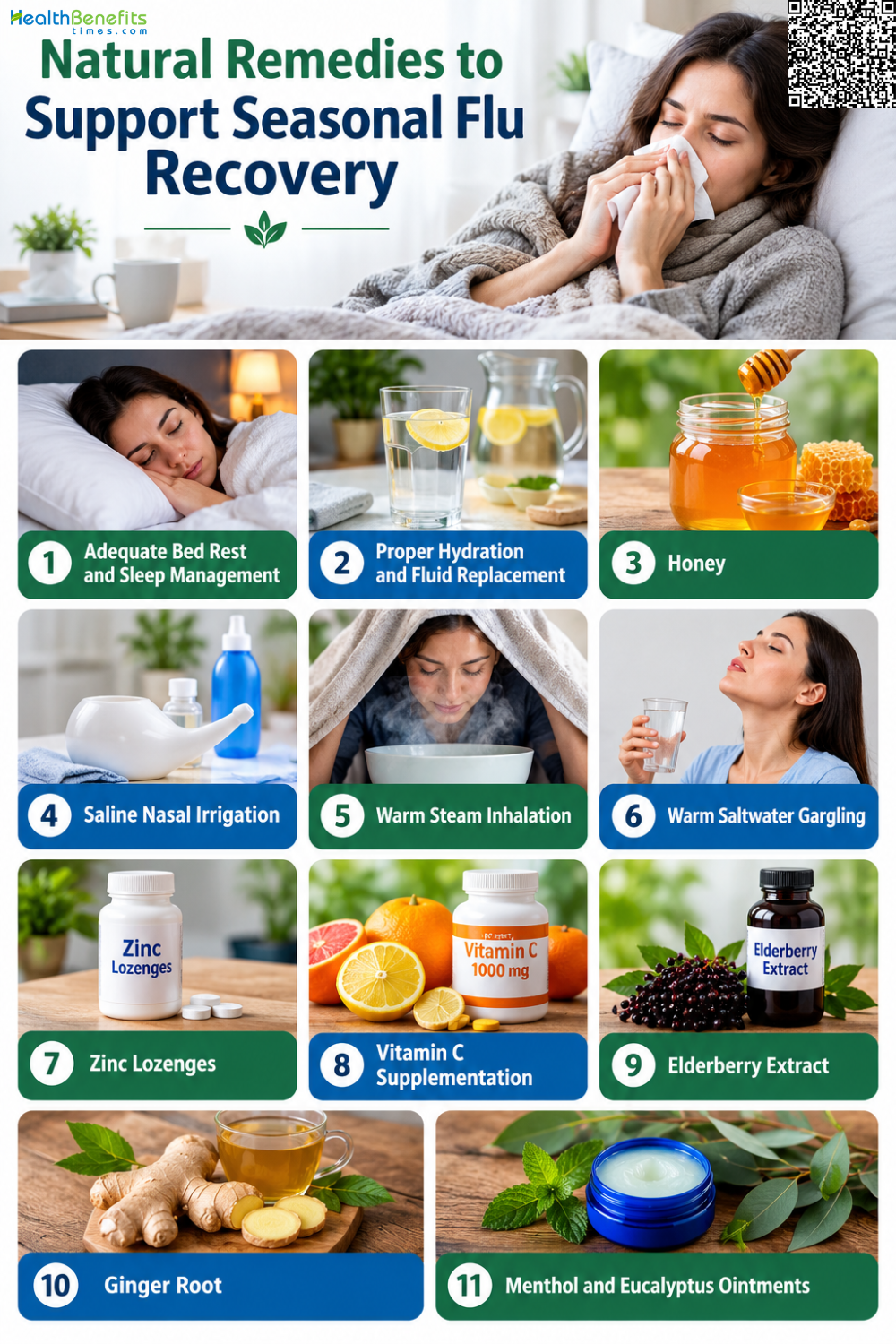
3. Honey
How it may help
Honey acts as a natural demulcent, meaning it thickly coats the irritated back of the throat to soothe cellular inflammation. This physical coating effectively suppresses the persistent, dry coughs that frequently accompany seasonal influenza, providing significant relief from nighttime respiratory discomfort without requiring synthetic pharmaceutical ingredients 17.
What research says
Clinical trials conclude that honey effectively reduces both cough frequency and severity during acute upper respiratory tract infections. Evidence demonstrates that a single nighttime dose of honey often outperforms common over-the-counter cough suppressants, like dextromethorphan, in improving overall sleep quality for individuals suffering from viral illness 18.
How to use it safely
You can safely consume one to two teaspoons of pasteurized honey directly before bedtime to suppress nighttime coughing. Alternatively, you may dissolve the honey into warm water or decaffeinated tea to create a soothing liquid that simultaneously promotes essential hydration during your flu recovery 11.
Potential precautions or side effects
You must never give honey to infants under one year old due to the severe risk of infant botulism, a potentially life-threatening neurological condition caused by natural bacterial spores 19.
4. Saline Nasal Irrigation
How it may help
Saline nasal irrigation physically flushes thick mucus, viral particles, and inflammatory debris directly from the nasal passages. This mechanical washing safely relieves severe nasal congestion and sinus pressure caused by the influenza virus, allowing individuals to breathe easily and accelerating the clearance of infectious respiratory secretions 20.
What research says
Clinical evidence demonstrates that regular saline nasal irrigation effectively reduces symptom severity during acute upper respiratory tract infections. Studies conclude that flushing the nasal cavity significantly clears trapped infectious agents and decreases reliance on pharmaceutical decongestants, improving overall clinical comfort without adverse systemic effects 21.
How to use it safely
You must exclusively use distilled, sterile, or previously boiled and cooled water to prepare the saline solution. Lean forward over a sink, gently squeeze the solution into one nostril using a clean device, and allow the liquid to drain entirely out the opposite nostril 22.
Potential precautions or side effects
You should never use untreated tap water, as it carries a severe risk of fatal parasitic brain infections. Additionally, incorrect salt mixtures may cause temporary nasal stinging or burning 23.
5. Warm Steam Inhalation
How it may help
Warm steam inhalation introduces heated moisture directly into the respiratory tract. This physical process effectively thins thickened mucus and relaxes inflamed airway muscles. By loosening severe nasal congestion, the steam allows the body to easily expel trapped viral particles, significantly relieving uncomfortable sinus pressure during a seasonal influenza infection 24.
What research says
Clinical reviews indicate that while warm steam does not directly destroy the influenza virus, it provides measurable subjective relief for acute respiratory symptoms. Evidence confirms that inhaling heated moisture temporarily improves nasal airflow and reduces internal mucosal swelling, offering a safe option to manage congestion without pharmaceutical side effects 24.
How to use it safely
You should fill a large, stable bowl with recently boiled water and carefully lean over it with a towel draped across your head. Breathe deeply through your nose for ten minutes, keeping your face a safe distance from the water’s surface to avoid thermal injury 25.
Potential precautions or side effects
You must exercise extreme caution to prevent severe burn injuries from spilled water. Medical authorities strongly warn against using steam inhalation for young children due to high scalding risks 26.
6. Warm Saltwater Gargling
How it may help
Warm saltwater gargling utilizes natural osmosis to draw excess fluid out of inflamed throat tissues. This physical process effectively reduces internal swelling and discomfort. By mechanically flushing away thickened mucus and lingering viral particles, it temporarily relieves severe throat irritation caused by seasonal respiratory infections 27.
What research says
Clinical studies confirm that routine saltwater gargling significantly decreases the severity of upper respiratory tract infections. Evidence demonstrates that this mechanical intervention effectively clears infectious debris from the throat lining, thereby limiting local cellular inflammation and providing substantial relief from acute viral sore throat symptoms 28.
How to use it safely
You should dissolve half a teaspoon of standard table salt into eight ounces of warm water. Tilt your head backward, gargle the solution deeply in your throat for thirty seconds, and spit it out completely. You may safely repeat this process several times daily for continuous symptom relief 11.
Potential precautions or side effects
You must avoid swallowing the saltwater, as ingesting excess salt can trigger severe nausea. Furthermore, this remedy is strictly not recommended for young children unable to spit consistently 27.
7. Zinc Lozenges
How it may help
Zinc lozenges release active ions directly into the throat tissue. These particles interfere with the ability of respiratory viruses to replicate and bind to the mucosal lining. By physically blocking the virus from multiplying in the upper airway, zinc helps the immune system clear the infection faster during seasonal illnesses 29.
What research says
Clinical reviews demonstrate that administering zinc lozenges within twenty-four hours of symptom onset significantly reduces the overall duration of viral respiratory infections. Studies conclude that consistent zinc supplementation shortens the length of illness by nearly a third, accelerating full clinical recovery compared to a placebo 30.
How to use it safely
You should begin taking zinc lozenges within twenty-four hours of your first symptoms. Allow the lozenge to dissolve completely in your mouth without chewing or swallowing it whole. Limit your intake to the recommended daily dosage, and always consume them with food to prevent an upset stomach 31.
Potential precautions or side effects
You may experience temporary side effects like a metallic taste or mild nausea. Strictly avoid intranasal zinc sprays, as they can cause a permanent, irreversible loss of smell 32.
8. Vitamin C Supplementation
How it may help
Vitamin C acts as a powerful antioxidant that supports essential immune functions. It directly stimulates the activity of white blood cells, which are responsible for detecting and destroying viral particles. Additionally, it protects surrounding respiratory tissues from internal damage caused by the body’s inflammatory response during an active influenza infection 33.
What research says
Clinical trials indicate that while Vitamin C does not prevent respiratory infections, regular supplementation can modestly reduce the overall duration and severity of symptoms. Evidence concludes that maintaining adequate vitamin levels supports tissue repair and enhances general immune defense, helping the body recover faster from acute viral illnesses 34.
How to use it safely
You can safely consume 500 to 1,000 milligrams of Vitamin C daily during your flu recovery. To maximize nutrient absorption and prevent mild stomach discomfort, you should take the supplement alongside full meals and drink adequate water throughout the day 35.
Potential precautions or side effects
You must avoid exceeding 2,000 milligrams daily, as excessive intake frequently causes severe diarrhea and stomach cramps, and significantly increases your risk of developing painful kidney stones 35.
9. Elderberry Extract
How it may help
Elderberry extract contains high concentrations of natural antioxidants called anthocyanins, which actively support immune function and exhibit distinct antiviral properties. These specific compounds physically bind to the exterior proteins of the influenza virus, effectively neutralizing the pathogen and preventing it from attaching to and entering healthy respiratory cells 36.
What research says
Clinical trials demonstrate that commercial elderberry extract significantly reduces the severity and duration of seasonal influenza symptoms. Evidence confirms that when individuals begin supplementation within forty-eight hours of symptom onset, they recover several days faster than those receiving a placebo, effectively accelerating the overall respiratory healing process 37.
How to use it safely
You should exclusively consume commercially prepared, standardized elderberry syrups or capsules, strictly following the specified dosing instructions. Begin supplementation at the earliest sign of respiratory illness, taking it alongside meals and adequate fluids to maximize absorption and prevent potential stomach upset 36.
Potential precautions or side effects
You must never consume raw or unripe elderberries, leaves, or stems, as they contain toxic cyanide-producing compounds that cause severe vomiting and potentially fatal chemical poisoning 36.
10. Ginger Root
How it may help
Ginger root contains active compounds called gingerols that provide potent anti-inflammatory and stomach-calming effects. During an active influenza infection, these natural compounds directly soothe severe throat irritation, reduce airway inflammation, and relieve the intense nausea or digestive discomfort that frequently accompanies systemic viral illnesses 38.
What research says
Clinical reviews confirm that ginger extract significantly reduces internal systemic inflammation during respiratory infections. Evidence demonstrates that its active botanical compounds inhibit viral activity in the respiratory tract and effectively manage flu-induced nausea without the sedating side effects often associated with traditional pharmaceutical anti-nausea medications 39.
How to use it safely
You can safely steep freshly sliced ginger root in hot water for ten minutes to create a soothing therapeutic tea. Consume up to three cups daily while recovering. Ensure you do not exceed four grams of total daily ginger intake from all dietary sources 38.
Potential precautions or side effects
Excessive ginger consumption causes severe heartburn and diarrhea. If you take prescription blood thinners, you must consult a physician because ginger significantly increases dangerous bleeding risks 40.
11. Menthol and Eucalyptus Ointments
How it may help
Menthol and eucalyptus ointments provide immediate sensory relief from severe respiratory congestion. When inhaled, these active botanical compounds directly stimulate cold-sensitive nerve receptors inside the nasal passages. This distinct physiological reaction tricks the brain into perceiving increased airflow, significantly reducing uncomfortable feelings of stuffiness and effectively suppressing persistent nighttime coughs during an active influenza infection 41.
What research says
Clinical trials demonstrate that topical aromatic ointments significantly improve subjective sleep quality for individuals suffering from acute respiratory infections. Evidence confirms that while menthol does not physically decrease nasal airway resistance or destroy viral particles, it provides powerful symptomatic relief that helps patients rest comfortably without requiring oral pharmaceutical interventions 42.
How to use it safely
You should gently massage a thick layer of the ointment directly onto your chest and throat immediately before bedtime. Leave the treated area loosely covered by clothing to allow the medicinal vapors to safely rise toward your nose, ensuring continuous inhalation while you sleep 41.
Potential precautions or side effects
You must never apply these potent ointments directly inside your nostrils, on broken skin, or on infants under two years old, to prevent severe and potentially life-threatening airway spasms 43.
Foods to Avoid When You Suffer From Seasonal Flu Recovery
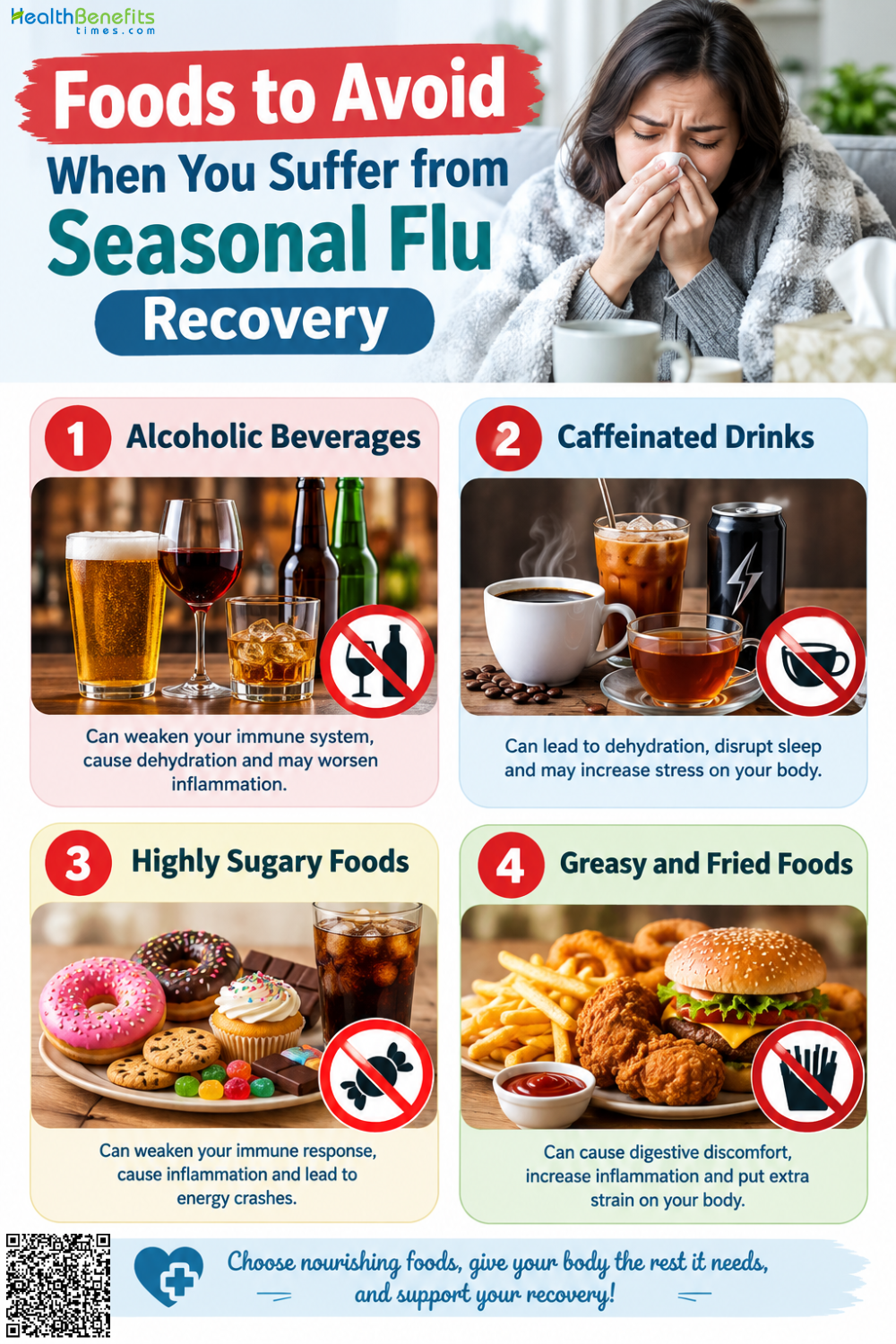
1. Alcoholic Beverages
Alcohol causes severe cellular dehydration and actively suppresses immune system functions, significantly delaying the body’s ability to clear viral infections and repair tissues 44.
2. Caffeinated Drinks
High-caffeine beverages act as strong diuretics. This accelerates fluid loss, worsening flu-induced dehydration and thickening protective respiratory mucus, which makes coughing more difficult 45.
3. Highly Sugary Foods
Consuming excessive refined sugars triggers widespread internal inflammation. This temporarily impairs the infection-fighting capacity of white blood cells, unnecessarily prolonging the acute healing process 46.
4. Greasy and Fried Foods
Heavy, fat-laden foods are difficult to properly digest. They frequently trigger severe nausea and stomach cramping during a time when viral illness already compromises gastrointestinal stability 47.
When to See a Doctor When You Struggle From Seasonal Flu Recovery
- Difficulty Breathing: If you experience severe shortness of breath or rapid breathing, seek immediate care, as this indicates potential pneumonia or severe respiratory failure 48.
- Persistent Chest Pain: You must consult a doctor if you feel constant pain or intense pressure within your chest, which signals severe lung inflammation or cardiac complications 48.
- Relapsing Symptoms: Seek medical evaluation if your initial fever and cough improve but suddenly return with increased severity, indicating a highly dangerous secondary bacterial infection 48.
- Severe Dehydration: You require urgent medical attention if you stop urinating entirely, experience extreme weakness, or suffer severe dizziness, representing clinical signs of life-threatening dehydration 48.
- Worsening Chronic Conditions: Contact a physician immediately if the viral infection severely aggravates existing medical issues, such as triggering intense asthma attacks or exacerbating chronic heart disease 48.