

Welcoming a baby’s first tooth is a major developmental milestone. Teething, clinically defined as tooth eruption, is the physiological process where an infant’s primary teeth move through the jawbone and emerge from the gums 1. This process generally begins when a child is between 6 and 8 months old, though the exact timeline can safely vary among healthy infants 2. Typically, the two bottom front teeth (lower incisors) appear first, and the cycle continues until all 20 primary teeth are fully in place by around 30 months of age 2. Common local symptoms involve gum tenderness, increased drooling, and a mild urge to bite or chew on firm objects 3. However, clinical evidence strongly indicates that severe systemic issues, such as a high fever or diarrhea, are not caused by teething and warrant prompt medical evaluation by a healthcare provider 2.
Causes of teething
- Root Formation and Growth: As the root of the developing tooth lengthens deep within the jaw, it creates an upward physical force that pushes the crown of the tooth toward the gum surface 4.
- Bone Remodeling: A specialized tissue sac surrounding the developing tooth, called the dental follicle, signals the body to break down jawbone tissue directly above the tooth while simultaneously building new bone underneath it, clearing a direct path for emergence 4.
- Connective Tissue Adaptation: The development of the periodontal ligament—a system of flexible fibers connecting the tooth to the jaw—creates traction that helps pull and guide the emerging tooth into its final position in the mouth 5.
- Genetic Timing: Inherited genetic traits serve as the primary biological clock, dictating the individual timeline and natural sequence in which a child’s teeth will begin the eruption process 6.
Symptoms of teething
- Swollen and Tender Gums: The gum tissue directly over the erupting tooth often becomes visibly red, swollen, and sensitive to touch or pressure 2.
- Excessive Drooling: Infants typically produce a significantly higher amount of saliva during this process, which can occasionally cause a mild, temporary rash on the face or chin from constant moisture 1.
- Biting and Chewing: To relieve the internal pressure of the tooth pushing through the jaw, babies will naturally seek out firm objects to chew or bite down on 2.
- Irritability and Fussiness: The mild, localized discomfort in the mouth can lead to general crankiness, uncharacteristic crying, and a lower tolerance for minor frustrations 1.
- Sleep Disruptions: The aching sensation in the gums can temporarily interfere with a child’s normal routine, causing difficulty falling asleep or more frequent night wakings 1.
- Slight Temperature Elevation: While the body’s natural inflammatory response can cause a minor, slight rise in body temperature, clinical evidence shows that teething does not cause a true fever of 100.4°F (38°C) or higher 1.
Natural teething remedies for Baby
1. Application of Gentle Gum Massage Using a Clean Finger
How it may help
Applying gentle, direct pressure to an infant’s gums counters the upward pressure from the erupting tooth. This physical counter-pressure temporarily overrides pain signals traveling from the irritated gum tissue to the brain, providing immediate, natural relief from soreness without the need for medication.
What research says
Pediatric clinical guidelines strongly recommend gum massage as a safe, first-line intervention for infant teething discomfort 1. Evidence confirms that physical counter-pressure effectively soothes localized gum irritation and reduces infant irritability without the adverse risks associated with topical pain relievers 2.
How to use it safely
Thoroughly wash your hands with soap and water to prevent introducing harmful bacteria into your baby’s mouth. Use a bare, clean index finger to gently but firmly rub the swollen areas of the gums for one to two minutes while applying steady pressure.
Potential precautions or side effects
Ensure your fingernails are short to avoid scratching the gums. Never apply benzocaine numbing gels during massage, as they pose life-threatening blood oxygen risks to infants 7.
2. Use of Refrigerated, Solid Teething Rings
How it may help
The cool temperature of a refrigerated teething ring temporarily numbs the nerves in the gums, reducing localized inflammation and pain sensations 1. Furthermore, the solid surface allows infants to safely bite down, applying soothing counter-pressure that relieves the physical discomfort of the emerging tooth.
What research says
Pediatric guidelines endorse solid, chilled teething rings as a highly effective, non-pharmacological intervention for teething pain 1. Health authorities specifically warn against using liquid-filled teething rings, as the outer plastic can rupture under biting pressure, creating severe choking hazards and exposing infants to unknown liquids 7.
How to use it safely
Wash the solid teething ring with warm water and mild soap. Place it in the refrigerator until chilled, but never put it in the freezer. Always give the cooled ring to your baby to chew on under direct and continuous adult supervision to ensure their safety.
Potential precautions or side effects
Never freeze teething rings, because extreme cold can severely damage delicate gum tissue 7. Never tie the ring around your child’s neck, as this creates a fatal strangulation risk.
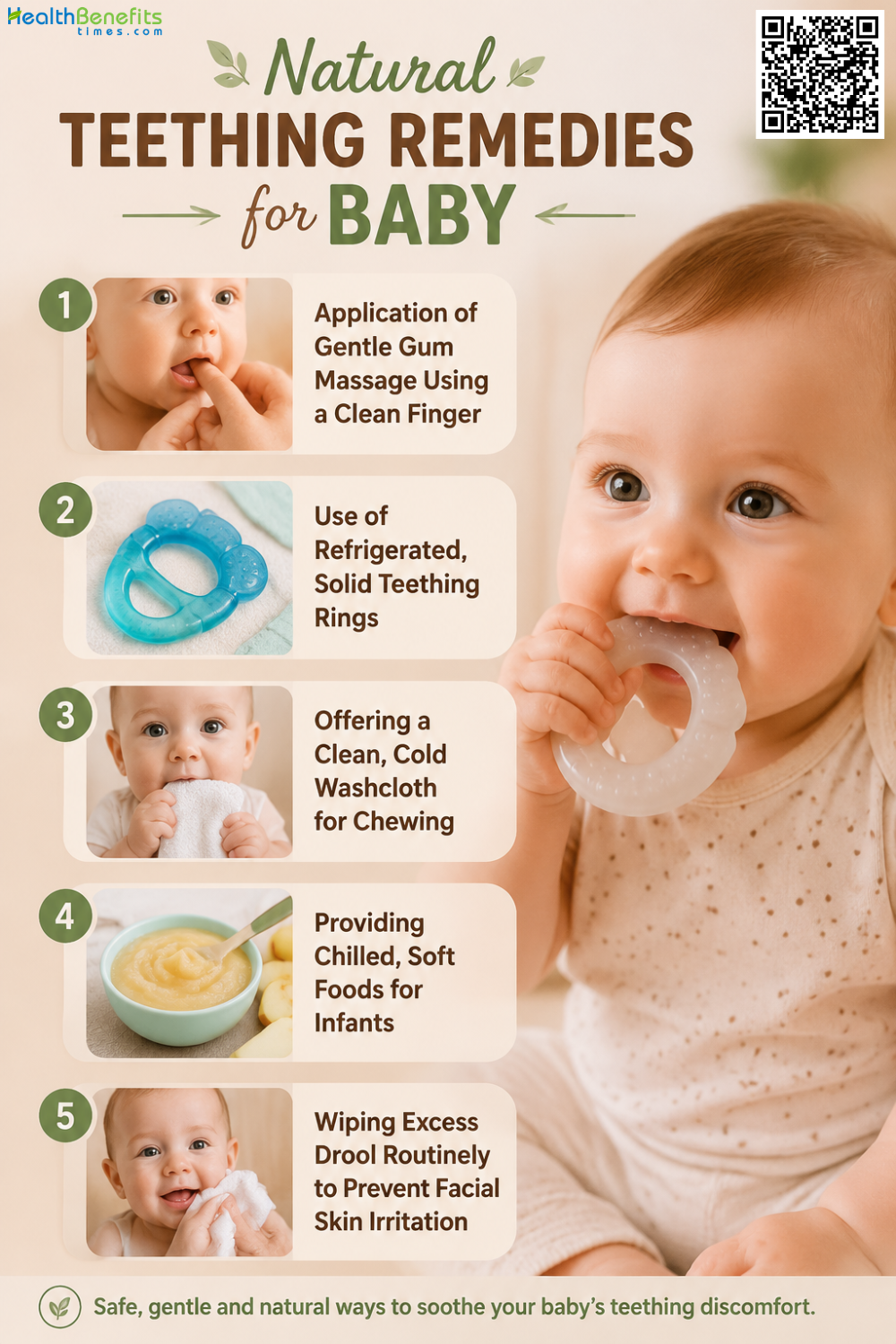
3. Offering a Clean, Cold Washcloth for Chewing
How it may help
The thick texture of a damp washcloth provides a satisfying surface for an infant to chew, offering therapeutic counter-pressure against the gums. When chilled, the cold temperature safely reduces local swelling and numbs the painful area without requiring oral medication 2.
What research says
Pediatric health authorities consistently endorse the use of a clean, cold washcloth as a safe, primary remedy for teething pain 2. Clinical evidence supports cooling therapies to manage localized inflammation and discomfort, prioritizing these physical interventions over systemic pain relievers or dangerous topical anesthetics 1.
How to use it safely
Soak a clean cotton washcloth in water, wring out the excess moisture, and place it in the refrigerator until cool. Once chilled, offer it to your baby to gnaw on. Always supervise your child closely while they chew to prevent accidental gagging or choking.
Potential precautions or side effects
Never place the washcloth in the freezer, as frozen fabric can stick to and severely damage an infant’s delicate gums 2. Always wash the cloth thoroughly after every use.
4. Providing Chilled, Soft Foods for Infants
How it may help
For infants who have transitioned to solid diets, consuming chilled, soft foods helps soothe inflamed gums. The cold temperature acts as a mild, natural numbing agent that reduces local swelling and dulls teething pain without the use of oral medications 2.
What research says
Pediatric health guidelines recommend using cool items to safely manage infant teething discomfort 1. Clinical authorities support offering chilled, soft foods—such as cold applesauce or yogurt—as an effective physical method to relieve localized gum inflammation in infants developmentally ready for solids 2.
How to use it safely
Offer your baby chilled yogurt, fruit purees, or mashed vegetables. If using solid pieces of cold fruit, place them in a safe mesh feeding pacifier to prevent choking. Always ensure your child is sitting upright and supervise them closely while they eat.
Potential precautions or side effects
Never offer hard, frozen pieces of food, as they create a severe choking hazard. Avoid sugary foods to prevent early decay in newly emerging primary teeth 2.
5. Wiping Excess Drool Routinely to Prevent Facial Skin Irritation
How it may help
Teething significantly increases saliva production. Constant moisture on the chin, neck, and chest can break down the outer skin barrier, leading to a painful, red rash. Routinely removing this excess drool prevents secondary skin irritation, keeping the infant more comfortable during the tooth eruption process 2.
What research says
Clinical guidelines identify excessive drooling as a primary physiological response to teething 1. Prolonged exposure to saliva causes localized contact dermatitis. Pediatric authorities advise that keeping the facial skin dry is the most effective method to prevent this irritating rash and reduce overall infant distress 2.
How to use it safely
Use a soft, clean cotton cloth to gently pat your baby’s face and chin dry throughout the day. Avoid harsh rubbing, which creates friction. You can also apply a thin layer of plain petroleum jelly to create a protective barrier between the skin and the saliva.
Potential precautions or side effects
Do not use scented baby wipes or lotions containing alcohol on the face, as these chemicals can sting, trigger allergic reactions, and significantly worsen existing skin inflammation.
Foods to Avoid When You suffer from teething
1. Hard, frozen solid foods
Avoid hard chunks of frozen fruits or vegetables. They do not soothe safely and create a severe, life-threatening choking hazard as they melt in the mouth 2.
2. Sugary snacks and juices
Exclude fruit juices and sweetened foods. Sugar promotes rapid bacterial growth, causing early tooth decay in newly emerged primary teeth before the enamel hardens 2.
3. Commercial teething biscuits
Skip processed teething biscuits. They frequently contain high amounts of hidden sugars that cling to new teeth and actively contribute to severe infant dental cavities 8.
4. Raw, hard produce
Avoid unmashed raw carrots or whole apple slices. Infants lack molars to grind these, making them a primary choking risk rather than a safe teething aid 9.
When to see Doctor when you struggle from teething
- High Fever: If the infant develops a temperature of 100.4°F (38°C) or higher. Teething does not cause true fevers; this indicates a potential underlying infection requiring medical evaluation 1.
- Diarrhea or Vomiting: Teething does not cause systemic illnesses like diarrhea, vomiting, or widespread body rashes. These symptoms signal a separate viral or bacterial infection needing a doctor’s diagnosis 2.
- Inconsolable Crying: While mild fussiness is normal, severe irritability, lethargy, or uncontrollable crying are not typical teething signs and suggest a separate painful condition like an ear infection 1.
- Delayed Tooth Eruption: If a child reaches 15 months of age without any primary teeth emerging, a healthcare provider should evaluate them for potential underlying developmental conditions 2.