Health Benefits
    Facebook Twitter Instagram
    Friday, December 5
    Facebook Twitter Pinterest
    Health Benefits
    • Home
    • Dental Health
    • Mental Health
    • Weight Loss
    • Health Wiki
    • Nutrition
    • Healthy Recipe
    • BMI Calculator
    Health Benefits
    Home»Herbs and Spices»Facts about Orchard Grass – Dactylis glomerata
    Herbs and Spices

    Facts about Orchard Grass – Dactylis glomerata

    By SylviaOctober 16, 2020Updated:October 16, 2020No Comments11 Mins Read
    Facebook Twitter Pinterest LinkedIn Tumblr Email

    Dactylis glomerata, also known as cock’s-foot, orchard grass, or cat grass (due to its popularity for use with domestic cats) is a common species of grass in the genus Dactylis and Poaceae ⁄ Gramineae (Grass family). It is a cool-season perennial bunchgrass native throughout most of northern Africa (i.e. Algeria, Egypt, Libya, Morocco and Tunisia), Europe (i.e. Denmark, Finland, Ireland, Norway, Sweden, UK, Austria, Belgium, Czechoslovakia, Germany, Hungary, the Netherlands, Poland, Switzerland, Belarus, Estonia, Latvia, Lithuania, Moldova, Russia, Ukraine, Bulgaria, Italy, Romania, Yugoslavia, France, Portugal and Spain), western Asia, Mongolia, Pakistan and northern India. Cocksfoot has been spread as an agricultural grass since at least the 18th century. It has been introduced into most temperate lands as a forage grass, in the USA it is known as ‘Orchard grass’.

    Barnyard grass, cat’s grass, cock’s foot, cocksfoot, cocksfoot grass, cockspur, orchard grass, orchardgrass, cocksfoot, hardgrass, rough cocksfoot, Cat grass, Slender Cock’s-foot and Ascherson’s orchardgrass are some of the popular common names of the plant. Orchardgrass is shade tolerant and is common in numerous shady areas such as orchards, hence its common name. The alternate common name, ‘cocksfoot’, is in reference to the shape of the flower head, with its long lower flowering branches that stick out to the side during bloom. The species name, glomerata, means ‘gathered in bunches’, referring to the dense, irregularly rounded flower clusters.

    Orchard Grass Facts

    Orchard grass Quick Facts
    Name: Orchard grass
    Scientific Name: Dactylis glomerata
    Origin Europe, temperate Asia, and northern Africa
    Shapes Seed head is dense and spike-like in appearance when it first emerges. With maturity, it becomes open and branched.
    Health benefits Beneficial for treating tumors, kidney and bladder ailments.
    Name Orchard grass
    Scientific Name Dactylis glomerata
    Native Northern Africa (i.e. Algeria, Egypt, Libya, Morocco and Tunisia), Europe (i.e. Denmark, Finland, Ireland, Norway, Sweden, UK, Austria, Belgium, Czechoslovakia, Germany, Hungary, the Netherlands, Poland, Switzerland, Belarus, Estonia, Latvia, Lithuania, Moldova, Russia, Ukraine, Bulgaria, Italy, Romania, Yugoslavia, France, Portugal and Spain), western Asia, Mongolia, Pakistan and northern India
    Common Names Barnyard grass, cat’s grass, cock’s foot, cocksfoot, cocksfoot grass, cockspur, orchard grass, orchardgrass, cocksfoot, hardgrass, rough cocksfoot, Cat grass, Slender Cock’s-foot, Ascherson’s orchardgrass
    Name in Other Languages Afrikaans: Boord gras
    Albanian: Telishi, bari i kopshtit
    Amharic: Yefirafirē sari (የፍራፍሬ ሣር-)
    Arabic: Iisbaeiat eunqudia (إصبعية عنقودية), bistan aleashb (بستان العشب)
    Armenian: Voznakhot (ոզնախոտ), ptghatu ayginer (պտղատու այգիներ)
    Azerbaijani: Meyvə bağı
    Basque: Alka-belar
    Belarusian: Kupkoŭka sbornaya (Купкоўка зборная)
    Bengali: Bāgānēra ghāsa (বাগানের ঘাস)
    Breton: Geot gallek
    Bulgarian: Yezhova glavitsa (ежова главица), obiknovena glavitsa (обикновена главица), sborna glavitsa (сборна главица), ovoshtna treva (овощна трева)
    Burmese: Hkyaan myaat (ခြံမြက်)
    Catalan: Dactyl, Cucurulles, Dàctil, Fenal, Fenàs mascle  
    Chinese: Yā máo (鸭茅), Guǒyuán cǎo (果园草)
    Croatian: Cvorasta oštrica, voćna trava
    Czech: Srha říznačka, srha laločnatá, ovocná tráva            
    Danish: Hundegræs, Almindelig hundegræs, frugtplantagegræs
    Dutch: Gewone kropaar, kropaar, boomgaard gras         
    English: Cocksfoot, hardgrass, rough cocksfoot, orchardgrass, Cat grass, Slender Cock’s-foot, Barnyard grass, Cocksfoot grass, Cockspur, Ascherson’s orchardgrass
    Esperanto: Gardeno
    Estonian: Harilik kerahein, viljapuuaia rohi           
    Finnish: Koiranheinä, hedelmätarhan ruoho      
    French: Chiendent à bossettes, dactyle aggloméré, dactyle pelotonné, herbe des vergers, patte de lièvre, pied de poule, Dactyle vulgaire, Gramen pelotonné, herbe du verger
    Galician: Dactyle pelotonné
    Georgian: Satitura (სათითურა), baghis balakhi (ბაღის ბალახი)
    German: Gemeines Knaulgras, gemeines Knäuelgras, gewöhnliches Knaulgras, gewöhnliches Knäuelgras, Knäuelgras, Wiesenknäuelgras, Knäuelgras, Wiesen-Knäuelgras, Obstgartengras
    Greek: Daktylída (δακτυλίδα), chórto oporóna (χόρτο οπωρώνα)
    Gujarati: Bāga ghāsa (બાગ ઘાસ)
    Hausa: Ciyawar orchard
    Hebrew: Tzibboret heharim, צִבֹּרֶת הֶהָרִים, ציבורת ההרים             
    Hindi: Ghaas ghaas (घास घास)
    Hungarian: Csomós ebír               , gyümölcsös fű
    Icelandic: Axhnoðapuntur, Orchard gras
    Indonesian: Rumput kebun
    Irish: Féar úllord
    Italian: Erba mazzolina, erba mazzolina commune, pannocchina, Dattile, erba del frutteto
    Japanese: Kamogaya (カモガヤ), Ōchādogurasu (オーチャードグラス)
    Javanese: Suket ing kebon
    Kannada: Haṇṇina hullu (ಹಣ್ಣಿನ ಹುಲ್ಲು)
    Kazakh: Kädimgi tarğaqşöp (Кәдімгі тарғақшөп), كادىمگى تارعاقشوپ, baqşa şöpteri (бақша шөптері)
    Kirghiz: Aksokto (Аксокто)
    Korean: Gwasuwon jandi (과수원 잔디)
    Kurdish: Giyayê dare
    Lao: Orchard ja
    Latin: Herba pomarii claudite
    Latvian: Parastā kamolzāle, augļu dārza zāle       
    Lithuanian: Paprastoji šunažolė, sodo žolė          
    Macedonian: Yezhevka (ежевка), ovošna treva (овошна трева)
    Malagasy: Ahitra
    Malay: Rumput dusun
    Malayalam: Pūntēāṭṭa pull (പൂന്തോട്ട പുല്ല്)
    Maltese: Haxix tal-ġardina
    Marathi: Bāga gavata (बाग गवत)
    Mongolian: Tsetserlegiin övs (цэцэрлэгийн өвс)
    Nepali: Bagaicā ghām̐sa (बगैचा घाँस)
    Northern sami: Beatnatrávda
    Norwegian: Hundegras, Hund-grass, frukthage gress
    Occitan: Grosso-testo, Pè de lèbre, Pèd-de-lèbre           
    Oriya: ବଗିଚା ଘାସ |
    Persian: علف باغ, چمنزار باغ
    Polish: Kupkówka pospolita, rżniączka pospolita, trawa sadowni               
    Portuguese: Dáctila, dáctilo, dáctilo-comum, dáctilo-dos-lameiros, erva-dos-combros, panasco, panasco-das-areias, panasco-das-moitas, panasco-de-folhas-estreitas, pé-de-galo, Capim-dos-pomares, grama de pomar
    Punjabi: Bagīcā ghāha (ਬਗੀਚਾ ਘਾਹ)
    Romanian: Golomăţ, iarba de livadă
    Russian: Yezha obyknovennaya (ежа обыкновенная), yezha sbornaya (ежа сборная), sadovaya trava (садовая трава)  
    Serbian: Ježevica (јежевица), Јеževica, voćnjak trave (воћњак траве)
    Sindhi: باغن جي گھاس
    Sinhala: Paḷaturu vatu taṇakoḷa (පළතුරු වතු තණකොළ)
    Slovak: Reznačka laločnatá         
    Slovene: Navadna pasja trava, sadovnjak            
    Spanish: Dáctilo, dáctilo aglomerado, dáctilo apelotonado, dáctilo ramoso, lastón, pasto ovillo, triguera, pasto azul orchoro, pasto orchoro, grama en jopillos, Jopillo, Rata trepadora, pasto ovillo, zacate del huerto, hierba de huerto
    Sundanese: Jukut dusun
    Swedish: Hundäxing, Koiranheinä, Vanlig hundäxing, fruktträdgårdsgräs
    Tajik: Alafi ʙoƣī (алафи боғӣ)
    Tamil: Paḻattōṭṭa pāṭal (பழத்தோட்ட புல்), Paḻattōṭṭa pul
    Telugu:  Ārcarḍ gaḍḍi (ఆర్చర్డ్ గడ్డి)
    Thai: H̄ỵ̂ā s̄wn p̄hl mị̂ (หญ้าสวนผลไม้)
    Turkish: Meyve bahçesi               
    Ukrainian: Hryastytsya zbirna (грястиця збірна), fruktova trava (фруктова трава)
    Upper Sorbian: Lěsny sukač
    Urdu: باگ گھاس
    Uzbek: Oqsoʻxta, mevali o’t
    Vietnamese: Vườn cây ăn trái
    Walloon: Rexhe waide
    Welsh: Troed y ceiliog, glaswellt perllan
    Zulu: Utshani bezithelo
    Plant Growth Habit Coarse, clump-forming, cool-season tall growing, perennial grass
    Growing Climates Grass and heathland, forests, riparian habitats, freshwater wetlands, coastal areas, meadows, pastures, sand dunes, disturbed sites, roadsides, rough grassland, fields, savannas, woodland borders, orchards, thickets, fence rows,  powerline clearances in wooded areas and miscellaneous waste area
    Soil Performs well on different textured soils ranging from clay to gravely loams and on shallow to deep soils. It does not grow well in saline soils and areas with high water tables
    Plant Size 1.4 to 4 feet (0.5-1.2 m ) tall
    Root Extensive fibrous root system but no stolons and rarely have short rhizomes
    Culms Light green, terete, and glabrous; later they become straw-colored
    Stem Stems are flattened and are either erect or bend abruptly at the base
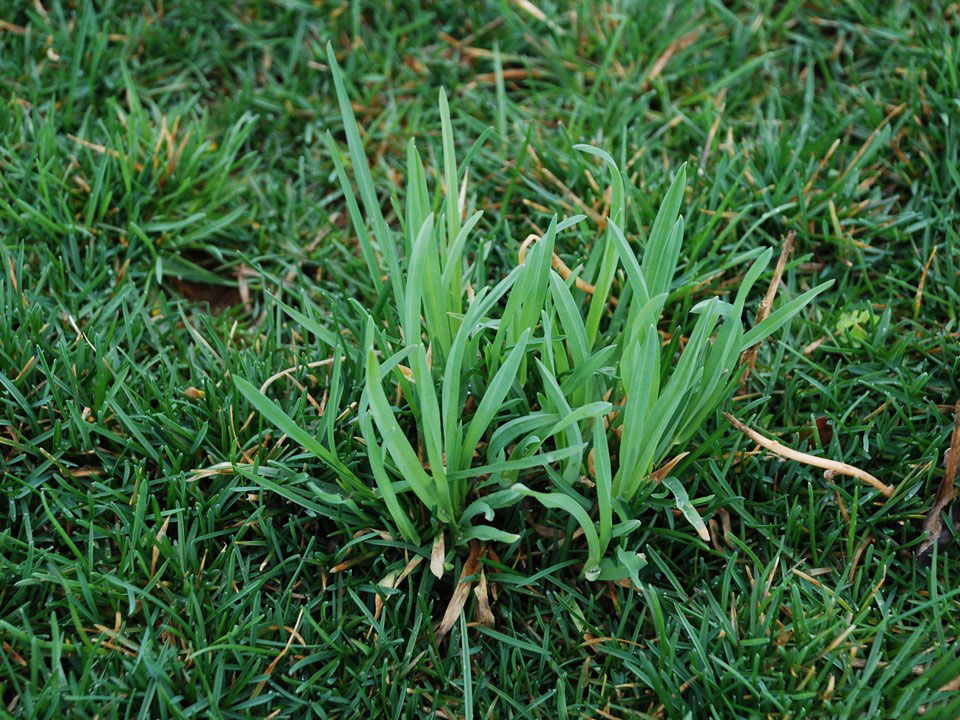
    Leaf Leaves of both fertile and infertile shoots have a similar appearance. Their blades are up to 10″ long and 1/3″ (8 mm.) across; they are green and hairless. The leaf blades of infertile shoots spread outward and remain low
    Flowering season June to September
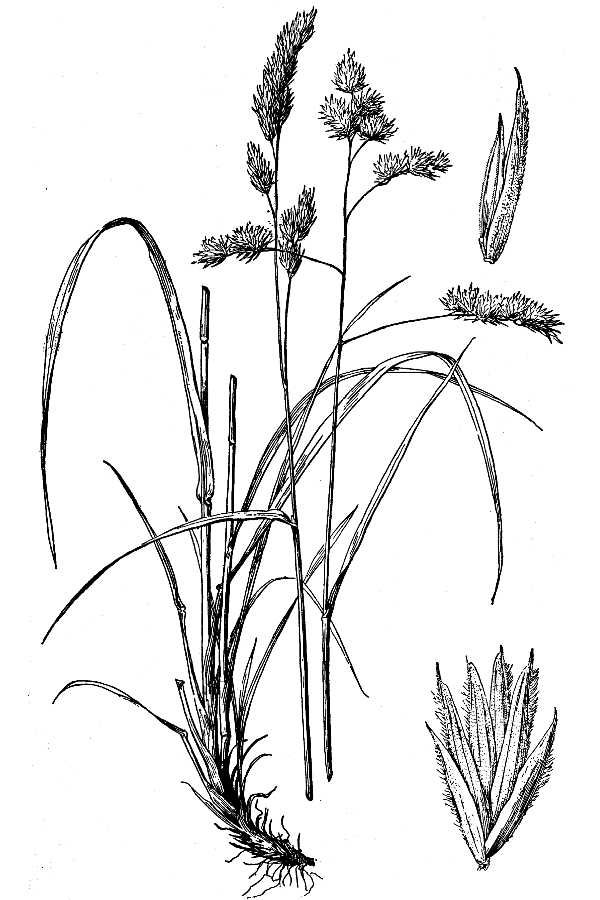
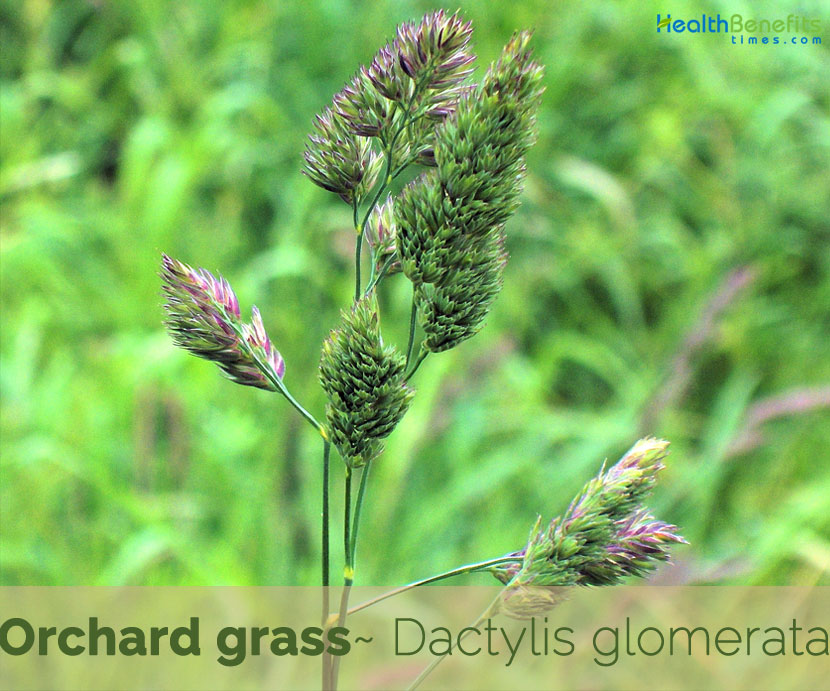
    Flower Inflorescence consists of a panicle of spikelets; the branching pattern of this panicle tends to occur along a 2-dimensional plane. The panicle is up to 10 inches long and 5 inches across, consisting of an erect rachis and short lateral branches
    Fruit Shape & Size Seed head is dense and spike-like in appearance when it first emerges. With maturity, it becomes open and branched
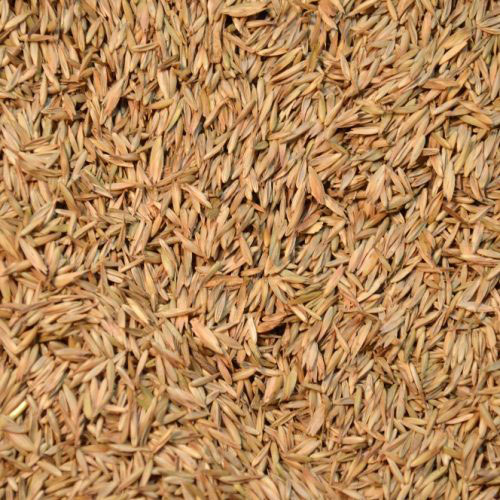
    Seed Seeds are very small, narrow, pointed about 1/3 inch long
    Propagation By seed or by divisions
    Season July to September
    Traditional Uses
    • The plant is a folk remedy for treating tumors, kidney and bladder ailments.
    Precautions
    • This plant is an important cause of hay fever.

    Plant Description

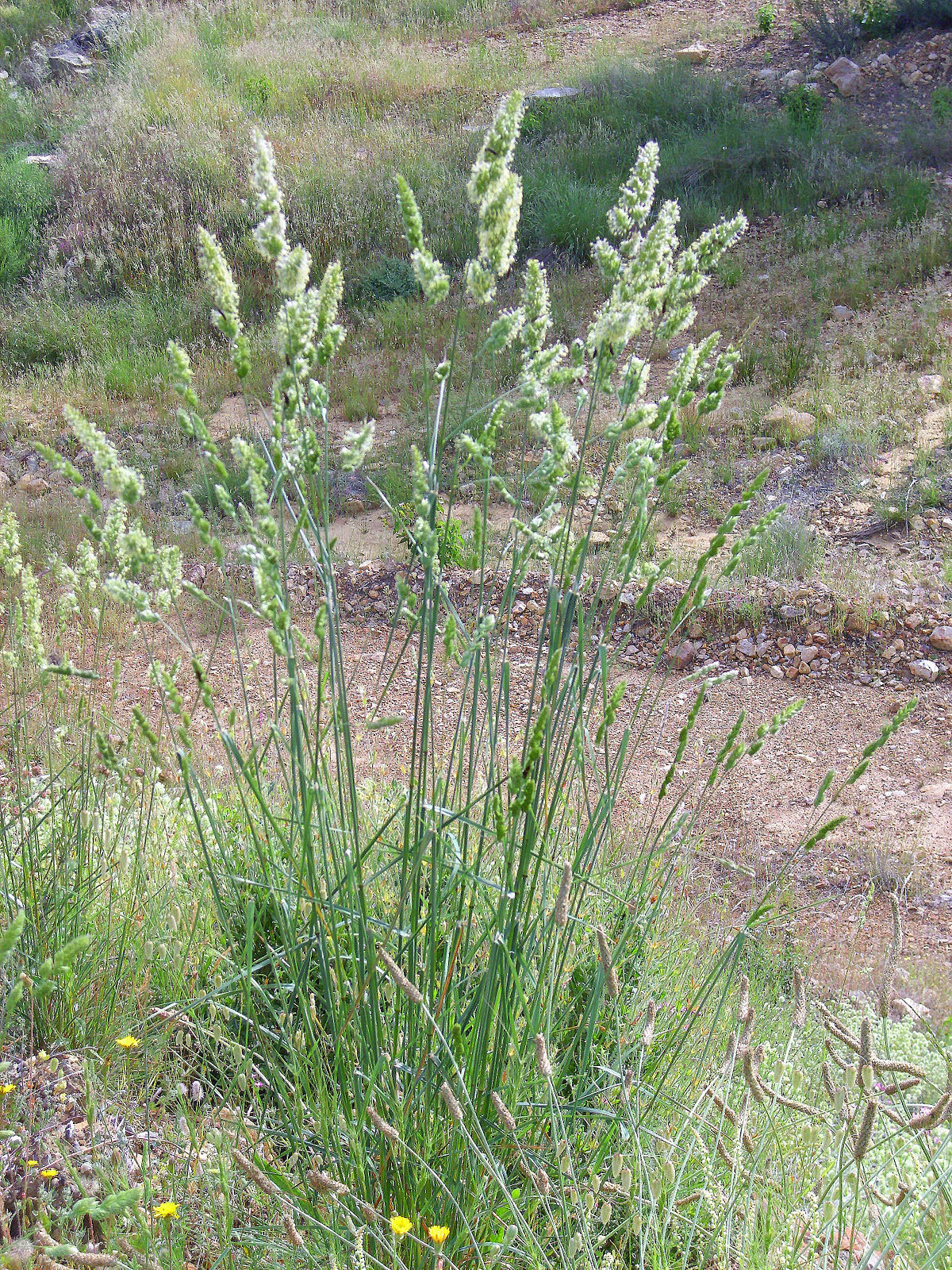
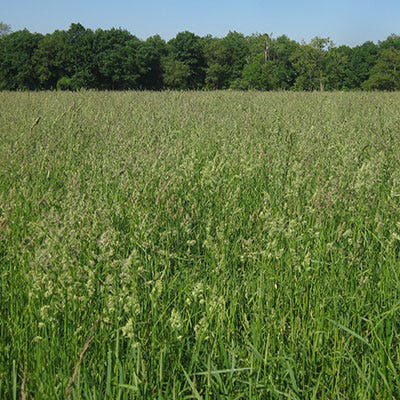
    Orchard grass is a coarse, clump-forming, cool-season, tall growing, perennial grass that normally grows about 1.4 to 4 feet (0.5-1.2 m) tall. The plant is found growing in grass and heath land, forests, riparian habitats, freshwater wetlands, coastal areas, meadows, pastures, sand dunes, disturbed sites, roadsides, rough grassland, fields, savannas, woodland borders, orchards, thickets, fence rows, powerline clearances in wooded areas and miscellaneous waste area. The plant performs well on different textured soils ranging from clay to gravely loams and on shallow to deep soils. It does not grow well in saline soils and areas with high water tables. The plants have extensive fibrous root system but no stolons and rarely have short rhizomes. Stems are flattened and are either erect or bend abruptly at the base. Culms are light green, terete, and glabrous; later they become straw-colored.

    Leaves

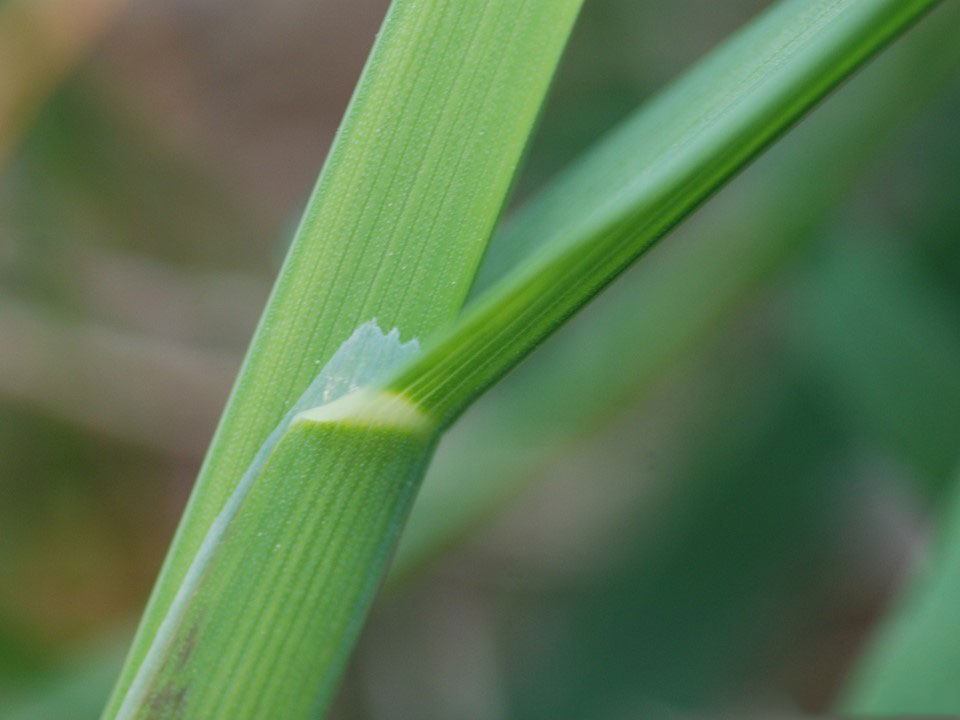
    The leaves of both fertile and infertile shoots have a similar appearance. Their blades can be 3 to 12 inches long (or more) and 1/8 to 1/3 inch wide. They are light green to dark blue-green and hairless somewhat rough on the upper and lower surfaces and margins, and sharply folded (V-shaped in cross-section). The leaf blades of infertile shoots spread outward and remain low, while the blades of alternate leaves on fertile shoots are more arching. Leaf sheaths are light green, hairless, and open toward their apices and have longitudinal veins. The ligule (projection inside on the top of the sheath) is membranous, finely toothed, rounded to pointed and relatively long (1/6 to 1/3 inch long). Auricles (appendages at the top of the sheath) are absent.

    Flower

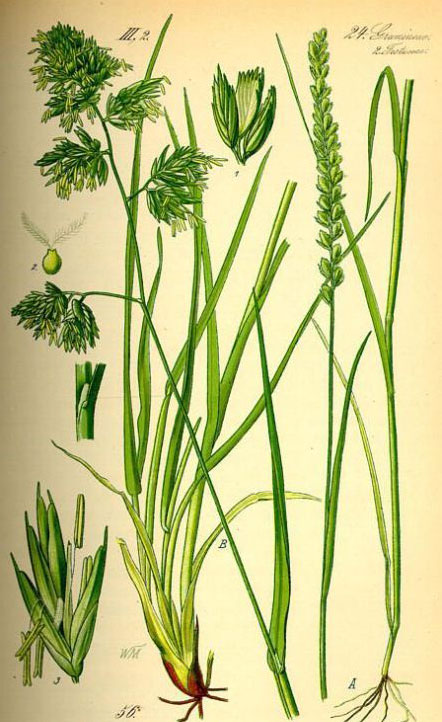
    The inflorescence consists of a panicle of spikelets; the branching pattern of this panicle tends to occur along a 2-dimensional plane. The panicle is up to 10 inches long and 5 inches across, consisting of an erect rachis and short lateral branches (only 1 lateral branch per node). Latter are stiff, straight, spreading to nearly erect, and few in number. Lateral branches have dense tufts of spikelets toward their tips, otherwise they are naked. The rachis also terminates in dense tufts of spikelets.

    Each spikelet consists of a dense tuft of 3-7 lemmas and their perfect florets; there is a pair of sterile glumes at the bottom. The spikelets are whitish green while their florets are blooming, but they later become light tan to brown. The glumes are linear-lanceolate, keeled, and unequal in size; the shorter glume of a pair is about 4-5 mm. in length, while the longer glume is about 5-6 mm. in length. The lemmas are linear-lanceolate and ciliate along their keels; they are about 5-8 mm. in length. In each spikelet, the upper lemmas tend to be shorter than the lower lemmas. Each floret has a pair of white plumose stigmata and 3 stamens with large white anthers. The blooming period occurs from June to September, lasting about 1-2 weeks for a colony of plants.
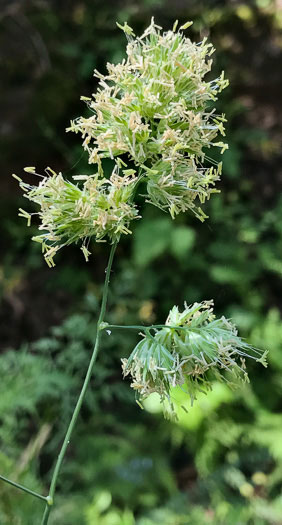
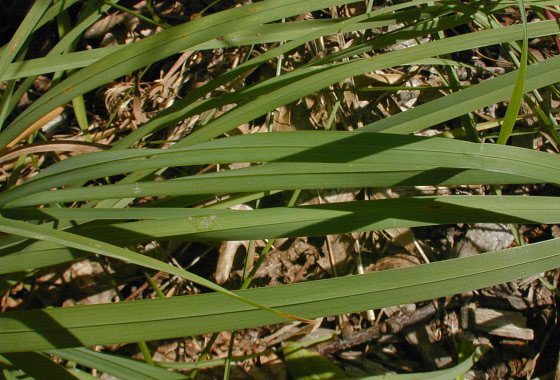
    Flowers-of-Orchard-grass Leaf-blades-of-Orchard-grass Membranous-ligule-of-orchardgrass Orchard-grass-plant Orchard-grass-plant-growing-wild Plant-Illustration-of-Orchard-grass Seeds-of-orchard-Grass Sketch-of-Orchard-grass Small-Orchard-grass-plant
    [Show thumbnails]

    Fruit

    The seed head is dense and spike-like in appearance when it first emerges. With maturity, it becomes open and branched. Seeds are very small, narrow, pointed about 1/3 inch long with 95,000 to 1,300,000 seeds/kg. They are food sources for caterpillars like the gatekeeper and meadow brown; while the seeds are eaten by finches and gamebirds.

    Prevention and Control

    Due to the variable regulations around (de)registration of pesticides, your national list of registered pesticides or relevant authority should be consulted to determine which products are legally allowed for use in your country when considering chemical control. Pesticides should always be used in a lawful manner, consistent with the product’s label.

    Physical/Mechanical Control

    Beddows (1959) says that D. glomerata can easily be controlled by ploughing, and that it does not survive heavy trampling by livestock. Muyt (2001) says that plants can be dug out but that the crown must be removed to prevent regrowth. Where plants are in seed he suggests cutting and bagging the stems before removing the rest of the plant. Muyt (2001) also says that stands can be slashed regularly during the main growing season to limit seed production. When a weed in turfgrass it can eventually be eliminated by close mowing (Hathaway et al., 2004).

    Biological Control

    Although a few insect species seem to be confined to D. glomerata (Beddows, 1959) there has never been any interest in using any of these for biological control: the species is so-long established and so valuable in many places that this would be impractical.

    Chemical Control

    Muyt (2001) says that plants can be treated with non-selective herbicides like glyphosate or grass-selective herbicides like fluazifop-butyl, but follow-up treatment is needed to control seedlings and surviving plants.

    Few Important Facts

    • Having a deep root system, the plant is also useful for checking soil erosion.
    • The plant can be grown for biomass, annual productivity ranges from 2 to 37 tons per hectare.
    • It is widely used as a pasture grass and also to improve forage production on rangelands.
    • Orchard grass has 487,000 seeds per pound.

    References:

    https://www.itis.gov/servlet/SingleRpt/SingleRpt?search_topic=TSN&search_value=193446#null

    http://www.hear.org/pier/species/dactylis_glomerata.htm

    https://npgsweb.ars-grin.gov/gringlobal/taxon/taxonomydetail?id=13114

    https://pfaf.org/user/plant.aspx?latinname=Dactylis+glomerata

    http://www.floracatalana.net/dactylis-glomerata-l-

    https://www.cabi.org/isc/datasheet/17618

    https://plants.usda.gov/core/profile?symbol=DAGL

    https://en.wikipedia.org/wiki/Dactylis_glomerata

    https://www.cal-ipc.org/plants/profile/dactylis-glomerata-profile/

    http://www.theplantlist.org/tpl1.1/record/kew-406640

    https://www.fs.fed.us/database/feis/plants/graminoid/dacglo/all.html

    https://gd.eppo.int/taxon/DACGL

    https://www.hort.purdue.edu/newcrop/duke_energy/Dactylis_glomerata.html

    76%
    76%
    Awesome

    Comments

    comments

    Herbs and Spices O
    Share. Facebook Twitter Pinterest LinkedIn Tumblr Email
    Previous ArticleHealth benefits of Lady’s Bedstraw – Galium verum
    Next Article All You Need to Know About UV Sterilizers

    Related Posts

    Uses of Monkey Pitcher plant

    April 16, 2024

    Traditional uses and benefits of Wild Marigold

    March 21, 2024

    Traditional uses and benefits of Drooping fig

    March 12, 2024

    Comments are closed.


    Orchard grass Scientific Classification

    Scientific Name: Dactylis glomerata

    Rank Scientific Name & (Common Name)
    Kingdom Plantae (Plants)
    Subkingdom Tracheobionta (Vascular plants)
    Infrakingdom Streptophyta  (land plants)
    Super Division Spermatophyta (Seed plants)
    Division Magnoliophyta (Flowering plants)
    Sub Division Spermatophytina  (spermatophytes, seed plants, phanérogames)
    Class Liliopsida (Monocotyledons)
    Sub Class Commelinidae
    Super Order Lilianae  (monocots, monocotyledons, monocotylédones)
    Order Cyperales
    Family Poaceae ⁄ Gramineae (Grass family)
    Genus Dactylis L. (orchardgrass)
    Species Dactylis glomerata L. (orchardgrass)
    Sub Species
    • Dactylis glomerata ssp. glomerata L. – orchardgrass        
    • Dactylis glomerata ssp. lobata (Drejer) H. Lindb.
    Synonyms
    • Bromus cylindraceus (Brot.) Brot
    • Bromus glomeratus (L.) Scop
    • Dactylis abbreviata Bernh. ex Link
    • Dactylis altaica Besser   
    • Dactylis aschersoniana Graebn
    • Dactylis canariensis Nees ex Steud
    • Dactylis capitellata Link
    • Dactylis ciliata (Peterm.) Opiz    
    • Dactylis cylindracea Brot
    • Dactylis decalcata Brand
    • Dactylis fasciculata C.Sm. ex Link
    • Dactylis glaucescens Willd
    • Dactylis glomerata var. abbreviata (Link) Lange
    • Dactylis glomerata f. acroantha Franch
    • Dactylis glomerata subsp. altaica (Besser) Domin
    • Dactylis glomerata var. altaica (Besser) Keng
    • Dactylis glomerata f. amplectens Domin               
    • Dactylis glomerata f. angustifrons Domin
    • Dactylis glomerata f. aprica Podp
    • Dactylis glomerata var. aprica (Podp.) Domin
    • Dactylis glomerata subsp. aschersoniana (Graebn.) Thell
    • Dactylis glomerata var. aschersoniana (Graebn.) Domin
    • Dactylis glomerata var. australis Willk
    • Dactylis glomerata f. barbata Domin
    • Dactylis glomerata f. capitellata (Link) Maire
    • Dactylis glomerata var. ciliata Peterm
    • Dactylis glomerata var. confusa Domin
    • Dactylis glomerata var. congesta (Domin) Acedo              
    • Dactylis glomerata var. decalcata Nees ex Döll
    • Dactylis glomerata var. deflexa Domin
    • Dactylis glomerata var. detonsa Fr
    • Dactylis glomerata var. ebusitana O.Bolòs & Vigo
    • Dactylis glomerata var. fleischeri (Domin) Acedo              
    • Dactylis glomerata var. geomastrix Borbás
    • Dactylis glomerata var. glaucoviridis Domin
    • Dactylis glomerata subsp. glomerata
    • Dactylis glomerata var. glomerata
    • Dactylis glomerata var. hackelii Asch. & Graebn
    • Dactylis glomerata subsp. hackelii (Asch. & Graebn.) Cif. & Giacom
    • Dactylis glomerata subsp. himalayensis Domin
    • Dactylis glomerata f. hispida Ghișa
    • Dactylis glomerata subsp. hylodes (P.F.Parker) Holub
    • Dactylis glomerata subsp. hyrcana Tzvelev
    • Dactylis glomerata subsp. ibizensis Stebbins & D.Zohary
    • Dactylis glomerata f. ibizensis (Gand.) Knoche
    • Dactylis glomerata subsp. intercedens (Domin) Acedo
    • Dactylis glomerata subsp. izcoi S.Ortiz & Rodr.Oubiña
    • Dactylis glomerata var. kroulikii Domin
    • Dactylis glomerata f. latifolia Issler
    • Dactylis glomerata f. laxa Ortmann ex Opiz
    • Dactylis glomerata var. laxa Ortm
    • Dactylis glomerata var. leiantha Hayek
    • Dactylis glomerata var. leiostachys Domin
    • Dactylis glomerata var. luxurians Soest ex Jansen & Wacht
    • Dactylis glomerata var. macrocephala Domin
    • Dactylis glomerata subsp. marina (Borrill) Greuter
    • Dactylis glomerata var. marina (Borrill) Speranza & Cristof
    • Dactylis glomerata var. maritima (Hack.) Trab
    • Dactylis glomerata var. nemorosa Klett & Richt
    • Dactylis glomerata subsp. oceanica G.Guignard
    • Dactylis glomerata var. orlicensis (Domin) Acedo              
    • Dactylis glomerata var. pallida Issler
    • Dactylis glomerata subsp. pendula Dumort
    • Dactylis glomerata var. pendula Dumort
    • Dactylis glomerata f. petrakii Domin
    • Dactylis glomerata f. picta Domin
    • Dactylis glomerata var. pilosa Soest
    • Dactylis glomerata subsp. polygama (Horv.) Domin
    • Dactylis glomerata f. prihodae Domin
    • Dactylis glomerata var. pubescens St.-Amans
    • Dactylis glomerata var. rigida (Boiss. & Heldr.) Hayek
    • Dactylis glomerata f. rigidior Domin
    • Dactylis glomerata var. scabra (W.Mann ex Opiz) Beck
    • Dactylis glomerata var. schustleri Domin
    • Dactylis glomerata var. sibthorpii (Hack.) Boiss
    • Dactylis glomerata subsp. sinensis A.Camus
    • Dactylis glomerata subsp. slovenica (Domin) Domin
    • Dactylis glomerata var. spicata Pamp
    • Dactylis glomerata f. spuria Domin
    • Dactylis glomerata var. stenophylla Opiz ex Podp
    • Dactylis glomerata var. stenostachys (Domin) Acedo
    • Dactylis glomerata f. subglaucescens Domin
    • Dactylis glomerata var. subglomerata Domin
    • Dactylis glomerata var. subhirsuta (Domin) Acedo
    • Dactylis glomerata f. sublaevis Domin
    • Dactylis glomerata var. subsessilis Peterm
    • Dactylis glomerata f. subspiciformis Domin
    • Dactylis glomerata var. superglomerata (Domin) AcedoDactylis glomerata var. superpolygama (Domin) Acedo
    • Dactylis glomerata f. tenuifolia Domin
    • Dactylis glomerata var. trichophora Domin
    • Dactylis glomerata f. triramea Domin
    • Dactylis glomerata f. variegata (C.L.Hitchc.) Beetle
    • Dactylis glomerata var. verticillata Jansen & Wacht
    • Dactylis glomerata var. violascens Issler
    • Dactylis glomerata subsp. woronowii (Ovcz.) Stebbins & D.Zohary
    • Dactylis heterophylla Opiz ex Domin
    • Dactylis hispanica Noö ex Steud
    • Dactylis hispanica var. maritima Hack
    • Dactylis hispanica var. sibthorpii Hack
    • Dactylis hyrcana (Tzvelev) Mussajev
    • Dactylis ibizensis Gand
    • Dactylis izcoi S.Ortiz & Rodr.Oubiña
    • Dactylis izcoi Horjales, Laso & Redondo
    • Dactylis izcoi subsp. merinoiana Horjales, Laso & Redondo
    • Dactylis juncinella subsp. stebbinsii Horjales, Laso & Redondo
    • Dactylis kirschbaumii Opiz ex Domin
    • Dactylis kovarovicii Opiz               
    • Dactylis lobata (Drejer) Ostenf
    • Dactylis marina Borrill    
    • Dactylis maritima (Hack.) Rivas Mart
    • Dactylis metlesicsii P.Schönfelder & D.Ludw
    • Dactylis nemorosa Opiz ex Domin
    • Dactylis noeana Steud
    • Dactylis ortmanniana Opiz
    • Dactylis pendula (Dumort.) B.D.Jacks
    • Dactylis peylii Opiz ex Domin      
    • Dactylis polygama Horv
    • Dactylis polygama f. amplectens (Domin) Soó
    • Dactylis polygama f. angustifrons (Domin) Soó
    • Dactylis polygama f. barbata (Domin) Soó
    • Dactylis polygama f. ciliata (Peterm.) Soó
    • Dactylis polygama var. confusa (Domin) Soó
    • Dactylis polygama f. deflexa (Domin) Soó
    • Dactylis polygama var. geomastrix (Borbás) Soó
    • Dactylis polygama var. glaucoviridis (Domin) Soó
    • Dactylis polygama f. kroulikii (Domin) Soó
    • Dactylis polygama f. latifolia (Issler) Soó
    • Dactylis polygama f. laxa (Ortmann ex Opiz) Soó               
    • Dactylis polygama f. luxurians (Soest ex Jansen & Wacht.) Soó
    • Dactylis polygama f. macrocephala (Domin) Soó
    • Dactylis polygama f. pallida (Issler) Soó
    • Dactylis polygama f. petrakii (Domin) Soó
    • Dactylis polygama f. picta (Domin) Soó
    • Dactylis polygama f. prihodae (Domin) Soó
    • Dactylis polygama f. rigidor (Domin) Soó               
    • Dactylis polygama f. scabra (W.Mann ex Opiz) Soó
    • Dactylis polygama f. schustleri (Domin) Soó
    • Dactylis polygama f. spuria (Domin) Soó
    • Dactylis polygama f. subglaucescens (Domin) Soó
    • Dactylis polygama f. sublaevis (Domin) Soó
    • Dactylis polygama f. subspiciformis (Domin) Soó               
    • Dactylis polygama f. tenuifolia (Domin) Soó
    • Dactylis polygama var. trichophora (Domin) Soó               
    • Dactylis polygama f. triramea (Domin) Soó
    • Dactylis polygama f. verticillata (Jansen & Wacht.) Soó
    • Dactylis polygama f. violascens (Issler) Soó
    • Dactylis pubescens Opiz ex Domin
    • Dactylis rigida Boiss. & Heldr
    • Dactylis scaberrima Opiz
    • Dactylis scabra W.Mann ex Opiz
    • Dactylis scabra Mann ex Domin
    • Dactylis slovenica Domin
    • Dactylis smithii subsp. hylodes P.F.Parker
    • Dactylis smithii subsp. marina (Borrill) P.F.Parker
    • Dactylis stenophylla Opiz ex Domin
    • Dactylis villosa Ten
    • Dactylis woronowii Ovcz
    • Festuca glomerata (L.) All
    • Festuca phalarioides Lam
    • Koeleria dactylis Chaub
    • Limnetis glomerata (L.) Eaton
    • Phalaris glomerata (L.) Gueldenst
    • Sesleria cirtensis Trab
    • Trachypoa vulgaris Bubani
    Categories
    • Beverages (78)
    • Dairy (28)
    • Dental Health (15)
    • Equipment (5)
    • Essential OIls (196)
    • Facts (2,939)
    • Foods (255)
    • Fruits (516)
    • Giveaway (1)
    • Grains and Cereals (36)
    • Health & Beauty (763)
    • Herbs and Spices (1,249)
    • Medicines (9)
    • Mental Health (19)
    • Nutritional value (27)
    • Nuts and seeds (73)
    • Oils (81)
    • Pets (4)
    • Poultry & Seafoods (67)
    • Pulses and Beans (16)
    • Reviews (25)
    • supplement (2)
    • Vegetables (304)
    • Weight Loss (22)

    What is Lupin Bean Flour?

    Science Backed Health Benefits of Durian (Durio zibethinus)

    Science Backed Health Benefits of Feijoa (Pineapple Guava) (Acca sellowiana)

    Science Backed Health Benefits of Gac Fruit (Momordica cochinchinensis)

    Science Backed Health Benefits of Amaranth Leaves (Amaranthus spp)

    Science Backed Health Benefits of Arrowhead (Sagittaria sagittifolia)

    ABOUT
    Home
    About us
    Contact us
    Privacy Policy
    Terms & conditions
    Disclaimer
    Direct Communication
    e-mail: [email protected]
    Gmail: [email protected]
    Whatsapp: +977-9841146511
    Viber: +977-9841146511
    Useful
    Health Wiki
    Nutrition
    Facebook Twitter Pinterest
    © 2025 www.healthbenefitstimes.com All rights reserved.

    Type above and press Enter to search. Press Esc to cancel.

    ×

    Log In

    Forgot Password?

    Not registered yet? Create an Account