Health Benefits
    Facebook Twitter Instagram
    Friday, December 5
    Facebook Twitter Pinterest
    Health Benefits
    • Home
    • Dental Health
    • Mental Health
    • Weight Loss
    • Health Wiki
    • Nutrition
    • Healthy Recipe
    • BMI Calculator
    Health Benefits
    Home»Herbs and Spices»Facts about Pelajau
    Herbs and Spices

    Facts about Pelajau

    By s mOctober 17, 2019Updated:October 17, 2019No Comments2 Mins Read
    Facebook Twitter Pinterest LinkedIn Tumblr Email

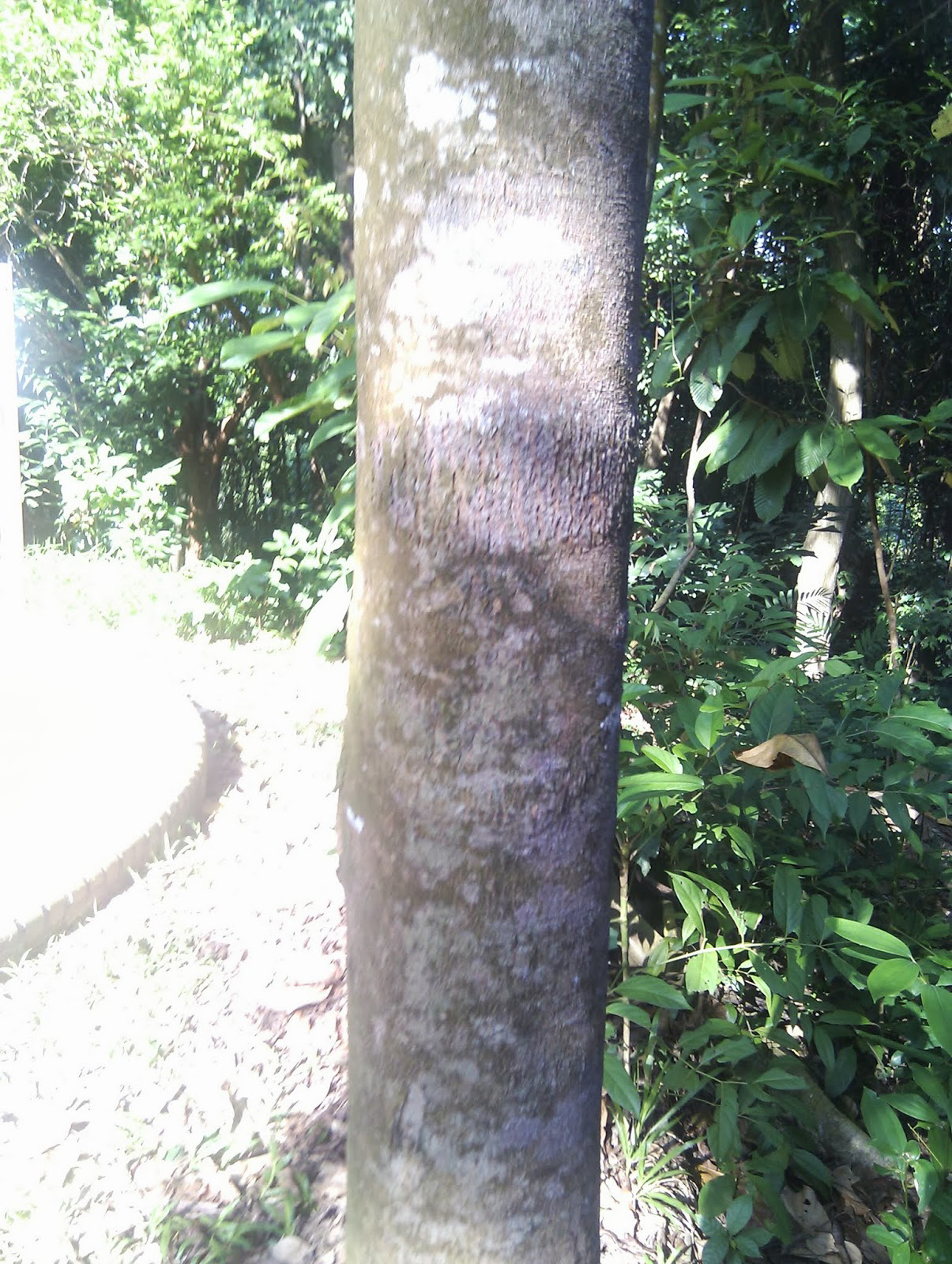
    Pelajau, Pentaspadon motley, is a plant species belonging to family Anarcardiaceae and found in Malaysia, Indonesia, the Solomon Islands and Papua New Guinea. It is endangered by loss of habitat. The fruits and seeds are edible after cooking. In native tropical range, it is found in lowland undisturbed primary forests upto altitude of 200 meters. It mostly occurs in swamps, repeatedly inundated areas and along rivers and streams on sandy to clayey soils. Usually it is found as pre-disturbance remnant in secondary forests. Naturally, it occurs in low lying and undulating land especially near streams and in seasonal swamp forests. Leaves measures 10 to 30 cm long with 7 to 9 leaflets. Usually leaflets are opposite with pointed apex having rounded base and pinkish color when young. Bark is grey-white with pink inner bark and has whitish sap when cut. Timber is light hardwood  with light yellow-green heartwood. Sapwood is white having green tinge when fresh measuring 2-3 cm wide and not clearly differentiated. The soil is light reddish loam and shallow having underlying rock and granite and also a good drainage.

    Plant description

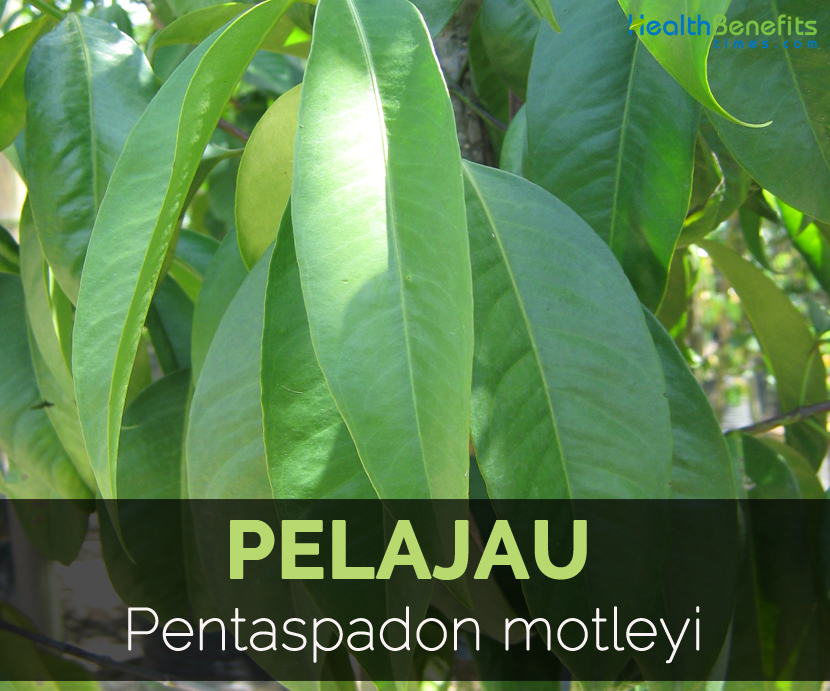
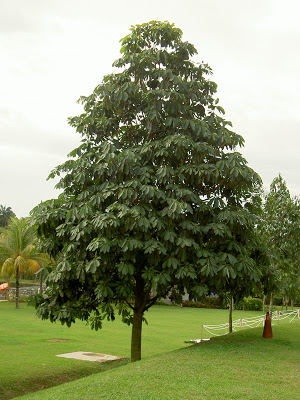
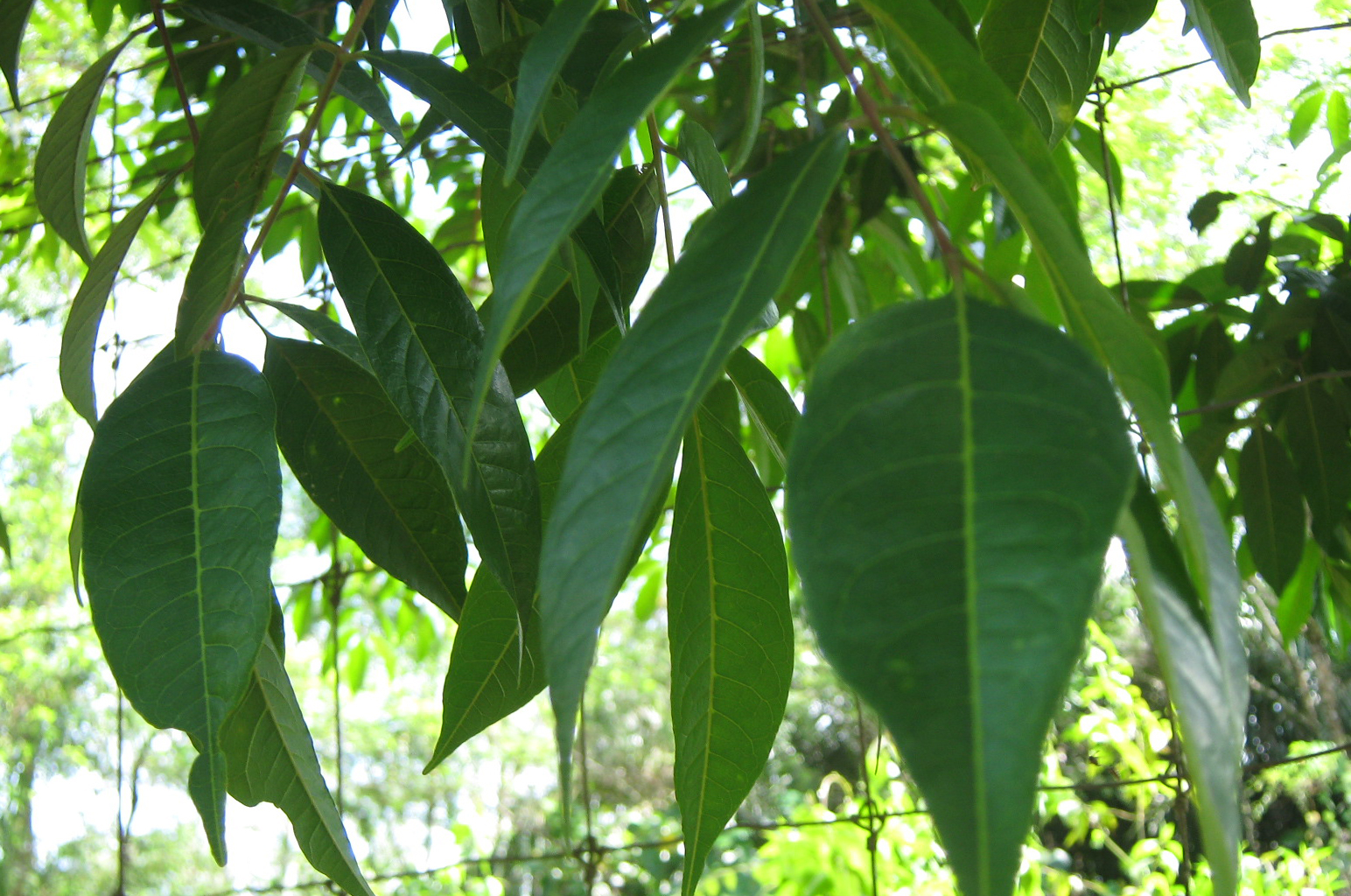
    Pentaspadon motley is a tall tree measuring 51 meters in height and 70 cm dbh with thin spreading buttresses and scaly or grey-brown bark. Leaves are compound, alternate, imparipinnate measuring 10–20 cm long having 7 to 9 dark green leaflets which are pink when young. Leaflets are opposite and about 5–13 cm × 2–6 cm. It has pointed apex and rounded base, penni-veined having 6 to 10 pairs of secondary nerves and hairy domatia in axils of secondary nerves. Flowers are small, cream colored and about 4 mm in diameter. The bisexual flowers have imbricate petals and five fertile stamens that alternates with five sterile staminodes and one celled ovary having short style. Fruit is a drupe which is fleshy ovoid, greenish-brown, 3–5 cm by 2–2.75 cm which contains one large, ovoid and oblong compressed seed.

    Palajau-tree Pelajau-bark Pelajau-leaves
    [Show thumbnails]
    Traditional uses

    • In Sarawak, use the sap as oil for itch, skin diseases and scabies.
    • Stems resin is used to calm down itchiness of skin.

    Culinary uses

    • Consume the fruits fresh, cooked, fried or roasted.
    • The kernel offers a pleasant taste when roasted or fried.
    • Add the kernels to the soup.
    • Boil the fruits.

    References:

    https://en.wikipedia.org/wiki/Pentaspadon_motleyi

    http://www.asianplant.net/Anacardiaceae/Pentaspadon_motleyi.htm

    http://www.tropical.theferns.info/viewtropical.php?id=Pentaspadon+motleyi

    83%
    83%
    Awesome

    Comments

    comments

    Herbs and Spices P
    Share. Facebook Twitter Pinterest LinkedIn Tumblr Email
    Previous ArticleUnderstanding the Dental Implant Process
    Next Article What Causes Your Homocysteine Levels to Spike?

    Related Posts

    Uses of Monkey Pitcher plant

    April 16, 2024

    Traditional uses and benefits of Wild Marigold

    March 21, 2024

    Traditional uses and benefits of Drooping fig

    March 12, 2024

    Comments are closed.


    Pelajau Quick Facts
    Name: Pelajau
    Scientific Name: Pentaspadon motleyi
    Origin Native to Malaysia (peninsular, Sarawak and Sabah); Indonesia (Kalimantan, Irian Jaya, Sumatra), Papua New Guinea (Gulf and Madang Provinces), Bougainville and the Solomon Islands.
    Colors Greenish-brown
    Shapes Fleshy ovoid, pointed drupe, 3–5 cm by 2–2.75 cm
    Name Pelajau
    Scientific Name Pentaspadon motleyi
    Native Native to Malaysia (peninsular, Sarawak and Sabah); Indonesia (Kalimantan, Irian Jaya, Sumatra), Papua New Guinea (Gulf and Madang Provinces), Bougainville and the Solomon Islands.
    Common/English Name Pelajau, Plajau, Pelong Tree, White Pelon Tree
    Name in Other Languages Indonesia: Plajau (Sumatra), Djuping, Empelanjau, Empit, Kedondong, Panjau, Letjut, Pelajau, Pelasit, Peladjau, Pilajau, Plajau, Planjau, Praju, Polajo, Umpit, Tampison, Vpie (Kalimantan);
    Malaysia: Pelong Licin, Kedondong (Peninsular), Plajau, Lakacho, Plasin Uping (Sarawak), Empelanjau, Pelajau (Sabah);
    New Guinea: Ailala, Laleua, Laleva;
    Borneo: Djuping, Empelanjau, Empit, Kedondong, Panjau, Letjut, Pelajau, Pelasit, Peladjau, Pilajau, Planjau, Plajau, Praju, Polajo, Umpit, Tampison, Vpie
    Plant Growth Habit Emergent, tall tree
    Plant Size 51 m tall and 70 cm dbh
    Bark Scaly, grey-brown
    Leaf Alternate, compound, imparipinnate, 10-20 cm long
    Flower Small, 4 mm in diameter, cream
    Fruit shape & size Fleshy ovoid, pointed drupe, 3–5 cm by 2–2.75 cm
    Fruit color Greenish-brown
    Seed Ovoid, oblong compressed

    Pelajau Scientific Classification

    Scientific Name: Pentaspadon motleyi

    Rank Scientific Name & (Common Name)
    Kingdom Plantae (Plants)
    Phylum Tracheophyta
    Class Magnoliopsida
    Order Sapindales
    Family Anacardiaceae
    Genus Pentaspadon Hook.f.
    Species Pentaspadon motleyi Hook.f.
    Synonyms
    • Nothoprotium sumatranum Miq.
    • Pentaspadon moszkowskii Lauterb.
    • Pentaspadon minutiflora B. L. Burtt
    • Pentaspadon officinalis Holmes
    • Pentaspadon officinalis Holmes ex King
    • Rhus novoguineensis Laut
    Categories
    • Beverages (78)
    • Dairy (28)
    • Dental Health (15)
    • Equipment (5)
    • Essential OIls (196)
    • Facts (2,939)
    • Foods (255)
    • Fruits (516)
    • Giveaway (1)
    • Grains and Cereals (36)
    • Health & Beauty (763)
    • Herbs and Spices (1,249)
    • Medicines (9)
    • Mental Health (19)
    • Nutritional value (27)
    • Nuts and seeds (73)
    • Oils (81)
    • Pets (4)
    • Poultry & Seafoods (67)
    • Pulses and Beans (16)
    • Reviews (25)
    • supplement (2)
    • Vegetables (304)
    • Weight Loss (22)

    What is Lupin Bean Flour?

    Science Backed Health Benefits of Durian (Durio zibethinus)

    Science Backed Health Benefits of Feijoa (Pineapple Guava) (Acca sellowiana)

    Science Backed Health Benefits of Gac Fruit (Momordica cochinchinensis)

    Science Backed Health Benefits of Amaranth Leaves (Amaranthus spp)

    Science Backed Health Benefits of Arrowhead (Sagittaria sagittifolia)

    ABOUT
    Home
    About us
    Contact us
    Privacy Policy
    Terms & conditions
    Disclaimer
    Direct Communication
    e-mail: [email protected]
    Gmail: [email protected]
    Whatsapp: +977-9841146511
    Viber: +977-9841146511
    Useful
    Health Wiki
    Nutrition
    Facebook Twitter Pinterest
    © 2025 www.healthbenefitstimes.com All rights reserved.

    Type above and press Enter to search. Press Esc to cancel.

    ×

    Log In

    Forgot Password?

    Not registered yet? Create an Account