

Health Benefits
    Facebook Twitter Instagram
    Friday, December 5
    Facebook Twitter Pinterest
    Health Benefits
    • Home
    • Dental Health
    • Mental Health
    • Weight Loss
    • Health Wiki
    • Nutrition
    • Healthy Recipe
    • BMI Calculator
    Health Benefits
    Home»Facts»Rose Apple facts
    Facts

    Rose Apple facts

    By s mMay 2, 2016Updated:August 4, 2017No Comments4 Mins Read
    Facebook Twitter Pinterest LinkedIn Tumblr Email

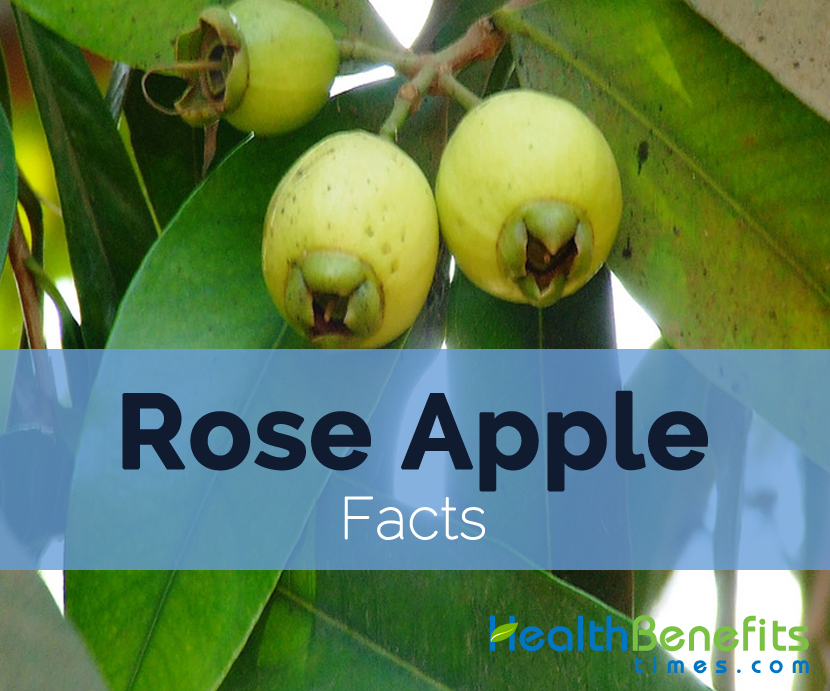
    Rose-apple-factsA Rose Apple is neither an apple nor a rose. It belongs to the same family of plums, apricots, peaches, cherries, raspberries, pears and almonds. It is a sensitive fruit which get bruises easily. It does better in wet, warm and humid areas with adequate rainfall. The tree bears a fruit about 2 kg after the growth of four years. This fruit is rich in polyphenols, potassium, vitamin C and dietary fiber.

    Name Rose Apple
    Scientific Name Syzygium aqueum
    Native East Indies and Malaya, also cultivated in Ceylon, the Pacific Islands, India and former Indochina.
    Common/English Name Bell Fruit, Watery Rose Apple, Water Cherry, Bell Apple, Water Apple
    Name in Other Languages Brazil: Jambeiro Aguado, Jambo
    Portuguese: D’agua
    Chinese: Shui Lian Wu;
    Dominican Republic (Spanish): Cajuilito Solimán;
    Dutch: Djamboe Aer;
    French: Jambosier D’eau, Pomme D’eau;
    German: Wasserjambuse, Wachsjambuse;
    Indonesia:
    Aceh: Jambi Raya, Jambi Iye;
    Bali: Jambu Er, Njamu Er;
    Batak: Jambu Erang, Jambu Aek,
    Besemah: Jambu Ayik
    Bimba: Jambu Jene,
    Bugis: Jambu Saiom, Jambu Salo;
    Boeol, Sulawesi, Manado: Takaw;
    Ceram, Moluccas, Ambon: Kepet, O’uno;
    Kalimantan, Dyak: Kubal;
    Gajo: Jambu Airjemerl;
    G orontalo: Omuto, Upo;
    Halmaheira:  Yarem, Rowane;
    Jambi: Jambu Pingping ,
    Java: Jambu Air, Jambu Uwer,
    Lampong: Jambu Air, Jambu Kelinga;
    Lingga: Jambu Bertih;
    Madurese: Jambhu Wir;
    Makassar: Jambu Jene;
    Malay, Bengkoelen: Jambu Keling;
    Manado: Gora;
    Minangkabau:  Jambu Aye;
    Nias: Samba;
    Oelias: Rutu Putio, Jambu Waelo;
    Papua: Purori, Ansahmoh,;
    Sangir: Compose;
    Sawoe: Wo Luba Kume;
    Singkep: Jambu Aer;
    Serawaj: Jambu Ayak;
    Solor: Bluwo, Bluwa;
    Sulawesi, Moluccas: Kebes, Kouoa;
    Sundanese: Jambu Air;
    Ternate: Gora Yadi ;
    Tidore: Yadi;
    Toraja:  Jambu, Wua Usa;
    Japanese: Mizu Renbu;
    Malaysia: Jambu Chili, Jambu Ayer;
    Papua New Guinea: Lal Lau;
    Philippines (Bisaya): Tambis;
    Spanish: Manzana De Agua, Perita Costena;
    Suriname: Pommerak;
    Thai: Machomphu-Pa, Chom Pu Pa
    Plant Growth Habit Tropical, evergreen, low
    Growing Climate Warm and humid climates with adequate rainfall
    Soil Well-drained
    Plant Size 3–10 m
    Bark Flaky brown
    Branchlets Wide spreading
    Stem 30 cm
    Leaf Narrow and glossy
    Edible parts of the plants Fruits: consumed as fruit salad or made pickle
    Leaves: used to wrap fermented sticky rice
    Flowering Season Midsummer (from June- August)
    Flower Greenish-white or creamy-white, Width: 2 to 4 in (5-10 cm), Diameter: 7.5-10 cm
    Fruit shape & size Bell-shaped, length: 5–8 cm
    Fruit color Pink-red
    Flesh color White
    Fruit peel Thin with smooth texture
    Flavor/aroma Not tart, simply aromatic
    Fruit Taste Mild sweet
    Seed 1 or 2, grey in color
    Varieties/Types Java Rose Apple, Malay Rose Apple, Jambu, Water Rose Apple
    Fruit Season Early winter to Late fall
    Major Nutritions Vitamin C (Ascorbic acid)22.3 mg (24.78%)
    Vitamin B3 (Niacin) 0.8 mg (5.00%)
    Carbohydrate 5.7 g (4.38%)
    Total dietary Fiber 1.5 g (3.95%)
    Calcium, Ca 29 mg (2.90%)
    Potassium, K 123 mg (2.62%)
    Vitamin A 17 µg (2.43%)
    Vitamin B2 (Riboflavin) 0.03 mg (2.31%)
    Copper, Cu 0.016 mg (1.78%)
    Vitamin B1 (Thiamin) 0.02 mg (1.67%)
    Manganese, Mn 0.029 mg (1.26%)
    Protein  0.6 g (1.20%)
    Magnesium, Mg 5 mg (1.19%)
    Phosphorus, P 8 mg (1.14%)
    Iron, Fe 0.07 mg (0.88%)
    Calories in 1cup (100 g) 25 Kcal.
    Health Benefits
    • Fights Free Radical Damage
    • Reduced Risk of Stroke
    • Boost good HDL Cholesterol
    • Prevent Diabetes
    • Prevent Constipation
    • Prevent muscle cramping
    • Skin Health
    Traditional uses
    • A decoction made from astringent bark is used in folkloric medicine of Malaysia to treat thrush.
    • In the childbirth ceremony, it is served as a salad.
    • In India, it is used to boost the liver and brain functions.
    • Rose Apple is undoubtedly a stimulant for the brain and liver in India.
    • The sweetened prepared from the flowers used to reduce fever.
    • The sore eyes and rheumatism is cured with the decoction made from the leaves.
    • Dysentery, diarrhea and catarrh are treated with the seeds.
    • The infusion of roasted and powdered seeds is used to treat diabetes in Nicaragua.
    • Rose Apple is believed to contain the pain-killer properties in Colombia.
    • Epilepsy is treated with the use of root by the Cuban people.
    Precautions
    • The rose Apple preparations possess high risk of toxicity.
    • The roots and seeds are also poisonous.
    • Hydrocyanic acid (cyanide or prussic acid) is present in the stems, leaves and roots in the numerous amounts which could be harmful to the body.
    How to Eat
    • It could be eaten raw.
    • People preserve Rose Apples in the form of jellies and jams.
    • It is also added to the desserts.
    • It is used in the preparation of sauce or fruit syrup.
    Other Facts
    • Rose apples highly perishable and easily bruised.
    • It is non-climacteric.
    • The trees of Rose Apple bloom as well as fruit less in summer.
    • 2 kg (5 lbs.) fruit is yield by the matured rose apple tree.
    • Rose Apple enhances the liver and brain.
    • The fruit acts as a stimulant for the liver and brain.
    • The fruit infusion performs as a diuretic.

    Comments

    comments

    Facts
    Share. Facebook Twitter Pinterest LinkedIn Tumblr Email
    Previous ArticleRose Apple Nutritional Value
    Next Article Facts and Health Benefits of Blackberries

    Related Posts

    5 Things You Need to Know About Psoriasis

    January 21, 2023

    Toxic Metal: 5 Ways to Protect yourself from Aluminum Toxicity at Home and Eating Out

    October 24, 2019

    Chewing Gum benefits and Risks

    September 10, 2018

    Comments are closed.


    Categories
    • Beverages (78)
    • Dairy (28)
    • Dental Health (15)
    • Equipment (5)
    • Essential OIls (196)
    • Facts (2,939)
    • Foods (255)
    • Fruits (516)
    • Giveaway (1)
    • Grains and Cereals (36)
    • Health & Beauty (763)
    • Herbs and Spices (1,249)
    • Medicines (9)
    • Mental Health (19)
    • Nutritional value (27)
    • Nuts and seeds (73)
    • Oils (81)
    • Pets (4)
    • Poultry & Seafoods (67)
    • Pulses and Beans (16)
    • Reviews (25)
    • supplement (2)
    • Vegetables (304)
    • Weight Loss (22)

    What is Lupin Bean Flour?

    Science Backed Health Benefits of Durian (Durio zibethinus)

    Science Backed Health Benefits of Feijoa (Pineapple Guava) (Acca sellowiana)

    Science Backed Health Benefits of Gac Fruit (Momordica cochinchinensis)

    Science Backed Health Benefits of Amaranth Leaves (Amaranthus spp)

    Science Backed Health Benefits of Arrowhead (Sagittaria sagittifolia)

    ABOUT
    Home
    About us
    Contact us
    Privacy Policy
    Terms & conditions
    Disclaimer
    Direct Communication
    e-mail: [email protected]
    Gmail: [email protected]
    Whatsapp: +977-9841146511
    Viber: +977-9841146511
    Useful
    Health Wiki
    Nutrition
    Facebook Twitter Pinterest
    © 2025 www.healthbenefitstimes.com All rights reserved.

    Type above and press Enter to search. Press Esc to cancel.

    ×

    Log In

    Forgot Password?

    Not registered yet? Create an Account