| Sisymbrium Quick Facts |
| Name: |
Sisymbrium |
| Scientific Name: |
Sisymbrium officinale |
| Origin |
Europe, Mediterranean |
| Shapes |
Capsule; Length: 0.5- 1.0 inch; straight or curved, glabrous, terete (Fruit) |
| Calories |
235 Kcal./cup |
| Major nutrients |
Calcium (120.80%)
Vitamin B3 (77.81%)
Magnesium (55.24%)
Manganese (48.65%)
Tryptophan (44.77%)
|
| Health benefits |
Healthy bones, Reduce cholesterol, Prevent cramps, Lowers inflammation, Cardiac ailments |
| More facts about Sisymbrium |
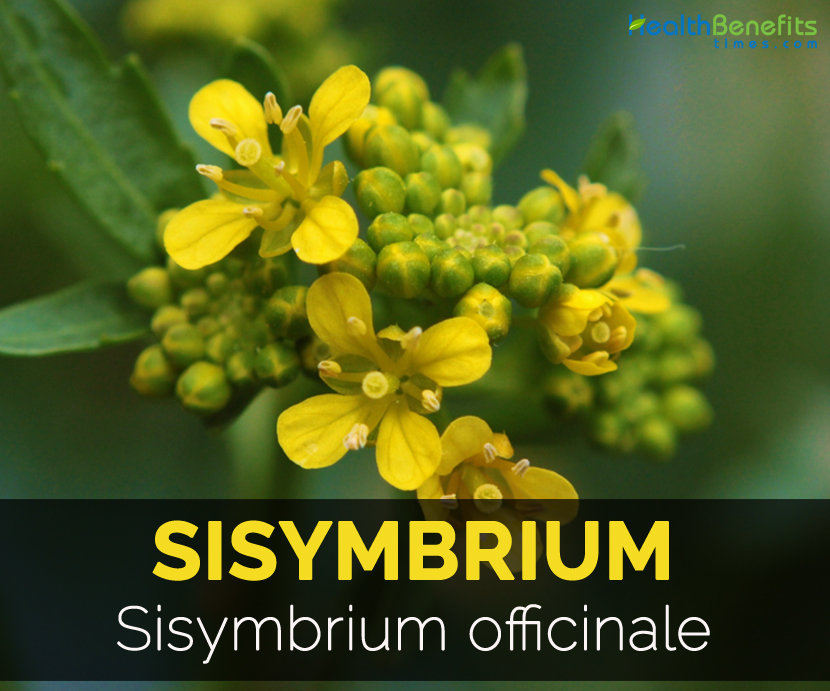
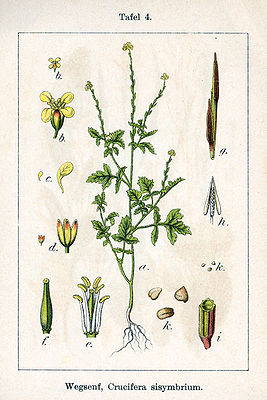
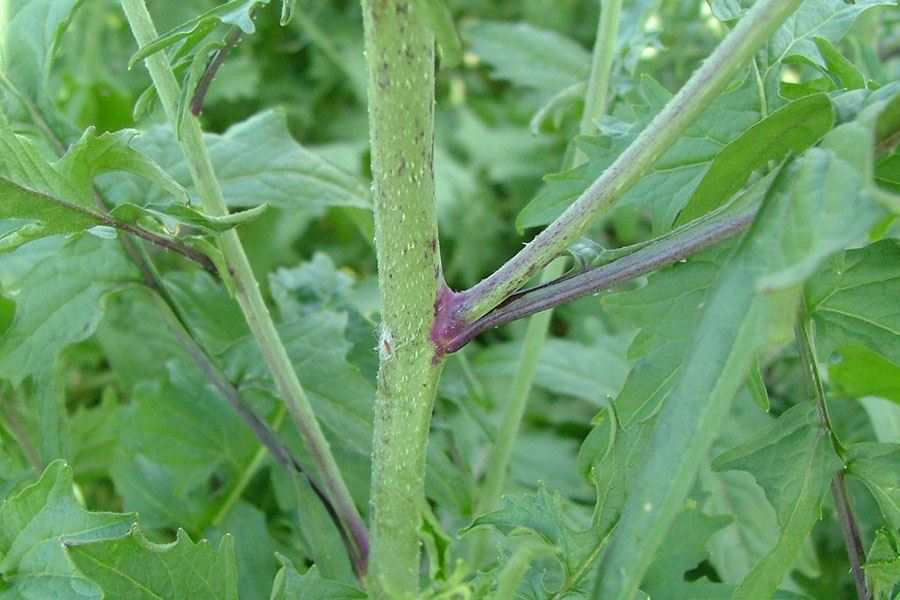
Sisymbrium with its scientific name Sisymbrium officinale, is also called Hedge mustard, Oriental mustard, Tumbling mustard, Indian hedge mustard, Wild mustard, Oriental rocket mustard, Oriental rocket, Mustard, Common hedge mustard, Erysimum and English water cress. It is native to Europe, Mediterranean and belongs to the family Brassicaceae/Cruciferae. Sisymbrium officinale is widely available in the European countries, North Africa and Southeast Asia. It got introduced to South and North America, Australia and South Africa. This plant is widely grown for the edible seeds and leaves. It is an annual plant which bears flowers from July to September. It has hairy stems which are light green to purplish green in color. It produce straight or curved capsule as a fruit.
Plant
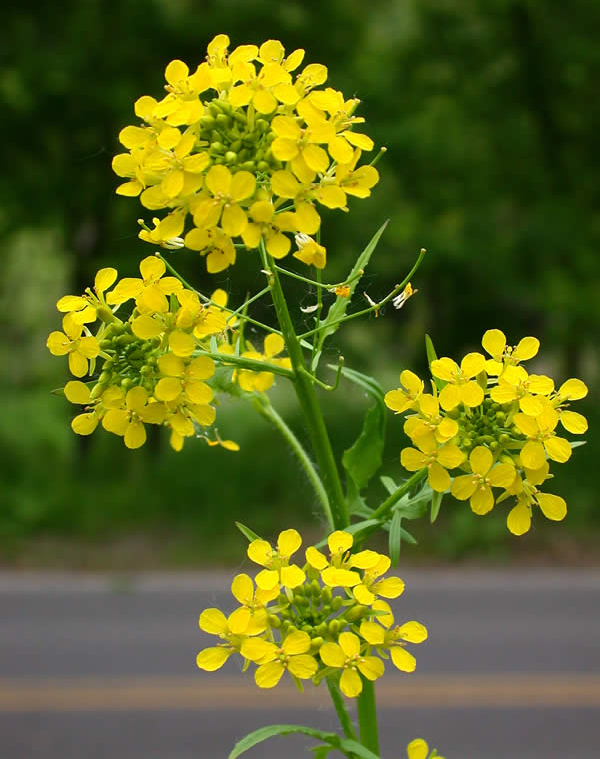
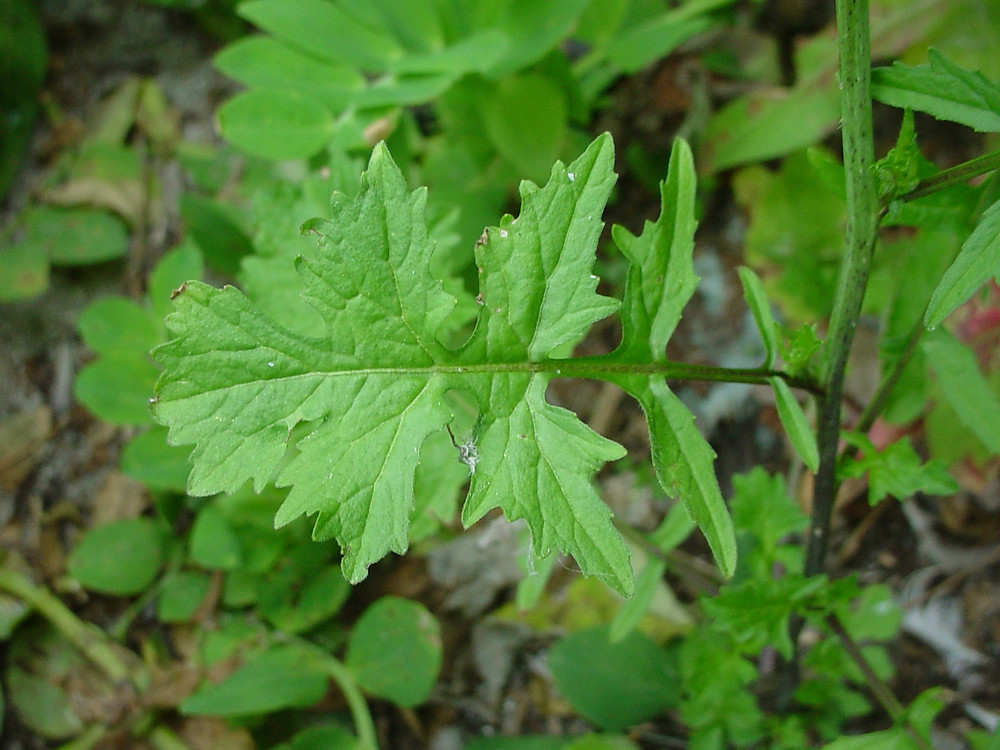
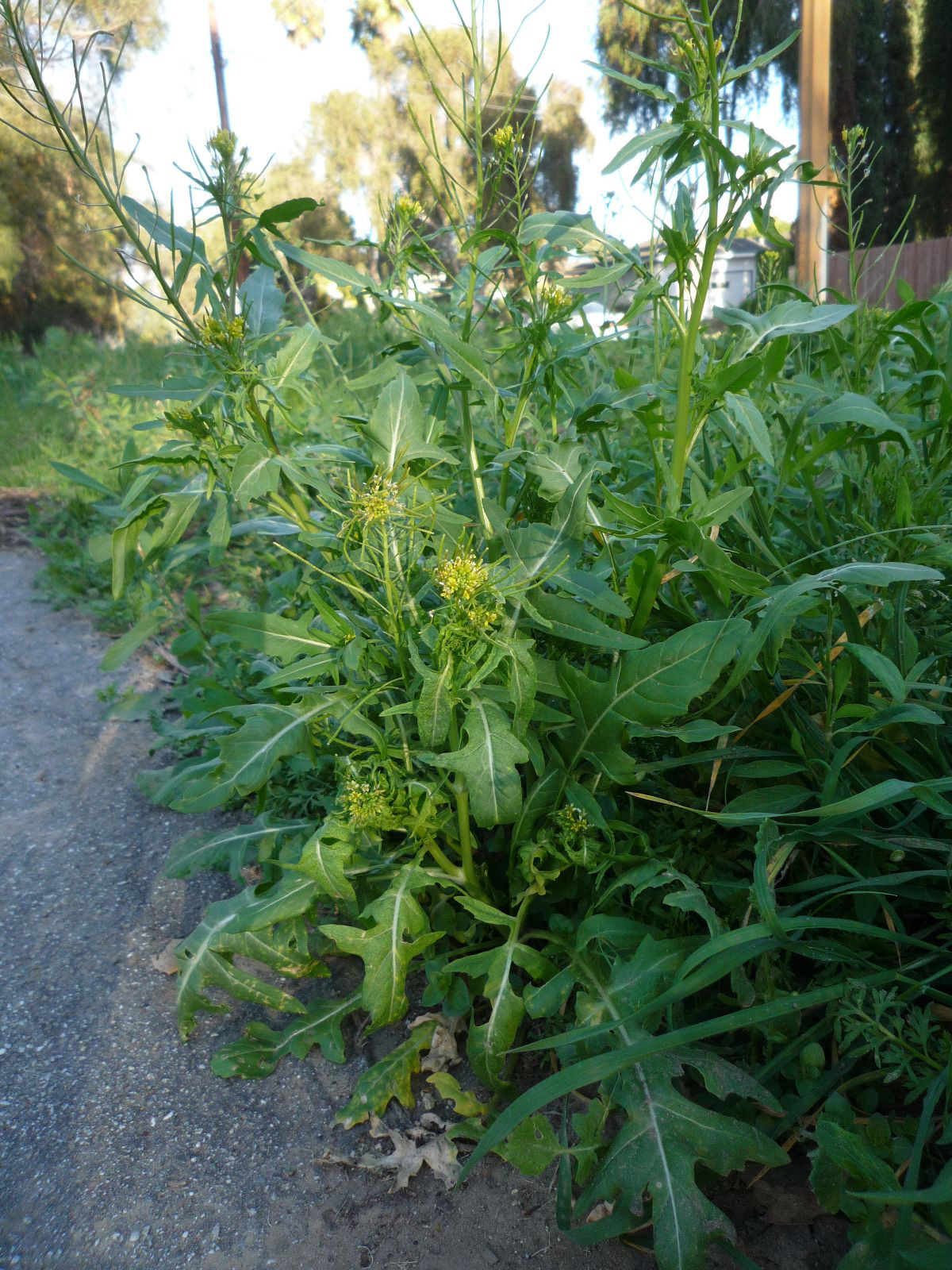
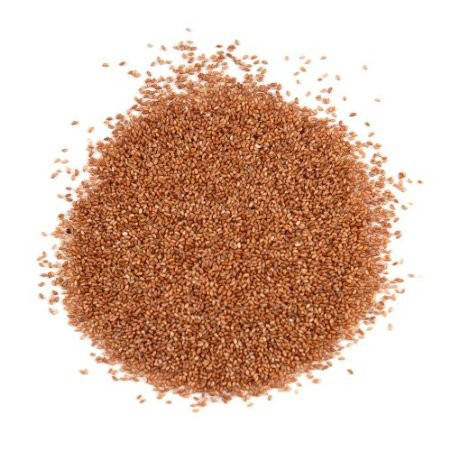
Sisymbrium is an erect and herbaceous annual plant that grows upto 1-3.5 ft. in height. The stems are erect, hairy and light green to purplish green. Leaves are egg shaped, oblong to lanceolate which measures about 3-8 inches long and 1-3 inch wide. The flowers have four yellow petals and measures upto 3-6 mm in diameter and 2-4 mm (0.08-0.16 inch) long. The fruit of this plant is a capsule of 0.5-1.0 inch long which is straight or curved, glabrous and terete. It possess cylindrical, flattened, reddish brown seeds of 1 mm long.
Nutritional value
In a cup measuring 74 grams, it grants 120.80% of calcium, 77.81% of vitamin B3, 55.24% of magnesium, 48.65% of manganese, 44.77% of tryptophan, 44.31% of vitamin B6, 33.53% of potassium, 33.16% of carbohydrate, 28.98% of threonine, 28.77% of isoleucine, 25.22% of vitamin C, 24.72% of valine, 24.70% of leucine, 24.08% of vitamin B2, 19.56% of histidine, 17.96% of protein, 17.82% of lysine, 17.50% of folate, 14.76% of vitamin B5 and 11.75% of vitamin B1. The same serving size covers 4.51 grams of moisture, 235 calories, 8.98 grams of protein, 3.4 grams of total fat, 13.99 grams of ash and 43.11 grams of carbohydrate.
Health Benefits of Sisymbrium
The plant is used as a herbal medicine. The plant whether fresh or dried provides a medicinal effect. It helps to treat congestion of chest, coughs, asthma, fever, etc. It also lower swelling, inflammation, detoxify spleen and liver, clear piles and wounds. It is externally used as an aid for gout as well as rheumatic problems. Discussion below under the benefits provided by Sisymbrium:
- Healthy bones
Calcium promotes the body shape and enhances the backbone which helps to eradicate the back pain. It maintains the proper shape of bones and prohibits the skeletal issues such as osteoporosis and arthritis that affects the movement and is painful. (1)
- Reduce cholesterol
The high intake of Niacin helps to lower the bad cholesterol levels in the body and increase the level of good cholesterol that prevents the chances of clotting of artery walls as well as atherosclerosis. (2)
- Prevent cramps
Magnesium is an aid for backaches, muscular tension and kidney stress. It assists in the calcium absorption that helps to heal the bones faster. Its deficiency leads to the leg cramps and general fatigue. The adequate consumption of the supplements is effective for the treatment of leg cramps. (3)
- Lowers inflammation
Manganese acts as an aid for inflammation and sprains by raising the superoxide dismutase level which is possible due to the presence of antioxidants. The arthritis patients have low amount of Superoxide dismutase which is mostly required in order to raise the function and synthesis of SOD. (4)
- Cardiac ailments
Vitamin B6 controls the fat level which is deposited in the human heart and prevents various cardiac ailments. Vitamin B6 prevents the formation of kidney stones as kidney is the essential organ. (5)
- Stroke
Potassium is essential for the proper functions of brain. The high amount of potassium assists to transport the oxygen to brain by enhancing the neural activity and raising the cognitive functions. It also prevents the stroke in human brain. It is a vasodilator which helps to relax the blood vessels in the body. It assists in smooth flow of blood and prevent break off and clot. (6)
- Eye problems
Cataract has become one of the common visual problems. It is caused due to low presence of Vitamin C in the eye. The high intake of Vitamin C assists to transport the blood to ocular areas of the human body. (7)
- Immunity power
Vitamin B2 promotes the immune power by promoting antibody reserves. It also strengthen the body’s defense power to fight against infections. One should consume the diet rich in riboflavin which should be restored regularly. (8)
- Muscle health
Protein is vital of the coordination and contraction of muscles. Proteins are available in the muscle tissues which helps the muscles to give a structure. The growth of muscles depends on the sufficient presence of proteins in the body. There should be balance between the breakdown of muscle proteins and rate of muscle protein synthesis. The breaking down of muscle proteins depends on the conditions. (9) (10) (11) (12) (13)
- Increase stamina
Pantothenic acid lowers the fatigue in the body and increases the metabolic activities of the body. Vitamin is able to raise the stamina in order to perform activities efficiently and effectively. (14)
Varieties/Types
- Tansy Mustard: It is an annual plant which grows to the height of 0.6 m or 2 ft. The flowers are seen from June to August. The hermaphrodite flowers pollinates by itself. It prefers sandy, loamy and clay soils.
- Jim Hill mustard: This annual herb is about 20-160 cm tall. The erect stems are glabrous. The leaves are oblong to lanceolate and lobed. It has oblong sepals of 4-6 x 1-2 mm. Fruit is stout, terete and smooth. The seeds are oblong and are about 0.8-1 x 0.5-0.6 mm.
- Tumble Mustard: The annual plant growing up to 1 m (3 ft. or 3 inches. It flowers from June to August. The hermaphrodites flowers are are pollinated by insects. It is self-fertile. It prefers dry and moist soil.
- Smooth mustard: The annual herb with erect stem upto 20-50 cm in height which is covered with hairs. The leaves are oblong, dentate and in rosette form. The pale yellow petals are about 2 x 1 mm.
- London rocket: It grows upto 0.5 m (1 ft. or 8 inches) tall. The leaves are ovate to lanceolate, pinnately lobed and 6-20 cm long. The pale yellow petals are about 3-4 mm long. The oblong seeds are 0.8 mm long. The flower blooms during mid-winter.
- Hairy hedge mustard: This herb is annual, erect and unbranched. The leaves are pinnately divided, 3-7 cm wide and 7-15 cm long. Seeds are about 1 mm long. It attracts bees, birds and butterflies. The flower is bright yellow which blooms during Late Spring or Early Summer.
- Sisymbrium luteum: It is a perennial plant which bears bright yellow flowers during Late spring or Early summer. The flowers are fragrant.
Traditional uses
- An infusion made with the plant is a cure for all throat ailments.
- The plant is considered as antiaphonic, expectorant, diuretic, stomachic and laxative.
- It helps to treat voice loss.
- Greeks use it as an antidote against poisons.
- It is used in folk medicine to soothe sore throats.
- The juice which is made with honey and sugar helps to treat coughs, shortness of breath and wheezing.
- It is also used to treat weak lungs and hoarseness.
- The flowers and juice is used by herbalists as a cure for stomach problems and bronchitis.
- It helps to repress the food poisoning in the Tibetan medicine.
- In folk medicine, it is used for gall bladder ailments, common cold, pleurisy, jaundice, ulcers and sciatica.
- It helps to lower the chances of scurvy.
- The internal use of Sisymbrium is a cure for bronchitis, coughs, pharyngitis, bronchial mucus and laryngitis.
- The poultice made from plant soothes the toothache pain.
- An infusion made from leaves is used as a wash for sores.
- The seeds are placed under eye lids to clear the foreign particles from eyes.
Precautions
- The children and heart patients should not use it.
- The flowering tops possess high amount of cardiac glycosides which could lead to harmful effects.
- It is unsafe for the sensitive peoples, pregnancy and breast feeding women.
- The excessive use results in heart disease.
- Some side effects are vomiting, irregular heartbeat, diarrhea and headache.
- When the herb is mixed with medications then it leads to buildup of cardiac glycosides and causes arrhythmias, heart failure, slow heartbeat and death.
How to Eat
- Young shoots are cooked or also consumed raw.
- It enhances the flavor of salads and cooked as potherb.
- The seeds are also cooked.
- Seeds are grounded into powder and used to flavor soups.
- Young leaves are added to salads, sauces, soups and omelets.
- It is consumed with salt fish.
- In Northern Europe, it is mostly used as a condiment.
- The leaves are added to salads and cooked as leaf vegetable.
- In Europe, the seeds are used to make mustard pastes.
- The seeds are used as a flavoring with corn.
- In Mexico, the refreshing drink is made with seeds, claret, lime juice and syrup.
- Immature leaves are consumed as greens.
- In Europe, it is used in cooking, potherb or salads.
References:
http://www.pfaf.org/user/Plant.aspx?LatinName=Sisymbrium+officinale
https://en.wikipedia.org/wiki/Sisymbrium_officinale
http://www.herbal-supplement-resource.com/hedge-mustard-uses.html
http://www.prcupcc.com/herbs/herbsh/hedgemustard.htm
http://pfaf.org/user/Plant.aspx?LatinName=Sisymbrium
http://www.herbal-supplement-resource.com/hedge-mustard-uses.html
http://www.webmd.com/vitamins-supplements/ingredientmono-601-hedge%20mustard.aspx?activeingredientid=601&activeingredientname=hedge%20mustard
http://chestofbooks.com/flora-plants/flowers/British-Wild-Flowers-1/Hedge-Mustard-Sisymbrium-Officinale-Scop.html
http://pfaf.org/user/Plant.aspx?LatinName=Sisymbrium
http://www.hear.org/pier/species/sisymbrium_altissimum.htm
http://www.pfaf.org/User/Plant.aspx?LatinName=Sisymbrium+altissimum
http://www.hear.org/pier/species/sisymbrium_erysimoides.htm
http://www.hear.org/pier/species/sisymbrium_irio.htm
http://davesgarden.com/guides/pf/go/89928/
http://www.pfaf.org/User/Plant.aspx?LatinName=Sisymbrium+irio
http://www.hear.org/pier/species/sisymbrium_officinale.htm
http://davesgarden.com/guides/pf/go/94784/
http://www.pfaf.org/user/Plant.aspx?LatinName=Sisymbrium+officinale
http://davesgarden.com/guides/pf/go/158155/
http://davesgarden.com/guides/pf/go/71115/Sisymbrium%20luteum
http://www.missouribotanicalgarden.org/PlantFinder/PlantFinderComments.aspx?taxonid=278079&isprofile=0&letter=S
Comments
comments