Health Benefits
    Facebook Twitter Instagram
    Friday, December 5
    Facebook Twitter Pinterest
    Health Benefits
    • Home
    • Dental Health
    • Mental Health
    • Weight Loss
    • Health Wiki
    • Nutrition
    • Healthy Recipe
    • BMI Calculator
    Health Benefits
    Home»Herbs and Spices»Facts and benefits of Skunk Cabbage
    Herbs and Spices

    Facts and benefits of Skunk Cabbage

    By SylviaNovember 20, 2017Updated:November 21, 2017No Comments7 Mins Read
    Facebook Twitter Pinterest LinkedIn Tumblr Email

    Facts and benefits of Skunk Cabbage

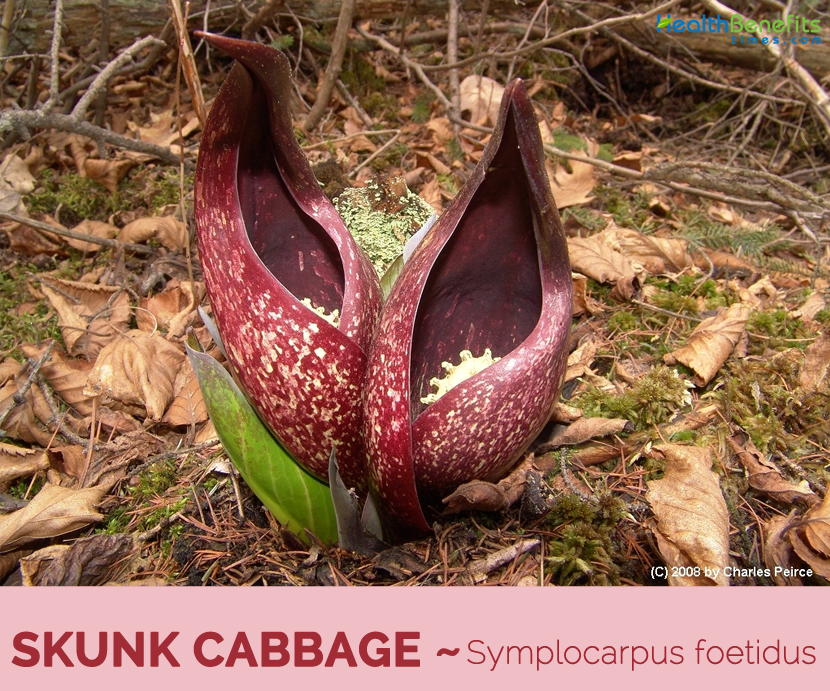
    Symplocarpus foetidus, commonly known as skunk cabbage, eastern skunk cabbage, swamp cabbage, clumpfoot cabbage, meadow cabbage, foetid pothos and polecat weed is a low growing, foul-smelling tuberous plant of the Aurum family that grows in wetlands around the world. The plant is native to the eastern North America; it ranges from Nova Scotia and southern Quebec west to Minnesota, and south to North Carolina and Tennessee. It is secure as endangered in Tennessee. The skunk cabbage is named so because its leaves look a lot like the leaves of the cabbage. The whole skunk cabbage plant has a strong fetid smell largely depending on the unstable determinant and the smell is normally deteriorated by heat instantly.

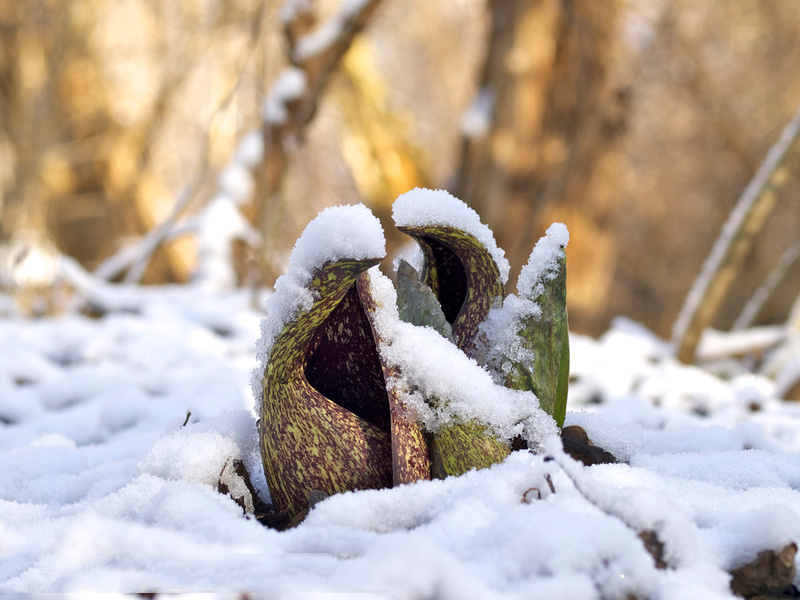
    Skunk Cabbage is remarkable in that it is able to generate heat when the ground is frozen. In fact, its flowers can warm up to around 70º F. This allows the plant to emerge and bloom when most other spring blooming species are still dormant. The root and underground stem (rhizome) are used to make medicine. The pungent smelling roots of the skunk cabbage have been a popular conventional cure for bronchitis, tight coughs and phlegm or catarrh. Several herbal medical practitioners recommend the skunk cabbage to treat nervous disorders as it is said to have moderate sedative or tranquilizing properties. In earlier times, an indigenous tribe of America also inhaled in the aroma of the mashed skunk cabbage leaves to get relief from headaches.

    Plant Description

    Skunk cabbage is a low growing, foul smelling tuberous plant that grows about 30-90cm (1-3ft) tall. The plant is found growing in swamps, wet woods, along streams, and other wet low areas and normally prefers moist, wetland soil. Roots are fleshy, contractile and rhizome is usually two inches or little more in length and measure one inch in diameter and 30 cm (1 ft.) thick. Skunk cabbage rhizomes are found in slanting slivers that are compacted and ridged. The rhizomes have a dark brown hue on the exterior and are white or yellowish inside.

    Leaves

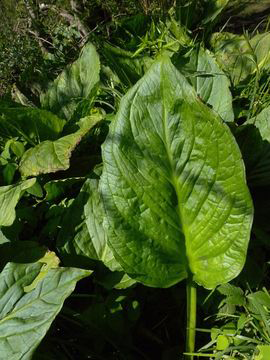
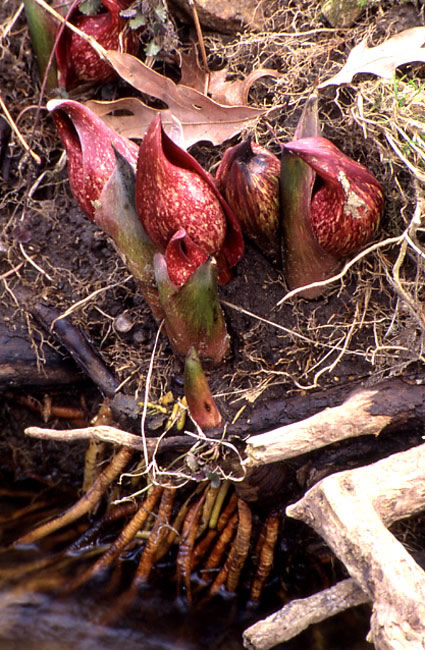
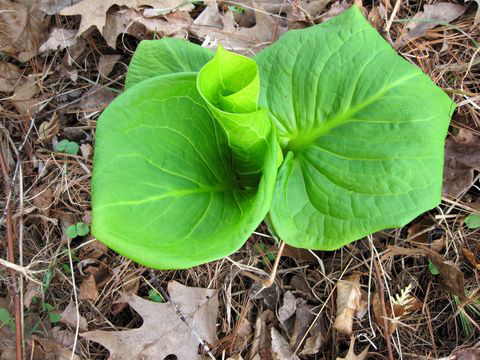
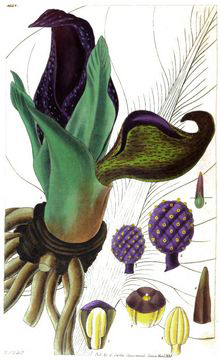
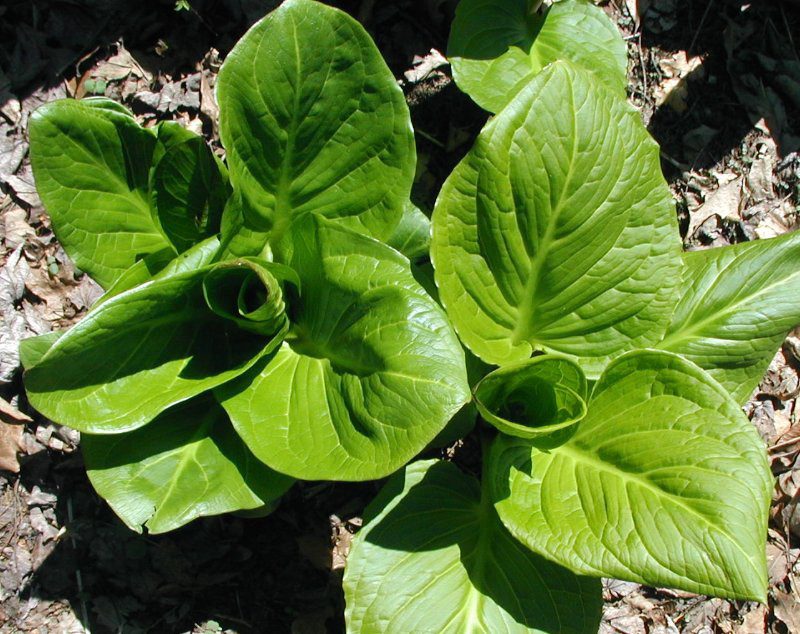
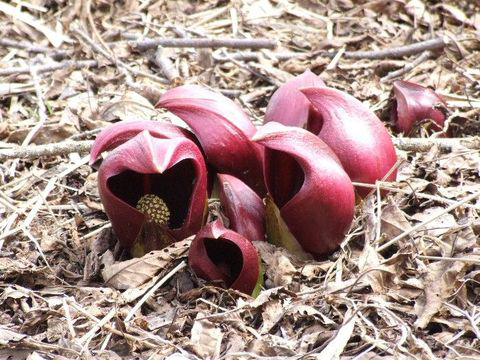
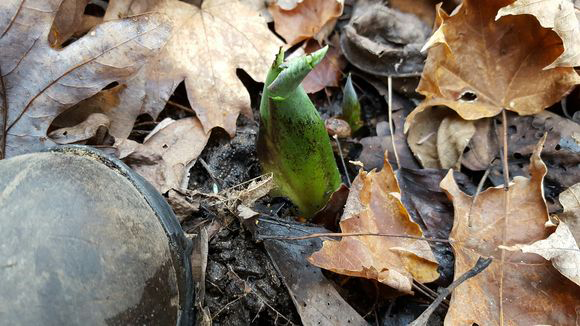
    Eastern skunk cabbage has leaves which are very large entire margined with a plastic like appeal, and have a slight wrinkle, about 40–55 cm (15.75–21.5 in) long and 30–40 cm (12–15.75 in) broad. It flowers early in the spring when only the flowers are visible above the mud. The stems remain buried below the surface of the soil with the leaves emerging later. The flowers are produced on a 5–10 cm (2–5 in) long spadix contained within a spathe, 10–15 cm (4–6 in) tall and mottled purple in color.

    Flower & fruit

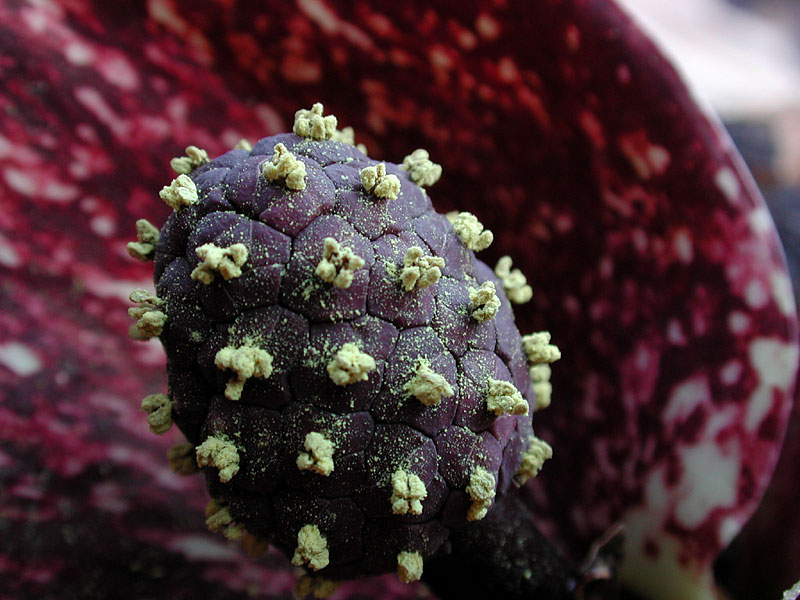
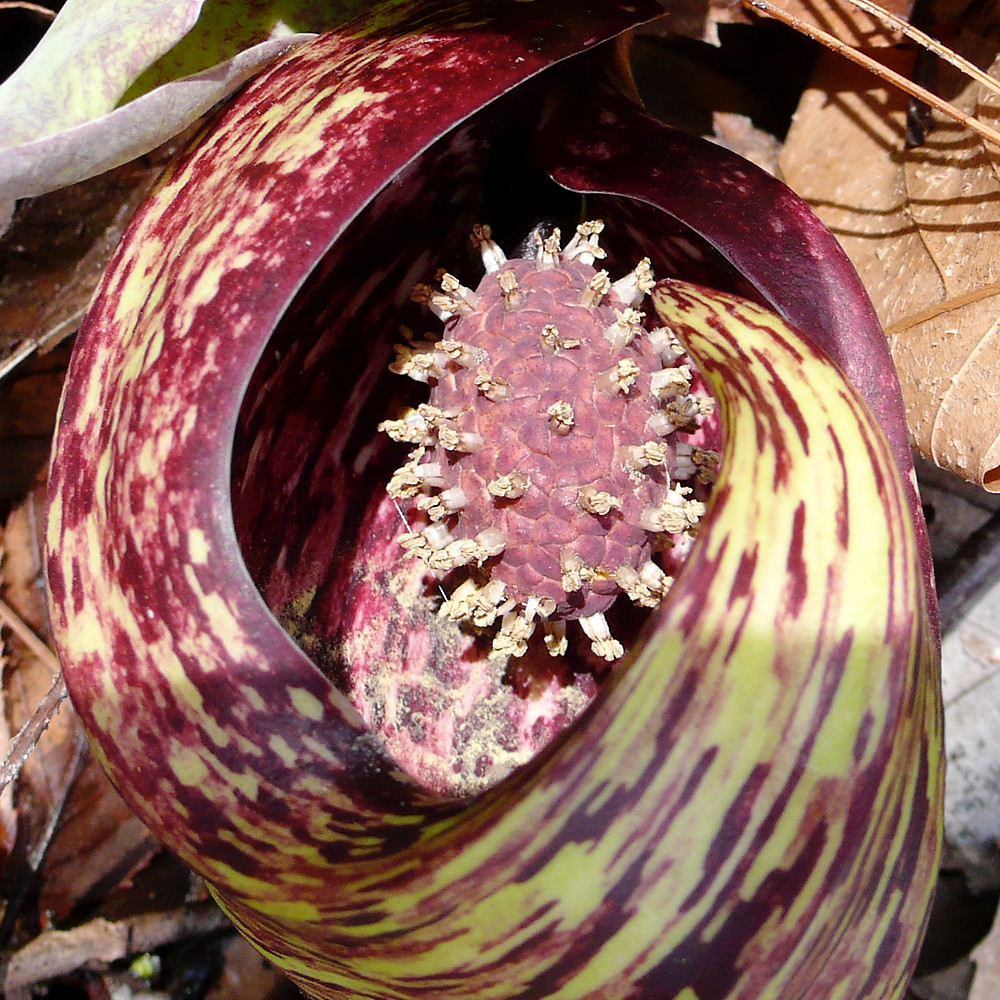
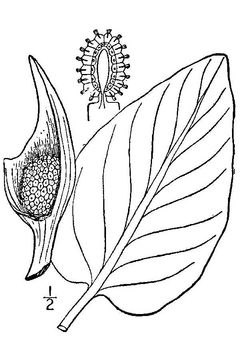
    As the spathe gets bigger, it will reveal another part inside, called a spadix. The spadix is a litle knob covered with small flowers. Numerous small, purple flowers grow on a small, oval, fleshy spike (or spadix), covered by a purple and yellowish-green, hood like bract (or spathe). Flowering time is from February to April, before the leaves appear. The whole plant emits a skunk or garlic odor. The plant bears oval-shaped fruit that are green when young turning to black as they mature. The fruit has wrinkled outer skin and whitish flesh.

    Skunk Cabbage Image Gallery
    Closer-view-of-Skunk-cabbage-flower Closer-view-of-Skunk-cabbage-flower
    Leaf-of-Skunk-Cabbage-plant Leaf-of-Skunk-Cabbage-plant
    Roots-of-Skunk-cabbage-Plant Roots-of-Skunk-cabbage-Plant

    Skunk-cabbage Plant Skunk-cabbage Plant
    Spathe of Skunk-cabbage plant-with-flower Spathe of Skunk-cabbage plant-with-flower
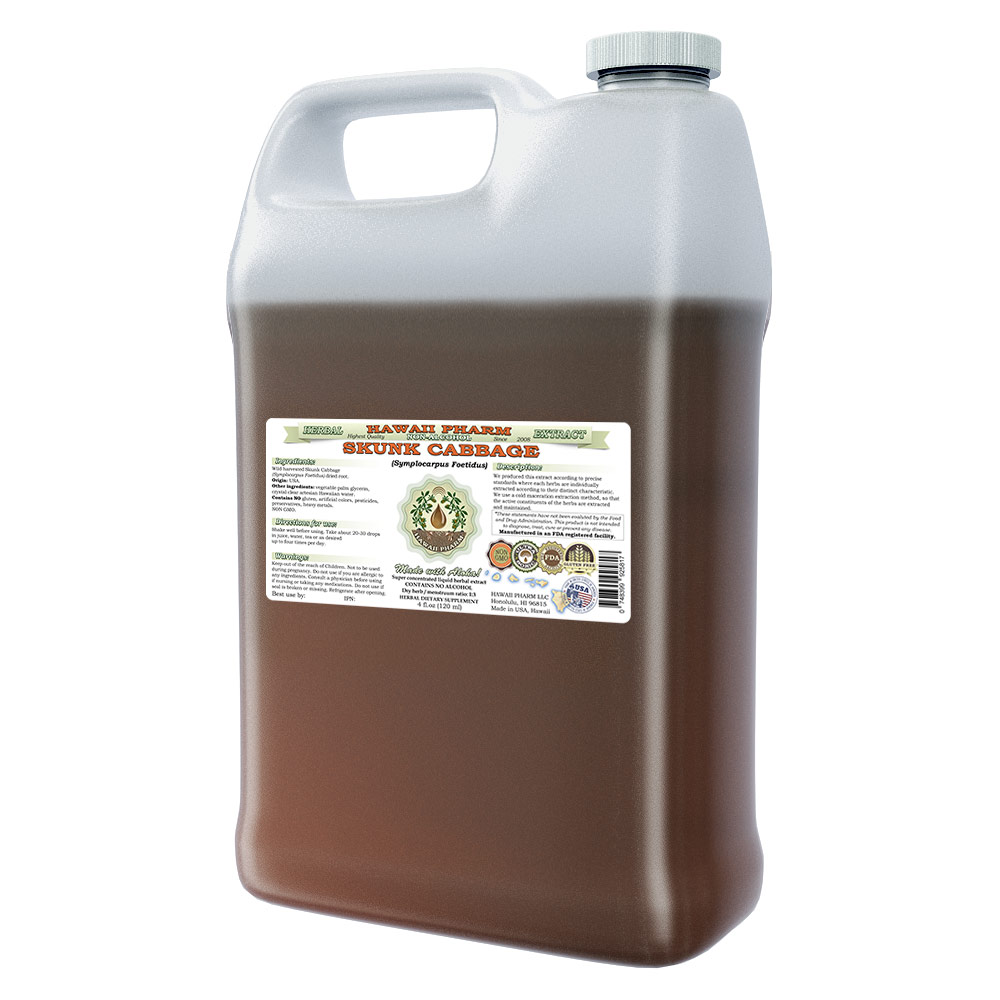
    Skunk-Cabbage-dried-root-liquid-extract Skunk-Cabbage-dried-root-liquid-extract

    Skunk-cabbage-growing-in-snow Skunk-cabbage-growing-in-snow
    Skunk-Cabbage-plant-Illustration Skunk-Cabbage-plant-Illustration
    Skunk-Cabbage-showing-broad-leaves Skunk-Cabbage-showing-broad-leaves

    Skunk-Cabbage-sketch Skunk-Cabbage-sketch
    Spathe-of-Skunk-cabbage Spathe-of-Skunk-cabbage
    Tiny-Skunk-cabbage--plant Tiny-Skunk-cabbage--plant

    Traditional uses and benefits of Skunk Cabbage

    • It was used in the treatment of respiratory diseases, nervous disorders, rheumatism, and dropsy.
    • Skunk cabbage was much used by the native North American Indians mainly for its expectorant and antispasmodic properties to treat bronchitis and asthmatic conditions, a use that is still used in modern herbalism.
    • Root is antispasmodic, diaphoretic, diuretic, emetic, expectorant and slightly narcotic.
    • Rootstock has been used internally in the treatment of respiratory and nervous disorders, including asthma, whooping cough, catarrh, bronchitis, mucous congestion and hay fever.
    • It is occasionally used to treat epilepsy, headaches, vertigo and rheumatic problems.
    • Externally, it has been used as a poultice to draw splinters and thorns, to heal wounds and to treat headaches.
    • Root hairs or rootlets have been applied to dental cavities to treat toothache.
    • Tea made from the root hairs has been used externally to stop bleeding.
    • An inhalation of the crushed leaves has been used in the treatment of headaches.
    • The leaf bases have been applied as a wet dressing to bruises.
    • It is said to be helpful in epilepsy and convulsions during pregnancy and labor.
    • Externally, as an ointment, it stimulates granulations, eases pain, etc. and relieves the pain of all external tumors and sores.
    • It is helpful for nervous disorders, spasmodic problems, rheumatism, and dropsy.
    • Some Native Americans boiled the root hairs to make a wash for stopping external bleeding.
    • One tribe inhaled the odor of the crushed leaves to cure headache or toothache (which may be a classic case of a cure worse than the disease).
    • Root is poultice for wounds, underarm deodorant; leaf is poultice to reduce swelling, they ate the root to stop epileptic seizures.
    • It is very reliable in tuberculosis, chronic catarrh, fevers, whooping cough, epilepsy, convulsions, and pleurisy.
    • It is also an excellent remedy in dysentery, convulsions, dropsy, hysteria, epilepsy, and for use during pregnancy.
    • It is used in the treatment of cancer, fluid retention, excessive bleeding (hemorrhage), anxiety, snakebite, skin sores, splinters, swellings, and wounds.
    • Skunk cabbage is also used to stimulate the digestive system.

    https://www.youtube.com/watch?v=VfXdfq7ppvU

    Culinary uses

    • While not considered edible raw, because the roots are toxic and the leaves can burn the mouth, the leaves may be dried and used in soups and stews.
    • Root must be thoroughly dried or cooked before being eaten.
    • Traditionally the root was dried for at least 5 weeks or boiled for 3 days before being eaten.

    Dosing considerations for Skunk Cabbage

    The appropriate dose of skunk cabbage depends on several factors such as the user’s age, health, and several other conditions. At this time there is not sufficient scientific information to determine an appropriate range of doses for skunk cabbage. Keep in mind that natural products are not always necessarily safe and dosages can be important. Be sure to follow relevant directions on product labels and consult your pharmacist or physician or other healthcare professional before using.

    Other facts

    • Skunk cabbage is protected as endangered in Tennessee.
    • The plant is foul smelling when it blooms.
    • Odor in the leaves serve to discourage large animals from disturbing or damaging this plant which grows in soft wetland soils.
    • The water should be changed at least once during the cooking process.
    • It should not be stored for a long time because it loses its medicinal qualities.
    • An infusion of the powdered root has been used as a wash to ‘cure a strong smell under your arm.
    • Skunk cabbages do not produce seed until they are five to seven years old.
    • Skunk Cabbage leaves are poisonous to mammals (including us).

    Precautions

    • The plant is considered poisonous.
    • Calcium oxylate in all parts of the plant is toxic and if consumed makes the mouth and digestive tract feel as though hundreds of needles are being stuck into it.
    • However, calcium oxylate is easily destroyed by thoroughly cooking or drying the plant.
    • Itching and inflammation possible with root contact.
    • Handling the fresh leaves can cause skin to blister whilst excessive doses of the root can bring on nausea and vomiting, headaches, vertigo, dimness of vision and dizziness. Skin hives, rash, and itchy or swollen skin have been reported.
    • Avoid during pregnancy and breast feeding.
    • Avoid with kidney stones.
    • Large doses cause nausea, vomiting, headache, vertigo and dimness of vision.
    • It may worsen gastrointestinal ulcers, gastrointestinal inflammation or cause irritation, abdominal cramps, burning, blistering in the mouth and throat, colic, and watery or bloody diarrhea.
    • Breathing problems, tightness in the throat or chest, and chest pain have also been reported with use of skunk cabbage.

    References:

    https://www.itis.gov/servlet/SingleRpt/SingleRpt?search_topic=TSN&search_value=811065#null

    https://davesgarden.com/guides/pf/go/2593/

    http://www.pfaf.org/user/Plant.aspx?LatinName=Symplocarpus+foetidus

    https://www.nps.gov/miss/learn/nature/skunkcabbage.htm

    https://www.botanical.com/botanical/mgmh/s/skunkc52.html

    http://www.theplantlist.org/tpl/record/kew-198911

    https://plants.usda.gov/core/profile?symbol=syfo

    http://medicinalherbinfo.org/herbs/SkunkCabbage.html

    http://www.bmsch.org/health-library/natural-standard-herbs-and-supplements/article/skunk-cabbage/

    https://en.wikipedia.org/wiki/Symplocarpus_foetidus

    http://www2.fcps.edu/islandcreekes/ecology/skunk_cabbage.htm

    www.bentoncountyiowa.org/webres/File/IRVM/…/Skunk%20Cabbage.pdf

    http://www.gloucesterva.info/Portals/0/mg/documents/HelpDesk/LocalGardening/Wildflower_Spot/SkunkCabbageFeb2007.pdf?ver=2016-08-14-180527-070

    82%
    82%
    Awesome

    Comments

    comments

    Herbs and Spices S
    Share. Facebook Twitter Pinterest LinkedIn Tumblr Email
    Previous ArticleHealth Benefits of Persimmons
    Next Article Health benefits of Bok choy

    Related Posts

    Uses of Monkey Pitcher plant

    April 16, 2024

    Traditional uses and benefits of Wild Marigold

    March 21, 2024

    Traditional uses and benefits of Drooping fig

    March 12, 2024

    Comments are closed.


    Skunk Cabbage Facts

    Skunk Cabbage Quick Facts
    Name: Skunk Cabbage
    Scientific Name: Symplocarpus foetidus
    Origin Eastern North America
    Colors Green when young turning to black as they mature
    Shapes Oval-shaped
    Flesh colors Whitish
    Taste Acrid taste
    Calories 11 Kcal./cup
    Major nutrients Vitamin C (34.22%)
    Vitamin A (25.14%)
    Iron (11.75%)
    Magnesium (9.52%)
    Vitamin B9 (8.00%)

    Name Skunk Cabbage
    Scientific Name Symplocarpus foetidus
    Native Eastern North America
    Common Names Skunk cabbage, eastern skunk cabbage, swamp cabbage, clumpfoot cabbage, meadow cabbage, foetid pothos or polecat weed, Skunk Weed, Polecat Cabbage, Stinking Poke,
    Name in Other Languages Chinese: Chòu song (臭菘), Hēi xiāzi báicài (黑瞎子白菜)
    English: Clumpfoot Cabbage, Eastern Skunk Cabbage, Foetid Pothos, Meadow Cabbage, Polecat Weed, skunk cabbage, swamp cabbage
    French: Tabac du diable, chou puant
    Plant Growth Habit Low growing, foul smelling tuberous plant
    Growing Climate Swamps, wet woods, along streams, and other wet low areas
    Soil Prefer moist, wetland soil
    Plant Size 30-90cm (1-3ft) tall
    Root Fleshy, contractile
    Rhizome Usually two inches or little more in length and measure one inch in diameter and 30 cm (1 ft.) thick.
    Rhizome Color Dark brown
    Flesh Color White or yellowish
    Leaf Very large entire margined leaves with a plastic like appeal, and have a slight crinkle, about 40–55 cm (15.75–21.5 in) long and 30–40 cm (12–15.75 in) broad.
    Flowering Periods Feb to April
    Flower Flowers are produced on a 5–10 cm (2–5 in) long spadix contained within a spathe, 10–15 cm (4–6 in) tall and mottled purple in color.
    Fruit Shape & Size Oval-shaped fruit
    Fruit Color Green when young turning to black as they mature
    Fruit skin Wrinkled outer skin
    Flesh  color Whitish
    Flavor/Aroma Strong, foetid odor
    Taste Acrid taste
    Seed Around ten to twelve seeds are found entrenched in the flesh, along the periphery of the fruits.
    Plant Parts Used Seeds, root, Rhizome
    Major Nutrients Vitamin C (Ascorbic acid) 30.8 mg (34.22%)
    Vitamin A, RAE 176 µg (25.14%)
    Iron, Fe 0.94 mg (11.75%)
    Magnesium, Mg 40 mg (9.52%)
    Vitamin B9 (Folate) 32 µg (8.00%)
    Threonine 0.078 g (4.43%)
    Vitamin B2 (Riboflavin) 0.056 mg (4.31%)
    Calcium, Ca 43 mg (4.30%)
    Sodium, Na 63 mg (4.20%)
    Vitamin B6 (Pyridoxine) 0.054 mg (4.15%)
    Season Aug to September
    Lifespan Up to 20 years, losing its leaves annually.

    Skunk Cabbage: Scientific Classification

    Scientific Name: Symplocarpus foetidus

    Rank Scientific Name & (Common Name)
    Kingdom Plantae (Plants)
    Subkingdom Tracheobionta (Vascular plants)
    Infrakingdom Streptophyta  (land plants)
    Superdivision Spermatophyta (Seed plants)
    Division Magnoliophyta (Flowering plants)
    Class Liliopsida (Monocotyledons)
    Subclass Arecidae
    Order Arales
    Family Araceae (Arum family)
    Genus Symplocarpus Salisb. ex W.P.C. Barton (skunk cabbage)
    Species Symplocarpus foetidus (L.) Salisb. ex W.P.C. Barton (skunk cabbage)
    Synonyms
    • Dracontium foetidum L.               
    • Ictodes foetidus (L.) Bigelow
    • Pothos foetidus (L.) Aiton
    • Pothos putorii Barton
    • Spathyema angusta Raf.              
    • Spathyema foetida (L.) Raf.
    • Spathyema lanceolata Raf.
    • Spathyema latifolia Raf.
    • Symplocarpus foetidus f. variegatus Otsuka
    • Raw
    • Without salt
    • With salt
    Nutritional value of Skunk cabbage raw
    Serving Size: 1 cup chopped, 56 g

    Calories 11 K cal. Calories from Fat 0.99 K cal.

    Proximity Amount % DV
    Water 51.78 g N/D
    Energy 11 Kcal N/D
    Energy 44 kJ N/D
    Protein 1.46 g 2.92%
    Total Fat (lipid) 0.11 g 0.31%
    Ash 0.9 g N/D
    Carbohydrate 1.76 g 1.35%
    Total dietary Fiber 1.2 g 3.16%

     
    Minerals Amount % DV
    Calcium, Ca 43 mg 4.30%
    Iron, Fe 0.94 mg 11.75%
    Magnesium, Mg 40 mg 9.52%
    Phosphorus, P 22 mg 3.14%
    Potassium, K 175 mg 3.72%
    Sodium, Na 63 mg 4.20%
    Zinc, Zn 0.1 mg 0.91%
    Copper, Cu 0.013 mg 1.44%
    Manganese, Mn 0.09 mg 3.91%
    Selenium, Se 0.5 µg 0.91%


    Vitamins Amount % DV
    Water soluble Vitamins
    Vitamin B1 (Thiamin) 0.017 mg 1.42%
    Vitamin B2 (Riboflavin) 0.056 mg 4.31%
    Vitamin B3 (Niacin) 0.504 mg 3.15%
    Vitamin B5 (Pantothenic acid) 0.079 mg 1.58%
    Vitamin B6 (Pyridoxine) 0.054 mg 4.15%
    Vitamin B9 (Folate) 32 µg 8.00%
    Folate, food 32 µg N/D
    Folate, DEF 32 µg N/D
    Vitamin C (Ascorbic acid) 30.8 mg 34.22%
    Fat soluble Vitamins
    Vitamin A, RAE 176 µg 25.14%
    Vitamin A, IU 3528 IU N/D


    Amino acids Amount % DV
    Threonine 0.078 g 4.43%
    Isoleucine 0.058 g 3.47%
    Leucine 0.082 g 2.22%
    Lysine 0.061 g 1.82%
    Methionine 0.025 g N/D
    Cystine 0.016 g N/D
    Phenylalanine 0.071 g N/D
    Tyrosine 0.045 g N/D
    Valine 0.076 g 3.60%
    Arginine 0.083 g N/D
    Histidine 0.026 g 2.11%
    Alanine 0.061 g N/D
    Aspartic acid 0.364 g N/D
    Glutamic acid 0.141 g N/D
    Glycine 0.055 g N/D
    Proline 0.049 g N/D
    Serine 0.068 g N/D

    *Above mentioned Percent Daily Values (%DVs) are based on 2,000 calorie diet intake. Daily values (DVs) may be different depending upon your daily calorie needs. Mentioned values are recommended by a U.S. Department of Agriculture. They are not healthbenefitstimes.com recommendations. Calculations are based on average age of 19 to 50 years and weighs 194 lbs.

    Source:
    https://ndb.nal.usda.gov/

    Nutritional value of Skunk cabbage cooked, boiled, drained, without salt
    Serving Size: 1 cup chopped, 98 g

    Calories 20 K cal. Calories from Fat 2.16 K cal.

    Proximity Amount % DV
    Water 91.07 g N/D
    Energy 20 Kcal N/D
    Energy 83 kJ N/D
    Protein 2.04 g 4.08%
    Total Fat (lipid) 0.24 g 0.69%
    Ash 1.03 g N/D
    Carbohydrate 3.63 g 2.79%
    Total dietary Fiber 1.9 g 5.00%

     
    Minerals Amount % DV
    Calcium, Ca 53 mg 5.30%
    Iron, Fe 1.29 mg 16.13%
    Magnesium, Mg 29 mg 6.90%
    Phosphorus, P 41 mg 5.86%
    Potassium, K 278 mg 5.91%
    Sodium, Na 120 mg 8.00%
    Zinc, Zn 0.16 mg 1.45%
    Copper, Cu 0.021 mg 2.33%
    Manganese, Mn 0.14 mg 6.09%
    Selenium, Se 0.9 µg 1.64%


    Vitamins Amount % DV
    Water soluble Vitamins
    Vitamin B1 (Thiamin) 0.049 mg 4.08%
    Vitamin B2 (Riboflavin) 0.078 mg 6.00%
    Vitamin B3 (Niacin) 0.49 mg 3.06%
    Vitamin B5 (Pantothenic acid) 0.123 mg 2.46%
    Vitamin B6 (Pyridoxine) 0.079 mg 6.08%
    Vitamin B9 (Folate) 34 µg 8.50%
    Folate, food 34 µg N/D
    Folate, DEF 34 µg N/D
    Vitamin C (Ascorbic acid) 15.7 mg 17.44%
    Fat soluble Vitamins
    Vitamin A, RAE 255 µg 36.43%
    Vitamin A, IU 5096 IU N/D


    Lipids Amount % DV
    Fatty acids, total saturated 0.038 g N/D
    Myristic acid  14:00(Tetradecanoic acid) 0.006 g N/D
    Palmitic acid 16:00 (Hexadecanoic acid) 0.028 g N/D
    Stearic acid 18:00 (Octadecanoic acid) 0.003 g N/D
    Fatty acids, total monounsaturated 0.007 g N/D
    Palmitoleic acid 16:1 (hexadecenoic acid) 0.003 g N/D
    Oleic acid 18:1 (octadecenoic acid) 0.003 g N/D
    Fatty acids, total polyunsaturated 0.098 g N/D
    Linoleic acid 18:2 (octadecadienoic acid) 0.015 g N/D
    Linolenic acid 18:3 (Octadecatrienoic acid) 0.077 g N/D

     
    Amino acids Amount % DV
    Threonine 0.11 g 6.25%
    Isoleucine 0.081 g 4.84%
    Leucine 0.114 g 3.08%
    Lysine 0.085 g 2.54%
    Methionine 0.034 g N/D
    Cystine 0.023 g N/D
    Phenylalanine 0.1 g N/D
    Tyrosine 0.063 g N/D
    Valine 0.106 g 5.02%
    Arginine 0.116 g N/D
    Histidine 0.036 g 2.92%
    Alanine 0.085 g N/D
    Aspartic acid 0.509 g N/D
    Glutamic acid 0.197 g N/D
    Glycine 0.077 g N/D
    Proline 0.069 g N/D
    Serine 0.095 g N/D

    *Above mentioned Percent Daily Values (%DVs) are based on 2,000 calorie diet intake. Daily values (DVs) may be different depending upon your daily calorie needs. Mentioned values are recommended by a U.S. Department of Agriculture. They are not healthbenefitstimes.com recommendations. Calculations are based on average age of 19 to 50 years and weighs 194 lbs.

    Source:
    https://ndb.nal.usda.gov/

    Nutritional value of Skunk cabbage cooked, boiled, drained, with salt
    Serving Size: 1 cup chopped, 98 g

    Calories 20 K cal. Calories from Fat 2.16 K cal.

    Proximity Amount % DV
    Water 91.07 g N/D
    Energy 20 Kcal N/D
    Energy 83 kJ N/D
    Protein 2.04 g 4.08%
    Total Fat (lipid) 0.24 g 0.69%
    Ash 1.03 g N/D
    Carbohydrate 3.63 g 2.79%
    Total dietary Fiber 1.9 g 5.00%

     
    Minerals Amount % DV
    Calcium, Ca 53 mg 5.30%
    Iron, Fe 1.29 mg 16.13%
    Magnesium, Mg 29 mg 6.90%
    Phosphorus, P 41 mg 5.86%
    Potassium, K 278 mg 5.91%
    Sodium, Na 351 mg 23.40%
    Zinc, Zn 0.16 mg 1.45%
    Copper, Cu 0.021 mg 2.33%
    Manganese, Mn 0.14 mg 6.09%
    Selenium, Se 0.9 µg 1.64%


    Vitamins Amount % DV
    Water soluble Vitamins
    Vitamin B1 (Thiamin) 0.049 mg 4.08%
    Vitamin B2 (Riboflavin) 0.078 mg 6.00%
    Vitamin B3 (Niacin) 0.49 mg 3.06%
    Vitamin B5 (Pantothenic acid) 0.123 mg 2.46%
    Vitamin B6 (Pyridoxine) 0.079 mg 6.08%
    Vitamin B9 (Folate) 34 µg 8.50%
    Folate, food 34 µg N/D
    Folate, DEF 34 µg N/D
    Vitamin C (Ascorbic acid) 15.7 mg 17.44%
    Fat soluble Vitamins
    Vitamin A, RAE 255 µg 36.43%
    Vitamin A, IU 5096 IU N/D


    Amino acids Amount % DV
    Threonine 0.11 g 6.25%
    Isoleucine 0.081 g 4.84%
    Leucine 0.114 g 3.08%
    Lysine 0.085 g 2.54%
    Methionine 0.034 g N/D
    Cystine 0.023 g N/D
    Phenylalanine 0.1 g N/D
    Tyrosine 0.063 g N/D
    Valine 0.106 g 5.02%
    Arginine 0.116 g N/D
    Histidine 0.036 g 2.92%
    Alanine 0.085 g N/D
    Aspartic acid 0.509 g N/D
    Glutamic acid 0.197 g N/D
    Glycine 0.077 g N/D
    Proline 0.069 g N/D
    Serine 0.095 g N/D

    *Above mentioned Percent Daily Values (%DVs) are based on 2,000 calorie diet intake. Daily values (DVs) may be different depending upon your daily calorie needs. Mentioned values are recommended by a U.S. Department of Agriculture. They are not healthbenefitstimes.com recommendations. Calculations are based on average age of 19 to 50 years and weighs 194 lbs.

    Source:
    https://ndb.nal.usda.gov/

    WordPress Tabs
    Categories
    • Beverages (78)
    • Dairy (28)
    • Dental Health (15)
    • Equipment (5)
    • Essential OIls (196)
    • Facts (2,939)
    • Foods (255)
    • Fruits (516)
    • Giveaway (1)
    • Grains and Cereals (36)
    • Health & Beauty (763)
    • Herbs and Spices (1,249)
    • Medicines (9)
    • Mental Health (19)
    • Nutritional value (27)
    • Nuts and seeds (73)
    • Oils (81)
    • Pets (4)
    • Poultry & Seafoods (67)
    • Pulses and Beans (16)
    • Reviews (25)
    • supplement (2)
    • Vegetables (304)
    • Weight Loss (22)

    What is Lupin Bean Flour?

    Science Backed Health Benefits of Durian (Durio zibethinus)

    Science Backed Health Benefits of Feijoa (Pineapple Guava) (Acca sellowiana)

    Science Backed Health Benefits of Gac Fruit (Momordica cochinchinensis)

    Science Backed Health Benefits of Amaranth Leaves (Amaranthus spp)

    Science Backed Health Benefits of Arrowhead (Sagittaria sagittifolia)

    ABOUT
    Home
    About us
    Contact us
    Privacy Policy
    Terms & conditions
    Disclaimer
    Direct Communication
    e-mail: [email protected]
    Gmail: [email protected]
    Whatsapp: +977-9841146511
    Viber: +977-9841146511
    Useful
    Health Wiki
    Nutrition
    Facebook Twitter Pinterest
    © 2025 www.healthbenefitstimes.com All rights reserved.

    Type above and press Enter to search. Press Esc to cancel.

    ×

    Log In

    Forgot Password?

    Not registered yet? Create an Account