

Health Benefits
    Facebook Twitter Instagram
    Friday, December 5
    Facebook Twitter Pinterest
    Health Benefits
    • Home
    • Dental Health
    • Mental Health
    • Weight Loss
    • Health Wiki
    • Nutrition
    • Healthy Recipe
    • BMI Calculator
    Health Benefits
    Home»Herbs and Spices»Health benefits of West Indian Elm
    Herbs and Spices

    Health benefits of West Indian Elm

    By SylviaOctober 18, 2019Updated:October 20, 2019No Comments14 Mins Read
    Facebook Twitter Pinterest LinkedIn Tumblr Email

    West Indian elm or bay cedar scientifically known as Guazuma ulmifolia, is a medium-sized tree normally found in pastures and disturbed forests. This flowering plant from the family Malvaceae grows up to 30 m in height and 30–40 cm in diameter. The plant is native to Caribbean, Central America, Mexico and Colombia, Peru, Ecuador, Bolivia, Argentina, Paraguay, And Brazil. It is also found in Antigua and Barbuda, Argentina, Bahamas, Barbados, Bolivia, Brazil, Colombia, Cuba, Dominica, Dominican Republic, Ecuador, Grenada, Guadeloupe, Guatemala, Haiti, Honduras, Jamaica, Martinique, Mexico, Montserrat, Netherlands, Nicaragua, Costa Rica, Panama, Paraguay, Peru, Puerto Rico, St Kitts And Nevis, St Lucia, St Vincent and the Grenadines, Trinidad and Tobago and Virgin Islands serving a number of uses that differs from its value in carpentry to its utility in medicine.

    Bastard Cedar, West Indian elm, Guasimo, Mutamba, mutambo, embira, embiru, guazima, guacima, guacimo, guasima de caballo, aquiche, ajya, guasima, cimarrona, guazuma, bolaina, atadijo, ibixuma, cambá-acã, bay cedar, bois d’homme, bois d’orme, bois de hetre, orme d’Amerique, Ajillá, Gunstock, Hay cedar, Jackocalaloo, Pricklenut, Bois De L’Orme, Bwa Dom, Cuaulote, Caulote, Contamal, Huásimo,  Mawo baba, Moena, Mutamba, Papayillo and Pixoy are some of the popular common names of the plant. The plant is synonymous with and formerly known as Theobroma guazuma. Specific epithet comes from the Latin words ulmus meaning elm and folia meaning leaf in reference to the elm-like leaves.

    This species has high economic importance. Its wood is used as fuel wood and charcoal, and its leaves are used as fodder for livestock. Beverage prepared from crushed seeds soaked in water is used to treat ailments like diarrhea, dysentery, cold, cough and venereal disease. It is also used as a diuretic and astringent. Rope and twine are made from the tough, fibrous bark and young stems. In dry areas it is an important source of fodder for livestock, especially at the end of the dry season when there are no grasses. In many places farmers feed the leaves and fruits to cattle.

    Plant Description

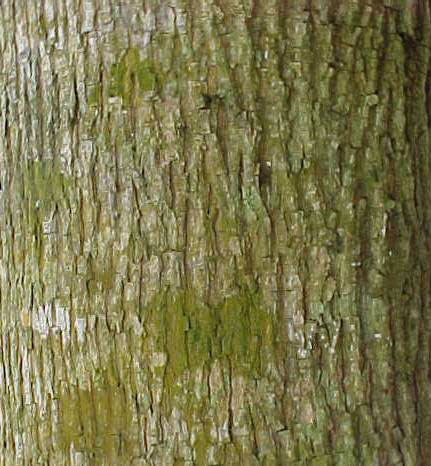
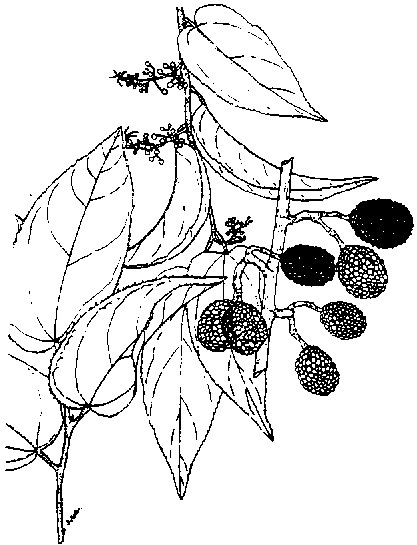
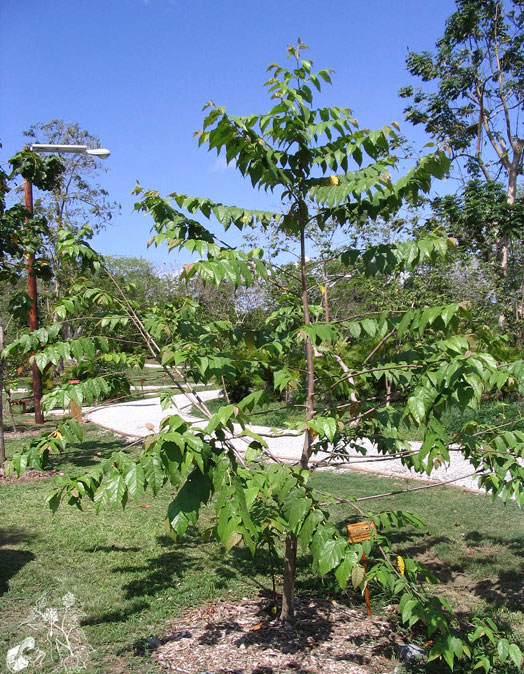
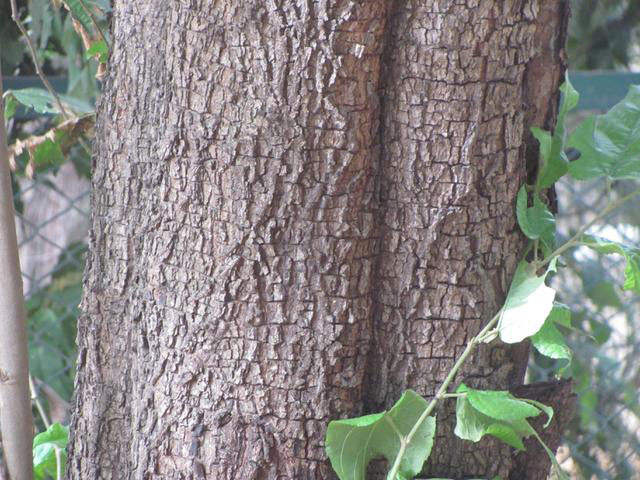
    West Indian elm is a small to medium-sized tree with a spreading, rounded crown. It can grow 10 – 30 meters tall. The straight, cylindrical bole is 30 – 40 cm, occasionally to 60 cm in diameter. The plant is evergreen, except in areas with a long, dry season. The plant is found growing along stream banks and in pastures and in secondary forest. Young twigs are covered with rust-brown or light grey star shaped hairs. Bark is grey or grey-brown becoming furrowed and rough or slightly shaggy.

    Leaves

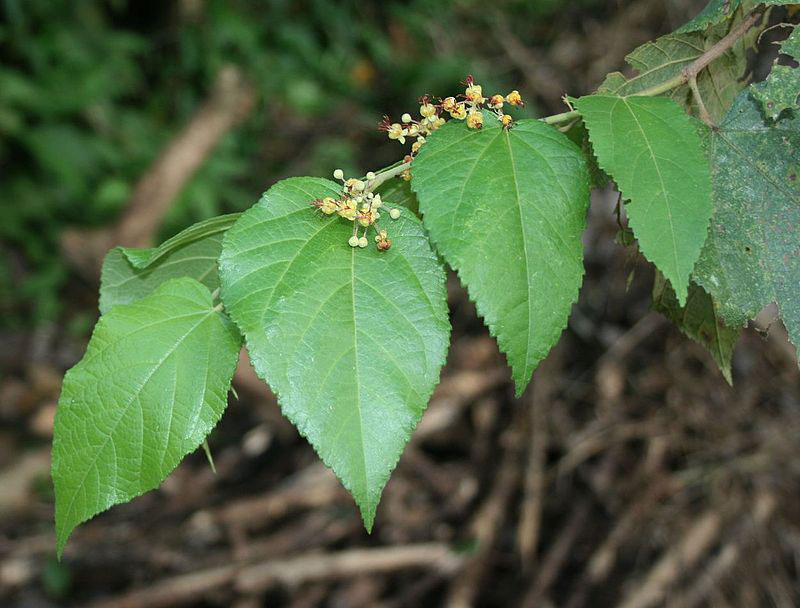
    Leaves are alternate in 2 rows in flattened arrangement, ovate to lance shaped, 6-13 cm long, 2.5-6 cm wide, long-pointed, finely saw-toothed, with 3 or sometimes 5 main veins from rounded or notched unequal-sided base, thin, nearly hairless or sometimes densely hairy. The leaf is dark green on the upper surface and light green-blue underneath and is rough (asperous) to the touch; at night hanging vertically. Leaf stalks are slender, 6-12 mm long, covered with tiny star-shaped hairs. There are three main leaf veins arising together from the leaf base, a characteristic of this family as well as several related families.

    Flowers

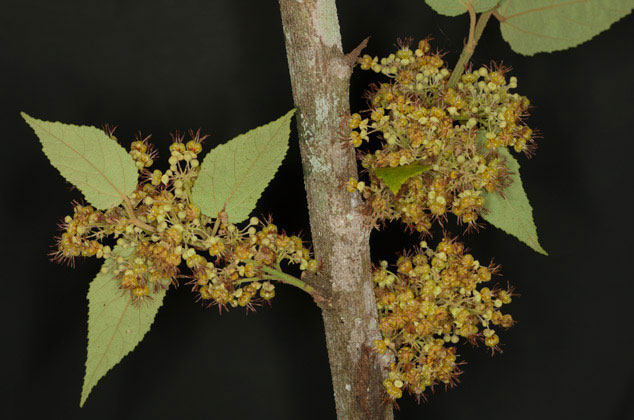
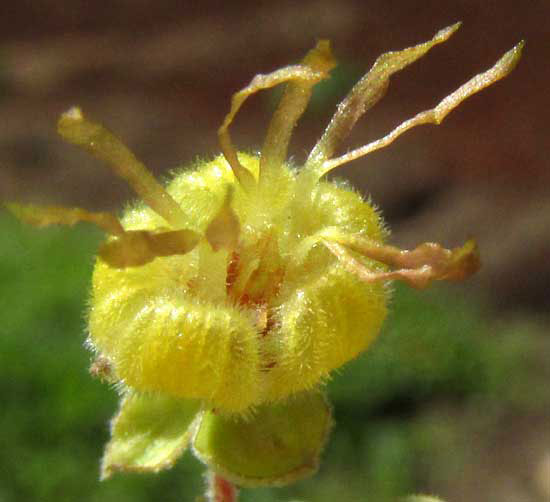
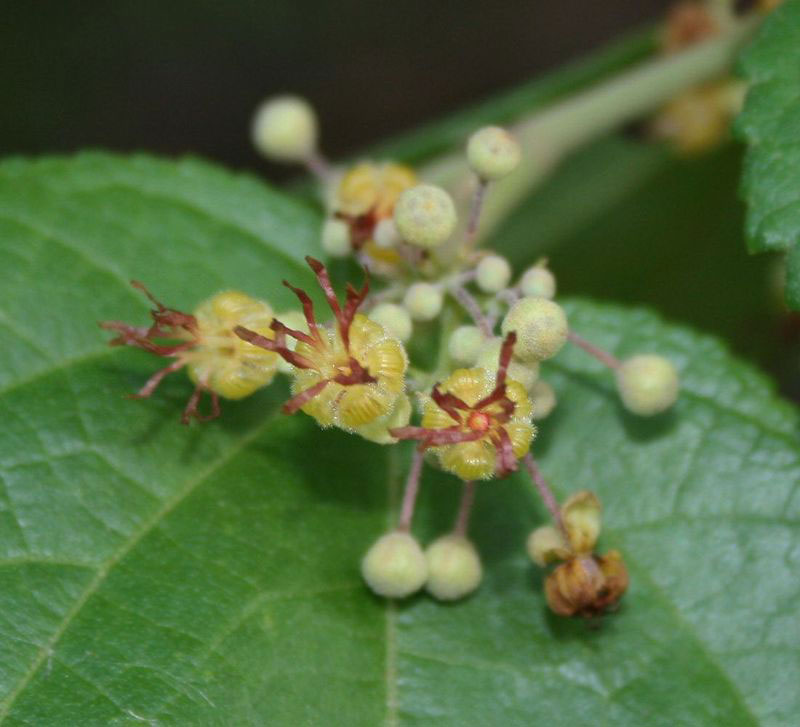
    The tree produces flower clusters (panicles) that are branched, 2.5-5 cm long, at the base of leaves. Flowers are many; short stalked, small, brownish-yellow, with 5 parts, about 1 cm long and half as broad, spreading, slightly fragrant. Calyx has 2-3 lobes, with rusty brown or light grey hairs, turned back, and then greenish; 5 yellow petals, each 2-forked; a yellowish stamen column with about 15 anthers surrounding the pistil, which has a hairy, light-green 5-celled ovary, style and 5 united stigmas. Normally the flowering takes place from April to October.

    Fruit

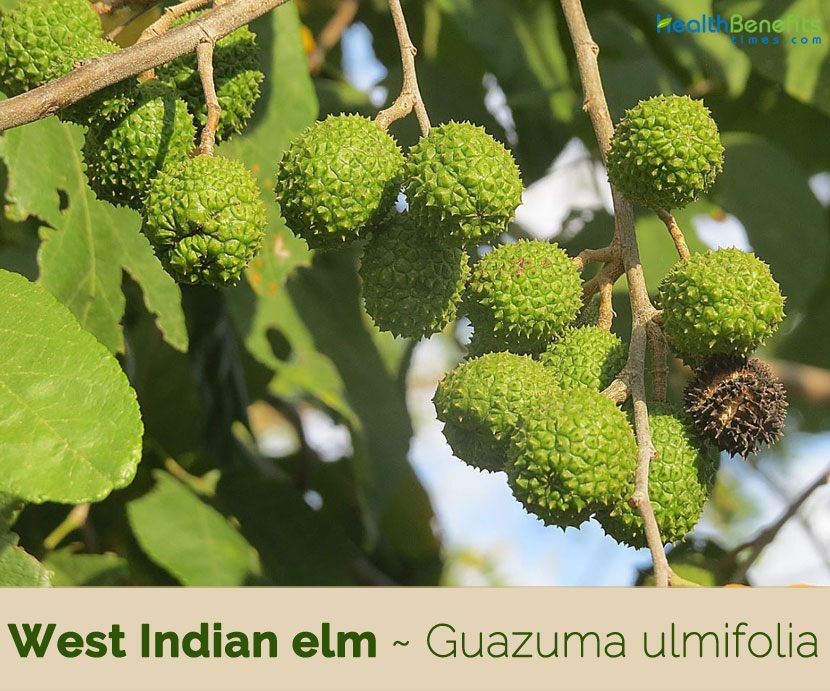
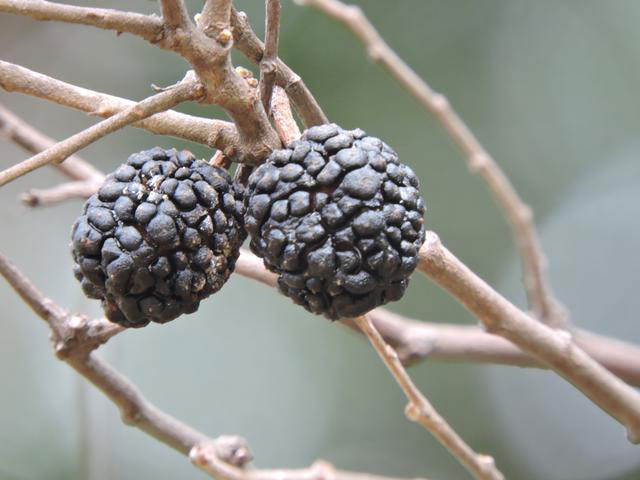
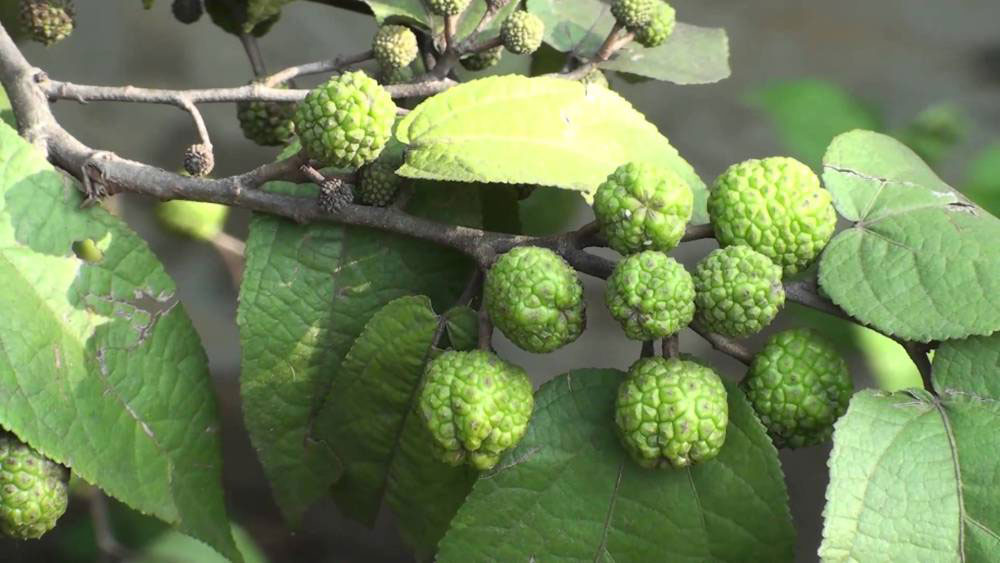
    Fertile flowers are followed by round to elliptical capsules, very warty, hard, purplish black, 1.2-4 cm long and 1.2-2.5 cm wide, 5- celled, opening at tip or irregularly by pores containing numerous seeds. Seeds are egg-shaped and 3 mm long, grey.

    Worldwide Ethno medical Uses of West Indian elm

    West Indian elm Quick Facts
    Name: West Indian elm
    Scientific Name: Guazuma ulmifolia
    Origin Caribbean, Central America, Mexico and Colombia, Peru, Ecuador, Bolivia, Argentina, Paraguay and Brazil
    Colors Green when young turning to purplish black as they mature
    Shapes Globose or ellipsoid capsule, woody, tubercled, 5-celled, 1.2-4 cm long and 1.2-2.5 cm wide, containing numerous, seeds
    Health benefits Cholesterol, Slimming, Healthy Hair, Good for Diarrhea, Combat Respiratory Problems, Injury Recovery, Treatment of Ulcers, Fight Venereal Diseases, Fight against Bronchitis, Good for Estomacais Problems, Combat hair implant, Liver Health
    Country Uses
    Belize For childbirth, diarrhea, dysentery, infections, prostate problems, rashes, skin, uterine problems, sores
    Brazil For asthma, blood cleansing, bronchitis, coughs, dysentery, excessive mucous, fever, hair loss, hepatitis, liver problems, parasites (head), pneumonia, skin diseases, syphilis, ulcers, and to increase perspiration
    Colombia As a uterine stimulant
    Cuba For bruises, burns, colds, flu, hemorrhoids, urinary insufficiency, wounds
    Dominican

    Republic

    For dysentery, fertility (veterinary), lung problems, and to increase perspiration
    Guatemala For bruises, dermatitis, erysipelas, fevers, gonorrhea, kidney diseases, skin disorders (irritation, eruptions, inflammation, sores, ulcers), stomachache, stomach inflammation, wounds, and to increase perspiration
    Haiti For blood cleansing, cough, diabetes, diarrhea, digestive sluggishness, fever, flu, fractures, scurvy, skin problems, wounds
    Jamaica For diarrhea, elephantiasis, leprosy, malaria
    Mexico For asthma, chest problems, childbirth, constipation, diarrhea, dysentery, elephantiasis, fever, gastrointestinal problems, hemorrhages, infectious diseases, kidney problems, leprosy, malaria, rashes, skin problems, syphilis, uterine pain, wounds
    Peru For diarrhea, dysentery, asthma, bronchitis, dermatitis, elephantiasis, fever, hair loss, hepatitis, kidney disease, leprosy, liver disease, lung problems, malaria, syphilis
    Venezuela For syphilis, wounds, and to increase perspiration and lower body temperature
    Elsewhere For asthma, bleeding, bronchitis, chest problems, elephantiasis, hair loss, hypertension, kidney disorders, liver problems, obesity, skin problems, stomachaches, and to increase perspiration


    Ethno medical Information on West Indian elm

    Plant Part Place Documented Ethnic Use Type Extract Route Used for
    Bark Belize
    • Used for skin sores, infections and rashes.
    • Used for dysentery and diarrhea, prostate problems and as a uterine stimulant to aid childbirth.
    • Decoction
    • Decoction
    • External
    • Oral
    • Human Adult
    • Human Adult
    Bark Brazil
    • Used as a diaphoretic for fevers. Used for coughs, bronchitis, ulcers, asthma, pneumonia and liver problems
    • Hot H2O Ext
    • Oral
    • Human Adult
    Bark Brazil
    • · Used to treat alopecia and head parasites.
    • · Used to treat skin afflictions.
    • · Used as a depurative, anti-syphilitic, pectoral, and anti-blennorrhagic.
    • Decoction
    • Decoction 
    • Decoction
    • External
    • External
    • Oral
    • Human Adult
    • Human Adult
    • Human Adult
    Bark Dominican Republic
    • Used as a diaphoretic and to treat dysentery, fertility (veterinary), and lung problems.
    • Decoction
    • Oral
    •  Human / Animal Oral
    Bark Colombia
    • Used to stimulate uterine contractions.
    • Hot H2O Ext
    •  Oral
    •  Human (Pregnant)
    Bark Cuba
    • Used for an astringent, diuretic, and emollient; to treat bruises, burns, flu, grippe, hemorrhoids, wounds
    • Decoction
    • Oral & External
    • Human Adult
    Bark Guatemala
    • Used for gonorrhea.
    • Used for stomach inflammation and stomachaches.
    • Infusion
    • Decoction
    • Oral
    • Oral
    • Human Adult
    • Human Adult
    Bark Haiti
    • Used for flu and diarrhea.
    • Used for fractures.
    • Decoction
    • Bark
    • Oral
    • External
    • Human Adult
    • Human Adult
    Bark Jamaica
    • Used for leprosy
    • Used for elephantiasis.
    • Used to treat diarrhea.
    • Used for malaria.
    • Hot H2O Ext
    • Hot H2O Ext
    • Infusion
    • Hot H2O Ext
    • Oral
    • Oral
    • Oral
    • Oral


    • Human Adult
    • Human Adult
    • Human Adult
    • Human Adult
    Bark Panama
    • Used to treat hypertension.
    • Infusion
    • Oral
    • Human Adult
    Bark Peru
    • Used for leprosy, alopecia, and dermatosis.
    • Used for liver disease, kidney disease and dysentery.
    • Decoction
    • Decoction
    • External
    • Oral
    • Human Adult
    • Human Adult
    Bark Peru


    • Used for, asthma, bronchitis, diarrhea, dysentery, elephantiasis, fever, hepatitis, malaria, nephritis, pulmonosis, and syphilis.
    • Decoction
    • Oral
    • Human Adult
    Bark Mexico
    • Used for wounds and rashes.
    • Used for gastrointestinal pain, diarrhea, dysentery, childbirth, asthma, and fever
    • Decoction
    • Decoction
    • External
    • Oral
    • Human Adult
    • Human Adult
    Bark + Fruit Mexico
    • Used to treat diarrhea, hemorrhage and uterine pain
    • Decoction
    • Oral
    • Human Adult
    Bark+ Leaf Mexico
    • Used for constipation and kidney disorders
    • Decoction
    • Oral
    • Human Adult
    Fruit Haiti
    • Used for diarrhea.
    • Decoction
    • Oral
    • Human Adult
    Fruit Mexico
    • Used to treat infectious diseases.
    • Infusion
    • Oral
    • Human Adult
    Leaf Guatemala
    • Used as a febrifuge, sudorific and to treat kidney disease.
    • Used for skin diseases, irritations, eruptions and inflammation, dermatitis, erysipelas, wounds, ulcers, bruises and sores.
    • Hot H2O Ext
    • Hot H2O Ext 
    • Oral
    • External
    • Human Adult
    • Human Adult
    Leaf Haiti
    • Used for flu and cough.
    • Used for diabetes.
    • Decoction
    • Decoction


    • Oral
    • Oral
    • Human Adult
    • Human Adult
    Leaf Peru
    • Used for liver disease, kidney disease and dysentery
    • Decoction
    • Oral
    • Human Adult
    Leaf Mexico
    • Used for Asthma
    • H2O Ext
    • Oral
    • Human Adult
    Entire Plant Mexico
    • Used medicinally for “magical” illnesses comprising a variety of physiological illnesses and symptoms. Use is most likely based on magic or superstition.
    • H2O Ext
    • Oral
    • Human Adult
    Root Mexico
    • Used for Childbirth
    • H2O Ext
    • Oral
    • Human (Pregnant)
    Stem bark Mexico
    • Used for Diarrhea
    • Infusion
    • Oral
    • Human Adult


    Different parts of plant and its uses

    Bark: Asthma, bruises, burns, alopecia, constipation, bronchitis, dermatitis, dermatitis, coughs, diarrhea, dysentery, fevers, childbirth, fractures, gastrointestinal pain, elephantiasis, gonorrhea, grippe, hypertension, infections, hemorrhoids, hemorrhage, influenza, leprosy, liver problems, malaria, nephritis, kidney problems, pneumonia, prostate problems, pulmonosis, skin conditions, stomach inflammation, stomach ache, syphilis, ulcers, uterine pain, wounds.

    Fruit: Hemorrhage, infection, diarrhea, uterine pain.

    Seed: Diarrhea, constipation, astringent, and in stomach troubles.

    Leaves: Asthma, alopecia, bruises, skin diseases, dermatitis, ulcers, dysentery, erysipelas, fevers, inflammation, kidney diseases, liver diseases, skin eruptions, sores, wounds.

    Root: Childbirth.

    Stem bark: Diarrhea
    West Indian elm Image Gallery
    Bark-of-West-Indian-elm-plant Bark-of-West-Indian-elm-plant
    Bunch-of-flowers-of-West-Indian-elm-plant Bunch-of-flowers-of-West-Indian-elm-plant
    Closer-view-of-flower-of-West-Indian-elm-plant Closer-view-of-flower-of-West-Indian-elm-plant
    Flower-of-West-Indian-elm-plant Flower-of-West-Indian-elm-plant
    Fruit-of-West-Indian-elm-plant Fruit-of-West-Indian-elm-plant
    Leaves-of-West-Indian-elm-plant Leaves-of-West-Indian-elm-plant
    Plant-illustration-of-West-Indian-elm Plant-illustration-of-West-Indian-elm
    Sketch-of-West-Indian-elm Sketch-of-West-Indian-elm
    Small-West-Indian-elm-Plant Small-West-Indian-elm-Plant
    Trunk-of-West-Indian-Elm-Tree Trunk-of-West-Indian-Elm-Tree
    Unripe-fruits-of-West-Indian-elm-plant Unripe-fruits-of-West-Indian-elm-plant
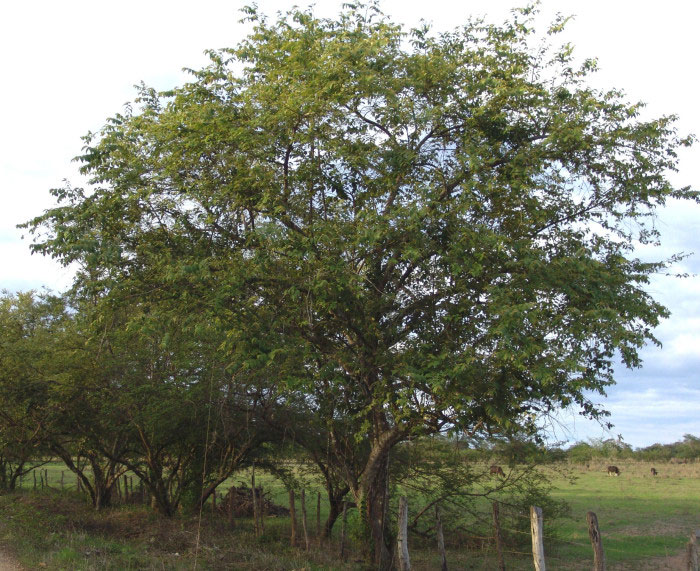
    West-Indian-elm-Plant West-Indian-elm-Plant

    Health benefits of West Indian elm

    Listed below are few of the popular health benefits of using West Indian elm

    1. Cholesterol

    Take some dry West Indian elm leaves. Pour enough hot water, such as making tea. Strain before drinking. In order not to bland, add one tablespoon of honey or sugar.

    2. Slimming

    Take 7 fresh leaves of West Indian elm and wash them. Add a piece of rhizome bangle, ginger, turmeric or white. Boil one-half cup water until remaining one glass. Once cool, strain and drink it. Mixes should be concurrent with white ginger or turmeric to reduce the effects of gastric irritation.

    3. Healthy Hair

    It is often used in the manufacture of products such as shampoos, conditioners and creams that prevent hair loss, dandruff and seborrhea. The ingredient still treats oiliness, moisturizes the hair and combat baldness.

    4. Good for Diarrhea

    The astringent properties from this plant help in the balance of the intestinal flora, often affected by the action of bacteria, viruses, or parasites that cause diarrhea and dehydration.

    5. Combat Respiratory Problems

    Tea provides outstanding results to treat respiratory problems such as colds, flu, bronchitis, and asthma. The substances contained in the plant contribute to clear the airway, promoting the removal of the viruses and bacteria causing these diseases.

    6. Injury Recovery

    The tonic properties and analgesic effects of this plant helps relieve the aches and pains caused by bruises, preferring the recovery of the body in less time.

    7. Treatment of Ulcers

    The consumption of West Indian elm tea is related with the decrease of the symptoms of ulcers, favoring the digestion and avoiding episodes of intoxication.

    8. Fight Venereal Diseases

    West Indian elm plays an important role for the treatment of venereal diseases such as syphilis.

    9. Fight against Bronchitis

    West Indian elm tea is helpful in the treatment of various respiratory diseases, such as asthma, bronchitis, and coughs. The drink also helps to relieve symptoms of fever as well.

    10. Good for Estomacais Problems

    Drink made from its crushed seeds with water is also great to treat stomach problems, diarrhea, ulcer, flu, colds, venereal diseases, and bruises, and is a great diuretic natural.

    11. Combat hair implant

    This is undoubtedly one of the amazing benefits of West Indian elm. It is an ingredient used in products that seek to deal with problems such as baldness or thinning of hair. The properties present in the plant help to stimulate the hair to grow strong and healthy.

    12. Liver Health

    Tea made from the bark of the West Indian elm has properties, wound healing, astringent, antiseptic, and stimulates the production of sweat and is great to clear the liver.

    Traditional uses and benefits of West Indian elm

    • Plant is antibacterial, anti-inflammatory, antifungal, antitussive, antiviral, astringent, blood purifier, cardiac, diaphoretic, digestive, diuretic, febrifuge, hemostatic, hypotensive, and oxytocic, vulnerary.
    • Bark also consists of a chemical called kaurenoic acid which has been recognized with antibacterial and antifungal properties.
    • Plant lowers heart rate and blood pressure, relaxes smooth muscles and stimulates the uterus.
    • Various research using leaf and bark extracts have clinically proven remarkable antibacterial activity against several disease-causing pathogens, including Bacillus, Staphylococcus, Streptococcus, E. coli, and Neisseria gonorrhea.
    • Applied externally, it is used to bathe wounds, rashes and sores; to treat skin problems, including dermatosis, elephantiasis and leprosy; it is applied to the scalp to arrest hair loss and combat parasites of the scalp.
    • The fruit (in Mauritius), the roasted seeds (in Java), and the bark (in India) are officinal remedies against elephantiasis.
    • An infusion of the crushed, seed soaked in water, is used to treat diarrhea, dysentery, colds, coughs and venereal diseases.
    • The Mixe Indians in the lowlands of Mexico use a decoction of dried bark and fruit to treat diarrhea, hemorrhages and uterine pain.
    • The Huastec Mayans of northeastern Mexico use the fresh bark boiled in water to aid in childbirth, for gastrointestinal pain, asthma, diarrhea and dysentery, wounds, and fevers.
    • Mayan healers in Guatemala boil the bark into a decoction to treat stomach inflammation and regular stomachaches.
    • Indigenous people have long used West Indian elm for asthma, bronchitis, diarrhea, kidney problems, and syphilis in Amazon.
    • They use a bark decoction topically for baldness, leprosy, dematosis and other skin conditions.
    • In Brazilian herbal medicine practices, a bark decoction is used to promote perspiration, cleanse and detoxify the blood, and to suppress coughs.
    • Bark decoction is also prepared and is used topically to promote hair growth, to combat parasites of the scalp, and to treat various skin conditions.
    • Dried bark and/or dried leaves are made into tea (standard infusion) and used for kidney disease, liver disease, and dysentery in Peru.
    • Dried leaves of the tree are brewed into a tea and drunk for fevers, kidney disease, and skin diseases, as well as used externally for wounds, sores, bruises, dermatitis, skin eruptions and irritations, and erysipelas in Guatemala.
    • Fruit is used as a cure whooping cough.
    • Decoction of the seeds that have been burned like a coffee can be drunk as cure for constipation.
    • Bark is used to induce perspiration, as a tonic and a blood cleanser, and is used to treat a wide range of disorders including, digestive tract problems such as kidney problems, uterine pain, venereal disease and as an aid to childbirth, respiratory tract problems such as asthma, bronchitis, coughs and pneumonia, fever and hemorrhages.
    • Beverage of crushed seeds soaked in water is astringent and diuretic in nature which is also used to treat cold, cough, contusions, constipation, diarrhea, dysentery, venereal disease and in various stomach troubles.
    • It cures Anorexia, Bronchitis, gonorrhea, leprosy, asthma, high blood pressure, syphilis, baldness and indigestion.

    Other facts

    • Timber is used for posts, general carpentry, interior construction, furniture, barrel stave, boxes, crates, tool handles, gun-stocks and firewood and charcoal.
    • It is an important source of livestock fodder in many areas, particularly during the dry season when pasture grasses are unavailable.
    • It is fast-growing, tolerant of full sunlight and provides food for the native fauna.
    • Tough, fibrous bark and young stems are used to make rope and twine.
    • Mucilaginous sap is used sometimes in sugar fabrication to clarify syrup.
    • Heartwood is pinkish to brownish; it is not clearly demarcated from the light brown sapwood.
    • Fibrous wood is light in weight; it is not durable, It is used for posts, interior carpentry, light construction, furniture, boxes and crates, shoe horns, tool handles etc.
    • The tree can be used for fuel and to make charcoal.
    • The charcoal is of high quality.

    Precautions

    • West Indian elm bark has been documented in several animal studies to have uterine stimulant activity and it should not be taken during pregnancy.
    • People with a history of heart problems, those taking heart medications, or those with low blood pressure should not use this plant without supervision and advice of a qualified health care practitioner.
    • The plant should be taken internally only in moderation, as large doses can cause nausea, vomiting, and diarrhea.

    References:

    https://www.itis.gov/servlet/SingleRpt/SingleRpt?search_topic=TSN&search_value=21546#null

    https://npgsweb.ars-grin.gov/gringlobal/taxonomydetail.aspx?id=312760

    https://pfaf.org/user/Plant.aspx?LatinName=Guazuma+ulmifolia

    https://www.missouribotanicalgarden.org/PlantFinder/PlantFinderDetails.aspx?taxonid=287260&isprofile=0&

    https://plants.usda.gov/core/profile?symbol=GUUL

    https://pdfs.semanticscholar.org/8ae2/a1d8648692c44c2eefe6f98c402d628ca7a5.pdf

    http://www.nzdl.org/gsdlmod?e=d-00000-00—off-0hdl–00-0—-0-10-0—0—0direct-10—4——-0-1l–11-en-50—20-about—00-0-1-00-0–4—-0-0-11-10-0utfZz-8-10&cl=CL2.14.7&d=HASH011ec19a37bb817d72319187.31&gt=2

    https://wikivisually.com/wiki/Guazuma_ulmifolia

    http://tropical.theferns.info/viewtropical.php?id=Guazuma+ulmifolia

    https://indiabiodiversity.org/species/show/264307

    http://www.flowersofindia.net/catalog/slides/West%20Indian%20Elm.html

    https://sl.ku.dk/rapporter/seed-leaflets/filer/guazuma-ulmifolia-16.pdf

    https://gd.eppo.int/taxon/GUZUL

    https://en.wikipedia.org/wiki/Guazuma_ulmifolia

    https://pdfs.semanticscholar.org/f87a/98afee41739efc41d172d1c6bff022f3b357.pdf

    https://italisvital.info/cablote-cualote/

    http://www.theplantlist.org/tpl/record/kew-2834705

    https://www.cabi.org/isc/datasheet/26124

    http://old.worldagroforestry.org/treedb/AFTPDFS/Guazuma_ulmifolia.PDF

    https://www.inaturalist.org/taxa/154538-Guazuma-ulmifolia

    http://www.rain-tree.com/reports/mutamba-tech.pdf

    78%
    78%
    Awesome

    Comments

    comments

    Herbs and Spices W
    Share. Facebook Twitter Pinterest LinkedIn Tumblr Email
    Previous ArticleRecovering from Brain Injury with Proper Nutrition
    Next Article Vegetables: Facts about Kale

    Related Posts

    Uses of Monkey Pitcher plant

    April 16, 2024

    Traditional uses and benefits of Wild Marigold

    March 21, 2024

    Traditional uses and benefits of Drooping fig

    March 12, 2024

    Comments are closed.


    West Indian Elm facts

    Name West Indian elm
    Scientific Name Guazuma ulmifolia
    Native Caribbean, Central America, Mexico and Colombia, Peru, Ecuador, Bolivia, Argentina, Paraguay, And Brazil. It is also found in Antigua and Barbuda, Argentina, Bahamas, Barbados, Bolivia, Brazil,

    Colombia, Cuba, Dominica, Dominican Republic, Ecuador, Grenada, Guadeloupe, Guatemala, Haiti, Honduras, Jamaica, Martinique, Mexico, Montserrat, Netherlands, Nicaragua, Costa Rica, Panama, Paraguay, Peru, Puerto Rico, St Kitts And Nevis, St Lucia, St Vincent and the Grenadines, Trinidad and Tobago, Virgin Islands

    Common Names Bastard Cedar, West Indian elm, Guasimo, Mutamba, mutambo, embira, embiru, guazima, guacima, guacimo, guasima de caballo, aquiche, ajya, guasima, cimarrona, guazuma, bolaina, atadijo, ibixuma, cambá-acã, bay cedar, bois d’homme, bois d’orme, bois de hetre, orme d’Amerique, Ajillá, Gunstock, Hay cedar, Jackocalaloo, Pricklenut, Bois De L’Orme, Bwa Dom, Cuaulote, Caulote, Contamal, Huásimo,  Mawo baba, Moena, Mutamba, Papayillo, Pixoy
    Name in Other Languages Bengali:  Nipaltunth
    Brazil: Araticum-bravo, cabeça-de-negro, camaca, cambá-aça, embira, embira, embireira, embiru, envireira, fruta de macaco, fruta-de-macaco, guanaco, guaxima-macho, guaxima-torcida, ibiscuma, ibixuma, matambu, motamba, mutamba, mutamba, mutamba-verdadeira, mutambo, pau-de-bicho, pau-de-montanha, pau-de-mutamba, pau-de-pomba, periquiteira, piriquiteira, pojó
    English:  Bastard cedar, Bay cedar, Caulote, Gunstock, Musket tree, Pigeon wood, Pixoy, West Indian elm, honey fruit tree
    Español: West Indian-elm, Bastard-cedar, Bastardcedar
    French: Bois de hêtre, Bois d´orme, Bois d’homme, Hêtre gris, Hêtre orme, Hêtre vert, Mahot-baba, Mahot-hêtre, Mahot-hetre, Orme d’amérique
    Gujarati: Bhadraksha (ભદ્રાક્ષ), Khoto rudraksha (ખોટો રુદ્રાક્ષ)
    Hindi:  Rudraksha (रुद्राक्ष)
    Indonesian: Jati belanda
    Japanese:  Guazuma (グアズマ), Guazuma urumiforia (グ アズマ・ウ ルミフォリア),  Nireba guazuma (ニレバグアズ マ),  Nireba guazuma (楡葉グアズマ), Teoburaama guazuma (テ オブラーマ・グアズマ)
    Java: Jatos landi, Jati londa
    Kannada:  Rudrakshi (ರುದ್ರಾಕ್ಶೀ), Bhadrakshi mara, Bucha
    Malayalam: Rudraksham (രുദ്രാക്ഷം), Uttharasham
    Marathi: Rudrakshi (रुद्राक्षी)
    Mexico: Acashti, ajilla, ajya, aquich, aquiche, kabal-pixoy, k’olin kakaw, nocuana-yana, palote negro, parandesicua, pixoy, tzuni, tzuyui, uiguie, ya-ana, yaco de venado, yaco granidillo, zan-mi
    Oriya: Debodaru
    Portuguese:  Araticum-bravo, Buxuma, Cabeça-de-negro, Camacan, Cambá-aça, Embira, Embireira, Embiru, Enveira du campo, Fruta-de-macaco, Guaxima-macho, Guaxima-torcida, Mutamba, Mutamba, Mutamba-verdadeira, Mutambo, Mutambu, Pau-de-bicho, Pau-de-montanha, Pau-de-pomba, Periquiteira, Piriquiteira, Pojó
    Sanskrit: Rudraksha (रुद्राक्ष), Pundraaksha, Rudraakshi
    Siddha: Rudraksham
    Spanish:  Ajilla, Ajya, Aquiche, Bacedar, Bolaina, Bolaina negra, Cabeza de Negrito, Cabeza de Negro, Cablote, Caca de mico, Cambá-acá, Cambo-aca, Caulote, Chicharron, Chicharrón, Coco, Contamal, Cualote, Cuaulote, Guacima, Guacimo, Guácima, Guácimo, Guácimo blanco, Guácimo cimarrón, Guácimo de ternero, Guácimo dulce, Guásima, Guasima de caballo, Guásimo, Guazima, Guazuma, Iumanasi, Kamba aka guasa, Majagua de toro, Nocuana-yana, Papayillo, Parandesicua, Parandesiqua, Tablote, Tapaculo, Vácima, Yaco granidillo, Yaco de venado, black head,
    Tamil:  Rudrasam, Tenbachai, Thenmaram, Tubakki,  Tuppakki maram (துப்பாக்கிமரம்)
    Telegu:  Bhadraksha (భద్రాక్శ), Rudraksha (రుద్రాక్శ), Thene-chettu, Udrikpatta
    Plant Growth Habit Small to medium-sized tree
    Growing Climates Found growing along stream banks and in pastures, in secondary forest
    Plant Size Up to 30m in height and 30–40 cm in diameter
    Bark Gray or gray-brown and becomes furrowed and rough or slightly shaggy
    Leaf Alternate in 2 rows in flattened arrangement and ovate to oblong or lanceolate, simple, tomentosa, 3-21 cm long and 2-6 cm wide, base unequally cordate, apex acuminate, margins serrate, scabrid above, pubescent beneath, base 5-7-nerved; petioles 0.5-2 cm long, with 3 or sometimes 5 main veins from rounded or notched unequal-sided base
    Flowering season April to October
    Flower Flower clusters (panicles) branched, small, yellow or purple, born in axillary thyrsiform cymes 2-4 cm long; sepals 5, at first spathaceous; petals 5. Flowers are 0.5-0.7 cm across, in terminal and axillarv cymes
    Fruit Shape & Size Globose or ellipsoid capsules, woody, tubercled, 5-celled, indehiscenl, purplish black, 1.2-4 cm long and 1.2-2.5 cm wide, containing numerous, seeds
    Fruit Color Green when young turning to purplish black as they mature
    Seed Ovoid, grey seeds 2.5-4 mm long & 1.8-2 mm wide and black when ripe
    Propagation By Seeds or Cutting
    Plant Parts Used Bark, leaves, root, flowers, and fruit
    Season April and May
    Health Benefits
    • Cholesterol
    • Slimming
    • Healthy Hair
    • Good for Diarrhea
    • Combat Respiratory Problems
    • Injury Recovery
    • Treatment of Ulcers
    • Fight Venereal Diseases
    • Fight against Bronchitis
    • Good for Estomacais Problems
    • Combat hair implant
    • Liver Health
    Culinary Uses
    • The seeds are edible, fresh or cooked.
    • Fruits can be consumed raw or cooked.
    • Eaten green the fruits can be crushed in water to make a beverage or used to flavor other foods.

    West Indian elm Scientific Classification

    Scientific Name: Guazuma ulmifolia

    Rank Scientific Name & (Common Name)
    Kingdom Plantae (Plants)
    Subkingdom Tracheobionta (Vascular plants)
    Infrakingdom Streptophyta  (land plants)
    Super Division Spermatophyta (Seed plants)
    Division Magnoliophyta (Flowering plants)
    Sub Division Spermatophytina  (spermatophytes, seed plants, phanérogames)
    Class Magnoliopsida (Dicotyledons)
    Sub-Class Dilleniidae
    Super Order Rosanae
    Order Malvales
    Family Sterculiaceae (Cacao family)
    Genus Guazuma Mill. (guazuma)
    Species Guazuma ulmifolia Lam. (bastardcedar)
    Synonyms
    • Bubroma guasuma Willd.
    • Bubroma guazuma (L.) Willd.
    • Bubroma polybotryum Willd.
    • Bubroma tomentosum Spreng.
    • Bubroma ulmifolia (Lam.) Oken
    • Diuroglossum rufescens Turcz.
    • Guazuma blumei G.Don
    • Guazuma bubroma Tussac
    • Tussac burgroma guazuma
    • Guazuma coriacea Rusby
    • Guazuma guazuma (L.) Cockerell
    • Guazuma guazuma (L.) Kuntze
    • Guazuma guazuma var. tomentosa (Kunth) Kuntze
    • Guazuma guazuma var. ulmifolia (Lam.) Kuntze
    • Guazuma iuvira (Willd.) G.Don
    • Guazuma longipedicellata Freytag
    • Guazuma parvifolia A.Rich.
    • Guazuma polybotrya Cav.
    • Kunth tomentosa guazuma
    • Guazuma tomentosa var. cumanensis G. Don
    • Guazuma tomentosa var. monpoxensis G.Don
    • Guazuma tomentosa var. parvifolia (A.Rich.) Kitan.
    • Guazuma ulmifolia var. BPKitanov parvifolia
    • Guazuma ulmifolia var. tomentosa (Kunth) K. Schum.
    • Guazuma ulmifolia var. Trianae K. Schum.
    • Guazuma ulmifolia var. ulmifolia Lam.
    • Guazuma ulmifolia var. velchina K. Schum.
    • Theobroma celtifolia Salisb.
    • Theobroma guazuma L.
    • Theobroma tomentosa (Kunth) M. Gomez
    Categories
    • Beverages (78)
    • Dairy (28)
    • Dental Health (15)
    • Equipment (5)
    • Essential OIls (196)
    • Facts (2,939)
    • Foods (255)
    • Fruits (516)
    • Giveaway (1)
    • Grains and Cereals (36)
    • Health & Beauty (763)
    • Herbs and Spices (1,249)
    • Medicines (9)
    • Mental Health (19)
    • Nutritional value (27)
    • Nuts and seeds (73)
    • Oils (81)
    • Pets (4)
    • Poultry & Seafoods (67)
    • Pulses and Beans (16)
    • Reviews (25)
    • supplement (2)
    • Vegetables (304)
    • Weight Loss (22)

    What is Lupin Bean Flour?

    Science Backed Health Benefits of Durian (Durio zibethinus)

    Science Backed Health Benefits of Feijoa (Pineapple Guava) (Acca sellowiana)

    Science Backed Health Benefits of Gac Fruit (Momordica cochinchinensis)

    Science Backed Health Benefits of Amaranth Leaves (Amaranthus spp)

    Science Backed Health Benefits of Arrowhead (Sagittaria sagittifolia)

    ABOUT
    Home
    About us
    Contact us
    Privacy Policy
    Terms & conditions
    Disclaimer
    Direct Communication
    e-mail: [email protected]
    Gmail: [email protected]
    Whatsapp: +977-9841146511
    Viber: +977-9841146511
    Useful
    Health Wiki
    Nutrition
    Facebook Twitter Pinterest
    © 2025 www.healthbenefitstimes.com All rights reserved.

    Type above and press Enter to search. Press Esc to cancel.

    ×

    Log In

    Forgot Password?

    Not registered yet? Create an Account